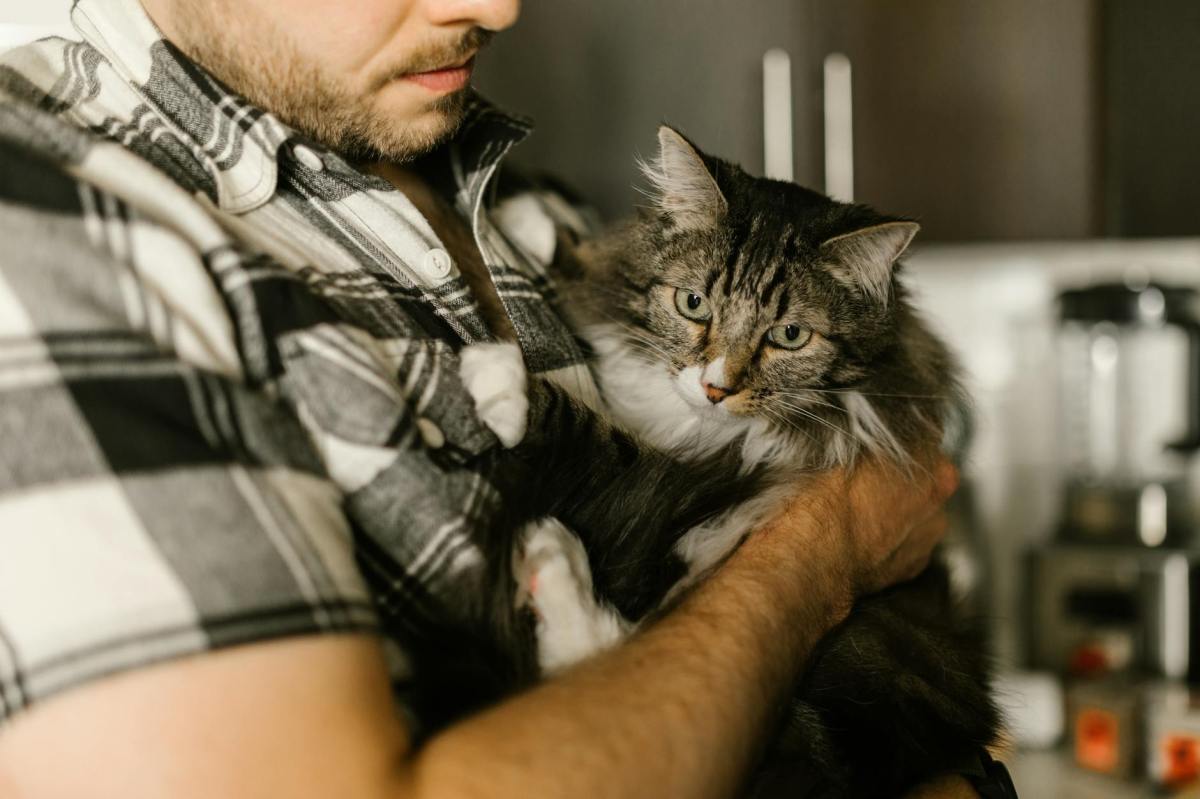
The Buddies wish all of you a wonderful Christmas filled with warmth, love, turkey, and lots of awesome stuff from Santa Claws!
Thank you for reading PITB and for being advocates for our furry friends!
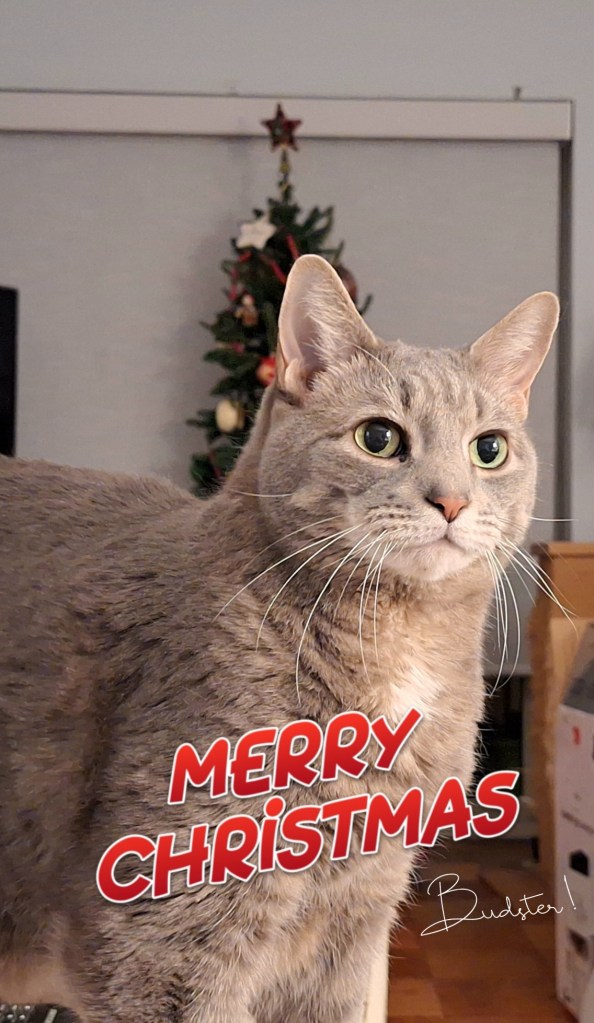
Zzzzzzz…zzzzzz…zzzzz…wait, what?! Oh. Merry Christmas!
The Buddies wish all of you a wonderful Christmas filled with warmth, love, turkey, and lots of awesome stuff from Santa Claws!
Thank you for reading PITB and for being advocates for our furry friends!
Another year, another Festivus for the Rest of Us.
This year marks the 29th Festivus of the Festivus Revival Era, when Cosmo Kramer convinced Frank Costanza to bring back the beloved holiday that eschews the excessive commercialism of the modern holiday season.
We enthusiastically celebrate Festivus annually at Casa de Buddy and here on the blog, but if you’re joining us for the first time and you’re not familiar with the tradition, we can help get you up to speed by referring back to the wisdom of Frank Costanza, who founded the holiday:
Frank Costanza: Many Christmases ago, I went to buy a doll for my son. I reached for the last one they had, but so did another man. As I rained blows upon him, I realized there had to be another way!
Cosmo Kramer: What happened to the doll?
Frank Costanza: It was destroyed. But out of that, a new holiday was born. A Festivus for the rest of us!
Festivus was popularized by Seinfeld in the 1997 episode “The Strike,” and presented as a holiday celebrated by the Costanza family under duress, at the insistence of Frank Costanza, the insane father of George Costanza.
But the holiday was not invented for the show — it was a real tradition invented by Dan O’Keefe Sr., father of Seinfeld writer Dan O’Keefe, in the 1960s. The younger O’Keefe had no plans to work it into an episode of the sitcom, and blames his “loudmouth brother” for bringing it up at a party for the Seinfeld cast and crew.

O’Keefe pleaded with his colleagues not to write it into an episode, but by that point Jerry Seinfeld and Larry David, the main creative forces behind the show, were already intrigued and couldn’t be talked out of it.
In a 2017 interview, Dan O’Keefe said he believed his father’s made-up holiday was “too weird” for the TV audience, but Seinfeld has always been about the absurd and the nonsensical.
The audience loved it, and in the almost three decades since, Festivus has grown in popularity. It’s celebrated in homes, neighborhood bars, offices and other places as a non-secular holiday for which people don’t have to worry about bringing gifts and it’s okay to be a little grumpy.
As testament to its widespread popularity and its place in modern American culture, Festivus has been recognized as a culturally significant event by the Library of Congress.

On the surface, Festivus is superficially similar to Christmas. It involves a gathering of family and friends, a holiday dinner and a warm atmosphere.
But in a rejection of holiday consumerism, Festivus is not celebrated with a tree or candles. Instead, the primary decoration is an unadorned Festivus pole, usually made out of aluminum. (“I find tinsel distracting,” Frank Costanza explained.)
Festivus dinner begins with the Airing of Grievances and ends with the Feats of Strength.
The head of the family declares “I’ve got a lot of problems with you people, and now you’re gonna hear about it!”

It should come as no surprise that cats, who have high standards for service, would have their owh list of disappointments. Behold, Little Buddy the Cat’s grievances for 2025:
Big Buddy: It has come to my attention that you portray me as a wimp on MY blog! Apparently your claims about me running from vacuums and the rustling of paper bags are running jokes in your posts. These heresies shall not go unpunished! I am a tiger!
Readers of PITB: Et tu, friends of Little Buddy? And here I thought I had admirers who appreciate me for being the dashing, beguiling, intelligent and meowscular feline I am. As punishment, I shall refuse to do anything amusing for at least a month, depriving you of stories about my witty ripostes and magnificent adventures.
Smudge the Neighbor Cat: Your time will come soon, my friend. Very soon. Nobody tangles with Buddy and…uh…gets untangled. Or something. You think I don’t know you’ve been surreptitiously marking my front door with your foul stench? I’ll be keeping a close eye on you, so you’d better not try any of your sneaky stuff!
The Jaguars of the Amazon: Once again, you my homies! You know how to make a fellow apex predator feel at home, and you can be reliably called upon when I need a vacuum destroyed or dogs intimidated. I got your backs! I love you guys.
Santa Claws: Last year’s gifts were a bit sub par, if I’m being honest. I’m a good boy, and as a good boy, I deserve toys! I have left the Christmas tree alone this year, I don’t scratch the couch, and I only puked on Big Buddy’s bed once. It’s technically my bed anyway, so it’s not like I did it on purpose. Trust me, I almost felt bad when Big Buddy had to replace the sheets and wash the old ones twice. And I don’t know what you may have heard regarding those vile rumors about me smacking Big Buddy in his sleep, but they’re really light taps with my paw. Smack is such a harsh word. Can I have new toys now?
There’s a disconnect between the usually careful language of research studies and the exaggerated claims of news articles.
The headlines over the past few weeks have all been variations on the same riff: cats meow more frequently to male caregivers because we don’t know how to bond with the little stinkers, we disregard their feelings, and we ignore their pleas.
Others are more blunt in their assessment, like a story from YourTango that stated women “bond deeply” with cats, whereas we men are merely “manipulated” by them.
“Other studies have found that women are much better at giving their cats more attention, understanding their cats’ emotions, and are more likely to mimic their cats’ vocalization, too,” the YourTango story claims. “Whereas for men, the same cannot be said. Considering they tend to give affection more sparingly than women, it’s no wonder that the dynamic is different.”
Just picture it: women levitating above the rest of us, sharing their amazing Female Affection with the poor, emotionally starved pet felines who belong to men. If we’re trying to get rid of the “crazy cat lady” stereotype and spread the idea that cats are great companions for every kind of person, this probably isn’t helping.
So what’s the source of these claims?
Apparently a study out of Turkey that involved just 31 cats and their humans. All of the human participants were Turkish, and just 13 of them were male. All were recruited online. (And for some parts of the study, like the analysis of greetings by owner gender, only 26 participants were included because the other five did not submit complete data, including the ages of their cats.)
It’s important to make a distinction between what the study’s authors claim and what the media reports, because they’re almost always two different things.

The research team from the University of Ankara counted more meows directed at the 13 male caregivers in their study compared to the 18 female caregivers. In their paper, the team acknowledged their sample size was too small to draw any conclusions, and lacked the demographic diversity to rule out innumerable potential reasons why those 13 cats meowed more frequently than the 18 cats cared for by women.
Even with a more robust sample size including men of different ages, social classes, and nationalities, correlation is not causation, and it may be that the apparent difference in feline vocalizations disappears with a larger study group that more accurately reflects universal demographics.
Indeed, the study’s authors state clearly that feline greeting behavior is “a complex, multidimensional phenomenon that defies straightforward explanation.” (Emphasis ours.)
The conclusion, as always, is that we need more data, which is one reason why studies must be repeatable.
That nuance doesn’t make it into listicles or stories optimized for maximum shareability on Facebook, so instead we get headlines that present studies as the last word instead of the first tentative steps to understanding a phenomenon.
In case it wasn’t obvious, there is no data to support the claim that men “give attention more sparingly” than women, or that women are better at reading feline emotions. We don’t even have baselines or criteria for those claims. How do we objectively measure “better” when it comes to reading cats, especially when every cat and human bonded pair have their own pidgin “language”? What’s the “right” amount of attention?

As the loyal servant of an infamously talkative cat, I’m not sure gender makes any difference. Bud’s vocal tendencies were already present from kittenhood, and I simply nurtured them by engaging in conversations with him, giving him loads of attention and doting on him.
Often our conversations go like this:
Bud: “Mreeeoww! Mow mow! Brrrrrt a bruppph!”
Me: “I know, little dude. You told me, remember?”
Bud: “Brrrrrr! Brrrruppp! Yerp!”
Me: “Yes, but they’ve tried that already. It’s not just about tokamak design, it’s…”
Bud: “Merrrrrp! Mow mow!”
Me: “No, it’s about plasma containment. No containment, no reaction, no energy gain!”
Bud: “Brrrrr! Mrrrowww! Brupbrupbrrrruppp!”
Me: “Yeah, well that’s just, like, your opinion, man.”
I really do talk about science and science fiction with my cat, since he seems to respond to it. Of course it’s gotta be at least partially due to my tone, but strangely if I talk to him about other abstract things, he acts like I’m bothering him with so much human nonsense.
Regardless, Buddy and I object to the claim that a talkative cat is a disengaged or neglected cat. It’s not that he talks a lot, it’s that he never stops!
Jaguars, pumas, ocelots and margays are able to thrive in the same jungles, a unique arrangement that sheds light on how each species lives.
The jungles of Guatemala are teeming with life.
The guttural calls of howler monkeys haunt the rainforest from above, where scarlet macaws hop branches in flashes of red, yellow and blue.
On the forest floor opossums, peccaries, and oversize rodents called pacas move through dense brush, occasionally picked out by the few shafts of light able to break through the canopy. Ocellated turkeys plumed in iridescent copper and emerald advertise themselves to potential mates with thumping sounds, while spider monkeys perch on the weathered stones of long-forgotten Mayan cities that were swallowed by the jungle centuries ago.
As in most tropics, the apex predators are cats — four different species, to be exact. Jaguars sit at the top, unchallenged. Pumas, close in size if not ferocity, also find sustenance in the rainforest alongside ocelots and margays.

How do four medium carnivorous species exist side by side?
By dividing time, space and items on the menu, according to a new study.

The felids hunt at different levels of the jungle at different times of day, and while there’s overlap between prey, each species has its own distinct diet, according to a research team from Oregon State University. Their paper, Niche partitioning among neotropical felids, was published earlier this month in the Journal of Animal Ecology.
As the big kids on the block, jaguars primarily eat peccaries (pig-like ungulates that weigh up to 88 pounds), armadillos, deer and, sadly, ocelots. Apparently membership in Club Felid does not grant the smaller wildcats a pass. Ocelots top out at about 35 pounds, while the largest jaguars weigh in at about 350 pounds, making the smaller cats easy prey.
Pumas opportunistically prey on peccaries and brocket deer, but the majority of their diet is composed of monkeys, both spider and howler. Ocelots and margays naturally go for smaller prey, sticking mostly to rodents and opossums.

While jaguars hunt on the ground and have a well-documented habit of slipping into the water to prey on caiman and crocodiles, pumas, ocelots and margays take advantage of their climbing abilities and lighter frames to reach arboreal prey. That allows pumas, for example, to snag monkeys and arboreal opossum species from the canopy, so they don’t have to compete with jaguars.
The team verified the “spatial, temporal, and dietary niche partitioning” within the Maya Biosphere Reserve by using ground camera traps, arboreal camera traps and fecal samples, which allowed them to confirm the prey each species has been consuming.
Interestingly, margays are the pickiest — or perhaps most limited — of the bunch, preying on only seven species, while the other three cats regularly hunt between 20 and 27 different kinds of animals.
The information gleaned from the study not only helps researchers understand how these species interact with their environment, but also can help guide conservation decisions to safeguard them against extinction.

Amazon says it has identified the driver who stole a California woman’s cat and is working with local police, but they still haven’t recovered the beloved pet.
You’d think it would be relatively trivial to reunite a woman with her cat after an Amazon delivery driver stole the kitty on Dec. 11.
After all, the victim’s own Amazon Ring camera system captured video of the driver walking away with Piper the cat after dropping off a package. Amazon knows precisely who the driver is, where he lives and how to contact him, because he’s a contractor for the company.
And it’s difficult to imagine how it would stretch the resources of the Lakewood (California) Sheriff’s Department to send a deputy out to arrest the guy and retrieve the cat.
This wasn’t a high stakes heist by pros with a plan to disappear.
It was a local delivery driver who made an impulsive decision to steal a cat from a customer.
Do the police really think the man is hiding out in a local motel with the shades down and the cat tied to a chair, cutting out letters from a magazine for a ransome note?
Getting Piper back matters very much to Diane Huff Medina and her children, who miss the chatty Siamese mix.
It doesn’t matter at all to the police or to Amazon, which finally issued a statement calling the theft a “horrible act” and saying it was cooperating with police.

“The Amazon Flex delivery partner in question is no longer eligible to deliver to our customers,” an Amazon spokesman said.
That doesn’t help Diane Huff-Medina get Piper back, nor does it help her reassure her children that the feline, who has been with the family for six years, will be returned unharmed.
“Every day they ask, ‘Is she back yet?’ It’s hard to tell them,”Huff-Medina told local media this week.
In our last post, we noted that in cases where people were reunited with their pets, they did not wait for Amazon or the police to act. Neither has the same sense of urgency as an animal’s own family, and unfortunately police are often reluctant to devote time or manpower to these cases because pets are considered property. When the most severe potential charge is petty larceny — which takes into account a cat or dog’s monetary value, but not its emotional value — stolen pets are considered minor crimes.
Huff-Medina has done well to shame Amazon and local police by going to the media and getting Piper’s story out there. We hope she gets good news soon.
Header image via Wikimedia Commons