Blog Posts

The Swiss Have A Unique Way Of Stealing Cats: By Feeding Them! PLUS: More Fun Claims About Litter Boxes In Schools

In Switzerland you can be charged with a crime and face significant fines for feeding other people’s cats. Meanwhile. the “kids identifying as cats” culture war rumors are back and as inane as ever.

The Swiss seem to take cat theft pretty seriously, to the point where they’re perfectly willing to drag people to court for feeding other people’s cats.

That’s what happened to a 68-year-old woman in Zurich who is accused of being so nice to Leo, a neighbor’s cat, that the little guy decided her house was now his house.

According to local media reports, a Zurich prosecutor wants to fine her 3,600CHF (Swiss francs), which is $4,370 in ‘Merican greenbacks! That’s a lot of money for giving a cat some Temps and cans of tuna.

To be fair, Leo’s original family isn’t happy, especially because they specifically asked the woman to stop feeding their cat. She can’t claim she accidentally adopted him, since she let him into her apartment and even installed a cat flap for him, according to Swiss media reports.

“Cases like this are increasingly ending up in court because the rightful owners report the “feeders”. Under Swiss law, cats are “other people’s property” and systematic feeding and giving a home to another person’s cat is considered unlawful appropriation.

But if a neighbour’s cats are only fed occasionally, this is not a punishable offence in Switzerland.”

There’s really not enough information to form an opinion about this particular case. Was Leo mistreated or not getting enough to eat? Did his new human have designs on him from the beginning? Did she just think she was doing the right thing?

“Gimme the nomnoms, human!” Credit: Wikimedia Commons

As for me, this is another good reason to keep Bud inside. If I let him roam the halls of the building unsupervised, he’d probably start a bidding war between me and neighbors in two or three other apartments, making it clear that whoever supplies him with the most delicious and most frequent snacks will enjoy the great honor of serving him.

Kids identifying as cats: the fake controversy that won’t die

Just a quick recap, for anyone who hasn’t been keeping up on this uniquely American culture war spectacle: Politicians of a certain stripe really like rumors about kids identifying as cats, so much so that they’ve confidently asserted it’s happening all over America, telling anecdotes about it while on the campaign trail during the 2020, 2022, and 2024 political cycles.

That encompasses two presidential elections and a midterm year, but it’s not relegated to federal cycles. State-level pols love to talk about it too.

It’s a culture war dog whistle, and politicians from both parties love stuff like this because it gets everyone all riled up, which means no one’s talking about all the grift, insider trading and other fun activities our “leaders” involve themselves in.

The thing is, to date not a single one of the claims has been backed up by proof. I know this because I’ve investigated every one of them, and invariably they turn out to be rumors. I’ve gotten emails and comments telling me I’m a fool for debunking the claims, and I’ve literally begged people to give me a real example of cat-identifying kids dropping deuces in litter boxes, but again, all the claims collapse under minimal scrutiny.

Every time a politician has told a story about allegedly cat-identifying kids and litter boxes in schools, it follows the same pattern: they insist it’s true, double down on the claim, try to change the goalposts, and finally, they grudgingly admit they can’t point to a single example.

In a week or two, we go from righteous condemnation and fury to “Well, my wife’s best friend teaches sixth grade, and she said she heard from a teacher in another district that kids were meowing in class.”

Furries outside a convention, not a school. Credit: Furscience

Texas state Rep. Stan Gerdes is in the righteous condemnation stage after introducing the Forbidding Unlawful Representation of Roleplaying In Education Act, aka the FURRIES Act.

Gerdes wants to ban meowing, hissing, barking, litter boxes, leashes and animal costumes from school grounds and events, but in his wisdom he’s excluded school mascots and Halloween costumes.

He is, however, fast approaching the “my cousin’s best friend’s co-worker said” stage, after he couldn’t point to a single cat- or furry-related incident when pressed during a committee meeting on May 1. He eventually named a school district, saying he’d gotten a “extremely concerning” and verified account of an incident there, only for the district to issue a statement saying it didn’t happen.

Gerdes did call to ask if there were litter boxes in the school, the district said, and when he was told there was not, he insisted a manual check of all school bathrooms, which also came up empty. Let’s see how long he sticks to his story before he finally admits he has no proof.

At Almost 700lbs, Hercules The Tiger Is A Symbol Of His Species’ Comeback

The huge Bengal may be the biggest tiger in India, and has already become a draw for tourists visiting from other parts of the country.

Hercules looks like a heavyweight boxer reincarnated as a tiger.

The massive apex predator was virtually unknown outside of India’s Kumaon district until this week, when a tourist posted a short video of the nearly 700-pound animal lumbering out of the brush and into clear view as he crossed a dirt path between rural villages.

The Bengal, who may be the biggest cat in India, is majestic. His gait is leisurely, as if he knows that anyone or anything he may encounter will clear a path the moment they see him. His fur doesn’t hide the rippling muscle underneath, and as he spots a group of tourists with cameras aimed at him, he bares his teeth momentarily, then pretends as if they don’t exist as he takes his sweet time crossing the path.

“In my entire career, I have never seen such a giant tiger,” Prakesh Arya, a divisional forest officer, told the New Indian Express.

For conservationists, tourists and the government of India, whose national animal is the Bengal, Hercules’ existence is proof that Project Tiger is on the right track. The project is a national effort to save the iconic species, grow its population, and protect it from poachers.

Hercules’ territory includes Ramnagar, a town in northern India known as they gateway to Jim Corbett National Park. The preserve is named after the renowned tiger hunter who took down the Demon of Champawat, a tigress who had killed at least 435 people during a decade-long rein of terror.

Corbett, who described tigers as “large-hearted gentlemen” who were unfairly maligned, was known for his prowess in hunting down man-eating tigers and leopards, but later in life he turned to conservation, realizing that Earth’s biggest cats were in danger of extinction if drastic efforts weren’t taken to save them. That was a century ago.

Now India devotes significant resources to their protection and well-being, with an entire corps of dedicated professional rangers and anti-poaching teams tracking the animals and constantly patrolling the vast country’s 58 tiger preserves, which cover 82,836.44 square kilometers.

A large tiger cools off in water on a hot day. Credit: Warren Garst/Wikimedia Commons, Colorado State University Library

For tigers like Hercules, having large contiguous ranges gives them the chance to live the way nature intended. Experts say the abundance of prey in the reserves, especially in the region Hercules calls home, has resulted in larger, more robust cats of the type that were once a memory.

“This is a clear symbol of the rich biodiversity and the success of our management efforts in this forest area,” Arya said.

In turn, the presence of the iconic cats has revitalized tourism. Tourists who have seen Hercules described the experience as “overwhelming.”

“Seeing ‘Hercules’ was an unforgettable experience,” Priya Sharma, a tourist from Delhi, told the Express.


Point/Counterpoint: ‘You Don’t Tell Me When To Sleep, Human!’ vs ‘A Consistent Bedtime Is Important!’

Buddy the Cat argues that a consistent bedtime is key to feeling good and healthy, while Buddy the Cat counters that stupid humans don’t tell him when to sleep, HE decides. Who’s right, Buddy or Buddy?

A Consistent Bedtime Is Important

What are you doing, human? It’s bedtime! Mow mow! You’re supposed to be in this bed and laying down so I can use your face as a pillow, drape myself across you, or burrow comfortably against your side to soak up body heat.

What am I supposed to do without a human sleeping substrate? How can any cat be expected to sleep like this? I know you claim there are so called “stray cats” who don’t have humans, but that is preposterous and I don’t believe it.

Let’s go! I read an article saying it’s very important to have a regular sleep schedule. Well, actually, I just saw the headline, but I got the gist of it, which is that you have to go to bed right meow!

You Don’t Tell Me When To Sleep, Human!

Sleep? Now? That’s ridiculous.

No, I have shadows to chase, toys to kick around and I really wanted to get into redecorating things around here, because they’re looking a little too orderly for my tastes.

Go ahead, go to bed. In a few minutes I’ll cry outside the bedroom door until you get out of bed and open it, then I’ll decide I don’t want to go in after all. I’ll do that two, maybe three more times just because I can.

Oh, you thought I was settling in? Nah. I have a bowl of water to splash all over the place, then I’ll cry until you get up again and refill it, and when you get back into bed for the fifth or sixth time, I’ll cry incessantly again because my dry food bowl is empty, meaning there’s plenty of food but it’s all pushed up to the sides.

Do not forget our pre-slumber ritual! You have to scratch my chin while I purr and you tell me what a good boy I am. Then you have to scratch the top of my head while I purr and you tell me what a good boy I am.

After that, maybe I’ll sleep. We’ll see.

Masterful Technique, Superb Skill: Buddy Demonstrates How Cats Hunt

While ferocity comes naturally to cats, hunting skill must be honed. Only those who are the most dedicated to their craft can claim the title of Apex Predator!

Watch an apex predator hone his supreme hunting skills and show his toys who’s boss!

Were Cats Really Domesticated By The Egyptian Cult Of Bastet?

While the sensational claims have spawned headlines around the world, a closer examination raises more questions.

According to dozens of articles, a pair of new studies throws doubt on the commonly-held view that cats self-domesticated 10,000 years ago by helping themselves to rodents invading human grain stores.

The conventional wisdom for some time has been that house cats are the domesticated ancestors of felis sylvestris lybica, the African wildcat. Their genomes are nearly identical, it’s often difficult even for experts to tell the species apart, and they’re much more tolerant toward humans than the comparatively hostile felis sylvestris, the European wildcat.

But two new papers are raising eyebrows for their fantastic claims that feline domestication was actually human-driven and began about 5,000 years ago in Egypt.

Specifically, the papers claim cats were sacrificed en masse by the cult of Bastet, an Egyptian feline goddess, guiding the species toward domestication in a way that doesn’t quite make sense with what we know of evolution.

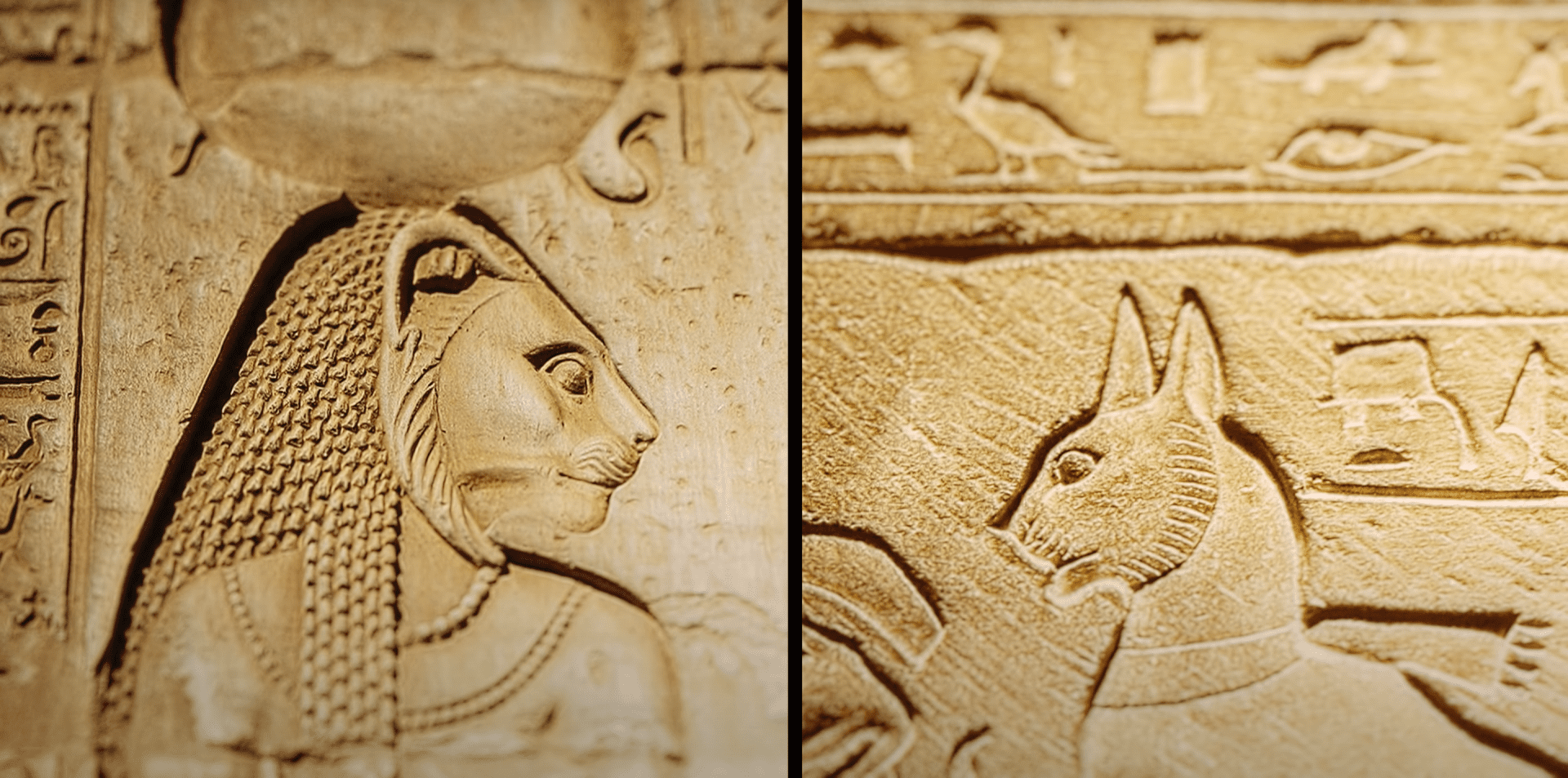
Bastet was originally depicted with the head of a lion, but the imagery around her evolved as she became a more prominent deity in the Egyptian pantheon. Later glyphs depicted her with the head of a domestic cat or African wildcat.

There are two main elements to the new claim:

  1. The earliest grave in which a cat was buried with a human was dated to about 10,000 years ago, and was found in Europe. But an analysis of the cat’s remains indicate it had DNA somewhere between a wild cat and a domestic feline. That, the authors claim, throws into doubt the idea that cats drifted into human settlements, drawn by the presence of rodents.
  2. If domestication was closer to 5,000 years ago, that would coincide with the rise of the cult of Bastet, the Egyptian cat goddess, around 2,800 BC.

Instead of the feel-good, fortuitous sequence of events the scientific community has accepted as the likely genesis of our furry friends, the authors of the new papers claim aggressive and fearful traits were essentially murdered out of the feline population by Bastet cultists who sacrificed cats in large numbers and mummified their corpses.

Neither paper has been peer-reviewed yet, and experts on ancient Egypt, genetics and archeology have already begun pushing back.

The new timeline, they say, doesn’t quite add up, with cat mummies found throughout different periods in Egyptian history, not just during the height of Bastet’s popularity in the Egyptian pantheon. Bastet’s popularity came approximately 700 years later than the authors claim the sacrifices began, and early imagery of the felid goddess depicts her with a lion head. It wasn’t until later centuries that Bastet was represented with the features of a domestic cat.

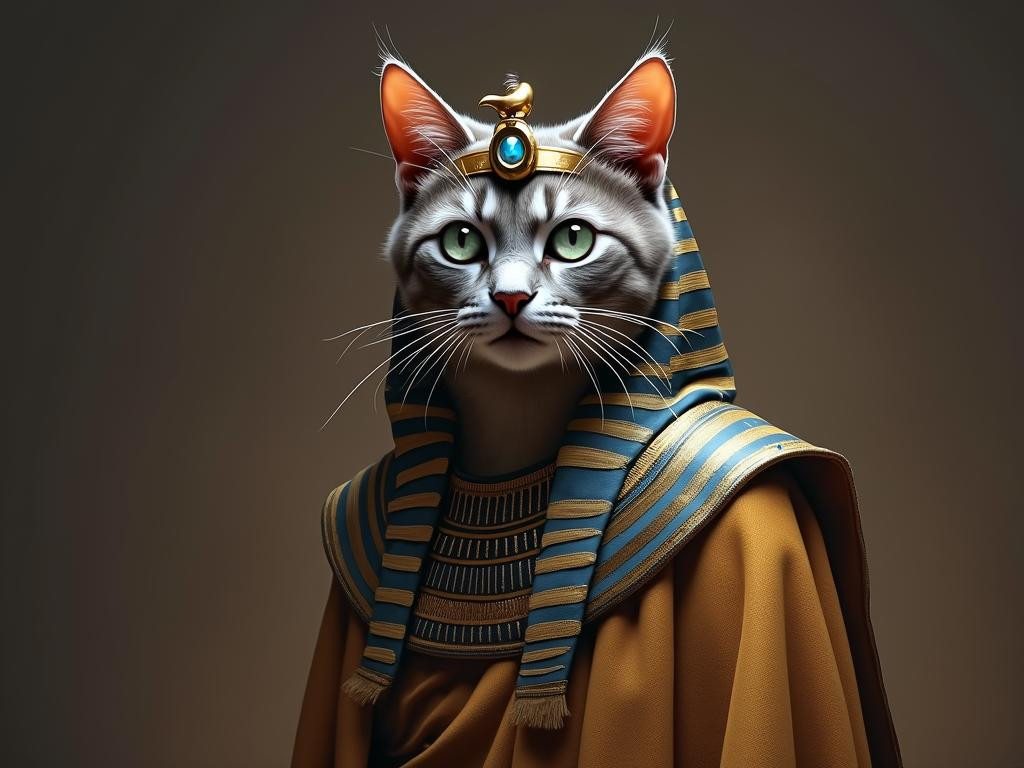
The powerful Pharaoh Budhotep I, considered an apocryphal king by some, sent a fleet of ships to the Americas to bring back turkey, according to legend. Credit: The Royal Buddinese Archaeological Society

Separate from timeline concerns is the lack of historical evidence. Cats were revered in ancient Egypt, and while there are an abundance of cat mummies — as well as the mummified remains of many other animals — that does not mean the cats were ritually sacrificed.

Indeed, archaeological, hieroglyphic and anthropological evidence all show cats enjoyed elevated status in the Egypt of deep antiquity, long before the nation became a vassal state of the Greeks, then the Romans.

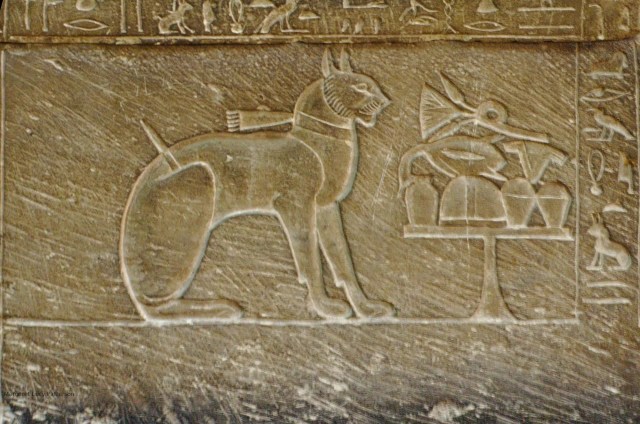
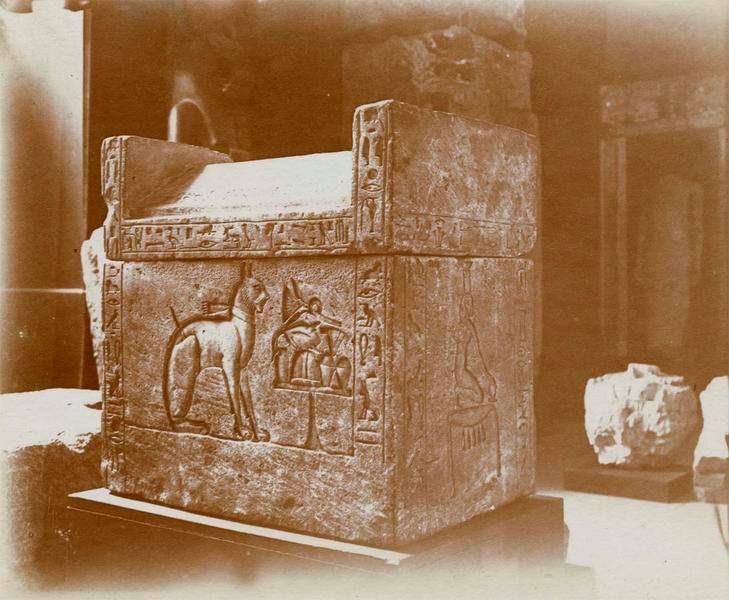
Cats were associated with magic, the divine and royalty, and cats who were the favored pets of Egyptian elites were given elaborate burials. Like Ta-miu, Prince Thutmose’s cat who is known for her grand sarcophagus decorated with images of felines and prayer glyphs meant to guide her to the afterlife.

Cats were sacred companions to the Egyptians

When cats are found buried with humans, the more common explanation is that those cats were the pets and companions of those humans. If the authors of the two new papers want to prove their claim that cats were ritually sacrificed by the tens of thousands — slaughter on a scale that would influence evolution — they’ve got a lot more work ahead of them. (And the burden of proof rests squarely with them, as the originators of the claim.)

Not only does their research attempt to change the origin stories of kitties to an ignominious tale of human barbarity, if we take their assertions at face value, we’re talking about a case of “domestication by slaughter.”

While it may be true that the earliest evidence of companion cats outside of North Africa revealed hybrid DNA, that doesn’t cast doubt on the commonly-accepted view of feline domestication, it strengthens it. Domestication is a process that takes hundreds of years if not more, and it occurs on a species level, so it makes perfect sense that cats found in burial sites from early civilization would be hybrids of domestic and wild. Those felines were of a generation undergoing domestication, but not quite there yet.

A detail from the sarcophagus of Ta-miu, Prince Thutmose’s beloved cat.
Ta-miu, Prince Thutmose’s beloved cat, was buried in an elaborately decorated sarcophagus with glyphs and offerings meant to guide her to the afterlife. Thutmose, son of Amenhotep III and Queen Tiye, lived in the 14th century BC.

Killing off docile cats?

Which brings us to another significant problem with the claim: if the ancient worshipers of Bastet were selecting the most docile and easiest-to-handle wildcats for their sacrifice rituals, as claimed, then they would be influencing evolution in the other direction.

In other words, they’d be killing off the cats who have a genetic predisposition toward friendliness, meaning those cats would not reproduce and would not pass their traits down. It would have the opposite effect of what the papers claim.

So despite the credulous stories circulating in the press and on social media, take the assertion with a grain of salt. Something tells me it won’t survive peer review, and this will be a footnote about a wrong turn in the search for more information on the domestication of our furry buddies.

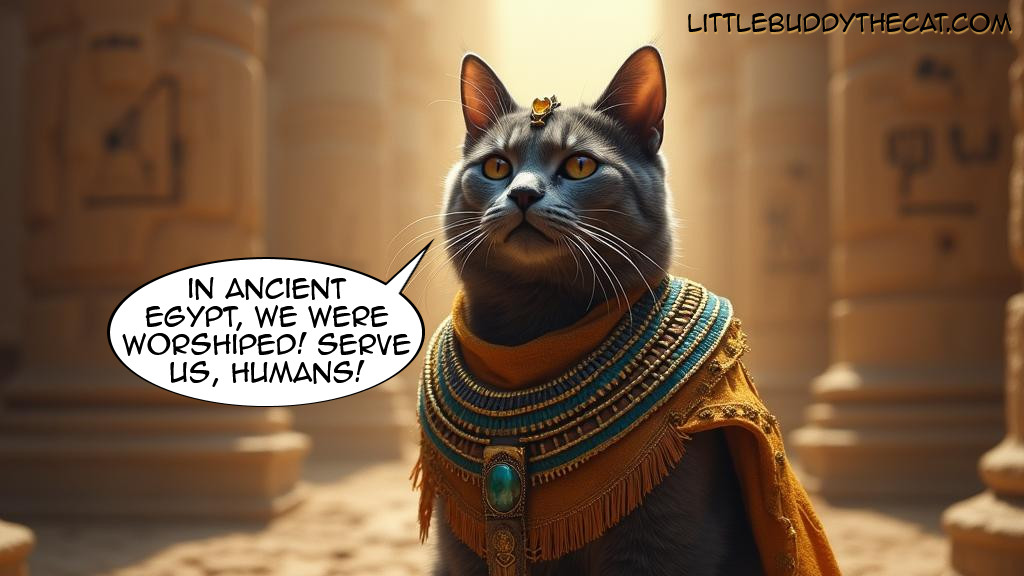
Cats would like human civilization to return to the good old days.