PLUS: Get the Army Corps of Engineers’ whimsical 2023 Cat Calendar!
A mountain lion got more than it bargained for when it found itself face to face with a ferocious furball last week.
The puma was taking a breather near a home on Jan. 5 when it turned, realizing there was a pair of eyes watching it. Those eyes belonged to the resident cat, a 13-year-old moggie who was not pleased to see a wild intruder in its territory.
The puma initially squared off on the other side of a sliding glass door as if saying “You want some of this?” but seemed shocked when the domestic cat, rather than backing down, launched into a series of feints and yowls.
The puma flinched a few times, then decided to vacate the premises.
Clearly, the wild cat found itself wondering about the identity of the tabby.
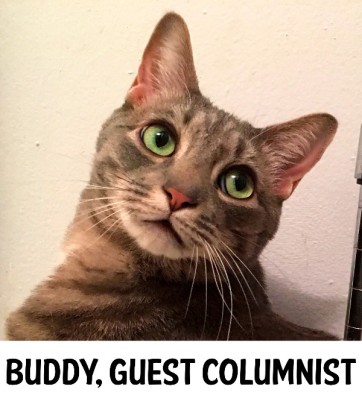
“Is that Buddy the Cat? Oh crap! If it’s him, I’m in trouble! They say he has huge meowscles and is a master of 36 styles of Kung Fu!”
Bridget Moynahan joins the search for Bridget Moynahan
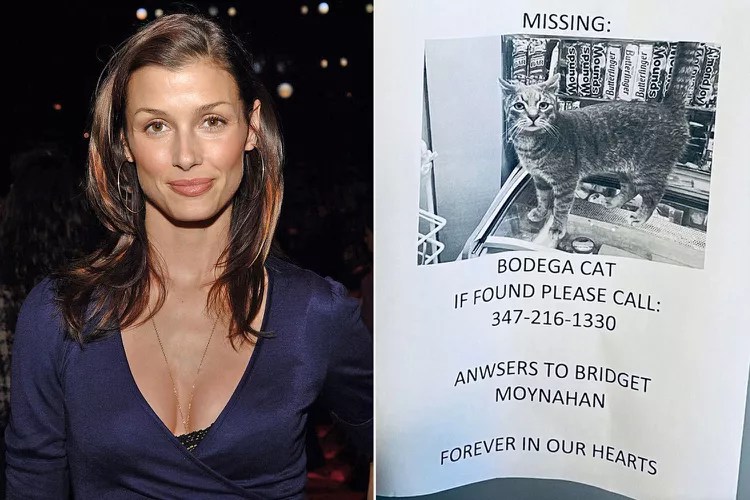
Blue Bloods actress Bridget Moynahan gave a boost to the search for a missing cat bearing her name.
The 51-year-old actress lent her star power to the search by posting about it on Instagram, where she has 345,000 followers.
The missing kitty belongs to the owner of a Manhattan bodega, and spends her days napping on the shelves and being admired by customers.
There are an estimated 10,000 bodegas in New York City, where traditional grocery stores don’t really fit into an urban lifestyle where most people don’t own cars and can’t load up two weeks’ worth of groceries in a minivan.
To keep mice and rats at bay, most of New York’s bodegas have cats. They’re technically illegal, but because having a cat in the store carries the same $300 penalty as having rodents, bodega owners opt for the former. The cats are beloved by New Yorkers, and the city is mostly content to overlook their presence unless there are major health violations.
Get the Army Corps of Engineers 2023 Cat Calendar for free
If you still haven’t picked up a calendar for the New Year, the Army Corps of Engineers has got you covered.
Their 2023 Cat Calendar features magnificent moggies in giant form, scratching, lounging and napping on ships, jetties, dams and dredges.
Click here to download the printable PDF of the calendar.
The 25-pound wildcat was found late on Friday afternoon. Now investigators are trying to determine who freed her and why.
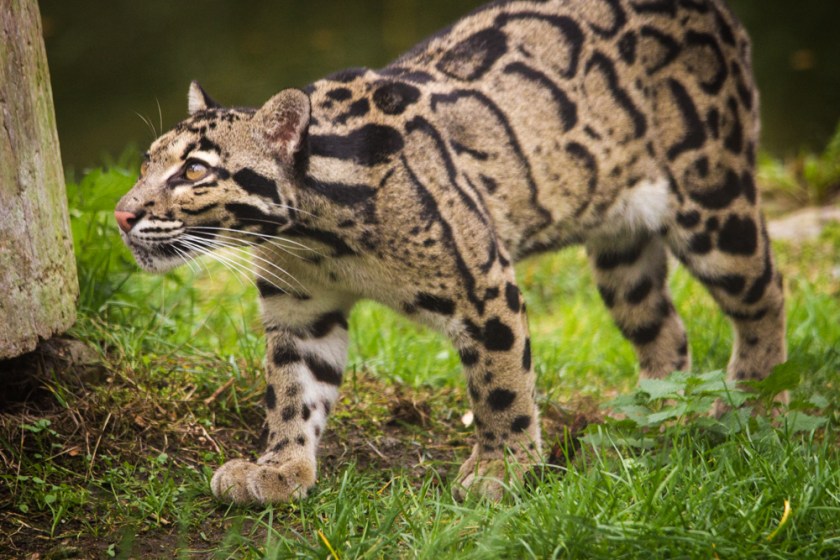
A clouded leopard who went missing from her enclosure was intentionally let loose according to police, who have opened a criminal investigation.
The medium-size wildcat, whose species is native to the foothills of the Himalayas, escaped from her enclosure some time between late Thursday night and Friday morning, prompting a zoo-wide shutdown and a massive coordinated search. During that time, zoo staff emphasized to local press — and in social media posts — that clouded leopards are not aggressive toward people and the escaped cat wasn’t a threat.
She was eventually found safe and unharmed on zoo grounds, hiding in a tree not far from her enclosure, at about 4:40 p.m. on Friday. She was secured within 35 minutes, zoo officials told the Fort Worth Star-Telegram.
But that’s not the end of the saga. Zoo staff say the leopard, a three-year-old named Nova, didn’t escape on her own — a person or persons breached the two-story exhibit by cutting through the mesh fence. Nova’s sister, Luna, lives in the same enclosure and did not leave the area.
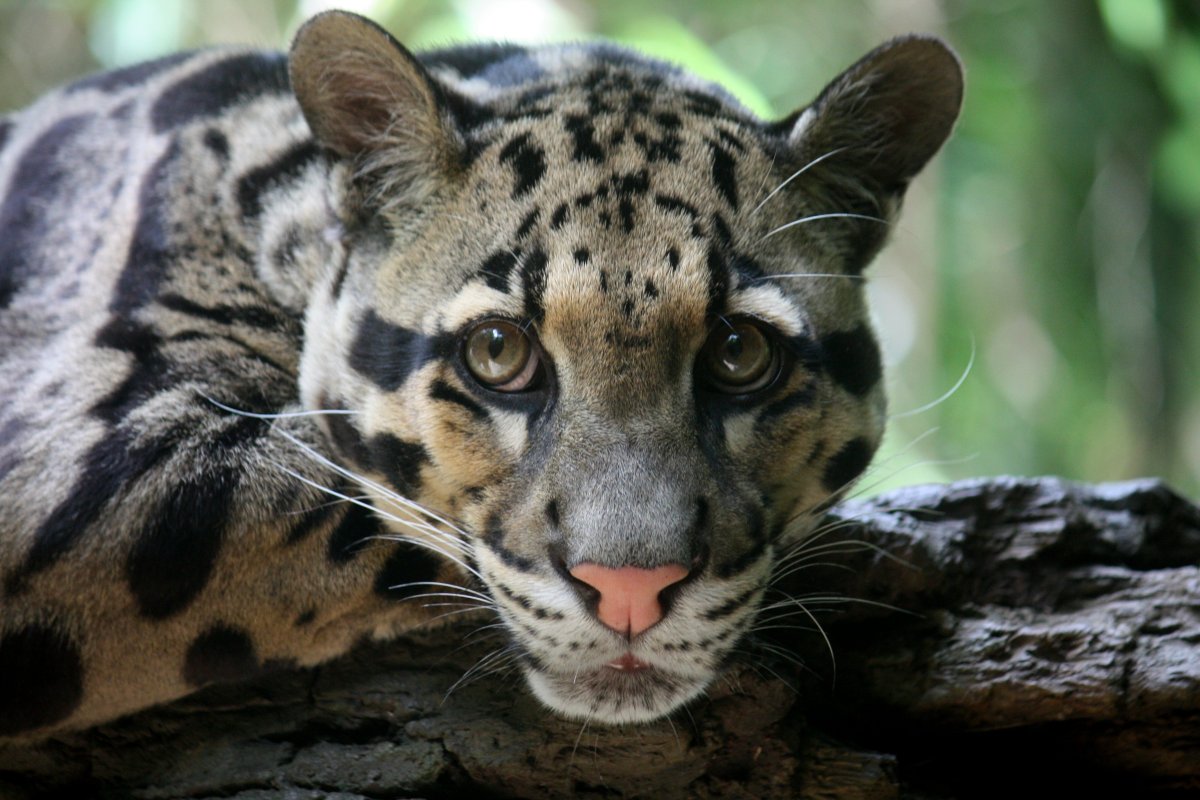
A clouded leopard. Credit: Wikimedia Commons
Now investigators are trying to determine if the people responsible for breaching the enclosure were committing an act of vandalism or intended to take the 25-pound wildcat.
“We found a suspicious opening in the habitat wall in front of the exhibit,” a Dallas Zoo official told reporters on Friday afternoon. “It was clear that this opening was not exhibit failure and it wasn’t keeper error.”
Police are reviewing surveillance footage and looking for clues in the 106-acre zoological park, which is located about three miles south of downtown Dallas and is home to more than 2,000 animals.
“It is their (Dallas Zoo officials’) belief and it is our belief that this was an intentional act, so we have started a criminal investigation,” Sgt. Warren Mitchell of the Dallas Police Department said.
Harrison Edell, vice president of animal care and conservation at the Dallas Zoo, warned against anyone attempting to steal zoo animals.
“This is a cat of conservation concern,” Edell said. “This is not a pet — she’s a critically important member of our family at Dallas Zoo.”
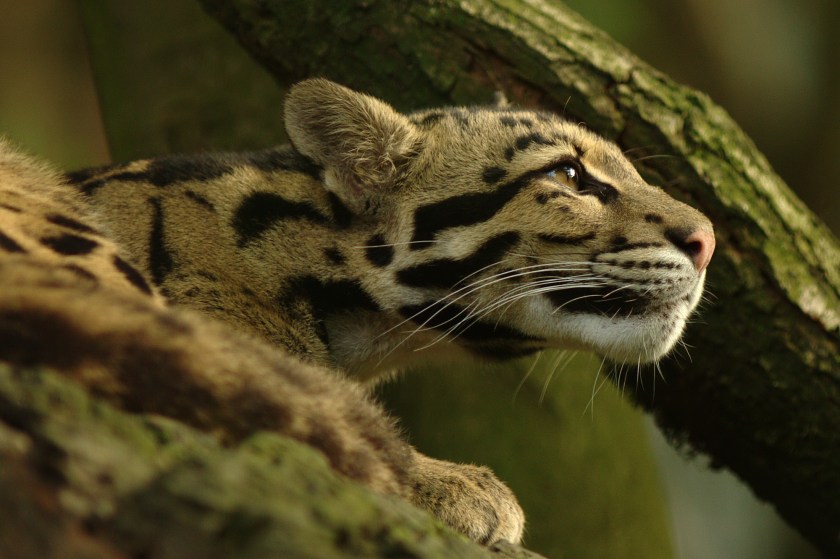
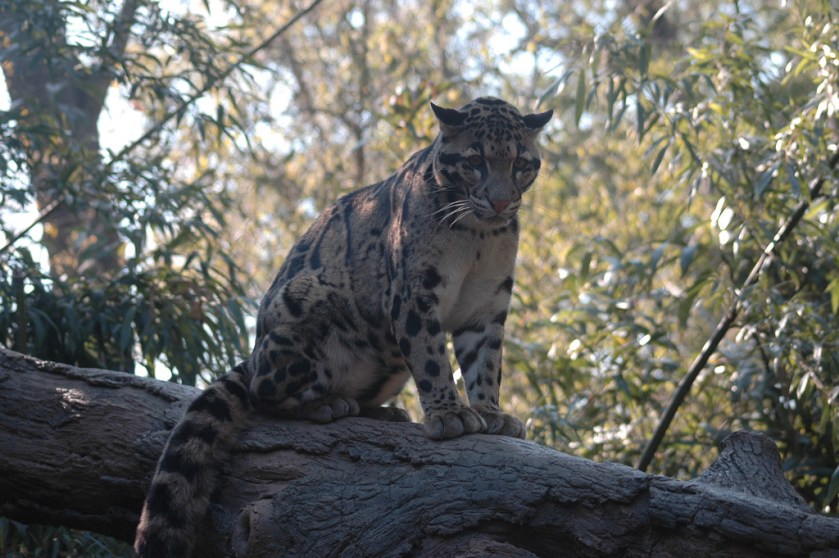
Clouded leopards diverged from a common ancestor shared with big cats, but typically don’t grow to more than 30 or 40 pounds. Credit: Wikimedia CommonsThere are fewer than 10,000 clouded leopards left in the wild. In captivity, the wildcats live for 11 years on average. Credit: Wikimedia Commons
Cats were treasured pets in ancient Rome, and strays can be found living in the ruins of the empire today.
This is only tangentially related to cats, but 1) It’s awesome, 2) It represents one of the best surviving examples of Roman home life, and 3) Cats invited themselves to the party.
The AP has a story and an extensive photo gallery of what it calls “newly restored remains of an opulent house in Pompeii that likely belonged to two former slaves who became rich through the wine trade offer visitors an exceptional peek at details of domestic life in the doomed Roman city.”
The House of Vettii was known as Domus Vettiorum in Latin and its owners, Aulus Vettius Conviva and Aulus Vettius Restitutus, were freed slaves who used their knowledge of wine — probably gleaned from their former dominus — to launch a successful business which propelled them to the economic heights of Roman society.
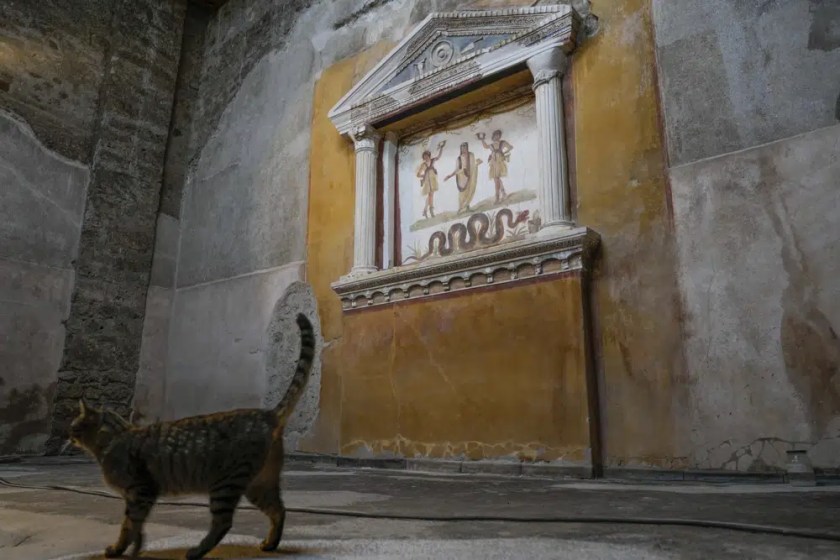
And who do we have there in slide number 16 of the photo gallery? A tabby cat, checking out the restored lararium, a nook where Romans would venerate their “household gods.”
A tabby cat prowls the House of the Vettii in Pompei. Credit: AP
The Vettii spared no expense when it came to hiring the best craftsmen and artists to lavishly decorate their home, covering the walls with scenes from Greek and Roman mythology. It took 20 years to restore the domus to much of its former glory
“They evidently tried to show their new status also through culture and through Greek mythological paintings, and it’s all about saying, ‘We’ve made it and so we are part of this elite’” of the Roman world, said Gabriel Zuchtriegel, a German archeologist who is now the director of the Pompeii archaeological park.
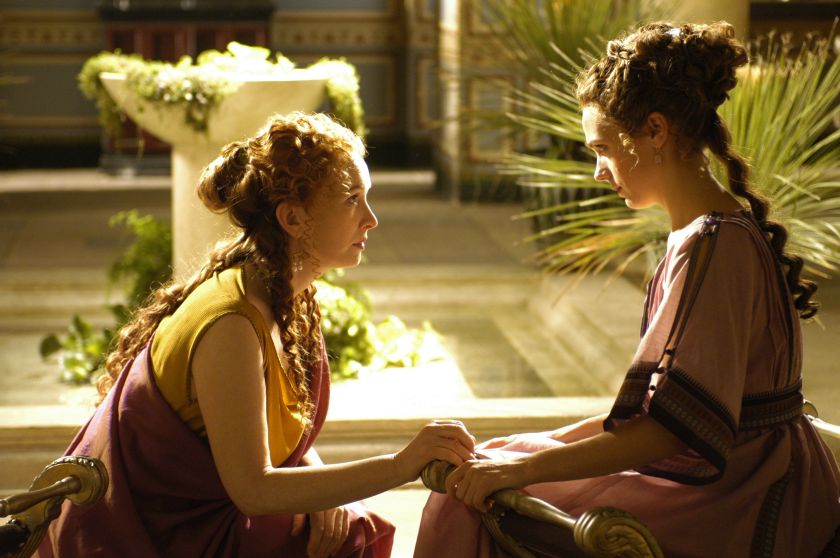
Looking at the restored home, it’s clear shows like HBO’s Rome and Starz’ Spartacus did a good job of portraying what Roman houses looked like on the inside, and how individual rooms were used by the people who lived in the homes as well as their servants:
Well-preserved walls show meticulously rendered scenes in the House of the Vettii. Credit: AP
We tend to think of ancient Greek and Roman buildings as monochrome since the paint has long worn off most structures, but the unique circumstances of Pompeii allowed some homes and other structures to remain largely preserved under volcanic debris since 79 AD.
Here’s a scene from Rome showing the interior of Servilia’s home, giving us an idea of how a wealthy Roman’s house would have looked in contemporary times:
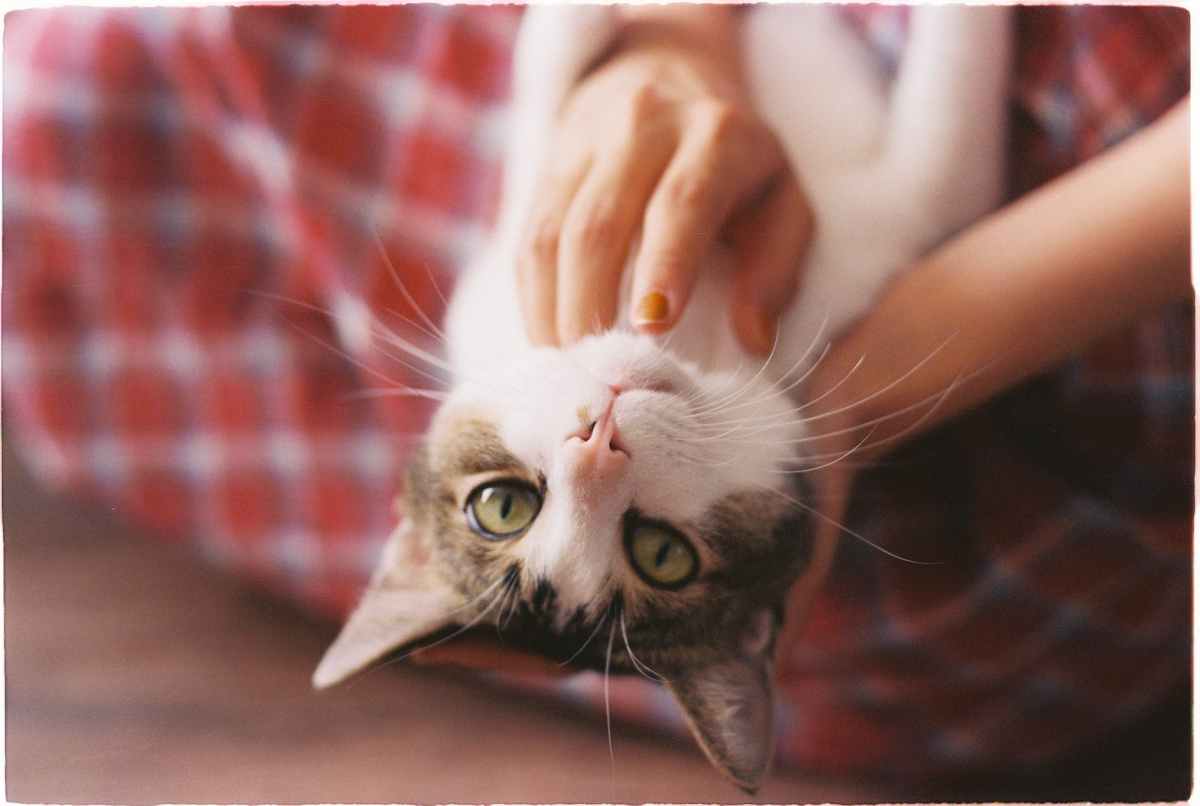
Buddy the Cat wants his human to keep scratching his head, while Buddy the Cat has had enough!
“Don’t Stop! Scritch Me More, Yeah!”
No! No, no, no, no, no! Do not stop! Bring those magic fingers back over here, right above my ears and…yeah!
That’s the good stuff!
Oh man. Down a little. Right there. That hits the spot! In fact, I bet it’ll feel even better when I help you out and lean into the scratches. Oh. I was right, that does feel good!
Hey, where are you…HEY!Who told you we’re done here?
Sheesh, you’d think I nip at you if you pet me too long or something.
You didn’t spend an adequate enough time on my chin yet, and you know I like it when you swing back around for a sort of “greatest hits” and go through the whole rotation again. Now I’m going to assume you don’t need additional instruction, so I’ll just close my eyes and purr away. Don’t stop until the precise moment you should. That’s a good human.
“Don’t You Humans Know When Enough Is Enough?”
All right already, sheesh! The petting was good for like 3.275 seconds, but it got really played out after that, and you just kept going!
Well whose fault is it that I delivered a warning bite? Me, or the person who couldn’t tell when it was clearly time to stop rubbing my head?
What is it with you humans, huh? Learn to read the room. If I want more scritches, I’ll ask for them.
But no. When I was tired of it, you allowed another two tenths of a second to elapse before ceasing all massaging activities. TWO TENTHS OF A SECOND! I should have you flogged for your insolence!
You’ve had years to improve at this, human. That’s thousands of scritches and massages delivered to my chin, my cheeks, the top of my head and behind the ears. What can account for your complete failure to anticipate the exact millisecond the petting should stop?
You disappoint me.
Point-Counterpoint presents two essays taking opposing positions on a topic. Join us again next week, when Buddy the Cat will debate Buddy the Cat on another important topic.
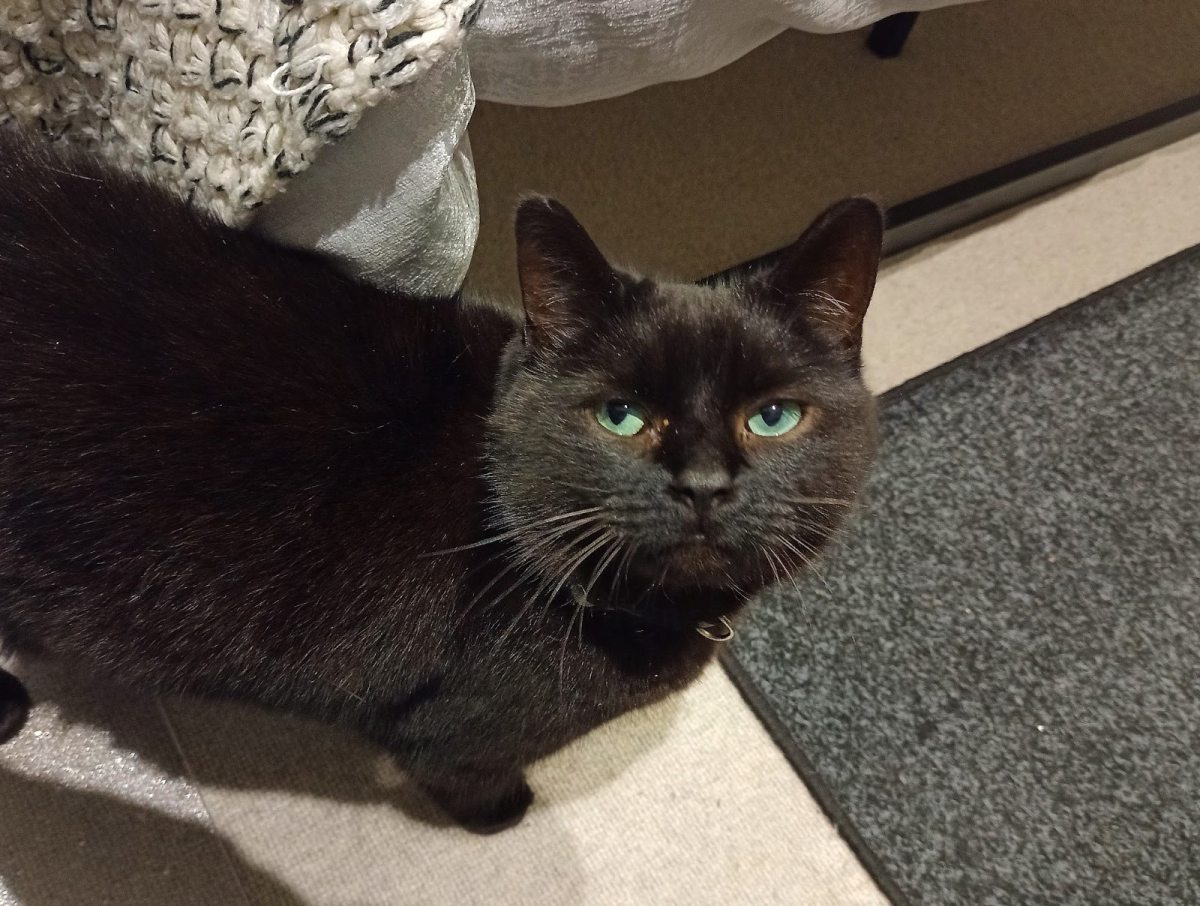
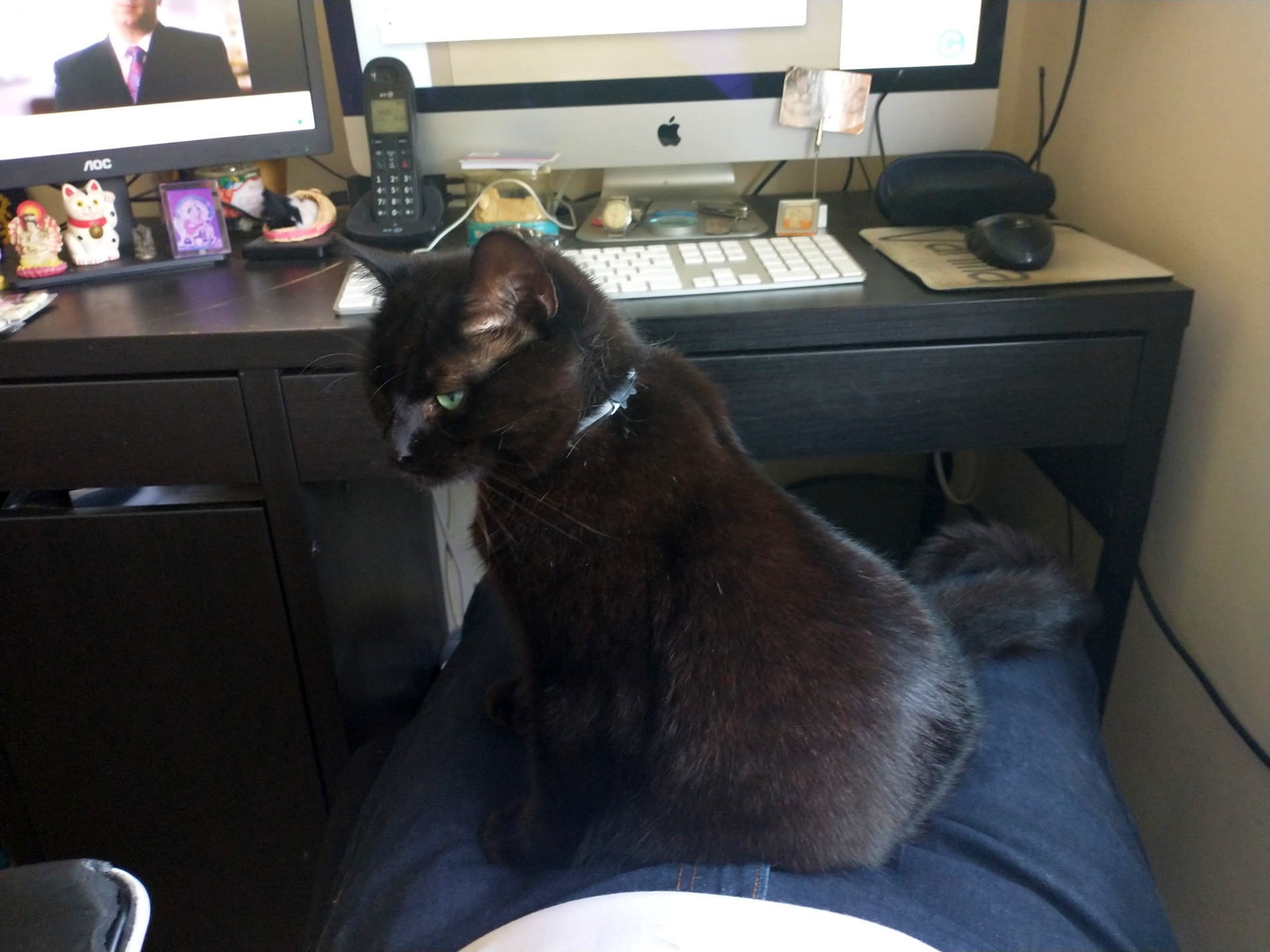
With her mesmerizing green eyes, supreme confidence and strong opinions, Bella has pawed her way into her humans’ hearts.
About a year after John Graham and his wife, Kathleen Birch, adopted Bella the Cat, they noticed she had an acquaintance — a genial neighborhood stray with a white-cream coat and black fur running from his back to his tail like a cloak.
Although she’s territorial like any member of her species and spends much of her time patrolling Grove Park — a quiet London neighborhood tucked into a winding loop of the Thames — Bella expressed no animosity toward the apparent intruder, and in fact seemed to be on quite friendly terms with him.
Graham and Birch, who like to joke that Bella is a clandestine agent of MI5 — Britain’s version of the FBI — dubbed the stray Bertie, and decided he was her field liaison.
“We think Bertie is her Mi5 contact and visits to get updates [before] returning to HQ to report on her field actions and mission status,” Graham quips.
After checking with the neighbors and bringing Bertie to the veterinarian, who said the stray was not chipped, Graham and Birch believe Bertie was likely abandoned by his previous family and eked out a living zig-zagging between homes in Grove Park, depending on the goodwill of neighbors and his own considerable charm for food. So they had Bertie chipped with their contact details about eight months ago, and now field agent and handler have been united under one safe house roof as they continue in His Majesty’s service.
Bertie and Bella even have their own WhatsApp group comprised of their humans and neighbors, who post to let each other know of the feline duo’s comings and goings.
Both cats are a source of great joy for Graham and Birch, who were looking to adopt again two years ago after the passing of their beloved Bets, who had been with them since kittenhood and lived to the ripe old age of 21.
Bella deciding she needs to be a lap cat for a little while in order to supervise John’s work. Credit: John Graham
After contacting a charity they support in Twickenham, the couple went out to meet a cat named Puss Puss at a foster’s home about three miles away.
“We walked in and sat down, and within literally a few seconds, she came out from under a table. My wife immediately fell in love with her as Puss Puss – now called Bella — rolled over and showed her belly with the loudest purrs ever,” Graham recalled. “She walked over to me and looked up with the most beautiful green eyes, allowing pets and scritches instantly. I was totally smitten. Her secret service training on overcoming any resistance was obvious here.”
Not much is known about Bella’s past, which Graham jokes is classified, but the fosters said Bella likely came from a hoarding situation. She bears some emotional scars from those times, making it clear she didn’t like to be picked up and wouldn’t tolerate head rubs. Graham said he thinks Bella may have been struck on the head by the abusive person or people who had custody of her originally, but with patience “she has grown to trust us and love us the way we love her.”
True to her training, Bella came striding out of her carrier that first day without need for coaxing and set about surveying her new headquarters, exploring while noting promising hideouts and lounging spots.
“She immediately checked out the perimeter as do all good Mi5 agents, looked around and began a sniffing and snooping journey for about an hour,” Graham said, “Then sitting in front of us on a low stool, she started shouting loudly, her default way of demanding food. This prompted me into action, offering her different dishes attempting to find her favourite. It turns out that she basically will eat anything.”
Indeed, Bella’s love of food is one of the few things that cause a bit of tension between her and her doting humans. She’s restricted to carefully measured wet food plus veterinarian-suggested “weight management crunchies” and, like many cats, is not shy about notifying her servants when the yums are low or the auto-feeder isn’t dispensing them. (In those instances, Bella hops up onto the bed and approaches the sleeping Graham: “I will get the gentle paw followed by the sharp claw to ensure I get the message to come and feed her immediately.”)
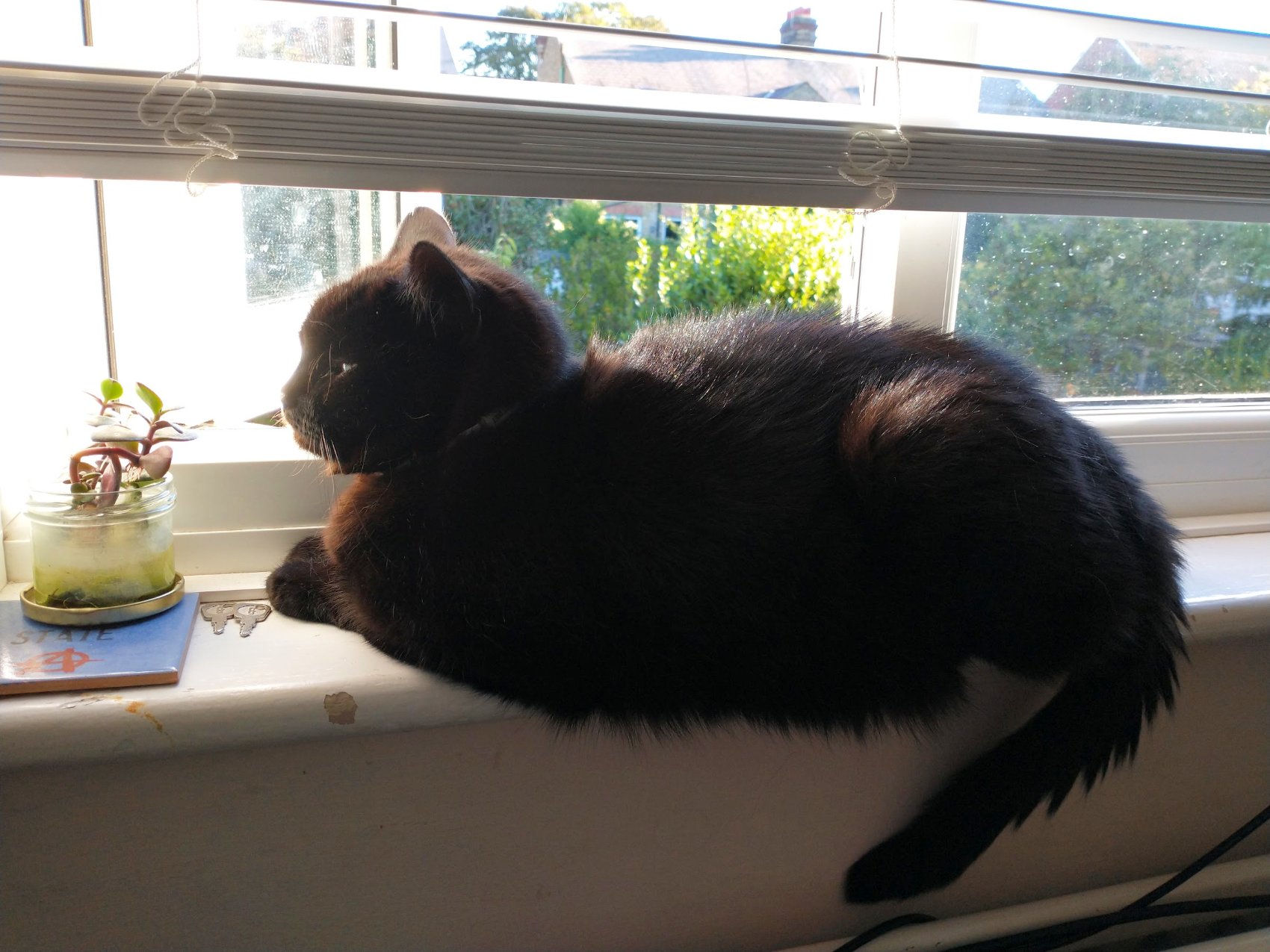
Bella on overwatch duty, making sure Grove Park remains quiet and free of interlopers. Credit: John Graham
Adopting a cat is always a guessing game. Will the cat relax and open up once she realizes she’s safe and has a home? Was he reserved when we met him because he’s been living in a shelter with unfamiliar sights and smells? Will she take to her new home immediately, or will she dive under a couch and remain there for weeks, emerging only to grab a bite from her bowl when no one’s around?
Those questions were immediately settled for Graham and Birch, and Bella’s outgoing personality is one of the things they love most about her, along with her supreme confidence.
“She has it in absolute truckloads,” Graham notes, “and there is pretty much no fear on her part about adventuring anywhere in or out of the house.”
While keeping cats indoors is the norm in the US, as many as nine in 10 caretakers in the UK allow their felines to spend time outdoors unsupervised, encouraging them to establish their territories, explore their gardens (backyards to us Americans) and familiarize themselves with their neighborhoods.
Many US shelters and rescues won’t allow potential adopters to take a cat home if they indicate they’re willing to let the kitty outside, and some even require adopters to sign contracts stating they’ll keep their four-legged friends indoors. UK cat rescues often take the opposite stance. They advise pet parents on how to gradually introduce their cats to the outdoors, offer tips on how to manage their outside time and recommend various pet flap configurations.
The difference is partly cultural and partly practical. While extolling the benefits of allowing cats to roam, UK cat lovers point out that domestic felines rarely stray far from their homes, on average venturing only between 40 and 200 meters (about 130 to 650 feet). They’re curious, which drives them to explore, but also territorial, which keeps them on a figurative leash.
There’s also a marked difference in wild threats to domestic cats. In the US, cats are vulnerable to pumas (also known as mountain lions and cougars), coyotes and a wide variety of birds of prey, from eagles, harriers and hawks to condors, osprey and even some larger species of owl. The UK does not have pumas, despite local legends to the contrary, nor does it have coyotes. Foxes, the smaller cousins of coyotes, and some birds of prey do pose a threat, but not to the extent that the wildlife of the Americas does.
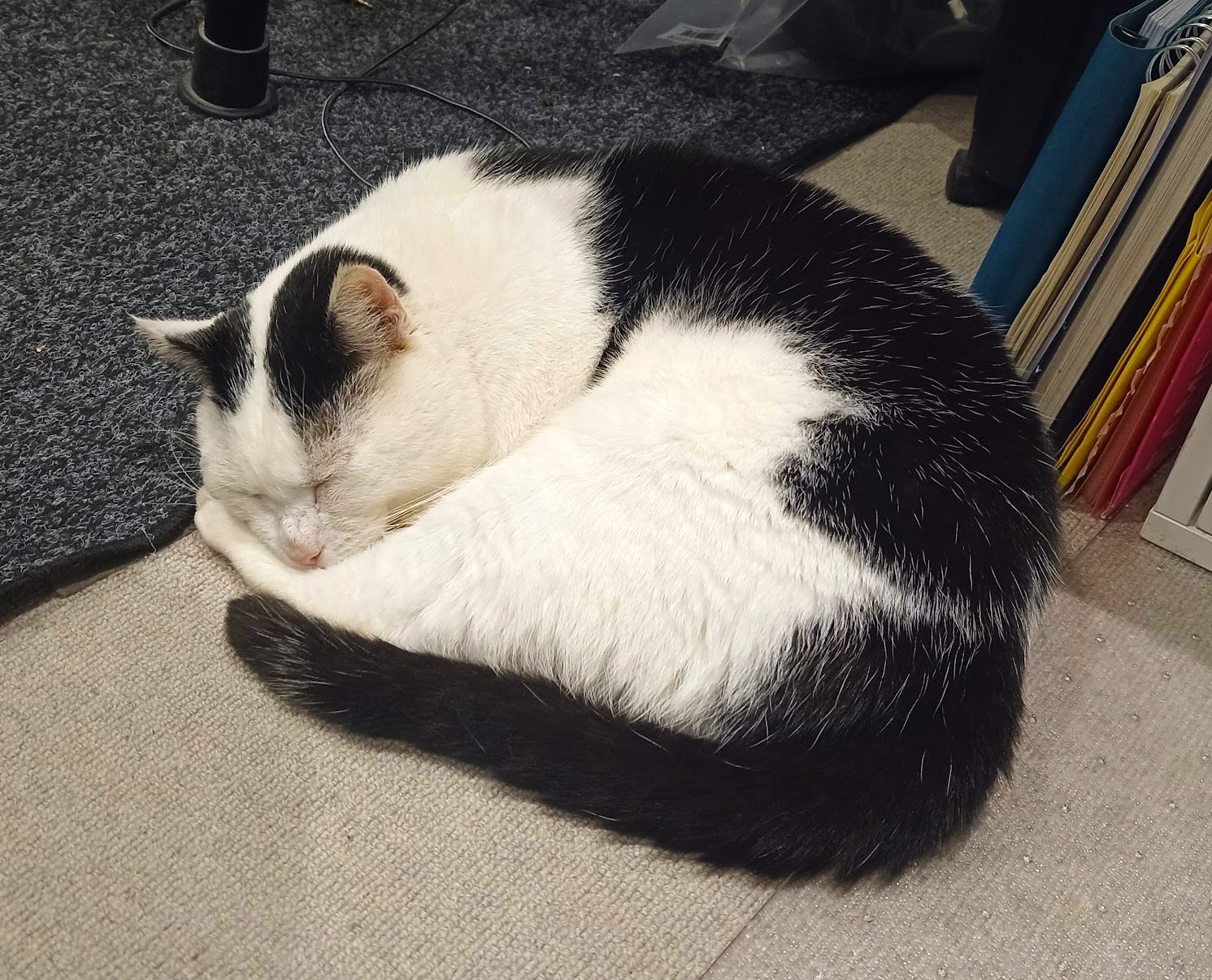
“Yes, I’ll just settle down here for a nap whilst I wait on your report to HRH.” Bertie joined Bella about eight months ago and now they both live under one roof. Credit: John Graham
For Graham, allowing his cats outside fosters their independent streak and allows them — or Bella, at least — to exercise their hunting impulses. Bertie isn’t known for his predatory prowess, but Bella is a pro at catching mice.
The local neighborhood is quiet, traffic is strictly limited to 20 mph, and the neighbors know each other well, often using their WhatsApp groups to track their kids in addition to cats.
In fact, if Bella could speak, Graham reckons she’d thank him for providing a home in a tranquil locale — and for never closing doors in their home.
What else would she say?
Graham says it’s obvious: “Glad that you understand the difference between my requests and my orders – you took a while.” She’d also likely chide the couple on their ineptitude as hunters, declaring Graham and Birch “are both rubbish at catching mice and rats despite how many times I show you how to do it.”
For Graham, the managing director of a London brand agency, and Birch, a skin care therapist, sharing their home with cats feels natural, and they cherish the unpredictable nature and playfulness of their feline friends. Cognizant of the fact that black cats are less likely to find homes, they prefer adopting melanistic house panthers like Bets, their previous cat, and Bella.
“I totally love all animals but as residents in our house, cats fit perfectly being clean, highly intelligent and able to manipulate any situation with an expression or display of love,” Graham says. “My favourite thing about Bella is when she surprisingly sits on my lap and the mystery when she hides in unlikely places causing me to rush around desperately trying to find her, not coming out even when I am shaking a treat bag.”
Bella will allow the game to drag out “until she decides to appear with her ‘I win’ look and swagger.”
Feline love is often hard-won, but that makes it worth it. In discussing Bella, it’s clear Graham lives for the moments when the independent-minded kitty decides to let him know how much he means to her by sleeping at the food of the bed, playing her hide-and-seek games and climbing into his lap.
Bella and Bertie may not be regular lap cats, but that’s okay with Graham and Birch.
“So there you have it,” Graham said. “Two cats that come and go as they please with occasional signs of affection, but get nothing apart from permanent love and affection from us.”
Bella is serious about her food. Credit: John Graham
Bella’s favorite toy, fittingly, is a mouse. Credit: John Graham




 “Don’t Stop! Scritch Me More, Yeah!”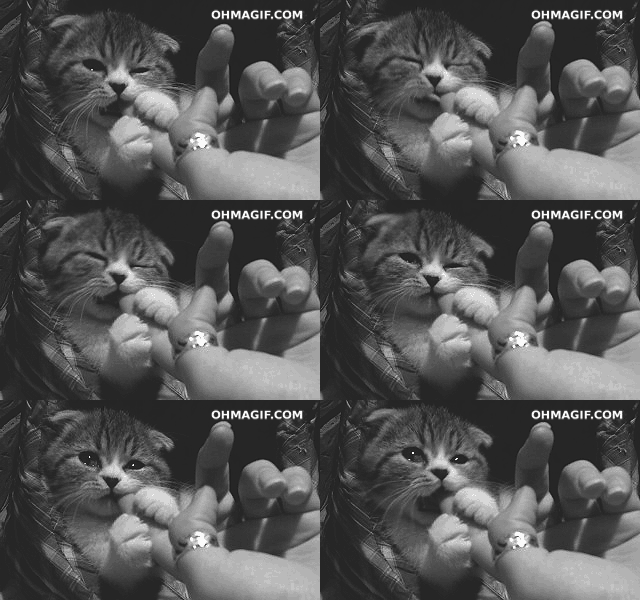


 Pain In The Bud