Innocent Cats Hit In Drive-By Spraying As Brutal Catnip Wars Escalate

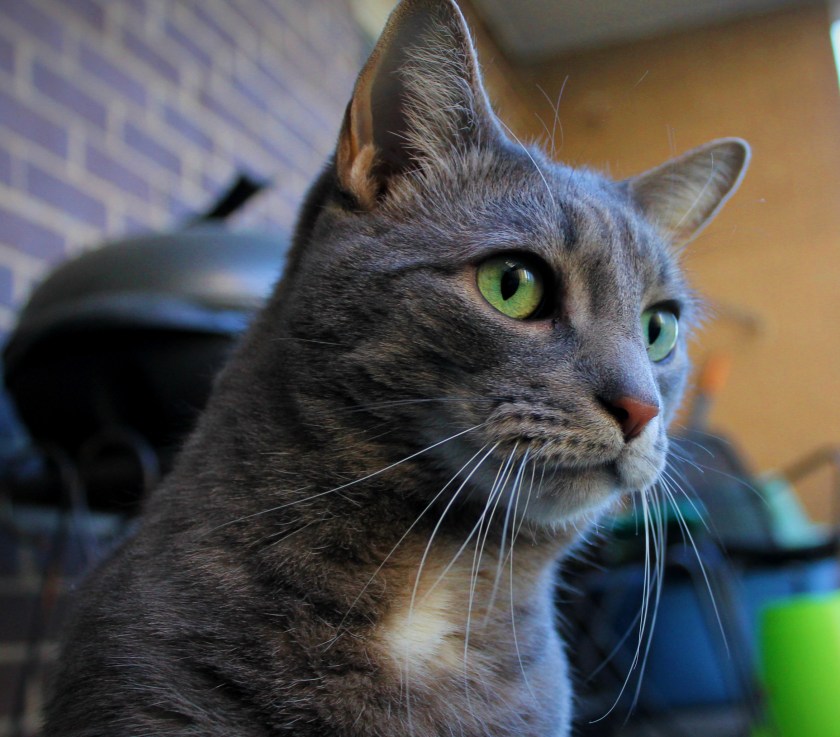
The Los Gatos Catnip Cartel muscles in on Buddy’s territory.

NEW YORK — At least five cats — including two kittens — were caught in the cross-spray of a drive-by urinating on Tuesday night, the latest innocent victims of an ongoing war between niplords vying for territorial control to push their product.

Lil Tubbie, a local tabby, said he was out for an after-kibble walk when he found himself in the middle of full-fledged gang warfare.

“The usual lowlifes were hawking their can-bags of nip on the street when a minivan came to a screeching halt and a half dozen Los Gatos just poured out from the back seat, screeching like bats out of hell,” Lil Tubbie said. “They were ruthless, pissing everywhere to mark their territory. I saw one poor kitten get sprayed in the face. It was chaos.”


catdriving4
The Los Gatos Catnip Cartel is notorious for its drive-by sprayings.

There was no warning an attack was imminent, and authorities said they were taken aback by the strike’s brutality, potentially marking an escalation in a catnip war that has been raging for months.

“This is not the first time the Los Gatos have strong-pawed their way to acquiring new territory,” Pawlice Chief Mr. Snuggles said. “But in the past, gangs and cartels observed a code. Now any innocent cat just going about their business in public runs the risk of getting blasted in the face or drenched by marauding gang members.”

Like their wild forebears, cat cartel members usurp new territory by urinating on it, marking the boundaries of their domains with the acidic, ammonia-like scent of kitty pee.

Gangsta Cat
“Whatchu lookin’ at?” Fat Tony Purrtellini, capo of the Cattazio Crime Family, is famous for his ruthless drive-by urinatings against rival nip families and cartels alike.

Buddy the Niplord, who runs the area’s most powerful catnip cartel, is expected to retaliate against Los Gatos’ latest power play, analysts said.

“If Buddy doesn’t retaliate, he looks weak,” said Claws Furson, a feline criminologist at John Jay College of Criminal Justice in Meownhattan. “Police are on high alert, warning kittens to stay inside while they brace for the next violent outburst. The catnip wars take a real toll on our communities.”

Avon Meowsdale, a powerful niplord who was taken down by Buddy’s cartel in 2011, was subjected to “kibble boarding,” a form of torture in which the feline victim is strapped to a table underneath a sieve and slowly driven insane by a steady drip of kibble.

catssnapping
Gang cats claim an alley from which to sling potent catnip.

The Los Gatos are known for their own brand of torture, famously subjecting cartel boss Pawblo Escobar to “El Gruñido” (The Growling), a form of torture in which the victim is placed in a cage and forced to watch as cats around him dine on delicious wet food.

Both kibble-boarding and The Growling were condemned by the UN High Commission on Feline Warfare, categorizing both methods as war crimes prosecutable by The Hague.

In the meantime, neighborhood cats have taken to wearing rain coats to protect themselves against random scent-marking drive-by sprayings. Meowmoud Mohammad, a Persian cat who owns Feline Fashions in Manhattan, said he can’t keep them stocked.

“I suggest pre-ordering to reserve a rain coat when the next batch arrives,” Meowmoud said. “With all these gangs trading urine salvos, it’s the innocent who suffer. Don’t let yourself get caught in the cross-stream without protection.”

Cat Gang
Cats loyal to Buddy the Niplord patrol their territory on Tuesday.

These Are The Top Male Cat Names For 2020

Royal names are particularly popular for male cats.

Who knew there were so many Olivers?

The Dickensian moniker tops a new list of 2020’s most popular male cat names, followed by Charlie and Leo, two names with regal connotations. You can’t throw a dart at a history book without hitting a King Charles, while Leo conjures images of the famed Spartan King Leonidas as well as panthera leo, aka the African lion, often mistakenly called the king of the jungle. (Tigers, not lions, occupy jungles. They’re also the largest cats on the planet.)

Rounding out the royalty-themed names are Simba (at number seven), the eponymous Lion King, Loki (at eighth-most-popular) of son-of-Odin Asgardian fame, George (10) and Louie (13), as in Louis XIV, le Roi Soleil, the Sun King of Versailles.

Here are the top 24, which might seem like an arbitrary number until you read through the list:

  1. Oliver
  2. Charlie
  3. Leo
  4. Max
  5. Jack
  6. Milo
  7. Simba
  8. Loki
  9. Oscar
  10. George
  11. Ollie
  12. Jasper
  13. Louie
  14. Simon
  15. Henry
  16. Dexter
  17. Toby
  18. Winston
  19. Gus
  20. Finn
  21. Kitty
  22. Tiger
  23. Rocky
  24. Buddy

Yep. Buddy’s not sure if he should be insulted at the lack of recognition, or happy that the feline Buddies are an apparently exclusive club.

The list was compiled by Rover.com, a site that allows people to connect with pet sitters and dog walkers. The list is based on the most popular names of cats belonging to the site’s registered users.

8B6B08ED-A707-47A0-80DE-0E66455E6C2C
Buddy: A name reserved for only the most sophisticated and handsome cats.

Can You Spot The Cat In This Photo?

There’s a kitty hiding among the stuffed animals in this photo…

Now for another edition of Cats Hiding In Plain Sight. This time it’s a domestic cat instead of a leopard, and the landscape is a bed full of stuffed animals instead of the wild outdoors.

The challenge here is to find the fluffy cat amid all the other fluffy things.

Unlike the hidden leopard photo, which drove me crazy, I spotted the cat immediately in this one. Can you?

cathidden
Where’s the cat at?

The cat’s name is Obi and he likes to snooze in the pile of stuffed animals. His favorite is a small hedgehog plushie that he likes to retrieve from the pile and carry with him around the house, owner Mark Carney said.

“We don’t think Obi is hiding per se,” Carney told The Dodo. “When we spot him, we get no reaction, so it’s not a game, either. It is just a spot he likes to sit.”

There may be another reason little Obi retreats to the stuffed animal-bedecked bunk: The family recently adopted a new kitten, and Obi may be trying to earn a reprieve from all that kitten energy.

Dear Buddy: Should Cats Be Concerned About Coronavirus?

Buddy puts his considerable detective skills to good use, uncovering the link between Corona virus and Corona beer.

Dear Buddy,

My humans have been stressed out lately, rubbing every surface with weird-smelling wipes and going on incessantly about something called the Coronavirus. I’m starting to get a little worried now. What is the Coronavirus, and do we cats have to worry about a disease that infects lesser animals like humans?

– Unsure In Utah


Dear Unsure,

I’d never heard of that there Coronavirus, so I did a little research. It turns out that my Big Buddy has six (!) Coronas in the refrigerator and is either unaware they carry viruses or doesn’t care.

Actually there may be more than six. I got kinda distracted when I found the cheese and helped myself to some Gouda.

So I went on the Internet, because everyone knows only true things are allowed on the Internet, and I found this:

B5300A68-F834-476F-BCEA-2CAEE493E6ED

Makers of Corona report £132,000,000 loss as a result of coronavirus

Also, the search term “Corona beer virus” is trending, so there are people who are smart like me who have also made the connection:

6C554D3A-181A-468C-8810-827A5172E214
Searches for “Corona beer virus” and “Coronavirus beer” have spiked sharply over the past month, Google Trends shows.

I also looked at the most trustworthy source, Wikipedia, and it says Corona is a beer made in Mexico.

I’m not exactly sure whether Mexico is a city or a province of China, but I heard some humans saying Corona Virus originated in China, so I can tell you for sure that Corona Virus started with Mexican Chinese people drinking Corona.

So it is my informed and professional opinion that we felines are safe from Coronavirus as long as we do not drink Corona, and as long as our humans don’t put Corona beer in our water bowls.

Your friend,

Doctor Buddy, MD

8903F955-D9A3-49B4-9F5A-A484425A3C8F

No, A Study Did Not Conclude Cats Kill 20 Billion Birds And Small Animals Yearly

Talk to birders, casual conservationists or anyone who says they’re worried about the ecological impact of cats on native bird and mammal populations, and without fail they’ll bring up The Study.

Yeah, that one: A 2013 study, published in Nature Communications, that claimed cats kill “billions” of prey animals each year in the U.S. alone — including 3.7 billion birds and up to 20 billion small mammals in the contiguous states.

What activists won’t acknowledge is the fact that there are fatal flaws in the research, flaws that have been repeated in a new study claiming cats kill 10 times as many small animals as wild predators.

Let’s break it down:

The researchers don’t actually know how many animals cats are responsible for killing. Both the 2013 Nature Communications study and the 2020 Animal Conservation study rely on owner questionnaires to estimate the number of animals pet cats kill outdoors and to assign numerical scores to their cats’ “hunting skills.” In other words, the study authors are relying on people who have no idea what their cats are doing outside to give them supposedly accurate figures on how many birds, rabbits and reptiles little Fluffy and Socks kill every year. As for people evaluating the hunting skills of their cats, how exactly do they do that? Do they consult nonexistent scoreboards? Do they find a dead mouse or two and conclude that Socks is the GOAT hunter?

The people who took the surveys were self-selected. These aren’t random samples. The questionnaires were given to people who actively volunteered to participate in the studies.

catbird4
Friend or snack?


  • In both cases, researchers supplemented their questionnaire data with estimates of “additional” animals killed by cats. Or to put it bluntly, the research teams invented numbers and plugged them in. They’ll claim they arrived at those numbers via analysis, but again, these are studies that rely on owner questionnaires for the bulk of the predation data. Any conclusions drawn from that data are automatically suspect.
  • The 2013 study was centered around a meta-analysis of earlier studies, not fresh data. For the numbers they didn’t have, researchers derived figures from older published studies. For example, they added billions of “kills” to the tally and attributed those phantom kills to “unowned cats.” The problem? No one knows exactly how many stray and feral cats roam America’s streets and countrysides, a fact the research team admitted in the 2013 study: “no empirically driven estimate of un-owned cat abundance exists for the contiguous U.S.,” they wrote.
  • The best estimates claim between 20 million and 120 million feral and stray cats live in the contiguous U.S. That’s a spread of 100 million! How can a research team estimate how many prey animals are killed by cats when they can’t even get a fix on the cat population? The numbers matter: If there are only 20 million ferals and strays, each of them would have to kill more than 1,000 animals a year to account for the study estimates.
  • Headlines trumpeting the 2020 study say it’s based on GPS data, but that’s only partially true. Yes, the team used GPS data from a small number of cats belonging to self-selected study participants, but that data tells them nothing about how many animals those cats are killing. The GPS data only indicates where cats go when they wander, not what they do. In this study, as in the last, researchers relied on questionnaires, which in turn assumes cat owners have exceptional memories and can account for everything their furry friends do outdoors when no one’s watching them.

The stakes are high, as NPR noted in a story about the 2013 study: The resulting headlines are repeated as gospel in newspapers across the country and on countless news sites, which in turn influences how people feel about cats. They influence politicians and proposed laws as well, with several countries looking to ban outdoor cats.

Buddy's claws
One cat who has zero kills: “I am NOT an inept hunter! You don’t want to tangle with these talons, bro.”

Nuance, such as the 2013 study’s admission that an unknowable number of animals are killed by “collisions with man-made structures, vehicles [and] poisoning,” is usually left out of those stories.

After all, no one’s seriously proposing an end to the automobile industry despite studies claiming untold billions of animals die as roadkill annually.

A quick Google search turns up hundreds of articles with breathless headlines like To Save Birds, Should We Kill Off Cats?, The Moral Cost of Cats, and Cat Owners Turn Blind Eye To Pets’ Violence.  There are alarmist books, too, like the hysterically-named Cat Wars: The Consequences of a Cuddly Killer.

In some Australian territories, authorities have open bounties offering $10 for the scalps of adult cats and $5 for the scalps of kittens. Is this what we’ve come to? Killing baby animals based on hysteria over bunk science?

“It’s virtually impossible to determine how many cats live outside, or how many spend some portion of the day outside,” Wayne Pacelle, former president of the Humane Society of the United States, told NPR at the time. The scientists “have thrown out a provocative number for cat predation totals, and their piece has been published in a highly credible publication, but they admit the study has many deficiencies. We don’t quarrel with the conclusion that the impact is big, but the numbers are informed guesswork.”

And that’s the important thing here: Instead of calling for a mass culling of cats based on wild estimates of their environmental impact, we should be working cooperatively on solutions to curb their opportunities to hunt, starting with simple measures like keeping cats indoors.

We don’t need another study with wild estimates of feline impact on small wildlife. What we need are smart plans and the will to implement them as a society.

(First image credit Earth.com. Second image credit CatsAndBirds.ca. Third photo is Buddy, the Inept Hunter.)