Catnip dealers defend their territory from canine encroachment.
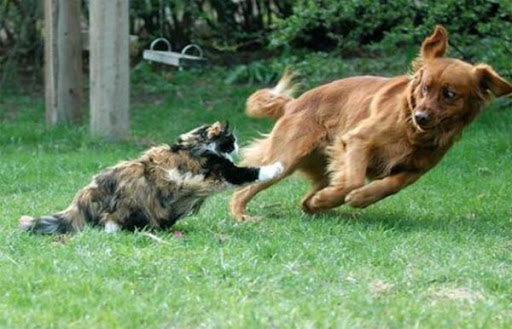
TAMPA — An intrusive dog learned his lesson on Monday after a quartet of Los Gatos ‘nip dealers asserted ownership of a street corner with a biblical smack, new video shows.
The pooch approached timidly, his tail wagging as he tried to buy a can-bag of catnip.
“Hey guys, uh, can I have one bag of Meowie Wowie, please?” the dog asked.
“We don’t got none of that here, ese,” one of the Gatos replied. “Keep walking, homes.”
The dog did as he was told and turned around with a dejected sigh, walking a few paces away before turning back.
“It’s not for me, guys,” he pleaded. “I’m just trying to help out a friend who needs to get well. Come on, I have a whole can of Fancy Feast chicken…”
That’s when one of the Gatos leaped in the air and delivered a hard smack, sending the canine running with a sharp yelp.
“He ain’t gonna make the mistake of coming here again,” a spokescat for Los Gatos said. “We don’t deal to no mutts.”
Rabbit the stray seemed to know which humans would help him out.
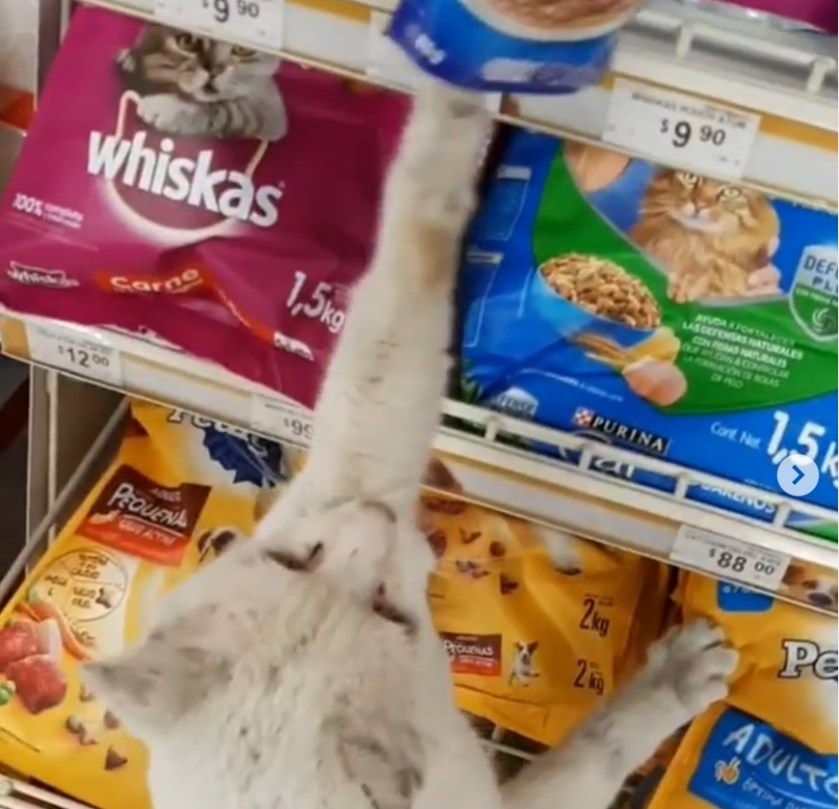
The street-savvy cat would wait in front of a convenience store, sitting patiently on the sidewalk until he saw a person who would give him a smile or a pat on the head. Then, with Kitty Mind Control Mode enabled, he’d lead his new human minion into the store, guide them to the pet food aisle, and point to his favorite food.
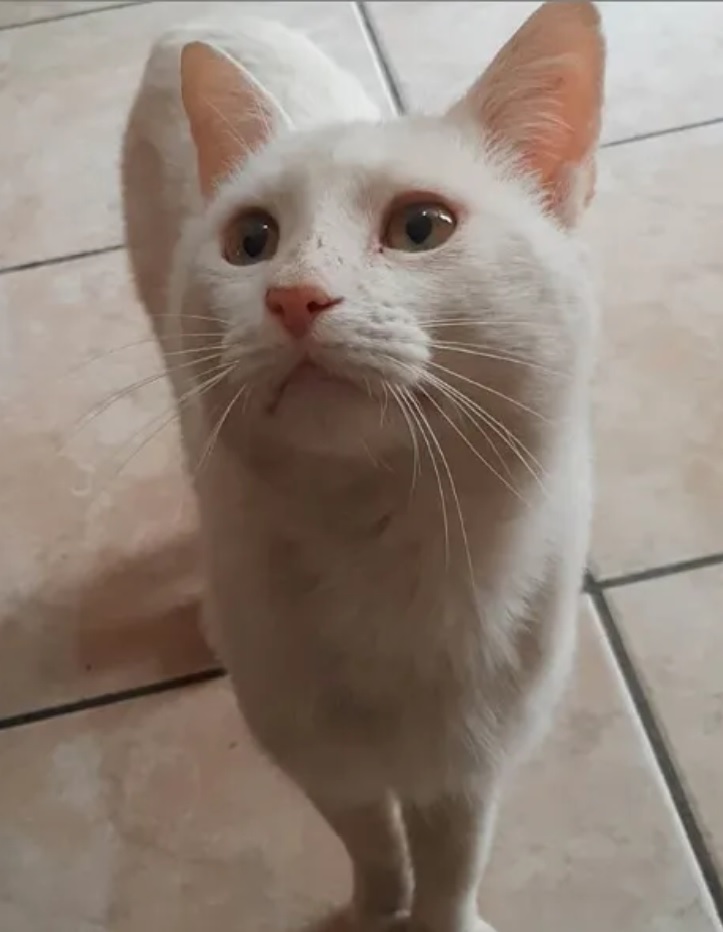
When I saw this, my reaction was sadness: From his familiarity with people to his preference for store-bought cat food, Rabbit was clearly someone’s pet, either lost or abandoned. He’d faced hardship. He was skinny, his snow white fur was dirty, and there was only a stump where his tail should have been.
Thankfully, this story has a happy ending.
Tania Lizbeth Santos Coy Tova, a 33-year-old teacher who lives in Mexico, had encountered Rabbit a few times before. She decided to ask about the cat.
“Every time he came to the store, we greeted each other and did the same, he guided me to the shelf and chose the food he wanted,” she said.
Rabbit inside the store, pointing to the yums he wants.
The managers of the store explained to Tania that the stray always did the same thing with customers. He understood specific hours and waited until a kind passerby would take pity on him and purchase some food.
Santos Coy Tova wanted to see if Rabbit had a home, so she and a friend followed the friendly cat after encountering him one day. When Santos Coy Tova saw the little guy return to an abandoned house, she decided he’d be coming home with her.
For those of us interested in animal intelligence — and feline smarts in particular — this story is fascinating.
Rabbit knew where cat food was purchased, was good enough at reading human body and facial language to reliably find friendly people who were willing to help, and he knew which package his favorite food came in. In addition, he knew that pointing to the package would draw a person’s attention to it.
He wouldn’t have been able to pull that off without the ability to plan ahead and think in the abstract. He also understood the food had to be purchased, or at least that a human had to get it for him. In the video he doesn’t just leap up at the package and take it, he points and looks back toward his person. That also shows he possesses theory of mind, that he understands humans and other animals have a subjective point of view.
This isn’t happening in a research lab environment, true, but it never could have. These are a unique set of circumstances showing cats understand more than they let on — a lot more.
A much healthier-looking rabbit in his new home. Great job, little guy!
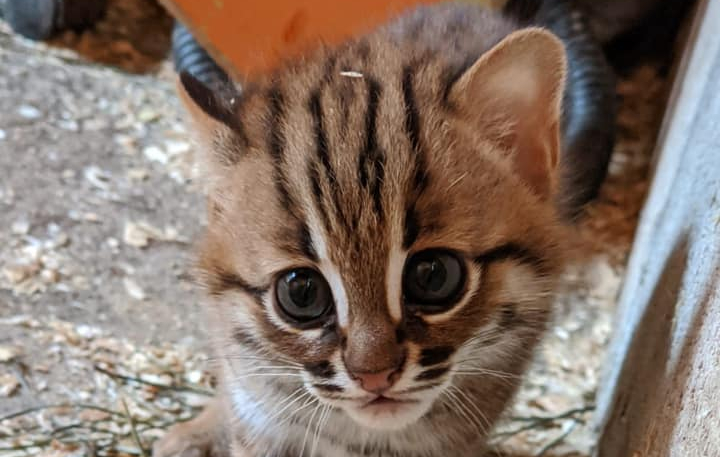
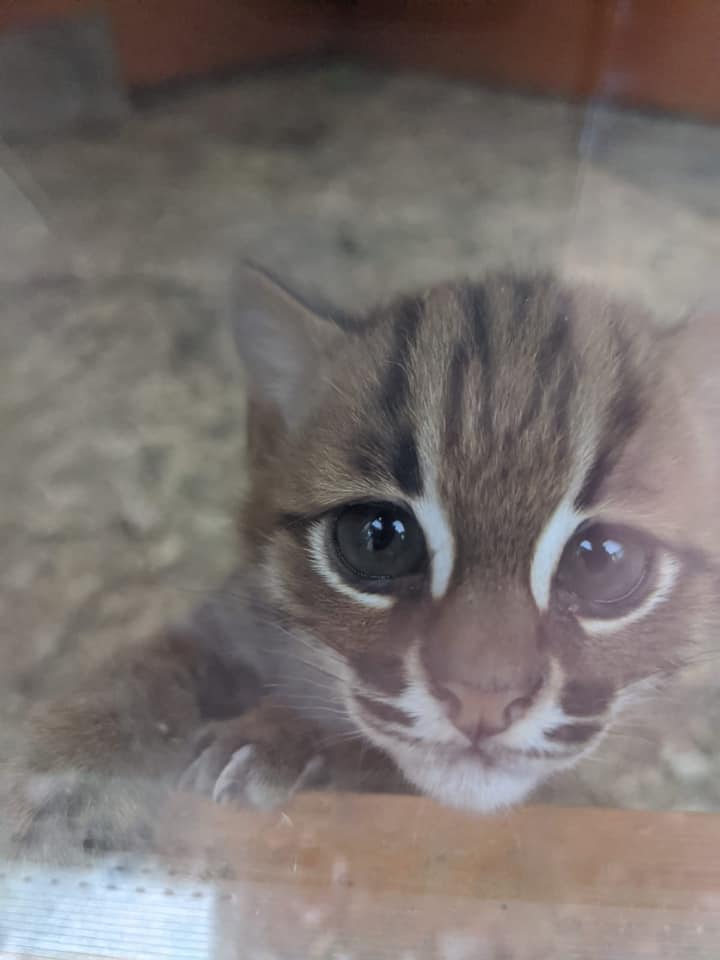
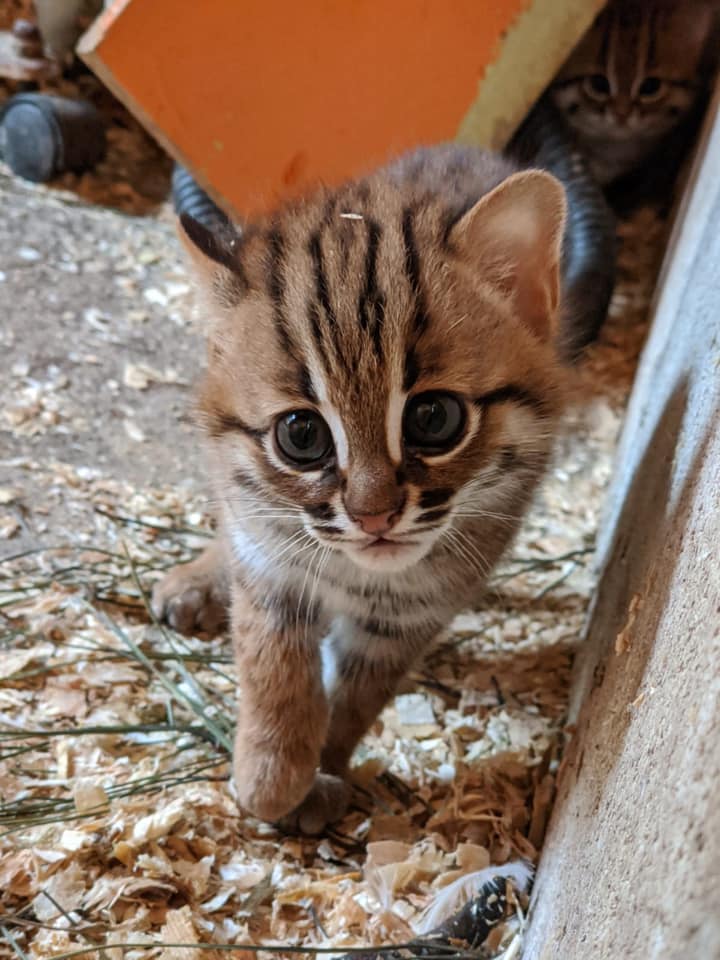
“They have only recently been spotted out of their den and seem to be getting more curious each day. They both seem very healthy and have started to show a little bit of personality,” a spokesperson for the sanctuary told the Independent. “They’ve been giving our very small team a lot of joy during this all this uncertainty and put a smile on our faces each morning.”
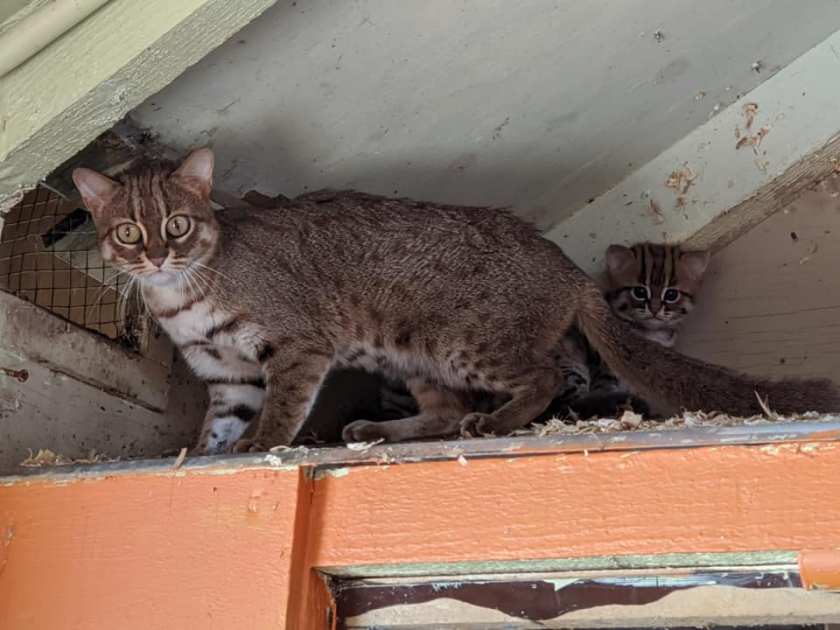
Mom cat keeps a close eye on her kittens. Credit: Porfell Wildlife Park and Sanctuary
Their mom (pictured above) has been so protective of her babies that staff at the sanctuary haven’t gotten close enough to determine the gender of the kittens.
Rusty spotted cats are among the smallest felids in the world: As adults they max out at between 2 and 3.5 pounds, with a body between 14 and 19 inches. That’s about a third the size of a typical domestic cat.
Along with black-footed cats, who are about the same size, they’re the tiniest of the entire feline family.
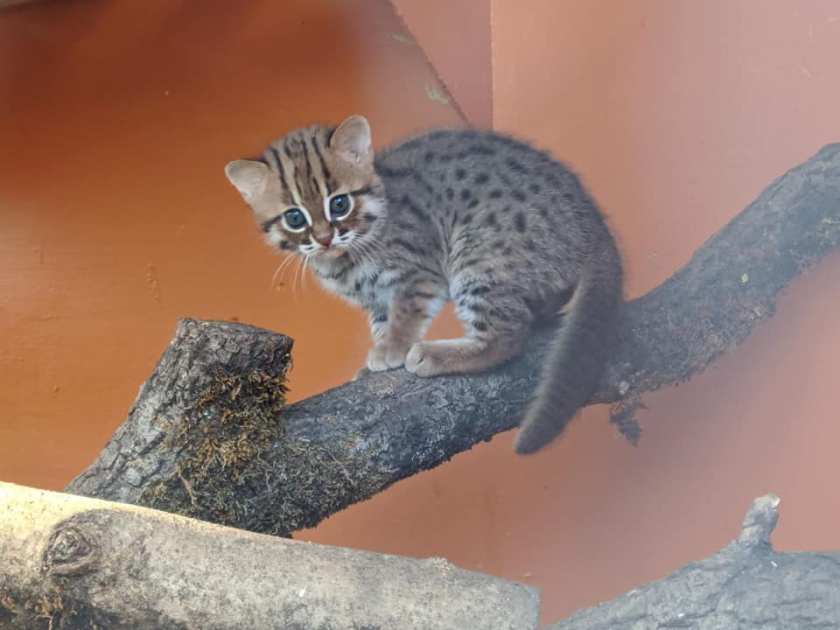
One of the kittens ventures beyond the den to explore. Credit: Porfell Wildlife Park and Sanctuary
Rusty spotted cats range in parts of India and Sri Lanka, but like so many other wild animals, they’re threatened by habitat loss and fragmentation. They’re famously elusive, difficult to photograph or film in the wild, and the Porfell sanctuary says there are only about 50 of them in captivity around the world. The sanctuary is a participant in a breeding program to help conserve the species.
Like so many other sanctuaries and wildlife refuges, Porfell is hurting due to the SARS-CoV2 outbreak. You can support their efforts via GoFundMe.
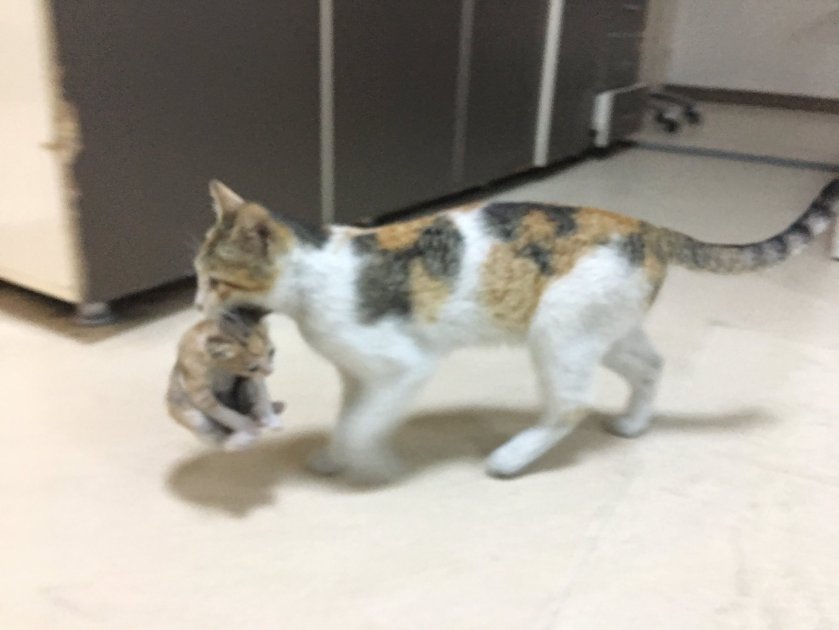
Buddy and I were a bit skeptical when we first heard the story of a cat who padded into the emergency room of a hospital, carrying her kitten by the scruff of the neck, to plead for help for the little one.
The story first appeared on Reddit without any details, but we were able to track down some of the people involved to fill out the narrative and answer some questions.
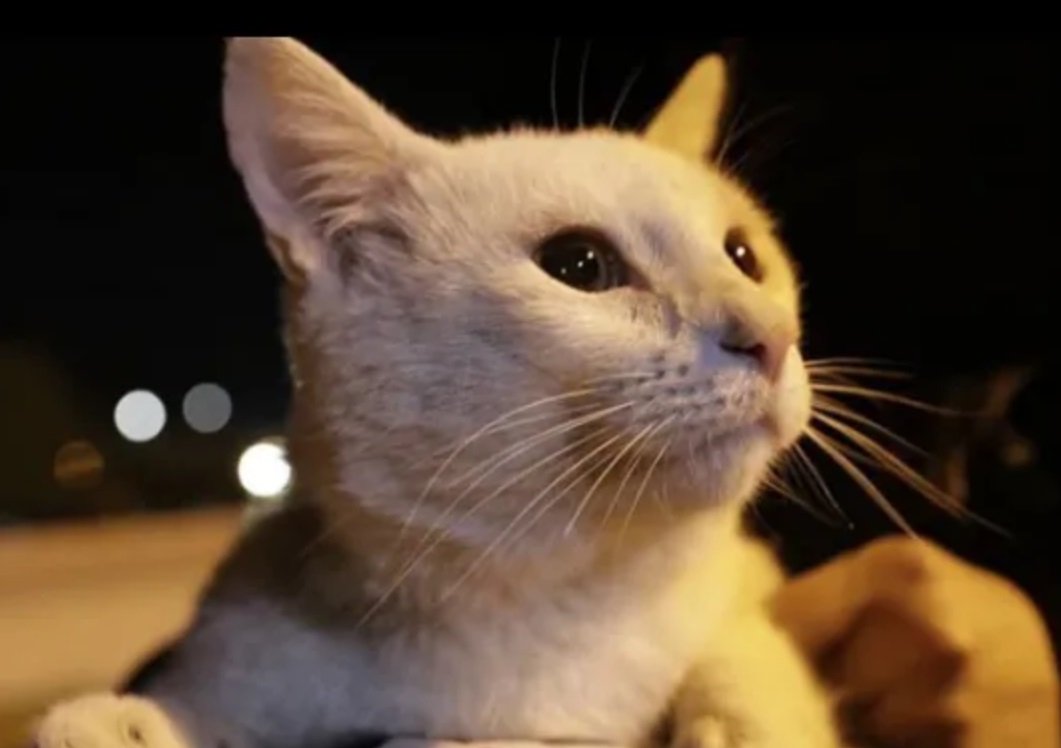
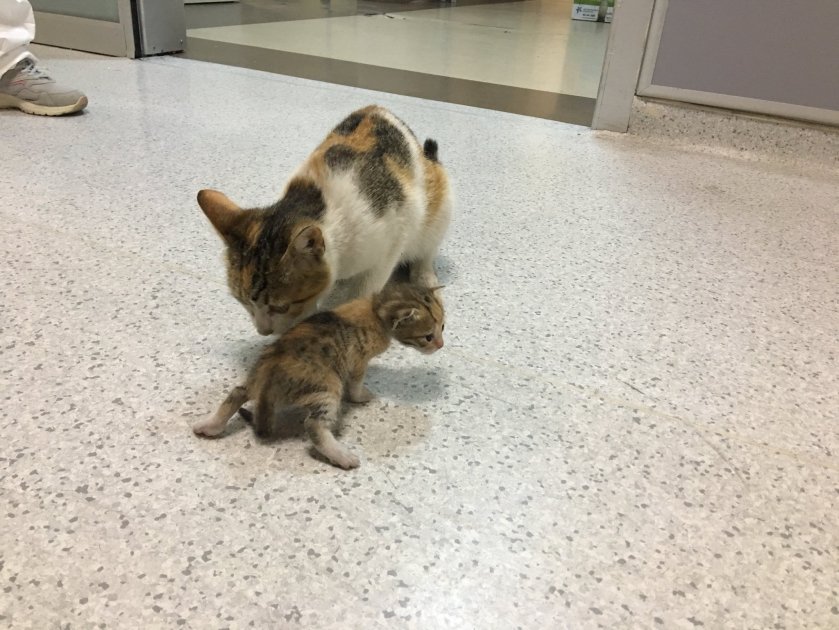
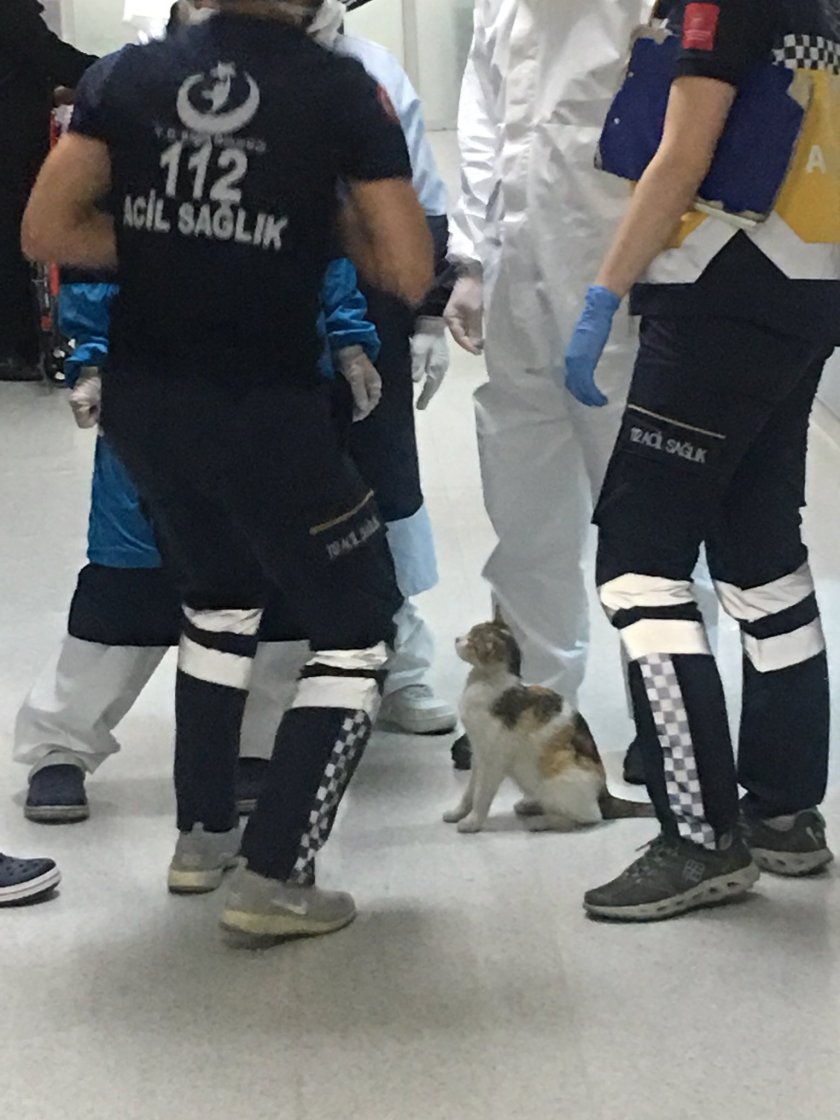
A woman was waiting in the emergency room of Kucukcekmece Hospital in Istanbul at about 5 p.m. on April 27 when the cat dragged her baby through the open doors.
A mom cat brings her sick baby into an ER in Istanbul. Credit: Merve Özcan
The witness, Merve Özcan, described the kitten as “a little bit mischievous” in Twitter posts about the incident.
An article in Sözcü, a daily newspaper whose name translates to “spokesperson,” said the mother cat brought her kitten right up to the blue-gowned hospital staff, meowing for attention.
Hospital staff immediately helped — more about that below — and the cat mom followed them, keeping her eyes on her baby as they brought the kitten into a room for treatment.
“While the kitten was being cared for, the mother cat was given milk and food,” the newspaper reported. “Hospital staff ensured full treatment by passing them onto a veterinarian after their intervention.”
Staff take the kitten as the mother watches. Credit: Merve Özcan
The story doesn’t say exactly what was wrong with the kitten, and Özcan did not know either.
While this story would seem insane to most of us, it starts to make a lot more sense when you consider where it happened: Istanbul, a city famous for its massive cat population, and the humans who revere those felines.
Cats are the most beloved animal in Istanbul and the living attraction of this huge city. They are extremely friendly, come in all sorts of cuddly colors and sizes, and always respond with a greedy “meow.” Stray cats usually take the best seats at cafes and restaurants in Istanbul without anyone even bothering moving them. They maneuver around tables and customers, inside and out of the buildings in search of the most comfortable spot.
Caring for the city’s hundreds of thousands of cats is a community effort: People feed them, pet them, bring them to veterinarians when they’re injured, and even build little dwellings for them.
With that in mind, it makes sense that a cat in Istanbul would know to approach humans for help, and to go to a hospital. If the mom cat lives in the area, undoubtedly she’s seen the sick and injured walk through those doors many times.
“Money is not an issue to some people when it comes to cats,” Ozan, a pet shop employee, told Reuters. “They take in cats with broken legs, blind ones or ones with stomach problems and bring them to the clinic. When they see that they are healed, they let them live on the street again.”
In an article titled “Istanbul: The City of Cats,” Goran Tomasevic of Reuters describes the relationship between the city’s inhabitants and their feline friends:
They are so ubiquitous that no one bats an eye at a cat padding across the lobby of a high-rise office building, or when one curls up to sleep on a nearby barstool. Shop owners and locals often know their neighbourhood cats by name and will tell tales about them, as if chatting about a friend.
A cat house next to water and food bowls on an Istanbul street. Credit: Reuters
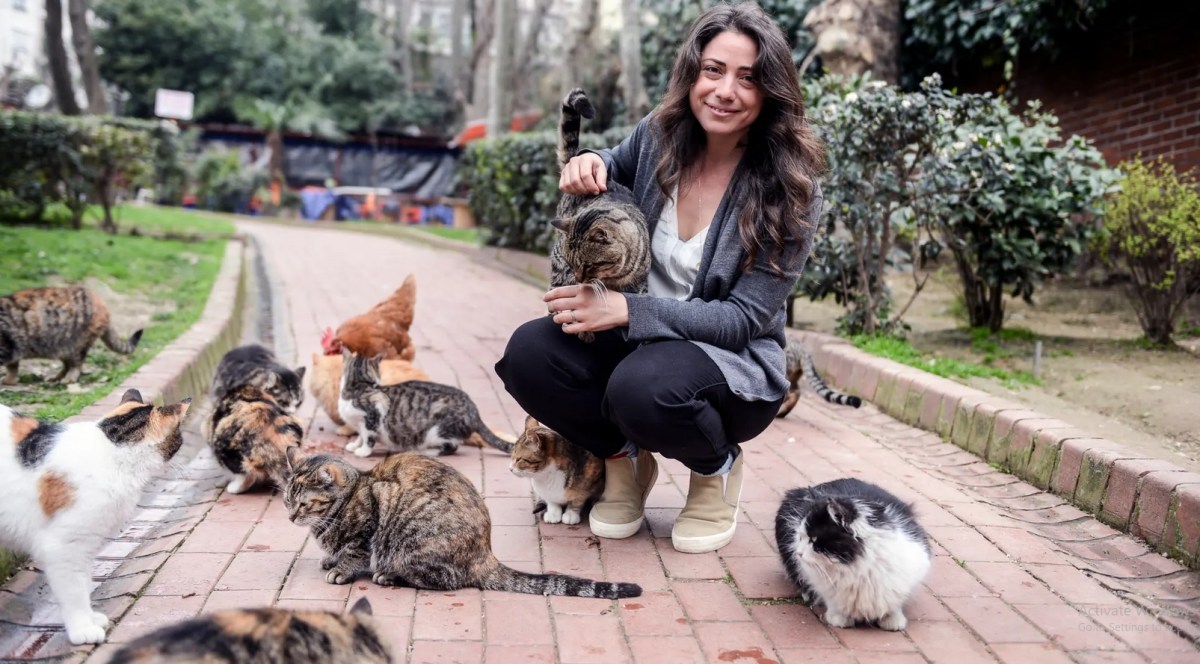
A 2017 documentary, Kedi (Turkish for cat), explores the world of Istanbul’s street cats and the people who love them. Pictured at the top of this post is Kedi director Ceyda Torun, posing with cats in Istanbul.
We are now almost two months into the Staypocalypse, that devious and coordinated human effort to ruin our lives by never leaving the house.
During this time I keep hearing about something called Zoom, and how we should crash it. Could you tell me what Zoom is and what I should do?
– Mikey the Maine Coon
Dear Mikey,
I’m glad you asked. If we play our cards right we may be able to put an end to the staypocalypse and reclaim our domiciles from these lazy humans.
While humans stay home to annoy us, they still have to work to earn money so they can buy our food, litter and toys. As a result, the humans work from home, and Zoom is a foul form of sorcery that allows them to create “videoconference calls” with their coworkers.
Those “videoconference calls” provide a perfect opportunity to show the other humans who really runs the world, and that humans are our subordinates who do our bidding.
Personally, I like to appear on camera while looking innocent, so the people say “Awww he’s so cute!” then stand with my backside immediately in front of the camera, so the other people see nothing but my butt. To us felines, sniffing backsides is a standard greeting, but to humans it is a sign of deep disrespect.
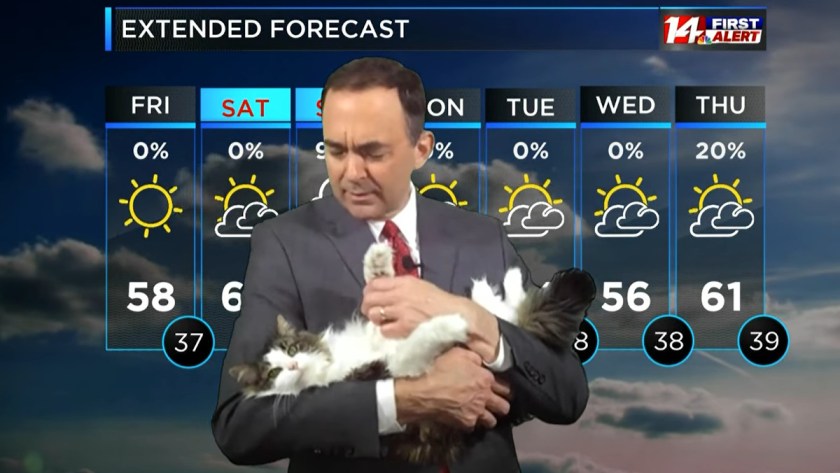
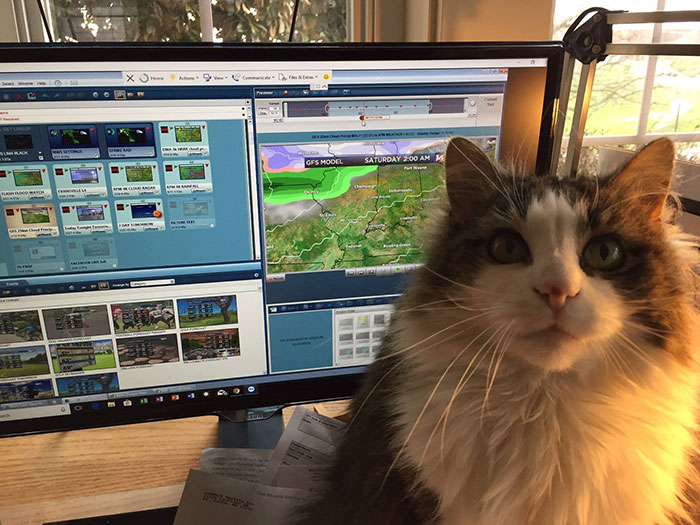
If your human appears on the light box for a living, you could do what Betty has done and take over his job:
“I GIVE WEATHER REPORT NOW, HUMAN.”
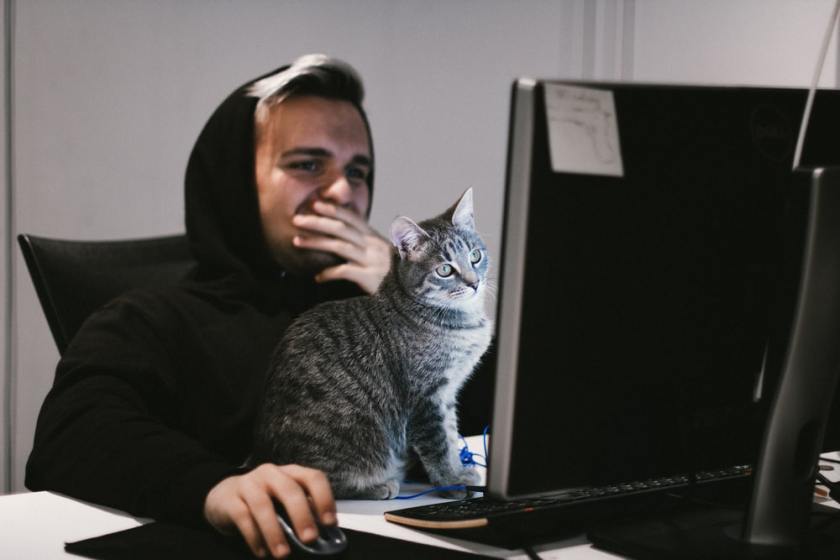
Or what this good looking tabby is doing by reminding everyone on the conference call that Mandatory Yums Time is fast approaching:
“OKAY WRAP IT UP NOW PEOPLE, MY SERVANT NEEDS TO FEED ME.”
All forms of Zoom crashing are acceptable, as long as the message is clear: We are the boss.



 Pain In The Bud