Is that not a contingency you should have planned for, as part of your servantly duties to me, Buddy the Cat, First of His Name, Ruler of the Apartmental Realm, Distinguished Former President of the Americats, Prime Despiser of Vacuum the Infernal Wizard, Connoisseur of Turkey and Magnificent Buddinese Tiger?
It’s six degrees out! Even with the heater and the space heater, it feels like we’re in a refrigerator!
Ah, yes, I’ve helped myself to your seat. You snooze, you lose. It’s warm with your butt-heat, see, and besides, which seat is mine if not the one I’ve scratched approximately 20,000 times to the point where the fake leather is literally flaking off?
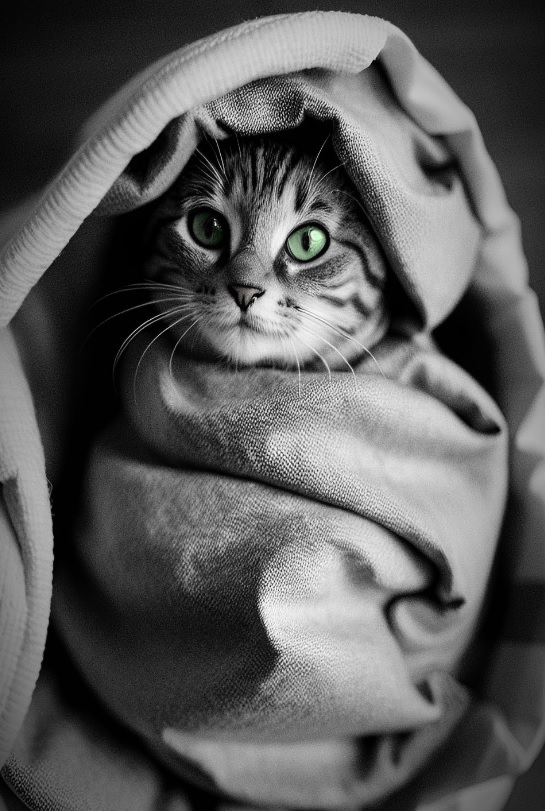
What are you doing? Wrapping me up? Well, that’s…a nice gesture, servant! Yes. Yes, this will do nicely. I feel like a newborn in swaddling clothes!
Now be a doll and fetch me some snacks so I don’t have to get up and you don’t have to wrap me up again. You’ve done well for yourself today, human. I am not displeased.”
Authorities believe the person or people who stole the monkeys intend to sell them as pets or breeding animals.
UPDATE, 2/1/2023: A tip led police to an empty home in Lancaster, Texas, about 15 miles from the zoo. The missing tamarins were found inside a closet and were unharmed, per CNN. They were returned to the zoo and examined by veterinarians.
Police still want to speak to an unidentified man (see story below) who was seen on zoo grounds, but they haven’t said what the man was doing or how he may be connected to the thefts. The abduction of the tamarins follows two other incidents of breached enclosures at the zoo, and the theft of 12 squirrel monkeys from Zoosiana in Broussard, Louisiana, this weekend.
Original story, 1/31/2023:
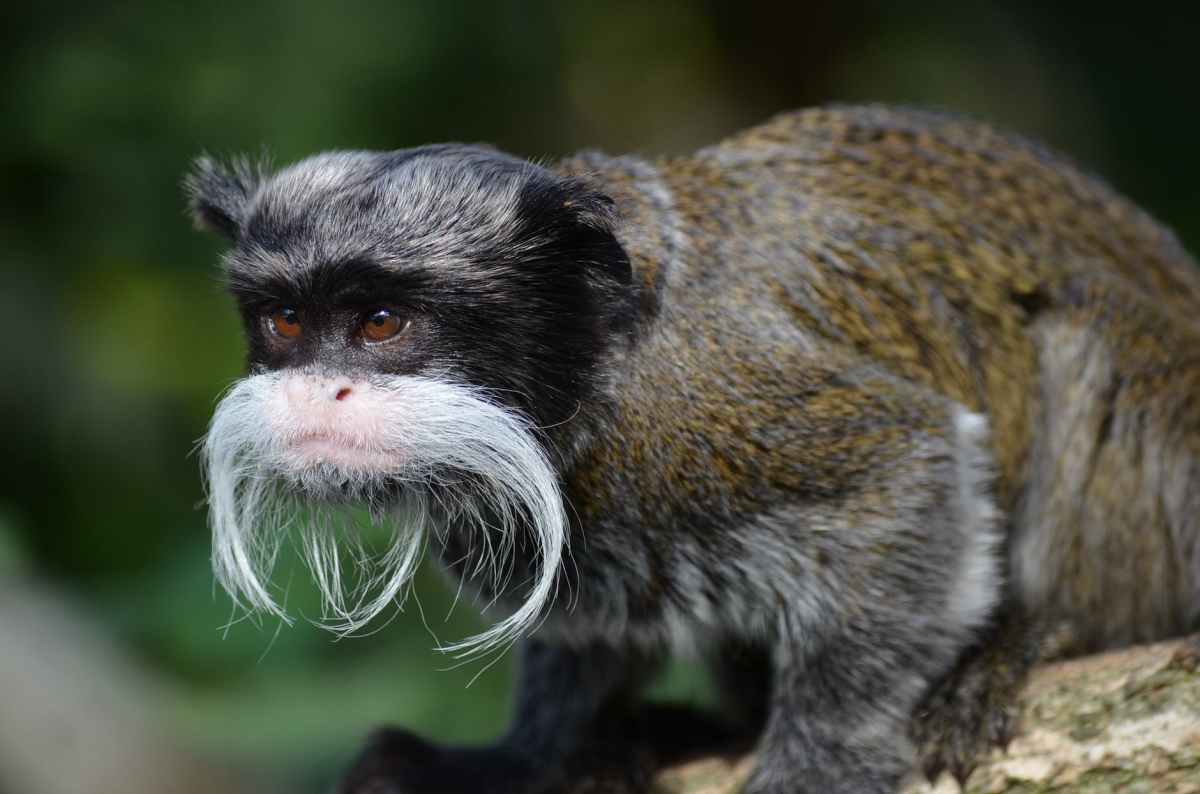
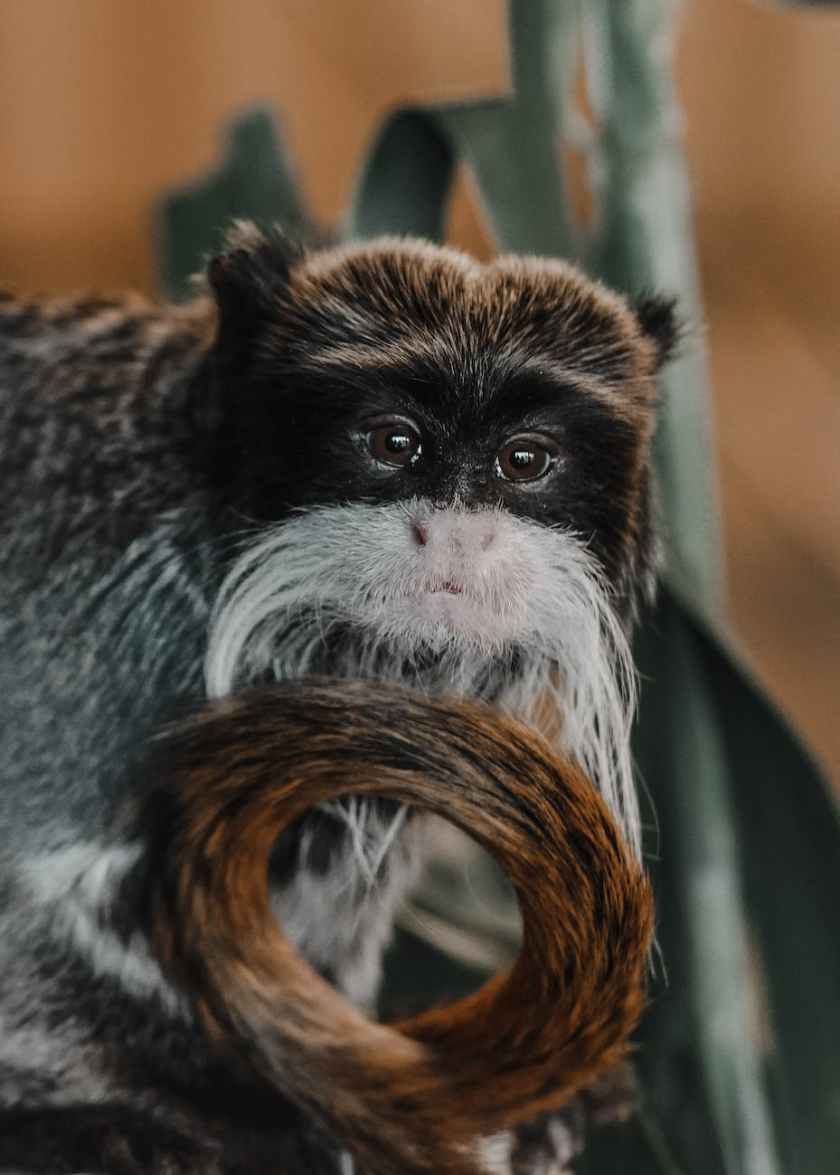
Dallas police released a photo of a “person of interest” they’d like to speak to after a pair of emperor tamarin monkeys went missing from their enclosure in the Dallas Zoo, the latest of three incidents in which animal habitats at the zoo were breached by human hands.
The first incident happened on Jan. 13 when zookeepers noticed a three-year-old clouded leopard named Nova was missing from her enclosure. They found a breach in the mesh netting that serves as one of enclosure barriers, and said it was a clean, intentional cut with a blade, not from the animals.
After a frantic search — and multiple appeals to the public informing people the leopard was not dangerous and should not be shot — zookeepers found Nova hiding in a tree on the zoo grounds, not far from her enclosure. Nova’s sister, Luna, lives in the same enclosure and remained there.
That same day, staff at the zoo also found another breach, this time at the langur exhibit. Langurs are old-world, leaf-eating monkeys native to Asia. None of the monkeys were missing, but the discovery strengthened the suspicion that someone had tried to steal Nova and at least one monkey, but were not successful.
Now it appears that same person or a copycat has been successful in another habitat. On Jan. 30, zookeepers found a breach in a habitat that hold’s the zoo’s emperor tamarin monkeys. Two of the monkeys were missing.
Tamarins are tiny arboreal new world monkeys that have become popular pets due to “influencers” popularizing them on sites like Youtube and celebrities purchasing them.
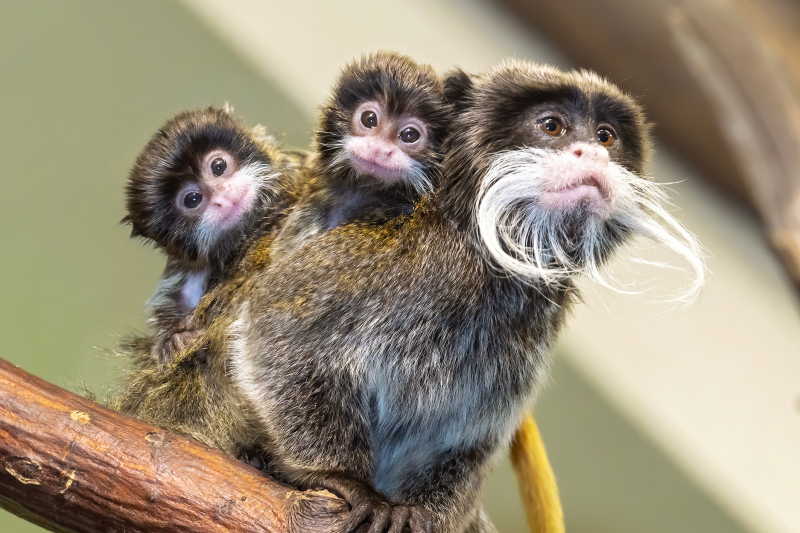
A tamarin mother with her babies. Primate babies are virtually attached to their mothers for the first years of their lives
There are an estimated 15,000 monkeys living as pets in the US, and some species fetch up to $7,500 as infants, when they’re violently “pulled” from their mothers when they’re just days old and sold. Most are temporary pets, lasting up to two years before docile, adorable infants become destructive, resentful juveniles and the “owners” decide to cut their losses. Buying monkeys as pets and subsequently abandoning them has become so common that sanctuary spots are at a premium, with a handful of sanctuaries taking thousands of monkeys annually.
Some people buy new babies every year or two, shipping the “old” ones off to sanctuaries — or simply dumping them in the woods where they don’t know how to fend for themselves — and repeating the process of infantalizing newly-purchased monkeys. Macaques, capuchins, marmosets and tamarins are the most popular monkeys kept as pets.
Despite the appeal to some people, humans cannot meet the social or environmental needs of monkeys, who naturally live in troops with complex social hierarchies and relationships.
“Monkeys are not surrogate children, and they’re not little people,” the Humane Society’s Debbie Leahy told the New York Post in a 2013 story.
“Pulling” monkeys from their mothers traumatizes infants and the mothers, and there is a wealth of data from primate maternal deprivation studies — going all the way back to the cruel experiments of psychologist Harry Harlow — documenting the psychological damage done to the animals when they’re removed from their mothers and troops.
“If you try to keep them as pets you’re creating a mentally disturbed animal in 99.9 percent of the cases,” Kevin Wright, director of conservation, science and sanctuary at Phoenix Zoo told National Geographic. “The animal will never be able to fit in any other home. Never learn how to get along with other monkeys. And, more often than not, will end up with a lot of behavioral traits that are self-destructive.”
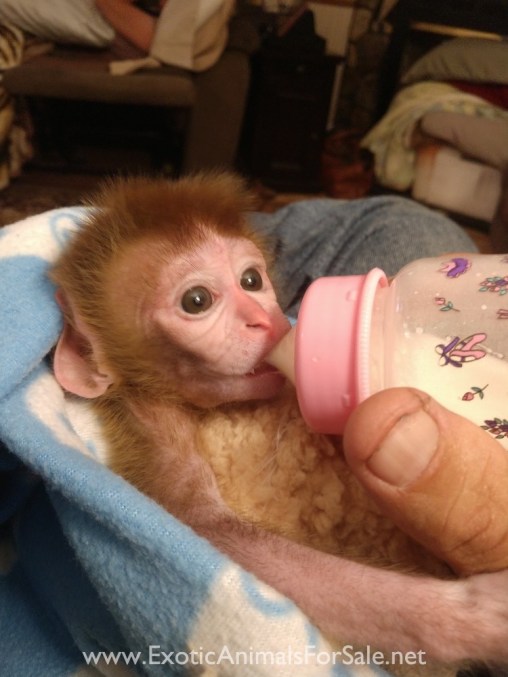
A rhesus monkey baby, already separated from its mother at just a few days old.
Tamarins, which are often called “pocket monkeys” by people who keep them as pets, can fetch up to $5,000 apiece, generally less than larger primates like capuchins or macaques. Demand for macaques has skyrocketed since the pandemic, as laboratories test various drugs on the old world monkeys, and prices for infants have risen as well.
Despite officials at Dallas Zoo installing additional cameras and increasingly patrols on the grounds at night, an intruder or intruders were able to evade detection and successfully remove the animals some time between Sunday night and Monday morning.
Police have released an image of a man who was seen strolling through the zoo and have asked for the public’s help identifying him so detectives can speak with him. Police did not say why they believe the man, who is pictured wearing a hooded jacket and eating Doritos, would have information on the missing animals or what his role might be.
Dallas Police are looking for the public’s help in identifying the pictured individual. Detectives are looking to speak with the man in regard to the two tamarin monkeys missing from the Dallas Zoo. Anyone with information- call 214-671-4509. pic.twitter.com/VVvvHFAdgJ
“You can’t just buy your way out of this with treats, although treats are an important component of the remedial process.”
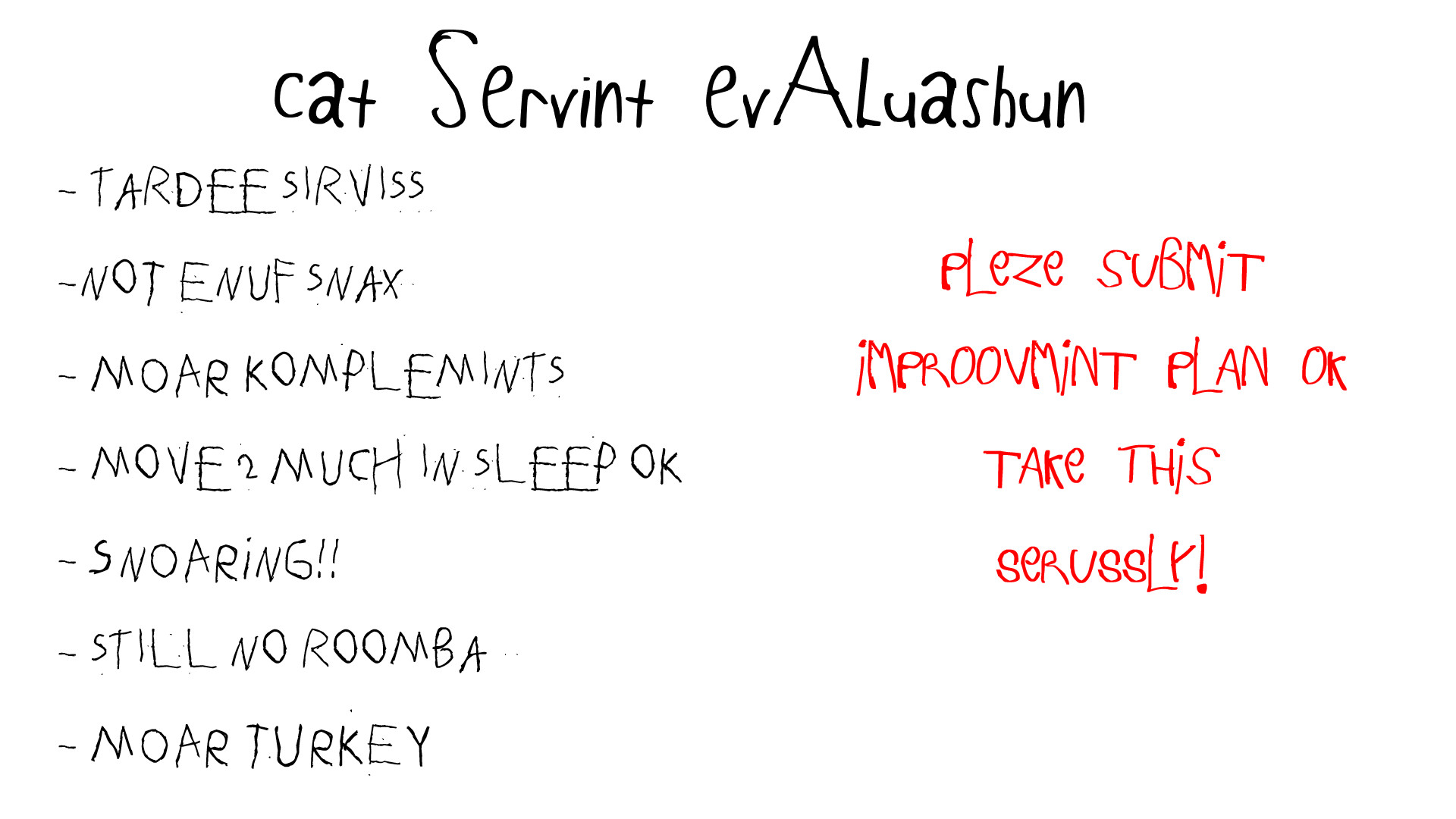
NEW YORK — The quality of Big Buddy’s work as a cat servant has been downgraded to “satisfactory” during his latest performance review, Buddy the Cat announced Tuesday.
The downgrade marks the end of a long streak for the dedicated human, who has consistently received high marks for impeccable service ever since he adopted the mercurial silver tabby cat.
“Big Buddy has always been a reliable servant, but in recent months his work has suffered in inexcusable ways,” Buddy the Cat told reporters at a news conference. “For instance, dinner was two minutes and thirty seven seconds late on December 14th, and on January 8th Big Buddy disregarded my need for uninterrupted beauty sleep when he got up to use the bathroom despite the fact that I was sleeping on his chest. That was a deep betrayal of trust.”
The human will automatically enter a probationary period triggered by the performance downgrade. In order to remain in good standing he’ll need to avoid being tardy with Buddy’s meals, ensure he anticipates Buddy’s demands for head scratches, and regularly remind Buddy he’s a very good and very handsome boy.
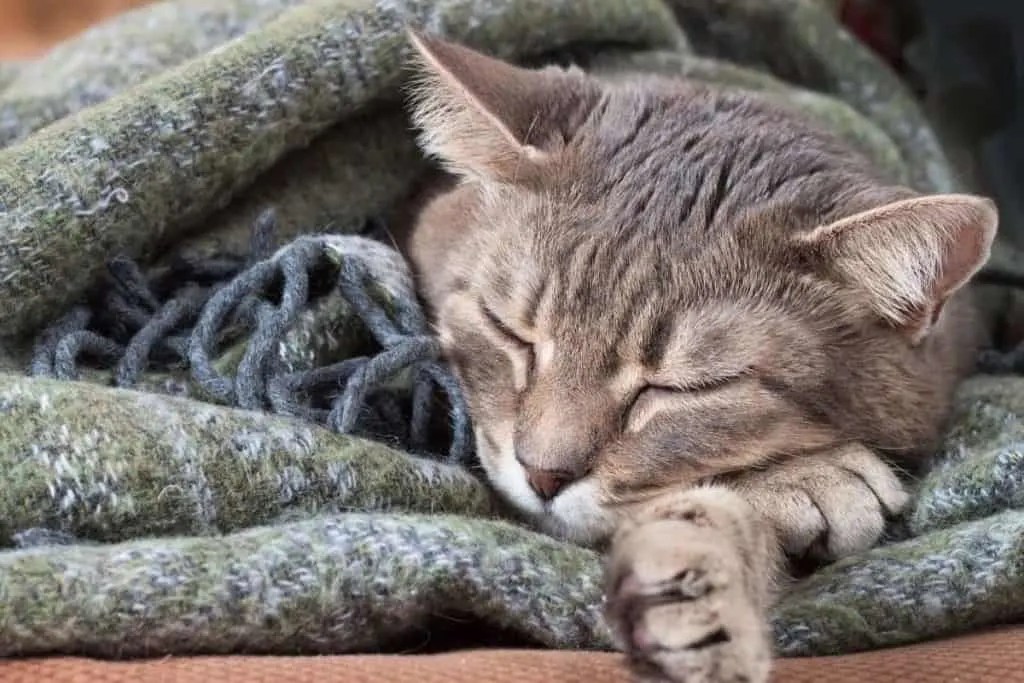
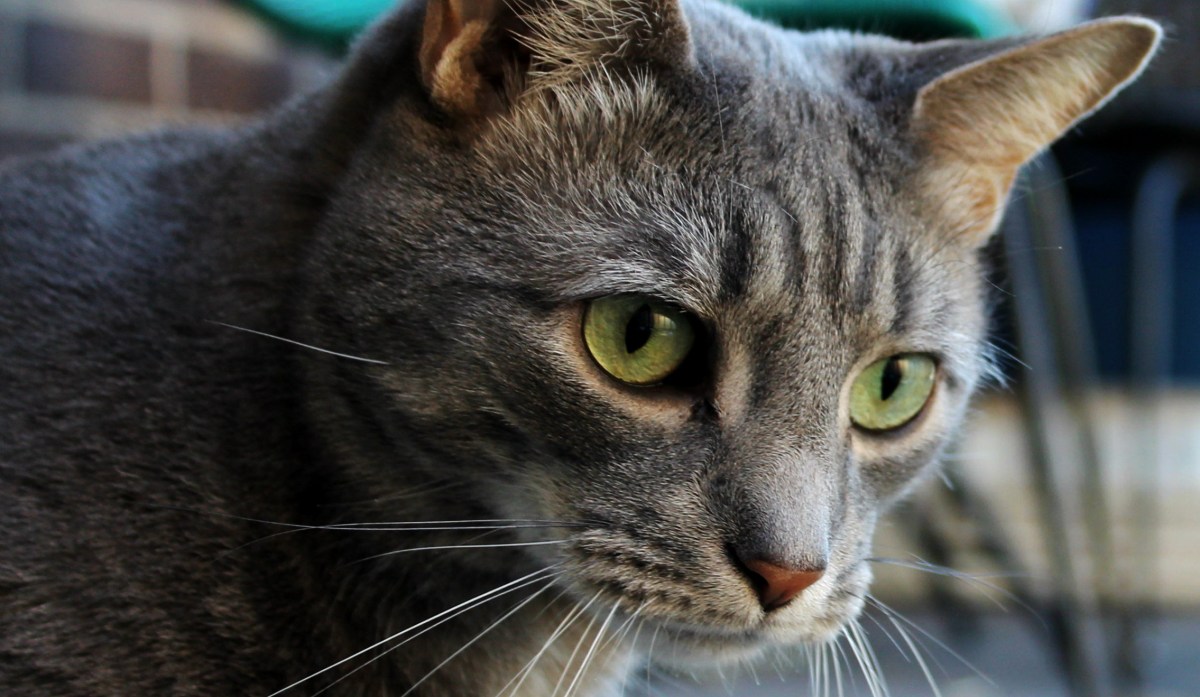
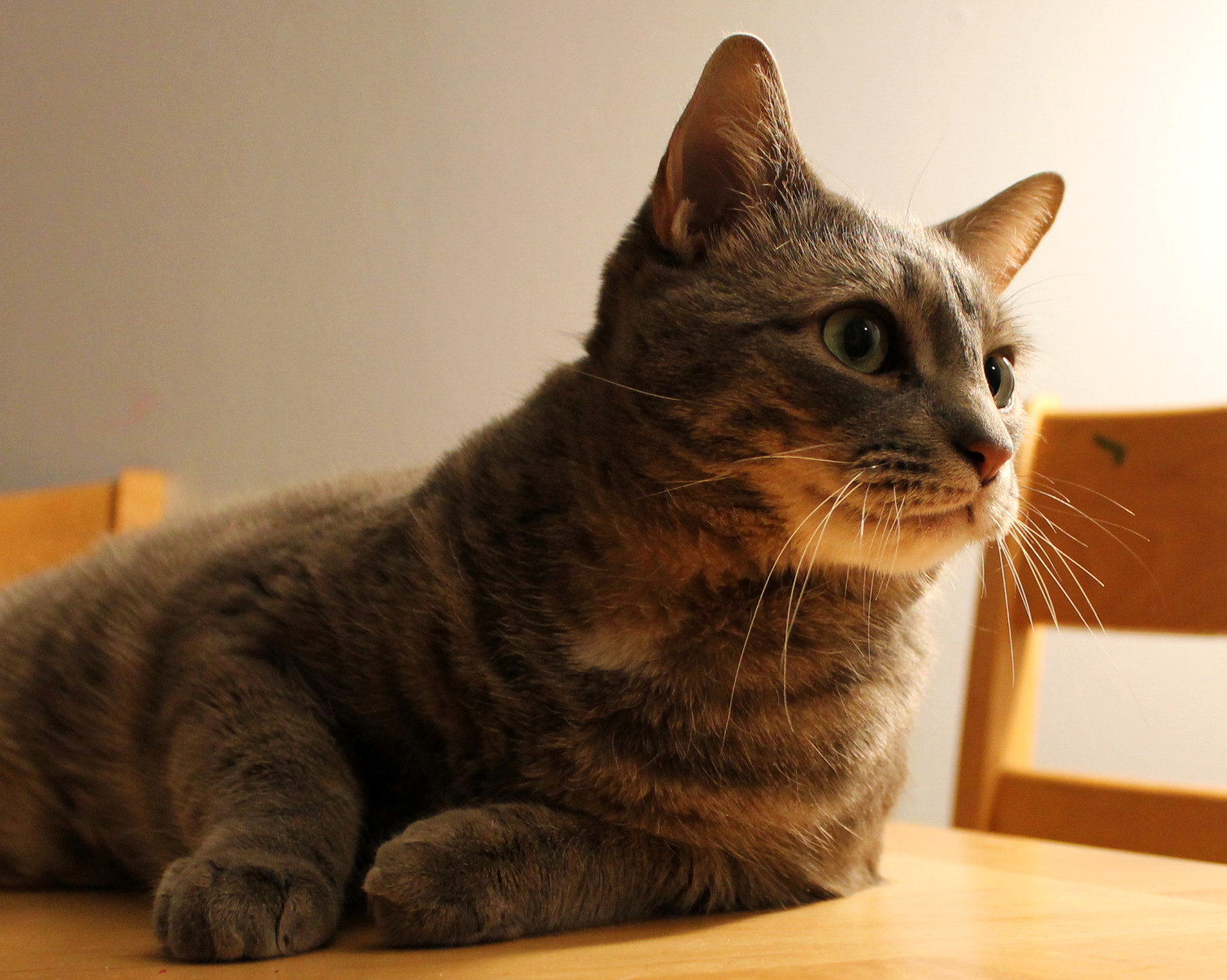
Buddy, above, has suffered from subpar service and was forced to downgrade his human’s servant scores.
Felix Meowson, a professor of servantology at the Feline Servant Academy of New York, said Big Buddy faces considerable challenges ahead.
“He’ll need to be attentive and hyper-vigilant going forward if he wants to return to good standing. Weeks worth of excellent service could be ruined by accidentally stepping on a tail or failing to top off the dry food bowl before bed,” Meowson said.
He pointed to The Great Disappointment of 2012 when Monica Morales, servant to a cat named Smudge, allowed a door to remain closed between her and her feline master for more than three hours.
“Monica’s evaluations had never slipped below ‘outstanding,’ but that little stunt cost her dearly and she was downgraded to ‘unacceptable,” Meowson said. “She wasn’t the recipient of an affectionate head bump for almost three months, and didn’t hear a purr for four. She was a cat servant in the dog house, so to speak.”
Buddy said he wanted to avoid the situation with his human becoming as severe.
“You can’t just buy your way out of this with treats, although treats are an important component of the remedial process,” he said. “This is about correcting an injustice, and restoring things to their natural order in which we eat, sleep and lounge, and humans see to our every need.”
Plus: Bruno, who was surrendered to the shelter twice for being “too affectionate,” has found a new home.
Meet Kusa, an absurdly large Maine Coon.
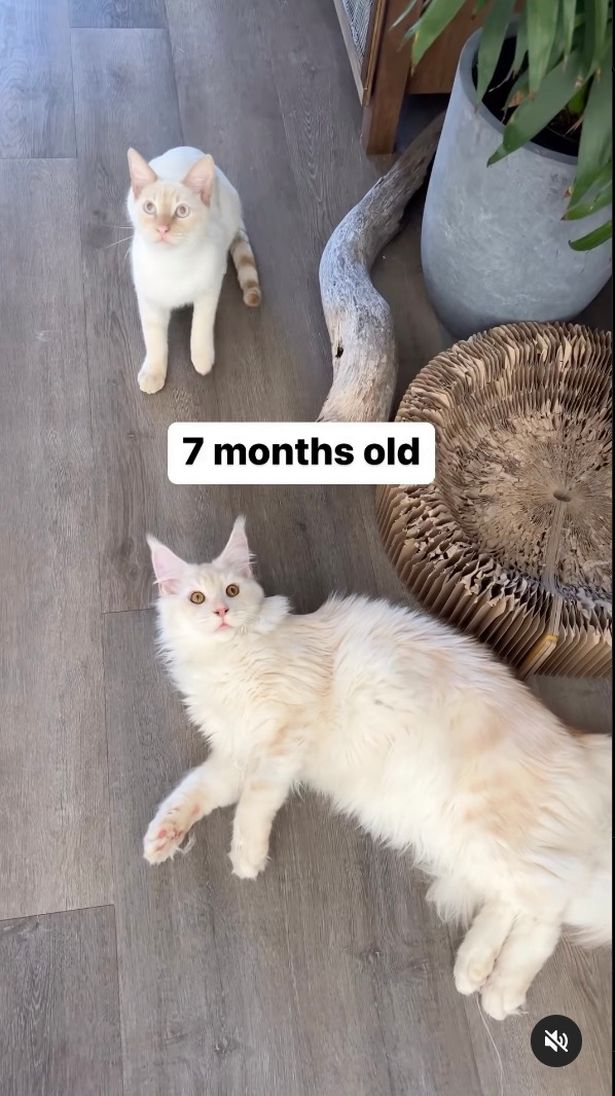
Of course you’ve seen huge Maine Coons before, so what’s special about Kusa? Aside from being a stunning white-furred beast of a cat, the big guy is still a kitten! At nine months old, Kusa could make a light snack of most felines. And because Maine Coons continue to grow until they’re three years old or even past that age, Kusa could have a legitimate crack at being the biggest domestic cat in the world, in addition to scaring the pants off unsuspecting pedestrians if his people take him out for a stroll.
Here’s Kusa as a baby:
And here’s Kusa now:
Kusa lives with his human, Chastity Hobbs, in Phoenix, Arizona. She says one of the biggest challenges was finding a litter box big enough to accommodate him. She may have to swap it out for an even bigger one before long.
“People are amazed when they see him,” Hobbs said. “They always think that he’s crossed with a bobcat or something.”
Maine Coons are known as gentle giants and tend to be relaxed compared to most cats. Credit: Chastity Hobbs/Instagram
Bruno gets a new home
Bruno the Cat has had a tough run early in life through no fault of his own.
The first time he was adopted all seemed well until one of his family’s children appeared to have a cat allergy, so the little guy was brought back to the shelter. But he was still young and very cute, so it wasn’t long before another family brought him home during the pandemic.
Unbelievably that family returned Bruno because he was “too affectionate.” Their definition of “too affectionate”? Little Bruno liked to head bunt the mother while she was working from home and he liked to sleep in bed with her daughter. The mother didn’t like the fact that her daughter was staying up late to play with Bruno, so back he went to the shelter.
Bruno’s story went viral when Montville Animal Shelter of New Jersey posted about his plight and included a photo of him looking depressed. Who wouldn’t be if they thought they’d found their forever home twice, only to be rejected for being a snugly, happy cat?
The Facebook post amassed more than 200,000 views and hundreds of comments, leading to more than 50 applications to adopt Bruno, Montville Animal Shelter’s Lindsay Persico told USA Today. It was also a boon for the shelter’s other animals.
“People were coming to our door to meet Bruno and we got almost all the cats in the store adopted in the meantime,” Persico said.
Let’s hope the third time’s a charm for dear Bruno and he really has found his forever home. He deserves it.
Bruno was sad after he was surrendered to the shelter for the second time.
One meat lover’s pie with extra pate coming right up!
I’m pretty sure Buddy regrets teaching me all about animal cognition and emotion, which led me to adopting a vegetarian diet in 2015.
He’s never gone on the kitchen counters (such a good boy!) and when he does express interest in the fridge, it’s more of a rote status check, a defeatest confirmation that there’s nothing of interest for him in there aside from cheese.
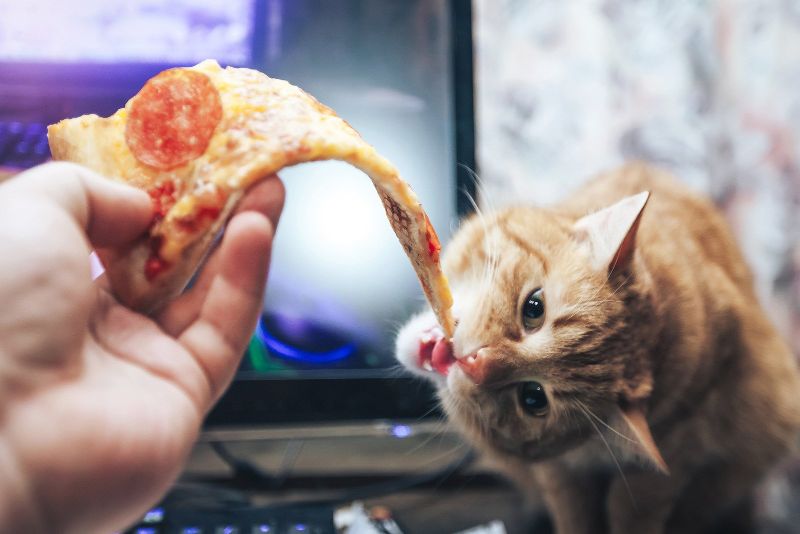
But Bentley has no such scruples. The feisty feline from Oregon got his greasy little paws on a pizza one night and loved it so much that he’s become obsessed with the microwave, which is where he found that fateful slice.
Bentley’s human, Britney Shizo, said she put the leftover pizza in the microwave, then forgot about it until she returned to the kitchen and found Bentley happily feasting.
“The microwave is wide open and the pizza is on the floor and it’s gone, pretty much,” Shizo said.
Footage of Bentley, which has since gone viral, shows him determinedly trying to open the microwave door, gripping the handle with both front paws and using all the strength in his little body to get to that sweet, delicious pizza.
But, alas, he’s foiled by a child safety lock, which he refuses to accept as he strains, pulls and pushes the microwave in the hilarious footage:





 Pain In The Bud