Sheba and a geneticist who specializes in cats are looking for felines descended from ancient Egypt’s royal buddies.
“You may call me Budtum Ra Budhotep Bhufu Amun Buddeses, human. Now serve me!”
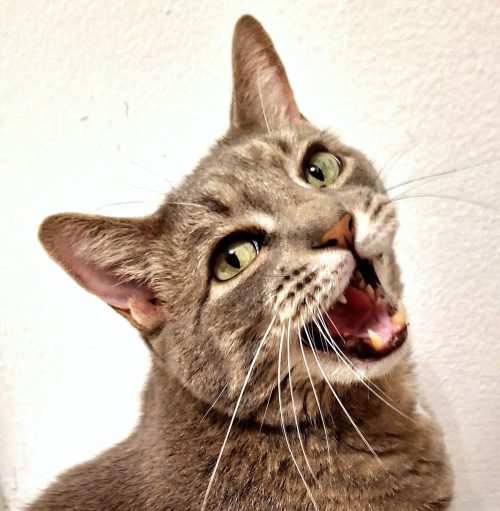
Bud’s already enormous ego just got a little bigger after I used Sheba’s Pharaoh Cat Finder to analyze his pharaohness.
The online tool says he’s up to 75 percent pharaoh:
I didn’t do it entirely out of altruism to give the little guy an ego boost. The winner of the Pharaoh Cat contest gets a lifetime supply of Sheba, and Bud’s been eating Sheba for 10 years. We’ve never endorsed any particular cat food here on PITB, partly because every cat is different, some have special nutritional needs and what works for one furry overlord may not work for another.
But as food motivated as he is, Buddy cannot scarf down more than half a can of wet food at a time, and he’s an enormous pain in the Bud when it comes to leftovers, so Sheba’s Perfect Portions saves me from wasting food.
While the online Pharaoh Cat Finder tool looks like it may be RNG combined with clever marketing, there’s a genetic basis for the search. The company is working with Dr. Leslie A. Lyons, a geneticist who specializes in the DNA of our furry little friends at the University of Missouri’s Feline Genetics and Comparative Medicine Lab.
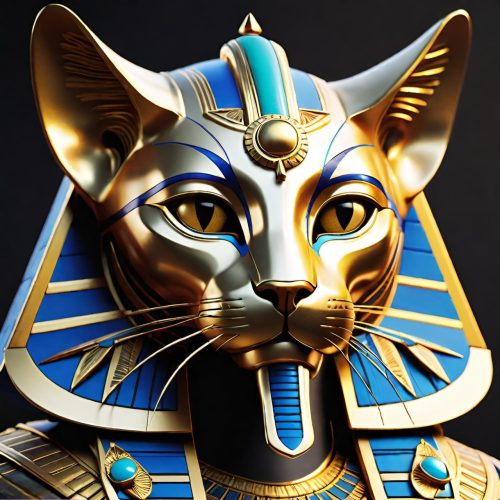
The legendary funerary mask of pharaonic feline Buddankhamun Budstet Ra Budshepsut, Buddy’s royal Egyptian ancestor. Credit: The Grand Museum of Magnificent Feline Stuff
Lyons was part of a research team that extracted DNA from mummified cats buried in ancient Egyptian tombs and sequenced their genetic code.
While the project verified that the Egyptians domesticated cats long before they began mummifying them and affording them revered status, Lyons says a DNA sequence from the ancient felines “has only been found in cats in Egypt and the U.S., unlocking even more questions to be explored.”
“We are looking at mitochondrial DNA only found in these pharaoh cats and a few cats in the U.S. So it’s really hard to find these cats, hence this hunt with Sheba pet food,” she said. “We’re on that quest to find the cats that went from Egypt into the U.S. and are the divine cats of the pharaohs. They should be worshiped like they were.”
The Temple of Amun Bud is guarded by gold statues of domestic cats instead of sphynxes. Credit: National Gallery of Buddesian Artifacts
I don’t think there’s any doubt that the aptly named Dr. Lyons is on team cat.
So here’s to hoping Bud gets a lifetime supply of Sheba, and Dr. Lyons is successful in her quest to find the elusive pharaoh cat lineage. In the meantime, we should probably start work on an impressive new pyramid here in the US, lest we disappoint our new feline pharaoh.
Bird flu is killing cats domestic and wild, in captivity and in nature. Experts are sounding the alarm, warning people not to feed their cats raw food, allow them to drink milk, or let them roam outside where they can easily catch the virus by going after small prey.
Highly Pathogenic Avian Influenza, the clinical name for bird flu, is a danger to all animals, but for cats it’s a virtual death sentence.
Only a handful have survived infection thanks primarily to early diagnosis, intervention and round-the-clock veterinary care. In the vast majority of cases, the virus burns through its feline victims in three or four days.
Bird flu has become even more deadly for felines of late. Of the 126 domestic cats killed by H5N1 since 2022, according to the US Department of Agriculture, half of them have have died in 2025 — and it’s only been three months.
To appreciate the true scope of the problem, the more illuminating statistic may be 82 million, which is the number of chickens “culled” — killed — in the US since 2022 because they were infected or raised at facilities where other birds tested positive for the virus.
Factory farming compounds the matter: more than 1.6 million egg-laying hens and 337,000 “pullets” — chickens less than a year old — were “depopulated” at a single facility in Texas last year. As staggering as those numbers are, Texas’s Department of Agriculture noted the figure merely “accounts for approximately 3.6% of the company’s total flock.”
“To provide context on the overall size of the U.S. poultry flock, there are more than 378.5 million egg-laying chickens in the United States. In 2023, more than 9.4 billion broiler chickens and 218 million turkeys were processed in the United States.”
If there ever was an example of putting too many eggs in one basket, this is it. American food supplies are vulnerable with so much concentrated in the hands of so few companies, a lesson the general public is learning the hard way now after eggs peaked at record prices last month. Things have cooled off a bit since then, but shoppers aren’t getting any benefit as grocery chains continue to charge a premium: the nationwide average for a dozen eggs was $5.90 in February, but stores in some states are still charging $10 or more.
It also raises questions about the sustainability and ethics of eating animals. Humans slaughter more than 75 billion chickens every year, and projections indicate there will be three billion more of us by the mid-2080s.
Meat from infected chickens can still end up in your cat’s bowl
Media reports about culling give the impression that those birds are removed from the food chain, but that’s not entirely true. The pet food industry has always cut corners by harvesting meat not fit for human consumption, a category that includes everything from the carcasses of sick animals, to “meat by-products” that can include beaks, hooves, eyes, hearts and other organs.
So while the culled chickens won’t show up in shrink wrap at the grocery store, they are making it into the pet food supply chain. Most pet food is “rendered,” cooked at such high temperatures that potential pathogens have been destroyed.
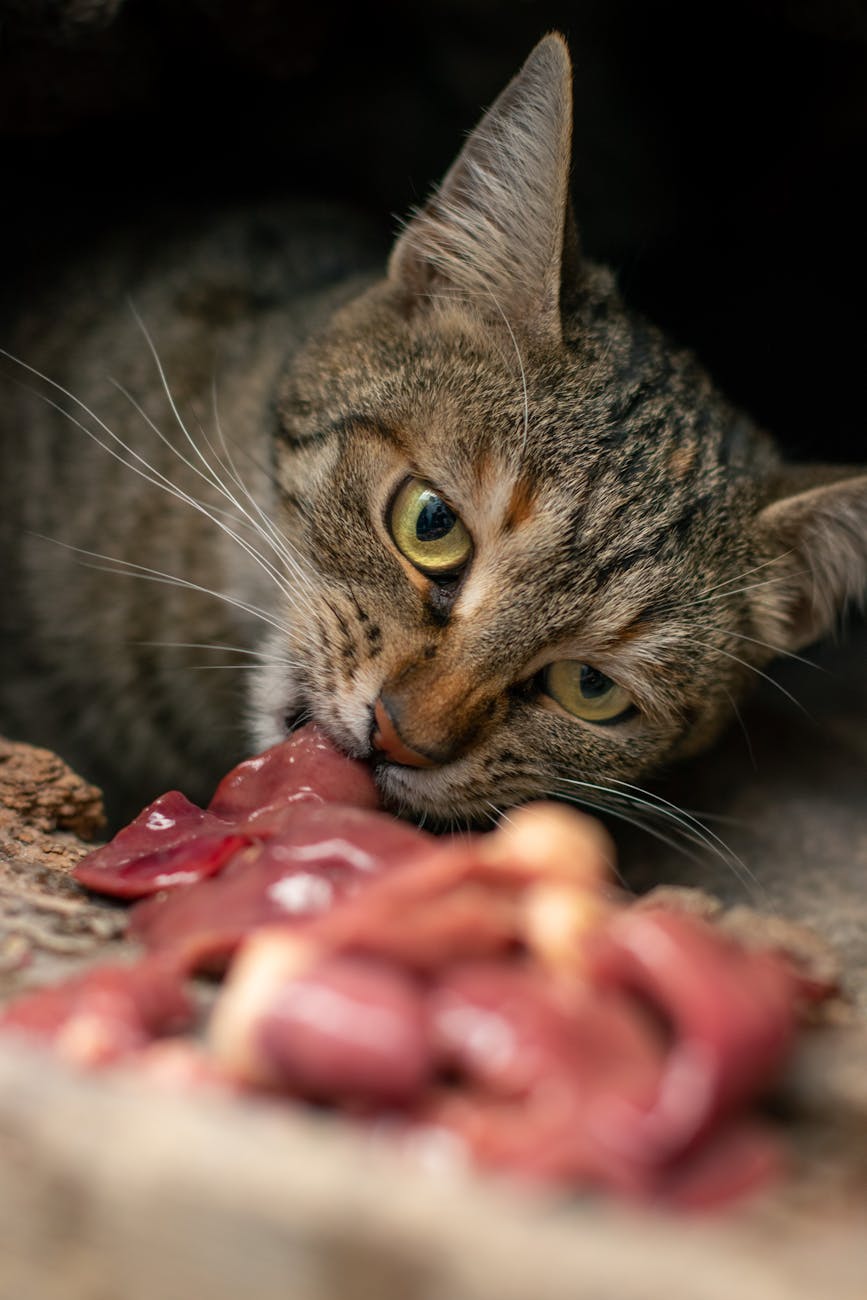
But an increasingly bigger slice of the market has been claimed by companies selling “premium” raw food — and that’s been the primary infection vector for domestic cats, particularly indoor cats who otherwise would have little or no exposure to the virus. (Cats who spend time outdoors can catch bird flu by preying on infected animals, just as wild cats do, and barn cats have caught it by drinking the milk of infected cattle.)
Cats are mostly lactose intolerant, and should not be given cow’s milk, despite the common misconception that it’s healthy for them.
“The animals that were depopulated could potentially have ended up in the food chain for pets,” Laura Goodman, an assistant professor at Cornell University’s Baker Institute for Animal Health, told NBC News. “It’s not uncommon for substandard meat to end up in the pet food chain.”
That’s what happened to Tim Hanson’s beloved cat, Kira, who died in February after eating raw food from a company called Wild Coast. The company has recalled the product, Boneless Free Range Chicken Recipe. It’s one of four recalls in the last month alone.
Hudson is suing Wild Coast for the veterinary bills — about $8,000 — and said he was devastated that Kira, whom he called “the happiest cat,” is gone. He said he thought he was doing right by her by feeding her the expensive raw food, but now urges people to avoid feeding their cats raw food at all costs.
“I don’t want any more cats dying,” he said. “Hopefully people can learn from Kira’s passing.”
Top image via Pexels. All other images via Wikimedia Commons
Whether you’re staying home on Valentine’s Day or spending it with your longtime significant other, there’s reason to celebrate with this special Valentine’s Day message from Little Buddy.
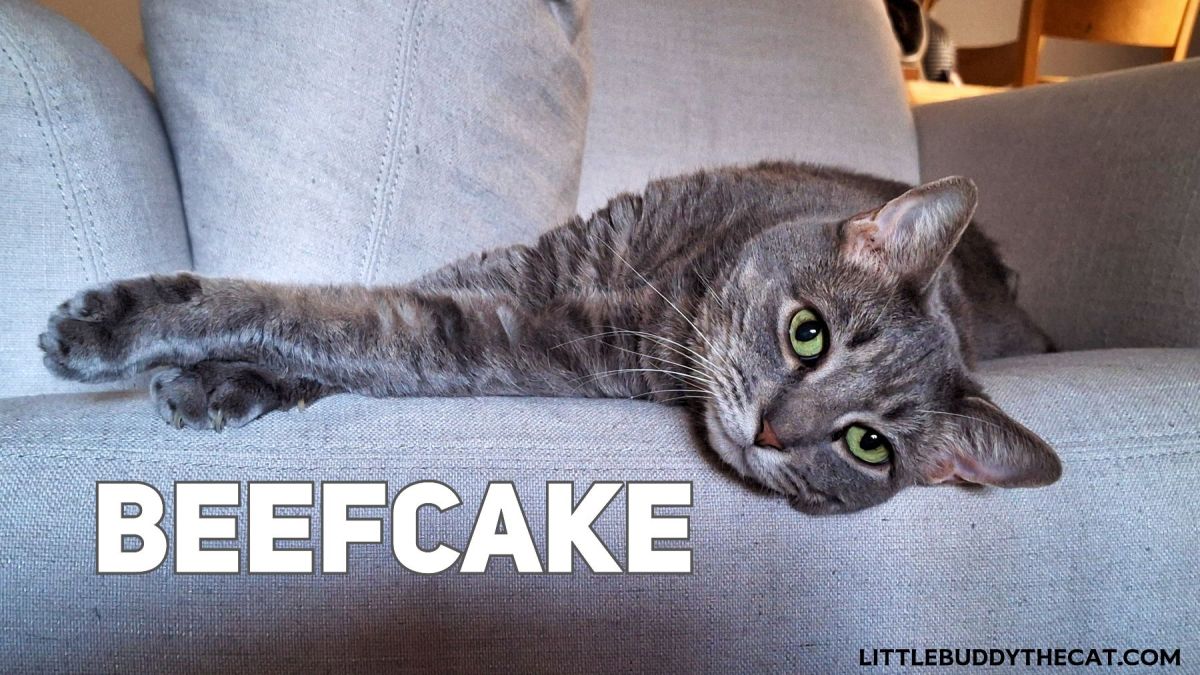
Lounging like the Fabio of cats, locking onto the camera with his soulful green eyes, Buddy embodies the romantic aspect of the holiday.
Valentine’s Day With Buddy the Cat
Already a major heartthrob to felines all over the world, Buddy is guaranteed to set human hearts fluttering as well with his meowscular good looks and remarkable charm.
Gaze upon this Adonis of Cats, ye mighty, and tremble!
Buddy the Cupid!
And finally, if you already have enough little buddies in your life, Buddy the Cupid will help you find your significant other…for a nominal fee of canned turkey pate and only during hours not designated for nap time, of course.
Dissatisfied with the limited variety of flavors and textures in his regular meal rotation, Buddy the Cat unveiled a sweeping new sanctions package designed to force his human to do better.
NEW YORK — Angry over his servant’s failure to broaden his selection of regular meals, Buddy the Cat announced new sanctions on Saturday aimed at forcing the uncooperative human to comply.
“President Buddy feels he’s been patient and magnanimous in dealing with his human’s shortcomings, but even a saint’s patience has limits,” Buddy’s spokesman told reporters. “This new sanctions package clearly communicates President Buddy’s disappointment and ensures swift compliance.”
The sanctions include prohibitive measures against sleep duration and quality, with Buddy promising to yowl at regular intervals and to wake his human by slapping him in the face every morning.
In addition, affection will be cut by 50 percent, increasing to 75 percent within two weeks if there is no improvement in the variety of flavors and textures of wet food served to Buddy.
“Buddy has made it clear that he expects more than a simple rotation of turkey, chicken and salmon pate,” the feline’s spokesman said. “He wants chunky tuna, he wants beef, he wants shredded duck served in gravy.”
President Buddy had threatened to pull his ambassadors and enact legislation declaring all shoes, sneakers and boots as legal litter boxes if the cheese sharing protocol was not observed. Credit: Wikimedia Commons
The latest round of sanctions follows the Buddesian Diplomatic Crisis of 2023, when Buddy threatened to begin using his Big Buddy’s shoes, boots and sneakers as litter boxes in retaliation for the latter failing to “equitably share cheese as per article IV, sub-clause C of the gastronomic distribution protocol.”
All-out war was avoided when both parties agreed that Little Buddy’s share of Gouda, American, provolone and other cheeses, excluding ricotta, feta and mozzarella, would be increased by 15 percent.











 Pain In The Bud