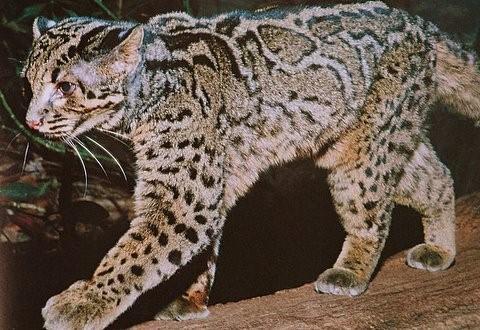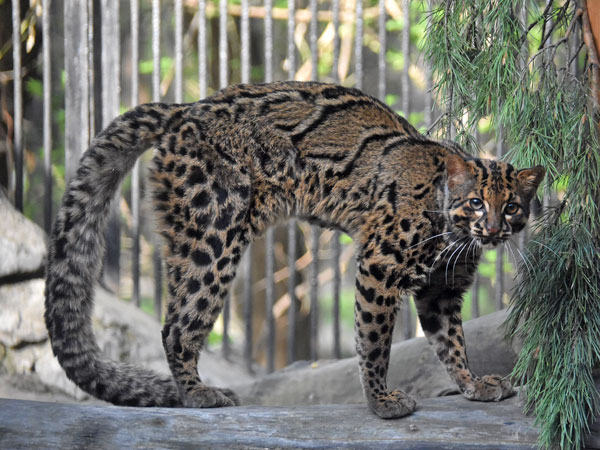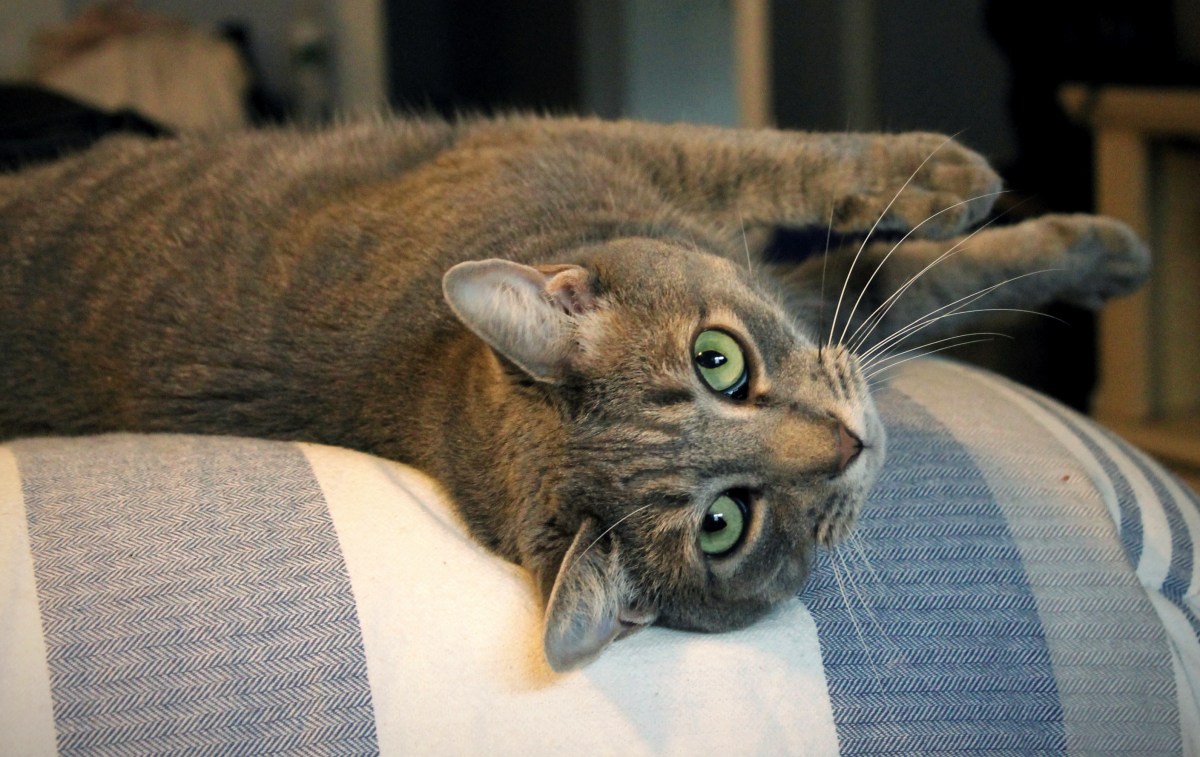
The semi-arboreal marbled cat is arguably the most elusive feline on the planet.
Dear readers, before you think this is a joke entry about Bud, let me emphasize we’re talking about the marbled cat, not the well-marbled cat.
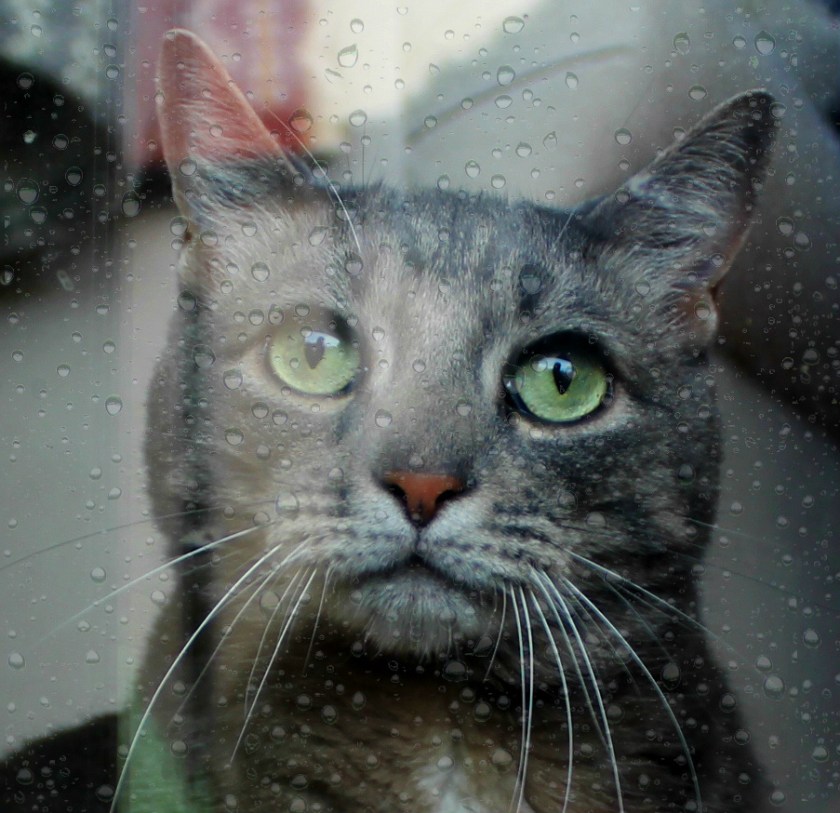
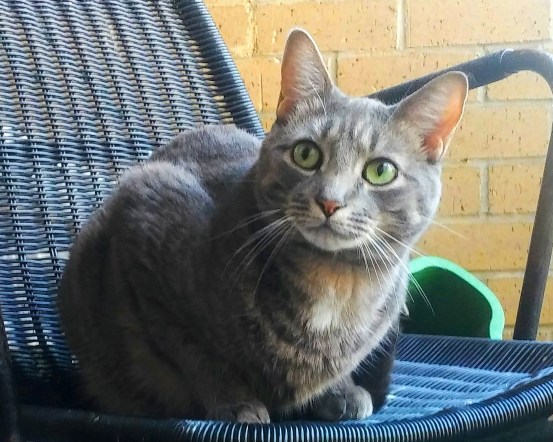
“I am NOT chubby, I am meowscular!”
“I’ve never heard of a marbled cat,” you might be thinking, and there’s a good reason for that.
These little guys are incredibly elusive, live far from most humans and are found only in Asia. They’re extremely difficult to track and locate in the wild and haven’t been the subject of any comprehensive field study, granting them an air of mystery in an era when you can find almost anything you want to know about almost any animal with a few clicks.
There’s a whole lot we don’t know about marbled cats, including their behavior in the wild, how long they gestate, what they eat and how they’ve successfully adapted to so many varied habitats.
Credit: Wildcats Magazine
The singular species is semi-arboreal. Almost all cats can climb trees. The problem is getting down afterward, which is why so many domestic cats get stuck in trees. They can’t descend head-first and they’re wary of descending tail-first, which makes them vulnerable. Marbled cats have unusually flexible claws that enable them to descend head-first with ease, so they don’t balk at climbing. Their large paws keep them sure-footed on tree limbs and they’re confident off the ground.
In 2011, a trail camera in Indonesia was tripped by a marbled cat, finally giving us a close-up view:
The striking felines are sometimes called “miniature clouded leopards,” and you can clearly see why.
The species is native to the eastern Himalayas, mostly in Nepal, Bhutan, Myanmar and tiny corners of China and India, as well as countries like Thailand, Cambodia and Indonesia. They’re extremely adaptable and live in a variety of habitats, from the forests of high-elevation mountain slopes to the humid jungles of Indonesia’s Borneo and Sumatra.
Marbled cats are about the same size as domestic cats, but they’ve got incredibly big, fluffy tails that are longer than their own bodies, which serve as formidable counter-weights for their tree-hopping. Their ears are a bit more round than the ears of their domestic cousins. They tend to have larger paws, and they have unique clouded coat patterns that are unlike any breed of domestic feline or close wildcat relatives.
Despite their relatively large natural habitat and the difficulty in pinning down population numbers, conservationists estimate there are fewer than 10,000 marbled cats. They’re threatened by the same deforestation by the palm oil industry that has devastated orangutan and clouded leopard habitats, although their strongholds in steep, high-elevation forests are safe for now. Marbled cats are listed as endangered by some authorities and as near-threatened by others, though like all wildlife their numbers are in decline.
Hasbulla filmed himself pulling his cat by its ear and repeatedly smacking it.
Even if you haven’t heard the name Hasbulla Magomedov, chances are you’ve seen images of the Russian’s cherubic face, which exists in the pantheon of internet memes with the likes of Cash Me Outside Girl, Kermit and Condescending Wonka.
Magomedov is not a child, despite his 3’4″ stature and toddler-like appearance. He’s an adult man who suffers from a form of dwarfism, although he’s never publicly spoken about his condition in detail.
Normally known simply by the mononym Hasbulla, beyond his status as a meme the diminutive Russian is mostly known for hawking garbage (cryptocurrency, self-branded merchandise, supplements) and for his nebulous association with mixed martial arts, existing as a sort of barnacle on the UFC where he appears at weigh-ins, uploads video of himself providing commentary and is carried around as a kind of good luck totem by Russian fighters.
Now Hasbulla is famous for something else — horrifically abusing his cat.
In a new video — which Habsulla was apparently proud of and voluntarily shared publicly — the 20-year-old speaks in his native Russian while pulling violently on his cat’s ear. The feline — which is terrified of Hasbulla and flinches when he approaches — escapes to the safety of a shoe box, but his tiny tormentor follows, smacking the poor cat on its body and head while barking in the gutteral nonsense that passes for a language in his gas station of a country:
Hasbulla boasts six million followers on Instagram, 1.5 million on Twitter, and his videos on TikTok have amassed an astounding 10.3 billion views.
The video is disturbing enough on its own, though I can’t help but wonder if Hasbulla is willing to share this kind of behavior, what’s going on when the cameras are off?
And if people are willing to physically abuse their cats to feed the content beast and keep their viewers “entertained,” how will they lower the bar in the future when their clicks slow down and they feel they need to do something even more shocking to reignite interest?
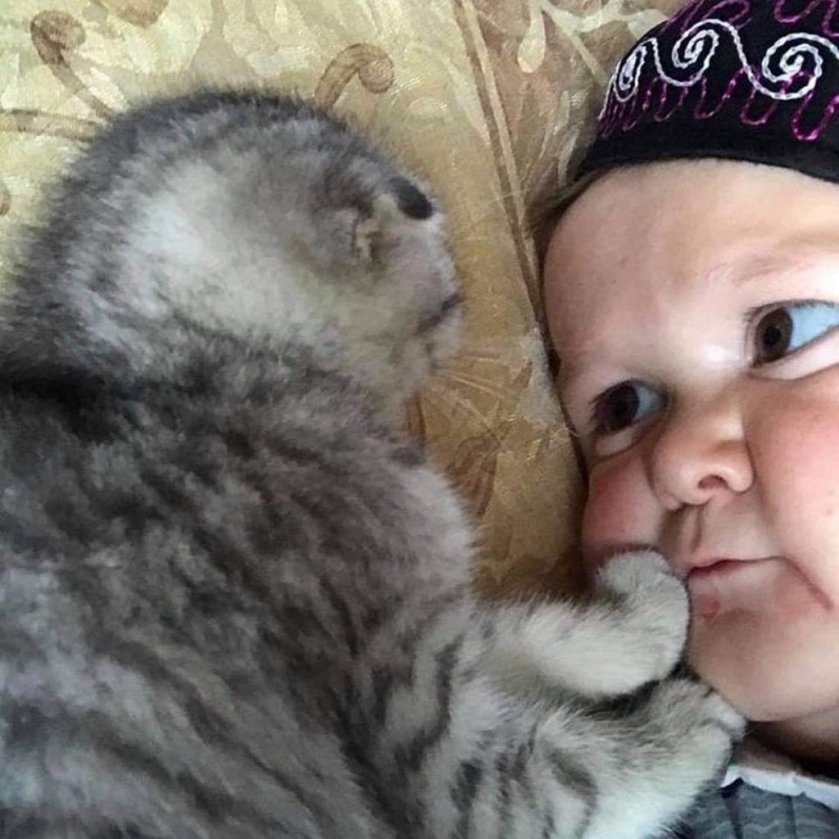
An older photo of the same cat in kittenhood, when Hasbulla introduced the kitty to his followers. The sweet cat
The orphaned lion cubs are among many wild animals brought safely out of Ukraine as the war there continues to rage.
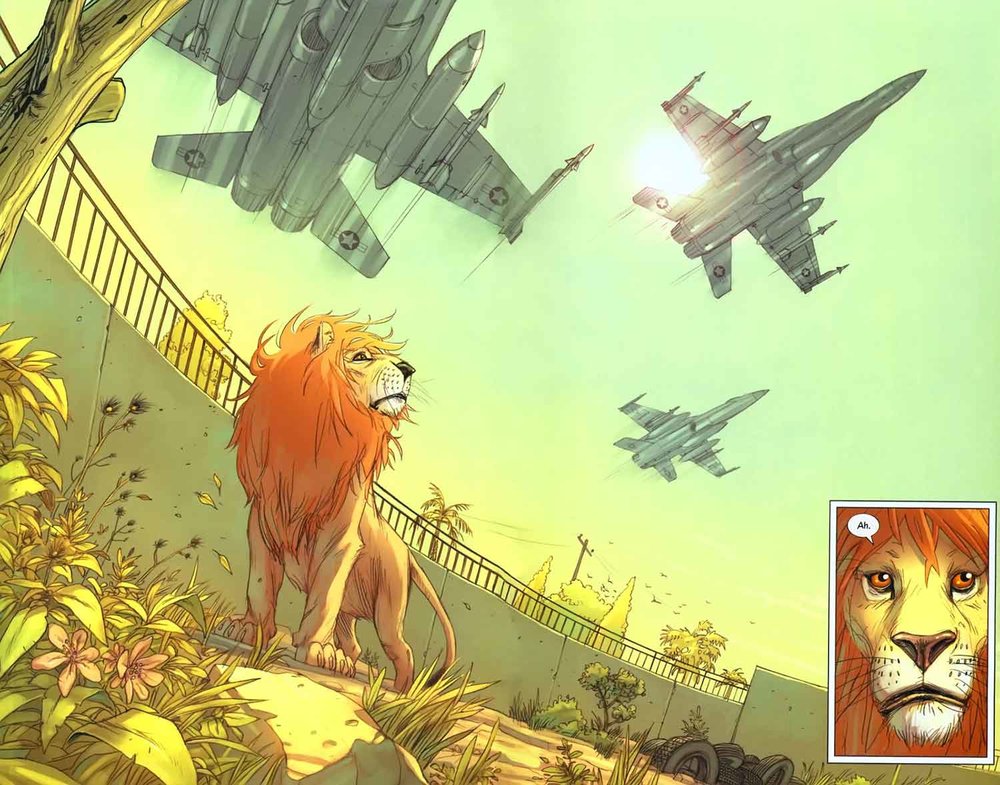
As the brilliant but depressing Pride of Baghdad documented in horrific detail, war isn’t just hard on humans, it’s hell on animals too.
The real-life lions in that drama were left to fend for themselves when American and coalition aircraft began pounding Baghdad in 2003, and their harrowing journey began when an errant missile literally opened a path for them to walk right out of the otherwise abandoned zoo.
As Russian soldiers began pouring over the border into Ukraine and Moscow’s missiles and artillery struck population centers earlier this year, Ukrainian activists sought to avoid a similar fate for their animals and worked on getting wildlife out of the zoos and the country, but there was only so much capacity at sanctuaries in countries like neighboring Poland.
At the same time, remaining in Ukraine was untenable. After Russian forces suffered a series of humiliating ground defeats to a Ukrainian counteroffensive — fueled by weapons systems and tactical intelligence from the US and other NATO countries — Russian President Vladimir Putin has ordered heavy and sustained missile strikes on civilian targets and critical infrastructure in already war-torn Ukraine.
One of his goals is to completely destroy the Ukrainian power grid via missile attacks on coal and gas plants as well as electricity substations, perhaps believing Ukraine might give up its opposition as its population freezes during the region’s harsh winters. The attacks have reached far into Ukraine, hitting the capital of Kyiv and cities like Lviv, which is more than 1,000 km from Russian territory, and some missiles have even disrupted power to neighboring Moldova. The Ukrainian people have not given up despite already enduring months of Russian artillery shelling, occupation and brutality.
But without electricity or reliable access to basics like clean water, caring for the remaining animals has become an impossibility as most people struggle just to keep warm, fed and hydrated.
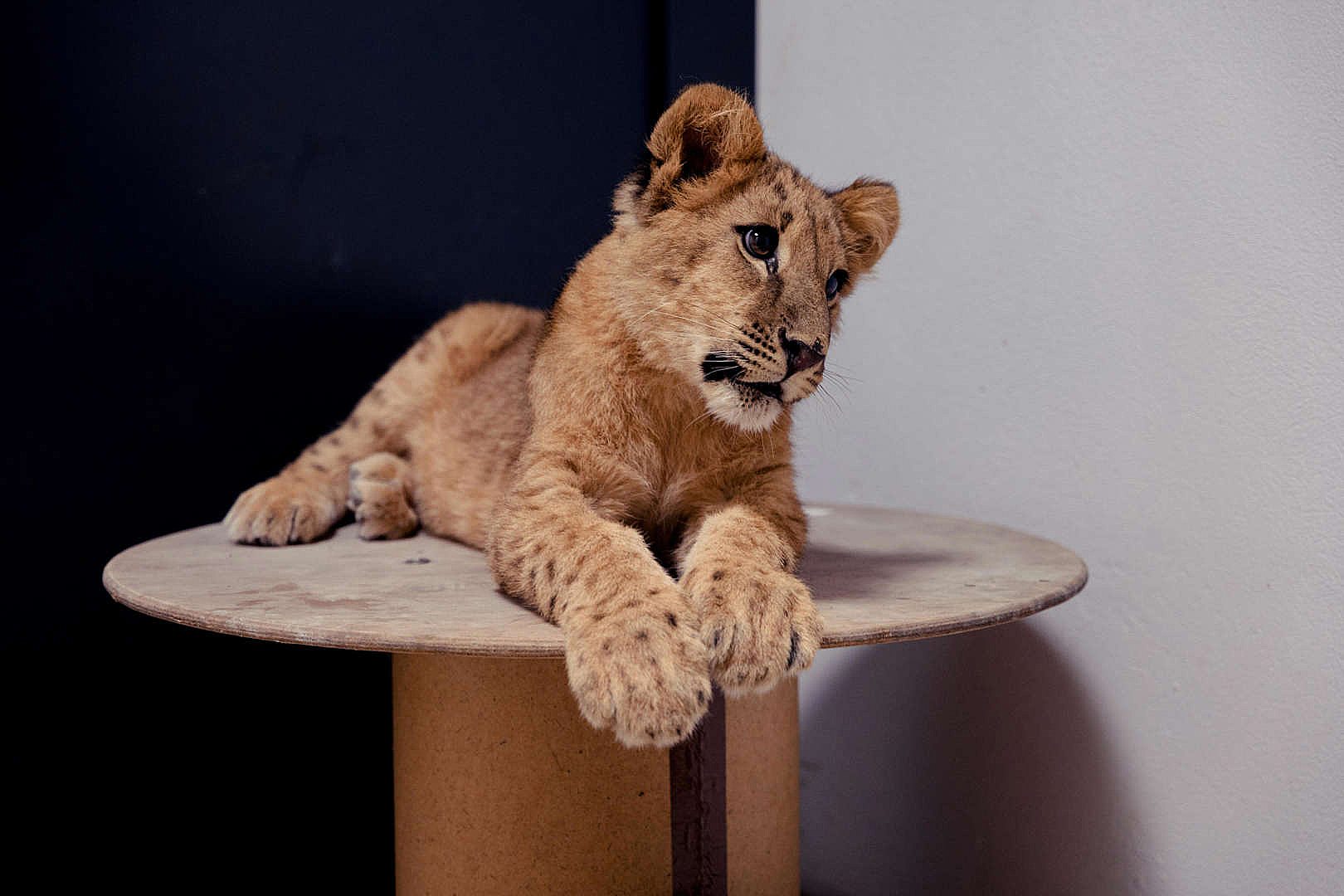
One of the cubs rescued from Ukraine, now living at The Wildlife Sanctuary in Sandstone, Minnesota. Credit: The Wildlife Sanctuary
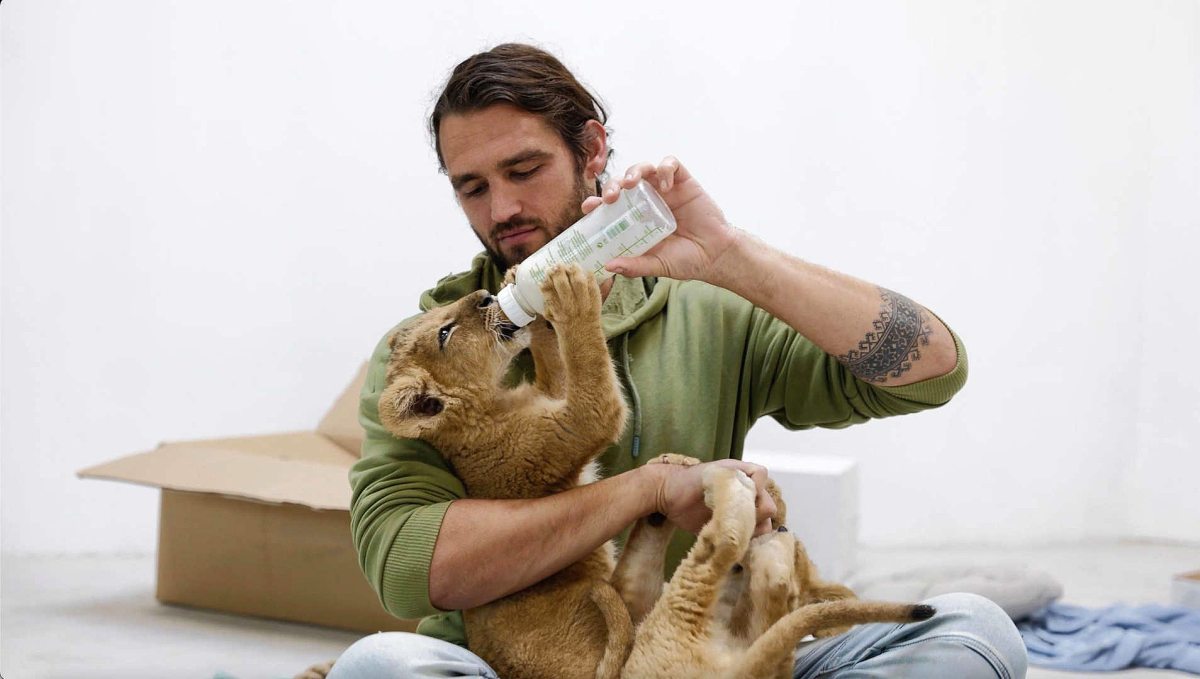
As a result, a quartet of lion cubs born several months into the war had to endure an epic, 36-hour journey that took them from Ukraine to Poland and finally to Sandstone, Minnesota, where they’re easing into their permanent home at The Wildlife Sanctuary. The facility is a non-profit and entirely funded by private donations, which means it’s not open to the public. Animals aren’t put on display, and their enclosures are built entirely for them, not for the benefit of visitor sight lines.
The lion cubs, who are all orphans, have already been indelibly impacted by the war.
“These cubs have endured more in their short lives than any animal should,” said Meredith Whitney of the International Fund for Animal Welfare, which facilitated the transport of the young cats some 5,000 miles from Ukraine to the central US.
The cubs, all between four and five months old, are named Taras, Stefania, Lesya and Prada. Taras is male while the others are female.
“We’ve cared for 300 big cats at TWS and are acutely aware of the trauma many big cats around the world experience,” said Tammy Thies, the sanctuary’s founder. “From the moment IFAW reached out to request our partnership, we knew these cubs had found their forever home at our sanctuary. They have a custom, open space to explore and soft grass or hay to rest their tired bodies on. Because of the generosity of our supporters, we can provide lifelong care to big cats at our sanctuary.”
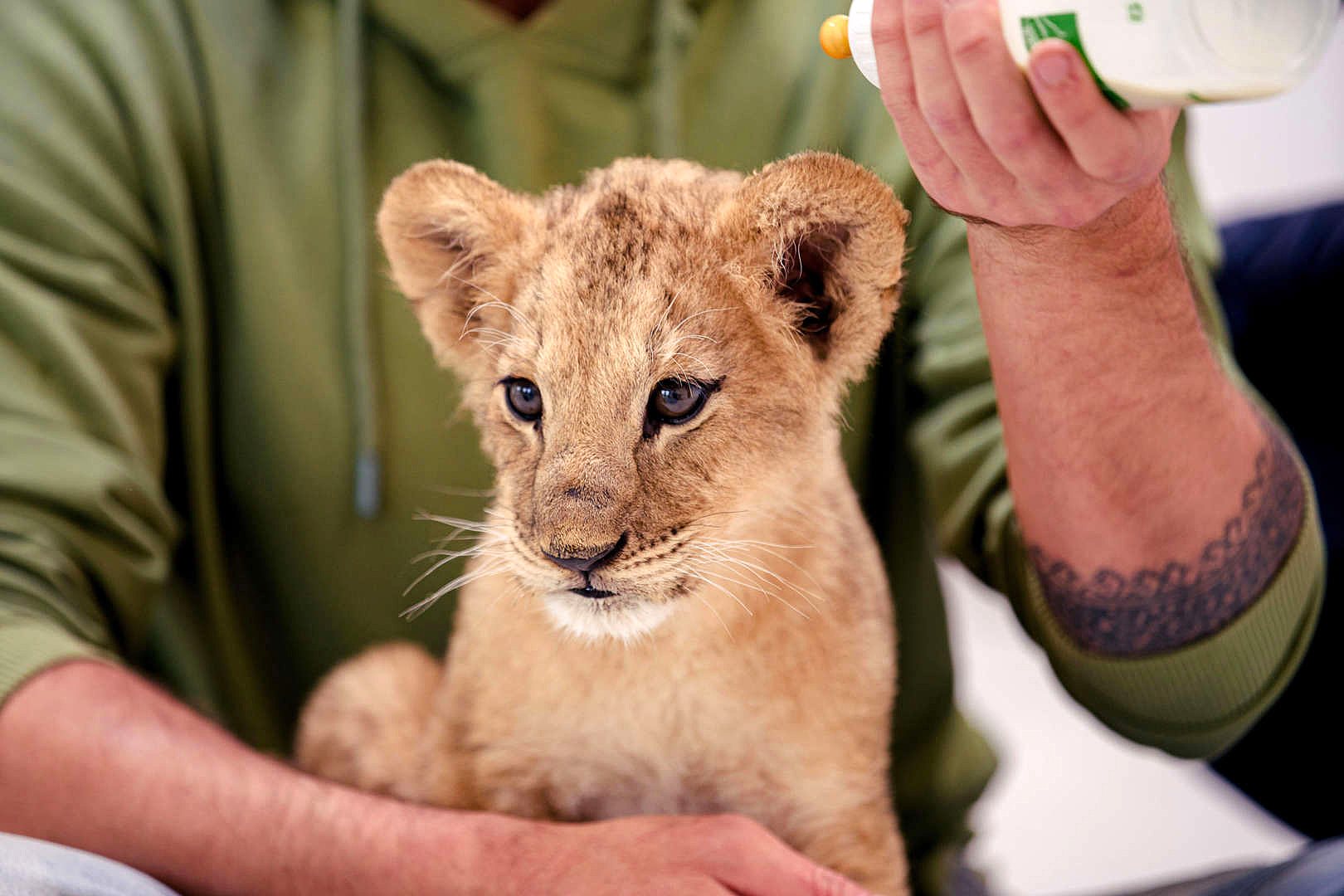
Bottle babies: The cubs are all between four and five months old and were not weaned before they were orphaned. Credit: The Wildlife Sanctuary
Pride of Baghdad is a 2006 graphic novel based on the true story of four lions who escaped Baghdad Zoo during coalition airstrikes in 2003. It’s poignant, beautifully illustrated and wonderfully told, but also harrowing and deeply upsetting.
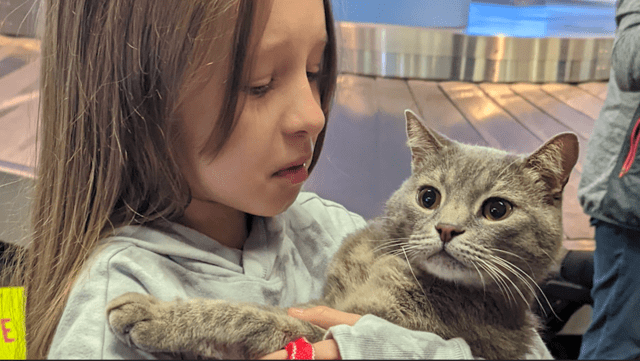
Ten-year-old Agnessa had to leave her cat, Arsenii, behind in Romania and was distraught at being separated from him.
Call me cheesy, but despite the polarization in our country, despite our disgusting political system and despite the fact that we’ve got plenty of flaws, America is still a good place to live and most Americans are good people.
I’m reminded of how lucky we have it here when I see photos of Uyghurs lined up by the thousands with their dead eyes in China’s concentration camps, and when I see clips of ghoulish Putin cronies on Russian state TV gleefully cackling at footage of destroyed Ukrainian hospitals, and laughing as they talk about drowning Ukrainian children.
I’m reminded of it in a much more hopeful way when I read stories like this one about 10-year-old Ukrainian Agnessa Bezhenar, whose family fled their war-torn country, spent time in Romania as refugees and eventually ended up in California.
Not only did Agnessa have to leave the only country she’d ever known and adjust to two foreign countries, and not only does she have to learn a new language and adjust to a new school, but her heart’s been broken since she had to leave behind her cat, Arsenii.
Agnessa was overcome with emotion after reuniting with Arsenii. Credit: Maria Bezhenar
Thanks to the efforts of two kind flight attendants, a volunteer at an animal rescue and her supportive new community in Cloverdale, Cali., Agnessa was finally reunited with Arsenii, a silver tabby with decidedly Buddesian looks. (No wonder Agnessa loves him so much!)
Geoffry Peters, the Californian who provided his second home to the Bezhenar family, also helped arrange to have Arsenii brought to the US.
“Can you imagine your life being turned upside down and you have to leave a country you’ve never left before, ride on an airplane you’ve never done before? Arrive in a new country, learn a language,” Peters told CBS News. “I mean, it’s like starting from scratch, only it’s on steroids. It’s like everything moving 100 miles an hour.”
Peters connected with the family through a program that helps Ukrainian refugees find homes in the US.
“Maria [Bezhenar] sent an email saying we’ve been matched and we have a family of six,” Peters said. “And so I went to my son and I said instead of renting this house, which he was planning on doing, would you be willing to donate it for two years?”
A flight attendant the Bezhenars met en route to the US connected the family with a fellow flight attendant who does animal rescue and recommended a local animal non-profit. When the staff at that rescue were told about Agnessa’s predicament, they contacted a colleague who was vacationing in Greece. That colleague agreed to travel to Bucharest, where Agnessa’s uncle had stayed behind and was caring for Arsenii. (A Ukrainian version of the Greek name Arsenios.)
The colleague brought Arsenii to California, a trip that took human and cat from Bucharest to Greece to Montreal, then Seattle and finally to Cloverdale. In all, Arsenii traveled more than 7,000 miles to be reunited with Agnessa.
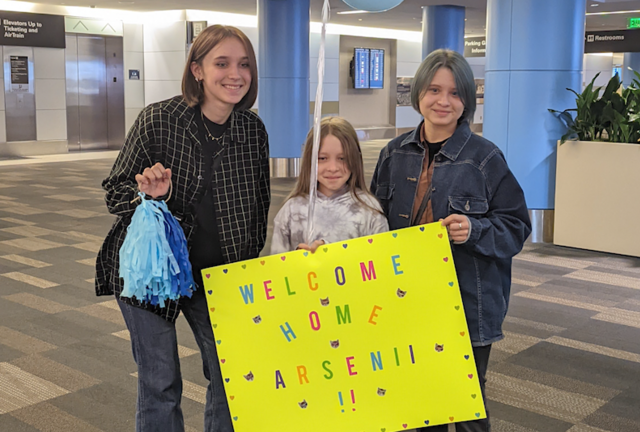
Agnessa and her older sisters waiting for Arsenii to arrive at the airport. Credit: Maria
Much like the Bezhenar family had arrived in the US to find Cloverdale locals holding up signs welcoming them to the US, the Bezhenars greeted Arsenii with their own signs — and lots of tears — when his long journey was finally over.
It’s been a rough year filled with trauma for the Bezhenar family, but they’ve found a new community, new friends like Peters, and have the support of people in Cloverdale, who worked together to make sure the Bezhenar’s new home was furnished when they moved in. They even got a piano for the home after hearing the kids liked to play.
The “kids identifying as cats” claims are popping up everywhere ahead of midterm elections. Why are we dragging cats into our culture wars?
The physicist Michio Kaku was a guest on a radio show and was answering a question about possible intelligent life visiting Earth when Joe Rogan interrupted him.
“The three pyramids are aligned with Orion’s belt,” Rogan said. “Do your research, man. Look it up.”
Rogan, who was into 9/11 truther conspiracies at the time, went on to explain how the Egyptians couldn’t possibly have built the pyramids on their own, and that aliens helped them align the positions of the giant structures to correspond to important celestial features.
Here was Kaku, one of the brightest minds in human history, co-founder of string field theory, a man whose textbooks are required reading for PhD-level physics students, getting talked over and “educated” by a pothead who rose to fame hosting a game show in which he forced contestants to eat cockroaches.
Rogan’s source was rock solid if you’re the type of person who thinks ancient aliens traveled thousands of lights to the Earth of deep antiquity to teach human beings how to stack stones on top of each other: Rogan’s friend’s wife, who works at the school district, insisted the litter box story is true.
Like previous claims of school administrators gone mad in service to alleged furries, Rogan’s claim was intentionally nebulous and unverifiable. He didn’t name the school, the district or the teacher. We have to take his word for it.
If you like that sort of thing, I have good news for you! Rogan’s in great company.
Marjorie Taylor Greene — the congresswoman who once claimed “Jewish space lasers” were responsible for California wildfires, the shining testament to US education standards who warned “the Gazpacho police” will imprison patriotic Americans, the genteel stateswoman who said scientists are creating fake meat in “Peach tree dishes” to “zap” Americans — has also warned of the apparently widespread practice of furry school children shitting in litter boxes.
Heidi Ganahl, GOP nominee for Colorado governor:
"they're mute and they don't talk, they growl and meow. it's bizarre. that's an extreme example but it's happening." pic.twitter.com/be2syn012e
Not to be outdone, Rep. Lauren Boebert has co-signed the cat conspiracy, telling donors that evil cat-loving people are hell bent on destroying wholesome American values by unleashing cat-identified children on an innocent and unsuspecting public.
Say it enough and it becomes true
The claims have been repeated so many times that they’ve spread to school board meetings and state legislatures across the country, perpetuated by gerontocratic leaders who think The Onion is a real news source. Two current gubernatorial candidates, in Colorado and Minnesota, have also repeated the claim.
“Schools are not disclosing that they are allowing children who identify as snakes, cats, whatever, they’re providing litter boxes for the [student] cats,” a Tennessee state representative said during a hearing in September. “And obviously it’s very disruptive to the learning process. If a child has that much of a self-identity issue they probably need a different environment, and it’s creating a lot of anxiety, a lot of confusion with the children who are boys and girls.”
“But Big Buddy,” you might be thinking, “I thought you said PITB was apolitical and you’re a moderate?”
It is, and I am.
I dislike all ideology equally because it invites people to abdicate their responsibility to think for themselves. I believe our two-party system and the divisiveness it fuels could be the ruin of our great nation, particularly at a time when polls show up to half the US population expects to fight in an ideologically-driven civil war. I worry that we are doing precisely what our enemies want by feuding amongst ourselves. Indeed, we know for a fact that “troll farms” in countries like Russia and China exist to sow the seeds of division and crank up poisonous political rhetoric online.
But I’m also against pure, abject, mind-boggling, depressing, Idiocracy-style stupidity and the idea that anything is true if someone says it is. Neither party has a monopoly on this kind of thing.
In particular, I’m not a fan of injecting cats into the American culture wars. (Although it’s not just cats at this point. A Texas school district was forced to deny rumors that administrators were allowing “furries” to eat out of dog bowls in school cafeterias.)
Three minutes of two state lawmakers in Tennessee insisting this week in a hearing that there is a “crisis” of kids identifying as cats and peeing in litter boxes in school hallways “across the state” pic.twitter.com/DDHWKIJtLz
We already fail these innocent creatures in myriad ways, from allowing declawing and doing little to improve weak animal welfare laws, to tolerating the idea that it’s perfectly acceptable for people to shoot cats with arrows, BBs and real firearms as some grotesque form of entertainment.
Now people want to use cats as the rope in a perverse game of cultural tug-of-war, which could further degrade their status and lead to more proxy violence against them.
Cats are vulnerable, and are already targets of hate
Violent criminals, including the perpetrators of the recent mass shootings in Uvalde and Buffalo, often get their start by killing cats before “graduating” to humans.
Cats are also frequent victims of redirected anger, with studies showing they’re abused and killed in domestic violence situations because they’re viewed as extensions of the feminine, or simply because killing them causes emotional distress to the people who care for them.
Politics have pervaded and infected so many things, cats and dogs are now staked to territory on either side of the political fault lines.
So how long will it be before an Alex Jones type claims the government is using cats to spy on Americans? The best conspiracy theories always have a nugget of truth to them, after all, and in the 1960s the CIA tried — and failed, spectacularly — to use cats implanted with transmitters to spy on Soviet officials.
How long before a Boebert or a Greene tells a crowd that it’s their patriotic duty to shoot “liberal cats” on sight? How long before Tucker Carlson follows up one of his thrilling UFO/crop circle/cow mutilation investigative specials with a breathless exclusive about America-hating cats?
“Why do so many cats want to see America burn? Why do cats like to line their litter boxes with the American flag? Does the government allow cats to vote? Hey, I’m just asking questions!”
If you think that’s outlandish, I’d point out that we’ve been there, done that.
Tucker Swanson Carlson has already claimed that “decadent rich people” who “detest the country” like to plot America’s downfall from cat cafes. Those evil America-haters stroke cats and sip lattes while “working through the night to destroy” our great nation, Carlson told his viewers. I’m not making this up.
Europeans almost extirpated domestic cats in the middle ages when people were convinced they carried the Black Plague, and cats had even bigger targets on their backs after the Inquisition’s most overzealous prosecutors insisted felines were used in Satanic rituals.
Likewise, my Google News alert for cat-related articles shows a depressing, never-ending feed of stories about people chugging beer and shooting cats with BB guns, mystery killers strangling neighborhood kitties and “hunters” who put arrows through these sentient, innocent animals who have the mental and emotional capacity of three-year-old human children.
And there’s already plenty of nonsense online about how our choice of pet reflects our political beliefs, as well as unhinged rants about the kind of people who prefer cats. There are even research studies about the intersection of politics and attitudes toward companion animals, and research shows certain people consider cats “liberal” because they don’t adhere to social hierarchies and don’t recognize authority.
Is it really a stretch to imagine some 85, deep into a case of Miller High Life, taking target practice at neighborhood cats because he sees them as evil, feminine, America-hating animals? Are we sure it doesn’t happen already?