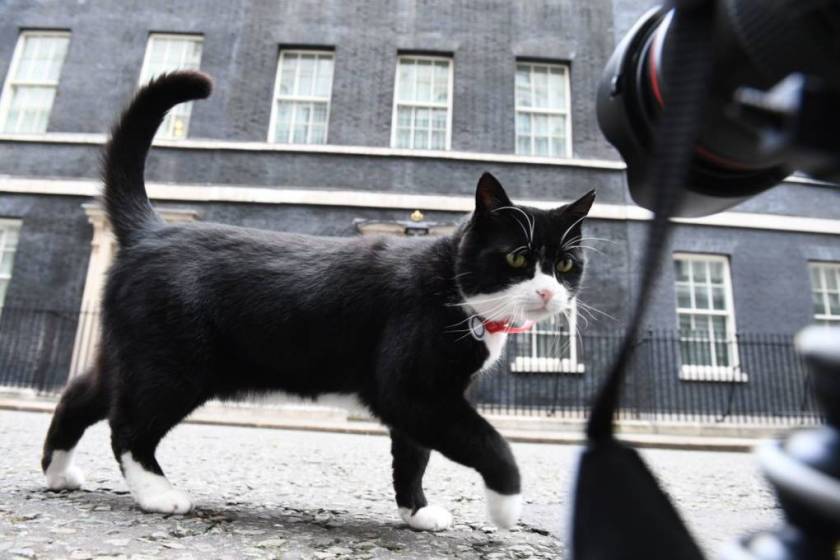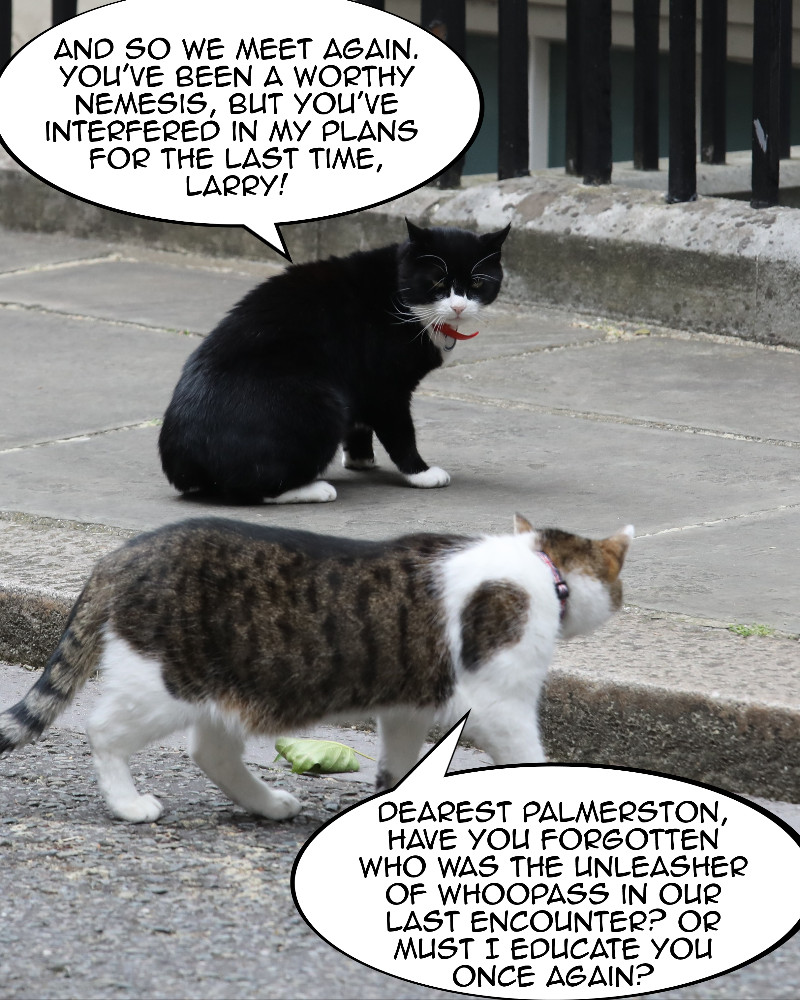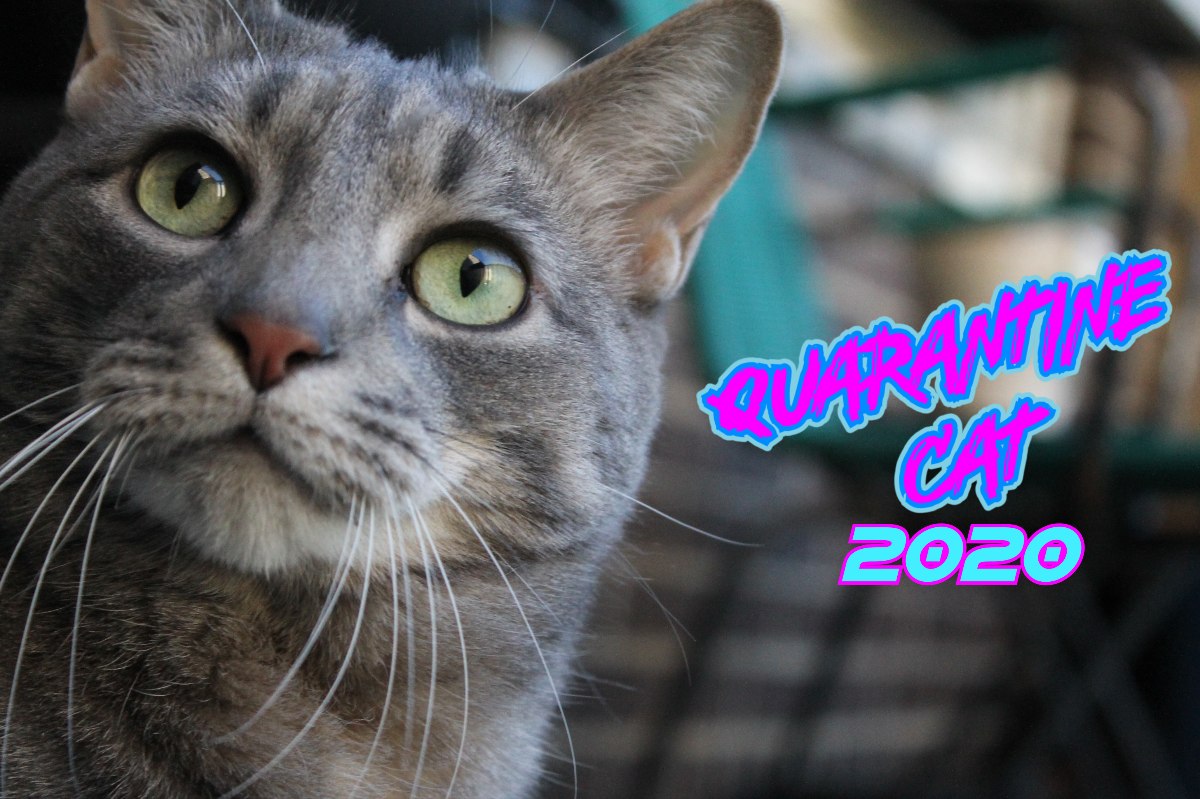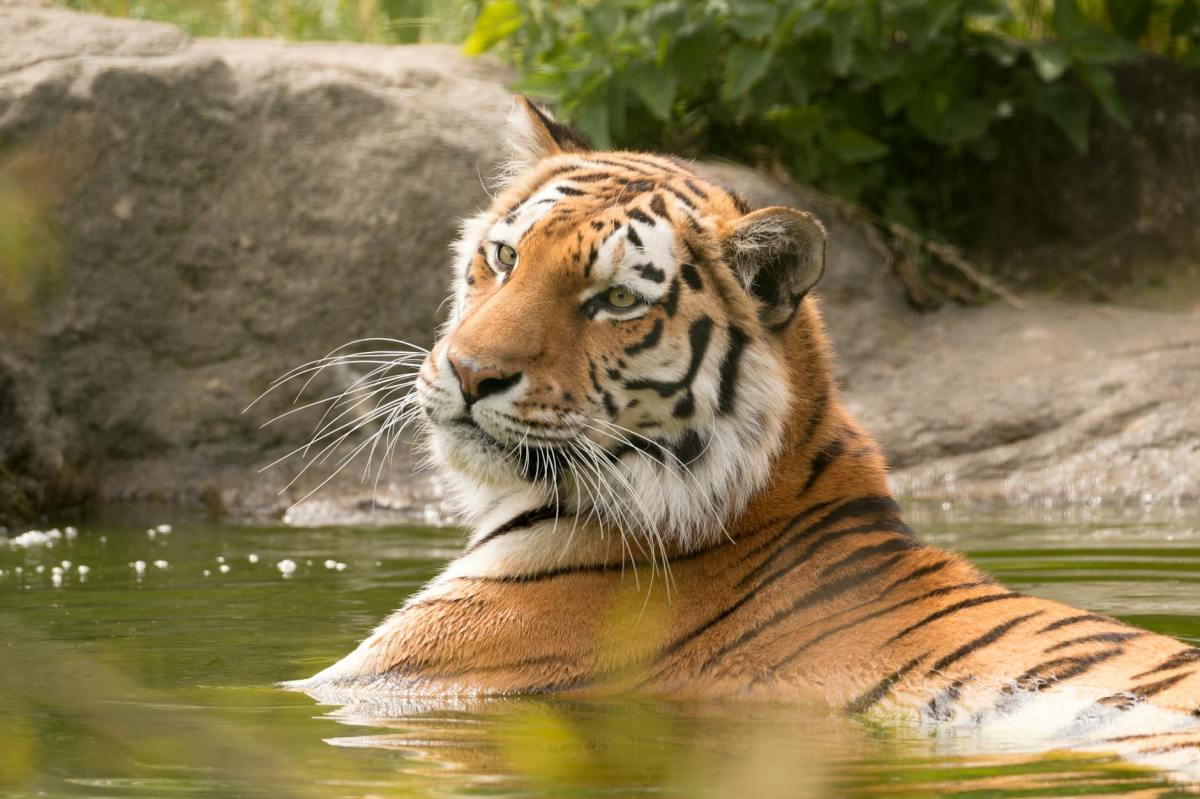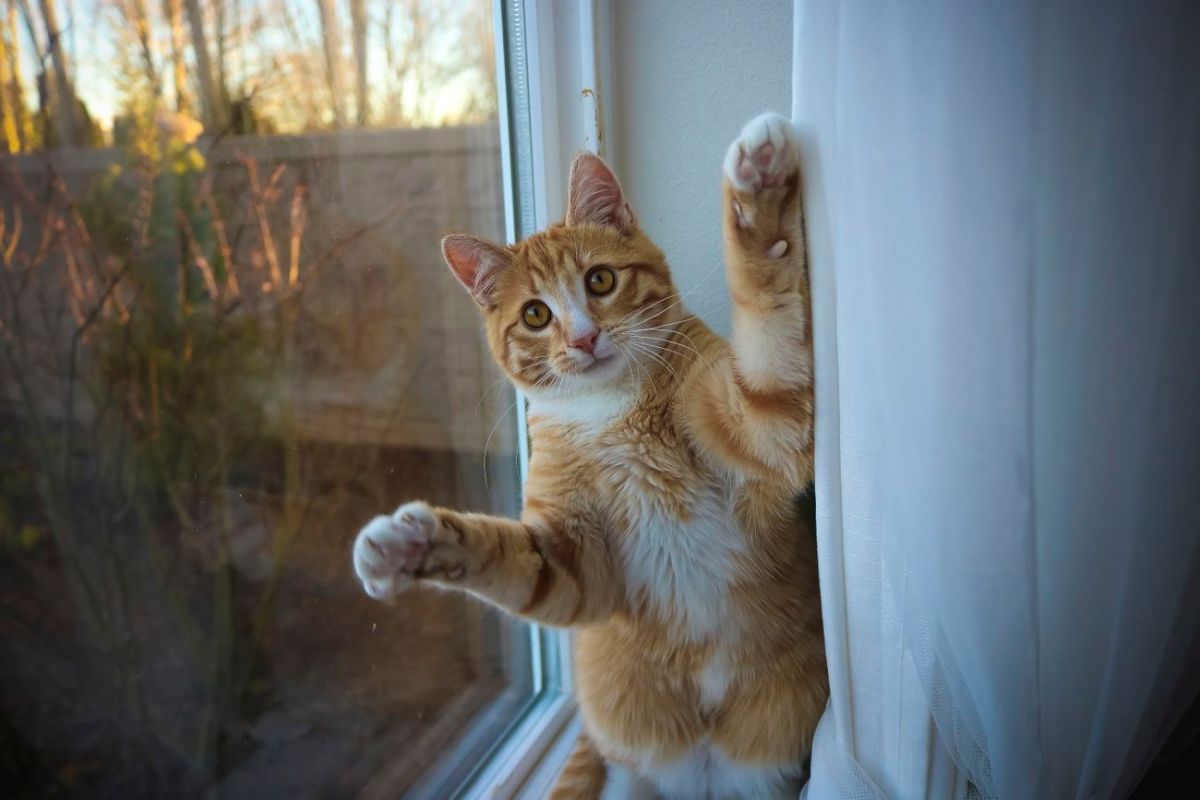
Taken during the spring of 2020 during the height of the quarantine, which Bud was blissfully oblivious to!


Flashback photos from the spring of 2020 when most cats were wondering why their people were huddling at home and only venturing out cautiously with masks and gloves.
Taken during the spring of 2020 during the height of the quarantine, which Bud was blissfully oblivious to!


“If you feed your pet contaminated raw meat or milk, they will likely die. I’m not exaggerating, just giving it to you straight,” one infectious disease specialist warned.
In more disconcerting news from the bird flu front, a new study warns of exceptionally high mortality rates for cats who are infected with the virus.
The study found 89.6 percent of avian influenza cases in cats are fatal, making the virus a virtual death sentence.
That applies to all species of cats, from the true big cats in the panthera genus — tigers, lions, jaguars and leopards — to felines, a broad group that includes domestic cats, lynx, cheetahs, pumas, ocelots, servals, jaguarundis and others.
“We don’t know if the cats are more susceptible than anybody else,” the American Veterinary Medical Association’s Michael Bailey told USA Today. “It’s just the fact they’re exposed to higher viral burdens because of where they go.”
Whether cats are more susceptible is up for debate, but one SPCA chapter said felids of all species are “uniquely vulnerable” to avian influenza because there are so many ways it can be transmitted to them by doing nothing more than what they typically do.
The @SeattleTimes reported on the first 2 cases of Avian bird flu that’s killed 2 wild #cougars in Washington, as discovered by Panthera #Puma Program and Washington Department of Fish & Wildlife. Learn more from Puma Program Director Dr. Mark Elbroch: https://t.co/feOcHnPpWT pic.twitter.com/v2nrM1jDOC
— Panthera (@PantheraCats) December 21, 2024
https://platform.twitter.com/widgets.js
Cats can be infected by catching and eating birds and mice, drinking raw milk, eating raw meat (including commercial raw pet food), and exposure to infected animals, including cows.
In Washington state, two wild pumas died after contracting the virus from prey, a development Panthera puma director Mark Elbroch called “troubling.”
“It certainly raises eyebrows and makes one wonder: is it indicative of a bigger pattern out of sight?” Elbroch asked, noting pumas are at the top of the food chain in the Pacific northwest.

To date, as many as 900 cattle herds across the US have tested positive for bird flu, according to the US Department of Agriculture, while two thirds of California’s dairy farms — 660 out of 984 — had confirmed cases as of Dec. 26.
Bird flu was the confirmed cause of death in a house cat from Washington who died after eating Northwest Naturals commercial raw food, which has since been recalled. Three house cats in Texas succumbed to the virus, which they possibly contracted from hunting mice. The bird flu was also responsible for the deaths of two domestic cats in California who drank raw milk, and 20 of 37 wild cats — including a tiger, several pumas, bobcats and a Geoffroy’s cat (pictured at left) — at the Wild Felid Advocacy Center, a sanctuary in Washington.

Veterinarians are warning people to keep their cats indoors and to avoid raw meat diets, which have become more popular in recent years. Cats should not be given cow’s milk anyway, since most are lactose intolerant. As a general rule, kittens should consume milk from their mothers or kitten-specific formula, but should not be given milk from any other source.
“If you feed your pet contaminated raw meat or milk, they will likely die. I’m not exaggerating, just giving it to you straight,” tweeted Dr. Kristen Coleman, an assistant professor at the University of Maryland’s School of Public Health.
While the west coast accounts for the majority of confirmed bird flu infections, the virus continues to spread. A map from the Centers for Disease Control shows where infections have been verified as of late December:

Unfortunately, the bird flu outbreak comes on the heels of a heavily politicized pandemic and a major loss in trust in American institutions like the CDC after efforts to obscure the origins of SARS-CoV2, the virus that causes COVID-19.
It’s not clear if the fallout will make Americans less likely to heed warnings about bird flu and other potential viruses, but animal welfare groups and virologists say people can keep their cats safe with a handful of common-sense steps.
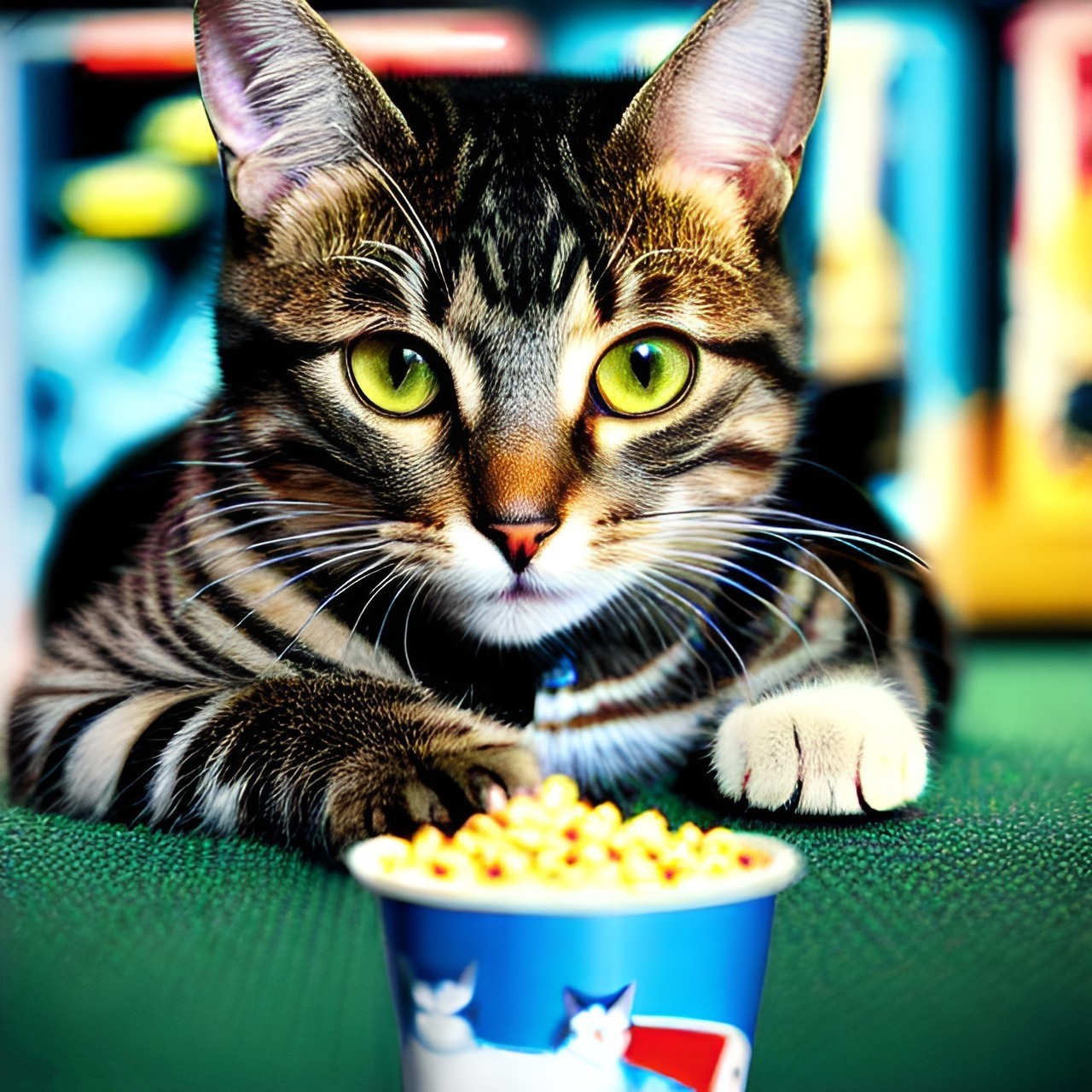
Would you bring your cat(s) to the movies?
The whole pet thing takes on a different vibe in Asia.
I first saw it in Tokyo where people push their cats along in baby strollers and luxury shops sell thousand-dollar accessories for felines and canines alike.
In countries like China it’s become a thing to dress pets in “cute little outfits” and pose them like dolls for social media snaps.
Now in Thailand — which is second only to China in pet ownership on the continent — people can bring their cats and dogs to the movies.
Agence France-Presse sent a reporter there to witness costumed Chihuahuas and poodles arrive by stroller and sit next to their humans for a screening of The Little Mermaid. A cat, who probably had no idea what the hell was going on, was plopped down on the seat next to her human.

A spokesman for the Bangkok cineplex told AFP he thinks pet-friendly cinemas will bring people back to the movies after the pandemic. Pet owners, he said, have been less likely to leave home because their animals are now used to having them around all the time and experience separation anxiety when they leave.
As Bud’s loyal servant I know he does have separation anxiety, but I wouldn’t bring him to the local Alamo Drafthouse or AMC even if they had pet-friendly screenings here.
For one thing, he’s a damn cat! He’s not interested in screens unless they’re showing birds feasting on seeds in a forest, with all the accompanying sounds, while he’s viewing it from the safety of his own home
Second, I know precisely how he’d react, and he wouldn’t take well to being in a theater with a bunch of dogs and a handful of other cats. He’d spend half the movie hissing and the other half crying. I can’t imagine it being a fun experience for him.
Then there’s the “dress code.” Pets in Thailand’s new animal-friendly screenings must wear diapers and sit in bags provided by the theater. This is to ensure they won’t defecate all over the seats, obviously, but my cat has never even tolerated a collar. The chances of him accepting a diaper are zero.

Lastly, at the risk of getting myself into trouble, the entire idea sounds about as appealing as trying to watch a non-kids movie in a theater full of screaming six-year-olds.
Don’t get me wrong, I loved accompanying my nieces to see the Super Mario Brothers movie, watching their delight at seeing the Mushroom Kingdom, Princess Peach, Mario and Luigi brought to life. (“You kids today with your Nintendo Switches, your fancy graphics and your networked games. We had Gameboy. It only had two colors, and you had to put little cartridges inside it to play games, and when they didn’t work we had to blow the dust out of ’em. You don’t know how good you got it, you kids today!”)
But do I want to be responsible for a feline with the intellectual development of a young child while I’m trying to watch a movie? If by some miracle Bud would stop hissing and/or crying, he’d focus on me and start yapping for snacks.
The movies just aren’t a great place for cats, and I’m not sure dogs would be thrilled to be there either.
Now, a hookah bar where you could bring your cat and give him his own little hookah filled with catnip? Maybe that could work.
“Yes, I’ll take an Amstel Light and a bag of your best Meowie Wowie for my little buddy here. Can I see the bar food and pate menus as well? We’ve just come from seeing John Wick 11 at the movies and we’re both famished!”

Things could have gone south for cats during the early days of the COVID-19 virus.
Someone bring this cat inside, give him a magnificent meal and make him king of the house.
After a man fell 30 feet down a “seasonal waterfall” into a creek drainage in Pleasant Valley, Calif., about 50 miles east of Sacramento, an insistently meowing outdoor cat led the man’s wife and neighbor “right to where the man fell,” per CBS News.
The incident happened a few minutes after 9 p.m. on Feb. 21, according to the El Dorado County Fire Protection District, whose EMTs rescued the man. Authorities haven’t provided updates on his status, but as he was airlifted to a hospital, his injuries were likely serious.
The heroic feline is described as the family’s “outdoor cat.” He should be amply rewarded with a real home.

A former UK health minister said the government mulled a plan to “exterminate all pet cats” early in the Coronavirus pandemic when the virus was new and poorly understood, the Guardian reported.
“What we shouldn’t forget is how little we understood about this disease. There was a moment we were very unclear about whether domestic pets could transmit the disease,” James Bethel told the UK’s Channel 4 news. “In fact, there was an idea at one moment that we might have to ask the public to exterminate all the cats in Britain. Can you imagine what would have happened if we had wanted to do that?”
Yeah, I can imagine a few million incredulous and angry people drawing their blinds, hiding their cats and figuring out ways to buy cat food and litter on the black market to avoid tipping off the authorities in the heavily CCTV-wired nation. If authorities tried to push the issue, things would have gotten ugly.
Here in the US we’d have another run on guns and Bud would run screaming underneath my bed, probably while demanding I slide his turkey and water bowl to him so he could lay low from “the feds.” Hey, he runs a catnip cartel. He’s used to it!
All jokes aside, I think we’ve forgotten that Chinese authorities were beating pets dead in the street and going house-to-house to put them down when the virus raged through the population there for the first time in late 2019. Animal welfare groups said thousands of pets were abandoned by their caretakers and either left to starve in empty homes or left to fend for themselves.
When the virus spread, ripping through countries like Italy, France, Belgium, Russia and taking hold in New York before spreading to the rest of the US, virologists still weren’t entirely certain whether cats — who are susceptible to an unrelated form of Coronavirus — could pass the infection to people. It’s not far-fetched to imagine that if the UK or other countries decided felines must be culled, US authorities may have followed.
The idea of a government demanding we kill our cats is disturbing on its own, never mind the prospect of it happening during a time when our pets were the few things helping us keep our sanity while we all huddled in isolation.
Thankfully reason prevailed and research ultimately proved that the chances of cats or dogs spreading COVID to humans is almost nonexistent.
Two new reports estimate the cost of caring for a cat over a typical 15-year lifespan.
Two stories published in recent days give wildly varying estimates of how much it costs for the privilege of serving a cat.
First we should note that both reports assume the cats are adopted in kittenhood and the average lifespan of a cat is 15 years. That’s in line with current data showing well cared-for, indoor-only cats live between 12 and 18 years, with outliers on both ends. It’s not uncommon to hear about cats living well into their 20s just as some cats sadly pass on before their time, whether due to natural causes, illness or accidents.
A Texas cat named Creme Puff is the Guinness World Record holder for longest-lived house cat, holding on for an astonishing 38 years until her death in 2005.
Caring for a house panther can cost between $4,250 and $31,200 over kitty’s lifetime, according to an analysis of associated costs by The Ascent, a vertical of financial literacy site The Motley Fool.

The estimates break costs down into recurring expenses — which include food, treats, litter and veterinary care — and fixed expenses like scratching posts, toys, additional cat furniture, bowls, grooming tools and similar items.
Not surprisingly, the biggest expense is food, the cost of which has been exacerbated by inflation, rising fuel costs and lingering supply chain issues that caused a cascade effect during the pandemic. Everything from sourcing metal for cat food tins to meat availability was impacted as ports were closed and meat processing plants were shuttered at various points since early 2020.
An unrelated estimate from OnePoll, based on a survey commissioned by pet food company Solid Gold, put the lifetime estimate of cat servitude at $25,304. Like the Motley Fool analysis, OnePoll’s respondents cited food as the primary expense, followed by veterinary care.
The wide range from the Motley Fool analysis could be attributable to geography, how well the cat is fed, and how many extra things caretakers do for their cats. A person who lives in Manhattan, splurges on bespoke feline furniture and buys ultra-premium cat food at almost $3 a can is going to spend significantly more than an eastern European cat servant who feeds raw or home-cooked food and builds their own ledge loungers and scratching apparatus.

Here in New York the cost of cat food in local grocery stores has spiked dramatically, but online prices have remained steady. Keeping in mind we’ve never really endorsed any particular brand or vendor on PITB, I switched from occasionally buying food online to Chewy auto-shipments during the pandemic because Bud’s favorite food was becoming very difficult to find locally, and that arrangement has worked out cost-wise as well.
Bud’s a true Pain In The Bud when it comes to “leftovers” so his primary wet food is Sheba Perfect Portions. It’s reasonably priced, comes in variety packs and helps avoid waste since each meal comes in its own 1.3oz recyclable blister-like plastic package. (Recycling is especially important with these single-serve packages, tiny as they are.) His dry food is Blue Buffalo Wilderness Adult Chicken recipe, although occasionally I’ll buy the weight control version of the same dry food when it looks like Little Man has gotten a bit chubby. He doesn’t protest, thankfully.
I feed him two 1.3oz wet meals a day and fill his dry bowl less than halfway at night so he can have his late snack and doesn’t have to wake me up if and when he gets hungry overnight. Sometimes I’m dimly aware of him sliding off me, padding over to his little dining nook and munching on dry food before hopping back onto the bed and dozing off again.
Overall it works out to about $21 a month, so I’d call it an even $25 with treats. You can schedule your auto-ship at any interval you choose, edit it at any time, and prompt the shipment immediately if you’re running out of food, so you can save more by ordering a few months’ worth of food at a time and taking advantage of free shipping on orders of more than $50.
Has inflation impacted cat food prices in your local area? How much does it cost to feed your cat(s) every month?