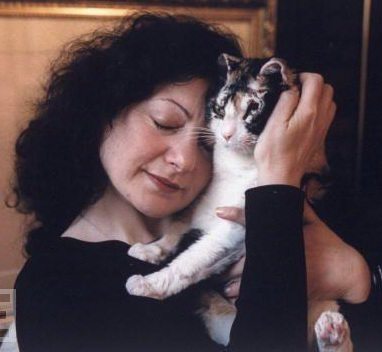
A writer reminds us that feline friendships don’t always come easy, but some of the hardest-won are the most rewarding.
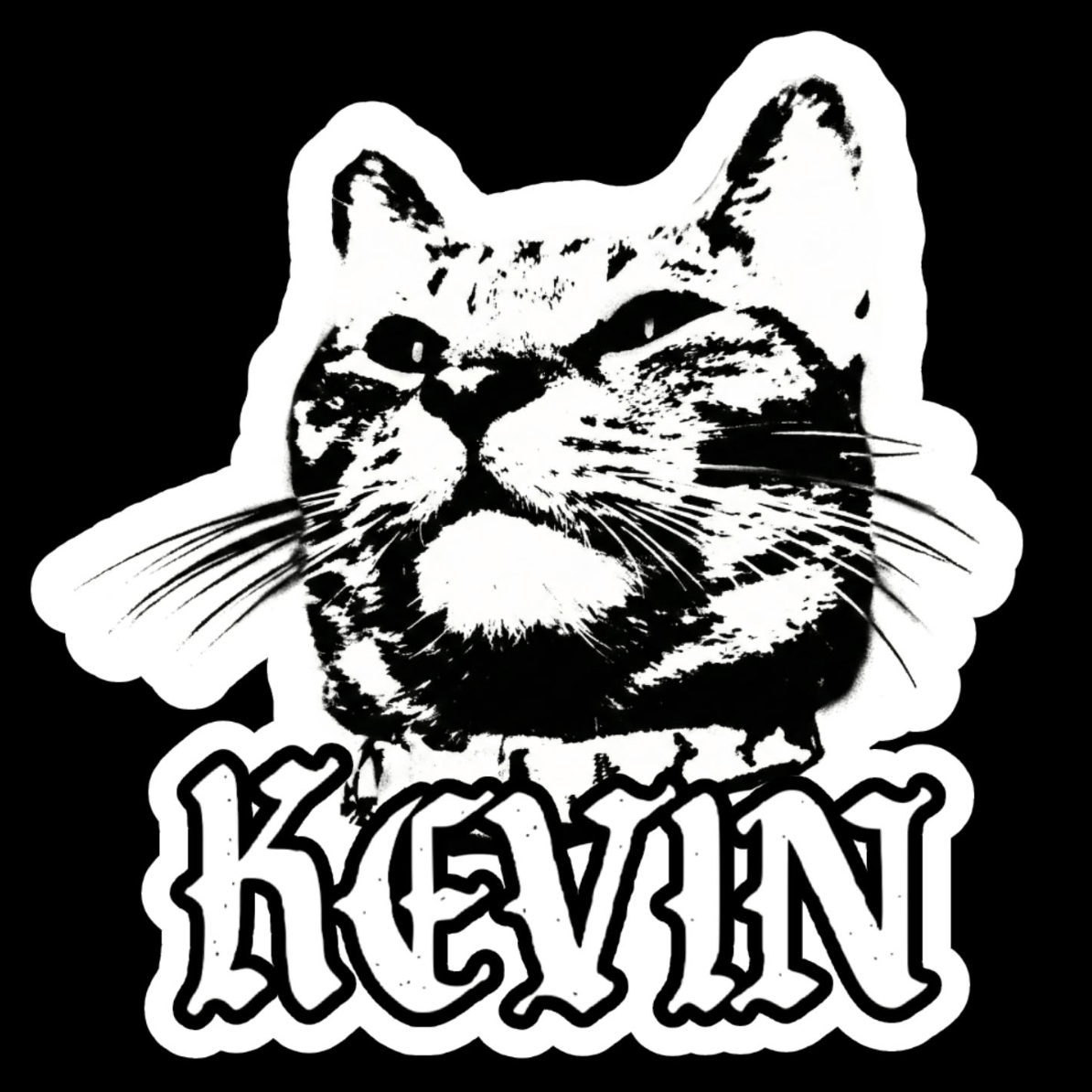
When San Francisco’s KQED, the local public radio affiliate, asked its culture writers to reflect on “one beautiful thing” from 2025, Rae Alexander chose her cat, Kevin.
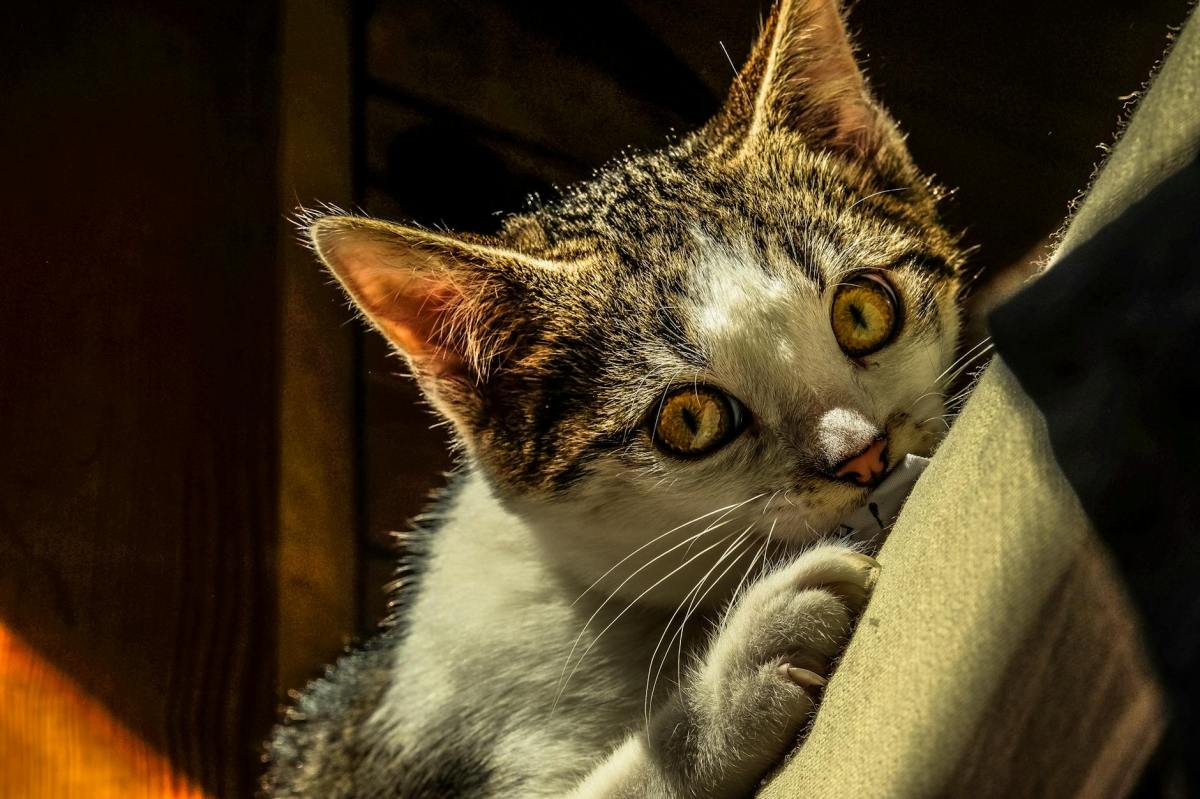
Kevin is “chaos in cat form,” a feline “sociopath” who doesn’t realize how much damage he does with his claws. The tabby, Alexander writes, is “never not screaming at us for food” and pads around as if he owns the place. (That sounds awfully familiar!)
After bringing Kevin’s heavily pregnant mother in from the cold earlier this year, Alexander adopted Kevin’s mother and his “well-behaved sister,” but was repeatedly rebuffed when she tried to get rid of Kevin himself.
Three potential adopters fell through while Kevin was growing out of his kitten stage, drastically reducing his chances of finding a home.
Then something crazy happened: cat and human came to a mutual understanding and the beginnings of trust led to friendship and love. As with any progress in gaining a cat’s trust, it was not a quick process, but Kevin eventually showed another side — a much softer, appreciative version of himself who enjoys cuddling and expresses love despite his quirks.
“As this fraught year draws to a close, I want Kevin to be a pertinent reminder to us all that the little things bumming us out today might just lead to the things that make us happiest tomorrow,” Alexander wrote. “Start putting all those everyday stresses on the stairs. You never know where that might lead in 2026.”
Apologies for going radio silent over the past week. This past Saturday I sat down to write and my computer was dead. As in completely dead — I couldn’t even trick it into loading BIOS or getting a boot screen.
So I said farewell to a machine that had served me well since 2018, that served as my primary platform for writing, producing music and gaming.
Now I’ve got an absolute beast of a machine centered on one of the new Ryzen chipsets, and it takes quite a bit of restraint not to go into nerdy details. I’m still setting things up, especially the music production workflow.
The important thing is, I’m able to properly sit at a desk and write again, and Buddy can properly supervise me from his desktop perch again, so we are now back!
Rhode Island’s law has some teeth: veterinarians who violate it will have their licenses suspended or revoked.
Five down, forty five to go.
With a new law going into effect in the fall, Rhode Island joins New York, Maryland, Virginia and Massachusetts in banning the declawing of cats.
Declawing may sound like a sort of kitty manicure, but the neutral name disguises a cruel form of elective mutilation that involves amputating a cat’s toes at the first knuckle.
It’s the equivalent of chopping off 1/3 of each finger, all to prevent potential damage to inanimate objects like furniture.
“Declawing is painful, unnecessary and inhumane. It’s no way to treat any pet,” said Rhode Island state Sen. Melissa Murray, one of the bill’s co-sponsors. “Fortunately, there has been growing awareness of the risks and cruelty of declawing. Our state must recognize that declawing is animal abuse and prohibit it altogether.”
Rhode Island’s new law is more prohibitive than some of the others: veterinarians who declaw cats once the law goes into effect on Sept. 1 will have their licenses suspended or revoked entirely.
Declawing doesn’t “just” cause short term pain from the procedure. It forces cats to change the way they walk and move in general, altering their gaits. As a result, declawing leads to early onset arthritis among a host of other medical problems.
Declawing also results in psychological and behavioral problems. Cats who are declawed often become depressed, and they’re more likely to avoid the litter box since standing on litter is painful for them.
Since the procedure also takes away their primary defensive mechanism, declawed cats are much more likely to bite, which along with litter box avoidance means they’re more likely to end up abandoned in shelters.
Bud’s got this one, which is sold as the Ultimate Scratcher, which is about 3 feet tall and sturdy, offering an optimal place for cats to literally scratch their itch.
Cats should never be declawed!
There are several viable options for keeping them from scratching furniture, including nail caps and redirecting them to scratchers. The latter are a bare necessity if you have a cat, as scratching is a natural feline behavior and our little friends will find something to scratch if we don’t provide them with appropriate scratching surfaces.
Since cats like to stretch while they scratch, I highly recommend getting a large tower scratcher with a secure base. Bud has one, he uses it constantly, and he does not touch the couch or the chair in the living room, nor does he touch any other furniture. It can be done, it just requires patience and consistent redirecting, with positive encouragement.
Negative reinforcement, such as yelling at your cat, will not achieve results. The only thing it will accomplish is damaging your relationship and trust with your cat.
Since New York became the first state to ban declawing in 2019, more states have considered similar legislation. Although routinely opposed by state Veterinary Medical Associations — special interest groups that represent a portion of veterinarians who see declawing as a reliable money-maker — lawmakers have allied with veterinarians in support of bans, as well as groups like the Humane Society, the SPCA, the Animal Legal Defense Fund and the Paw Project to overcome opposition and get bills passed.
When the abandoned garage she was sheltering in caught fire on a cold day in 1996, Scarlett the cat was determined to get all five of her babies to safety.
The night of March 30, 1996, was unseasonably cold, and as temperatures dipped below freezing, a young cat and her litter of five found shelter in an abandoned garage in Brooklyn.
Unfortunately for them a few humans had the same idea, huddling for warmth in the garage as they smoked crack.
Prodigy’s “Firestarter” was at the top of the charts at the time, an apt soundtrack for what would happen next — the crack-addled humans started a fire that spread quickly and took the young feline mother by surprise.
That momma, who would later be named Scarlett, scooped up one of her kittens and brought it to safety before immediately heading for the flames again.
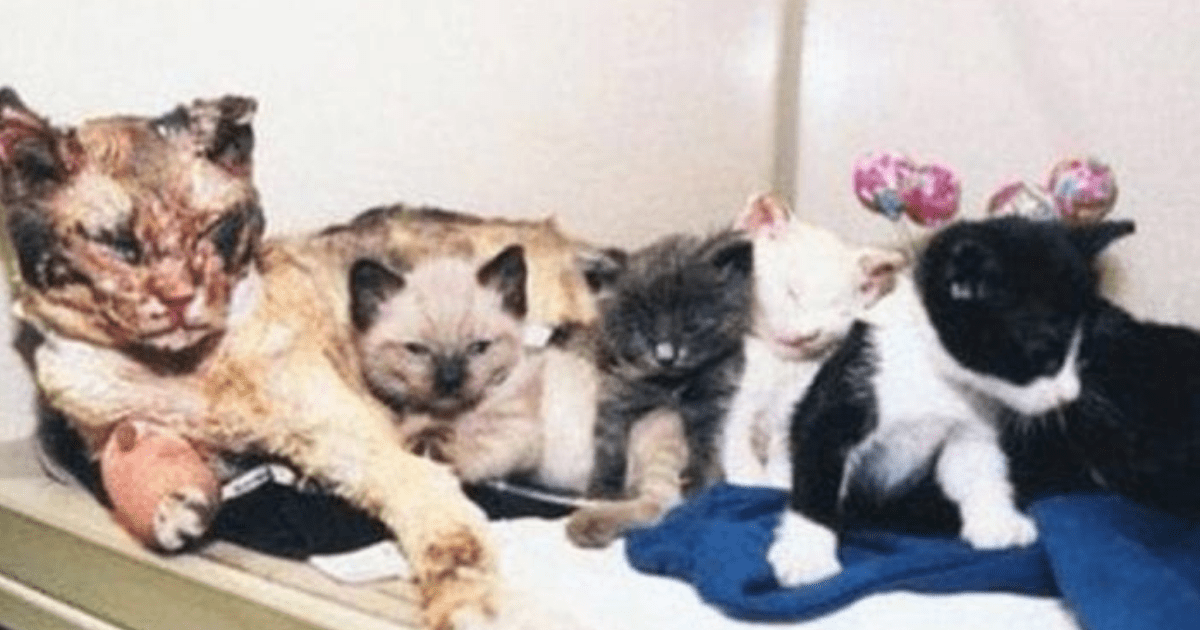
Scarlett, badly burned and bandaged, with her kittens at the North Shore Animal League. Credit: North Shore Animal League
FDNY firefighter David Giannelli was among the first responders at the engulfed garage and realized the small calico was rescuing her babies, running back into the flames to carry them out one by one.
When Scarlett had retrieved the last kitten, Giannelli watched her as she nuzzled all five of them to count them because she could no longer see — her eyes were sealed with burns and blisters.
Satisfied that her kittens were out of harm’s way, Scarlett collapsed.
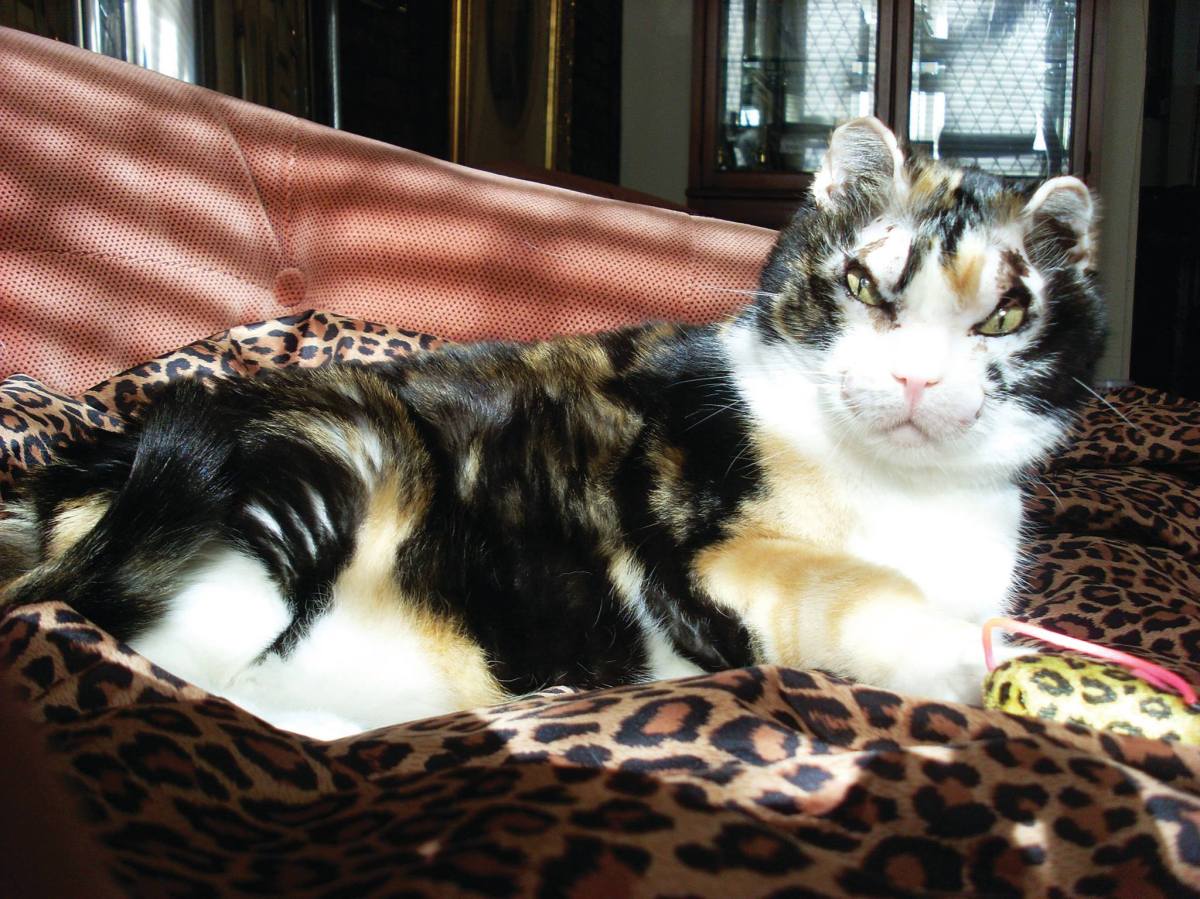
She paid a heavy toll for her actions. Her whiskers and the fur on her face was singed off, her ears were disfigured and she nearly died from smoke inhalation.
Giannelli brought the unconscious cat and her babies to New York’s North Shore Animal League, where veterinarians saved her life and put her on a path to recovery while also housing her with her beloved kittens.
Four of Scarlett’s kittens survived and were adopted out in pairs. Scarlett herself was adopted by New Yorker Karen Wellen, who was chosen out of thousands of applicants who wrote to the shelter. Wellen, who had suffered a medical emergency of her own, was specifically looking to adopt a special needs cat.
Scarlett’s kittens went to nearby families, who kept in touch with Wellen and scheduled reunions between her and the kittens she risked her life for.
“This cat is definitely the queen of the house,” Wellen told a TV news crew during a segment about Scarlett in the late 90s. “Whatever she wants is hers.”
Scarlett was a house cat for the rest of her life, living comfortably until she passed away on Oct. 11, 2008, at 13 years old.
Wellen with Scarlett.
Little Scarlett’s story is not only an example of extraordinary bravery, it’s testament to how much mother cats love their kittens and should give us pause before we separate mothers from their babies too early. The absolute minimum is eight weeks, but many shelters will only allow kittens to go home with adopters at 12 weeks old or older, which they say gives them enough time with their mothers and siblings to learn crucial social skills, like sharing, not playing too rough, and proper self-grooming.
In recent years, many shelters and rescues have enacted policies of requiring that kittens are adopted in pairs. Even when they’ve got loving homes with humans who dote on them and provide them with plenty of attention, having another kitten around to grow with and learn from has a huge positive effect on a young cat’s development.
Buddy’s my first cat, as regular readers of PITB know, and if I could do it all over again, I’d have adopted one of his litter mates too. And who knows? Maybe in the future we’ll learn that keeping feline families together is optimal. Scarlett is testament to the fact that mother cats will sacrifice their own lives to save their babies. If that’s not love, what is?
Kittens back home on Earth ask the brave catstronauts about their mission and life in space!
STAR COMMANDER BUDDY’S LOG, STARDATE 12142022, Aboard the USS Fowl Play
Lt. Commander Freddie Ferocious has command of the bridge while I’ve retired to my ready room for the important task of answering video messages from kittens in Mrs. Meowmore’s Kittengarden class.
Lt. Commander Freddie Ferocious, executive officer of the USS Fowl Play.Star Commander Buddy, commanding officer of the USS Fowl Play.
Myles, a three-month-old tuxedo who wants to be a catstronaut when he grows up, has asked me how catstronauts eat and use the litter box in zero gravity.
“Well, Myles,” I tell him, “as you may have guessed, regular litter is no good without gravity! You can’t bury your business, obviously, and you run the risk of free-floating poops and granules of litter escaping into the ship’s habitable areas, so a litter box is out of the question. That is why we have a sealed Litter Chamber and a special suction device. It takes some getting used to, especially since it tends to pull on your fur while you’re doing your business!”
Sophia, a five-month-old Calico, asks us what we eat in space.
“This morning at 0100 hours I was informed that our food replicators are malfunctioning, which means the entire crew has had to make do with freeze-dried kibble and pate MREs. No wonder we’re all so cranky! I have ordered the engineering department to devote all available resources and catpower toward the repair of the replicators. This simply cannot be allowed to go unresolved, for a cranky crew can easily become a mewtinous one, and I don’t want to have to start spacing kitties out of the airlock. Er, I mean throwing ’em in the brig! Chief Engineer Meowdi LaForge tells me the replicators should be back online by breakfast.”
Chief Engineer Meowdi LaForge
Simba, three and a half months, asks: “Dear Commander Buddy, how far are you from the place you’re traveling to, and what will you do when you get there? Is it true there might be monsters? That would be scary!”
“Thanks for writing, Simba! It’s 10.47 light years to the Epsilon Eridani star system, which is a long ride! Fortunately the USS Fowl Play is a pretty big, comfortable ship, with lots of stuff to do to keep her running, and some pretty cool options for entertainment and R&R when we’re off duty. We’re less than two light years away from our destination now, which means the Fowl Play has already flipped and is engaged in a prolonged deceleration burn. We have to do that, see, so we don’t sail right on past Epsilon Eridani!
“Where did you hear about the thing with the monsters? It’s not true, okay? I don’t know what anyone told you, probably that jealous jerk Commander Calvin, but I totally did not run screaming from a monster during the expedition to Luyten 726-8, okay? That’s fake news!
“What happened was, I saw the monster and issued a blood-curdling battle cry, but then I hit the wrong button on my Planetary CatRover, which caused it to spin around and run in the other direction. I was trying to inspire my team, not abandon them. I would have turned around and battled the monster too, except by the time I realized my mistake I was already more than half way back to the lander and the others had scared the monster away with their laser pointers.”
That’s my rover on the left, and the Scary Monster on the right. As you can see, I’m very brave for facing the Scary Monster:
Buddy’s Planetary Rover
The Evil Monster, whom Buddy was totally not scared of.
Five-month-old Pepper asks: “Star Commander Buddy, do you think smart aliens are out there? What do they look like? Will they be nice when you meet them?”
“Hi, Pepper! Those are good questions. Well we should remember that we cats are not only a super intelligent species, but we are intimidating too! We have sharp teeth and claws, some of us can roar, and we look really strong and tough! So maybe the aliens will be scared of us!
“I think there will be smart aliens even though we haven’t found other intelligent life on Earth. I mean, there’s humans, but they’re simple-minded creatures, aren’t they? That’s why they’re our servants! LOL! Maybe the aliens will only have fur on their heads like humans. Maybe they’ll look like dogs. Gross, I know! Or maybe they’ll look like a cross between elephants, manta rays and aardvarks.
“We just don’t know, which is why we’re trying to find out. Picture it: Star Commander Buddy, fearlessly leading the first expedition to make contact with smart aliens. It’ll be pretty cool to be in the history books. Tell ya what, Pepper. If we find smart aliens, you and the rest of Mrs. Meowmore’s class will be the first to know. After NASA, of course. We’ll send you pictures. Deal?”
Lt. Loki pilots our lander, and he’s a good example of how intimidating our species can look! Will aliens be scared of him?
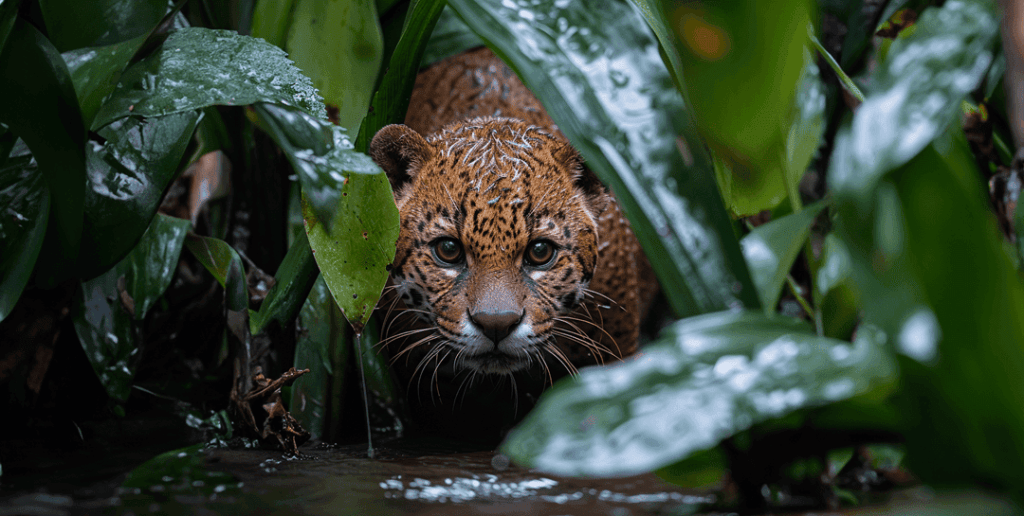
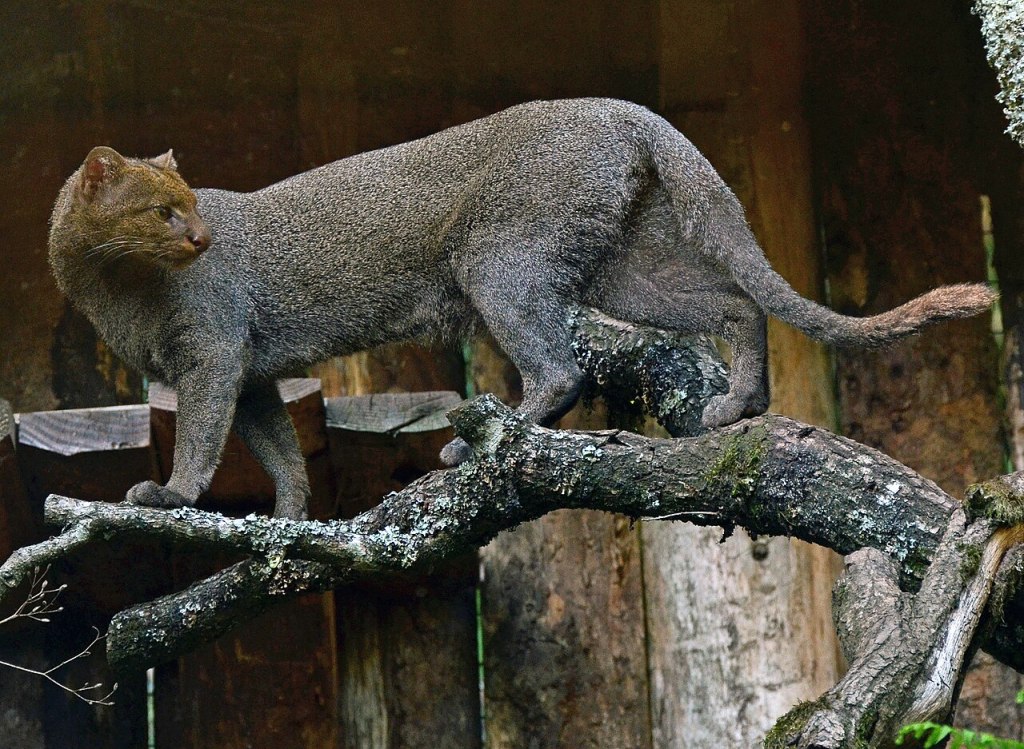
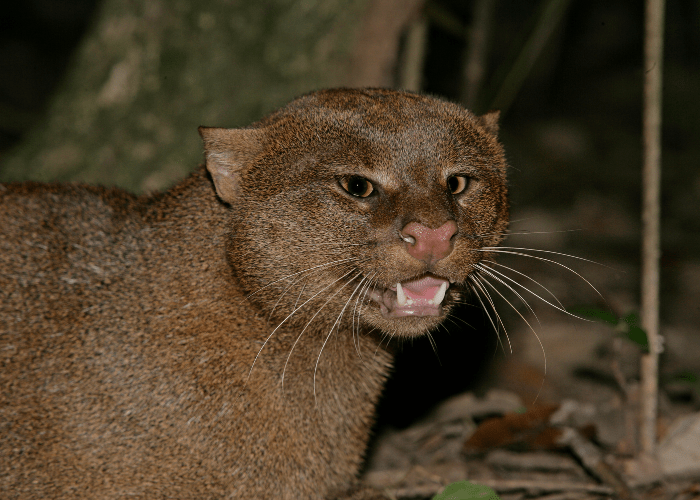
Vice Admiral Yo’oko Nahsuareo. Did you know jaguars make up only 4% of the Catstronaut Corps? They are usually sleep specialists, designing cryosleep pods for space travel and constantly improving comfortable napping spots on our ships.
More news in the world of Stray, the play-as-a-cat video game that’s taken the world by storm with rave reviews, plenty of memes and hilarious videos of real cats reacting to their humans playing the game.
Thanks to players who create custom game mods, short for modifications, Stray players can now replace the game’s ginger tabby protagonist with cats of their choosing. Currently there are mods that make the title cat a Siamese, a black cat with yellow eyes, a white cat with heterochromia (different color eyes), a tuxedo and a Calico, among others.
The most popular mod, dubbed Pick of the Litter, features many different coat colors and patterns that users can select and switch between.
There are currently at least two gray tabby mods, but neither of them match Buddy’s chubby incredibly muscular physique.
One modder is taking commissions from gamers and creating custom cat avatars based on photographs, so if a player’s cat has a unique color or pattern — or you just want something more accurate — they have that option. Perhaps we’ll inquire if it’s possible to add huge meowscles as well as edit coat patterns and colors.
Gray tabby mod: Clearly not meowscular enough to be Buddy.
Other mods allow players to substitute a dog as the protagonist (come on, now…), add snazzy spectacles to the kitty, and tweak graphics settings for greater photorealism.
Finally, if you’re a fan of a certain lasagna-loving cartoon cat, you’re in luck: He’s now in the game thanks to the efforts of one dedicated fan, and he’s as lazy and heavy-lidded as he’s always been.
It should be noted that mods are unique to the PC, which is an open platform. If you’re playing the game on a Playstation 4 or 5, you’re out of luck.
Garfield in Stray: Maybe you can feed him lasagna to restore his health?