You Can’t Neuter Your Ex, But You Can Donate To A Shelter To ‘Fix’ A Stray Named After Him

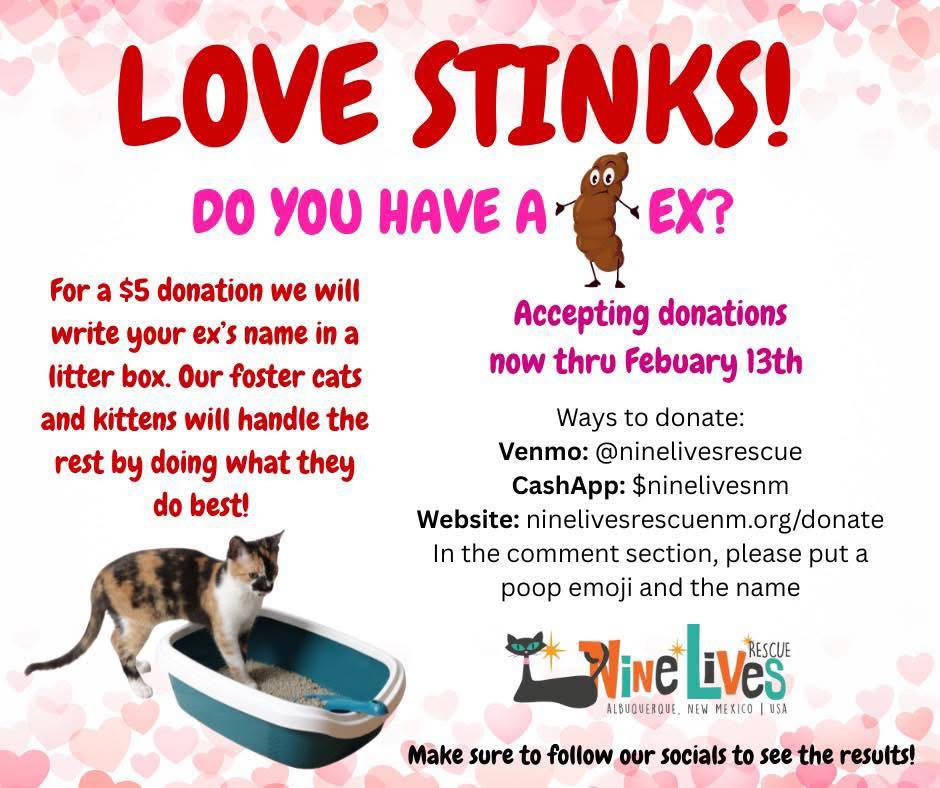
Or if your sense of humor tends toward the scatological, you can donate to put your ex’s name on a litter box.

Like other nonprofits, animal shelters face steep competition when it comes to scoring charitable donations, so the more a shelter can stand out, the better.

For some that means stories about their rescues and pets-in-waiting going viral. For others, it means finding clever ways to use occasions like Valentine’s Day to raise money.

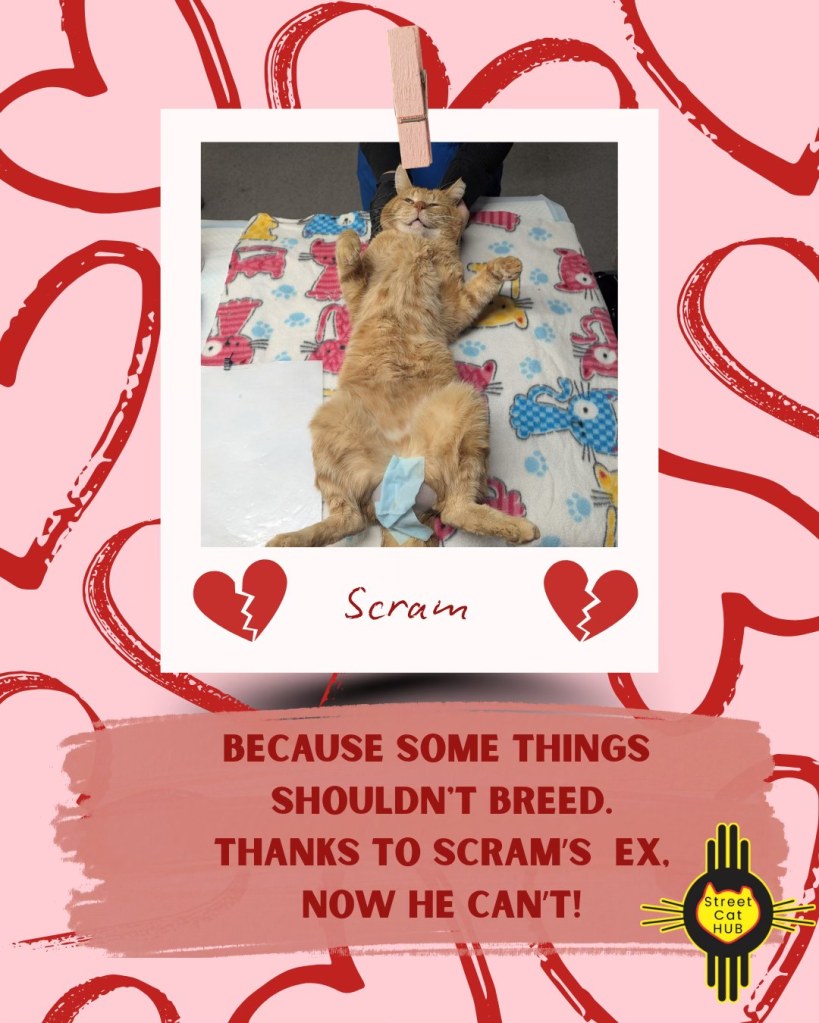
One of the latest fads involves making a donation to pay for spay/neuter surgery for a street or shelter cat — and having the cat named after your ex. As one shelter puts it, “because some things shouldn’t breed.”

Poor Scram has no idea he’s a stand-in for a despised ex.

If the idea of castrating an ex seems a little morbid to you, you’ve still got options.

For just $5, Albuquerque, New Mexico’s Nine Lives Shelter will write your ex’s name on a litter box.

“Our foster cats and kittens will handle the rest by doing what they do best,” the shelter’s staff wrote on Facebook.

A search turns up similar Valentine’s Day themed fundraisers in New York City, Oklahoma, Detroit, Washington, Alabama, Tampa, Des Moines, northern California, and dozens of other cities, regions and states.

Of course, there’s another option for people who prefer a more positive take: donating out of love for cats in general, because despite the encouraging drop in animal euthanasia over the past two decades — the result of relentless campaigns to get pets and street cats spayed/neutered — a few hundred thousand cats are put down every year. Every time a cat is fixed, that number drops, and existing cats have a better chance of finding forever homes.

Happy National Black Cat Day!

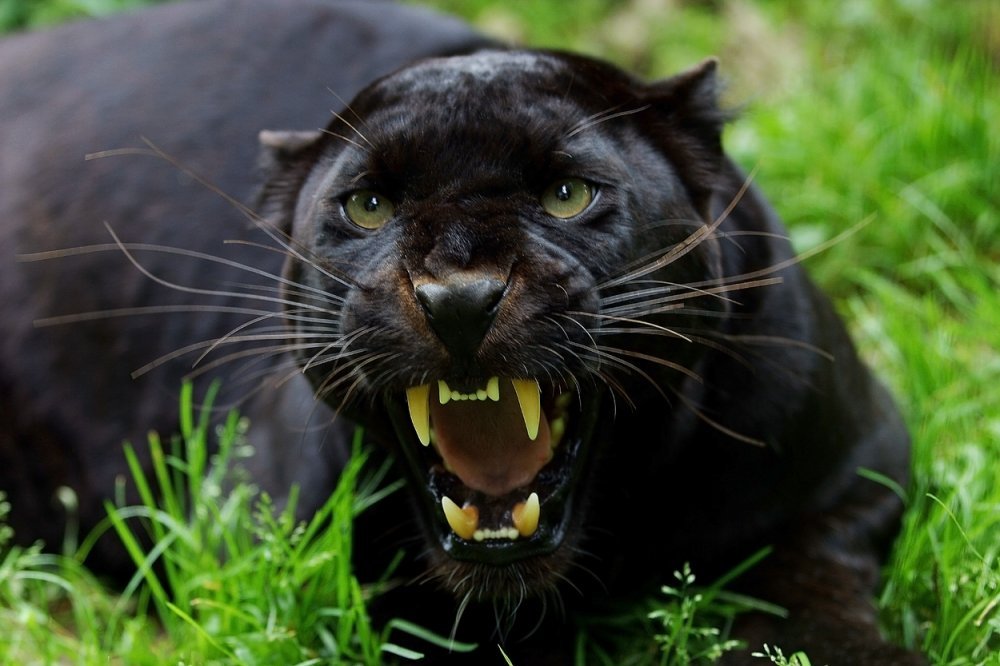
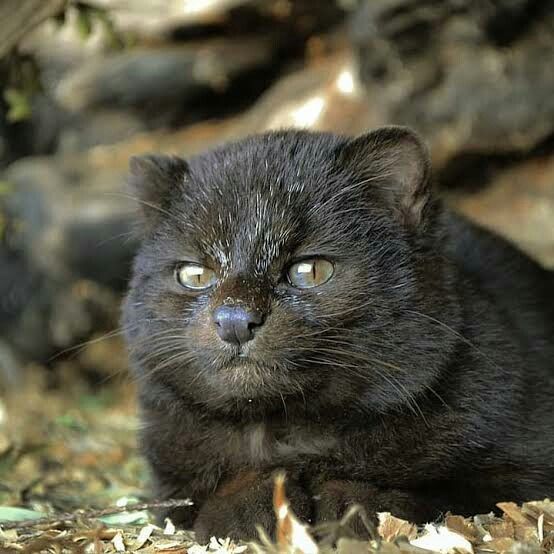
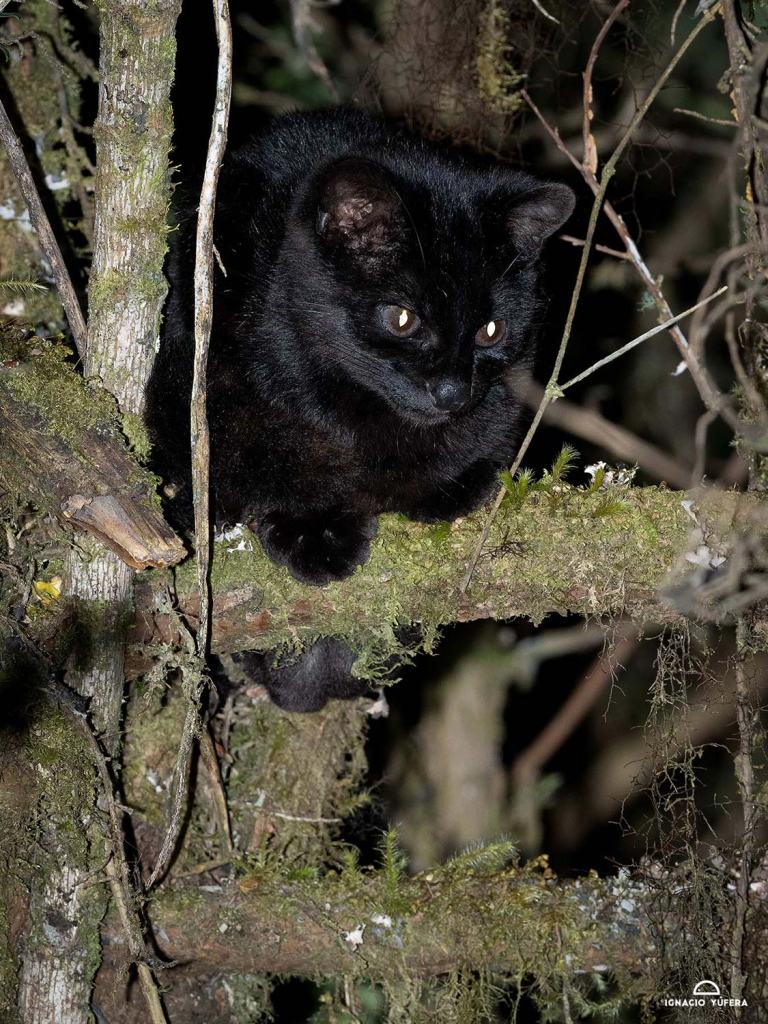
House cats, jaguars, leopards, Servals and jaguarundi are just some of the species that have melanistic (black) color morphs.

Everyone knows house cats, jaguars and leopards can be voids, but did you know other cats have black color morphs too?

The Asian golden cat, the Serval, jaguarundi, Margay, kodkod, Geoffrey’s cat, oncilla, Pampas cat, and bobcat all have melanistic variants.

Unfortunately when it comes to house cats, research supports the longstanding claim that black cats are adopted at lower rates, and are euthanized in greater numbers, than other felines. Part of that can be chalked up to superstition. It’s also due in part to the fact that black cats are more difficult to photograph.

But as these photos prove, all you need is some decent ambient light, smart framing and maybe a bit of shadow/highlight correction to help bring out a black cat’s natural features.

Melanistic kodkod.
Melanistic oncilla. Credit: Ignacio Yufera

Image credits: Top two rows via Pexels, with photographers listed in the captions. All other photos via Wikimedia Commons. Last image (melanistic oncilla) credit Ignacio Yufera

His Mission: Save Cats, And Prove Men Can Love Them Too

Abdul Raheem found peace when he adopted his beloved cat, Bambi. Now he wants other men to know felines are awesome.

There’s something to the idea that people who aren’t fond of felines just haven’t met the right cat.

For me, it was the experience of interacting with a friend’s affable tuxedo — just one, since all my experiences up to that point had been with people who kept an unreasonable number of cats.

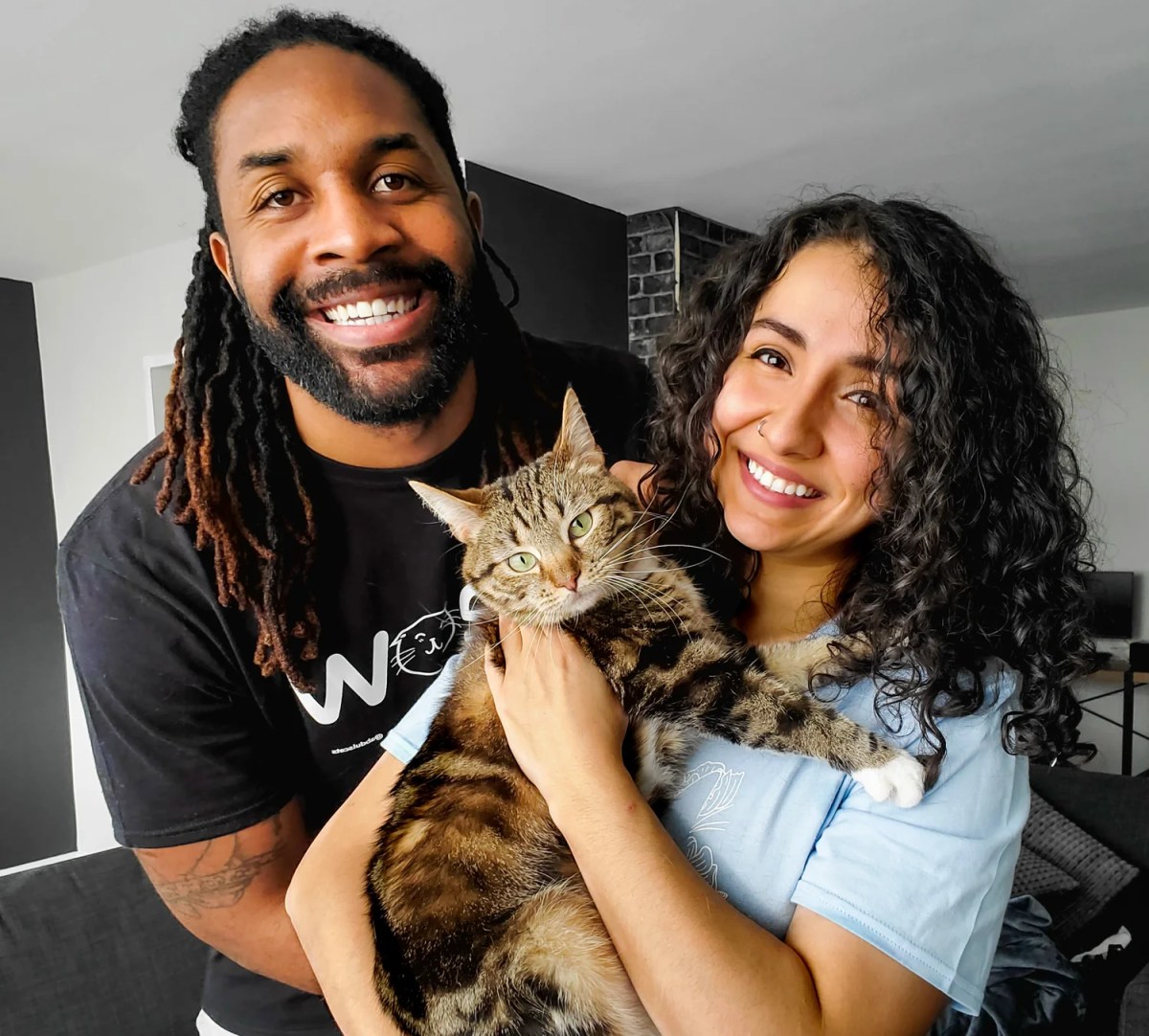
For Abdul Raheem, it was adopting a cat named Bambi after he and his wife fostered and fell in love with her.

“She brought me so much just happiness, and she made my mental health better,” Raheem told the Washington Post. “My anxiety was better when I was around her. So I just want to give other people that feeling.”

Raheem and his wife, Shamiyan Hawramani, became regular fosters for a shelter near their home, and Hawramani began filming her husband’s doting interactions with the baby felines.

Raheem with one of his bottle babies. He and his wife have fostered about 200 kittens and cats since the COVID pandemic.

Their friends found the videos amusing, and lots of people online have too. Abdul’s Cats, an Instagram account documenting Raheem caring for fosters, has a large following — including young men, many of whom are thinking about adopting a cat for the first time because Raheem is showing them something that challenges stereotypes.

My favorite anecdote is about Raheem’s enthusiasm for cats spreading to his friends. At first, they got accustomed to the idea of baby cats jumping in their laps and taking curious swipes at controllers on nights when they’d hang out and play video games.

Then they came to the same conclusion Raheem had: hanging out with cats is relaxing. Several of those friends have since adopted their own feline overlords, and Raheem says one friend now has four cats running around his house.

As for stereotypes, I think cat ladies get a bad rep. They’re the ones who do all the hard work of managing colonies, trapping, fostering, volunteering in shelters and placing cats in good homes.

When you think of the sheer volume of work, and the things they’ve accomplished — including a dramatic reduction in euthanized cats thanks to TNR efforts — they are the unsung heroes. They do it because they love cats.

Jordan Poole is one of several NBA players who have professed their love of felines. In the off-season Poole volunteers with his local shelter.

But it’s also good to toss aside labels and outdated attitudes, like the insistence that cats are companions for women only, and that adopting and caring for a feline friend is somehow unmanly.

Like Jordan Poole, the NBA guard who evangelizes the awesomeness of cats to his fellow players, men like Raheem show guys that they can adopt too.

Now if you’ll excuse me, Bud and I have a busy day of lifting weights, watching football, working on the hot rod we’re restoring in the garage, and drinking beer. Then we’re gonna chant Viking drinking songs until we pass out.

Header image credit Abdul’s Cats

Happy Tuesday Blog Hop

https://www.linkytools.com/basic_linky_include.aspx?id=317817

Vet’s Urgent Warning Over Laser Toys, Plus: US Now Has 200+ Cat Cafes

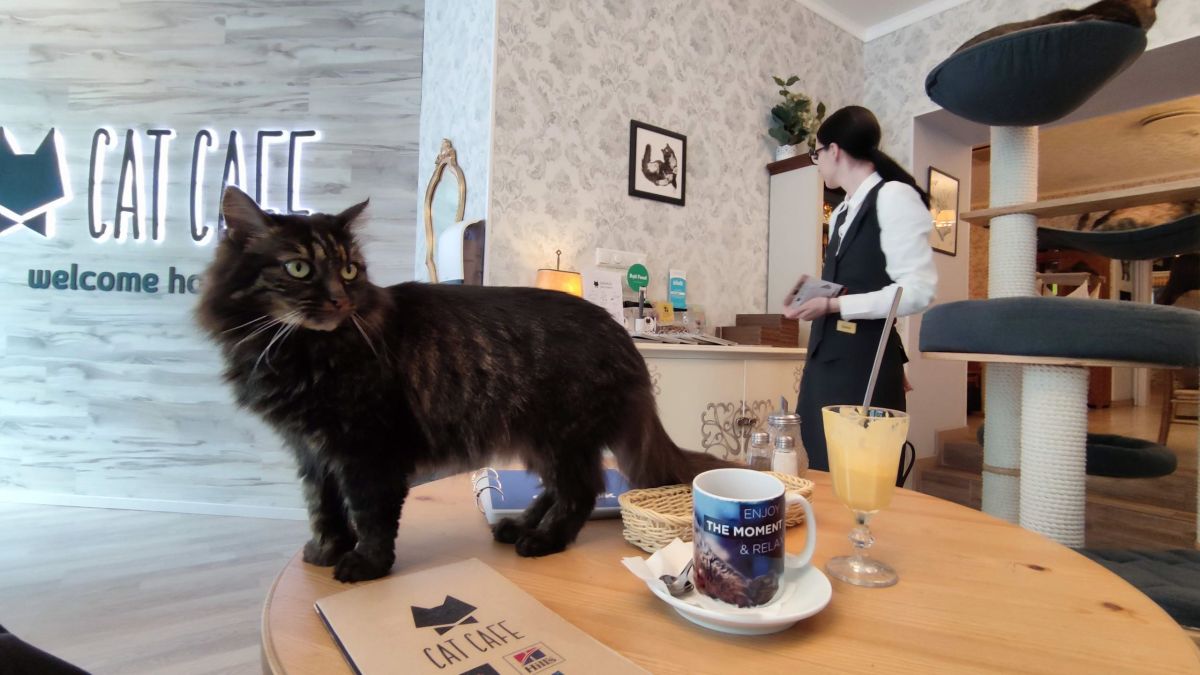
People who frequent cat cafes say they feel relaxed among the little ones. Hundreds of thousands of felines find their forever homes via cafes in the US, which are typically integrated with local shelter and rescue networks.

You may have noticed that most journalists don’t actually interview anyone these days, and the majority of “news” stories are either rewrites or lazily-assembled, 300-word virtual birdcage liners about which celebrity or influencer is “clapping back” at haters for “throwing shade” at them, with quotes directly copied and pasted from X or Instagram.

It’s cheap, easy content — far cheaper than funding war correspondents or impactful investigative journalism — and it doesn’t require reporters to leave their desks, speak to sources on the phone, or even fact-check what they’re writing.

“Well, they said it” is good enough for modern newsrooms, which is why we can’t have a national story or a disaster like the wildfires without waves of misinformation getting amplified by press and influencers alike. And the executives of the handful of remaining news companies wonder why trust in media is at historically low levels.

So these days, a veterinarian warning about laser toys via a TikTok video is considered international news. Nina Downing, a veterinarian with UK pet charity PDSA, took to the social media platform to warn about “laser pointer syndrome,” which she says can result in obsessive compulsive behavior in cats and dogs.

Our furry friends can become frustrated that they never actually capture the elusive red dot, according to proponents of the theory, and too much laser pointer play can result in a pet who barks at shadows or tries to tackle anything that moves.

“Cats have a hunting sequence to follow which is replicated in play, however if it doesn’t come to a successful capture at the end, this can cause them to become really agitated,” Downing warns.

Credit: WIkimedia Commons

Happily, Buddy is impervious to this alleged syndrome because he doesn’t actually have a “hunting sequence.” Born indoors, he’s known nothing but warmth and comfort, and food is something that’s served to him on a precise schedule, not something that needs hunting.

Accordingly, when we play with wand toys, Bud’s version of a “kill” is to grab the plush toy or feathers while dancing around on his back paws. He bobbles the toy while he dances, lets it go and resets the game.

The concept of a kill bite is completely alien to him, and apparently not even his feline instincts are enough to tell him there’s another step to “winning” the game. Still, I tell him he’s a good boy and a fierce little tiger because we can’t have fragile egos getting bruised.

That said, if you find lasers are one of the few reliable ways to get your kitty moving, it’s probably a good idea to wind down by switching to a wand toy. Let the little one simulate a kill, get a few rabbit kicks in and feel like a champ. There’s little or no research supporting the concept of laser pointer syndrome, but it still couldn’t hurt to give your feline overlord something tangible to “kill” at the end of a play session.

Cat cafes are more popular than ever in the US

USA Today has a story today about the apparent ubiquity of cat cafes in the US, and how they’re changing things for the better, for felines as well as people.

Using data from Yelp, the newspaper found there were 200 cat cafes, give or take, across the country at the end of 2024, up from about 75 in 2020.

“When we started, people weren’t quite sure what they were, there was a lot of explaining how they worked and what they were,” said Laura Konawalik, owner of a chain of three cafes featuring felines in North Carolina. “Nowadays people come in knowing the general concept.”

The same data shows searches for strings like “cat cafes near me” have increased 78,700% between February of 2020 and February of 2024, USA Today reported.

Patrons playing with cats at a cafe in Osaka, Japan. Credit: Wikimedia Commons

While cafes in some other countries are populated by felines owned by the proprietors, most cat cafes in the US are integrated with their local shelter and rescue networks, so patrons can adopt if they fall in love with the little ones they meet while having a cup of coffee or tea.

That means some of the oldest cat cafes in the country have facilitated thousands of adoptions and continue to find forever homes for their animals.

About 330,000 cats were euthanized in the US in 2023, the most recent year for which complete statistics are available, according to Shelter Animals Count, a national database that keeps track of shelter intakes and cat/dog euthanasia figures. Data for the first half of 2024 showed a decrease from the previous year’s numbers, but numbers from the latter half aren’t available yet.

Jet Taylor, a regular at Konawalik’s Mac Tabby cafes, says he keeps coming back to destress and feel calm.

“I would be willing to bet,” he said, “you could put a heart rate monitor on me and when I’m sitting there petting a cat, my heart rate goes down.”

What It’s Like Adopting An Internet Famous Cat, Plus: The Argumentative Cat

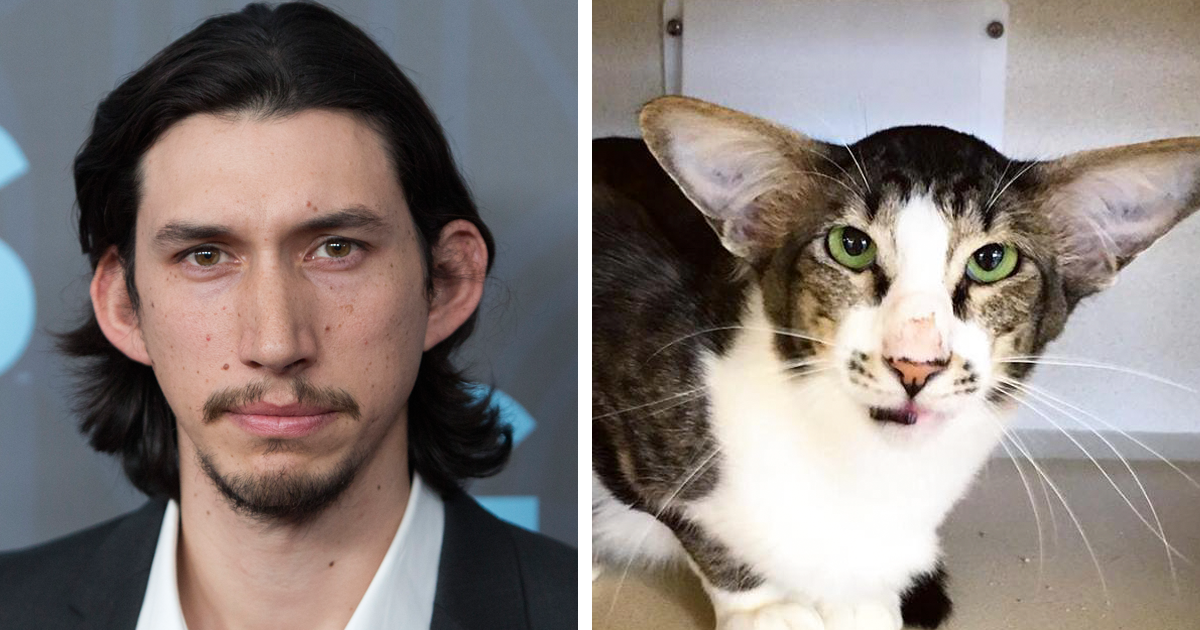
Kylo Ren, named after actor Adam Driver’s most notable role, changed the lives of a woman and her young son.

Remember the Adam Driver Cat?

The little guy made a big splash for a while back in 2016 when images of his unusual mug went viral and the internet decided he looked like the 39-year-old actor.

In an essay, Emily McCombs describes feeling “something deep in my soul” when she saw photos of the cat she’d name Kylo, in honor of Driver’s best-known role as the conflicted Sith lord in the third Star Wars trilogy. Against all odds, and despite intense interest in the Oriental Shorthair, McCombs was able to adopt Kylo after begging a friend for a ride from Brooklyn to the Monmouth County SPCA in New Jersey.

But it’s what happened after that impacted McCombs and her young son the most. Kylo was gentle with McCombs’ son, had a habit of staring adoringly at her and “wasn’t truly happy if he wasn’t smooshed against my face.” Aside from the shoulder bit, Kylo sounds a lot like Bud:

“Rather than just being a lap cat, Kylo was more likely to perch on my shoulder, or plop down directly on my face,” McCombs wrote. “He preferred positions that made it impossible to do anything but pay attention to to him, and would regularly headbutt my phone when he wanted my undivided attention.”

Actually, he’s more polite than Bud, who has no qualms about slapping my smartphone out of my hands and loves to send it flying if I make the mistake of leaving it unattended on a flat surface. “Stoopid little glowing rectangle!” I imagine him yelling in the meowenese language.

Kylo became part of McCombs’ family, helping her tuck her son in every night after story time, and while McCombs said a few love interests came and went, Kylo endured.

McCombs got to spend seven wonderful years with Kylo before she made the difficult decision to euthanize him after he was diagnosed with kidney failure and his struggle became more desperate. The story’s worth reading for her take on grief, Kylo’s sweet relationship with her son, and her insistence that no amount of internet fame compared to the love Kylo gave the family.

It’s also validation of the way people feel when they lose their four-legged companions, and a reminder that grief doesn’t need to be justified, regardless of whether some people insist “it’s just a cat.” 

The microchip company called to ask her to confirm a change of ownership for her missing cat

A British woman was thrilled when the microchip company contacted her to say her missing cat had been found, but was confused and dismayed when the representative on the line asked her to confirm a change of ownership.

Now she’s trying to get her kitty back, but her efforts have been frustrated by the other person who wants to keep him, as well as data protection laws that prevent the microchip company from identifying the person. 

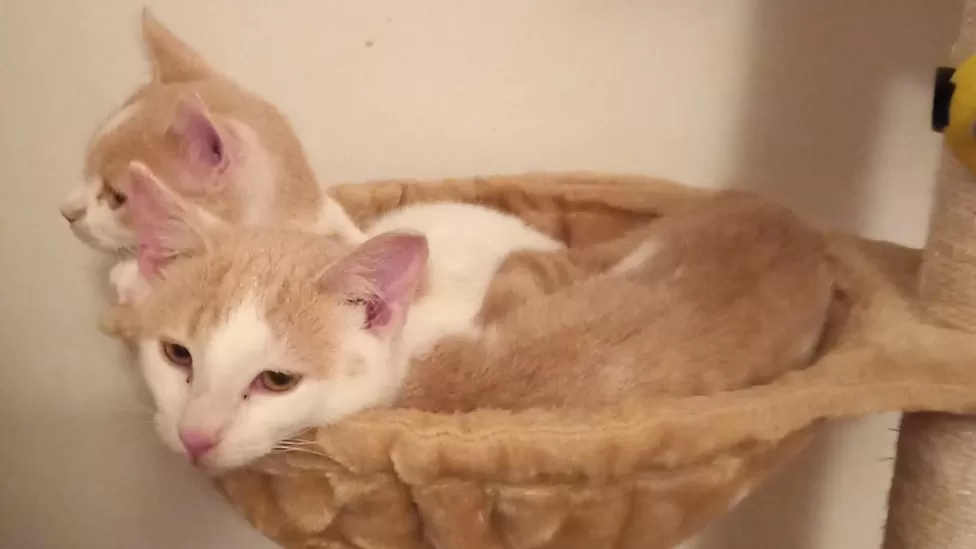
Beryl Edwards of Shropshire, a rural area bordering Wales, adopted her cat Fred and his brother Geno in 2021. Fred went missing over the summer in 2022, and Edwards said she was initially ecstatic when she was told he’d been found.

“And then out of the blue last week I get an email saying we’ve had a request – somebody wants a transfer of ownership,” Edwards told the BBC. “Can you imagine the range of emotions from, ‘Fred! He’s alive, he’s OK’ to ‘transfer of ownership? What’s this all about?’”
fredgeno

The company, Identibase, told Edwards that while they could not give her the person’s information, they would ask the person to contact Edwards and return the cat. 

Edwards never heard back, and now it’s a criminal matter. 

“We are following up on a number of enquiries and at this stage are treating the matter as a potential theft,” the West Mercia Police said, per the BBC.

It’s not clear if police believe the person who has Fred stole him from Edwards, or whether they found him and want to keep him, but we hope Edwards and Fred are reunited, and Fred gets to live with his bonded littermate Geno again.

I can understand why the company would hesitate to provide the other person’s information, even if no law existed. You don’t want people physically confronting each other and potentially taking pets by force in disagreements over ownership. It’s also possible that the person who wants to keep Fred never intended to “trip” the microchip, and Edwards’ information may have been discovered by a veterinarian during a routine exam. But perhaps the unusual case can inform a future change to the law so it’s easier for people to retrieve their pets in cases like this, and for law enforcement to return pets when there’s clear documentation showing one party is indeed the caretaker.

This is not funny

A woman opens her front door to find a distressed cat crying for her help. Instead of taking him in, feeding him, checking on his welfare or even calling a local shelter, the woman proceeds to film herself performatively yelling at the stray and telling him to “get on off my porch!”

The TikTok video went viral this past week and people think it’s hilarious.

File this under “Social Media Is A Sign Of Humanity’s Decline.” Maybe the woman would have been cold-hearted even if she wasn’t hamming it up for an internet audience, but the prospect of clicks and likes almost certainly played a part in the way she dismissively yelled at an animal who was obviously in distress. Even if she didn’t want another pet and couldn’t adopt the cat, it costs nothing to show kindness and make sure he gets to people who will do right by him. 

I won’t link to the woman’s TikTok, but if you want to read Newsweek’s take about how her performance “delighted the internet,” click here. I hope the cat found a more sympathetic person and has either been returned home if he was lost, or found his way into a forever home if he was a stray.