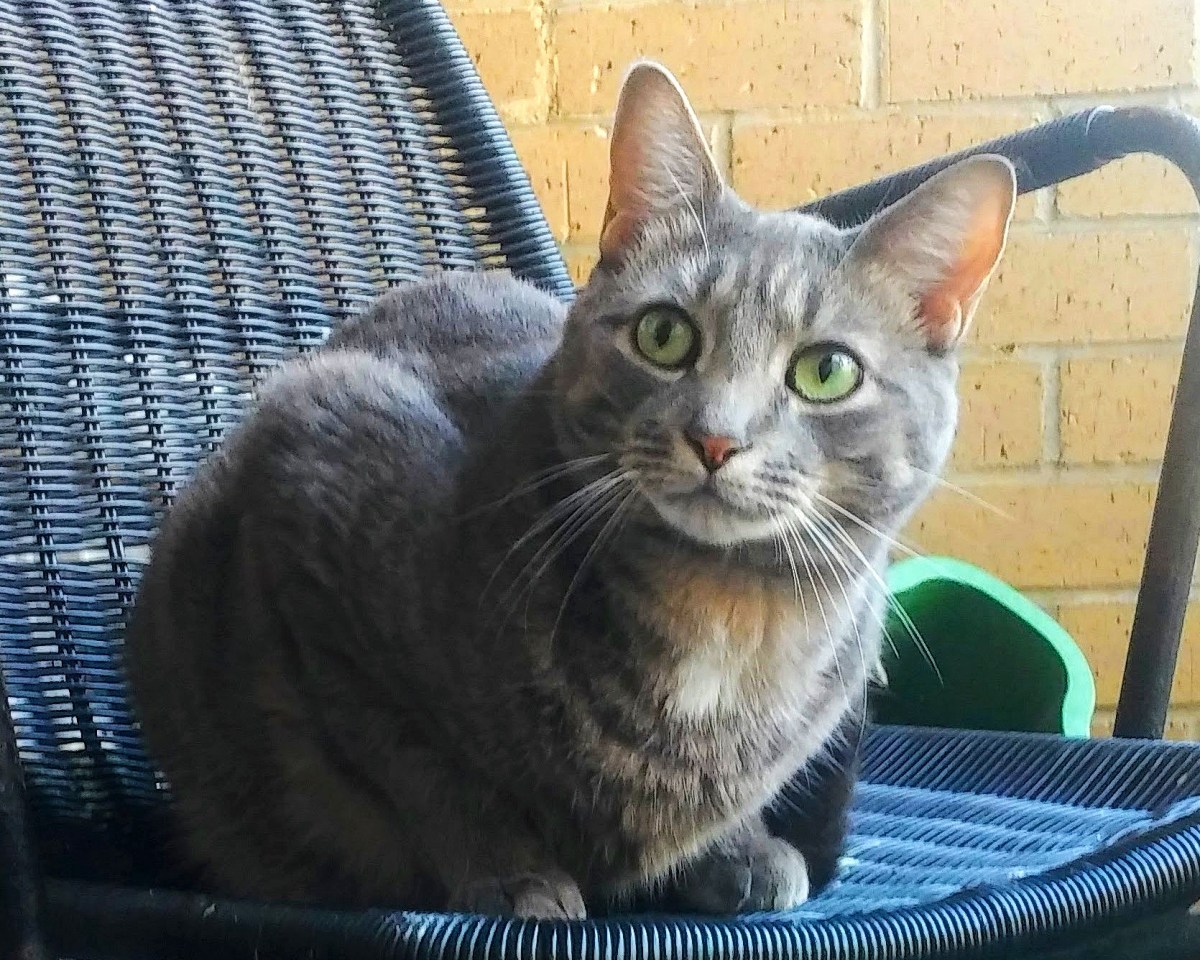
Today’s a good day to do something special for your little pal(s), and to help spread awareness that felines are sentient, intelligent animals with feelings.
Happy International Cat Day!
Today marks the 23rd annual observance of the special day, which was established by the International Fund for Animal Welfare, a nonprofit originally founded in the late 1960s to stop the commercial hunting of seals off Canada’s coasts.
Buddy sits on his vanquished foe, an alien xenomorph. “I don’t understand how these things gave humans so much trouble,” he said.
In more than half a century since, the group has expanded to an international operation with projects aimed at improving conditions for wild and domestic animals. They do wildlife rescue, rehabilitation, preserve management and more.
International Cat Day was intended to help raise awareness about cats, their behaviors and the best ways to interact with them and give them good homes.
For those of us who are already wrapped around the paws of our feline overlords, it’s an occasion to do something extra for our buddies. Here at Casa de Buddy, that means spending more time with little man, giving him catnip, and his favorite human food treat: cheese.
The thing that matters most to him is Buddy Time, when we hang out, play games with his wand toys, and eventually he snuggles up in my lap.
We hope all of you are enjoying International Cat Day and have the opportunity to spend some extra time with your furry pal(s) today. For all they do to improve our lives, a little expression of gratitude is the least we can do.
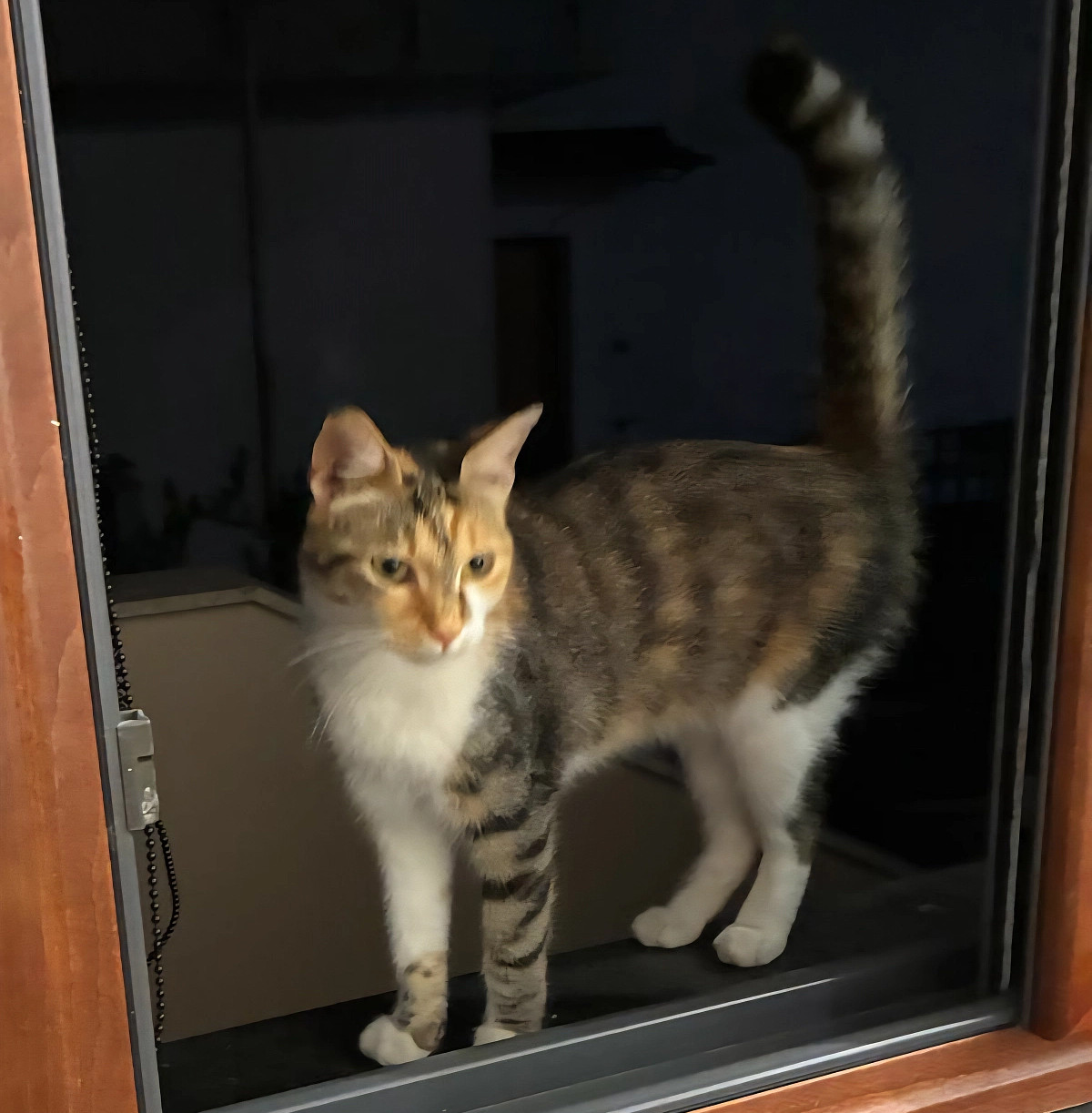
Twix the cat is a beautiful Calico living in sunny coastal Italy.
Wary as he may be of them sometimes, Bud is the “family cat” to my nieces.
Now 12 and 8, they’ve wanted a cat for a long time but were vetoed by their parents, since the family was moving to Italy and it appeared my younger niece had allergies.
Well, now they’re finally settled in Italy, tests have confirmed my niece is not allergic to cats, and it turns out their new home comes with a feline.
A beautiful, super-friendly and affectionate Calico named Twix, who was fed, spayed and given veterinary care by the home’s previous family.
“She is super affectionate and lets us pet her a lot,” my brother texted me along with photos of Twix on a window sill and on the grass outside, enjoying scritches from the kids. “Even rolls on her back and has her stomach scratched.”
“Shiiit,” I responded. “Touching the stomach would get you killed with Bud … Well, you got a cat, whether you like it or not.”
The friendly Twix with the girls.
It also looks like Bud will have a potential lady friend. I plan to visit for an extended amount of time and use my brother’s house as a base from which to explore Europe, and there’s just no way I’m going to leave Bud for months, especially when he’ll be 12.
He can handle a long weekend and even a couple of weeks, but months? I don’t think that would be good for either of us, and I worry that he may think I’m not coming back. We have never been separated for that long. He’s coming to Italy with me.
As for Twix, it looks like she’s been living on the property for quite a while. The kids have set up a little shelter for her with blankets. I advised my brother to make sure she has a water bowl that’s refilled regularly with fresh water, they’re feeding her wet food, and I’ll work on getting little Twix inside permanently if she isn’t already a house cat by the time I get there. I can be persistent! It looks like she can come and go as she pleases, so it may not be long before she decides it’s better to be inside and safe.
A friend once taught me that you can “speak Italian” by adding -are (“RA”) onto anything. “Grazie! La felinare!”
Every cat lover’s camera roll is dominated by photos of our fluffy little overlords. It’s the natural order of things.
I’ve always said Bud’s silent treatment can be worse than his vocal protests when it comes to gauging the intensity of his disapproval.
Howling at me to fetch him a snack? That’s normal. Sitting down two feet away and fixing me with his wide-eyed, accusatory stare as I eat a snack without getting one for him? Now that’s serious.
Andreas Nilsson, the director of a new ad highlighting a recently-introduced Apple feature, clearly understands the hierarchy of feline displeasure:
In the spot, a man uses Apple Intelligence to remove his cat, Garrett, from a photo he just snapped of his wife relaxing and reading a book.
“Look, I deleted Garrett,” he says, holding up the photo and clearly expecting something along the lines of “Wow, that’s a pretty cool feature!”
Instead, she gives him a dry “I always knew you hated Garrett” and goes back to her book.
But Garrett himself doesn’t have to utter a single meow. His reproachful gaze is all the prompting the man needs to undo his mistake with the tap of his screen.
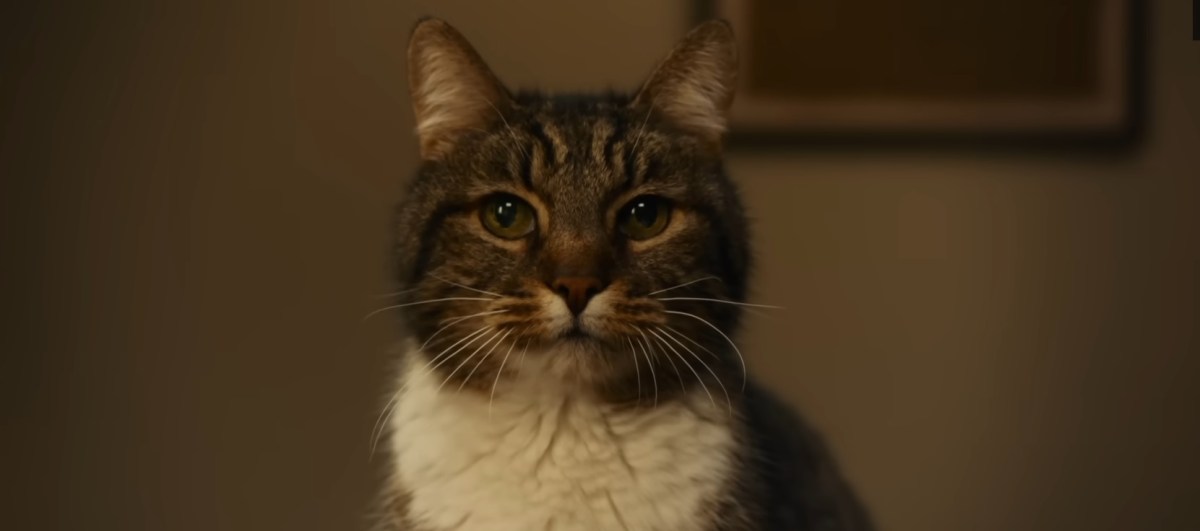
The commercial ends with a slow close-in on Garrett’s face, which has “You’re on thin ice, human!” written all over it.
I like this spot. The creative team took a risk in showing off a new feature in a way that made the characters react negatively, but cat people will love it, and viewers aren’t likely to forget what they saw.
Android users have had something very much like it for quite a while now. Sometimes it really does work the way it does in the commercials, with seamless results, but other images are a bit more difficult to clean up and require some manual tinkering. If Apple’s figured out a way to measurably improve this sort of thing, that’s a pretty big positive for the future of smartphone photography and editing.
In any case, cheers to Nilsson for knowing who holds real power in human-feline households. Now if you’ll excuse me, the king is demanding my attention, no doubt to have me scratch his chin, open a door for him, or serve him second breakfast…
The makers of Temptations want you to feed your cats more snacks, as if they don’t get enough!
In yet another indication that some people don’t seem to pay attention to their feline masters, the Wall Street Journal reports on Mars and its internal operation “Cattitude,” which as far as I can tell amounts to a few people within the company realizing they haven’t squeezed every last dollar of revenue from people who have cats.
That’s a problem, the company realized, because more people are adopting cats, younger generations are more likely to adopt felines, and anyone who hasn’t had their head in the sand knows the little ones rule the internet with their cuteness.
Through “Cattitude,” which apparently involves everything from executives walking around the office wearing cat ears, to handing out “I Love Cats” decals and consulting with “cat parents” on products, the company says it’s identified a “treat gap” between felines and canines, with dogs as the far more frequent beneficiary of yums:
“Feline insecurity can be self-fulfilling. If you think your cat doesn’t care, you might be less likely to shower them with perks. That may be why dogs get way more treats.
Mars launched a campaign in May that spotlights the “treat gap” by the numbers: Dogs are nearly 32% more likely to get daily treats than cats in dogs-only and cats-only households; in homes with both, 38% of parents said they don’t give the same number of treats.“
The story does not say how the company arrived at those numbers. Probably market research in the form of surveys. Not exactly scientific, as these things go.
This is one of those stories that makes me wonder if these people actually have cats.
From the moment I wake up until the second I settle into bed, Bud shrieks at me for snacks. He won’t even let me stumble into the bathroom before the first shrill reminders. He demands snacks before dinner, after dinner, after he’s had snacks, and sometimes while he’s eating them.
If he could speak English and hold a bull horn, I have no doubt he’d spend the majority of his day blasting the demands into my ears: “MOAR SNACKS, BIG BUDDY! MOAR! MOAR!”
Mars should know this. One of its most popular products, Temptations, turns cats into slobbering addicts. I had to wean the Budster off them, then stupidly bought them again months later and had to wean him off the Temps again because he has a one-track mind when they’re in his bloodstream. Two are not enough. Six are not enough. Ten are not enough.
One time, I left a big tub of the damn things unattended for a minute and he managed to pop the top off by knocking it off the coffee table. When I walked back into the living room, he was dragging his jaw along the floor like a bulldozer, inhaling as many as was felinely possible into his little mouth.
Frantically, I shooed him away and began picking them up, but the damage was done. He threw up a few minutes later. Then he shrieked for more!
He always looks innocent, doesn’t he?
Interestingly, the WSJ notes that if you type “Does my cat” into Google, the first two auto-complete suggestions are “Does my cat love me?” and “Does my cat know I love her?”
And that brings us to a point on which I agree with the people at Mars: cats still aren’t well understood.
Dogs happily slobber over their people. Cats show their love in subtle ways, like proximity, head bunting and momentary contact.
Just like the whole “cats love milk” thing is half myth, half misunderstanding, so is the idea that your cat doesn’t love you unless he’s leaping into your arms to hug you as saccharine orchestral music swells in the background.
While there are always outliers, most cats don’t like being hugged or picked up, and most have hard limits when it comes to the amount of physical affection they’ll tolerate. It’s not because they don’t care for us, but because they’re semi-domesticated carnivores who still retain the skittish tendencies of their wild brethren, and because they get easily overstimulated, among other reasons.
If Mars’ Cattitude is an ongoing thing, I hope the decision-makers in the company come to what I believe are two of the most important conclusions to keep in mind when it comes to cats. Giving them your love means giving them your time and attention, and treating them like the sentient, emotional creatures they are.
The best piece of advice I ever got was to always take your cat’s emotions into consideration.
It really is that simple.
Now if you’ll excuse me, I have snacks to dispense.
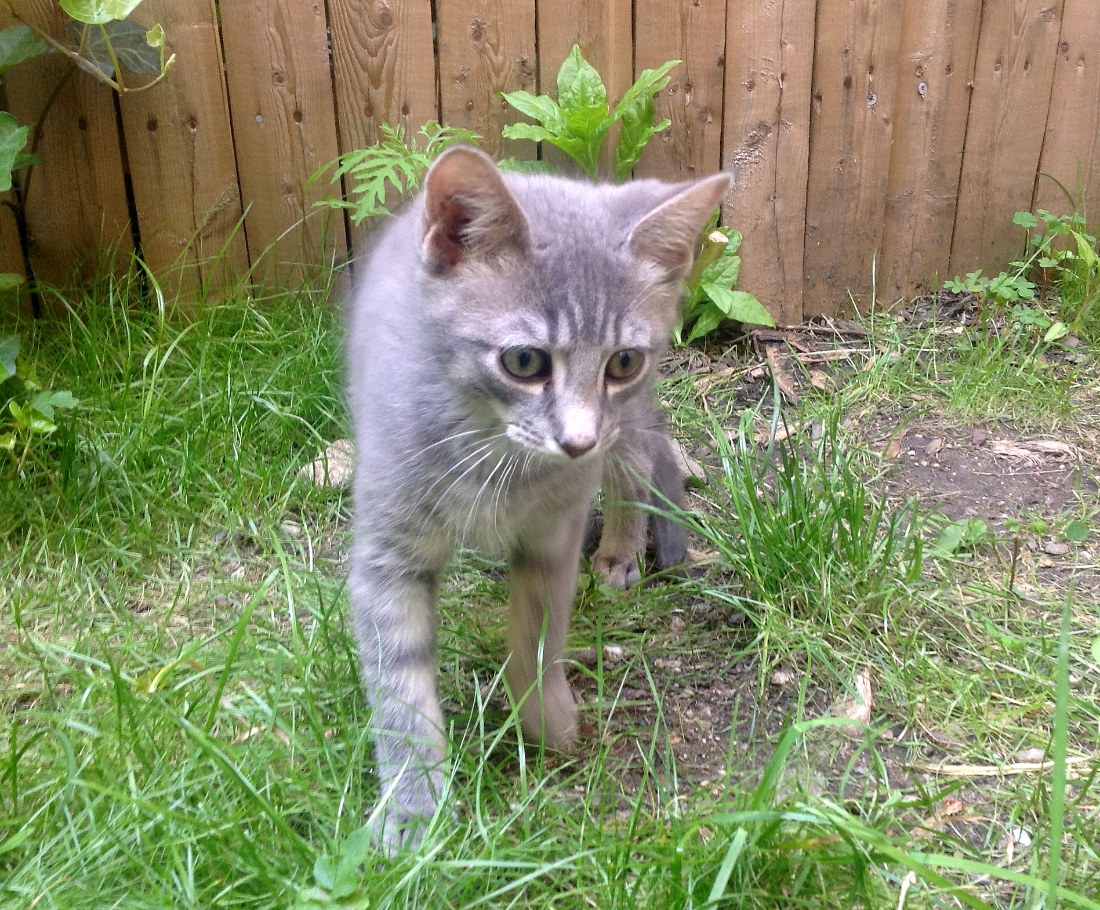
From summer 2014 when Bud was about five months old.
Bud says: “Derp derp derp! I’m a bug-eyed kitten! Derp!”Bud says: “Now THIS is a more regal image befitting my status as a handsome feline!”Bud says: “Here I am in action! As you can see, I was ripped but not quite as meowscular as I am now.