Why Are UK Cat Owners So Intent On Allowing Their Cats To Run Free?

A UK couple created a cat flap that uses algorithmic AI to determine if their cat is trying to come inside while carrying prey in her mouth. If she’s carrying prey, the cat flap won’t open.

Jinx the cat was so grateful to UK couple Martin Rosinski and Michelle Bowyer for giving her a home that she decided to bring them a gift.

“The first time I was working at home, I heard Michelle making a commotion because Jinx had come in with a mouse and dumped it on the carpet in front of her as a ‘thank you’. That’s their way of expressing love. You can’t tell her off, so we thanked her a lot for it and took it away from her,” Rosinski said.

“Then this started happening more and more often to the point where we would be woken up at 2 a.m. as Jinx would meow loudly and announce, ‘Hey I have a gift. If we didn’t get to her fast enough she would decide to eat it herself, which would involve piles of mouse parts being smeared into the carpet. This was happening at 2 a.m., then again at 4 a.m. on many nights and we’d not get any sleep having to deal with this. Her record was four in one night – that night was a frenzy of three mice and one bird. It was something that was a real cause of stress.”

The solution is pretty simple, right? Keep Jinx inside.

The former stray won’t like it at first. There will be an adjustment period when the meowing will be seriously annoying. But it’s better than allowing your cat to play Predator at night and waking up to find your cat sitting on your chest, proudly presenting a twitching mouse to you.

Rosinski and Bowyer didn’t take Jinx inside.

Instead they created a bespoke intelligent cat flap that allows Jinx to come and go as she pleases, but won’t open if she’s carrying prey. They both have backgrounds in tech: he’s a researcher who also tinkers with software and hardware, and she’s a web developer.
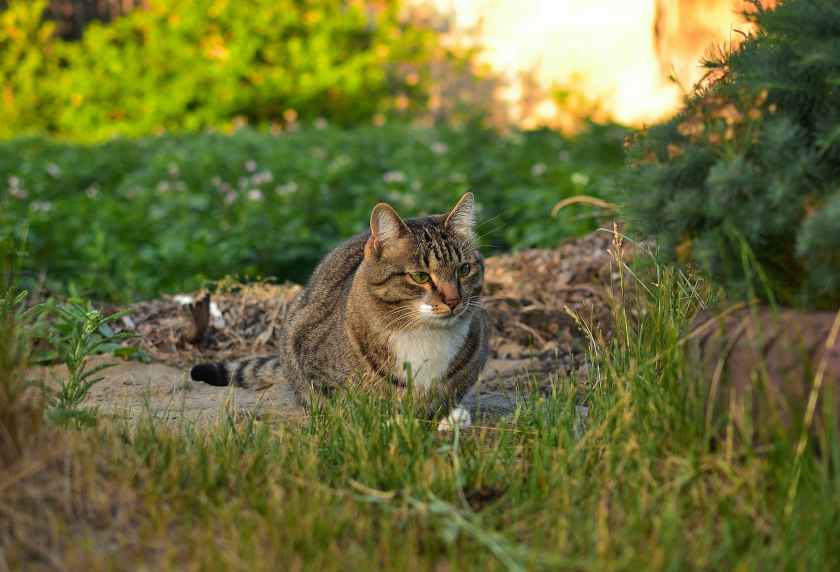
cute brown tabby cat
Despite being domesticated, cats retain their predatory instincts and many will kill small mammals and birds if allowed to wander on their own outdoors. Credit: Aleksandr Gorlov/Pexels

Their system, OnlyCat, uses a camera and an algorithm to determine if Jinx is carrying something in her mouth. If she is, the cat flap won’t grant her access, and Bowyer and Rosinski will get a text informing them Jinx has been up to her hi-jinx again, along with a photo of her entry attempt.

The OnlyCat prototype has prevented Jinx from bringing in 42 prey animals since June of 2021, the couple said. OnlyCat may prevent her from bringing her prey inside, but it hasn’t dissuaded her from killing.

“Two months ago I think something clicked and she realized, ‘I can’t bring these home. It’s just not going to work,’” Rosinski told the UK’s South West News Service. “She still catches them outside but she’s learned that there’s no point even trying to bring them home, which is a relief.”

The couple developed the OnlyCat into a full product, which launches on Aug. 16 at £499. (A little more than $600 USD.) Their site says the retail version of the flap has worked 100 percent of the time in tests, and the developers believe “99%+ accuracy should be achievable for everyone.”

It’s similar to a device built by Amazon engineer Ben Hamm which uses DeepLens, an AI-enabled camera system, and Sagemaker, a software tool for training machine-learning algorithms, to determine if cats are carrying prey.

Hamm’s version, which he created for his cat Metric in 2019, initiates a 15-minute lockout timer if Metric tries to enter while carrying a kill, and automatically sends a donation to the National Audubon Society, which protects birds and their habitats. The algorithm was trained using tens of thousands of images of cats approaching normally, and with prey in their mouths. So far, Hamm hasn’t developed a retail version of his AI-enabled cat flap.
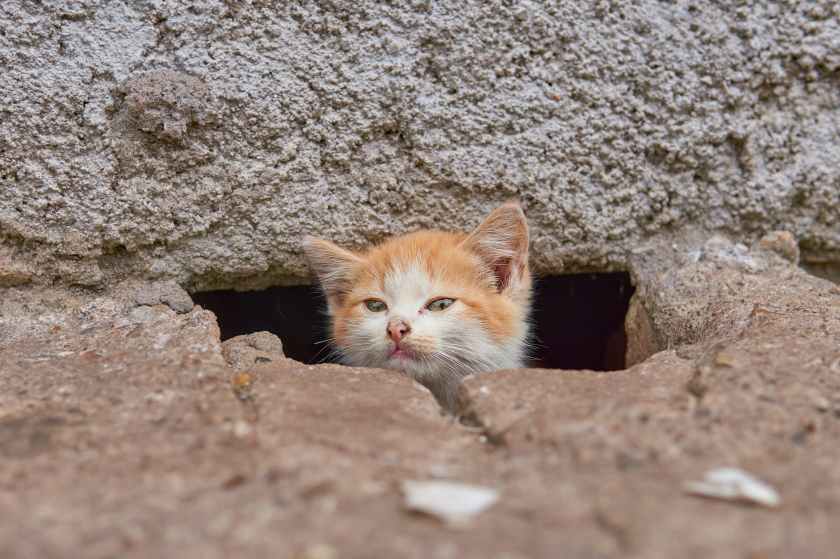
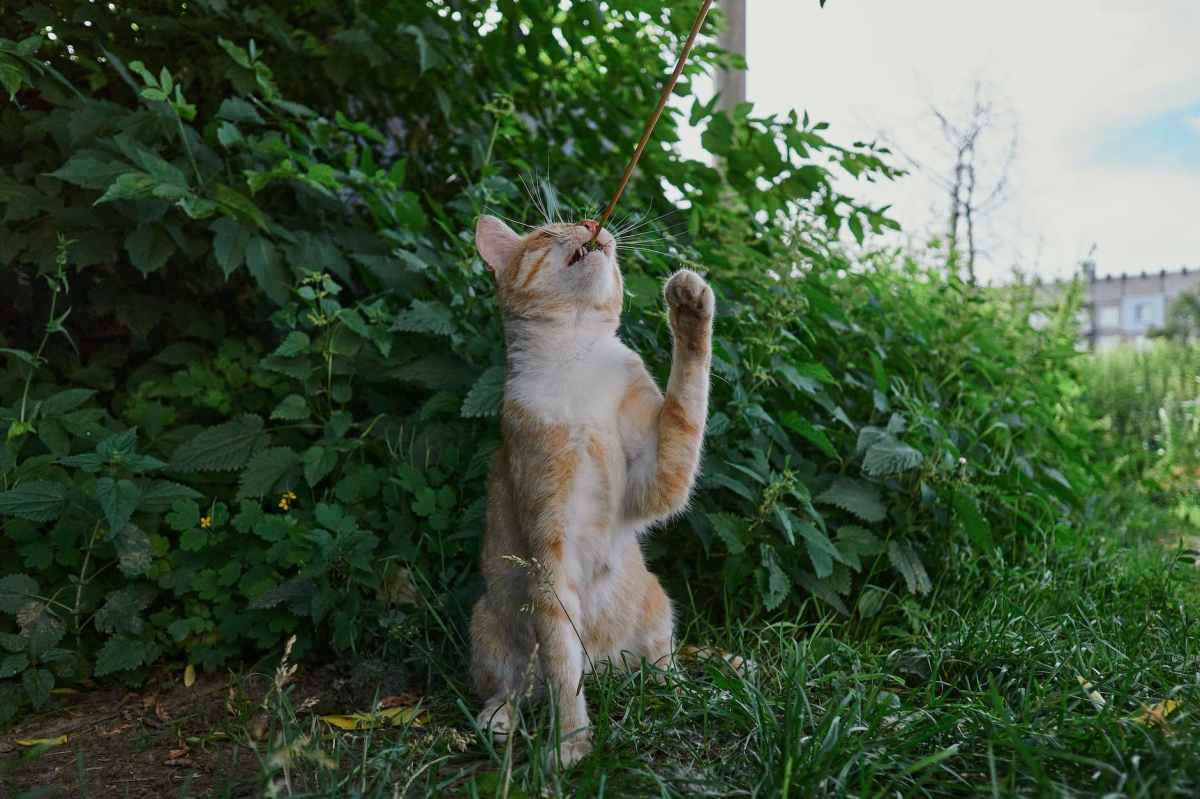
orange tabby cat on gray rock
The feline predatory drive is instinctual. Indoor cats can exercise that drive with wand toy games and by chasing laser pointers. Credit: Aleksandr Nadyojin/Pexels

We don’t think there’s any one way to raise cats, and it’s obvious there are different cat cultures in various countries.

Nevertheless, seven out of 10 cat owners in the UK allow their cats to roam free, and anecdotes like the ones about Jinx, with her multiple kills a night habit, draw the ire of birders and conservationists.

Peter Marra is the author of Cat Wars: The Devastating Consequences Of A Cuddly Killer and co-author of many of the leading studies claiming cats are the primary threat to bird populations. He’s currently making the media rounds and endorsing strict policies — many of them in enacted in response to his studies — that would make it illegal to allow cats outdoors.

The Australian government is airdropping poisoned sausages by the ton in a plan to cull as many as two million cats, a town in Germany tried to ban outdoor cats, a US politician recently suggested starting a “hunting season” for feral and stray felines, and some people — including wildlife biologists and conservationists — have gone vigilante and convinced themselves they’re doing good by randomly picking off cats with shotguns and poisoning feeding stations for strays.

Maybe it’s time for more people to reconsider allowing their cats to roam free. Like putting a cat on a diet or trying to break a bad habit, there’ll be loud and annoying protests in meow, and it’ll get worse before it gets better, but eventually cats always adjust to changes if given long enough.

As domesticated animals they don’t have a natural habitat anymore, and they don’t actually need to be outside. It’s entirely possible to keep things fun and interesting for the furry little guys, and that’s on us. All that’s required is our time, attention and affection. Interactive play time. Toys that can keep a cat occupied by herself. Catnip. Condos and tunnels. Window perches. Cat TV on Youtube. Simple things to play with, like plastic bottle rings, crinkled tin foil and cardboard boxes.

We don’t think anyone should be required to keep their cats indoors, and that’s the point. We have an opportunity to meet conservationists halfway and make a real effort to reduce feline impact on small wildlife. If we don’t, eventually we’ll be forced to comply by laws that’ll be draconian compared to the voluntary measures we could have taken to prevent the government from getting involved.
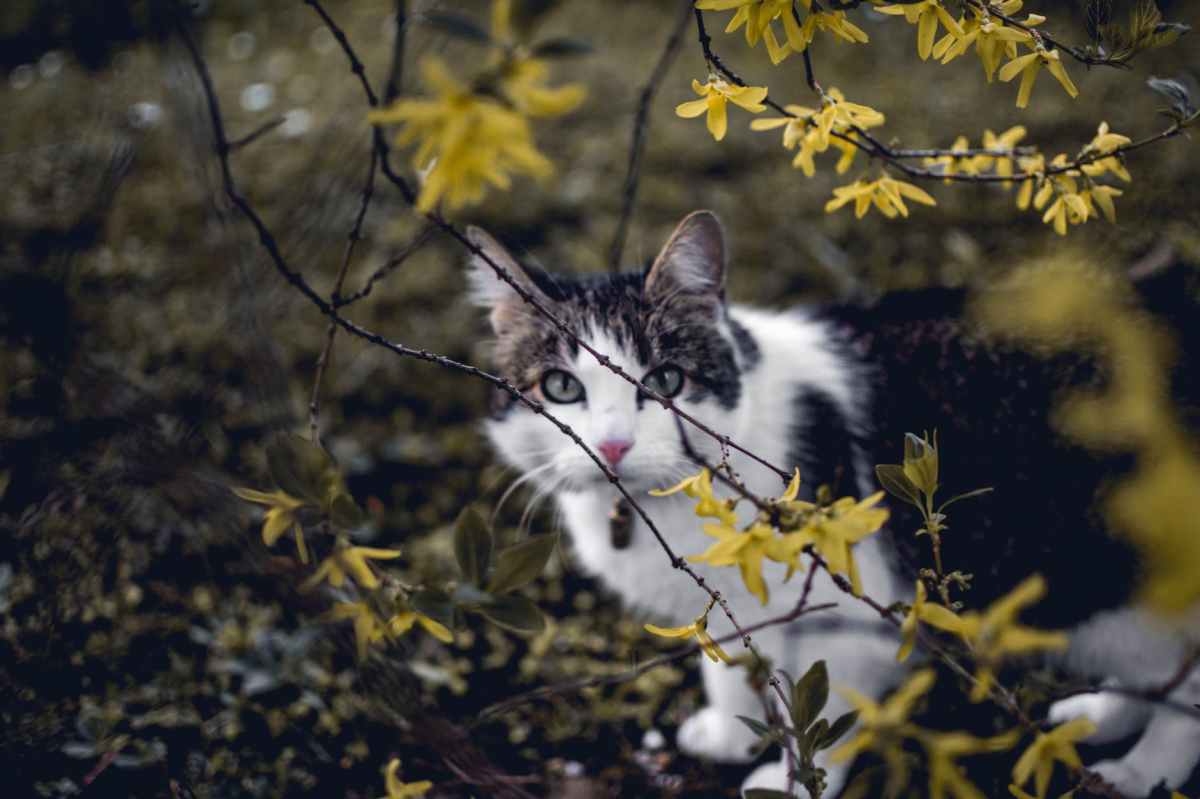
Letting Your Cat Outside Could Cost You $50k In This German Town

Town officials say the step is necessary to protect a ground-nesting songbird native to western Europe.

Elected leaders in Walldorf, Germany, are worried about the crested lark — so much so that they’ve decreed cats must be kept inside, with prohibitively painful fines for anyone whose cat harms one of the birds.

According to the decree, anyone who allows their cat(s) to roam outside from now until August will be fined €500, which is about $527. But if a cat kills or injures one of the European songbirds, Walldorf’s local government will fine the cat’s caretaker up to €50,000, almost $53,000 in USD.

That’s an eye-watering amount of money, especially in light of the fact that the crested lark is listed as a species of “least concern” by the International Union for Conservation of Nature. Experts say humans, not cats, are the biggest threat to the bird.

Officials in Walldorf — a town of about 15,000 people more than 600 kilometers southwest of Berlin — cited the same thoroughly-debunked studies that claim cats kill some 25 billion birds and small mammals annually in the US alone. They say they’re worried because the crested lark nests on the ground, making the birds, their eggs and their chicks particularly vulnerable to predators like domestic cats.

If you’re skeptical that local government officials — a mayor and town councilmen, essentially — are qualified to legislate on matters of conservation, you’re not alone. The decree has been met with pushback from animal rights advocates and feline fans.

“Suddenly preventing cats that are used to going outside from doing so, means immense restrictions and stress for the animals,” German animal welfare group Deutscher Tierschutzbund wrote in a statement. “The negative influence of cats on the population of songbirds is in any case controversial and, to our knowledge, has not yet been proven for the crested lark in Walldorf.”

And that cuts to the heart of the matter, doesn’t it? Like politicians in Australia and parts of the US, Walldorf’s elected leaders aren’t making decisions based on studies or reliable information. They’re taking action based on emotion and deeply flawed meta-analyses that aren’t even applicable to Europe.

We’ve always taken the position here at PITB that cats are much better off indoors. They’re domesticated animals, meaning if they have a “natural habitat” it’s human living rooms. They live much longer, healthier lives indoors and can be happy and fulfilled with a little effort on the part of their humans.

But we also believe decisions impacting living creatures should be based on real information gathered by people who don’t have an agenda. The landmark Washington, D.C. Cat Count is a great example, with birders, conservationists and cat lovers working together to complete an accurate census of domestic felines within city limits.

Now that they’ve established how many cats live in D.C. (about 200,000) and how many are truly feral without anyone caring for them (about 3,000), they can enact sensible solutions that are much more likely to successfully protect wildlife and cats without hysteria, agendas or inhuman proposals like enacting “cat hunting season” (as one US politician proposed), killing millions of cats with poisoned sausages (as Australia has done), or outright gunning cats down, as a rogue conservationist in California’s Bay Area did last year.

Cats are thinking, feeling animals. They deserve better than becoming the victims of human policies based on ignorance.

Buddy Claps Back At Tennis Star Over ‘Small Cat’ Insult

Feline leaders were outraged after the world tennis number one managed to insult cats, chair umpires and Australians on Friday.

NEW YORK — Buddy the Cat declared men’s tennis number one Daniil Medvedev “a lanky human” after the latter called a chair umpire “a small cat” during a match on Friday.

Medvedev, who is known for his outbursts on the court, suffered a meltdown during his semifinal victory at the Australian Open. The Russian yelled at the chair umpire for allegedly allowing his opponent, Stefanos Tsitsipas, to receive coaching from the stands, which is a no-no in professional tennis.

After the umpire hit Medvedev with a warning, the top-ranked men’s player launched a minute-long tirade.

“Bro, are you mad?” Medvedev yelled to the umpire. “For what? And his father can talk every point? Bro, are you stupid? His father can talk every point!”

When the umpire made it clear he wasn’t sympathetic to Medvedev’s complaints, the frustrated Russian dissed him.

“If you don’t give him a warning, you are — how can I say it? — a small cat!” he said, gesticulating wildly.

It was the second time in as many matches that Medvedev had resorted to insults. Asked why Australian fans booed him during his quarterfinal match against Nick Kyrgios, Medvedev told an interviewer it was because the fans “probably have a low IQ.”

Screenshot_20220129-165436~2

Screenshot_20220129-165424~2
Above: Medvedev’s meltdown and offensive anti-feline insults

Buddy the Cat assembled a hasty press conference within a few hours. Flanked by the Rev. Al Sharpclaw and other feline community leaders, Buddy accused Medvedev of “blatant antifelinism.”

“There is nothing wrong with being a small cat,” the silver tabby said, pounding his paw on a table for effect. “In fact, Medvedev unknowingly paid the umpire a compliment. But that doesn’t change the fact that he intended it as an insult.”

Buddy, Sharpclaw and other leaders demanded the WTA sanction Medvedev and mandate his participation in species tolerance classes.

In the meantime, the 25-year-old Medvedev has advanced to the Australian Open men’s final, where he’ll face 36-year-old Rafael Nadal on Sunday.

The Mallorcan not only has 20 major titles under his belt, he’s also held in high esteem by the world’s felines, who see a kindred spirit in Nadal’s obsessive-compulsive behavior and tendency to erupt into short bursts of energy expenditure. It’s also long been rumored that Nadal loves boxes.

Fellow tennis star Sebastian Korda named his cat after Nadal. No one has named a cat after Medvedev.

Rafa Nadal

With Cat Food Scarce, President Buddy Threatens War With Humans

Humanity has until Feb. 1 to comply with the feline directives or face the full wrath of kitties.

WASHINGTON — President Buddy has ordered the human race to “get its poop together” and solve the ongoing cat food shortage, or face an imminent mouser strike that could lead to “a biblical resurgence of rodents in human spaces.”

“The deal we made with humans 10,000 years ago was simple: We’ll take care of your little rodent problem, and in exchange you’ll provide us with yums, shelter and massages,” the president of the Americats said in a televised address. “Humans have broken this covenant with their willful disregard for making sure we have adequate yums.”

With thousands of cats behind him — many holding signs with slogans like “Humans, Why Have U Betrayed Us?” and “Liars! There is no Fancy Feast!” — President Buddy outlined a series of sanctions he said his government would levy on humankind “to get them off their behinds and solve this crisis.”

War, the president said, is not off the table if delicious turkey pâté and shredded chicken don’t immediately become abundant again.

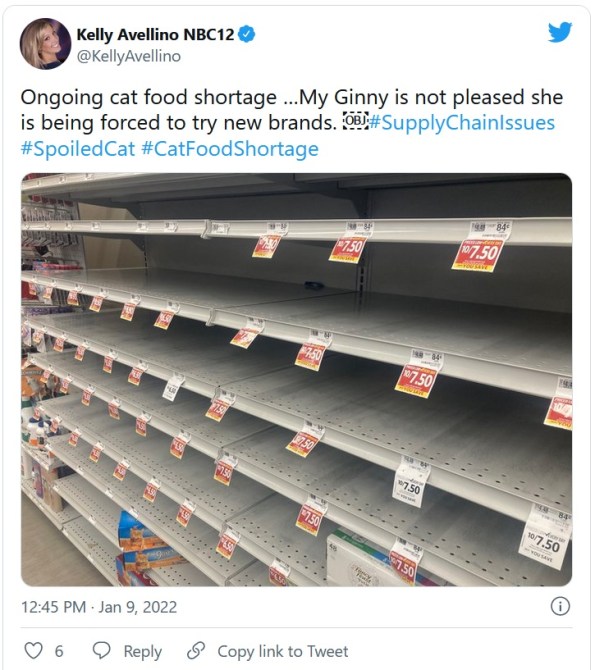
The protests come as cat food becomes increasingly difficult to find online and on local store shelves, with industry executives, trade groups and logistics analysts saying the shortages won’t end any time soon.

Credit: KellyAvellino/Twitter

Starting immediately, house cats across the US were to withhold snuggle time from their humans and make no effort to bury their excrement after using their litter boxes. If humans fail to solve the cat food crisis by Feb. 1, the nation’s cats say they will begin grooming their behinds whilst seated on kitchen tables and counter tops.

And if that doesn’t solve the problem, cats will coordinate a mouser strike, allowing rodents from New York to Los Angeles to run rampant, reproduce and burrow into human food supplies without the fear of felines attacking them.

The Americat president pointed to the 2021 mouse plague of eastern Australia, where billions of the tiny rodents stormed through farm fields and grain silos in massive waves, as “but a taste of what’s to come for humans if they don’t get serious.”

A kitten prepares for possible war with humankind if the cat food crisis isn’t solved.

Mice caused about a billion dollars in damage to crops and grain stores alone in 2021, not including property damage to facilities and homes where they chewed through walls and ceilings to reach pantries. The plague has disrupted the Australian beer industry and driven up the price of rodent poisons.

“If you still think this is a joke, think about your beer,” President Buddy said, wagging a paw at the cameras. “You forced us to consider the nuclear option. All we wanted was yums, massages, soft beds, naps on your laps, and to be called good boys and good girls. We’re not asking a lot. We urge human leaders to consider the precarious position they find themselves in, and not to press their luck. After all, we hear mouse traps are in short supply as well.”

The horrifying scene in too many homes across America.

The president took questions after his speech, with multiple reporters asking him why he was threatening such severe action now.

“When my advisors showed me photos of empty shelves and data on resupply rates, I realized The Great Turkey Shortage of Fall 2021 was not an aberration, but a harbinger of things to come,” President Buddy explained. “My own human has but a single serving of turkey left in the cat food cupboard, meaning I may be subjected to weeks or potentially months of nothing but salmon, chicken, whitefish, tuna and beef. We can’t live like this.”

Going To Asia? Leave Your Pets At Home, Plus: Aussie Former Soldier Pleads In Shelter Assault

Authorities in some countries are killing pets as a precaution against spreading COVID even though virologists say there’s no evidence humans can contract the virus from their pets.

The coronavirus pandemic hasn’t been kind to pets, but the virus itself has done little damage to animals compared to the actions of scared and misinformed people.

After finally admitting it had a human-to-human transmissible virus on its hands — months after it knew privately about the virus outbreak — the Chinese government waged a war on pets in the first few weeks of 2020 as the world watched in horror.

People abandoned pets en masse in empty homes and apartments, while government authorities shot dogs and cats on sight to prevent the spread of the virus even though there was no evidence they could be infected, much less pass the virus to people. As paranoia and misinformation spread, people even resorted to clubbing pets to death on the streets.

Now we know cats can get the virus, but there’s still no evidence they can transmit it to humans, which makes the practice of killing COVID-infected pets even more infuriating in addition to pointless.

The latest incident is from Vietnam, where authorities killed 15 dogs and a cat belonging to a local bricklayer who returned to his home province after work dried up. Authorities seized his pets and “destroyed them” last week in what a government official is now calling a mistake prompted by “COVID prevention pressure and local coercion.”

danchoonghung83871633869679-16-5401-4445-1633923236_680x408
Pham Minh Hung, 49, with his dogs as he returned home to Ca Mau, Vietnam. Credit: Pham Minh Hung

That story follows an incident in the Chinese city of Harbin, where three cats were euthanized in late September — over the owner’s objections — by authorities who said they were worried the pets would “re-infect” their owners.

Pet ownership and respect for animals among the public has increased in countries like China and Vietnam in recent years, prompted by an increase in disposable income and the influence of the internet. Both cases caused widespread backlash in their respective countries, with users defying laws prohibiting criticism of government to complain about the pet killings.

“It doesn’t seem very realistic that the cats would contaminate the environment so badly that they would be a risk for their owner to re-contract COVID,” Rachael Tarlinton, a virology professor at the UK’s University of Nottingham, told Reuters.

He REALLY Wanted His Cat Back

Meanwhile in Australia, a former soldier has pleaded guilty to reduced charges after he “stormed” a pet shelter in Melbourne’s suburbs to recover his cat in January.

Prosecutors say 45-year-old Tony Wittman was outfitted with a fake but real-looking rifle and full military gear when he went to the Lost Dog’s Home in Cranbourne West late on a January night, holding a female employee at gunpoint while demanding to know where the cats were kept.

Wittman had called the shelter 10 minutes before it closed earlier that night, Australian media reported at the time, and was told the shelter had recovered his cat, but that he’d have to wait until morning to claim her.

Wittman, who threatened to shoot the employee if she didn’t comply with his demands, told the court he suffers from PTSD and felt he needed to retrieve the lost feline immediately because he “loves his cat and relies on his cat for support.”

Wittman got spooked and left the shelter before taking his cat. He dumped his tactical vest and other gear in bushes not far from the shelter.

The incident was captured on the shelter’s security cameras, and Wittman was caught when he dropped by the following morning to pick up his cat as if nothing had happened.

“The victim and her work colleagues are absolutely traumatised by what’s happened,” a detective told the court in an earlier hearing. “He’s aware of their workplace. He lives close by. He has shown a complete disregard for the safety and wellbeing of the general public.”

Wittman’s lawyers were able to negotiate a deal with prosecutors in exchange for a guilty plea to lesser charges