Cats: The Not-So-Ultimate Spider Hunters!

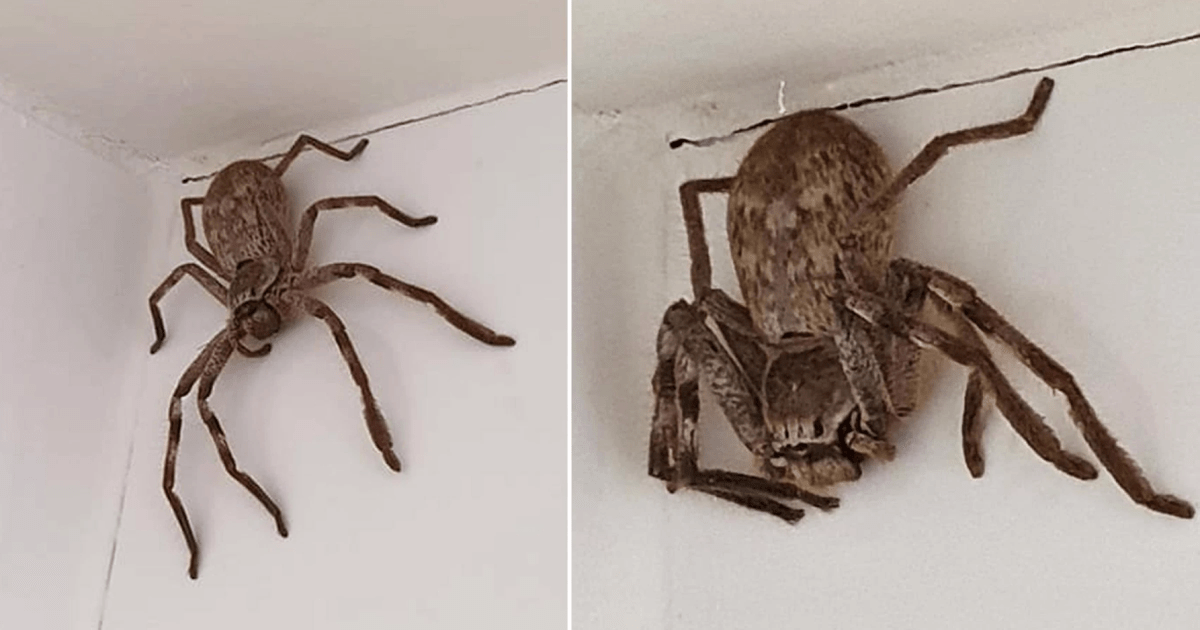
Would your cat take on a spider this big?

As if Australia doesn’t have enough terrifying critters, there’s the Huntsman spider, a big tarantula-looking monstrosity that welcomes itself into houses.

Luke Jones, who uploaded the below video to TikTok, says it’s “not unusual” to see them hanging onto walls or poking out from behind curtains, and they “get into everything, all the linen clothes on the bed.”

In his position I’d get a hermetically sealed chamber to use as my bedroom, but Luke’s got his own solution: Let his cat take care of the problem. In the video, a woman — presumably Luke’s girlfriend or wife — hoists the couple’s pet cat up so kitty can ruthlessly earn his keep as an exterminator half-heartedly paw at the spider:

Cats are famous for “playing” with their prey, so maybe what we’re seeing is an initially curious cat getting a close look at the Huntsman before unleashing a dose of feline whoop-ass.

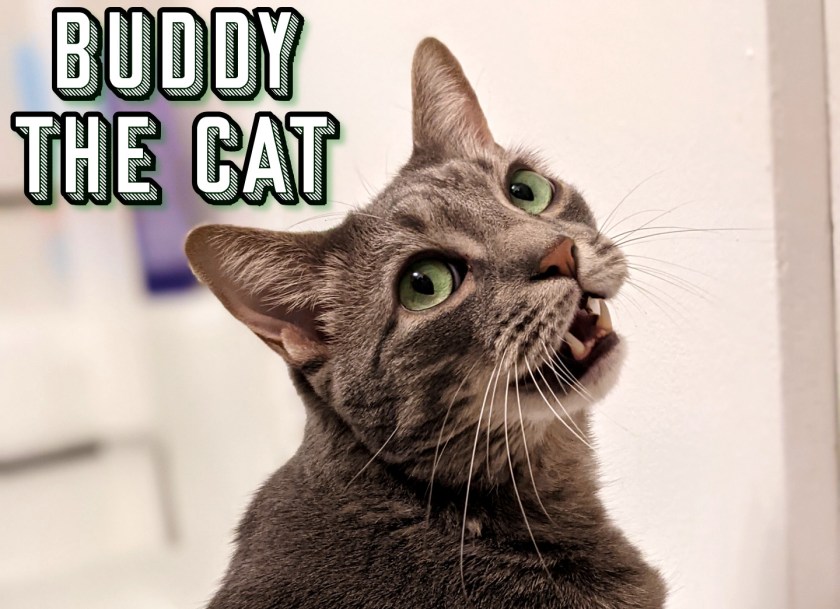
One thing I know for sure: If I tried to get Buddy to play exterminator with a spider that large he’d go hide underneath a table.

Cat Performs Record 26 Tricks In A Minute

Buddy the Cat refuses to learn more tricks in an effort to surpass an Austrian-Australian cat who set the world record for tricks.

“Hey Bud, c’mere!”

“I’m lounging.”

“Get your lazy ass up and come here!”

“This better be good…”

“Check it out, little dude: This cat performs 26 tricks in 60 seconds.”

“That’s a world record. Whattya think, wanna try to beat it?”

“No.”

“Aw, come on! You can already do stop, sit, high-five and fist bump. It’ll be fun. You only need to learn 23 more.”

“Sounds like a lot of work. I’m just not that ambitious, Grand Amigo.”

“Seriously? You’re gonna let some Austrian cat claim the title of world’s smartest kitty?”

“I’m sure she needs it. What else is there to do in that backwater country except drink Foster’s and punch kangaroos?”

“Austrian, not Australian.”

“That’s what I said. G’day, matey! Beautiful day to skip uni, how ’bout we throw some shrimp on the barbie and drink our non-alcoholic beer?”

“Austria. It’s a different country, you idiot.”

“Now you’re just trying to confuse me so I’ll agree to learn more tricks. I will not fall for another one of your schemes, human!”

Buddy the Cat

Cat Dies Fighting Off Venomous Snake To Protect Kids

A family cat successfully fought off a highly venomous snake, but later died from the snake’s venom.

Arthur the tabby cat made the ultimate sacrifice to protect the children of his human family.

The “adorable domestic shorthair cat was playing in the backyard with his family in their backyard, following his two little hoomans around when danger slithered right up to the young children,” Animal Emergency Services staff of Queensland, Australia, wrote in a Facebook post honoring Arthur.

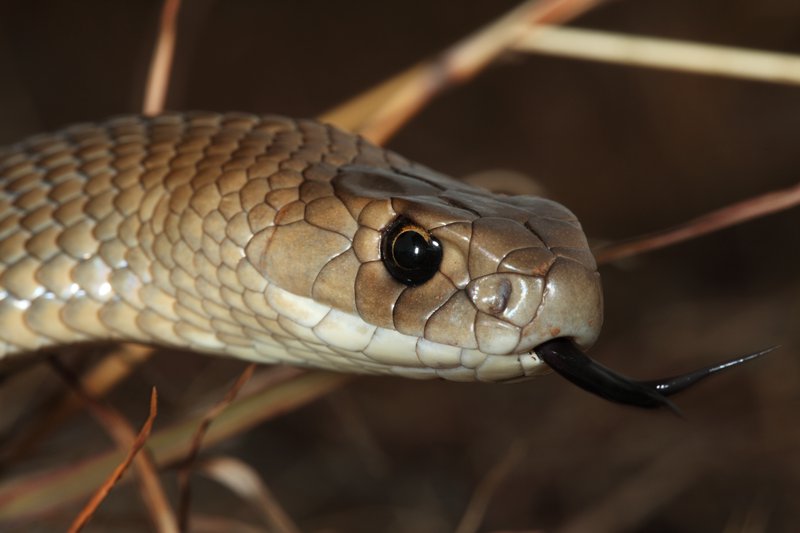
Eastern brown snakes are no joke: They’re the second most-venomous snakes in the world as measured by the toxin release in their bites, and they’re responsible for 60 percent of snake bite deaths in Australia.

Brave Arthur killed the snake before the adults in the family shooed everyone inside, but he was fatally injured.

Arthur the Cat
Arthur the tabby cat saved his family from an extremely venomous snake but died from the snake’s toxic venom.

“Unfortunately, in the process, Arthur received a fatal envenomation snake bite. In the chaos of getting the children out of the yard, no-one saw the actual bite, but Arthur collapsed and quickly recovered like nothing was wrong not long after,” staff at Animal Emergency Services wrote. “Collapse events like this is a common symptom of snake bites, although not a well-known symptom amongst pet owners.

When they realized Arthur was seriously hurt, his family rushed him to the nearest animal hospital, but “Arthur’s symptoms were too severe to recover.”

Arthur’s humans, who live in Tanawha, Queensland, are “devastated” at the loss of their beloved, mischievous cat, Animal Emergency Services staff wrote. One thing’s for certain: They’ll never forget the little guy or what he did for them.

Conservationists Want Cat Owners On Their Side

Wildlife conservationists should work with cat lovers instead of making enemies of them in the ongoing quest to protect small wildlife from felines. Cat owners, in turn, can show good faith by being more responsible about spaying and neutering, and by keeping their cats indoors.

Wildlife conservationists are worried, and they have a right to be.

In addition to the billions of animals we humans kill every year in our ruthless exploitation of life on this planet, our pet cats have their own separate impact, killing birds and small mammals in significant numbers.

Yet conservationists aren’t making headway with cat lovers, primarily because their approach frequently relies on shaming and drastic, often cruel proposals: Some Australian states are outright culling cats, offering $10 a head for adults and $5 for kittens, for example, while a pair of academics from the Netherlands advocate criminally prosecuting cat owners who let their pets outside combined with a policy of euthanizing millions of cats. Extremists in the US are pushing for similar measures, arguing that TNR (trap, neuter, return) isn’t an effective way of managing cat populations.

57336B30-57EA-4829-A5CB-07F0823934C6

Something has to be done, and a few smart conservationists are realizing the accusatory, Richard Dawkins-style of engaging “the enemy” just causes people to withdraw, not to listen and cooperate.

“I get quite sick of the conflict focus of some conservation biologists,” Wayne Linklater, chairman of the environmental studies department at California State, tells New Scientist. “The solutions lie with the people who care most about cats, not with the people who don’t care about them.”

Great. Now there are a few things conservationists should know as they engage with people who care for cats:

  • Most of us want what you want: We want cat owners to keep their pets inside. Cats aren’t wild animals. They have no “natural habitat” and contrary to misconceptions, they don’t belong outside. They’re not equipped to provide for themselves, and they face dangers from traffic, predators like coyotes and mountain lions, fights with other cats, and perverse humans who kill and torture them for fun. Strays and ferals live short, brutal lives (living to an average of 3.5 years) while indoor cats live 17 years on average. The “cats belong inside” angle is common ground from which to start a dialogue.
  • Stop repeating bunk studies as fact! The idea that cats are an all-consuming plague on wildlife came about as a result of a handful of studies, yet all but the most recent of them are based on old data and manipulated numbers compiled by people with an agenda. One of the earliest studies, which claimed cats kill up to 3.7 billion birds and 20.7 billion mammals annually, relies so heavily on invented numbers and massaged data that it’s worthless and outright dangerous to informed discourse on the topic, yet it’s repeated as fact by credulous conservationists and the press. Knowing the true scope of the problem is key to understanding whether mitigation efforts really work. Misinformation only sabotages those efforts.
  • Come get your people: Peter Marra is one of the co-authors of the bunk 2013 Nature Communications study with the above oft-cited numbers, and he’s also the author of the shrill Cat Wars: The Devastating Consequences of a Cuddly Killer. Marra is an advocate of using taxpayer money to kill millions of cats. He also says that anyone who questions his claims about cats — a group that includes major animal rescues, welfare organizations, and many academics — is tantamount to climate change deniers and tobacco companies that denied for decades that cigarettes have a negative effect on health. Marra’s major contributions amount to sowing misinformation, polarizing the issue and inflaming opinions on both sides. Everything about his behavior indicates he wants to sell books and promote himself, not save wildlife from predatory domestic cats. He should not be taken seriously and his research should not be reported as fact.

Cat lovers are, by definition, animal lovers. They’re people who care about wildlife and domestic animal welfare. It shouldn’t be difficult to engage with them.

At the same time, cat advocates need to purge the crazies out of their ranks as well. Sending death threats to scientists (see the New Scientist link up top) is way out of order, it’s inhuman behavior and it only hurts the legitimacy of our cause.

A good first step toward reconciliation could involve enlisting cat owners in an effort to properly study feline impact on small wildlife, producing reliable data to facilitate a measured, fact-based approach that doesn’t begin and end with the notion that cats are hellspawn.
If all sides engage in good faith, there’s no reason why we can’t protect wildlife and cats.

6246936A-DF9E-4BFE-86BA-BAEF7F5300BE

Chasing Clicks, News Sites Blame Cat For Woman’s Death

News sites are exploiting another tragedy for clicks.

If you’d just skimmed headlines like “Kiss of Death: Elderly Woman Killed By Cat” and “Tragedy as woman is killed by her CAT, as doctors issue a dire warning to pet owners” you’d think a woman was somehow violently killed by an enraged 10-pound cat.

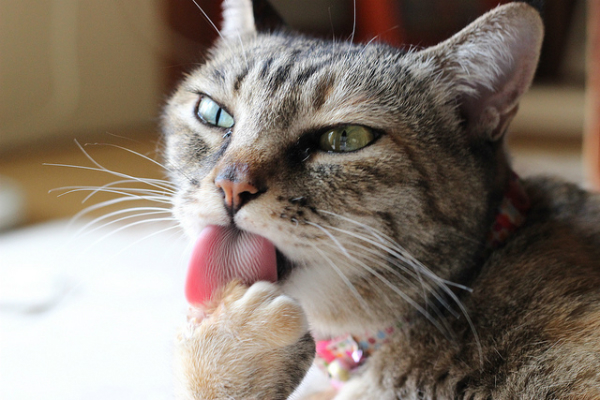
The reality is much less dramatic: A woman’s cat scratched her, then licked the wound.

Through her saliva, the cat named Minty infected the victim with bacterial meningitis, doctors told the New Zealand Herald.

The woman fell into a coma, was found by relatives and brought to Melbourne’s Box Hill Hospital, where medical staff kept her sedated as they tried to treat her. With few options, the family in consultation with the doctors decided to wake her to say goodbye, then placed her back in a coma and withdrew life support.

“Infections related to cat bites and scratches like this person, we’d get at least one a week where somebody comes into the hospital,” Lindsay Grayson, director of infectious diseases at Melbourne’s Austin Health, told the newspaper. “It is very important that if a cat is biting or scratching you, you mention it to your GP.”
54E30393-5955-4B87-8A06-A23E1CC6F630

The woman was 80 years old, and the story suggests she had a compromised immune system. It didn’t provide any other details about her overall health, existing co-morbidities or whether her cat was allowed outdoors. Outside cats have a greater chance of picking up bacteria that can harm humans, experts say. A separate article mentioned the victim took blood thinners.

Grayson’s warning is simple and spot-on: Take bites and scratches from cats and dogs seriously, get the wounds treated and call your doctor. Something that looks like an inconsequential scratch could prove deadly or cause major health problems.

Cats and dogs live in more than 100 million homes in the US alone and infections are exceedingly rare. Grayson is aware of that, and he’s giving solid preventative health advice to people in the pet-owning demographic.

Unfortunately calm and reasoned doesn’t draw clicks, so the story is propagating via headlines that conjure images of a cat literally murdering its owner.

It should go without saying that the cat didn’t intend to cause any harm and is incapable of understanding what happened. All she knows is that her human is dead, which she’s certainly distraught about, and it sounds like she’s not getting sympathy or affection from her new humans.

“I was in shock for a good couple of weeks,” the woman’s daughter said. “I’ve tried not to hate the cat … but then I was sitting with it trying to be nice and it lashed out at me as well for no reason.”

With all respect to the grieving, there most certainly is a reason. The cat is grieving too, she’s living with new people in a new situation, and she’s almost certainly scared. It’s an unfortunate situation for all involved.