Can an ocean-dwelling invertebrate make music? Mattias Krantz thought so. Proving his point took months of work, creative thinking and perseverance.
Mattias Krantz got Tako from a Japanese seafood market.
“That guy,” he told the person manning the stall, pointing to a common octopus sitting in shallow water with others of its kind, not even given room to swim before it was to become someone’s meal.
It is the ultimate as far as random interventions of fate go, and I kept thinking about Tako’s almost-end on a plate while watching musician Mattias Krantz teach the clever animal how to play piano.
Octopus are smart. Comparing animal intelligence to human intelligence is always a flawed and imprecise effort, not least because of differences in psychology and evolution, but the eight-armed invertebrates have cognitive abilities on par with humans at three years old. That is to say, some of their cognitive gifts exceed those of small children, some fall short, and some are about equal. It’s always going to be apples to oranges between species.
Octopus learn quickly simply by observing. They remember individual people even if they haven’t seen them for months. They play, explore and even decorate their dens. In the wild, species like the mimic octopus perform nature’s most astonishing acts of imitation, not only changing the hue, texture and patterns of their skin, but also their shape and the way they move. They can imitate dozens of creatures, blend into the sand, and disguise themselves as plants and rocks. When a predator approaches, the mimic octopus takes on the shape, color and behavior of another predator — a highly venomous fish, for example — and scares off the aggressor. That requires serious smarts.
Technically, saying Tako is playing piano may be a stretch. Octopus can’t hear, so Krantz rigged Tako’s tank with a device that turns sound to rhythmic pulses in the water.
Yet there is no denying that Taku took to the piano with enthusiasm, happily played it, even looked forward to it every day when Krantz’ multiple iterations of waterproof keyboards finally reached a point where the animal could reliably manipulate the keys. (Krantz had to create switches Tako could pull, for example, as it’s difficult for the invertebrates to push keys.)
Krantz’ determination is admirable. The Swedish musician, known for his quirky projects, overcame major hurdles that would have stopped most people, and navigating some of those challenges required radical reconsideration of how humans and animals interact with the world.
Yet Krantz and Tako got there in the end, and the piano is only one part of it. Tako is short for takoyaki, a Japanese fried octopus dish. Watching Tako’s interest and enthusiasm as he tackled the piano day after day, you can’t help but think about his less fortunate tankmates, and our collective ambivalence to the overwhelming evidence that we share this planet with billions of other minds, each with their own thoughts and feelings.
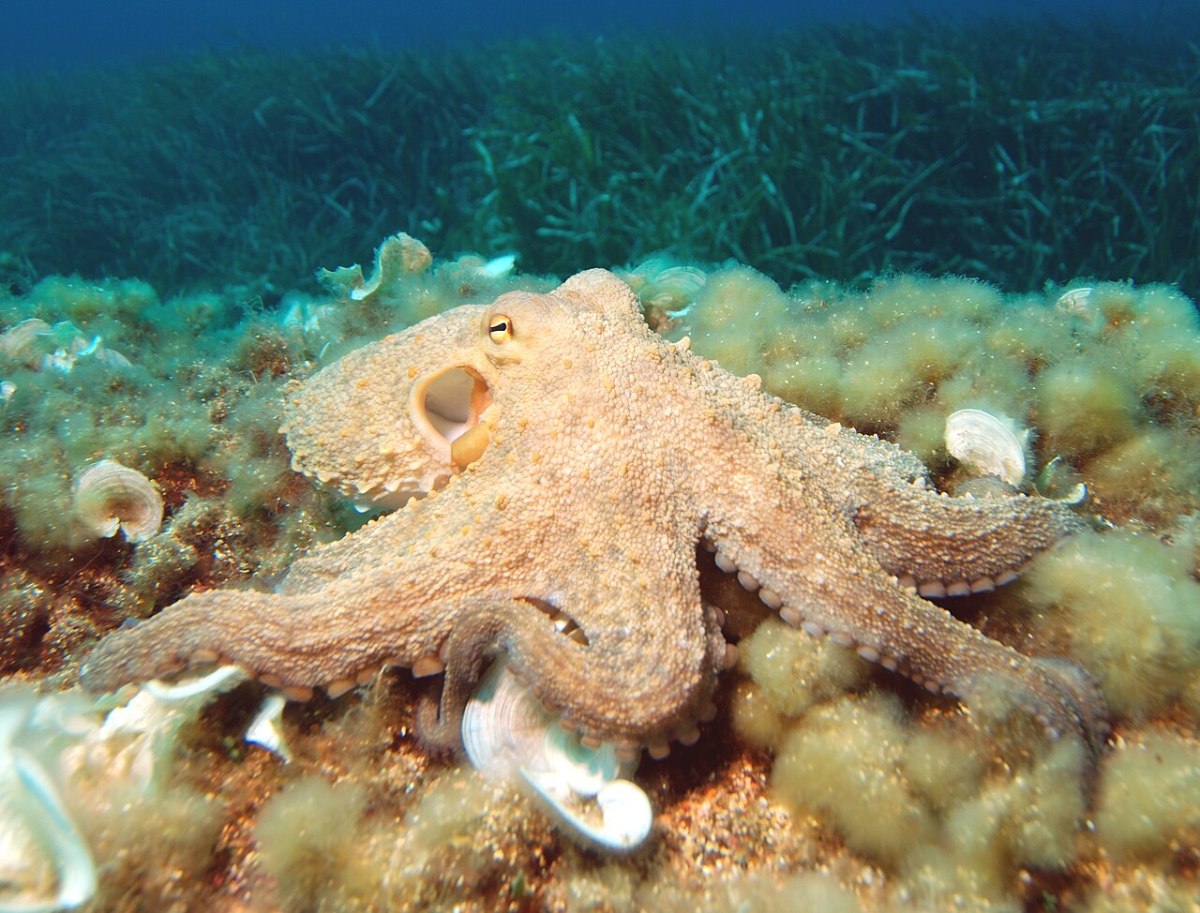
Header image of common octopus credit Albert Kok/Wikimedia Commons
Convinced that culling cats will prevent local wildlife from going extinct, despite no evidence supporting that idea, New Zealand’s authorities have pledged to wipe out ferals and strays.
A recent RNZ story about efforts to exterminate cats in New Zealand starts with an anecdote about a man named Victor Tinndale, describing the way he bludgeons a cat to death as casually as if he’s sipping a cup of coffee.
Tinndale has taken it upon himself to kill cats even though the country’s wildlife management authorities told him not to. Why? Because he thinks cats are responsible for driving native species toward extinction.
He doesn’t know that, of course. No one does. No one’s bothered to do the research, and the driving force behind the claim that cats are responsible is a series of meta-analyses by birders who literally invented numbers to align with their predetermined conclusions about predatory impact.
To date there is not a single study that accurately measures feline predatory impact, nor is there a shred of evidence that slaughtering cats — whether beating them to death, shooting them with shotguns or poisoning them — has any beneficial impact on endangered bird species.
Yet there are vigilantes aplenty slaughtering cats across New Zealand, youth hunting contests encouraging kids to shoot cats and kittens, and government-sponsored extermination programs, like a particularly ghastly effort on a small island off New Zealand’s coast, where members of a team tell themselves they’re doing good work by sniping animals who are doing what they were born to do.
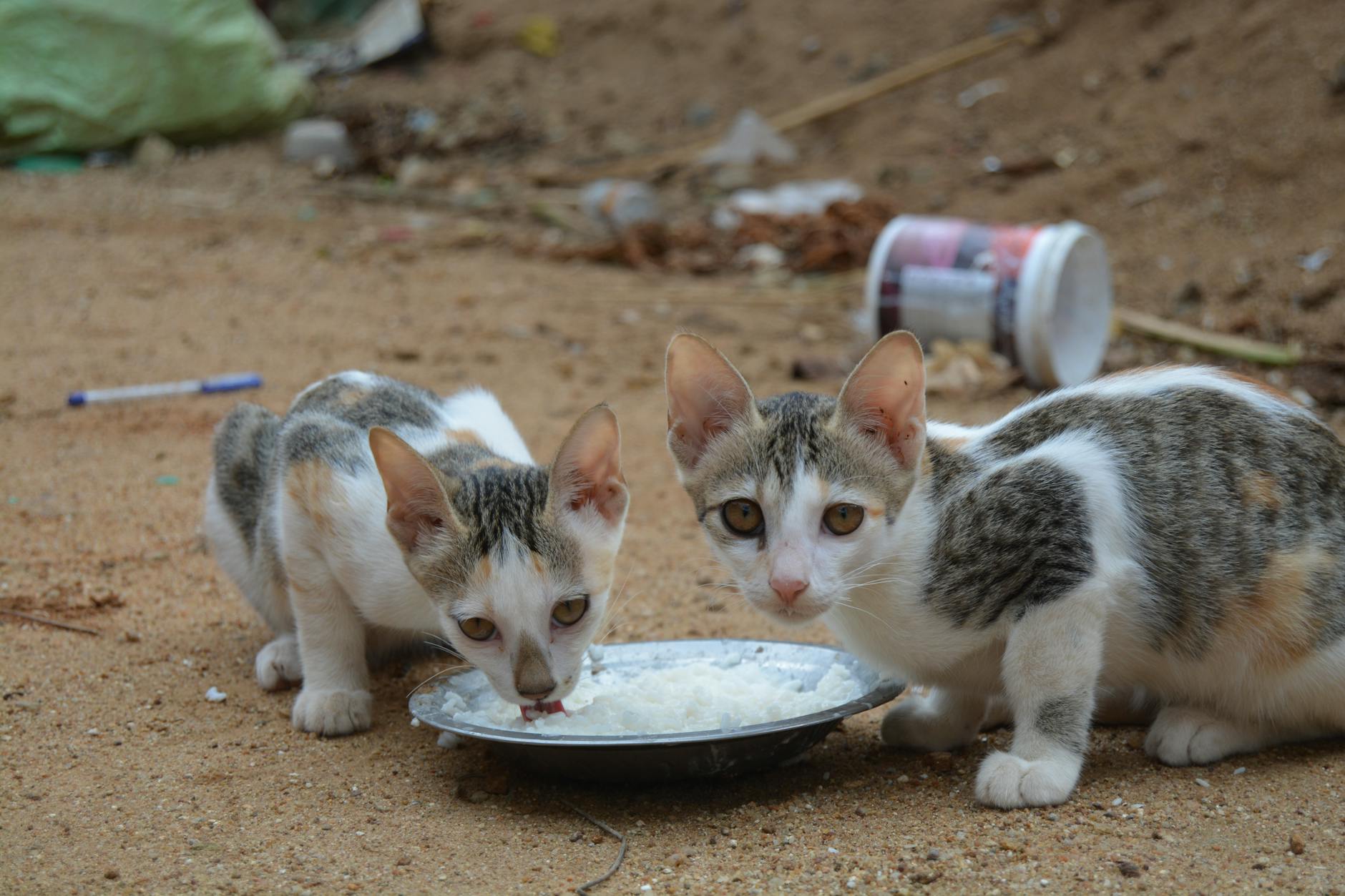
Ferals and strays already have tough lives without being hunted for sport or at the behest of government officials who aren’t in full possession of the facts. Credit: Mohan Rai/Pexels
The RNZ story describes Tinndale merrily skipping through the Aotearoan wilderness, singing songs and cracking jokes like a perverse Tom Bombadil as he murders cats unfortunate enough to get caught in his traps.
RNZ cameras follow Tinndale as he finds a terrified feline in one of the his traps. Tinndale describes the cat’s impending death at his hands as some sort of inevitable cosmic justice. He didn’t sentence the cat to die, he argues. He’s just the man who carries out the sentence.
“This cat is just an utter killing machine,” Tinndale says, addressing a camera as he repeats rhetoric from birder Peter Marra — who has advocated for the destruction of the entire species — almost word for word. “I’d hate to think what this cat has slayed to survive. So this guy has got to go, you know?”
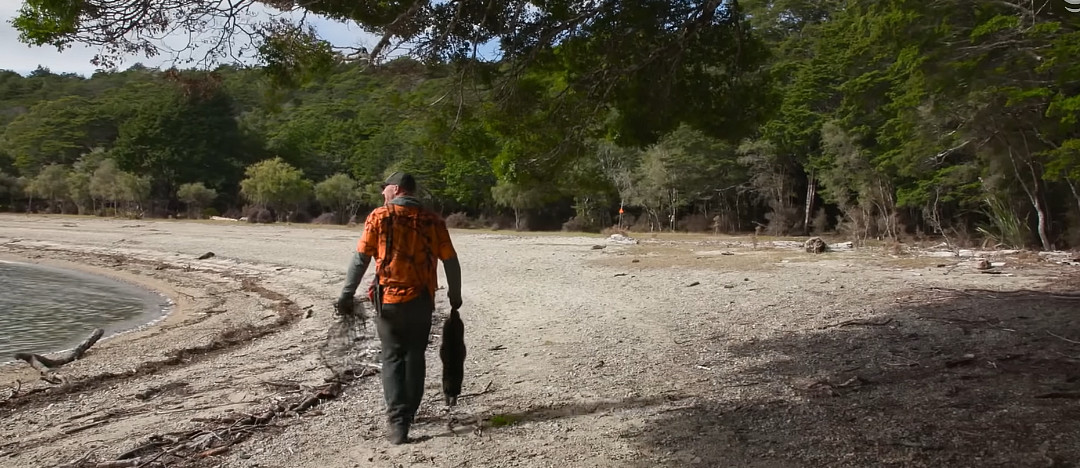
The next scene shows Tinndale walking along the shore, the cat now hanging dead in his hands. He is judge, jury and executioner.
Tinndale buries his victims in a “graveyard” he made near a hut, admitting the graveyard is a “little bit of a laugh.” Tinndale was shocked, the story says, when New Zealand’s Department of Conservation didn’t pat him on the head for his vigilante efforts.
“I thought they’d have a chuckle, you know, and be pleased, but it was nothing of the sort,” he told RNZ.
Thought they’d have a chuckle?
This man thinks bludgeoning animals to death is hilarious. He is a psychotic vigilante who has taken it upon himself to violently end life. Why is he allowed to own weapons? Why is he not in prison or on a court-mandated mental illness management program?
Brad Windust with a trophy hunter’s expression as he shows off a Maine Coon mix he killed with the help of his hunting dog. Credit: Supplied to NRZ
The story goes on to quote Jessi Morgan of the Predator Free New Zealand Trust, who flat-out admits she can’t say how many cats there are in the country, let alone measure their predatory impact.
“I’ve seen estimates from two-and-a-half million to 14 million, which basically tells us we’ve got no idea what those numbers are,” Morgan said before immediately relaying anecdotes from hunters and farmers who say they’re “seeing more.”
This is not how we make decisions between life and death! This is not science, not by any definition of the word. This is not public policy. This is vigilantism and a mob mentality, amplified by the fact that it’s easier to blame a defenseless species for our own conservation failures and humanity’s impact on wildlife.
It is gross, utter disrespect for life under the guise of conservation, by people who not only can’t articulate what sort of damage they think felines are doing to their country, but have not a scrap of evidence that vigilantes running around bludgeoning cats to death are doing anything other than causing needless suffering.
Worse, it’s clear at least some of these self-appointed nature guardians are enjoying the task of murdering cats. It’s evident in their smiles as they show off their prizes and in the way they talk about their “work” — not as a solemn duty after all other options have been exhausted, but as something to “have a chuckle” over.
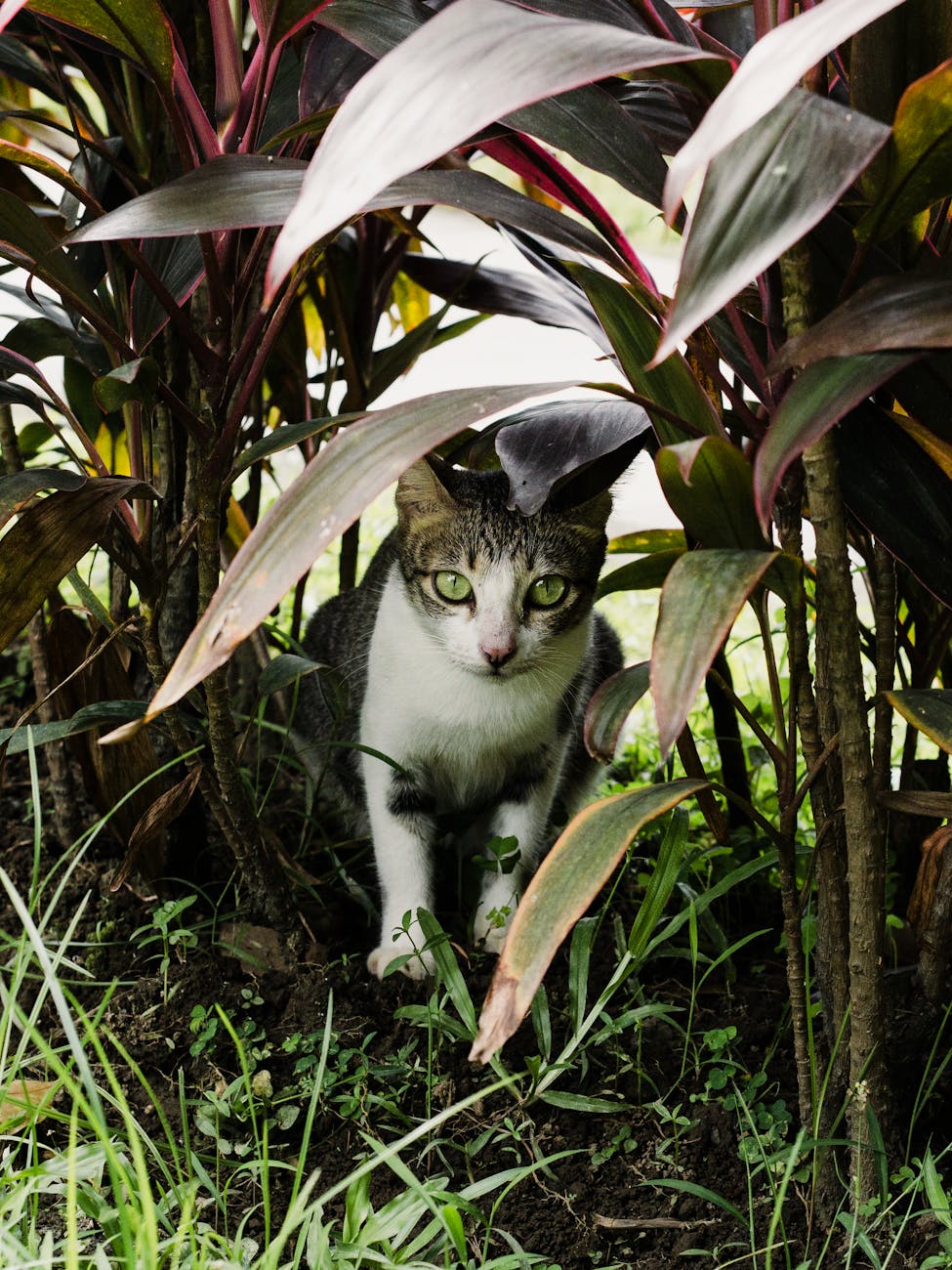
Credit: Dianne Concha/Pexels
This is also a failure of journalism, a failure to follow the most basic best practices and rules, to ask for proof when people assert opinions and call them facts. Those who call themselves journalists, who credulously spread the bunk studies about feline impact on native species, should be ashamed of themselves for not even taking a few minutes to read the studies they cite. Anyone who reads the research would immediately understand that the “studies” — which are really meta-analyses of old data — don’t provide any proof that cats are responsible for pushing endangered species toward extinction. They do nothing of the sort.
What we do know, and have confirmed over more than half a century of rigorous science, is that we are responsible for wiping out wildlife — more than 73 percent of the world’s monitored wildlife populations in the past 50 years alone, according to the World Wildlife Fund’s annual report.
Aside from the fact that they don’t have homes, these cats are no different than pet felines. They are the same species. Credit: Wikimedia Commons
Animal welfare groups have never disputed the idea that cats probably do have a part in endangering small mammals and bird species. They are predators. Hunting is their role.
But that is a far cry from proving they have a measurable impact, let alone are the primary drivers. In rare cases when research teams did the hard work of taking a feline census, as Washington, D.C.’s Cat Count did, the population numbers turn out to be considerably lower than expected.
Data from the Cat Count also confirmed what we know, that cats do not stray more than a few hundred feet from their territory, whether it’s a human home or a small shelter in a managed colony. In urban and suburban environments, the study found, cats have minimal impact through hunting unless they’re living directly adjacent to wooded areas.
Sending a bunch of lunatics out, dancing and skipping as they arbitrarily slaughter sentient creatures with real emotions, is the kind of monstrous behavior only humans are capable of.
Human-made devices and structures kill innumerable birds annually, a fact that isn’t accounted for in studies and news stories blaming cats for bird species extinctions. Credit: Amol Mande/Pexels
But it isn’t enough for New Zealand’s government to have vigilantes killing cats, or community-sponsored cat hunts. Now the government has pledged to eradicate feral cats by 2050. Because feral cats are the same species as stray and pet cats, and there is no way to determine by sight if a cat is feral or just frightened, that means any feline found outdoors will be killed.
“In order to boost biodiversity, to boost heritage landscape and to boost the type of place we want to see, we’ve got to get rid of some of these killers,” says Tama Potaka, the country’s conservation minister.
Note the language in the linked story, which describes domestic cats as if they’re a separate species. That’s the kind of ignorance that drives these cruel efforts.
New Zealand is heavily reliant on tourism, with visitors accounting for almost six percent of the country’s GDP before COVID-19, a number the country’s leaders expect to match in late 2025 as the tourism industry recovers. It’s part of New Zealand’s overall shift to services instead of products in an effort to diversify its economy.
Anyone who loves cats, who thinks men shouldn’t play God, who thinks we ought to demand at least something in the form of proof before allowing socially maladjusted vigilantes to brutally kill animals, should boycott New Zealand as a travel destination.
If you enjoy PITB’s content and want to help us keep the lights on, please consider whitelisting this site on your ad blocker.
Header image: Tinndale walking with a cat he killed via RNZ
Goodall spent the better part of seven decades with the chimpanzees of Tanzania. Her discoveries were so profound, they forced the scientific community to reevaluate what separates humanity from other animals.
As I’m sure most of you have heard, Jane Goodall passed away Wednesday of natural causes. She was 91.
Goodall’s work was revolutionary and her career was extraordinary. It’s difficult to imagine now, but when Goodall first pitched camp in Tanzania’s Gombe Stream National Park in July of 1960, the scientific community knew virtually nothing about great apes.
Goodall wasn’t exactly welcomed with open arms. Being female and photogenic were the first two strikes against her in the eyes of the establishment.
She was self-taught, didn’t have a degree (she later earned a doctorate at Cambridge), and perhaps her biggest “sins” involved empathy and an attitude more buttoned-up scientists saw as anthropomorphizing the animals.
Goodall with a Gombe chimpanzee. Credit: Wikimedia Commons
Goodall gave the chimps names (a no-no at the time among scientists), carefully observed and recorded their family trees, worked out the obtuse — to human eyes– social hierarchy of primate troops, and witnessed behavior that no one had ever seen before.
She saw friendship, love and loyalty among the chimpanzees, witnessed a bitter war between the Gombe troop and a splinter group, followed families over generations, and saw one chimp die of a broken heart after his mother passed away. (I recommend Goodall’s 1990 book, Through A Window: Thirty Years With The Chimpanzees of Gombe, and the 2002 follow-up, My Life With Chimpanzees, for anyone who wants to read more.)
Her first major contribution, in October of 1960, not only fundamentally challenged our assumptions about animals, it forced us to change the way we regard our own species.
Goodall, observing the chimpanzees from a distance despite the rain that day, watched as a male she named David Graybeard repeatedly dipped blades of grass into the Earth. Curious, Goodall approached the site after Graybeard left, grabbed a few blades of grass and imitated what she’d seen the chimp doing.
She was astonished when she pulled the grass out and the strands were covered in termites. David Graybeard had been eating. He was using a tool to eat!
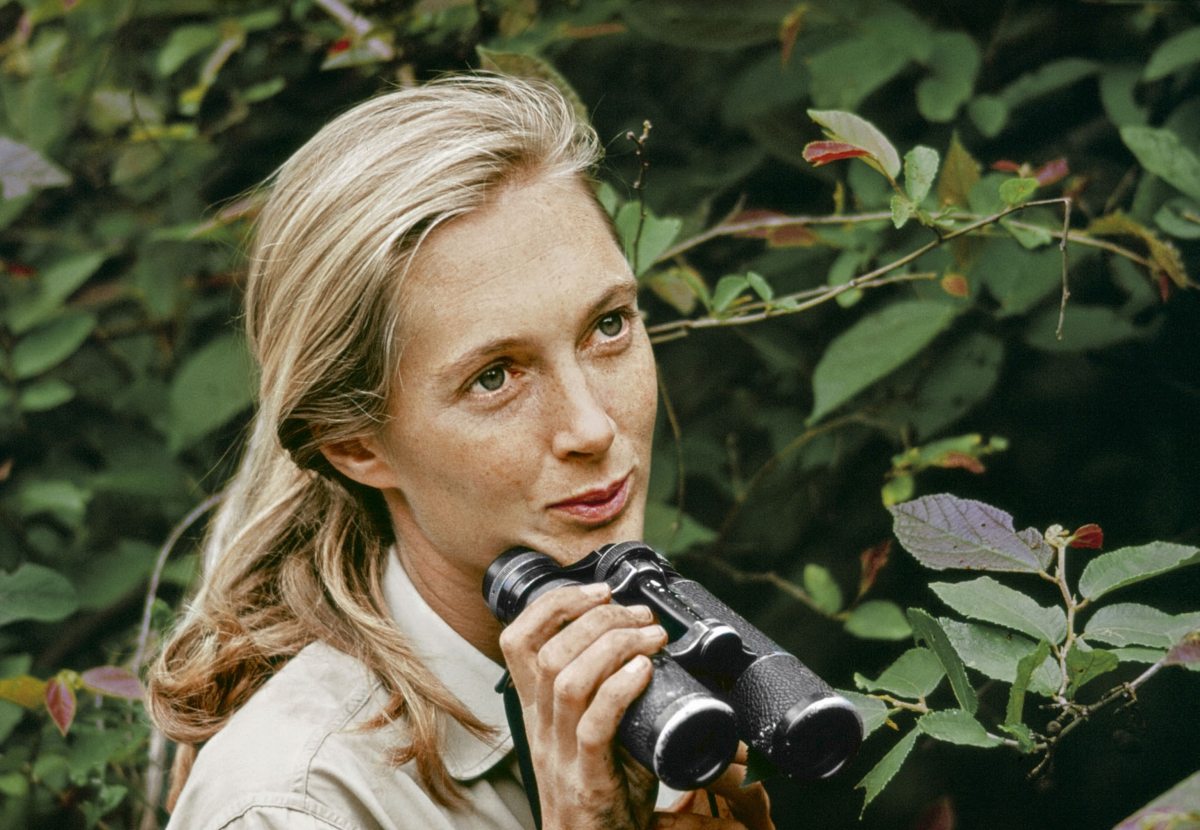
Goodall at Gombe in the early 1970s. The primatologist secured unprecedented access to the chimpanzees by gaining their trust. Credit: Wikimedia Commons
The discovery was huge because scientists believed tool use was, at the time, limited to mankind. We build and use tools, animals don’t, the thinking went.
When Goodall reported her findings to her mentor, anthropologist Louis Leakey, his prompt response indicated the gravity of her discovery: “Now we must redefine ‘tool,’ redefine ‘man,’ or accept chimpanzees as humans.”
Goodall never stopped working with the chimpanzees of Gombe, and today her formerly humble camp has become a permanent compound where researchers — all inspired by Goodall’s story — continue to study our genetic relatives.
But in her later years, Goodall became known for her activism just as much as her work as a scientist. She traveled constantly, engaging audiences on the subjects of animal conservation, respect for nature and understanding our place in the natural order. It’s a job that has become more necessary than ever as relentless human expansion, habitat fragmentation and human behavior push thousands of species toward extinction.
Credit: The Jane Goodall Institute
We lost Frans de Waal, the famous primatologist, in 2024. Now we’ve lost Goodall, and Sir David Attenborough is less than six months shy of his 100th birthday. We’re going to need people to pick up where they left off, and the job is much more difficult than it looks, requiring expertise, charisma and the ability to connect with audiences who know little about the subject matter.
But that’s a problem for another time. For now, let’s remember Jane and appreciate all she’s done over the span of an incredible life and career.
A new story from CNN examines how friendship with animals can enhance our spiritual lives.
If you ask Bud, I’m sure he’d agree that merely having the privilege of being friends with him is akin to a transcendental experience.
“Yes, human, by stroking my fur, you are brushing up against the divine!” he’d probably say. “Now make a proper offering, and don’t skimp out on me. I want the good snacks!”
The massive ego of my cat aside, some theologians and spiritualists say we’re in the midst of a “Great Pet Awakening,” with more people than ever welcoming animals into their homes, treating them like family, and coming to profound realizations by bonding with them.
Our pets can help us come to grips with our own mortality, amplify our own spiritual lives and even help us heal, they say. Some of it’s nebulous, including a Pew poll that found most Americans believe pets are imbued with some sort of vague supernatural energy, and some of it’s tangible, like studies that have found cat purring has a calming effect on people as well as cats.
If you’re interested in reading more, CNN’s story on the “awakening” quotes a Canadian theologian and author, a Buddhist, and, tragically, a “psychic medium.” In true grief vampire style, the latter says “pet psychics” can offer people “a chance to hear personalized messages from their pets in the Great Beyond.”
“Now leave the snack, bow, and retreat until I call for you again. That’s a good human.”
I don’t like thinking about a time when Bud will be gone, but when that day comes, if I encounter a “pet psychic” who tells me Bud sends his love and appreciation from the afterlife, it’ll reinforce my dim view of self-proclaimed mediums. If, however, the “psychic” tells me that Bud is still miffed about the times dinner was late, or he’s annoyed that I’ve adopted another cat who has inherited his toys, I’ll change my tune!
In any case, I think there’s one hugely important thing the CNN story does not touch on. It focuses on the way pets benefit people, but perhaps the most profound gift our animals give us — if we’re open to it — is a new appreciation for them, and what a miracle they are.
It’s 2025, but surprisingly, there are lots of people who are still stuck in a pre-cognitive revolution mindset, viewing animals as little more than biological automatons. They deny animal cognition, emotions and agency, as if B.F. Skinner and behaviorism remain the credible model. To do that, you’d have to ignore more than sixty years’ worth of research proving our furry friends have their own rich internal lives, their own thoughts and feelings.
Buddy’s ego may be slightly inflated.
That, to me, is one of the great things about cats. If I was a merely adequate servant, the Budster would take the free meals, the shelter and the warm bed, and ignore me until he wants something. Instead, he’s rarely more than three feet from me, he spends much of his day sitting on me or in direct physical contact, he can’t abide any barrier between us, and he expresses his love by marching up to me, purring up a storm, and rubbing his head against my face.
He chooses to do that, and it tells me that for all the boneheaded mistakes I’ve made, I must be doing a pretty decent job. He’s not my property, he’s my Buddy.
Cats and dogs communicate primarily by scent, touch and body language, but human efforts to understand them have focused exclusively on meows and barks. If we want to truly understand our non-human friends, we need to take an approach that considers the other ways animals “talk” to each other.
A few years ago when MeowTalk made a minor splash in the startup world, I was pretty bullish on its potential to help us understand our cats better.
Sure, the app had an unhelpful habit of attributing improbably loving declarations to Buddy, but I thought it would follow the trajectory of other machine learning models and drastically improve as it accumulated more data.
More users meant the app would record and analyze more meows, chirps and trills, meaning it was just a matter of time before the AI would be able to distinguish between an “I want attention!” meow and a “My bowl is dangerously close to empty!” meow.
Obviously that didn’t happen, and what I personally didn’t take into account back then — and should have, given how obvious it is in retrospect — is that cats don’t just communicate via vocalizations.
In fact, cats don’t normally incorporate vocalizations into communication at all. Pet kitties do it entirely for our benefit because they know we’re generally awful at interpreting body language and we are completely useless when it comes to olfactory information.
It’s actually amazing when you really think about how much of the heavy lifting cats do in our efforts to communicate with each other. They recognize we can’t communicate the way they do naturally, so they try to relate to us on our terms. In return, we meet them less than halfway.
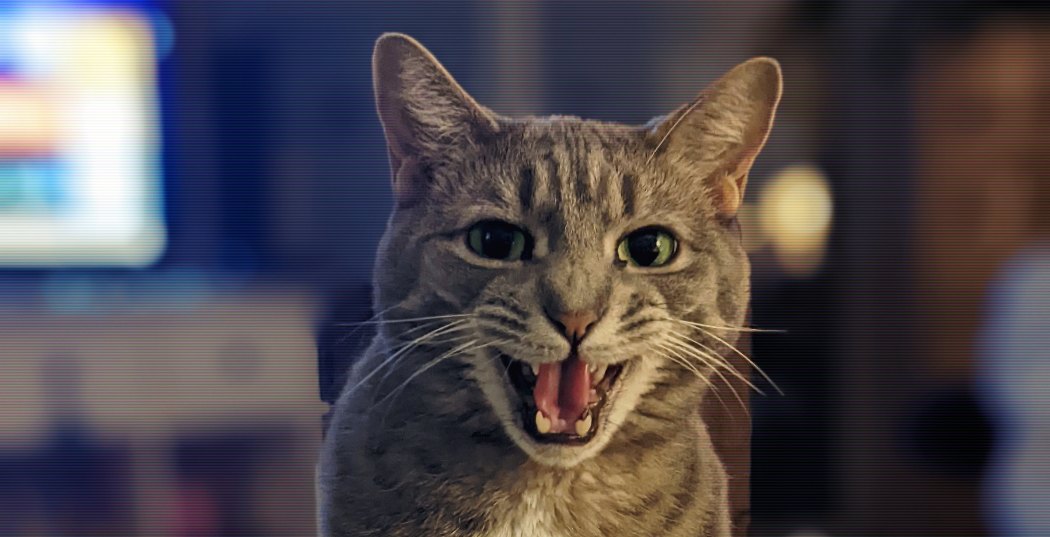
No wonder Buddy sometimes looks frustrated as he meows at me, as if I’m the biggest moron in the world for not understanding the very obvious thing he’s trying to tell me.
“Human, how can you not understand the simple feeling of innerer schweinehund I’m trying to convey here? The cringe is killing me!”
Now the Chinese tech giant Baidu is throwing its hat into the ring after filing a patent in China for an AI system that uses machine learning to decode animal communication and “translate” it to human language.
Machines are designed to process things from a human viewpoint according to human logic, so if Baidu wants to succeed where MeowTalk has not, its engineers will need to take a thoughtful approach with the help of animal behavior experts.
This is a hard problem that encompasses animal cognition, neuroscience, linguistics, biology, biochemistry and even philosophy. If they approach this strictly as a tech challenge, they’ll set themselves up for failure.
Without the information and context clues provided by tails, whiskers, facial expressions, posture, eye dilation, heart rate, pheromones and even fur, an AI system is only getting a fraction of the information cats are trying to convey.
Trying to glean meaning from that is like trying to read a book in which only every fourth or fifth letter is legible. There’s just too much missing information.
Even if we can train machines to analyze sound visual, tactile and olfactory information, it may not be possible to truly translate what our cats are saying to us. We may have to settle for approximations. We’ve only begun to guess at how the world is interpreted differently among human beings thanks to things like qualia and neurodivergence, and the way cats and dogs see the world is undoubtedly more strange to us than the way a neurodivergent person might make sense of reality.
“He grimaced. He had drawn a greedy old character, a tough old male whose mind was full of slobbering thoughts of food, veritable oceans full of half-spoiled fish. Father Moontree had once said that he burped cod liver oil for weeks after drawing that particular glutton, so strongly had the telepathic image of fish impressed itself upon his mind. Yet the glutton was a glutton for danger as well as for fish. He had killed sixty-three Dragons, more than any other Partner in the service, and was quite literally worth his weight in gold.” – Cordwainer Smith, The Game of Rat and Dragon
An animal’s interpretation of reality may be so psychologically alien that most of its communication may be apples to oranges at best. Which is why I always loved Cordwainer Smith’s description of the feline mind as experienced via a technology that allows humans with special talents to share thoughts with cats in his classic short story, The Game of Rat and Dragon.
In the story, humans are a starfaring civilization and encounter a threat in the void between stars that people don’t have the reaction speed to deal with. Cats, however, are fast and swift enough, and with a neural bridge device, teams of humans paired with cats are able to keep passengers safe on interstellar journeys.
The narrator, who is one of the few people with an affinity for teaming up with felines, hopes he’ll be paired with one of his two favorite cats for his latest mission, but instead he’s assigned to partner with an old glutton of a tomcat whose mind was dominated by “slobbering thoughts of food, veritable oceans of half-spoiled fish.”
The narrator wryly notes that the last time one of his colleagues was paired with that particular cat, his burps tasted of fish for weeks afterward. But the cat in question, despite being obsessed with fish, is a badass at killing “dragons,” the human nickname for the bizarre entities that attack human ships in space. (The software that allows felines and humans to link thoughts also portrays the “dragons” as rodents in the minds of the cats, stimulating their ancient predatory drive so they’ll attack instantly when they see the enemy.)
We can’t know for sure if Smith’s interpretation of the feline mind is accurate, but another part rang true when he wrote that cat thoughts were all about the moment, filled with sentiments of warmth and affection, while they rapidly lost interest in thoughts about human concerns, dismissing them “as so much rubbish.”
If the mind of a cat is that relatable, we’ll be incredibly lucky. But in reality we’re dealing with animals who evolved in drastically different ecological niches, with different priorities, motivations, and ways of looking at the world — literally and figuratively.
That doesn’t mean we shouldn’t try to understand our furry friends. Research has yielded interesting information about the way animals like whales and elephants communicate, and AI is at its best when it augments human creativity and curiosity instead of trying to replace it.
Even if we don’t end up with a way to glean 1:1 translations, the prospect of improving our understanding of animal minds is tantalizing enough. We just need to make sure we’re listening to everything they’re saying, not just the meows.










 Pain In The Bud