Were Cats Really Domesticated By The Egyptian Cult Of Bastet?

While the sensational claims have spawned headlines around the world, a closer examination raises more questions.

According to dozens of articles, a pair of new studies throws doubt on the commonly-held view that cats self-domesticated 10,000 years ago by helping themselves to rodents invading human grain stores.

The conventional wisdom for some time has been that house cats are the domesticated ancestors of felis sylvestris lybica, the African wildcat. Their genomes are nearly identical, it’s often difficult even for experts to tell the species apart, and they’re much more tolerant toward humans than the comparatively hostile felis sylvestris, the European wildcat.

But two new papers are raising eyebrows for their fantastic claims that feline domestication was actually human-driven and began about 5,000 years ago in Egypt.

Specifically, the papers claim cats were sacrificed en masse by the cult of Bastet, an Egyptian feline goddess, guiding the species toward domestication in a way that doesn’t quite make sense with what we know of evolution.
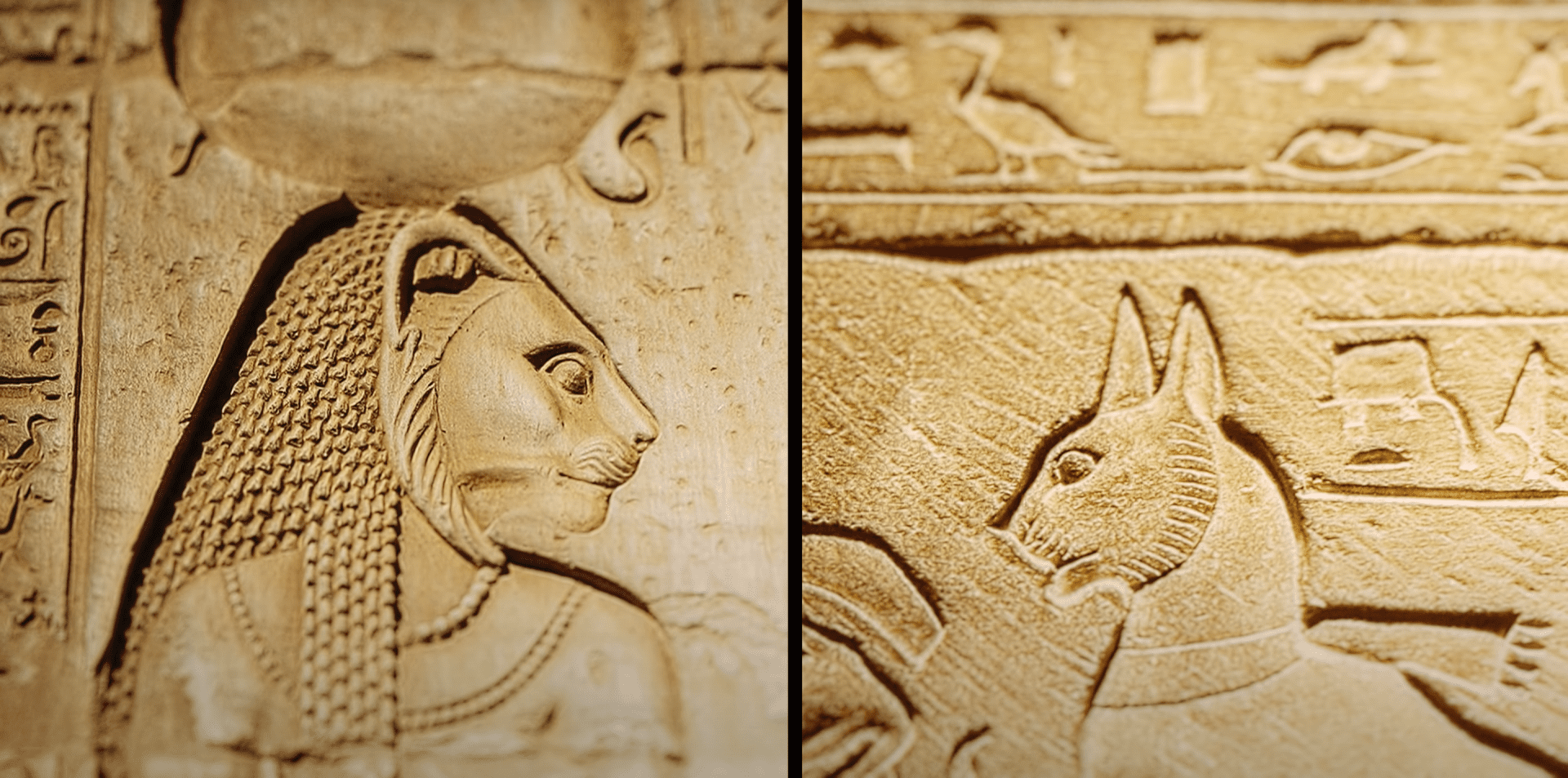
Bastet was originally depicted with the head of a lion, but the imagery around her evolved as she became a more prominent deity in the Egyptian pantheon. Later glyphs depicted her with the head of a domestic cat or African wildcat.

There are two main elements to the new claim:

  1. The earliest grave in which a cat was buried with a human was dated to about 10,000 years ago, and was found in Europe. But an analysis of the cat’s remains indicate it had DNA somewhere between a wild cat and a domestic feline. That, the authors claim, throws into doubt the idea that cats drifted into human settlements, drawn by the presence of rodents.
  2. If domestication was closer to 5,000 years ago, that would coincide with the rise of the cult of Bastet, the Egyptian cat goddess, around 2,800 BC.

Instead of the feel-good, fortuitous sequence of events the scientific community has accepted as the likely genesis of our furry friends, the authors of the new papers claim aggressive and fearful traits were essentially murdered out of the feline population by Bastet cultists who sacrificed cats in large numbers and mummified their corpses.

Neither paper has been peer-reviewed yet, and experts on ancient Egypt, genetics and archeology have already begun pushing back.

The new timeline, they say, doesn’t quite add up, with cat mummies found throughout different periods in Egyptian history, not just during the height of Bastet’s popularity in the Egyptian pantheon. Bastet’s popularity came approximately 700 years later than the authors claim the sacrifices began, and early imagery of the felid goddess depicts her with a lion head. It wasn’t until later centuries that Bastet was represented with the features of a domestic cat.
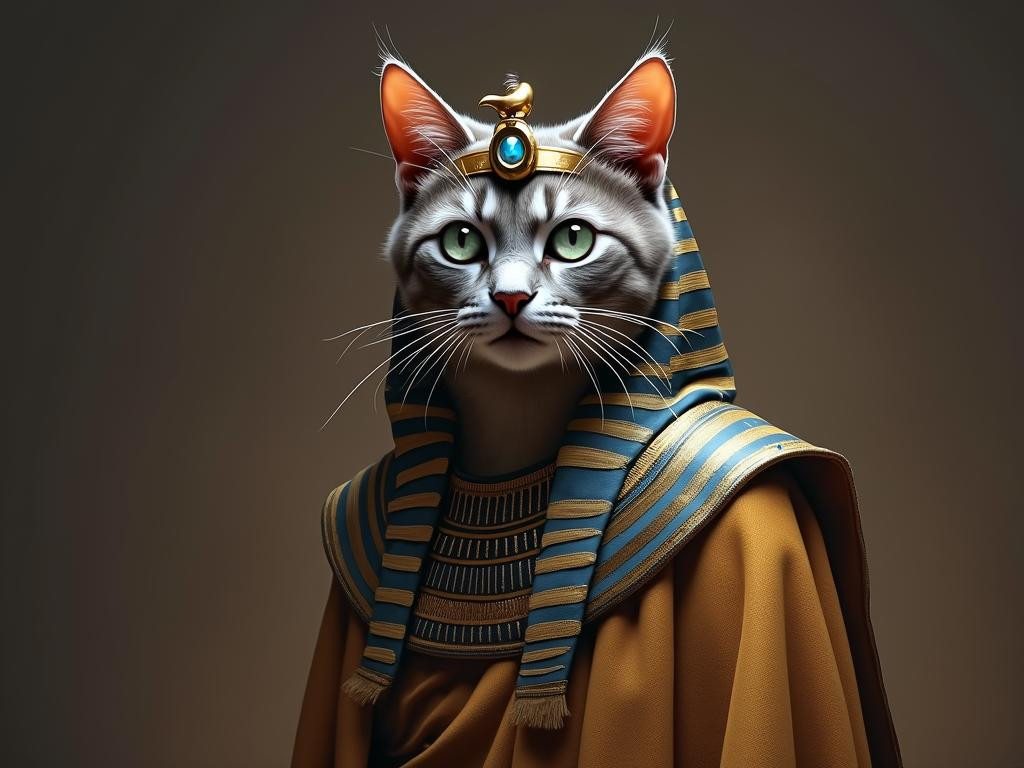
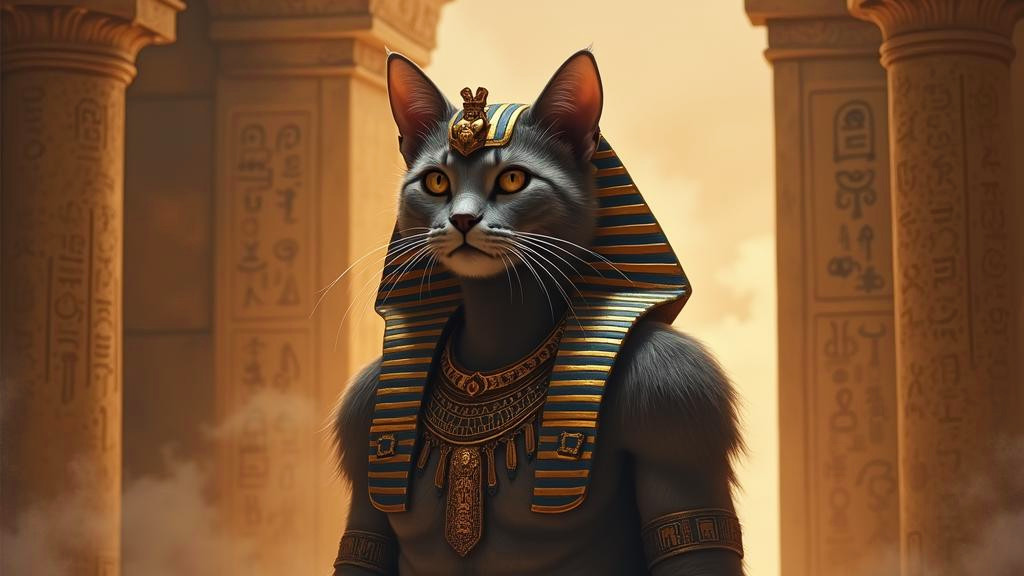
The powerful Pharaoh Budhotep I, considered an apocryphal king by some, sent a fleet of ships to the Americas to bring back turkey, according to legend. Credit: The Royal Buddinese Archaeological Society

Separate from timeline concerns is the lack of historical evidence. Cats were revered in ancient Egypt, and while there are an abundance of cat mummies — as well as the mummified remains of many other animals — that does not mean the cats were ritually sacrificed.

Indeed, archaeological, hieroglyphic and anthropological evidence all show cats enjoyed elevated status in the Egypt of deep antiquity, long before the nation became a vassal state of the Greeks, then the Romans.

Cats were associated with magic, the divine and royalty, and cats who were the favored pets of Egyptian elites were given elaborate burials. Like Ta-miu, Prince Thutmose’s cat who is known for her grand sarcophagus decorated with images of felines and prayer glyphs meant to guide her to the afterlife.

Cats were sacred companions to the Egyptians

When cats are found buried with humans, the more common explanation is that those cats were the pets and companions of those humans. If the authors of the two new papers want to prove their claim that cats were ritually sacrificed by the tens of thousands — slaughter on a scale that would influence evolution — they’ve got a lot more work ahead of them. (And the burden of proof rests squarely with them, as the originators of the claim.)

Not only does their research attempt to change the origin stories of kitties to an ignominious tale of human barbarity, if we take their assertions at face value, we’re talking about a case of “domestication by slaughter.”

While it may be true that the earliest evidence of companion cats outside of North Africa revealed hybrid DNA, that doesn’t cast doubt on the commonly-accepted view of feline domestication, it strengthens it. Domestication is a process that takes hundreds of years if not more, and it occurs on a species level, so it makes perfect sense that cats found in burial sites from early civilization would be hybrids of domestic and wild. Those felines were of a generation undergoing domestication, but not quite there yet.
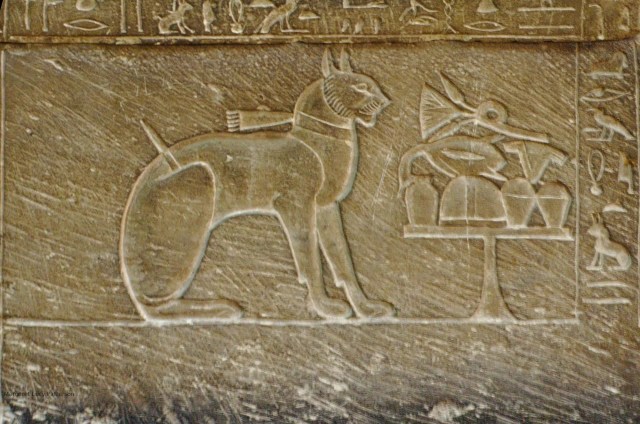
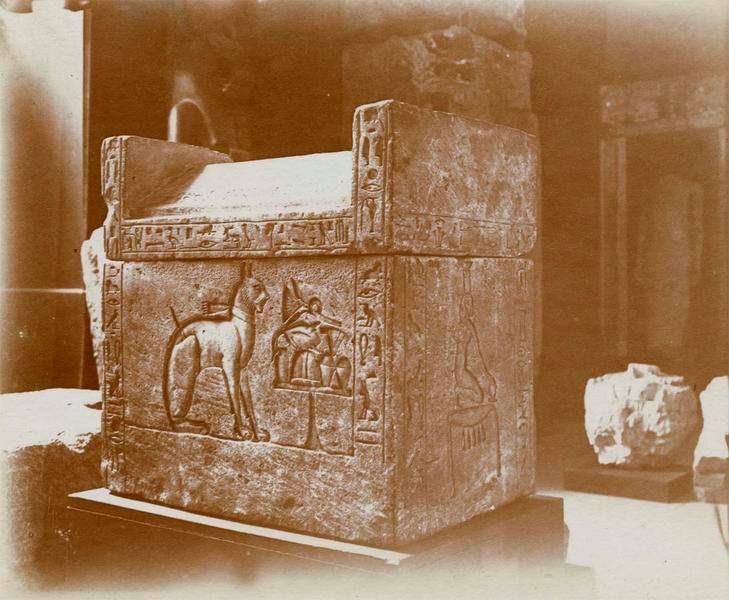
A detail from the sarcophagus of Ta-miu, Prince Thutmose’s beloved cat.
Ta-miu, Prince Thutmose’s beloved cat, was buried in an elaborately decorated sarcophagus with glyphs and offerings meant to guide her to the afterlife. Thutmose, son of Amenhotep III and Queen Tiye, lived in the 14th century BC.

Killing off docile cats?

Which brings us to another significant problem with the claim: if the ancient worshipers of Bastet were selecting the most docile and easiest-to-handle wildcats for their sacrifice rituals, as claimed, then they would be influencing evolution in the other direction.

In other words, they’d be killing off the cats who have a genetic predisposition toward friendliness, meaning those cats would not reproduce and would not pass their traits down. It would have the opposite effect of what the papers claim.

So despite the credulous stories circulating in the press and on social media, take the assertion with a grain of salt. Something tells me it won’t survive peer review, and this will be a footnote about a wrong turn in the search for more information on the domestication of our furry buddies.
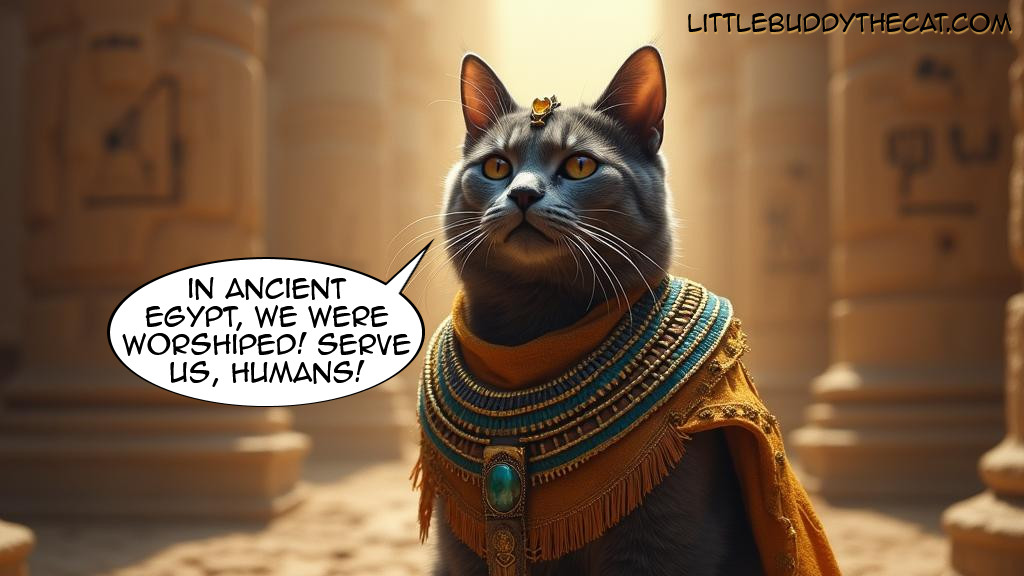
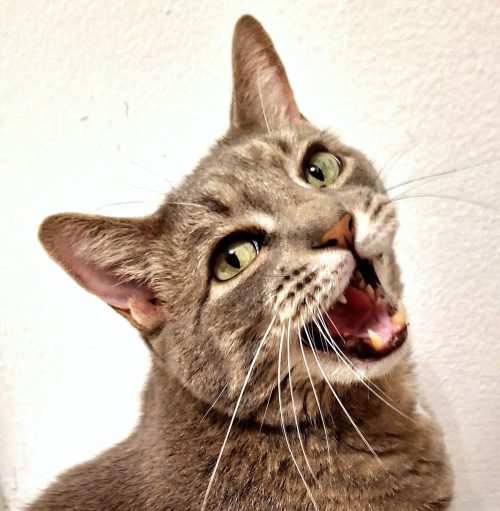
Cats would like human civilization to return to the good old days.

Buddy — Er, Budhotep — Is Apparently Descended From Royal Pharaonic Felines

Sheba and a geneticist who specializes in cats are looking for felines descended from ancient Egypt’s royal buddies.

“You may call me Budtum Ra Budhotep Bhufu Amun Buddeses, human. Now serve me!”

Bud’s already enormous ego just got a little bigger after I used Sheba’s Pharaoh Cat Finder to analyze his pharaohness.

The online tool says he’s up to 75 percent pharaoh:

I didn’t do it entirely out of altruism to give the little guy an ego boost. The winner of the Pharaoh Cat contest gets a lifetime supply of Sheba, and Bud’s been eating Sheba for 10 years. We’ve never endorsed any particular cat food here on PITB, partly because every cat is different, some have special nutritional needs and what works for one furry overlord may not work for another.

But as food motivated as he is, Buddy cannot scarf down more than half a can of wet food at a time, and he’s an enormous pain in the Bud when it comes to leftovers, so Sheba’s Perfect Portions saves me from wasting food.

While the online Pharaoh Cat Finder tool looks like it may be RNG combined with clever marketing,  there’s a genetic basis for the search. The company is working with Dr. Leslie A. Lyons, a geneticist who specializes in the DNA of our furry little friends at the University of Missouri’s Feline Genetics and Comparative Medicine Lab.

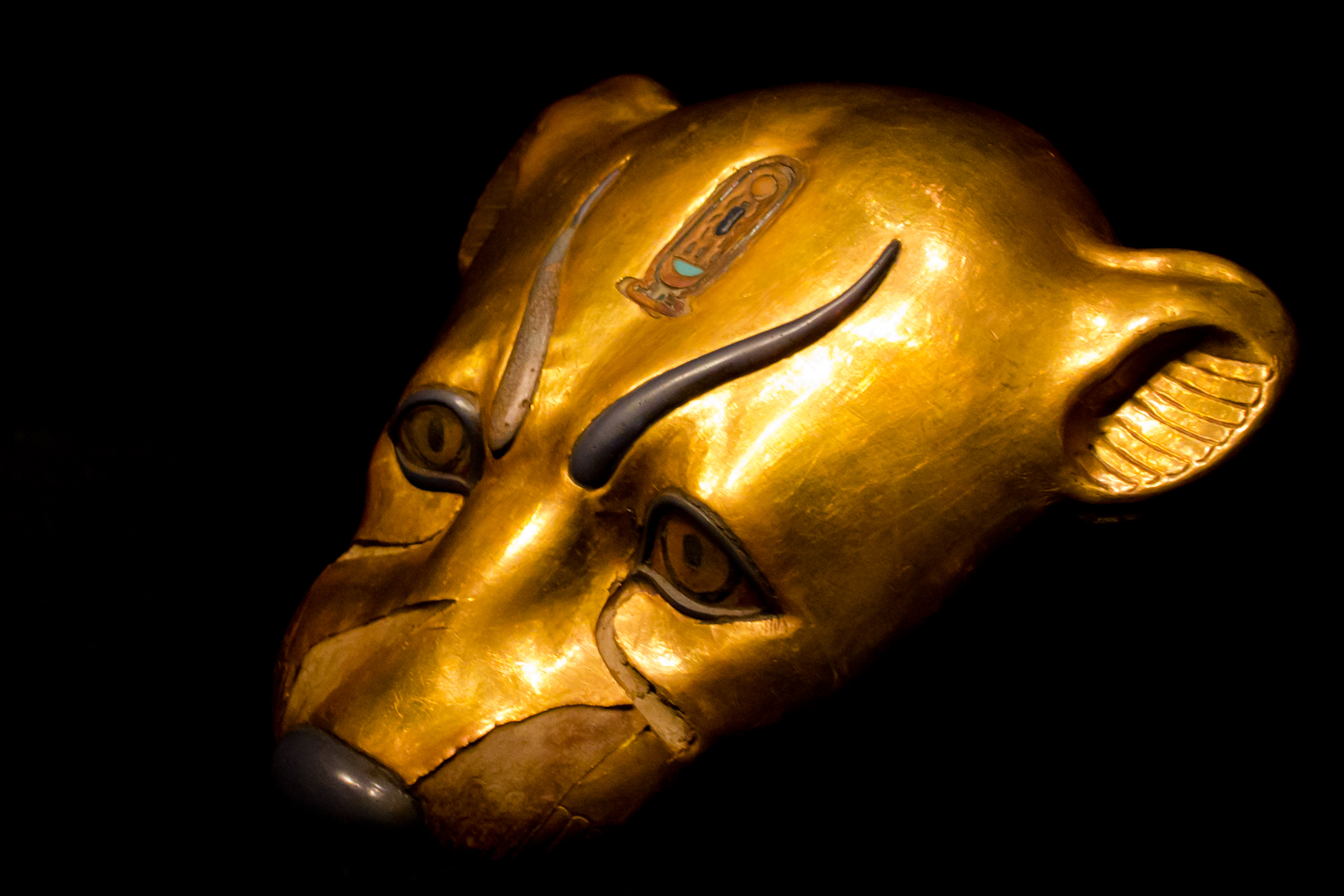
The legendary funerary mask of pharaonic feline Buddankhamun Budstet Ra Budshepsut, Buddy’s royal Egyptian ancestor. Credit: The Grand Museum of Magnificent Feline Stuff

Lyons was part of a research team that extracted DNA from mummified cats buried in ancient Egyptian tombs and sequenced their genetic code.

While the project verified that the Egyptians domesticated cats long before they began mummifying them and affording them revered status, Lyons says a DNA sequence from the ancient felines “has only been found in cats in Egypt and the U.S., unlocking even more questions to be explored.”

“We are looking at mitochondrial DNA only found in these pharaoh cats and a few cats in the U.S. So it’s really hard to find these cats, hence this hunt with Sheba pet food,” she said. “We’re on that quest to find the cats that went from Egypt into the U.S. and are the divine cats of the pharaohs. They should be worshiped like they were.”

The Temple of Amun Bud is guarded by gold statues of domestic cats instead of sphynxes. Credit: National Gallery of Buddesian Artifacts

I don’t think there’s any doubt that the aptly named Dr. Lyons is on team cat.

So here’s to hoping Bud gets a lifetime supply of Sheba, and Dr. Lyons is successful in her quest to find the elusive pharaoh cat lineage. In the meantime, we should probably start work on an impressive new pyramid here in the US, lest we disappoint our new feline pharaoh.

Cat On The Street: Should Humans Worship Felines As They Did In Ancient Egypt?

We asked six cats what they think about the possibility of humanity worshiping their species again.

It’s said that the people of ancient Egypt venerated cats as deities and treated them with the utmost respect in addition to pampering them, granting them access to pharaonic palaces and feeding them from the pharaoh’s own kitchens.

Cats have not forgotten their elevated status in ancient Egypt, even thousands of years later, and they yearn for a return to the days when they were served with veneration rather than simply being served.

Should humans worship cats as they did in ancient Egypt?

100 Years Ago, An Archaeologist Unearthed The Most Incredible Find In History

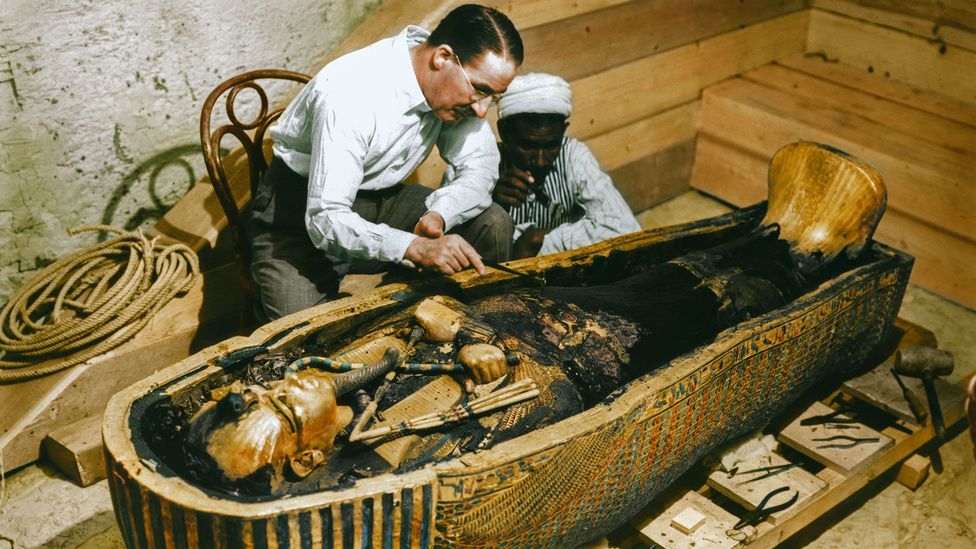
100 years ago today, Howard Carter found a tomb filled with statues of cats, as well as the mummy of some guy named King Tut!

Howard Carter’s peers felt sorry for him.

The British archaeologist’s contemporaries watched him dig in Egypt’s Valley of the Kings year after year, grid by grid in what they were sure was a fruitless search for something that didn’t exist. Everyone knew the sand-covered necropolis had yielded all of its secrets. Everyone knew Carter was wasting his time — and the funds of his patron, the Earl of Carnarvon — looking for the tomb of an obscure, apocryphal boy king who allegedly ruled Egypt for nine years in deep antiquity.

After 15 years, the partnership between Carter and Carnarvon was about to end. Even the wealthy aristocrat had his limits, and after so much time and effort chasing an apparent mirage, Carnarvon declared he would pay for one final season of archaeological work in 1922.

Carter had been laboring in the necropolises along the Nile since he was a young boy and apprentice to the great archaeologists of his time. Aside from seasons that were cut short by war, the Egyptologist had spent three decades digging in those valleys. Now he was about to be out of a job and a patron.

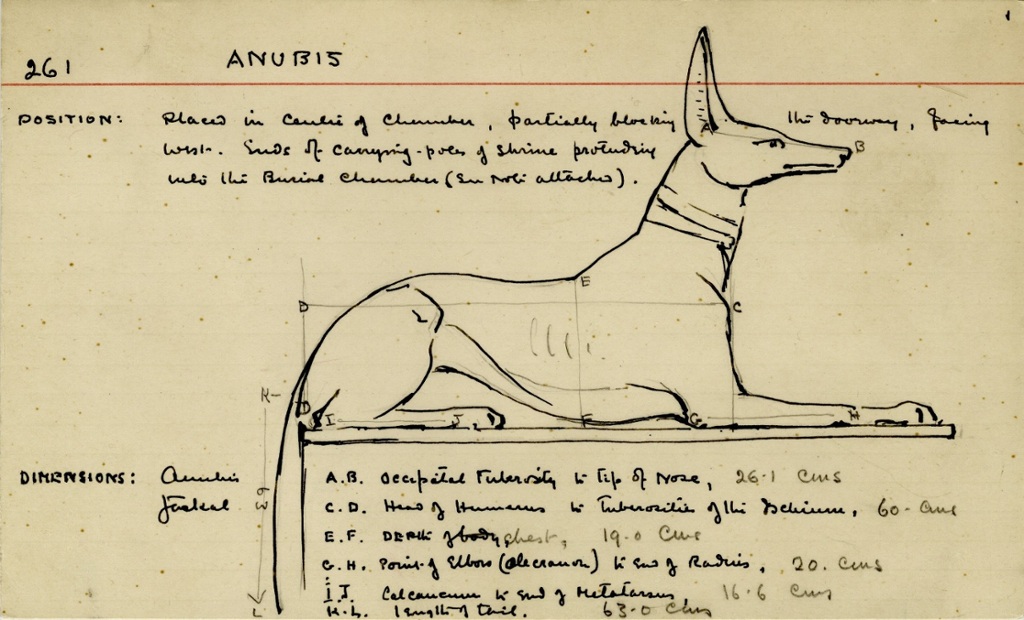
Carter's notes
Howard Carter’s discovery made him the most famous archaeologist in history, but it also left him with the incredible task of preserving and cataloguing everything in the more than 3,000-year-old tomb. Here’s a page from Carter’s notes about a statue of Anubis. Credit: Wikimedia Commons

Exactly 100 years ago today, Carter wrote a terse entry in his journal: “First steps of tomb found.”

Those steps descended to a door of limestone and plaster, marking the entrance to an antechamber. A second doorway lay sealed in the gloom, and after dispatching a letter imploring Carnarvon to make haste to Egypt, Carter waited for the arrival of his patron and chipped away at the second door, peering through a tiny hole.

With trembling hands I made a tiny breach in the upper left-hand corner. Darkness and blank space, as far as an iron testing-rod could reach, showed that whatever lay beyond was empty, and not filled like the passage we had just cleared. Candle tests were applied as a precaution against possible foul gases, and then, widening the hole a little, I inserted the candle and peered in, Lord Carnarvon, Lady Evelyn and Callender standing anxiously beside me to hear the verdict. At first I could see nothing, the hot air escaping from the chamber causing the candle flame to flicker, but presently, as my eyes grew accustomed to the light, details of the room within emerged slowly from the mist, strange animals, statues, and gold – everywhere the glint of gold.

The earl, sensing a shift in Carter’s mood, queried him: “Do you see anything?”

Carter paused to collect himself before answering.

“Yes,” he said. “Wonderful things!”

The rest is history.

It turned out the room Carter first glimpsed was yet another antechamber. It had been breached in antiquity and tomb robbers had taken some of its valuables before resealing it, but they hadn’t breached a second chamber, the one that contained what are now the most famous finds in archaeological history: The iconic gold funerary mask of King Tutankhamun, the ornate sarcophagus inscribed with prayers from the Egyptian book of the dead, a life-size statue of the boy pharaoh and other statuary, impeccably designed furniture, vases, funerary candle holders, textiles, canopic jars, even chariots and a model ship. There were cats too, including statues of felids big and small.

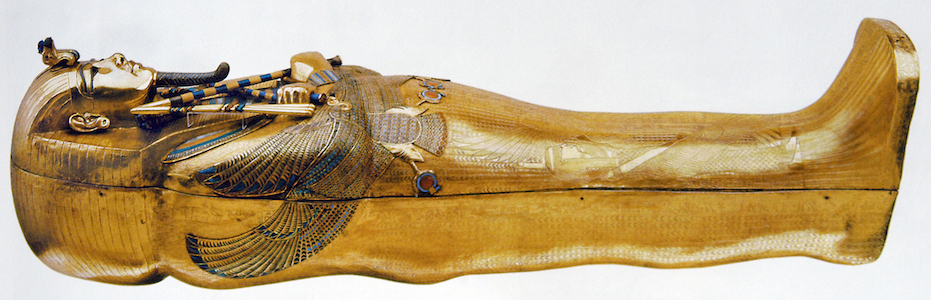
Tut coffin
A second coffin made of wood and gold encased the pharaoh’s body and was placed within the sarcophagus.

Everything was gilded, and everywhere Carter’s torch cast light was the glitter of gold. He had been vindicated. Subsequent rulers had almost erased Tut’s name from history, and many doubted he was a historical figure. Now Carter not only proved the boy pharaoh was real, he had discovered the best-preserved tomb in history, ignited renewed interest in ancient Egypt, and unearthed objects that would leave indelible marks on human culture.

For more about Carter’s historic discovery, King Tutankhamun himself and the impact of the incredible discovery as the world celebrates its 100th anniversary, here’s some further reading:

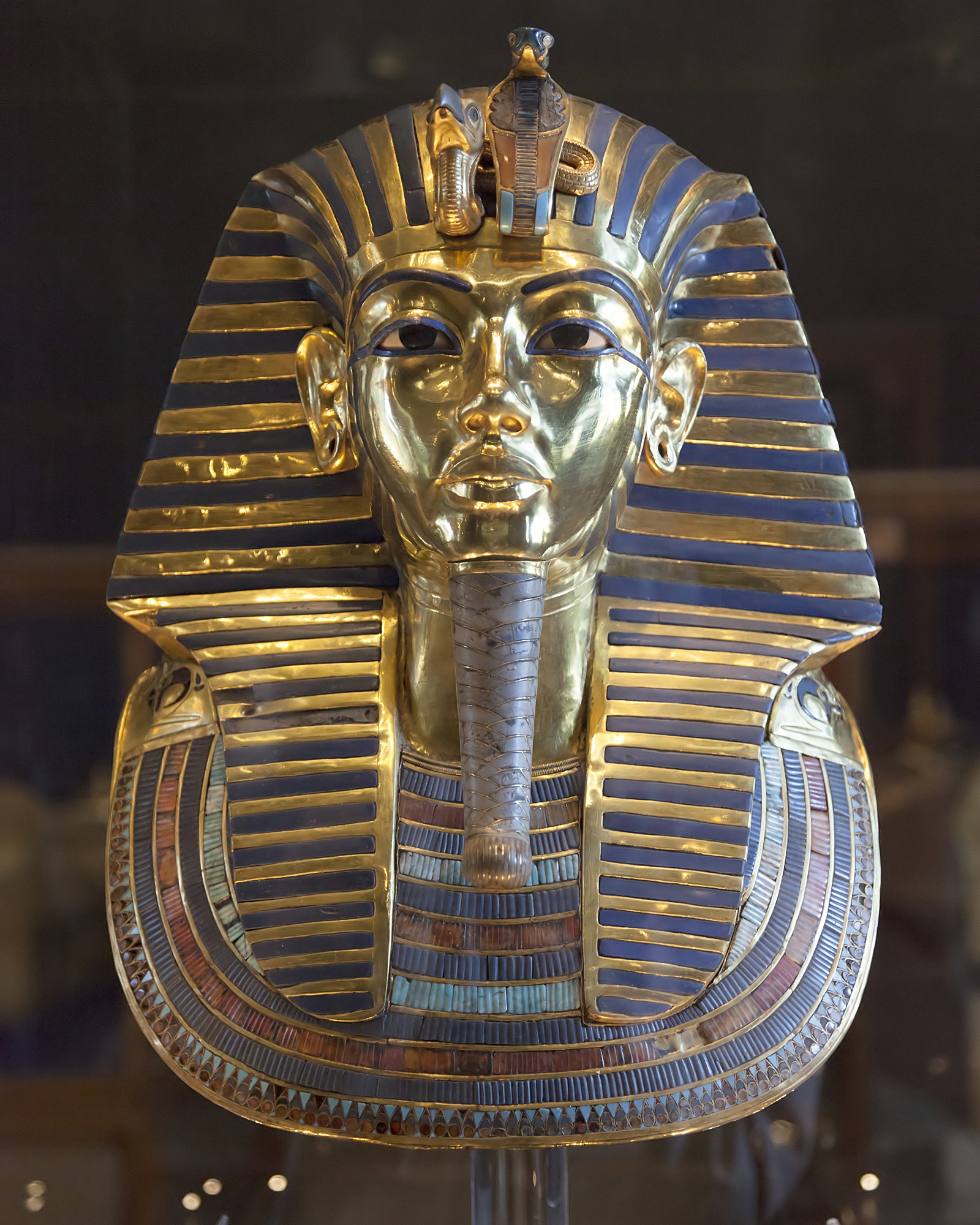
Funerary Mask of King Tutankhamun
The funerary mask of King Tutankhamun is perhaps the most recognizable and iconic artifact from ancient Egypt. Credit: Wikimedia Commons

Leopard from King Tut's tomb
A sculpture of a leopard found in Tutankhamun’s tomb. Cats were important in ancient Egypt, and feline/felid imagery abounds in depictions of deities, statuary and motifs. Credit: Wikimedia Commons

FurryGate: Rogan, Boebert, Greene Drag Cats Into Politics With Claims Of Litter Boxes In Schools

The “kids identifying as cats” claims are popping up everywhere ahead of midterm elections. Why are we dragging cats into our culture wars?

The physicist Michio Kaku was a guest on a radio show and was answering a question about possible intelligent life visiting Earth when Joe Rogan interrupted him.

“The three pyramids are aligned with Orion’s belt,” Rogan said. “Do your research, man. Look it up.”

Rogan, who was into 9/11 truther conspiracies at the time, went on to explain how the Egyptians couldn’t possibly have built the pyramids on their own, and that aliens helped them align the positions of the giant structures to correspond to important celestial features.

Here was Kaku, one of the brightest minds in human history, co-founder of string field theory, a man whose textbooks are required reading for PhD-level physics students, getting talked over and “educated” by a pothead who rose to fame hosting a game show in which he forced contestants to eat cockroaches.

I thought of that cringey interaction this week after reading about Rogan insisting school districts are accommodating kids who identify as cats by replacing toilets with litter boxes in school bathrooms.

Rogan’s source was rock solid if you’re the type of person who thinks ancient aliens traveled thousands of lights to the Earth of deep antiquity to teach human beings how to stack stones on top of each other: Rogan’s friend’s wife, who works at the school district, insisted the litter box story is true.

Like previous claims of school administrators gone mad in service to alleged furries, Rogan’s claim was intentionally nebulous and unverifiable. He didn’t name the school, the district or the teacher. We have to take his word for it.

If you like that sort of thing, I have good news for you! Rogan’s in great company.

Marjorie Taylor Greene — the congresswoman who once claimed “Jewish space lasers” were responsible for California wildfires, the shining testament to US education standards who warned “the Gazpacho police” will imprison patriotic Americans, the genteel stateswoman who said scientists are creating fake meat in “Peach tree dishes” to “zap” Americans — has also warned of the apparently widespread practice of furry school children shitting in litter boxes.

Not to be outdone, Rep. Lauren Boebert has co-signed the cat conspiracy, telling donors that evil cat-loving people are hell bent on destroying wholesome American values by unleashing cat-identified children on an innocent and unsuspecting public.

Say it enough and it becomes true

The claims have been repeated so many times that they’ve spread to school board meetings and state legislatures across the country, perpetuated by gerontocratic leaders who think The Onion is a real news source. Two current gubernatorial candidates, in Colorado and Minnesota, have also repeated the claim.

“Schools are not disclosing that they are allowing children who identify as snakes, cats, whatever, they’re providing litter boxes for the [student] cats,” a Tennessee state representative said during a hearing in September. “And obviously it’s very disruptive to the learning process. If a child has that much of a self-identity issue they probably need a different environment, and it’s creating a lot of anxiety, a lot of confusion with the children who are boys and girls.”

“But Big Buddy,” you might be thinking, “I thought you said PITB was apolitical and you’re a moderate?”

It is, and I am.

I dislike all ideology equally because it invites people to abdicate their responsibility to think for themselves. I believe our two-party system and the divisiveness it fuels could be the ruin of our great nation, particularly at a time when polls show up to half the US population expects to fight in an ideologically-driven civil war. I worry that we are doing precisely what our enemies want by feuding amongst ourselves. Indeed, we know for a fact that “troll farms” in countries like Russia and China exist to sow the seeds of division and crank up poisonous political rhetoric online.

But I’m also against pure, abject, mind-boggling, depressing, Idiocracy-style stupidity and the idea that anything is true if someone says it is. Neither party has a monopoly on this kind of thing.

In particular, I’m not a fan of injecting cats into the American culture wars. (Although it’s not just cats at this point. A Texas school district was forced to deny rumors that administrators were allowing “furries” to eat out of dog bowls in school cafeterias.)

We already fail these innocent creatures in myriad ways, from allowing declawing and doing little to improve weak animal welfare laws, to tolerating the idea that it’s perfectly acceptable for people to shoot cats with arrows, BBs and real firearms as some grotesque form of entertainment.

Now people want to use cats as the rope in a perverse game of cultural tug-of-war, which could further degrade their status and lead to more proxy violence against them.

Cats are vulnerable, and are already targets of hate

Violent criminals, including the perpetrators of the recent mass shootings in Uvalde and Buffalo, often get their start by killing cats before “graduating” to humans.

Cats are also frequent victims of redirected anger, with studies showing they’re abused and killed in domestic violence situations because they’re viewed as extensions of the feminine, or simply because killing them causes emotional distress to the people who care for them.

Of domestic violence victims who have pets, more than 70 percent of their abusers also took their rage out on the victims’ pets.

Politics have pervaded and infected so many things, cats and dogs are now staked to territory on either side of the political fault lines.

So how long will it be before an Alex Jones type claims the government is using cats to spy on Americans? The best conspiracy theories always have a nugget of truth to them, after all, and in the 1960s the CIA tried — and failed, spectacularly — to use cats implanted with transmitters to spy on Soviet officials.

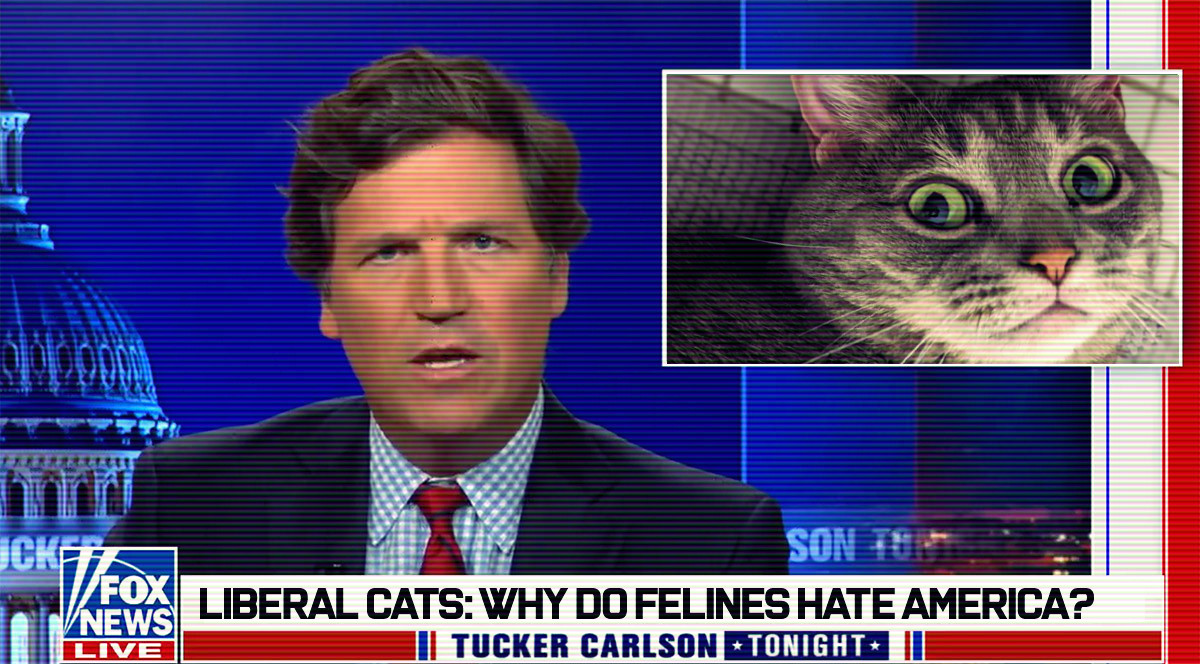
How long before a Boebert or a Greene tells a crowd that it’s their patriotic duty to shoot “liberal cats” on sight? How long before Tucker Carlson follows up one of his thrilling UFO/crop circle/cow mutilation investigative specials with a breathless exclusive about America-hating cats?

“Why do so many cats want to see America burn? Why do cats like to line their litter boxes with the American flag? Does the government allow cats to vote? Hey, I’m just asking questions!”

If you think that’s outlandish, I’d point out that we’ve been there, done that.

Tucker Swanson Carlson has already claimed that “decadent rich people” who “detest the country” like to plot America’s downfall from cat cafes. Those evil America-haters stroke cats and sip lattes while “working through the night to destroy” our great nation, Carlson told his viewers. I’m not making this up.

Europeans almost extirpated domestic cats in the middle ages when people were convinced they carried the Black Plague, and cats had even bigger targets on their backs after the Inquisition’s most overzealous prosecutors insisted felines were used in Satanic rituals.

Likewise, my Google News alert for cat-related articles shows a depressing, never-ending feed of stories about people chugging beer and shooting cats with BB guns, mystery killers strangling neighborhood kitties and “hunters” who put arrows through these sentient, innocent animals who have the mental and emotional capacity of three-year-old human children.

And there’s already plenty of nonsense online about how our choice of pet reflects our political beliefs, as well as unhinged rants about the kind of people who prefer cats. There are even research studies about the intersection of politics and attitudes toward companion animals, and research shows certain people consider cats “liberal” because they don’t adhere to social hierarchies and don’t recognize authority.

Is it really a stretch to imagine some 85, deep into a case of Miller High Life, taking target practice at neighborhood cats because he sees them as evil, feminine, America-hating animals? Are we sure it doesn’t happen already?

Politics really does ruin everything.