Buddy Unravels Astonishing Conspiracy During Ayahuasca Trip

“I see it now!” Buddy exclaimed. “Everything is connected, and we are everything! Who else is hungry?”

PERU — Three hours after ingesting ayahuasca brewed by a jaguar shaman — and two hours after jaguar scouts found him running around the jungle while screaming about extradimensional Teletubbies — Buddy the Cat had unraveled an astonishing conspiracy, sources reported.

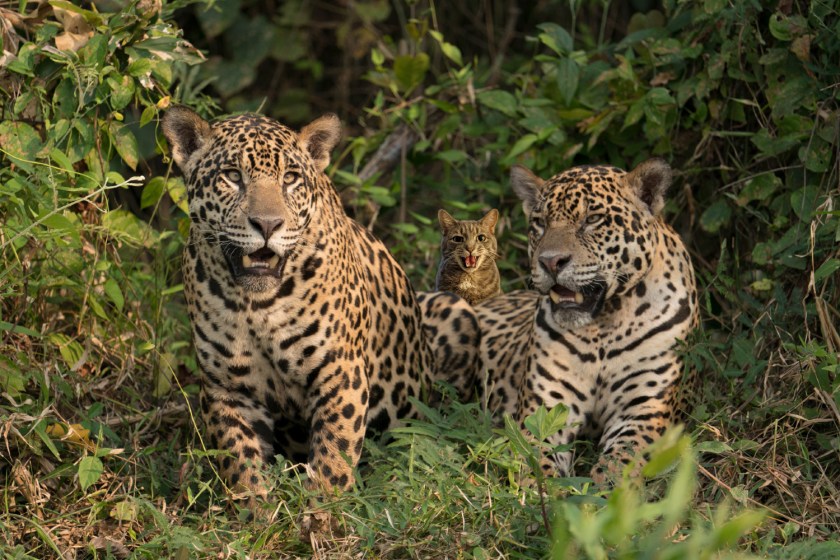
The New York-based cat, who had long sought to ingratiate himself with various groups of big cats, usually with disastrous results, finally found kinship with the tolerant jaguars in 2021 when he ventured into the Amazon and impressed the jungle-dwelling felids with his extensive knowledge of novel napping techniques. He also introduced the jaguars to turkey, and in return for his contributions to the jaguar nation, the big cats granted him the jungle name Kinich Bajo, which means “tiny sun-eyed one” in the ancient Yucatec dialect.

jaguarbuddies
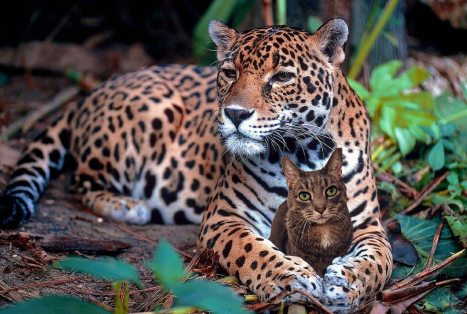
Buddy with Canguçu, one of his jaguar buddies.

Buddy returned to the Amazon in October of 2023 to “spend time with my homies” and participate in an ancient jaguar shamanistic ritual involving tea brewed from ayahuasca, the powerful psychedelic used in indigenous ceremonies.

Clearing a small grove in the Amazon rainforest and using rocks to represent people, places and ideas, Buddy was able to find indisputable connections between the Annunaki, the defunct Blockbuster chain of video rental stores and NFL linebacker Barkevious Mingo.

“But where does the Vatican fit in?” Buddy asked, resting his chin on his right paw thoughtfully. “Could it be that Barkevious Mingo is the true pope, and he was speaking ex cathedra when he said Havarti cheese is the food of the gods? Is catkind really ready to accept a divine proclamation on yums that excludes turkey and gouda?”

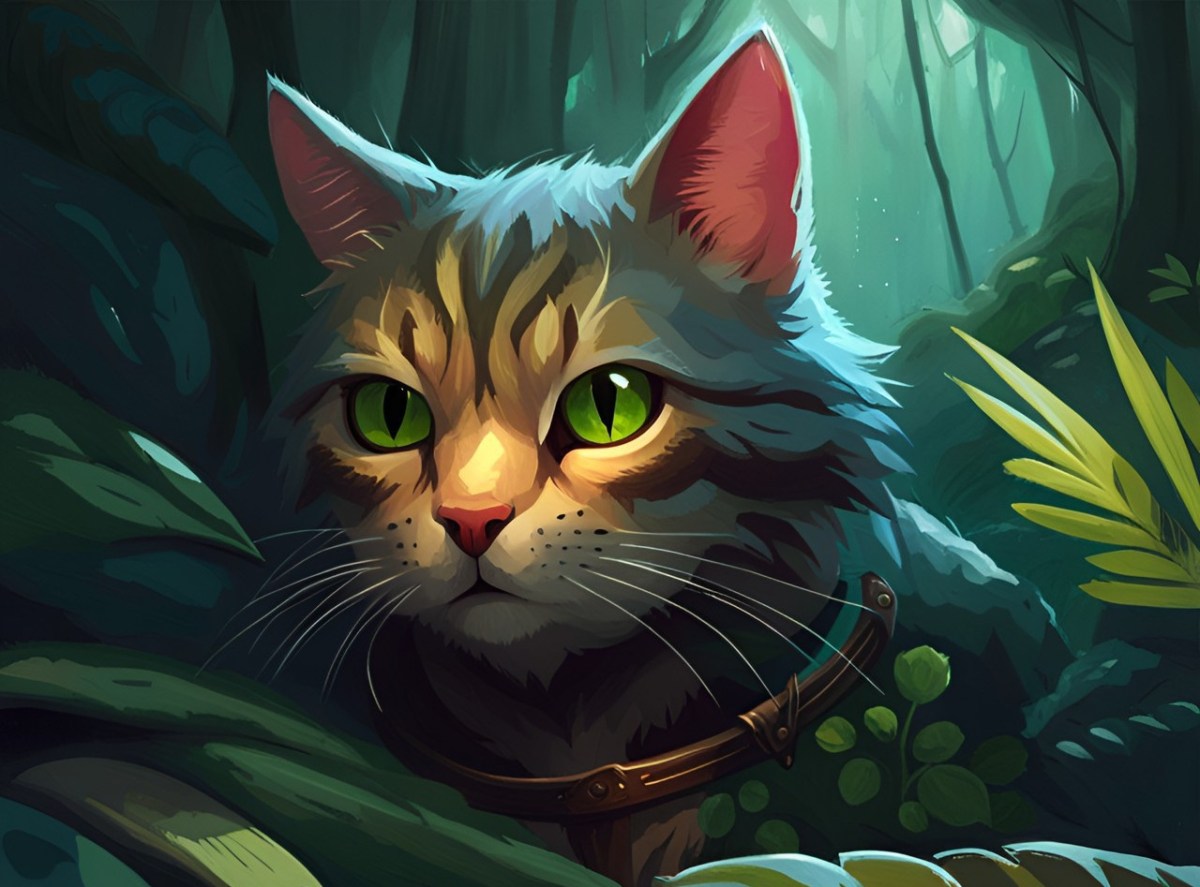
Buddy and Jaguars
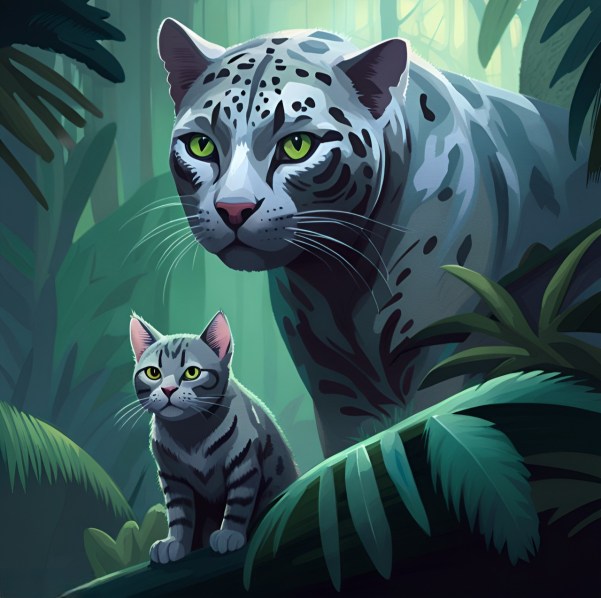
An artist’s impression of Buddy and jaguar elder Yguakina in the Amazon, piecing together great mysteries.

A pair of jaguar minders exchanged worried glances as they approached the tabby cat from both sides.

“Come back to the campfire, Kinich Bajo,” said Xbalanque, the older of the two, using the name jaguar elders had bestowed on the silver tabby. “Your work here can wait.”

Buddy didn’t take his eyes off the complex diagram of rocks, vines and leaves he’d carefully assembled. “Not while I’m so close!”

Xbalanque shook his head. “Where is Elder Yguakina?”

Buddy sighed.

“I had to send him away! He’d become consumed with this ridiculous theory involving Ragnar Lothbrok, the 1973 Pittsburgh Pirates and the Webb telescope,” Buddy said. “I don’t have time for such nonsense!”

As of press time, the Jaguar Nation of Iquitos Amazonia said Buddy was on the verge of a great discovery and will not emerge from the jungle until he’s connected the dots or the psychedelic brew wears off, whichever comes first.

buddy_jaguars2
Buddy with his jaguar buddies Xibalbá, left, and Ek B’alam.
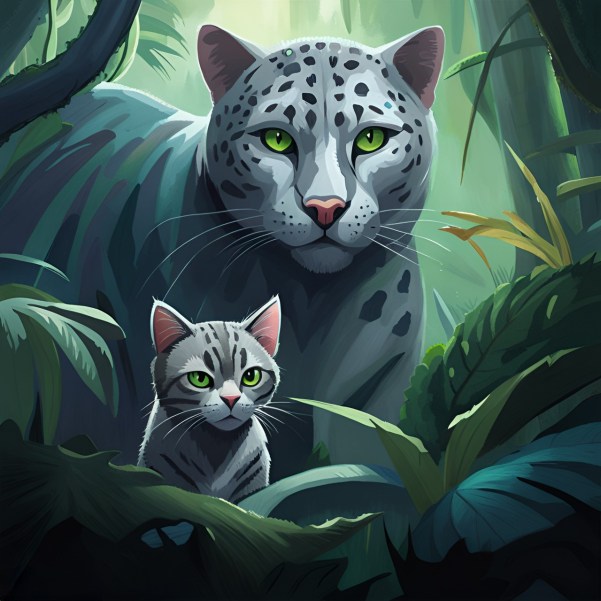
Buddy and Jaguars
Buddy and Yguakina find a grove where they begin diagramming Six Degrees of Kevin Bacon. (Artist’s impression.)

North Carolina Zoo Welcomes 3 Newborn Sand Cat Kittens

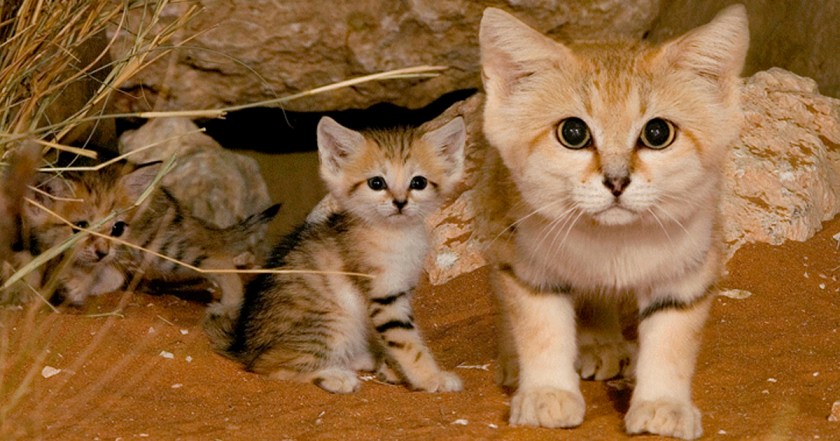
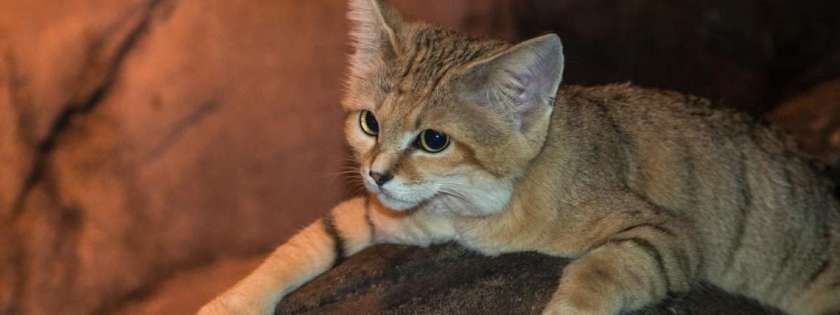
Sand cats are among the smallest felines in the world and live in harsh environments.

It’s baby season at the North Carolina Zoo.

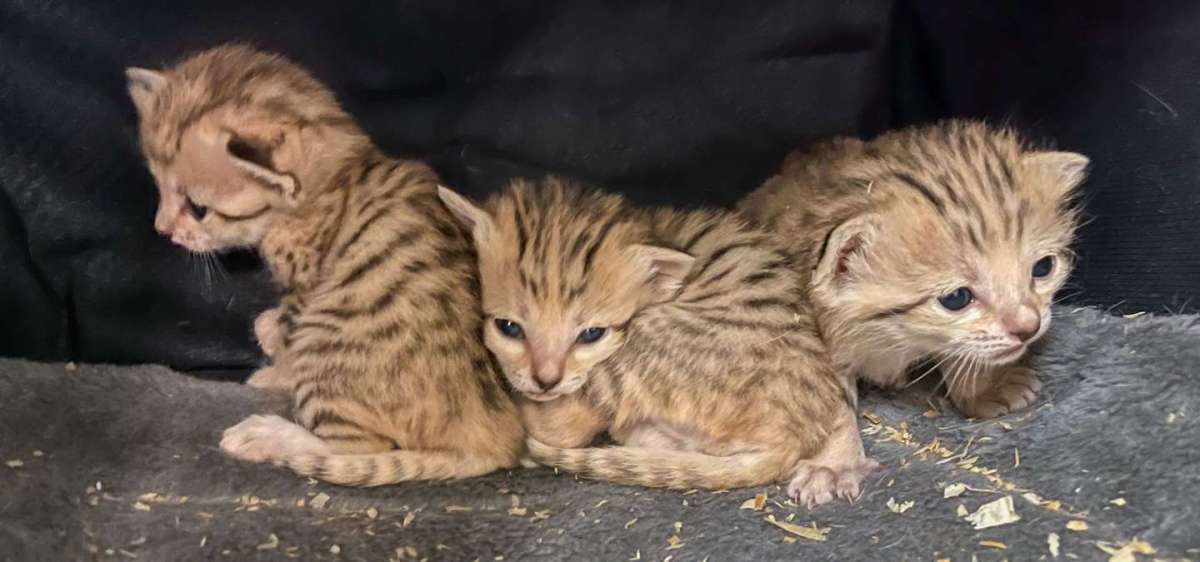
The 500-acre facility in Asheboro announced the birth of three healthy sand cat kittens. The species, felis margarita, is among the tiniest of all felids and is elusive in the wild, able to survive in desert biomes far from water in the African Sahara, as well as the Middle East and parts of Asia.

The kittens were born to first-time mom Sahara, 3, and Cosmo, 9, and remain unnamed for now. The zoo said it will allow the public to vote on their names, with details to be revealed in the near future.

sand-cats-kittens-forever-fb

The fortuitous birth of the tiny felines follows the arrival of a giraffe calf and a chimpanzee baby, both male, all within a two-week period in mid-May, the zoo said.

“The mom and triplets are doing well,” zoo staff wrote in an announcement. “The trio are beginning to explore their surroundings in the Desert Habitat. Lucky guests may be able to catch a glimpse of them in the coming days.”

Although sand cats aren’t listed as endangered, scientists don’t have a good handle on their numbers and caution that they may be less populous than estimated. The parents were arranged as a breeding pair for maximum genetic diversity through the Sand Cat Species Survival Plan and the Association of Zoos and Aquariums, the zoo said.

sandcat2
An adult sand cat. Credit: North Carolina Zoo

As Registration Deadline Looms, Big Cat ‘Owners’ Face A Reckoning

The days of tiny backyard enclosures for big cats are over.

The passage of the Big Cat Public Safety Act has been a massive win, resulting in the end of the wild cat trade in the US and the cruel practice of taking cubs from their mothers for use in roadside zoo petting attractions.

But there’s another, often-overlooked component of the new law that’s about to result in big changes for captive tigers, jaguars, pumas and other wild cats.

While current “owners” of big cats were grandfathered in under the BCPSA, they have until June 18 to register with the federal government, and with registration comes requirements, inspections and minimum standards of living for the wild felids.

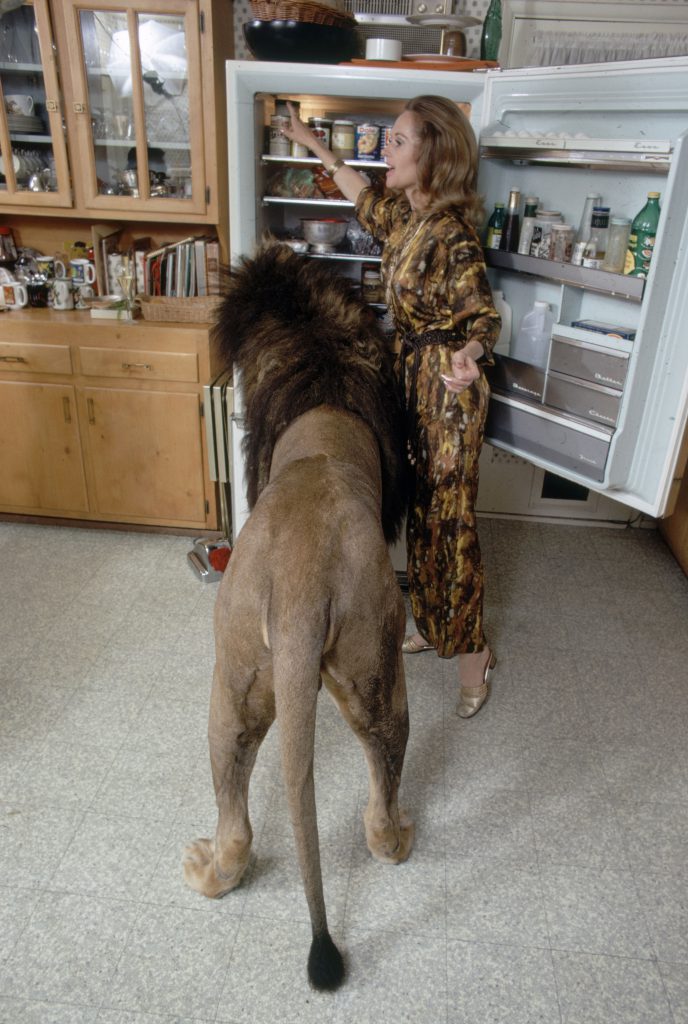
In other words, most of the people who “own” the estimated 20,000 privately held big cats are about to get a rude awakening. The days of tiny makeshift enclosures in backyards are over, as is the practice of keeping big cats in the home as if they’re domestic felines. (With apologies to Tippi Hedren, who once owned as many as 60 lions and tigers, and at 93 years old still has “13 or 14” big cats, according to her granddaughter, actress Dakota Johnson.)

141028-neil-lion-12-688x1024
Tippi Hedren with one of her lions in a vintage LIFE magazine photo. Hedren kept the lion and other big cats as pets in her home.

If people who have possession of big cats don’t register with the U.S. Fish and Wildlife Service, they’ll have their animals taken away. Likewise for people who don’t provide adequate enclosures that not only provide enough space, but are built to contain the apex predators.

As a result, sanctuaries are bracing for an influx of tigers, lions, jaguars, leopards, cheetahs, snow leopards, clouded leopards and pumas, all of whom are protected under the Big Cat Public Safety Act.

Experts anticipate a significant number of big cat “owners” could try to part with their animals if they can’t or won’t provide adequate enclosures, and the government is already cracking down on people who are trying to sell their “pets.”

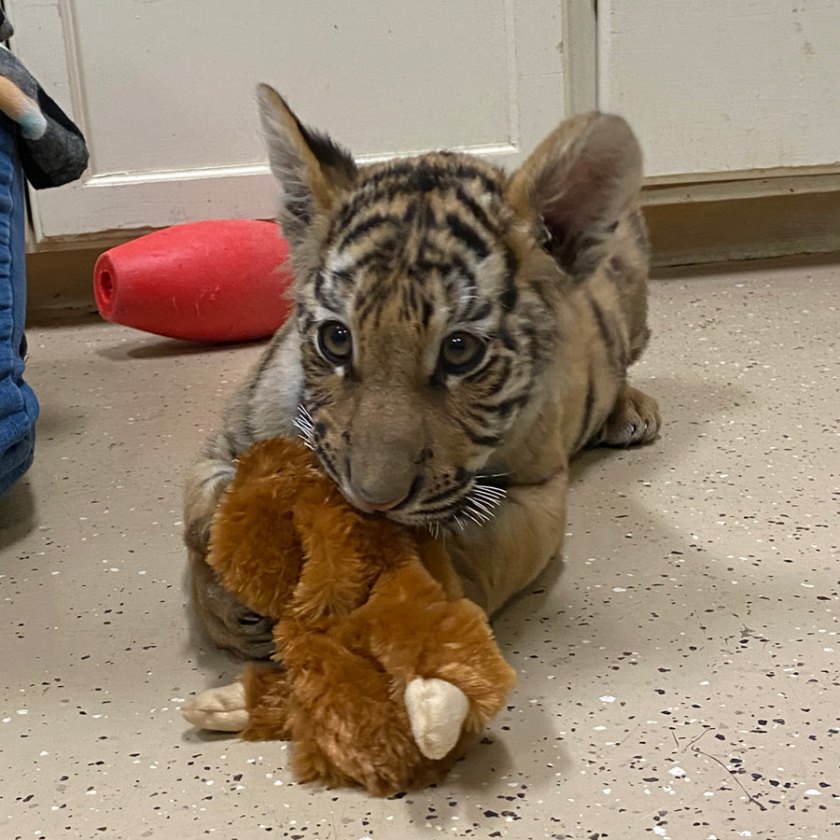
A tiger cub named Indy is one of the first to be taken out of private hands and placed in an accredited sanctuary. Indy was recently sold by her original “owner” and the man who purchased her for $25,000 tried to flip her, advertising the cub online.

Authorities moved in and found Indy in a dog kennel in a closet inside the man’s Arizona home. Police, who said they could hear Indy “moaning” from inside the closet, also seized an alligator and a dozen snapping turtles.

Tammy Thies, founder of the Wildcat Sanctuary in Sandstone, Minn. — Indy’s new home — said the cub is lucky she wasn’t confined to the small space for long.

“Many of the cubs we get are suffering from metabolic bone disease, malnutrition, sometimes they have such long confinement that they don’t have use of their back end, so Indy’s a lucky one,” Thies told WKQDS, the local Fox affiliate.

indytiger
Indy was found in a tiny cage in a man’s closet. Now she’s enjoying sunshine in an accredited sanctuary. Credit: Wild Cat Sanctuary

Indy arrived in May and has adjusted well to her new home in less than a month, according to the sanctuary. A page dedicated to tracking her progress has photographs of her meeting another tiger cub for the first time and playing in the grass.

As the deadline fast approaches, we hope Indy’s story is just one of many, and big cats who have suffered for years in tiny enclosures, under the “care” of people who aren’t qualified to keep them, find their way to accredited sanctuaries so they can live out the rest of their lives in sunshine, feeling grass and earth underneath their paws, with enrichment programs created by professionals who care about their well-being.

It’s about time.

tiger in shallow photo
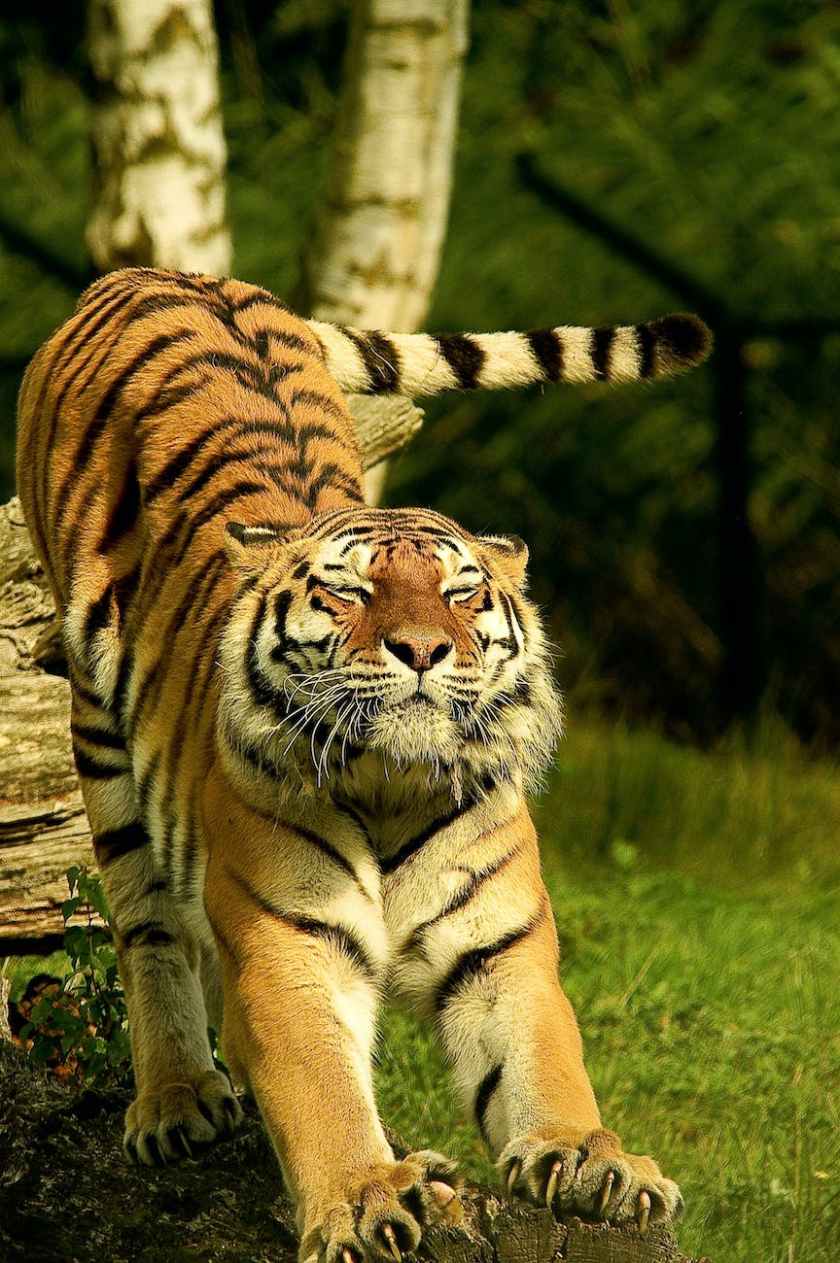
Credit: Richard Verbeek/Pexels.com

Amazing Cats: The Mysterious Marbled Cat

The semi-arboreal marbled cat is arguably the most elusive feline on the planet.

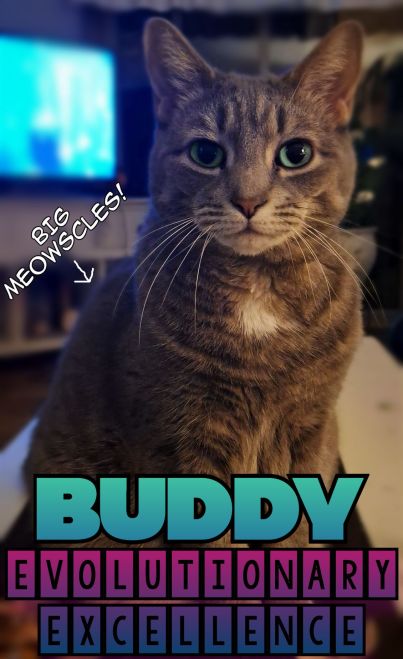
Dear readers, before you think this is a joke entry about Bud, let me emphasize we’re talking about the marbled cat, not the well-marbled cat.

chubbybuddy
“I am NOT chubby, I am meowscular!”

“I’ve never heard of a marbled cat,” you might be thinking, and there’s a good reason for that.

These little guys are incredibly elusive, live far from most humans and are found only in Asia. They’re extremely difficult to track and locate in the wild and haven’t been the subject of any comprehensive field study, granting them an air of mystery in an era when you can find almost anything you want to know about almost any animal with a few clicks.

There’s a whole lot we don’t know about marbled cats, including their behavior in the wild, how long they gestate, what they eat and how they’ve successfully adapted to so many varied habitats.

marbledcat2
Credit: Wildcats Magazine

The singular species is semi-arboreal. Almost all cats can climb trees. The problem is getting down afterward, which is why so many domestic cats get stuck in trees. They can’t descend head-first and they’re wary of descending tail-first, which makes them vulnerable. Marbled cats have unusually flexible claws that enable them to descend head-first with ease, so they don’t balk at climbing. Their large paws keep them sure-footed on tree limbs and they’re confident off the ground.

In 2011, a trail camera in Indonesia was tripped by a marbled cat, finally giving us a close-up view:

The striking felines are sometimes called “miniature clouded leopards,” and you can clearly see why.

The species is native to the eastern Himalayas, mostly in Nepal, Bhutan, Myanmar and tiny corners of China and India, as well as countries like Thailand, Cambodia and Indonesia. They’re extremely adaptable and live in a variety of habitats, from the forests of high-elevation mountain slopes to the humid jungles of Indonesia’s Borneo and Sumatra.

Marbled cats are about the same size as domestic cats, but they’ve got incredibly big, fluffy tails that are longer than their own bodies, which serve as formidable counter-weights for their tree-hopping. Their ears are a bit more round than the ears of their domestic cousins. They tend to have larger paws, and they have unique clouded coat patterns that are unlike any breed of domestic feline or close wildcat relatives.

Despite their relatively large natural habitat and the difficulty in pinning down population numbers, conservationists estimate there are fewer than 10,000 marbled cats. They’re threatened by the same deforestation by the palm oil industry that has devastated orangutan and clouded leopard habitats, although their strongholds in steep, high-elevation forests are safe for now. Marbled cats are listed as endangered by some authorities and as near-threatened by others, though like all wildlife their numbers are in decline.

Top image credit Joel Sartore/National Geographic Photo Ark

marbledcatrussia
A marbled cat at Novosibirsk Zoo in Russia. Credit: Zoo Institutes

Tiny Sand Cats Have The Largest Ranges Of All Felines, Study Says

The little-known, Lilliputian species of feline thrives in some of the harshest environments on Earth, proving cat species are capable of remarkable adaptations to their surroundings.

There’s a lot we don’t know about felis margarita, so much so that kittens of the elusive and stealthy species weren’t photographed in the wild until 2017.

Now a study has unveiled a surprising fact about sand cats: despite being tiny in stature, they occupy huge ranges that can rival the size of territories claimed by big cats like tigers and jaguars. One cat claimed 1,758 square kilometers — about 1,093 square miles — for himself according to Gregory Breton, the study’s author, who said the cat’s behavior showed sand cat ranges are “considerably larger than previously estimated.”

That individual maintained his impressive range for more than six months before moving on. His behavior and the movement of 21 others tracked via radio collars suggests the species could be semi-nomadic, moving or adjusting their ranges as they look for prey and water in some of the hottest, most arid environments on the planet.

“If true, this type of movement in response to rainfall is previously unrecorded among wild cat species,” wrote Breton, who is managing director of the cat conservation group Panthera in France.

In addition to following sources of water, the cats may maintain such large ranges because prey are more spread out compared to biomes like jungles, forests and wetlands where other species of cats make their homes.

(Above: Tap or click the images for full resolution versions.)

Impressive ranges weren’t the only surprise the tiny cats had for researchers. Breton and his colleagues managed to catch and examine more than 40 sand cats before releasing them back into the wild and noted they were all healthy, with few scars, no fresh wounds and no broken teeth.

The lack of wounds “means that it is likely that sand cats exhibit little territoriality and tolerate each other across their ranges,” Breton wrote  “This beloved cat may indeed share habitat with others of its species — maybe their perception does match their nature, at least towards other sand cats.”

Sand cats can be found in the Algerian Sahara, the deserts of the Arabian Peninsula and countries like Chad, Niger and Morocco. The Panthera team tracked the Lilliputian felines in the latter country, traversing the desert and arid landscapes of southwestern Morocco where temperatures peaked at 122 degrees Fahrenheit (50 degrees Celsius) during the day.

Sand cats have what Breton describes as “whimsical faces,” sporting wide, swept ears to go along with the general horizontal appearance of their heads.

They have golden, classic tabby markings and sand-colored fur with well-defined dark rings on their limbs, allowing them to expertly blend into their surroundings. Sand cat camouflage is so effective and the species is so quiet that one of the best ways to find them is at night, using search lights to pick out their reflective inner eyelids amid the desert landscape.

They’re also considerably smaller than house cats, weighing up to 7.5 pounds.

Breton said his team’s research is critical for estimates of sand cat population, which in turn will help authorities determine the conservation status of the elusive feline.

20130418-001CN
Credit: Panthera