Or if your sense of humor tends toward the scatological, you can donate to put your ex’s name on a litter box.
Like other nonprofits, animal shelters face steep competition when it comes to scoring charitable donations, so the more a shelter can stand out, the better.
For some that means stories about their rescues and pets-in-waiting going viral. For others, it means finding clever ways to use occasions like Valentine’s Day to raise money.
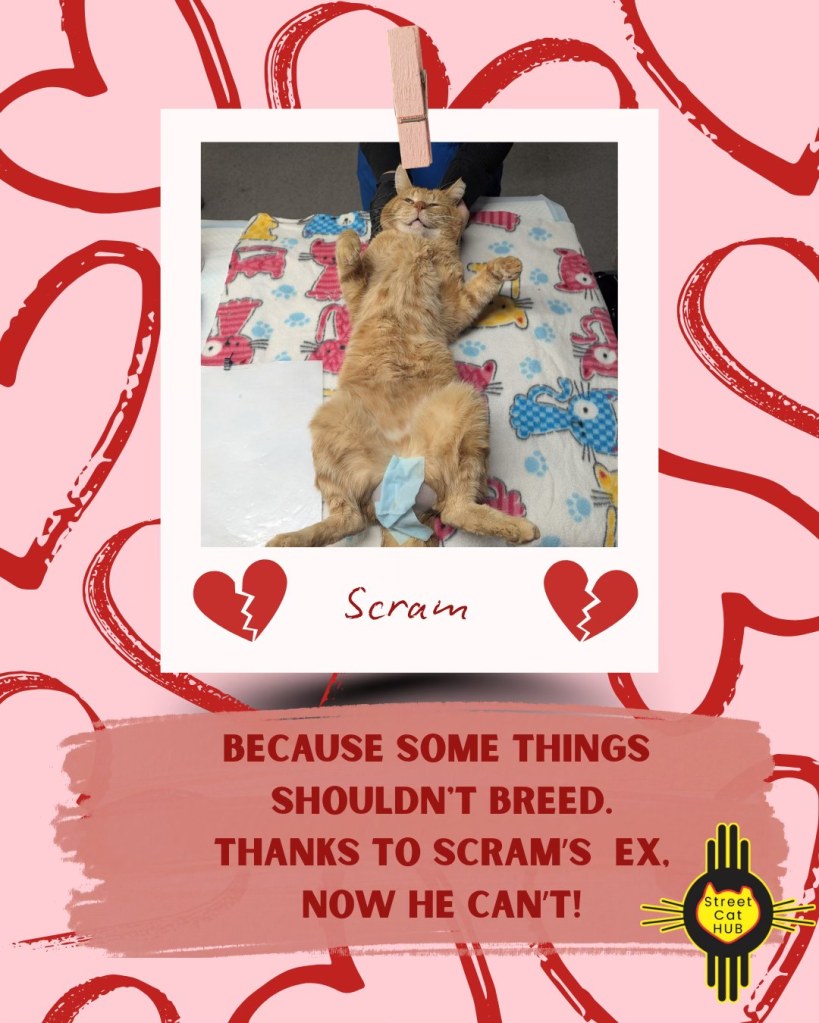
One of the latest fads involves making a donation to pay for spay/neuter surgery for a street or shelter cat — and having the cat named after your ex. As one shelter puts it, “because some things shouldn’t breed.”
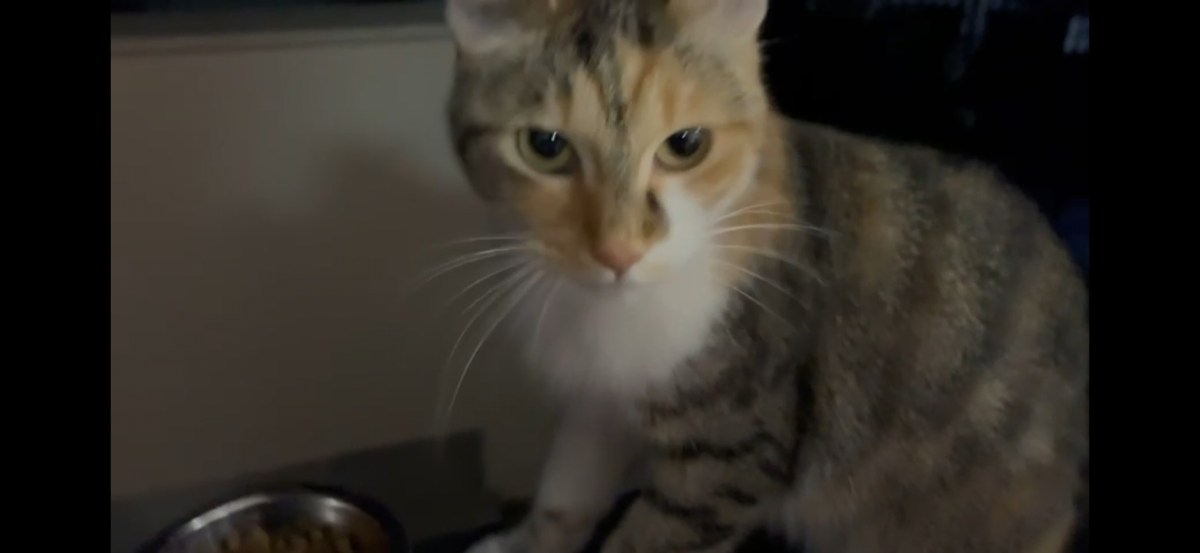
Poor Scram has no idea he’s a stand-in for a despised ex.
If the idea of castrating an ex seems a little morbid to you, you’ve still got options.
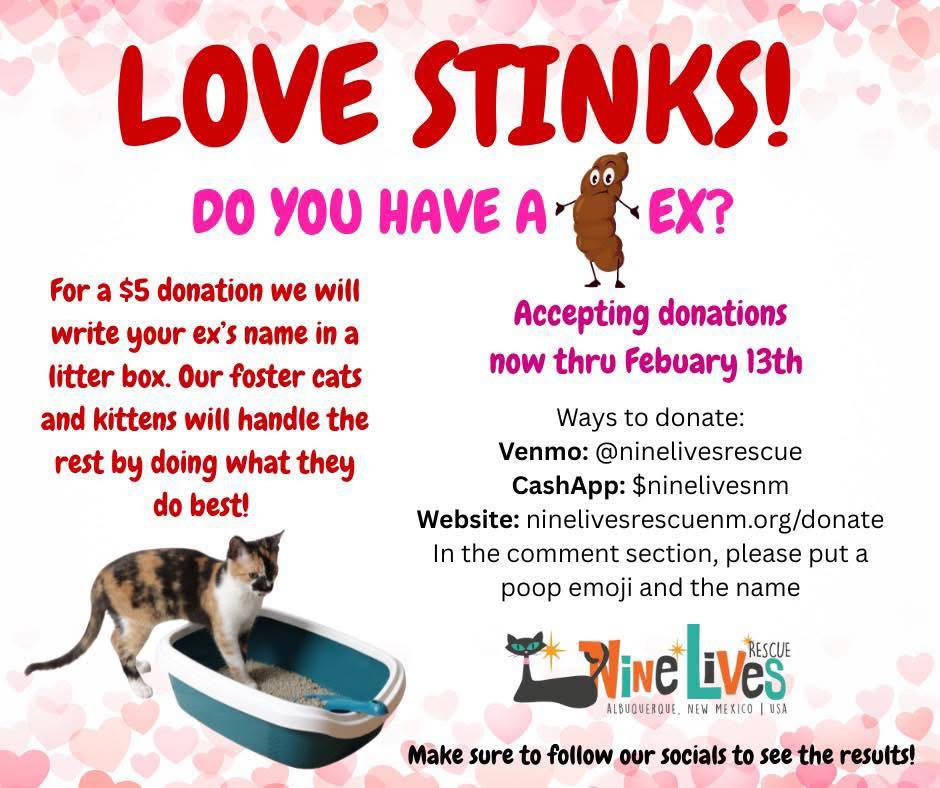
For just $5, Albuquerque, New Mexico’s Nine Lives Shelter will write your ex’s name on a litter box.
“Our foster cats and kittens will handle the rest by doing what they do best,” the shelter’s staff wrote on Facebook.
Of course, there’s another option for people who prefer a more positive take: donating out of love for cats in general, because despite the encouraging drop in animal euthanasia over the past two decades — the result of relentless campaigns to get pets and street cats spayed/neutered — a few hundred thousand cats are put down every year. Every time a cat is fixed, that number drops, and existing cats have a better chance of finding forever homes.
Convinced that culling cats will prevent local wildlife from going extinct, despite no evidence supporting that idea, New Zealand’s authorities have pledged to wipe out ferals and strays.
A recent RNZ story about efforts to exterminate cats in New Zealand starts with an anecdote about a man named Victor Tinndale, describing the way he bludgeons a cat to death as casually as if he’s sipping a cup of coffee.
Tinndale has taken it upon himself to kill cats even though the country’s wildlife management authorities told him not to. Why? Because he thinks cats are responsible for driving native species toward extinction.
He doesn’t know that, of course. No one does. No one’s bothered to do the research, and the driving force behind the claim that cats are responsible is a series of meta-analyses by birders who literally invented numbers to align with their predetermined conclusions about predatory impact.
To date there is not a single study that accurately measures feline predatory impact, nor is there a shred of evidence that slaughtering cats — whether beating them to death, shooting them with shotguns or poisoning them — has any beneficial impact on endangered bird species.
Yet there are vigilantes aplenty slaughtering cats across New Zealand, youth hunting contests encouraging kids to shoot cats and kittens, and government-sponsored extermination programs, like a particularly ghastly effort on a small island off New Zealand’s coast, where members of a team tell themselves they’re doing good work by sniping animals who are doing what they were born to do.
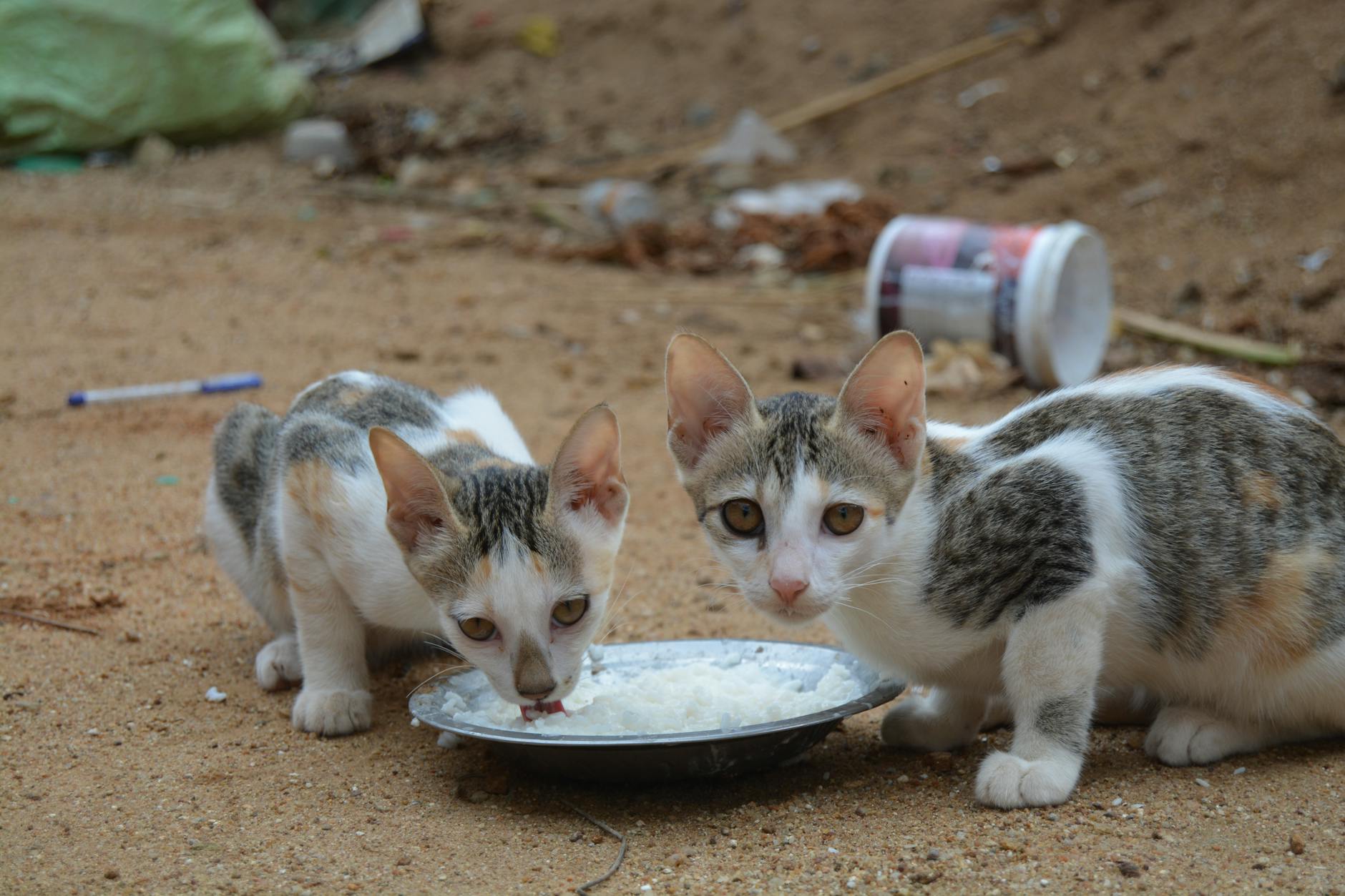
Ferals and strays already have tough lives without being hunted for sport or at the behest of government officials who aren’t in full possession of the facts. Credit: Mohan Rai/Pexels
The RNZ story describes Tinndale merrily skipping through the Aotearoan wilderness, singing songs and cracking jokes like a perverse Tom Bombadil as he murders cats unfortunate enough to get caught in his traps.
RNZ cameras follow Tinndale as he finds a terrified feline in one of the his traps. Tinndale describes the cat’s impending death at his hands as some sort of inevitable cosmic justice. He didn’t sentence the cat to die, he argues. He’s just the man who carries out the sentence.
“This cat is just an utter killing machine,” Tinndale says, addressing a camera as he repeats rhetoric from birder Peter Marra — who has advocated for the destruction of the entire species — almost word for word. “I’d hate to think what this cat has slayed to survive. So this guy has got to go, you know?”
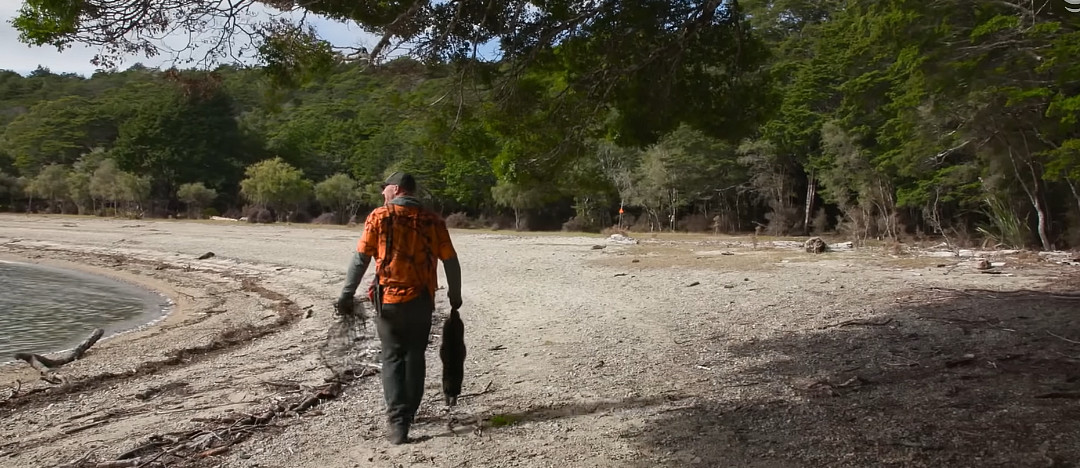
The next scene shows Tinndale walking along the shore, the cat now hanging dead in his hands. He is judge, jury and executioner.
Tinndale buries his victims in a “graveyard” he made near a hut, admitting the graveyard is a “little bit of a laugh.” Tinndale was shocked, the story says, when New Zealand’s Department of Conservation didn’t pat him on the head for his vigilante efforts.
“I thought they’d have a chuckle, you know, and be pleased, but it was nothing of the sort,” he told RNZ.
Thought they’d have a chuckle?
This man thinks bludgeoning animals to death is hilarious. He is a psychotic vigilante who has taken it upon himself to violently end life. Why is he allowed to own weapons? Why is he not in prison or on a court-mandated mental illness management program?
Brad Windust with a trophy hunter’s expression as he shows off a Maine Coon mix he killed with the help of his hunting dog. Credit: Supplied to NRZ
The story goes on to quote Jessi Morgan of the Predator Free New Zealand Trust, who flat-out admits she can’t say how many cats there are in the country, let alone measure their predatory impact.
“I’ve seen estimates from two-and-a-half million to 14 million, which basically tells us we’ve got no idea what those numbers are,” Morgan said before immediately relaying anecdotes from hunters and farmers who say they’re “seeing more.”
This is not how we make decisions between life and death! This is not science, not by any definition of the word. This is not public policy. This is vigilantism and a mob mentality, amplified by the fact that it’s easier to blame a defenseless species for our own conservation failures and humanity’s impact on wildlife.
It is gross, utter disrespect for life under the guise of conservation, by people who not only can’t articulate what sort of damage they think felines are doing to their country, but have not a scrap of evidence that vigilantes running around bludgeoning cats to death are doing anything other than causing needless suffering.
Worse, it’s clear at least some of these self-appointed nature guardians are enjoying the task of murdering cats. It’s evident in their smiles as they show off their prizes and in the way they talk about their “work” — not as a solemn duty after all other options have been exhausted, but as something to “have a chuckle” over.
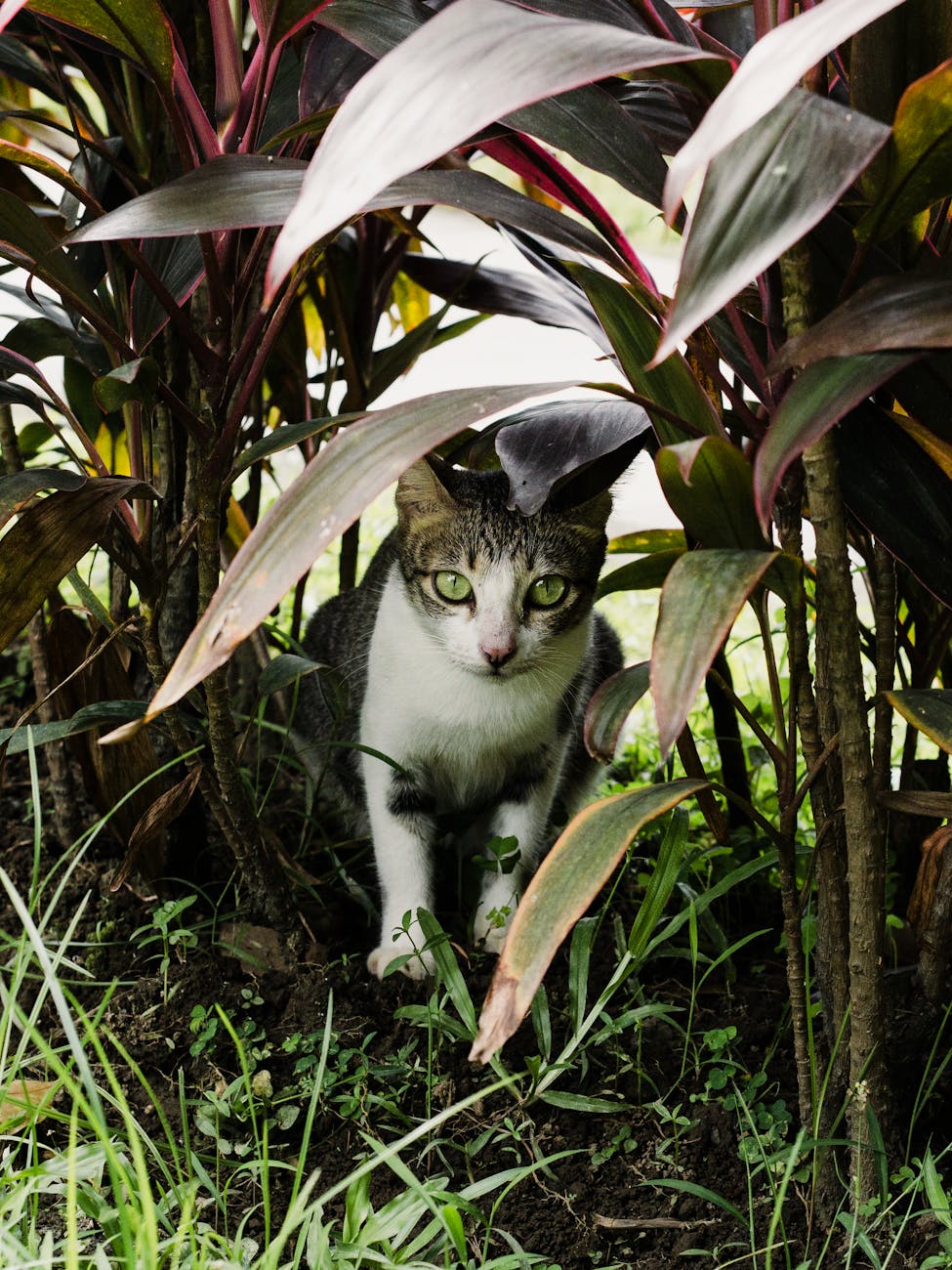
Credit: Dianne Concha/Pexels
This is also a failure of journalism, a failure to follow the most basic best practices and rules, to ask for proof when people assert opinions and call them facts. Those who call themselves journalists, who credulously spread the bunk studies about feline impact on native species, should be ashamed of themselves for not even taking a few minutes to read the studies they cite. Anyone who reads the research would immediately understand that the “studies” — which are really meta-analyses of old data — don’t provide any proof that cats are responsible for pushing endangered species toward extinction. They do nothing of the sort.
What we do know, and have confirmed over more than half a century of rigorous science, is that we are responsible for wiping out wildlife — more than 73 percent of the world’s monitored wildlife populations in the past 50 years alone, according to the World Wildlife Fund’s annual report.
Aside from the fact that they don’t have homes, these cats are no different than pet felines. They are the same species. Credit: Wikimedia Commons
Animal welfare groups have never disputed the idea that cats probably do have a part in endangering small mammals and bird species. They are predators. Hunting is their role.
But that is a far cry from proving they have a measurable impact, let alone are the primary drivers. In rare cases when research teams did the hard work of taking a feline census, as Washington, D.C.’s Cat Count did, the population numbers turn out to be considerably lower than expected.
Data from the Cat Count also confirmed what we know, that cats do not stray more than a few hundred feet from their territory, whether it’s a human home or a small shelter in a managed colony. In urban and suburban environments, the study found, cats have minimal impact through hunting unless they’re living directly adjacent to wooded areas.
Sending a bunch of lunatics out, dancing and skipping as they arbitrarily slaughter sentient creatures with real emotions, is the kind of monstrous behavior only humans are capable of.
Human-made devices and structures kill innumerable birds annually, a fact that isn’t accounted for in studies and news stories blaming cats for bird species extinctions. Credit: Amol Mande/Pexels
But it isn’t enough for New Zealand’s government to have vigilantes killing cats, or community-sponsored cat hunts. Now the government has pledged to eradicate feral cats by 2050. Because feral cats are the same species as stray and pet cats, and there is no way to determine by sight if a cat is feral or just frightened, that means any feline found outdoors will be killed.
“In order to boost biodiversity, to boost heritage landscape and to boost the type of place we want to see, we’ve got to get rid of some of these killers,” says Tama Potaka, the country’s conservation minister.
Note the language in the linked story, which describes domestic cats as if they’re a separate species. That’s the kind of ignorance that drives these cruel efforts.
New Zealand is heavily reliant on tourism, with visitors accounting for almost six percent of the country’s GDP before COVID-19, a number the country’s leaders expect to match in late 2025 as the tourism industry recovers. It’s part of New Zealand’s overall shift to services instead of products in an effort to diversify its economy.
Anyone who loves cats, who thinks men shouldn’t play God, who thinks we ought to demand at least something in the form of proof before allowing socially maladjusted vigilantes to brutally kill animals, should boycott New Zealand as a travel destination.
If you enjoy PITB’s content and want to help us keep the lights on, please consider whitelisting this site on your ad blocker.
Header image: Tinndale walking with a cat he killed via RNZ
Free-ranging cats do have a negative impact on wildlife, but we’re not going to solve the problem by demonizing them and culling them by the millions.
The Literary Hub story starts off with a provocative question: what if cats ruled the world?
This is a question I find amusing to ponder, so instantly my mind was filled with images of cats scandalizing foreign heads of state by insouciantly swiping gifts off tables, angering diplomats by yawning and nodding off during summits, and financing the construction of massive and unnecessary coastal walls, on the off chance the ocean decides to move inland and get them wet.
Then the writer cited the repeatedly-debunked “study” that credulous media of all stripes still reference without bothering to read the text — that infamous 2013 Nature Communications paper, published by birders who author books with titles like “Cat Wars: The Consequences Of A Cuddly Killer.”
Some journalists don’t know any better, some are overworked, and some are frankly too lazy to read the study with a critical eye, but I think one of the more likely reasons people continue to cite the paper is because it’s easier to blame felinekind for wildlife extirpation than it is to admit we’re the primary culprits. After all, according to the WWF’s most recent annual review, we’ve killed off 73 percent of Earth’s wildlife since 1970, and we certainly didn’t need house cats to help us push elephants, rhinos, every species of higher non-human primate, and innumerable other species to the brink of extinction.
We did that. We did it with our relentless development, consuming and fracturing wild habitats. We did it with careless industrialization, by dumping chemicals and garbage into our rivers and lakes until more than half of them were rendered too polluted to swim in or drink from. We did it by bulldozing old growth forest and jungle, by exploiting species for fur, folk medicine, ivory, sport hunting and in the illegal wildlife trade.
Cheetahs are critically endangered, and they’re being driven to extinction even faster by poachers, who sell them to wealthy buyers in oil-rich gulf states where they’re trendy pets. Credit: Riccardo Parretti/Pexels
More than 47,000 species — that we know of — are headed toward extinction. It’s so much easier to blame it on anyone or anything else than admit we need to make major changes to our lifestyles and policies.
But don’t take my word for it. Here’s what Alley Cat Allies has to say about the 2013 meta-analysis and its derivative papers:
“The Smithsonian-funded study published in Nature Communications is not rigorous science. It is a literature review that surveys a variety of unrelated, older studies and concocts a highly speculative conclusion that suits the researchers’ seemingly desperate anti-cat agenda. This speculative research is highly dangerous. It is being used by opponents of outdoor cats and Trap-Neuter-Return (including the authors) to further an agenda to kill more cats and roll back decades of progress on TNR. And it is being spread unchecked by the media.“
Here’s what a group of ethicists and anthropologists wrote about the claims against cats in the journal Conservation Biology, lamenting the lack of nuance and danger in arguing that cats must be stopped “by any means necessary.” The drive to blame felines, they argue, has “fueled an unwarranted moral panic over cats”:
“Contrary to Loss and Marra’s claims that the scientific consensus is consistent with their views that cats are a global threat to biodiversity, the actual scientific consensus is that cats can, in certain contexts, have suppressive population-level effects on some other species (Twardek et al. 2017). This is something that is true of all predators, native or not (Wallach et al. 2010). Thus, cats should not be profiled as a general threat a priori and without reference to important factors of ecological context, situational factors, clear definition of harms, and evidence thereof.”
“There are there are serious reasons to suspect the reliability of the new, extreme cat-killer statistics,” wrote Barbara J. King, retired chairwoman of the department of anthropology at The College of William and Mary.
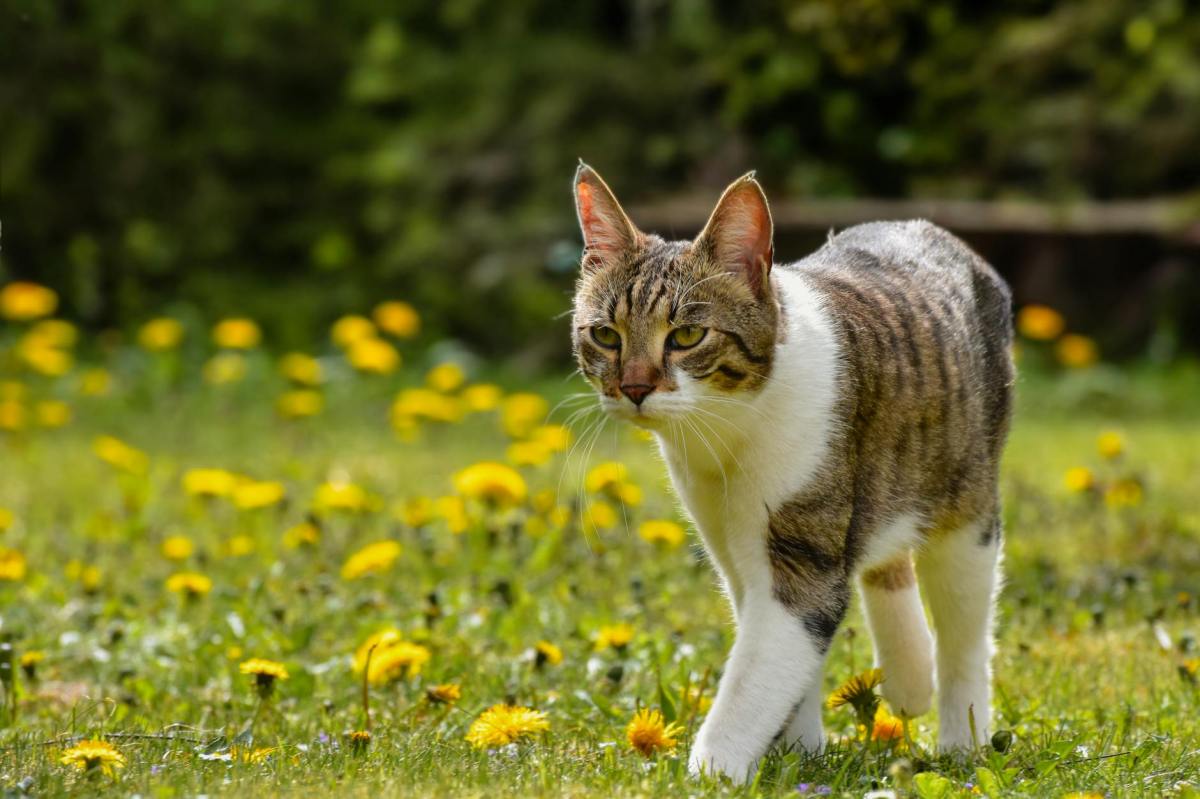
Feline predatory impact varies by local conditions. Free-ranging cats in cities and suburbs kill rodents, but have minimal impact on other animals, data shows. Credit: Patricia Luquet/Pexels
Like we’ve often noted here on PITB, the authors of the Nature Communications study can’t even say how many free-ranging felines exist in the US. They say it’s between 20 and 120 million. That’s a 100 million difference in the potential cat population! How can they tell us how many birds and mammals are killed by cats if they can’t even tell us how many cats there are? No amount of massaging the numbers can provide an accurate picture if the initial data is shaky or nonexistent.
Furthermore, the nature of a meta-analysis means the authors depend on earlier studies for estimates on predatory impact, but the 2013 Nature Communications paper does not include any data —not a single study — on feline predatory impact. In other words, they have no idea how many animals free-ranging cats actually kill.
In authentic studies that actually do measure predatory impact, the data varies widely in geographic and demographic context. Data derived from the D.C. Cat Count, for example, shows that cats living more than 800 feet from forested areas rarely kill wildlife, and are much more likely to kill rodents.
Those who cite the bunk study and its derivatives are “demonizing cats with shaky statistics,” King wrote, adding she was alarmed by “an unsettling degree of uncertainty in the study’s key numbers.”
Free-roaming populations are reduced when cat colonies are managed, and the animals are fed and fixed. Credit: Mia X/Pexels
Ultimately, we agree with Wayne Pacelle, former president of the Humane Society of the United States.
The meta-analysis authors “have thrown out a provocative number for cat predation totals, and their piece has been published in a highly credible publication, but they admit the study has many deficiencies. We don’t quarrel with the conclusion that the impact is big, but the numbers are informed guesswork.”
Cats do have a negative impact on wildlife, it varies according to local circumstances, and those of us who love cats have a responsibility to keep our pets indoors and help manage free-ranging populations.
But cooler heads must prevail, approaches to managing cats must be evidence-based, and the effort requires people of all kinds working together — which becomes much more difficult when agenda-driven pseudoacademics whip people into a frenzy by portraying felines as bloodthirsty, invasive monsters who need to be wiped out “by any means necessary.”
Solving the problem of free-ranging cats requires us to own up to our own role in species extinction and to take measured, evidence-based steps to protect vulnerable wildlife. Otherwise, we’re inflicting a whole lot of suffering on sentient creatures and accomplishing absolutely nothing.
Pixie the cat fought for his life and he’s now almost fully healed. Meanwhile, in Ohio, lawmakers want their state to become the sixth to ban declawing.
Back in April, a woman spotted a group of kids literally playing with fire, and was horrified when she got closer and realized they had set a cat ablaze.
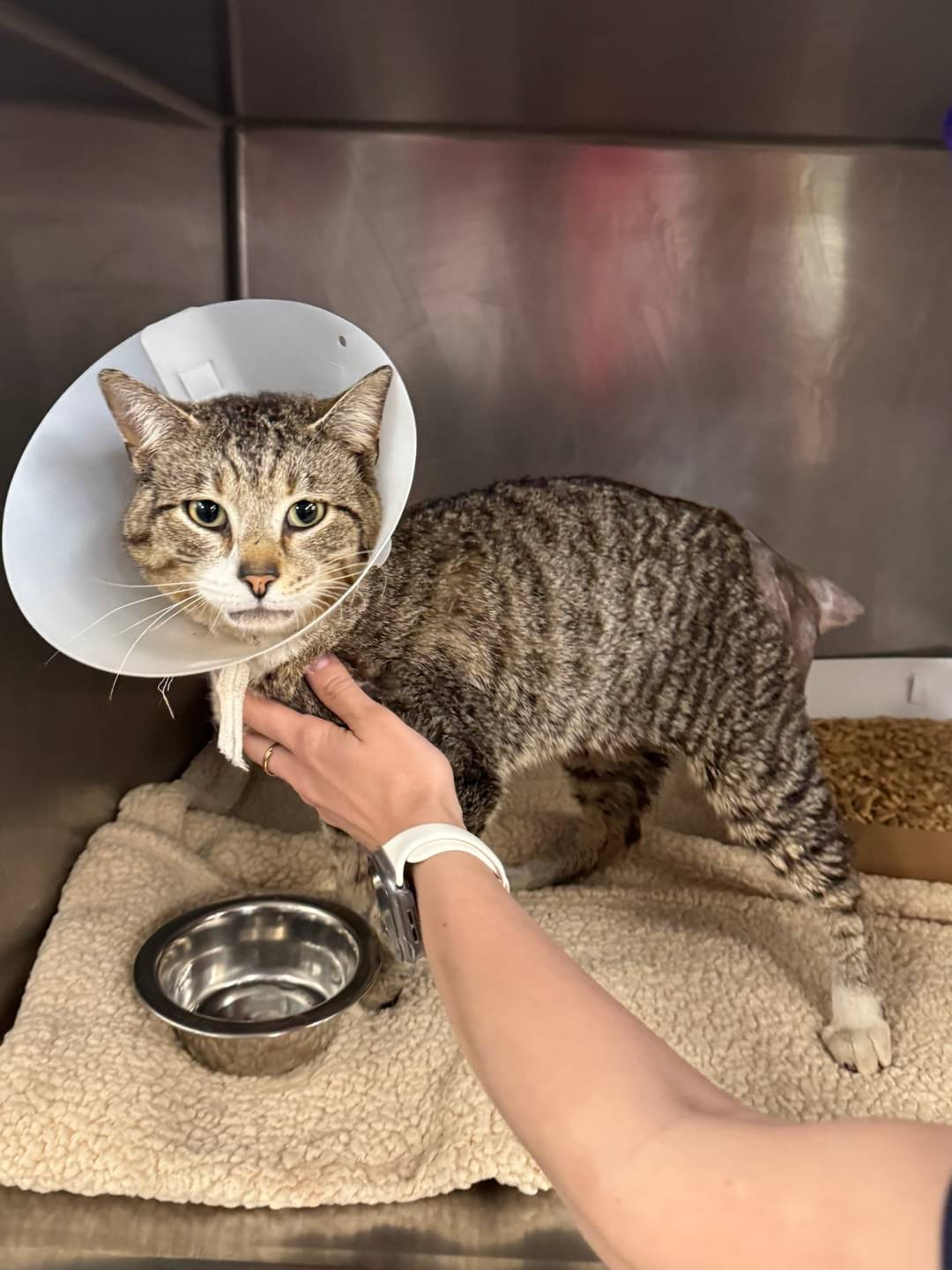
She took the cat from the little demons and rushed him over to the ACCT Philly, where the stray — now dubbed Pixie — fought for his life as veterinary staff treated him.
Now Pixie, who doesn’t harbor any ill will toward people and is an affectionate, loving little dude, is all healed up and ready for his forever home.
Pixie lost most of his tail and he still suffers from some incontinence episodes — which is to be expected, given the trauma he endured — but his fur has grown back, he’s healthy and he’s ready to be loved.
“Pixie’s story is hard to read. It breaks our hearts. But it’s the reality we fight every single day,” ACCT Philly’s staff posted online. “It’s why we exist – because no animal should ever face such cruelty, and every animal deserves a second chance at life.”
Pixie has recovered from his injuries and he’s ready to go to a good home. Credit: Pennsylvania SPCA
Pixie’s “spirit has been untouched” by his ordeal. If you live in the area and think you can provide a good home for the little guy — and exhibit the patience he needs with his ongoing issues from the cruelty he endured — visit ACCT Philly to fill out an adoption form. We hope Pixie gets a great home and lives his best life.
Another state looks to ban declawing
Our representaves in congress are too busy embarrassing Americans, staging Jerry Springeresque arguments in the legislative chambers and chasing TV cameras, so naturally they have no time for an insignificant issue like animal welfare.
But if they won’t act to bring our barbarian nation in line with the civilized world when it comes to banning the mutilation of cats, at least some state governments are doing what they can.
Ohio’s representatives are pushing for their state to become the sixth to ban the cruel procedure, after New York, Maryland, Virginia, Rhode Island, and Massachusetts. Washington, D.C., has also banned declawing, and a few dozen cities throughout the country have passed their own local prohibitions.
A bipartisan bill sponsored by a Republican and two Democrats has been introduced.
The usual villains in these efforts, the state’s Veterinary Medical Association, have trotted out the same tired arguments that declawing is “discouraged,” but shouldn’t be banned.
That argument doesn’t hold water when the veterinarians who hold VMA memberships are the types who offer package deals for kitten neutering and declawing. Not all or even most vets belong to state VMAs, and almost no veterinarians who specialize in feline care are members, but the vets who do support the group are the ones who see declawing as an income stream.
Their usual strategy is to call in favors from reps whose campaigns the group donates to, who in turn try to prevent declawing bans from ever reaching the floor for a vote.
After decades of successfully defeating such bans, the dam finally broke when New York passed its ban in June of 2019, becoming the first state to outlaw elective declawing.
We wish the bill’s sponsors, and their allies in local animal welfare groups, good luck in moving the legislation forward.
Twix and Gollum are in the process of converting my brother’s family into their dedicated servants.
My nieces have wanted a cat for a long time, but my brother and his wife had a few good reasons to hold off.
First and foremost, they were moving to a new country, and adding pets to a complex move that includes furniture, belongings and a long flight — plus adjusting to an entirely new country, new jobs and new schools — was a hassle they didn’t want.
In addition, I know they all deeply miss their dog, Cosmo, who passed away in the summer of 2023. Heck, I miss the little dude dearly. If he hadn’t burrowed his way into my heart, I wouldn’t have even thought of adopting a little buddy of my own.
But the Cat Distribution System cares little for the plans of mere mortals, and when my brother and his family arrived at their new home in coastal Italy, they soon discovered it came with a cat: Twix, a fixed calico who lives on the property.
It wasn’t long before the friendly Twix established that these new humans could be trusted, which is when she introduced an orange tabby who is either her brother or companion. No one’s quite sure.
Now my nieces have two cats to play with, and they’re making Bud look bad. As cats who have lived outdoors on the property, they’re much more accustomed to noise and change, and they adjust more quickly. Buddy, by contrast, is used to a quiet apartment with me, and while he is friendly to guests, he’s also a bit wary of kids.
Here are Twix and Gollum:
In the meantime, Buddy’s second term as President of the Americats is chugging along. After recognizing the need for a new denomination, President Buddy has introduced the new $11 cat dollar bill featuring his presidential likeness:
We’re not sure a powdered wig is a particularly good look for the little fellow, but I know better than to raise that concern.
Why would anyone need an $11 bill, you ask? Because cats don’t have pockets, so they don’t do change!
Cat dollars are legal feline tender and entitle the bearer to the equivalent value in cat food cans or snacks, when presented at any accredited feline bank.
Buddy, pleased with his new currency, has ordered his treasury to get started on a new $7 cat bill, which will also feature his likeness.








 Pain In The Bud