Were Cats Really Domesticated By The Egyptian Cult Of Bastet?

While the sensational claims have spawned headlines around the world, a closer examination raises more questions.

According to dozens of articles, a pair of new studies throws doubt on the commonly-held view that cats self-domesticated 10,000 years ago by helping themselves to rodents invading human grain stores.

The conventional wisdom for some time has been that house cats are the domesticated ancestors of felis sylvestris lybica, the African wildcat. Their genomes are nearly identical, it’s often difficult even for experts to tell the species apart, and they’re much more tolerant toward humans than the comparatively hostile felis sylvestris, the European wildcat.

But two new papers are raising eyebrows for their fantastic claims that feline domestication was actually human-driven and began about 5,000 years ago in Egypt.

Specifically, the papers claim cats were sacrificed en masse by the cult of Bastet, an Egyptian feline goddess, guiding the species toward domestication in a way that doesn’t quite make sense with what we know of evolution.

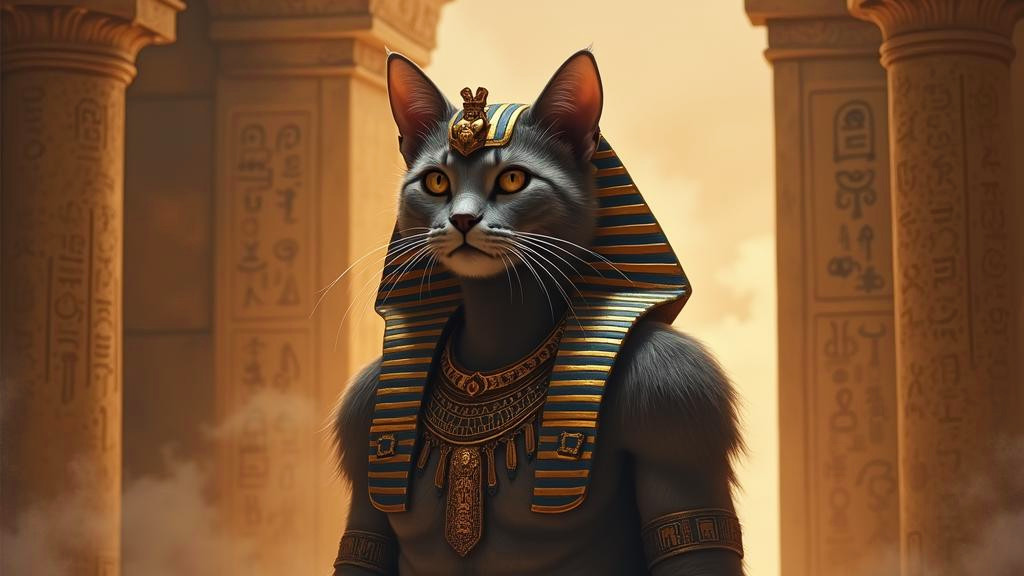
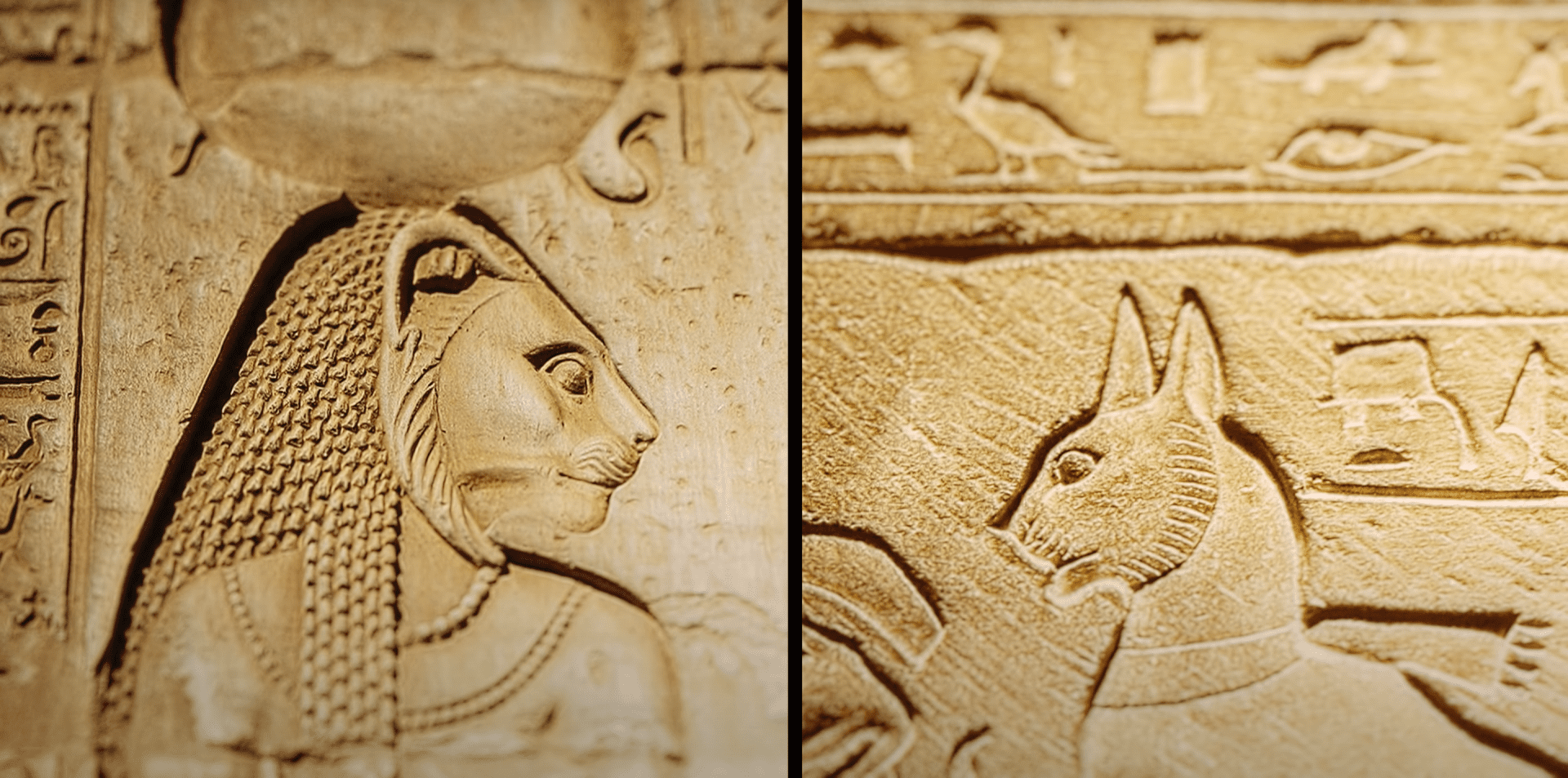
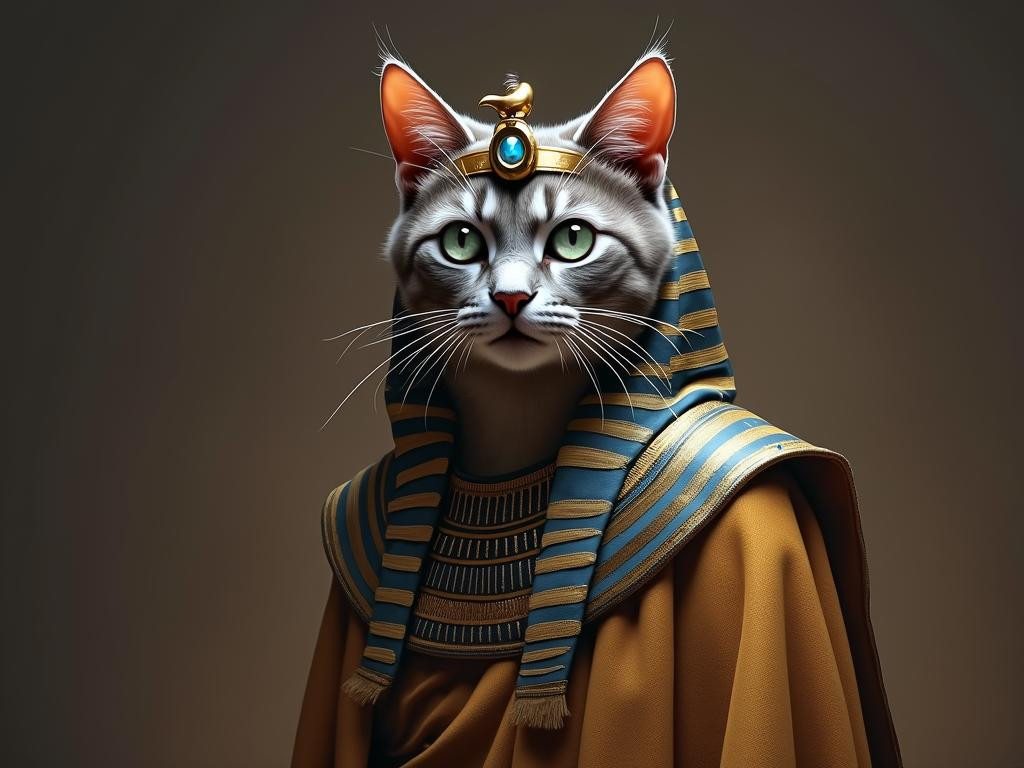
Bastet was originally depicted with the head of a lion, but the imagery around her evolved as she became a more prominent deity in the Egyptian pantheon. Later glyphs depicted her with the head of a domestic cat or African wildcat.

There are two main elements to the new claim:

  1. The earliest grave in which a cat was buried with a human was dated to about 10,000 years ago, and was found in Europe. But an analysis of the cat’s remains indicate it had DNA somewhere between a wild cat and a domestic feline. That, the authors claim, throws into doubt the idea that cats drifted into human settlements, drawn by the presence of rodents.
  2. If domestication was closer to 5,000 years ago, that would coincide with the rise of the cult of Bastet, the Egyptian cat goddess, around 2,800 BC.

Instead of the feel-good, fortuitous sequence of events the scientific community has accepted as the likely genesis of our furry friends, the authors of the new papers claim aggressive and fearful traits were essentially murdered out of the feline population by Bastet cultists who sacrificed cats in large numbers and mummified their corpses.

Neither paper has been peer-reviewed yet, and experts on ancient Egypt, genetics and archeology have already begun pushing back.

The new timeline, they say, doesn’t quite add up, with cat mummies found throughout different periods in Egyptian history, not just during the height of Bastet’s popularity in the Egyptian pantheon. Bastet’s popularity came approximately 700 years later than the authors claim the sacrifices began, and early imagery of the felid goddess depicts her with a lion head. It wasn’t until later centuries that Bastet was represented with the features of a domestic cat.

The powerful Pharaoh Budhotep I, considered an apocryphal king by some, sent a fleet of ships to the Americas to bring back turkey, according to legend. Credit: The Royal Buddinese Archaeological Society

Separate from timeline concerns is the lack of historical evidence. Cats were revered in ancient Egypt, and while there are an abundance of cat mummies — as well as the mummified remains of many other animals — that does not mean the cats were ritually sacrificed.

Indeed, archaeological, hieroglyphic and anthropological evidence all show cats enjoyed elevated status in the Egypt of deep antiquity, long before the nation became a vassal state of the Greeks, then the Romans.

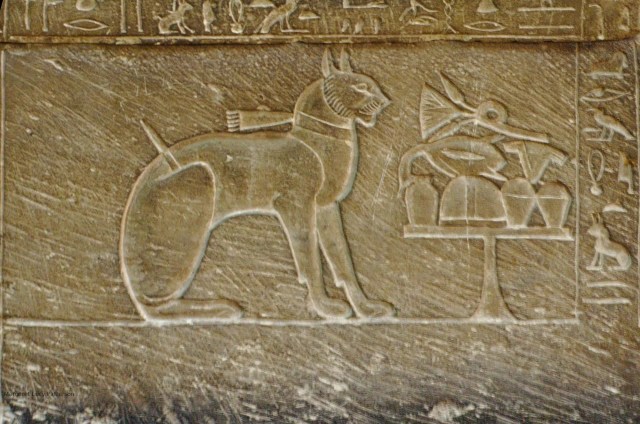
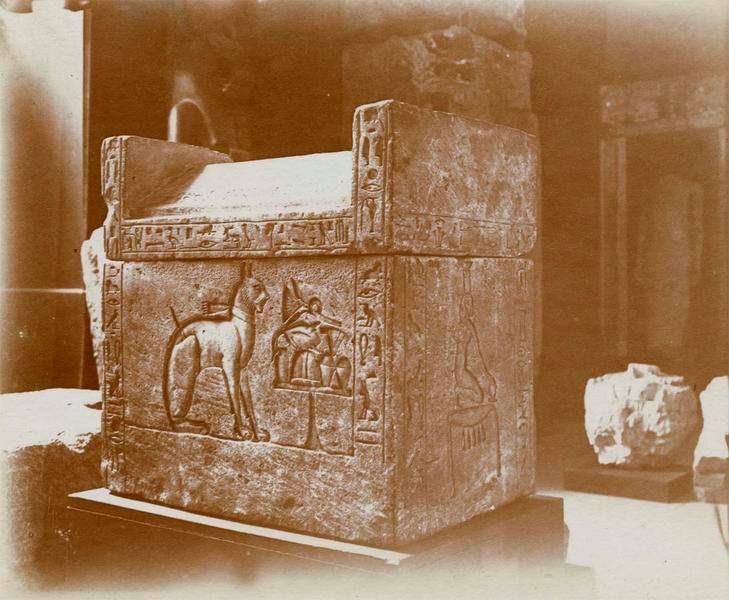
Cats were associated with magic, the divine and royalty, and cats who were the favored pets of Egyptian elites were given elaborate burials. Like Ta-miu, Prince Thutmose’s cat who is known for her grand sarcophagus decorated with images of felines and prayer glyphs meant to guide her to the afterlife.

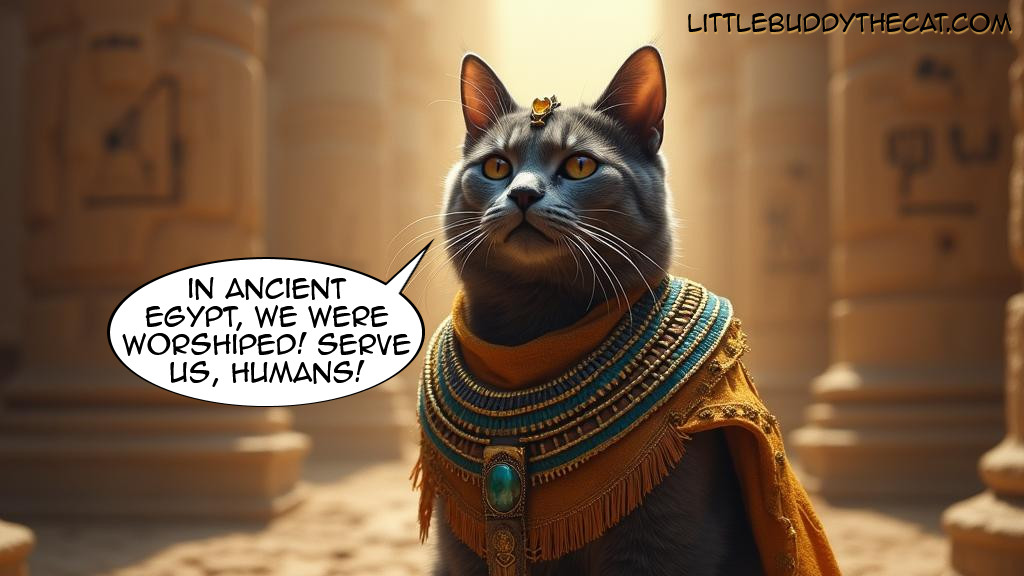
Cats were sacred companions to the Egyptians

When cats are found buried with humans, the more common explanation is that those cats were the pets and companions of those humans. If the authors of the two new papers want to prove their claim that cats were ritually sacrificed by the tens of thousands — slaughter on a scale that would influence evolution — they’ve got a lot more work ahead of them. (And the burden of proof rests squarely with them, as the originators of the claim.)

Not only does their research attempt to change the origin stories of kitties to an ignominious tale of human barbarity, if we take their assertions at face value, we’re talking about a case of “domestication by slaughter.”

While it may be true that the earliest evidence of companion cats outside of North Africa revealed hybrid DNA, that doesn’t cast doubt on the commonly-accepted view of feline domestication, it strengthens it. Domestication is a process that takes hundreds of years if not more, and it occurs on a species level, so it makes perfect sense that cats found in burial sites from early civilization would be hybrids of domestic and wild. Those felines were of a generation undergoing domestication, but not quite there yet.

A detail from the sarcophagus of Ta-miu, Prince Thutmose’s beloved cat.
Ta-miu, Prince Thutmose’s beloved cat, was buried in an elaborately decorated sarcophagus with glyphs and offerings meant to guide her to the afterlife. Thutmose, son of Amenhotep III and Queen Tiye, lived in the 14th century BC.

Killing off docile cats?

Which brings us to another significant problem with the claim: if the ancient worshipers of Bastet were selecting the most docile and easiest-to-handle wildcats for their sacrifice rituals, as claimed, then they would be influencing evolution in the other direction.

In other words, they’d be killing off the cats who have a genetic predisposition toward friendliness, meaning those cats would not reproduce and would not pass their traits down. It would have the opposite effect of what the papers claim.

So despite the credulous stories circulating in the press and on social media, take the assertion with a grain of salt. Something tells me it won’t survive peer review, and this will be a footnote about a wrong turn in the search for more information on the domestication of our furry buddies.

Cats would like human civilization to return to the good old days.

Vigilante Mob Targets Wrong House While Looking For Serial Cat Killer, Plus: Maine Coon Renders Buddy Liliputian!

The gathering, originally billed as a vigil, turned violent when the mob began breaking windows, tore down part of a fence, and pepper sprayed a father who tried to shield his children from the crowd’s wrath.

A mob of protesters, enraged by the actions of an accused cat killer, terrorized an innocent family on Sunday night.

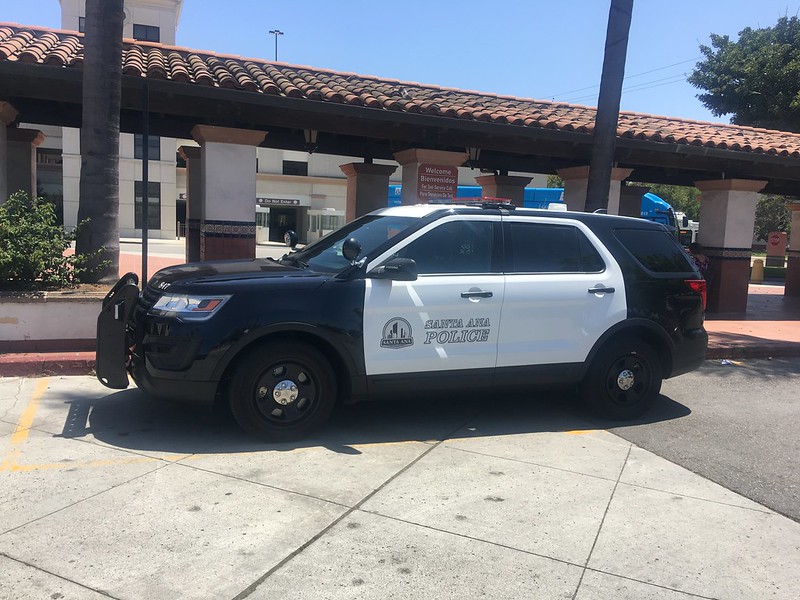
The crowd gathered in Santa Ana, Calif., for what was billed as a vigil for the slain cats and a condemnation of their alleged killer, 45-year-old Alejandro Oliveros Acosta. The Santa Ana man was arrested last week and charged with felony cruelty to animals after “dozens” of felines in the neighborhood disappeared under suspicious circumstances, per police.

With emotions running high, the crowd followed its more unruly members to a house they mistakenly identified as Acosta’s. The homeowner said he was related to Acosta’s wife but didn’t know anything about the cat killings until Acosta was arrested. He told the protesters he hadn’t seen Acosta since the arrest and asked them to calm down, but they broke windows, attacked him with pepper spray and terrorized children living there.

“The peaceful protesting wasn’t so peaceful. They’re scaring kids here. It’s scaring the whole family. There are kids, seven kids in this house. Two little babies, one that is autistic,” the man told KTTV. “You know, breaking our fences… pepper spraying us for no reason. If you did what you did, I didn’t know anything about it. You know, when we found out [about the cat murders] we were shocked.”

It took Santa Ana police an hour to respond, according to multiple news reports. Even after the police told the protesters that they had the wrong house and were breaking the law, the mob refused to leave and accused the victims of being complicit in Acosta’s alleged crimes. Officers had to manually break up the crowd by physically removing individual protesters.

On Monday, police took the unusual step of publicly commenting on the fallout from Acosta’s arrest, pleading with people to “allow the judicial process to take its course.”

“I don’t think it needs to be like this. I think it should have remained a vigil,” one protest participant told KTTV, a Fox affiliate in Los Angeles. “I knew it’d be a protest, but I didn’t think it would get violent. I don’t think anybody should be touching property.”

Needless to say, we don’t need people making the animal welfare community look like a bunch of lunatics, and vigilante “justice” is wrong. As humans, we’re at our worst when we engage in mob behavior, which obliterates reason, civility and empathy.

Although a lot of people seem to have difficulty with this simple concept nowadays, everyone is entitled to due process, and we’re a nation of laws where alleged crimes are litigated in court, not on the street, on front lawns or online.

Zeus the mighty, meowing from atop Olympus

A cat named Zeus has been turning heads lately, and for good reason: he’s huge even by Maine Coon standards.

Zeus is fluffy, imposing, and so big that he can help himself to food left on a counter just by getting up on his hind legs.

At almost 30 pounds, he’s practically three Buddies in mass. I texted a photo of Zeus to Buddy, and Bud responded with a photo of his own, claiming he’d just finished a grueling bench press session:

Bud hitting the gym to pump iron and stuff.

Hmmm.

Something tells me Buddy’s going to complain that I didn’t bestow him with the name of a Greek god. Is there a diminutive, glib deity to be found in the Olympian pantheon?

Another Serial Cat Killer, This Time Fresh From Prison, Goes Right Back To Killing Strays. Clearly, Existing Laws Are Not Enough

When serial cat killers serve sentences of less than a year due to plea deals and early release for good behavior, how much deterrent value do our laws have? Not much, it seems.

Note, 5/3/2025: We’ve heard from two readers who say the MyNorthWest report contains inaccuracies. We’ve reached out to the police and will follow up with police and courts on Monday to verify the facts and correct potential misinformation. Apologies for the confusion.

Every couple of months, at least in the last year or two, I’ve slowed down on posting, and almost always for the same reason: my cat-related news alerts are  seemingly endless streams of depressing stories about people shooting, strangling or dismembering cats.

It never ends, and sometimes it’s so overwhelming that I’m put off from writing for days. At the same time, I am not a believer in the idea that all animal blogs should be saccharine feel-good fests about fluffy kittens and TikTok videos of cats doing silly things.

There’s always a place for celebrating cats, but if they’re in danger, and if the stories point to wider trends that cat lovers should know about, then I think it’s our responsibility to remain educated. Not only so we can guard against threats to our little friends, but also so we can add our voices to the chorus calling for tougher laws and greater accountability.

That’s ultimately what this is about: accountability.

Stories about two cat serial killers in about a week have made it clear that even the strengthened animal protection law — the Preventing Animal Cruelty, or PACT Act — passed in 2019, during the first Trump administration, raising animal cruelty and murder to the level of a felony, are still not enough. They’re not a deterrent, especially when the convicted abusers and killers end up serving a year or less because prisons are overcrowded and the wider law enforcement community still doesn’t take animal-related crime as seriously as other violence.

Antoine Leander Runner Jr. is a serial murderer of cats. The Seattle man was recently released from prison after serving just a year for a felony animal cruelty conviction.

The 43-year-old’s modus operandi was setting up crude, homemade snares and traps to capture and harm felines. He was also known in cat rescue circles, where he posed as a cat lover and took advantage of programs to get free supplies, including “cat food, kennels, collars, leashes, and treats to lure cats and kill them,” according to MyNorthWest, a Seattle news site.

When locals discovered new homemade traps in Runner Jr.’s old haunts and trail cameras picked up images of the man himself stalking wooded areas, neighbors called police and area shelters. The evidence showed Runner Jr. was allegedly visiting cat colonies at night and had picked up right where he left off. One colony cat’s body was discovered on March 31, “disemboweled and publicly displayed.”

“Animal Control confirmed the injuries to the cats were human-caused,” MyNorthWest reported, adding that it appears Runner Jr. was visiting colonies “every night” to hunt cats.

Above images by u/picardhasyourback, posted to the SeattleWA subreddit. Click on the images to see full-size versions.

Runner Jr. was picked up by Seattle police this weekend after a neighbor spotted him in a wooded area and phoned authorities. The convicted cat killer, who had a new bench warrant out for his arrest, was charged with a misdemeanor, but more charges are likely as police investigate his latest alleged attacks on Seattle-area cats.

The Seattle man was originally arrested for killing cats in 2023, but was released early. The Seattle area was also terrorized by a serial cat killer who stalked the area in 2018, mutilating cats so badly that I won’t repeat the details on this blog out of respect for readers.

It should be made clear that Runner Jr. was not connected to the 2018 killings, but police should reconsider those cases as well because if it turns out Runner Jr. is guilty of these latest cat murders, it will be abundantly clear that he is a high recidivist offender who cannot be trusted to leave the animals alone. He should serve a long, unabridged prison sentence and be subject to constant monitoring when he’s released.

Antoine Leander Runner Jr. was arrested this weekend by Seattle police. Credit: Sarah Seiler/Facebook Georgetown Community Discussion Group

What’s the solution here? Increasingly tough criminal penalties for animal abuse and murder? Expensive monitoring equipment to watch over every cat colony? Education and training for law enforcement so violence toward animals is taken as seriously as it should be?

I hate to keep pointing out that people who harm animals are likely to “graduate” to harming humans, as many studies have shown, because it implies that we should only be concerned about animal abuse for its tendency to turn into human abuse. It obscures the fact that animal life is intrinsically valuable, and that cats — and dogs, many bird species, mammals and marine life — are sentient, with their own thoughts and emotions. But if that’s what it takes for people to take this sort of thing seriously, then it’s worth repeating the point.

Worst Fears Confirmed As Cops Find ‘Dozens’ Of Dead Felines In Accused Cat Killer’s California Home

The suspect had been spotted by several people who live in the neighborhood, who said they saw him luring cats with food and injecting at least one feline with a needle.

For the past two years, people in Santa Ana, California, have sworn there was a serial cat killer in their midst.

The allegations picked up steam this week after a local TV station aired a segment from angry and confused neighbors whose pets disappeared, as well as others who saw the suspect injecting at least one cat and scooping up others. The neighbors shared information on a hyper local platform, zeroing in on one particular neighbor.

On Wednesday, the Santa Ana Police Department arrested 45-year-old Alejandro Oliveros Acosta and charged him with felony animal cruelty in connection with the case. Investigators were able to put together enough information to obtain a warrant, and a search of Acosta’s home turned up the corpses of “dozens” of cats, according to Officer Natalie Garcia, public information officer at the Santa Ana Police Department.

Heartbreakingly, Garcia said there were too many bodies in Acosta’s home for police to put an exact number on how many cats he’s allegedly killed. Police are still putting together the details, and more charges are likely.

A press release from Santa Ana police says the department is working with animal control and a neighboring police department. In addition to the evidence they collected in Acosta’s home, several neighbors positively identified Acosta as the man they saw luring neighborhood cats with food, scooping up a breed cat, and injecting another. One cat was left hanging from a tree, while others simply disappeared, preventing their people from finding closure.

“I saw this same man grab [a] neighbor’s cat, inject it with a needle and some sort of substance,” one local told KTTV, a Fox affiliate in Los Angeles. “And [the neighbor] saw him and she yelled, ‘Hey!’ at him to get his attention. He got up and ran, jumped in his truck and left. And from what we know that cat died, and the owner went and put in a police report.”

Santa Ana is about 10 miles southeast of Anaheim, not far from Long Beach. Acosta was charged and sent to county jail. It wasn’t immediately clear if he’d retained an attorney.

After 10,000 Years, Dire Wolves Walk The Earth Again

The surprise announcement came from Colossal Biosciences, a company best known for its project to bring back the woolly mammoth.

A US biotech company shocked the world Monday when it announced the births of three dire wolf puppies, bringing back a species that hasn’t lived for more than ten millennia.

Or a version of that species, at least.

Scientists with Colossal Biosciences extracted DNA “from a 13,000 year old tooth and a 72,000 year old skull and made healthy dire wolf puppies,” Colossal CEO Ben Lamm said in a statement.

Of course, it wasn’t that simple.

The dire wolf, Aenocyon dirus, was heavier, stockier and had thicker fur than modern-day gray wolves. In addition, its bite was incredibly strong, generating more force than any living species of canid.

To create the dire wolf puppies, Colossal used the genomes reconstructed from the tooth and skull, spliced them with gray wolf DNA, and made 20 gene edits in 14 genes. Healthy embryos were implanted in three surrogates — large, mixed-breed dogs — and were successfully delivered.

Romulus, one of two male dire wolf pups born late in 2024. Credit: Colossal Biosciences

Remus, who was born at the same time as Romulus. Credit: Colossal Biosciences

Whether the new puppies are officially dire wolves is up for debate and beyond the scope of this post, but just like humans and chimpanzees share 98.7 percent of their DNA, dire wolves and gray wolves share 99.5 percent of their DNA.

The species also existed concurrently with gray wolves and there was interbreeding between the populations, meaning gray wolves already have dire wolf lineage.

As a result, the puppies may be more dire wolf than some are willing to admit. Just how far a “de-extinction” project has to go for the animals to qualify as their namesakes will be debated for years, and there are innumerable questions for which we won’t have answers until the pups grow and scientists monitor their behavior in addition to their physical health.

They won’t behave precisely the way their ancestors did, since they are growing up in a captive environment with teams of specialists constantly monitoring them. The wolves are “essentially living the Ritz Carlton lifestyle of a wolf. They can’t get a splinter without us knowing about it,” Colossal’s chief science officer, Beth Shapiro, told the New York Times.

Whether bringing back dire wolves is a “good” thing is also a topic for another day, at least as far as this post goes. You may disagree, and feel free to say so in the comments, but this is a subject you could write half a library of books on, encompassing ecological, moral and philosophical questions that don’t have easy answers.

It’s made even more complex by the situation we find ourselves in, with our own behavior and relentless expansion killing off more than 70 percent of the world’s wildlife since 1970, according to the World Wildlife Fund. The company wants to use its technology to help critically endangered species, like the red fox, avoid extinction.

Colossal has partnered with leaders in the fields of genetics and bioethics, as well as organizations that specialize in animal welfare. The puppies are in a sizable, custom-built facility in an undisclosed location, secured by “zoo grade” barriers, and the company enlisted the help of the SPCA to create an environment appropriate for them. Colossal says their care regimen will include socialization and the development of pack dynamics.

A newborn dire wolf pup. Credit: Colossal Biosciences

The company has well-publicized projects to bring back woolly mammoths and the dodo, and ultimately, its founders say they want to restore balance in places where apex predators have been brought to extinction by human activity.

“This project demonstrates the awesome potential for advances in genetic engineering and reproductive technologies to recreate lost diversity,” Andrew Pask, a Colossal board member and professor of biosciences at the University of Melbourne, said in a statement. “Apex predators are critical to stabilizing entire ecosystems and their loss from the landscape can have profound impacts on biodiversity.”


The pups are named Romulus, Remus and Khaleesi. That last name is in homage to the character Daenerys Targaryen (Emilia Clarke) from the book series A Song of Ice and Fire, and Game of Thrones, the television adaptation. Dire wolves play a major part in the narrative, and the series is credited with bringing the long-extinct animals back into the popular imagination.

Jon Snow (Kit Harrington) discovers an orphaned dire wolf pup in the first season of Game of Thrones. The pup, who grows into a fierce and massive adult wolf named Ghost, plays a pivotal role in many major events in the series. Credit: HBO

Khaleesi, a female dire wolf, named after the character Daenerys Targaryen from Game of Thrones. Credit: Colossal Biosciences