
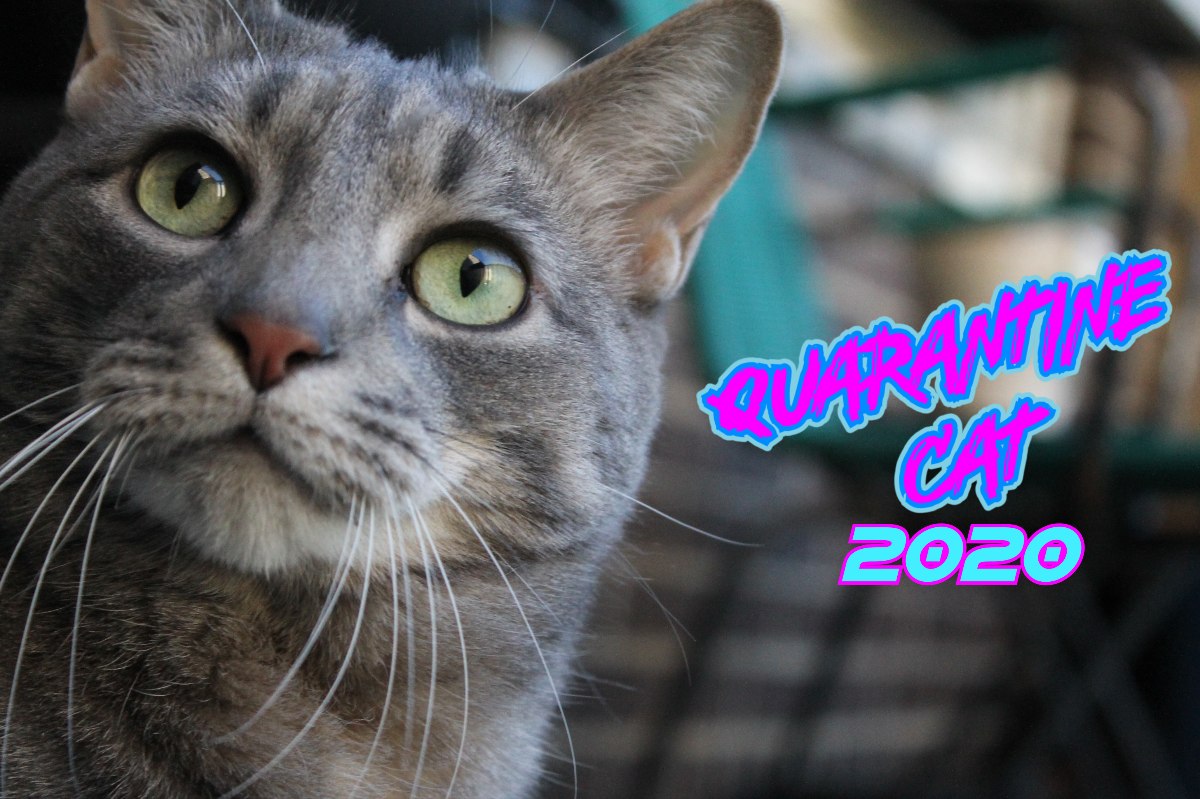
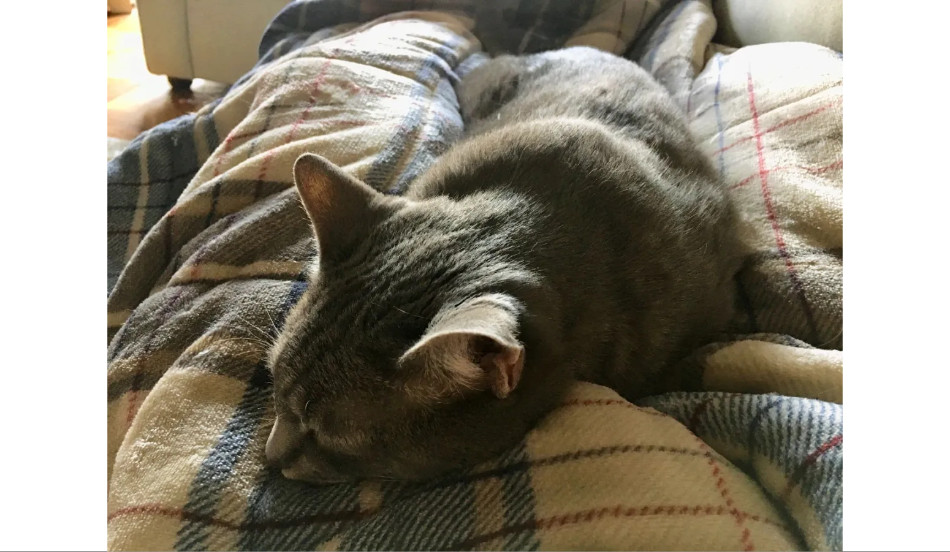
Taken during the spring of 2020 during the height of the quarantine, which Bud was blissfully oblivious to!


Flashback photos from the spring of 2020 when most cats were wondering why their people were huddling at home and only venturing out cautiously with masks and gloves.
Taken during the spring of 2020 during the height of the quarantine, which Bud was blissfully oblivious to!
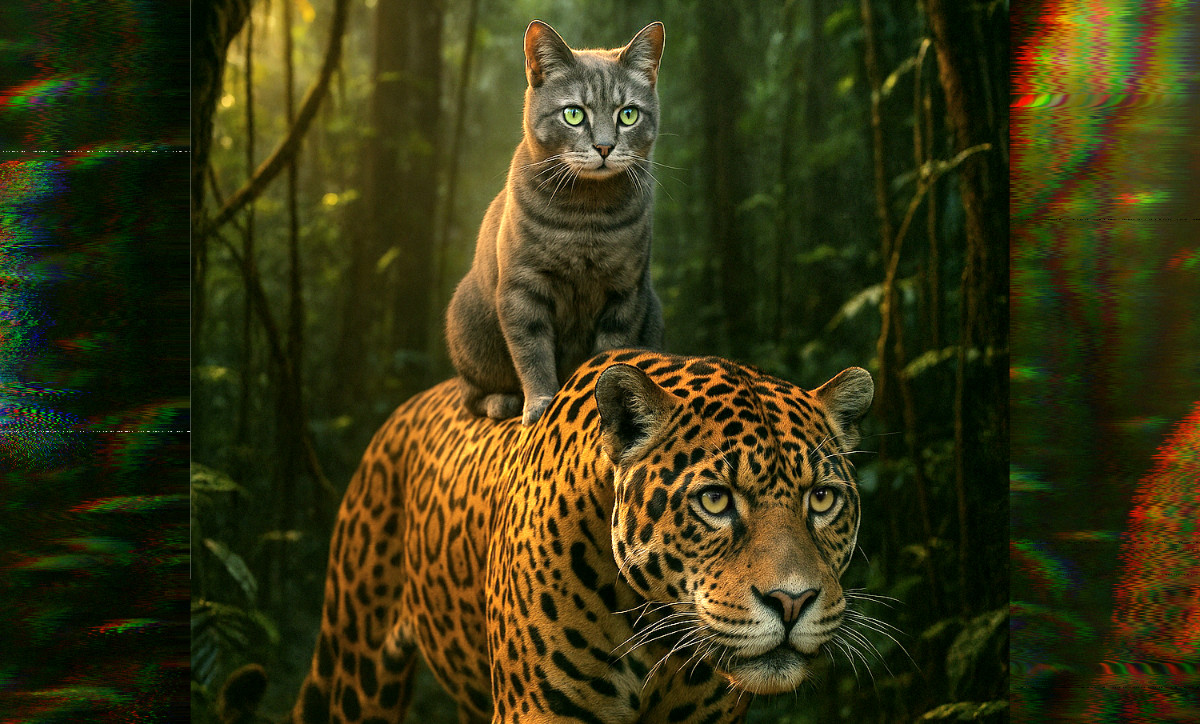
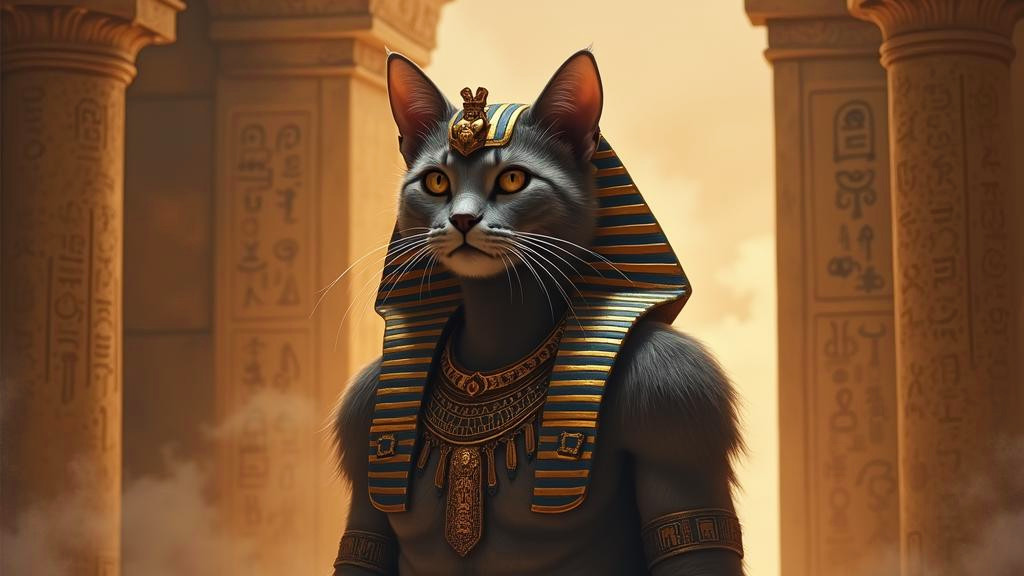
Buddy the Cat explores deep within the heart of the Amazon jungle, where he encounters foul and hostile creatures!
Today we present Buddy the Cat in an Amazonian Adventure, brought to you by the Center for Greater Buddesian Propaganda.
“The Center for Greater Buddesian Propaganda: Documenting The Achievement’s Of Earth’s Most Interesting And Ripped Feline, One Legend At A Time”
Today’s adventure finds our hero returning to the jungle to commune with the ancient jaguar spirits and eat turkey with his jaguar buddies.


The lesson: The only limit is your imeowgination. You’re as brave, meowscular and ripped as you imagine yourself to be. Or, at least Buddy is. YMMV.
Happy Sunday!
Buddy the Cat argues that a consistent bedtime is key to feeling good and healthy, while Buddy the Cat counters that stupid humans don’t tell him when to sleep, HE decides. Who’s right, Buddy or Buddy?
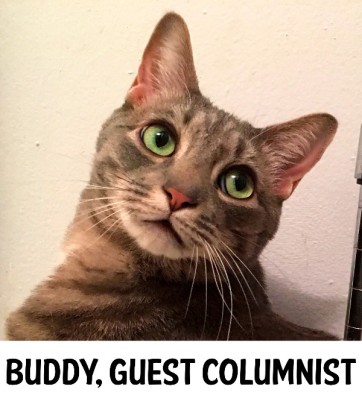 What are you doing, human? It’s bedtime! Mow mow! You’re supposed to be in this bed and laying down so I can use your face as a pillow, drape myself across you, or burrow comfortably against your side to soak up body heat.
What am I supposed to do without a human sleeping substrate? How can any cat be expected to sleep like this? I know you claim there are so called “stray cats” who don’t have humans, but that is preposterous and I don’t believe it.
Let’s go! I read an article saying it’s very important to have a regular sleep schedule. Well, actually, I just saw the headline, but I got the gist of it, which is that you have to go to bed right meow!
Sleep? Now? That’s ridiculous.
No, I have shadows to chase, toys to kick around and I really wanted to get into redecorating things around here, because they’re looking a little too orderly for my tastes.
Go ahead, go to bed. In a few minutes I’ll cry outside the bedroom door until you get out of bed and open it, then I’ll decide I don’t want to go in after all. I’ll do that two, maybe three more times just because I can.
Oh, you thought I was settling in? Nah. I have a bowl of water to splash all over the place, then I’ll cry until you get up again and refill it, and when you get back into bed for the fifth or sixth time, I’ll cry incessantly again because my dry food bowl is empty, meaning there’s plenty of food but it’s all pushed up to the sides.
Do not forget our pre-slumber ritual! You have to scratch my chin while I purr and you tell me what a good boy I am. Then you have to scratch the top of my head while I purr and you tell me what a good boy I am.
After that, maybe I’ll sleep. We’ll see.

While the sensational claims have spawned headlines around the world, a closer examination raises more questions.
According to dozens of articles, a pair of new studies throws doubt on the commonly-held view that cats self-domesticated 10,000 years ago by helping themselves to rodents invading human grain stores.
The conventional wisdom for some time has been that house cats are the domesticated ancestors of felis sylvestris lybica, the African wildcat. Their genomes are nearly identical, it’s often difficult even for experts to tell the species apart, and they’re much more tolerant toward humans than the comparatively hostile felis sylvestris, the European wildcat.
But two new papers are raising eyebrows for their fantastic claims that feline domestication was actually human-driven and began about 5,000 years ago in Egypt.
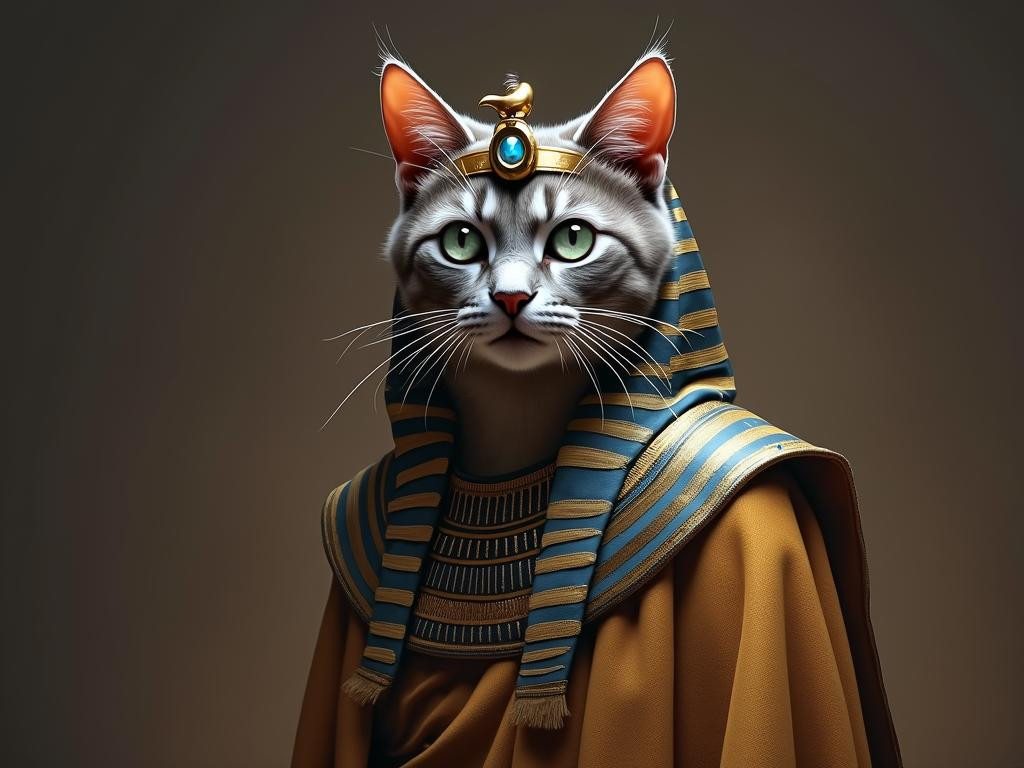
Specifically, the papers claim cats were sacrificed en masse by the cult of Bastet, an Egyptian feline goddess, guiding the species toward domestication in a way that doesn’t quite make sense with what we know of evolution.
There are two main elements to the new claim:
Instead of the feel-good, fortuitous sequence of events the scientific community has accepted as the likely genesis of our furry friends, the authors of the new papers claim aggressive and fearful traits were essentially murdered out of the feline population by Bastet cultists who sacrificed cats in large numbers and mummified their corpses.
Neither paper has been peer-reviewed yet, and experts on ancient Egypt, genetics and archeology have already begun pushing back.
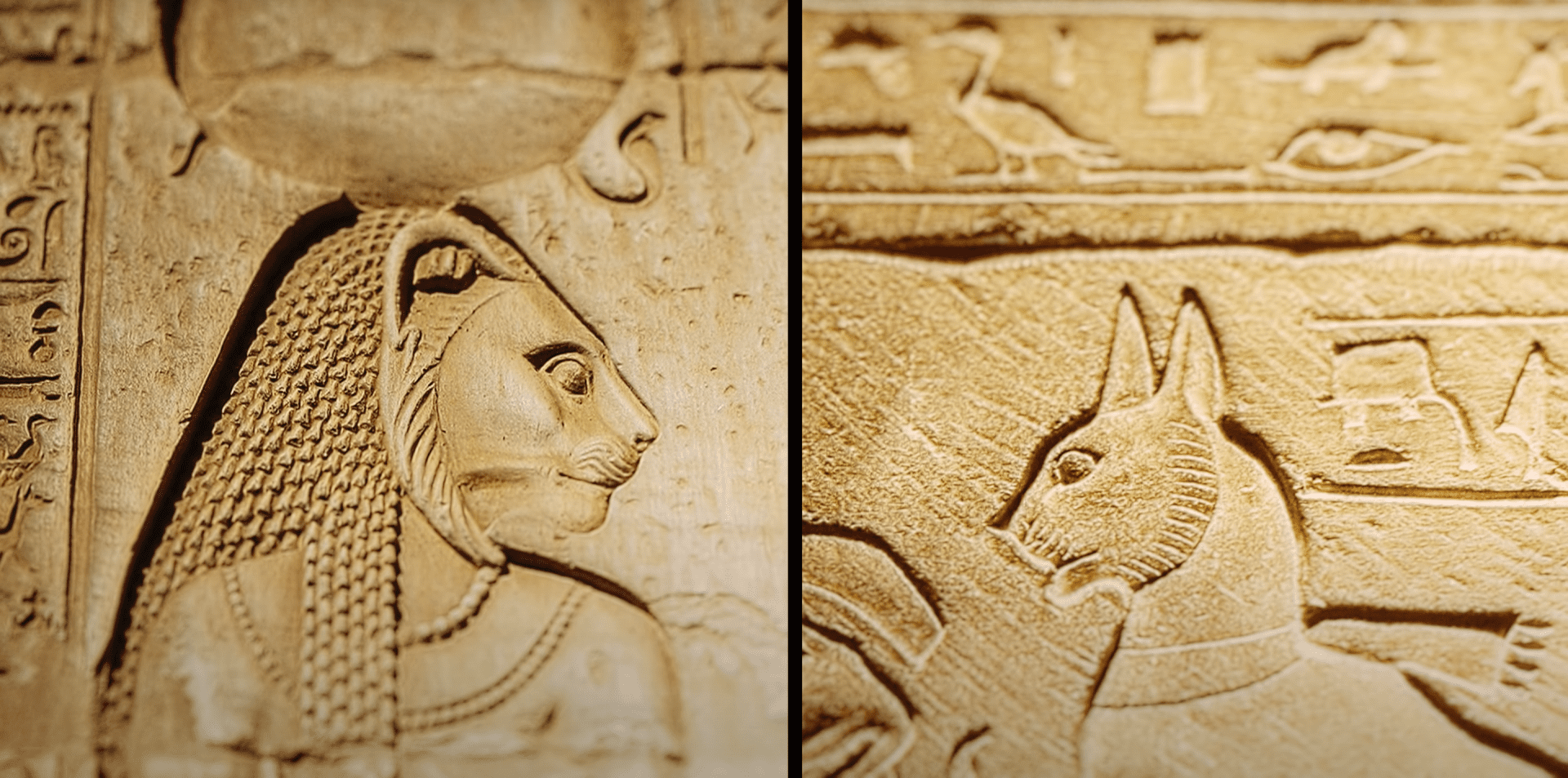
The new timeline, they say, doesn’t quite add up, with cat mummies found throughout different periods in Egyptian history, not just during the height of Bastet’s popularity in the Egyptian pantheon. Bastet’s popularity came approximately 700 years later than the authors claim the sacrifices began, and early imagery of the felid goddess depicts her with a lion head. It wasn’t until later centuries that Bastet was represented with the features of a domestic cat.
Separate from timeline concerns is the lack of historical evidence. Cats were revered in ancient Egypt, and while there are an abundance of cat mummies — as well as the mummified remains of many other animals — that does not mean the cats were ritually sacrificed.
Indeed, archaeological, hieroglyphic and anthropological evidence all show cats enjoyed elevated status in the Egypt of deep antiquity, long before the nation became a vassal state of the Greeks, then the Romans.
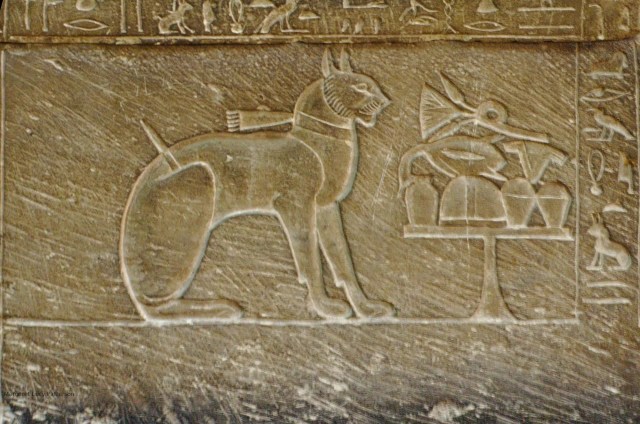
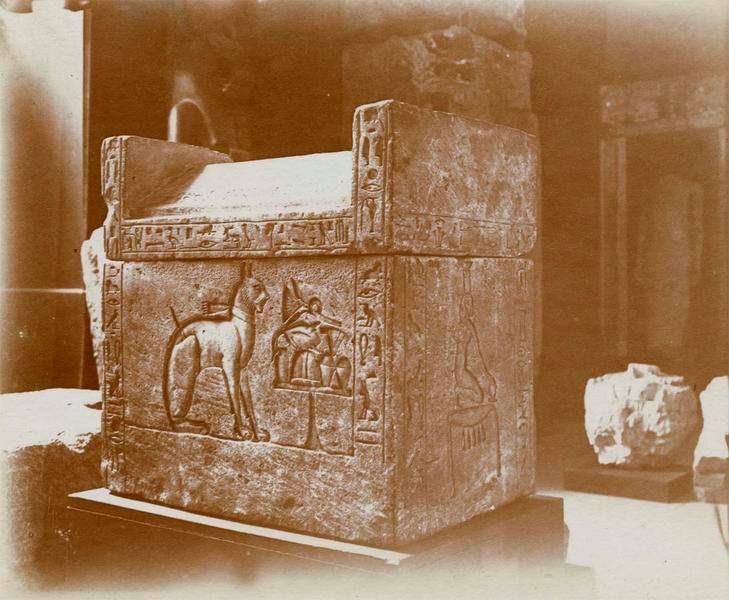
Cats were associated with magic, the divine and royalty, and cats who were the favored pets of Egyptian elites were given elaborate burials. Like Ta-miu, Prince Thutmose’s cat who is known for her grand sarcophagus decorated with images of felines and prayer glyphs meant to guide her to the afterlife.
When cats are found buried with humans, the more common explanation is that those cats were the pets and companions of those humans. If the authors of the two new papers want to prove their claim that cats were ritually sacrificed by the tens of thousands — slaughter on a scale that would influence evolution — they’ve got a lot more work ahead of them. (And the burden of proof rests squarely with them, as the originators of the claim.)
Not only does their research attempt to change the origin stories of kitties to an ignominious tale of human barbarity, if we take their assertions at face value, we’re talking about a case of “domestication by slaughter.”
While it may be true that the earliest evidence of companion cats outside of North Africa revealed hybrid DNA, that doesn’t cast doubt on the commonly-accepted view of feline domestication, it strengthens it. Domestication is a process that takes hundreds of years if not more, and it occurs on a species level, so it makes perfect sense that cats found in burial sites from early civilization would be hybrids of domestic and wild. Those felines were of a generation undergoing domestication, but not quite there yet.
Which brings us to another significant problem with the claim: if the ancient worshipers of Bastet were selecting the most docile and easiest-to-handle wildcats for their sacrifice rituals, as claimed, then they would be influencing evolution in the other direction.
In other words, they’d be killing off the cats who have a genetic predisposition toward friendliness, meaning those cats would not reproduce and would not pass their traits down. It would have the opposite effect of what the papers claim.
So despite the credulous stories circulating in the press and on social media, take the assertion with a grain of salt. Something tells me it won’t survive peer review, and this will be a footnote about a wrong turn in the search for more information on the domestication of our furry buddies.
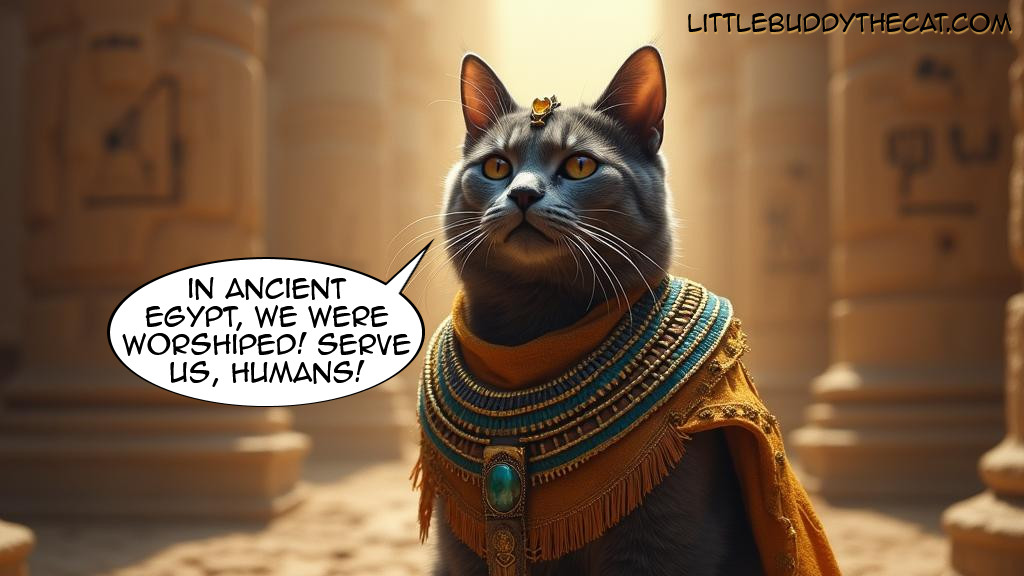
Buddy claims he’s a tiguar, not a domestic cat, and says allowing him outside is tantamount to Queen Daenerys allowing her dragons to roam the countryside in Game of Thrones.
Dear Buddy,
Dude. Everyone’s getting so uptight lately about making sure we stay inside. We’re predators! We should be running our neighborhoods, but no, our humans want to “protect” us.
As a famously fierce and ripped feline, what’s your take?
Frustrated in Fallbsurg
Dear Frustrated,
I empathize with you, I really do, but the way it was explained to me is that I’m a terrifying cat with huge meowscles, and by keeping me indoors, my human is protecting dogs, humans and other lower life forms from my potential wrath.
“Do they let tigers and jaguars run around New York?” Big Buddy asked me.
“Uh, no, I guess they don’t,” I said.
“Of course not. And that’s exactly why we can’t have you roaming the neighborhood. Think of the quandary Daenerys Targaryen had in Game of Thrones when her dragons were feasting on livestock from the farms of her subjects!”
And he’s right. A Buddy on the loose would cause all sorts of panic and other problems. I don’t want to be responsible for what happens when a bunch of humans freak out and go recklessly running in every direction, terrified I’m going to catch them.
If it takes sacrifice on my part to keep people comfortable, then I’m willing to endure the hardship of living indoors with a servant who heeds my every beck and call. It’s just the honorable thing to do.
Your friend,
Buddy

Dear Buddy,
Hey, pal! How have you been?
Friendly in Florida
Hey Friendly,
I’ve been handsome, how have you been?
Buddy
Dear Buddy,
You’re not a tiger! Or a jaguar! You’re a chubby, sedentary, spoiled house cat with an enabler of a human who encourages your delusions of being a powerful big cat!
Just stop already, it’s embarrassing!
Cringing In Connecticut
Dear Cringing,
First of all, I am a tiger/jaguar, or a tiguar if you will. I just haven’t hit my growth spurt yet. My human assures me it’s gonna happen.
I also asked my human if it’s true that he’s “an enabler” who encourages my supposed delusions. His response: “That’s absurd. Who’s a big, bad cat? You are, aren’t you? Yes, you are!”
So obviously you’re a hater and soon you’ll see me prowling the jungle with David Attenborough talking about how dangerous I am! Just wait!
Buddy the Badass

 Pain In The Bud