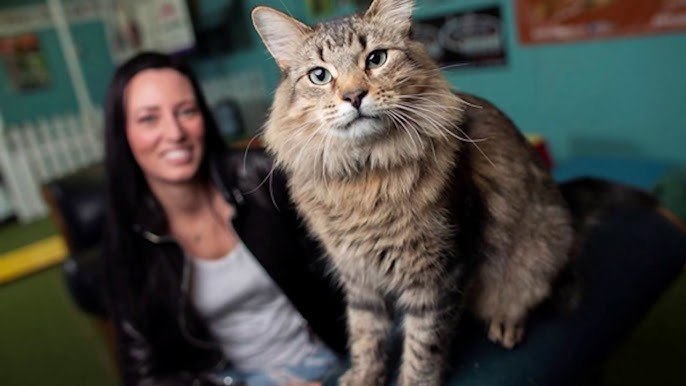
Minerva, a long haired black feline, won on the mysteriously laconic slogan, “CRIME.”
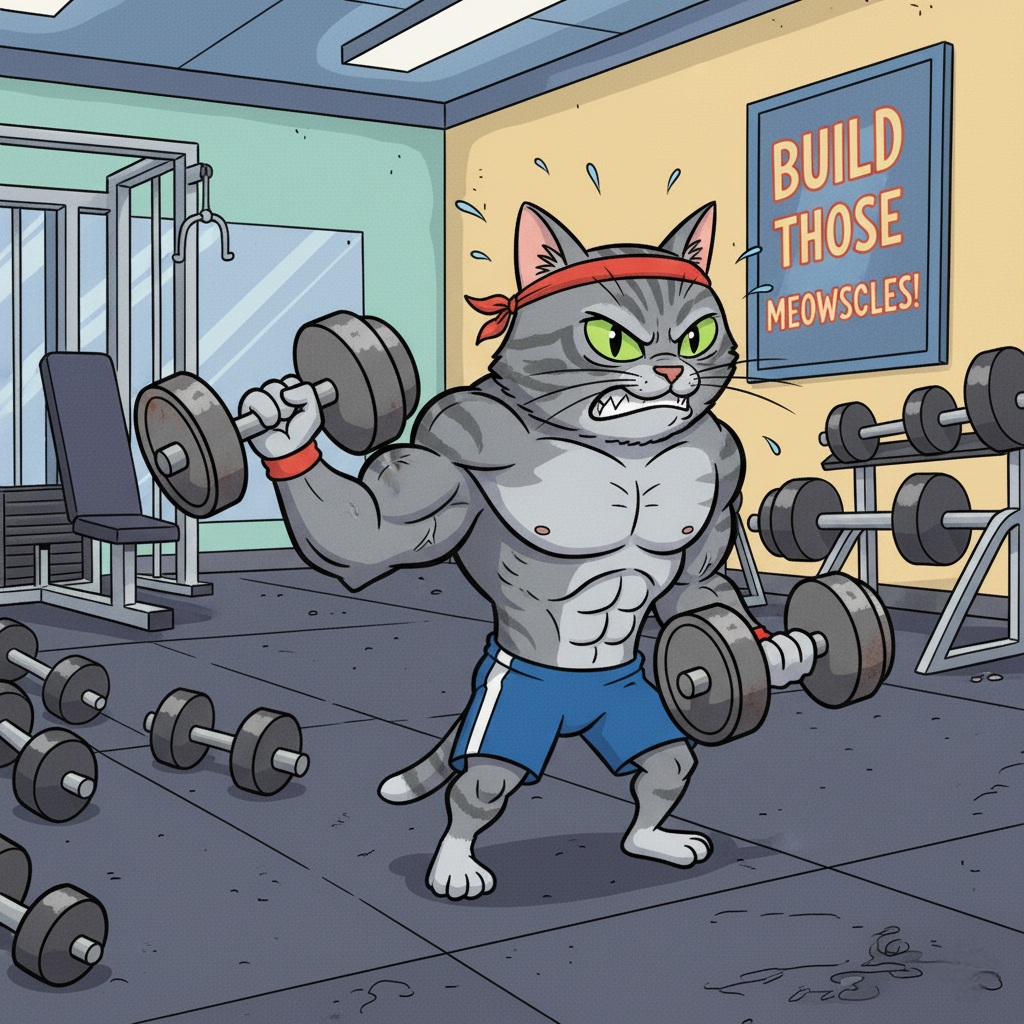
Happy Meowscular Monday! As Little Buddy the Cat says, Monday’s a good day to get ripped with intense exercises like slapping treats out of puzzle feeders and moving from one nap spot to another.
The election started as a joke but the idea caught on, the media noticed, and soon people around the world were reading about the race between about 50 pets.
Most candidates were cats, but a few neighbors entered dogs, a parrot and a guinea pig.
It’s not clear if the new feline mayor was promising to end it, address it or solicit more of it, but the slogan resonated with voters and Minerva surged ahead of the pack, defeating incumbent mayor Berry the cat and original challenger Orange Cat.
People who live in the area said the election helped make the neighborhood friendlier, fostering connections between humans and pets. We can’t wait to see what Minerva does with crime.
Some names climbed the rankings, while others are perennial favorites tied to coat colors, patterns and personalities.
Another year, another list of the most popular names for our furry overlords.
This one is based on data from a pet insurance company commissioned by US News & World Report, and while there are others based on things like chip registrations and veterinary records, they agree on pretty much all the most popular names.
So what are the top names we bestow on our little pals?
Unsurprisingly, Bella and Luna retained their top spots for female cats, while Leo ane Milo were the most popular names for male cats.
There’s not even a mention of the name Buddy, which is either a heresy which shall not go unpunished, or pretty cool because it’s kind of unique, and there are probably only like 25,000 Buddies in the US. Buddy hasn’t made up his mind yet, although I think he’s too lazy to go around punishing alleged heretics.
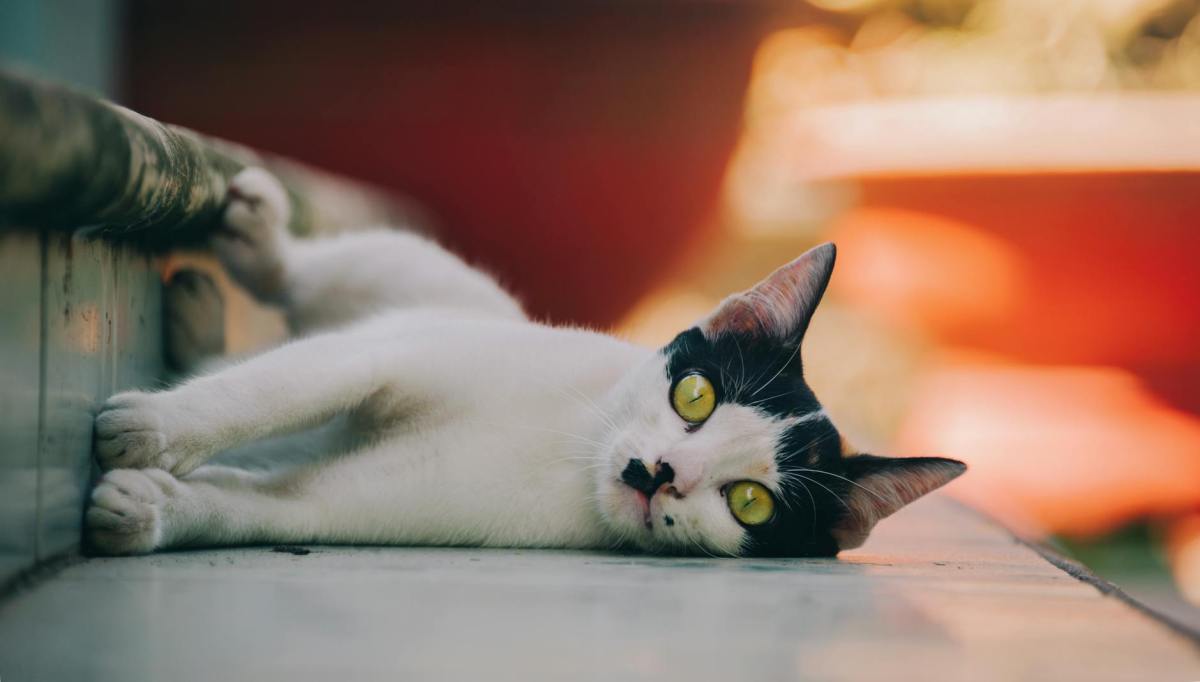
Credi5: Mahmoud Yahyaoui/Pexels
Interestingly, Luna and Bella are also the top names for female dogs. Leo enjoys enduring popularity due to its association with lions (panthera leo) while Milo owes its popularity at least in part to the film The Adventures of Milo and Otis.
Rounding out the list are Simba (Disney’s The Lion King), Nala from the same film, and traditional cat names like Kitty, Oreo, Shadow and Smokey, with the latter three referencing coat patterns and colors.
Twix and Gollum are in the process of converting my brother’s family into their dedicated servants.
My nieces have wanted a cat for a long time, but my brother and his wife had a few good reasons to hold off.
First and foremost, they were moving to a new country, and adding pets to a complex move that includes furniture, belongings and a long flight — plus adjusting to an entirely new country, new jobs and new schools — was a hassle they didn’t want.
In addition, I know they all deeply miss their dog, Cosmo, who passed away in the summer of 2023. Heck, I miss the little dude dearly. If he hadn’t burrowed his way into my heart, I wouldn’t have even thought of adopting a little buddy of my own.
But the Cat Distribution System cares little for the plans of mere mortals, and when my brother and his family arrived at their new home in coastal Italy, they soon discovered it came with a cat: Twix, a fixed calico who lives on the property.
It wasn’t long before the friendly Twix established that these new humans could be trusted, which is when she introduced an orange tabby who is either her brother or companion. No one’s quite sure.
Now my nieces have two cats to play with, and they’re making Bud look bad. As cats who have lived outdoors on the property, they’re much more accustomed to noise and change, and they adjust more quickly. Buddy, by contrast, is used to a quiet apartment with me, and while he is friendly to guests, he’s also a bit wary of kids.
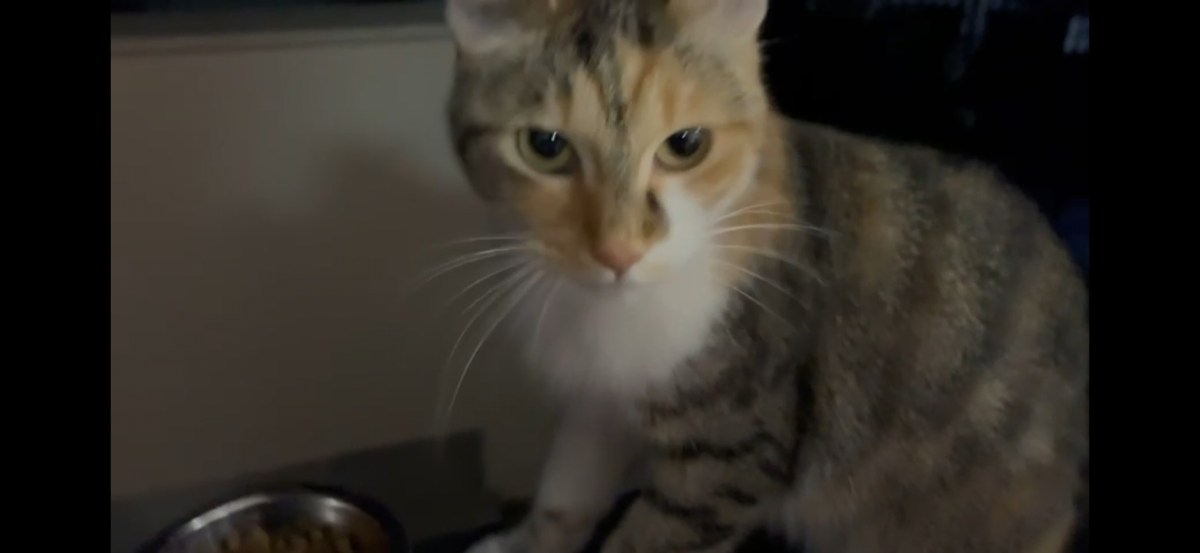
Here are Twix and Gollum:
In the meantime, Buddy’s second term as President of the Americats is chugging along. After recognizing the need for a new denomination, President Buddy has introduced the new $11 cat dollar bill featuring his presidential likeness:
We’re not sure a powdered wig is a particularly good look for the little fellow, but I know better than to raise that concern.
Why would anyone need an $11 bill, you ask? Because cats don’t have pockets, so they don’t do change!
Cat dollars are legal feline tender and entitle the bearer to the equivalent value in cat food cans or snacks, when presented at any accredited feline bank.
Buddy, pleased with his new currency, has ordered his treasury to get started on a new $7 cat bill, which will also feature his likeness.
A bartender gets more than he bargained for when he agrees to watch his neighbor’s cat in the new comedic crime flick Caught Stealing.
In Caught Stealing, the newest film from director Darren Aronofsky, a seedy guy named Russ (Matt Smith) asks his neighbor Hank (Austin Butler) to watch his cat for a few days while he’s out of town.
The cat is not only a handsome little fellow, he’s got a spiffy name: Bud.
The problem? Russ has seriously pissed off New York’s criminal element, and Hank is unaware a category five shitstorm is about to make landfall. No matter how many beatings he takes from gangsters who mistake him for his neighbor, the Lower East Side bartender takes his cat-sitting duties seriously.
“Bud remains central to the action,” the New York Times notes. “His skeptical gazes punctuate scenes and his presence endears the audience to Hank, who goes out of his way to protect the somewhat ornery creature when the going gets rough.”
Tonic and his co-star, Austin Butler. Credit: Melissa Millett
Alas, Caught Stealing‘s Bud is not our Bud, although that’s probably for the better. Our Bud would drive the on-set catering crew mad with his turkey-related demands, and he’d run off camera to hide behind my legs during fight scenes.
Instead, Bud is played by a pro, a cat named Tonic who has appeared in the remake of Stephen King’s Pet Sematary and the horror flick Thanksgiving.
Aronofsky tells the Times about the on-set cat wrangling, noting felines are usually “not very notorious for their collaboration skills.”
Still, Charlie Huston, who wrote the book the movie’s based on as well as the screenplay, said the team didn’t take any shortcuts with Bud.
“I don’t feel like we made it as easy for ourselves as some people would have wanted,” Huston told the Times. “I remember a lot of conversations about, ‘Do we have to have the [expletive] cat in this scene?’”
The fact that they did keep him squarely in the action is testament to Tonic. Before the little guy got the role, the team had it narrowed down to him and one other cat. Tonic made the decision easy for them.
“It was just such a no-brainer because the other cat was fine, but Tonic was such a rock star on Day 1 and that was without prep,” Huston said.
Tonic with trainer Melissa Millett. Credit: Melissa Millett
Tonic is so accustomed to performing in live events and movie appearances, he was ready to show off his skills — and to get his paws on his rewards.
“The second he came out of his crate,” trainer Melissa Millett said, “he looked like he thought he was the king of the world and he was ready for all the chicken.”
The Europeans aren’t messing around when it comes to noise on public transportation, and a loud pet can cost you.
Note to self: Never take Buddy on a French train, unless I want to be out a few hundred bucks by the time I reach my destination.
That’s my takeaway after coming across this story about a woman who was fined €110 (about $130 in ‘Merican dollars) by the French National Railway Company after another passenger complained that her cat was causing “acute tensions” by vocalizing.
Naturally, the passenger and the railroad have two different versions of events. Camille, who was identified only by her first name, said she’d purchased a ticket (about $8) for her cat, Monet, and had the feline in a carrier for the trip from Vannes, Brittany, to Paris, per railroad rules.
Monet “meowed a bit at the start” at the beginning of the journey, Camille admitted, but wasn’t excessively loud.
“Loud? I’m merely expressing my displeasure with the level of service around here!”
Railroad operators said there were multiple complaints, not just one, and claimed a conductor asked Camille and her boyfriend, Pierre, to switch to a mostly-empty car as a compromise with other passengers.
A conductor ticketed Camille when she declined the “simple and common sense solution,” according to French broadcaster BFM.
I’ve joked in the past about sedating the Budster before flights so the other passengers won’t toss him out at 40,000 feet, but there’s truth at the heart of it: Buddy is a naturally chatty cat, he’s got strong opinions, and he doesn’t hesitate to share them with anyone.
Of course you don’t want your companion animal to create a scene or make other passengers uncomfortable. I still wince when ai think about the woman who forced fellow passengers to endure the smell, proximity and potential defecation of her “emotional support horse,” and when people began abusing the privilege of going places with emotional support animals (emotional support alligator, anyone?), it was only a matter of time before companies that operate common spaces — be they in a fuselage, a baseball stadium or a grocery store — tightened the rules to avoid conflict.
Still, unless the cat was wailing, or Camille really did refuse to switch seats, a $130 fine is excessive.
Just something to think about for those of us who have plans to travel with our cats.
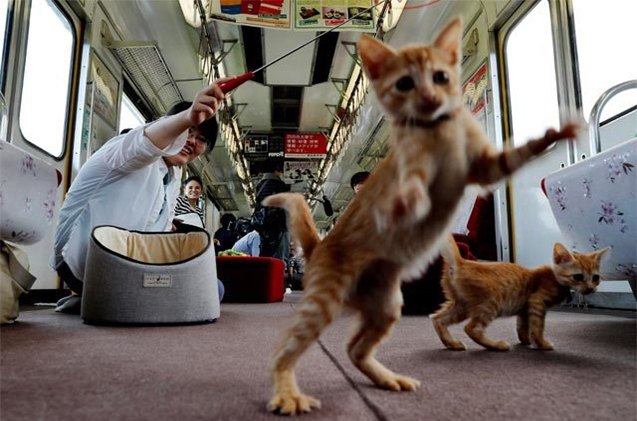
Header image of a cat cafe train car in Japan, credit: Wikimedia Commons







 Pain In The Bud