The Push To Legalize Bodega Cats In NY Is Picking Up Steam

The proposed program would offer free spay/neuter and vaccinations for bodega-dwelling felines, who would be considered working animals.

Walk into a New York bodega and chances are you’ll see a cat snoozing on the cash register, chillin’ on the counter or sitting on a windowsill while watching the busy streets.

New York City’s bodega cats are beloved, viral sensations who are celebrated in Instagram feeds and coffee table books, but they exist in a legal gray area.

The law technically forbids them, but the fine for having a cat is the same as the fine for a rodent infestation. The latter increases for every violation while the former does not.

So it’s a no-brainer: adopt a cat, keep your place rat-free, maybe pay a fine. Or suffer a rodent infestation, which is not only awful, it can be stubborn and rack up thousands in fines if there’s even a whiff of a rat when inspectors make subsequent drop-ins.

No one bothers to hide bodega cats. In fact they’re more likely to use them as mascots for their shops, uploading photos of the little ones taking well-deserved breaks from rodent-hunting and encouraging regular customers to interact with them.

Since local activists pushed for legalizing the mascots/hunters, they’ve found support in the city council, a councilman willing to put a bill for vote, and a plan.

“Bodega cats embody the New York spirit: friendly, welcoming, and anti-rat,” councilman Keith Powers said. “I’m proud that my legislation will codify them into city law and provide resources to keep them healthy. It’s time to remove the legal limbo that our furry friends have been living under for far too long and legalize them once and for all.”

The city would officially recognize and register bodega cats. In return, the bodega owners get free spay/neuter and vaccinations for their cats. And instead of looking for the existence of felines in a store and issuing a fine, inspectors would check on the welfare of the furry exterminators in addition to their usual inspections.

It’s win-win, it’s already got some early support, and it would improve life for thousands of animals across the city.

“Keith Powers’ bill would allow them to come out of the shadows,” perennial mayoral candidate and local fixture Curtis Sliwa told amNY. “No longer would there be the constant fear that the NYC Department of Health would visit and issue fines and sometimes threaten bodega owners that they might remand the bodega cat to a shelter.”

New York’s city council discussed the proposed law last week. There isn’t a date set for a vote yet, but we’ll happily follow up when we learn more.

Images credit @bodegacats_/X
Do You Speak Cat? This Quiz Tests Knowledge Of Real Feline Language

Studies show most of us are pretty bad at interpreting our cats’ moods. A research team in Australia wants to change that.

Cats are constantly telling us how they feel, but many of us aren’t listening.

We’re not talking about chirping, trilling and meowing, although those are some of the ways our cats try to communicate with us.

While they might seem protective of their own thoughts and feelings, cats are actually transparent, and they can’t lie.* Their tails, ears, whiskers, facial expressions and body language all broadcast a cat’s mood.

The question is, are we picking up that broadcast?

In The Conversation, the University of Adelaide’s Julia Henning introduces us to a quiz she designed to answer that question, and invites us to take it.

The goal: to correctly assess each cat’s mood. What I liked most was that we’re asked to evaluate videos — clear, well-lit high resolution clips — instead of the low resolution stills that are often used for quizzes like this.

Sir Talks-a-lot

Henning has been studying the human-cat communication issue because when we misread cats, there’s a good chance we’re stressing them out. Henning and her team published the results of a study in September in which 368 participants from Australia were asked to evaluate a series of clips human-feline interaction.

It turns out they didn’t do so well at reading the signs that a cat is agitated, stressed or doesn’t want to play.

“For videos of cats who weren’t playing and were showing subtle negative cues (such as sudden tension in the body or avoiding touch), participants only recognised the negative cues about as well as chance (48.7%),” the authors of the study wrote.

Even when study participants correctly read a cat’s ears, tail, whiskers and body language, some of them indicated they’d do things that would unknowingly make a cat more agitated and stressed. A classic example is trying to pet a cat’s belly and misinterpreting their derpy way of trying to block you as a playful gesture.

Did you know? Approximately 96% of Buddy’s communication is related to yums.

In the paper, which was published in Frontiers in Ethology, Henning and her colleagues lay out the case for making sure we — the people who take care of cats — are sensitive to what our little buddies are feeling.

It’s not just about strengthening the bond, although that’s an important part. It’s about reducing stress and miscommunication, and increasing quality of life.

Cats are incredibly sensitive to our actions and moods because we are the most important living beings in their lives. We feed and house them, and we’re their pals. If we’re constantly subjecting them to play they don’t like or overstimulating them, they get stressed, and stressed cats can become depressed, sick or resentful cats.

If we want to make sure our buddies live their best lives, we have to understand what they’re trying to tell us.

(*) Except when it comes to food. When food is involved, these innocent, cute little furry creatures become master manipulators and can convince anyone they’re starving.

Note: The first version of this story linked to the study page twice when the first link should have pointed to the quiz. It’s fixed now, and email subscribers can follow the link through this version of the story. Apologies for the error.

Header image credit: cottonbro studio/Pexels

Happy National Cat Day From The Buddies!

Shelters are full of felines who need forever homes, and National Cat Day was founded to make sure they’re not forgotten.

The number of “cat days” keeps growing, with separate dates for national and international cat days, dates honoring black cats, tabbies, calicos and tortoiseshells, and more.

But National Cat Day is one of the OGs, beginning 21 years ago, and it’s endorsed by the ASPCA. The main purpose of National Cat Day, per its founders, is to help homeless kitties find forever homes by inspiring people to adopt.

So we’ll say what we always do: shelters are full of little buddies who are just as lovable and deserving as Little Buddy himself, and all they need is a home, some love and patience to help them feel secure. Once they know they’re safe and loved, their personalities shine through.

If you like feline-centric fiction, Mollie Hunt released her 12th Crazy Cat Lady Mystery novel today. It’s called Cold Case Cat and you can read more about it here.

Meanwhile over at Catwoods, Leah writes about — and includes great photos of — her “Halloween cat,” Shelley. She also revisits the Facebook hoax posts we wrote about a few weeks ago, in which users claim the big cat was spotted in places as varied as Louisiana’s bayou, the Houston region, West Virginia and Wyoming.

Finally, the satirists at McSweeney’s have a new post titled “A Brief Questionnaire Before You Adopt This Rescue Cat,” which takes aim at overzealous shelter/rescue operators who make the process of child adoption look easy by comparison, and are constantly at capacity because they’ve made perfect the enemy of good.

Wanna adopt this cat? Hand over a list of every person you associate with along with their addresses, phone numbers and social security numbers, prepare for a 30-day in-home evaluation by a shelter staffer, and agree to feed kitty a diet of sushi-grade tuna!

Credit: Denitsa Kireva/Pexels

While it seems outlandish, I encountered some contracts that were only slightly less onerous before I adopted Bud, and it’s obviously the McSweeney’s team has too.

Now I understand a bit more why some shelter staff are so cautious. They see some of the worst behavior, after all, including people who return cats because they’re too affectionate, animal abuse cases, and cats on death’s door because their humans ignored decades of research and tried to turn their obligate carnivore pets into vegans.

They want to make sure the cats go to good homes, which is admirable, but they shouldn’t overlook potential adopters who are well-intentioned and looking for a little pal.

Morbidly Obese Cat Completely Transformed After Shedding Half His Weight

Patches was the biggest cat the staff at a Virginia animal shelter had ever seen, and was within snacking distance of the all-time record.

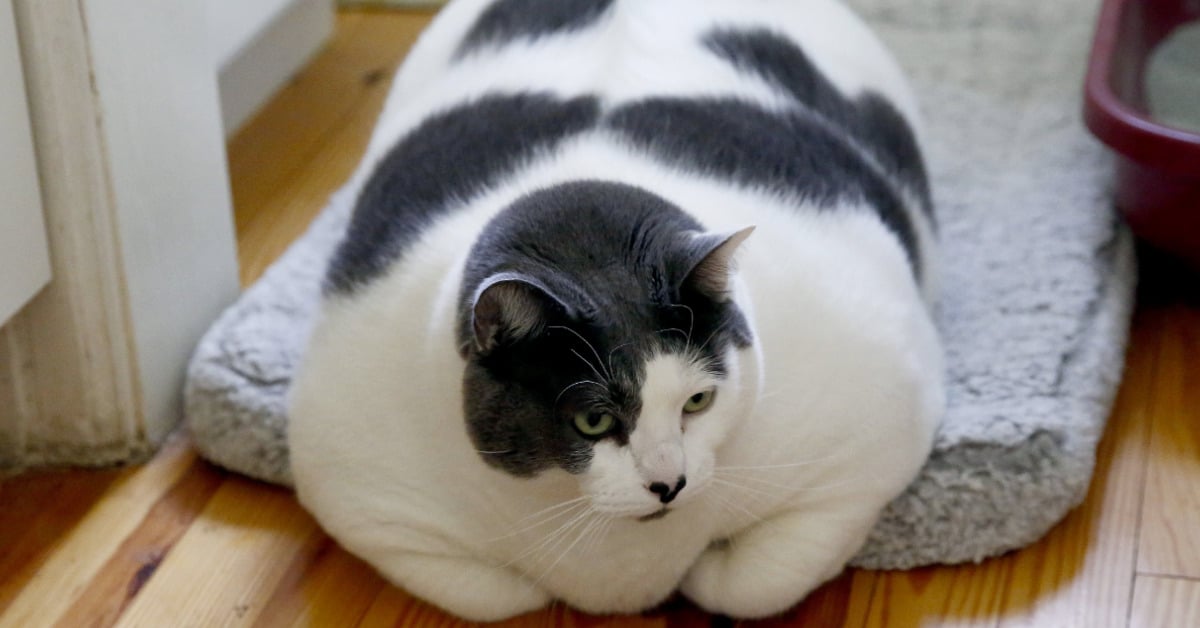
When Patches was surrendered to a Virginia animal shelter in mid-April of 2023, the staff — including longtime veterans of cat rescue — were taken aback.

The six-year-old feline weighed in at a staggering 40-plus pounds and was so big, the shelter staff had to keep him in an office because the largest crates they had were barely large enough for Patches to turn around.

“We thought we had seen big cats before, but he was definitely the biggest that we’ve ever seen,” Richmond Animal Care and Control’s Robin Young told the Washington Post at the time.

Patches was in dangerous territory for his personal health, and if allowed to continue gaining weight, he’d threaten the world record for a domestic cat, which is more than 46 pounds. (Guiness World Records stopped recognizing the heaviest cats decades ago because the organization didn’t want to encourage people to overfeed their cats in pursuit of the record.)

Top row: Patches in the early days shortly after his adoption. Bottom row: Patches after losing a significant amount of weight.

Last week, Patches reached a new milestone, weighing in at 18.94 pounds after more than two years of eating healthy and getting exercise with the help of Kay Ford, a retired businesswoman who adopted him.

It’s an incredible achievement, and one that was hard-fought, as anyone familiar with cats will know. Many well-fed cats can convince almost anyone they’re starving.

Ford’s pitch to the shelter made it easy for them as they fielded a flood of adoption applications for the chonkster, who had attracted plenty of attention as soon as the shelter posted about him online.

Ford told the shelter she was experienced, committed to helping Patches get down to a healthy weight, and would look forward to the challenge. She’d put on a few pounds during the pandemic, she added, and would lose weight alongside her new pal.

“I’ve had cats all my life,” Ford told the Post at the time. “It just seemed like the right thing.”

Ford with Patches shortly after meeting him. Credit: Richmond Animal Care and Control

She agreed to meetings at the shelter to review a weight loss plan and began documenting Patches’ progress on a Facebook page, Patches’ Journey, which now has more than 53,000 people following the feline’s transformation.

His diet isn’t over, and it’s a lifestyle change meant to be permanent, but there are a lot of people who are proud of the (much less) big guy, who now looks like a completely different cat.

Images via Patch’s Journey/Facebook

Happy National Black Cat Day!

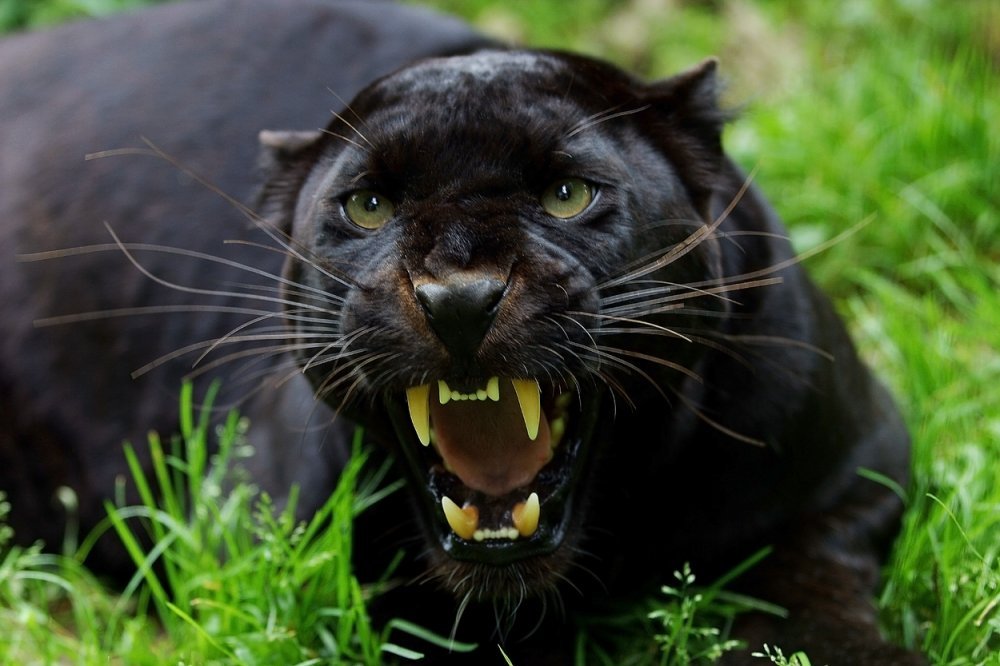
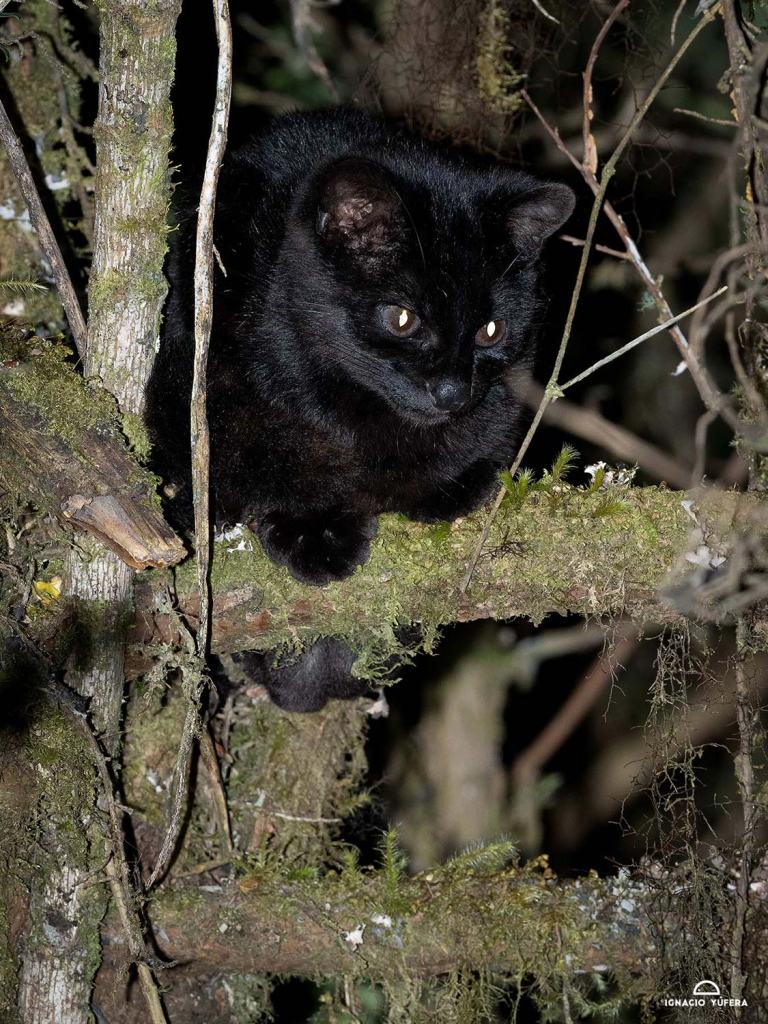
House cats, jaguars, leopards, Servals and jaguarundi are just some of the species that have melanistic (black) color morphs.

Everyone knows house cats, jaguars and leopards can be voids, but did you know other cats have black color morphs too?

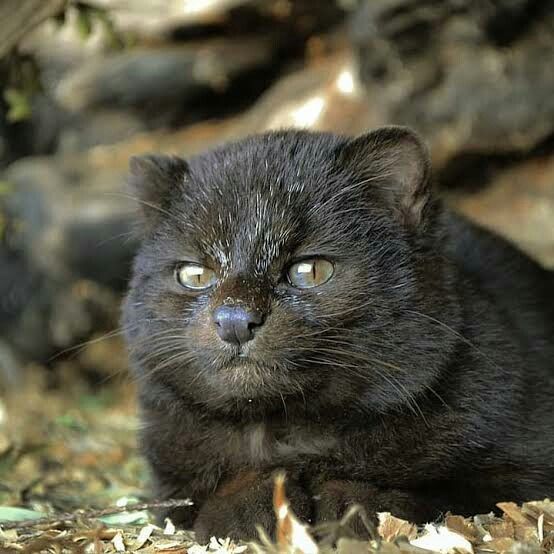
The Asian golden cat, the Serval, jaguarundi, Margay, kodkod, Geoffrey’s cat, oncilla, Pampas cat, and bobcat all have melanistic variants.

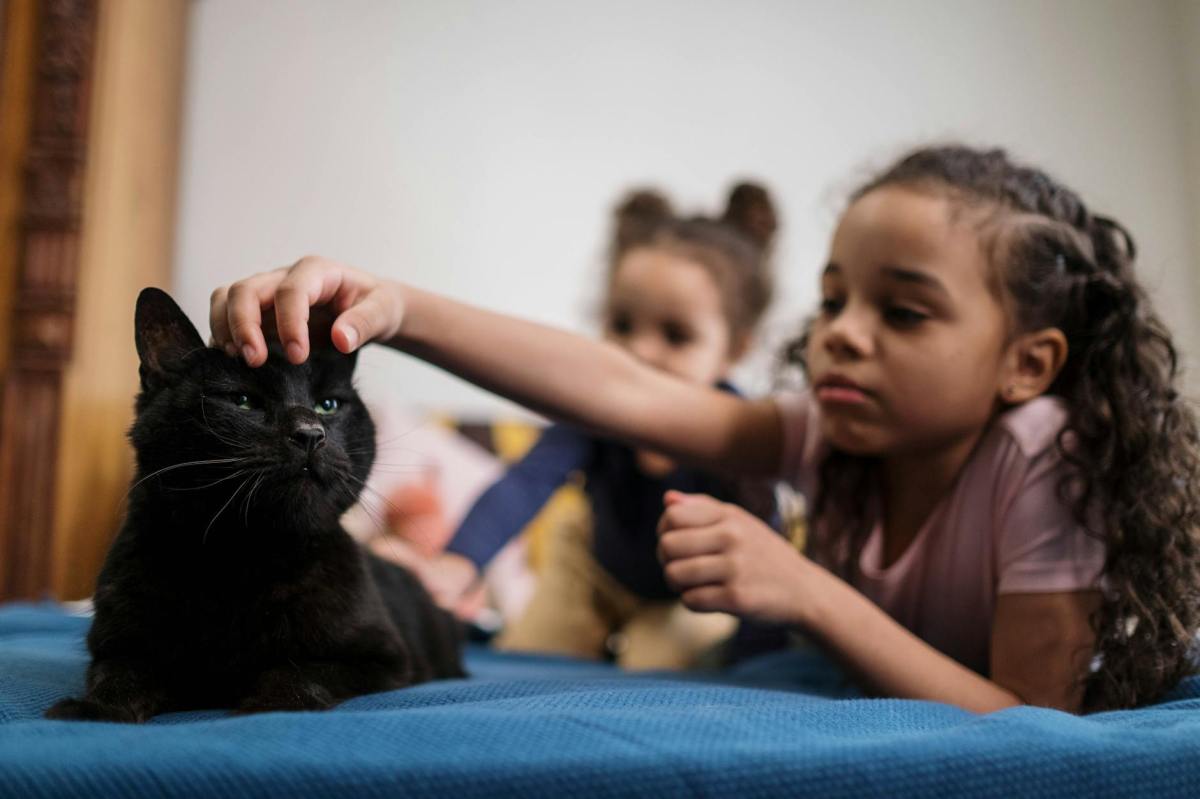
Unfortunately when it comes to house cats, research supports the longstanding claim that black cats are adopted at lower rates, and are euthanized in greater numbers, than other felines. Part of that can be chalked up to superstition. It’s also due in part to the fact that black cats are more difficult to photograph.

But as these photos prove, all you need is some decent ambient light, smart framing and maybe a bit of shadow/highlight correction to help bring out a black cat’s natural features.

Melanistic kodkod.
Melanistic oncilla. Credit: Ignacio Yufera

Image credits: Top two rows via Pexels, with photographers listed in the captions. All other photos via Wikimedia Commons. Last image (melanistic oncilla) credit Ignacio Yufera