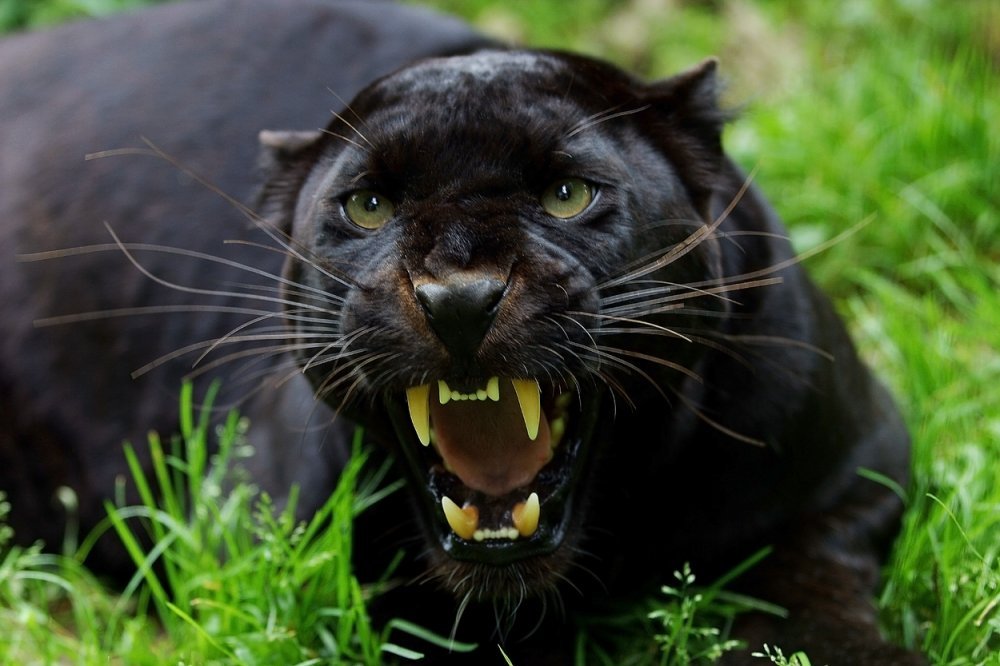
House cats, jaguars, leopards, Servals and jaguarundi are just some of the species that have melanistic (black) color morphs.
Everyone knows house cats, jaguars and leopards can be voids, but did you know other cats have black color morphs too?
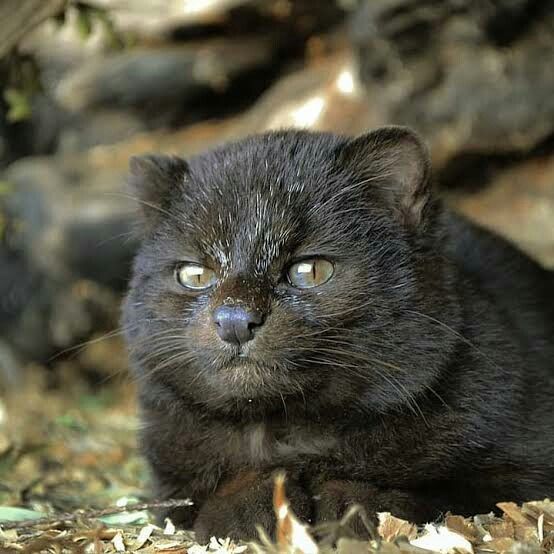
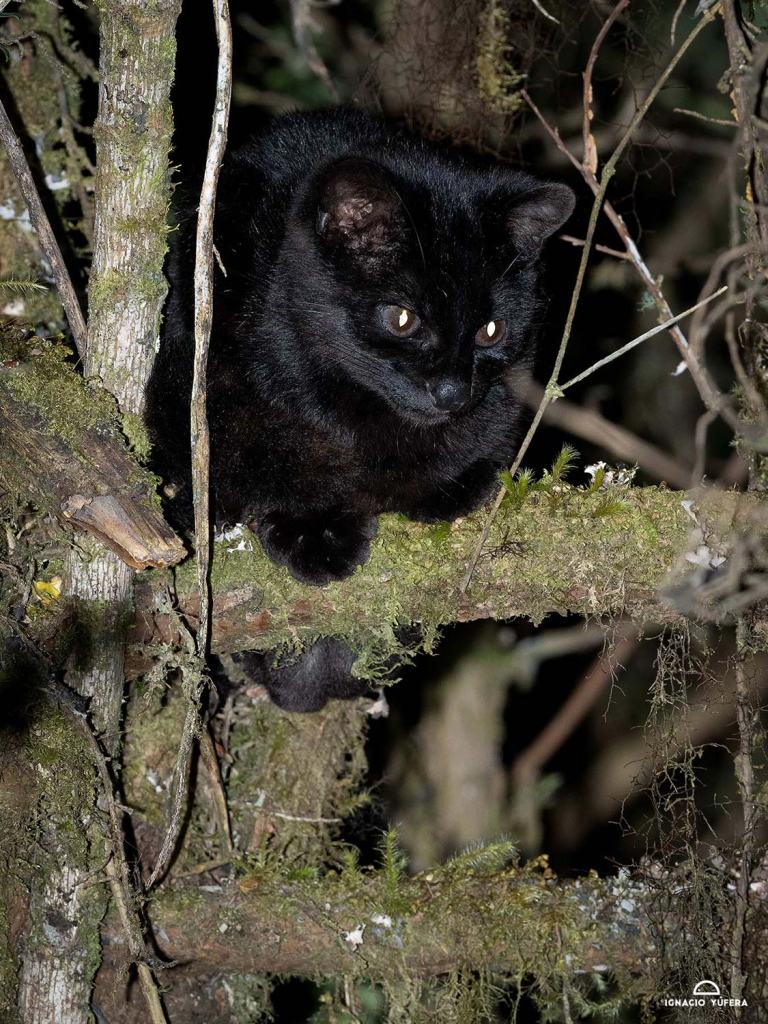
The Asian golden cat, the Serval, jaguarundi, Margay, kodkod, Geoffrey’s cat, oncilla, Pampas cat, and bobcat all have melanistic variants.
Unfortunately when it comes to house cats, research supports the longstanding claim that black cats are adopted at lower rates, and are euthanized in greater numbers, than other felines. Part of that can be chalked up to superstition. It’s also due in part to the fact that black cats are more difficult to photograph.
But as these photos prove, all you need is some decent ambient light, smart framing and maybe a bit of shadow/highlight correction to help bring out a black cat’s natural features.
Image credits: Top two rows via Pexels, with photographers listed in the captions. All other photos via Wikimedia Commons. Last image (melanistic oncilla) credit Ignacio Yufera
Cats judged their humans based on appearance, obedience and other categories at the Jacob Javitz Center in Manhattan.
NEW YORK — Marvin Wheeler was on all fours, with a pair of cats holding his mouth open with their paws and another wrapping a tape measure around his waist.
“The torso should be medium in proportion to the rest of the body,” a ginger tabby said, “while the snout –“
Wheeler yelped as the tabby gave his nose a firm slap with her paw.
“– should be slender and no more than half an inch above the top lip.”
Wheeler grunted as a Maine Coon shoved him off the table, and a trio of feline judges held up scorecards, awarding the engineer from New Jersey a 5.5, 6, and 5 out of 10 respectively.
“Does anyone have any objections?” asked the master of ceremonies, a rotund Norwegian forest cat named Milo.
Wheeler’s feline shook her head, and Milo leaned forward toward his mic. “Next!”
Feline judges award scores to one of the competitors at the 8th Annual People Fancy Show.
“Bring her up, fellas,” he continued, gesturing toward several cats escorting 53-year-old Martha Silverwind to the stage.
“Okay, next we have a librarian from Toronto, Canada, who is here for her first human show. We’re gonna be evaluating her on temperament, hair color, obedience training…”
More than 1,000 people were examined and judged by cats this weekend at the Jacob Javitz Center in New York for the 8th Annual Human Show sponsored by the Human Fancy League of America and the Society For Better Homes For Felines.
Helena Chione, an astronomer from Houston, Texas, waits for to be evaluated by judges on Saturday at the Jacob Javitz Center in New York, site of the 8th Annual Human Show. Her feline, Clyde, entered her in the Best Temperament category.
Ronald Greer, a dermatologist from Grewnwich, Conn., patiently waited for his turn while relaxing in his cage, which held a small bowl of cereal, a bottle of Poland Spring water and a chamber pot.
“I saw an ad for the show, and I thought, ‘Simba, why not see how Ronnie stacks up against other humans?'” Greer’s feline told a reporter. “I’ve been training him for more than two years now, and I’d say he responds maybe 80, 85 percent of the time I call him. Ideally I’d like to get it as close to 100 percent of the time as possible, because I don’t like to repeat myself when I’m hungry. But you know how it is with these humans. They have minds of their own.”
Simba sat outside Greer’s crate, encouraging the human to groom himself before the judges called his number.
Last year’s best in class in the age 20 to 29 bracket was Louisa Rey, a writer for Spyglass Magazine. Feline judges praised Rey’s responsiveness when commanded to serve snacks and commended her dark brown mane, describing it as “an ideal for a human of her age and gender” and complimenting her cat, Marcy, for “doing an outstanding job training her.”
Singer Taylor Swift took home honors in the 2024 People Fancy event for performing the best tricks, including one sequence, described as “adorable” by the judges, in which she giggled, cheered and smiled as she pretended to be fascinated by an American football game.
This year’s favorite in the best tricks category is Jonah Grayer, a 31-year-old attorney from Long Island, NY. Grayer, a magician by hobby, cocked his head to one side as his cat, Sebastian, rested a paw on his cage.
“Who’s a good boy,” Sebastian asked, dropping a cheeseburger slider into Grayer’s cage. “Who’s the best boy in the world? Jonah is! That’s right! Now let’s impress those judges!”
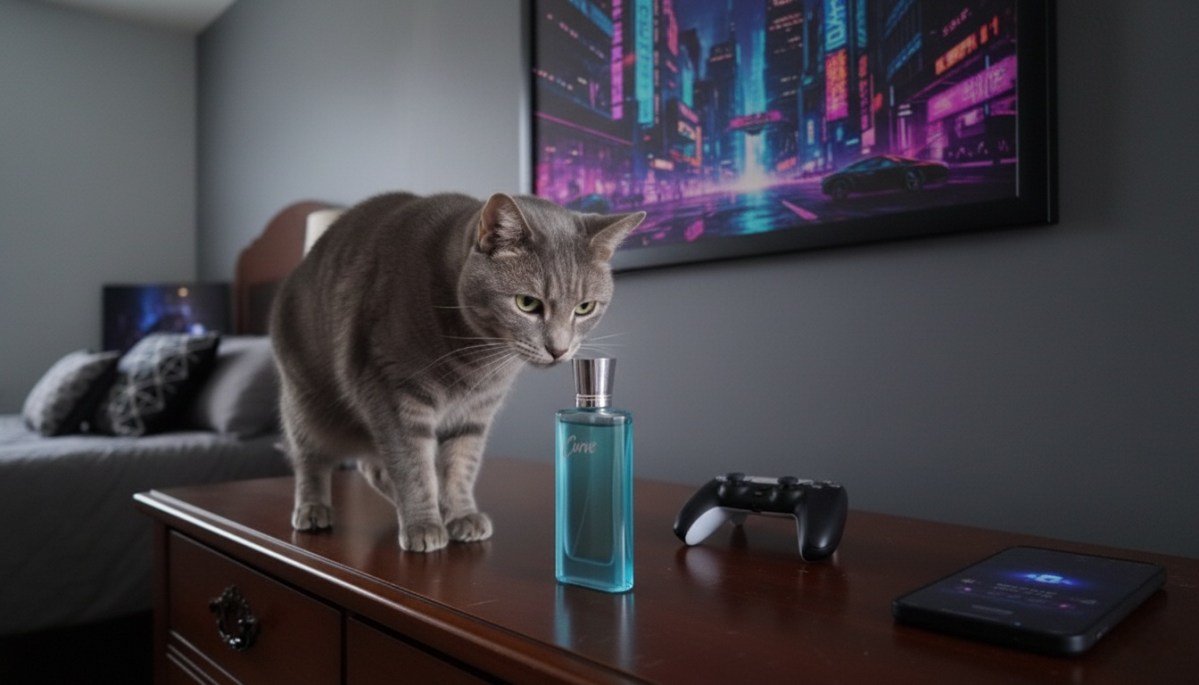
After learning that wildcats — including jaguars, tigers and ocelots — love Calvin Klein’s Obsession for Men, Buddy the Cat explores the world of colognes to find one that drives domestic kitties crazy.
Earlier we wrote about the accidental discovery that ocelots respond enthusiastically to Calvin Klein’s Obsession for Men. Subsequent experiments proved jaguars and tigers are particularly fond of the scent as well.
Then a reader’s comment posed a question so obvious, we’re ashamed we didn’t think of it ourselves: do domestic kitties like colognes?
To find out, we asked Buddy the Cat, aka Little Buddy, to evaluate several fragrances. He’s taken the assignment seriously and provided thoughtful analysis, giving us just a hint of what it’s like to have an incredibly keen feline sense of smell.
Dolce and Gabbana Pour Homme
“The first ecstatic whiff takes me back to kittenhood. Days napping in the sun and chasing flies. Fresh cut grass and fragrant foliage. I was so deep into my reverie that the base notes nearly bowled me over when they arrived suddenly in their regal glories, like a king’s entourage without a herald. Rich cedar and musk evoke hours spent luxuriating in the potent funk of my human’s sneakers. Quiet woods and spices, like a litter box a day after feasting on rabbit, gently whisper of naps. Buddy likes this one!”
Cool Water by Davidoff
“Its initial briny hints conjure impressions of a dock at low tide, fish baking in the sun while a graybeard captain lights his pipe. Through confident middle notes, its warm embrace gently tugs you inward, like an antiquarian beckoning you inside a rare book shop with a rodent infestation. Aged leather book bindings and dark oak react provocatively with the paw-licking intensity of decadent mouse urine. Meowgnificent!”
Jaguar by Jaguar
“A carnival of candy for the nose, like accompanying your human to the bathroom post-Chipotle! The first hints arrive furtively, like a disguised aristocrat casting nervous glances as he makes a beeline for a brothel. Then it asserts itself in force: an army of jaguars advancing in the moonlight, their meowscles rippling in the silver mist, scent-marking in unison! Musk, civetone, ammonia. Pheromonic bliss!”
Drakkar Noir by Guy Laroche
“Powerful but restrained, like a certain silver tabby in his carrier, a single spritz of this magnificent scent conjures memories of halcyon days as a young feline. Mid notes whisper of woods and spices, a grove of wild catnip undulating in a summer breeze. Underneath it all is an unshakable foundation of warmth, like being swaddled in my human’s t-shirt after it’s been worn on a humid 97 degree day.”
Tyrannosaurus Rex by Zoologist
“Bergamot and verdant iridescence arrive as our olfactory escorts, ushering us in to a delectably frisky gourmand accord. It’s as if we’re drifting on chocolate seas with vanilla currents playfully nudging us to shore where beefy undertones await. Umami! Steaks sizzle, beckoning our noses toward the grill, stomachs rumbling. A most delicious scent!”
So there you have it. T Rex emerges as the winner in this round, but can it compare to mainstays by Yves Saint Laurent and Giorgio Armani? Only Buddy can tell us. Tune in next time as we accompany the Budster on an aromatic journey!
Minerva, a long haired black feline, won on the mysteriously laconic slogan, “CRIME.”
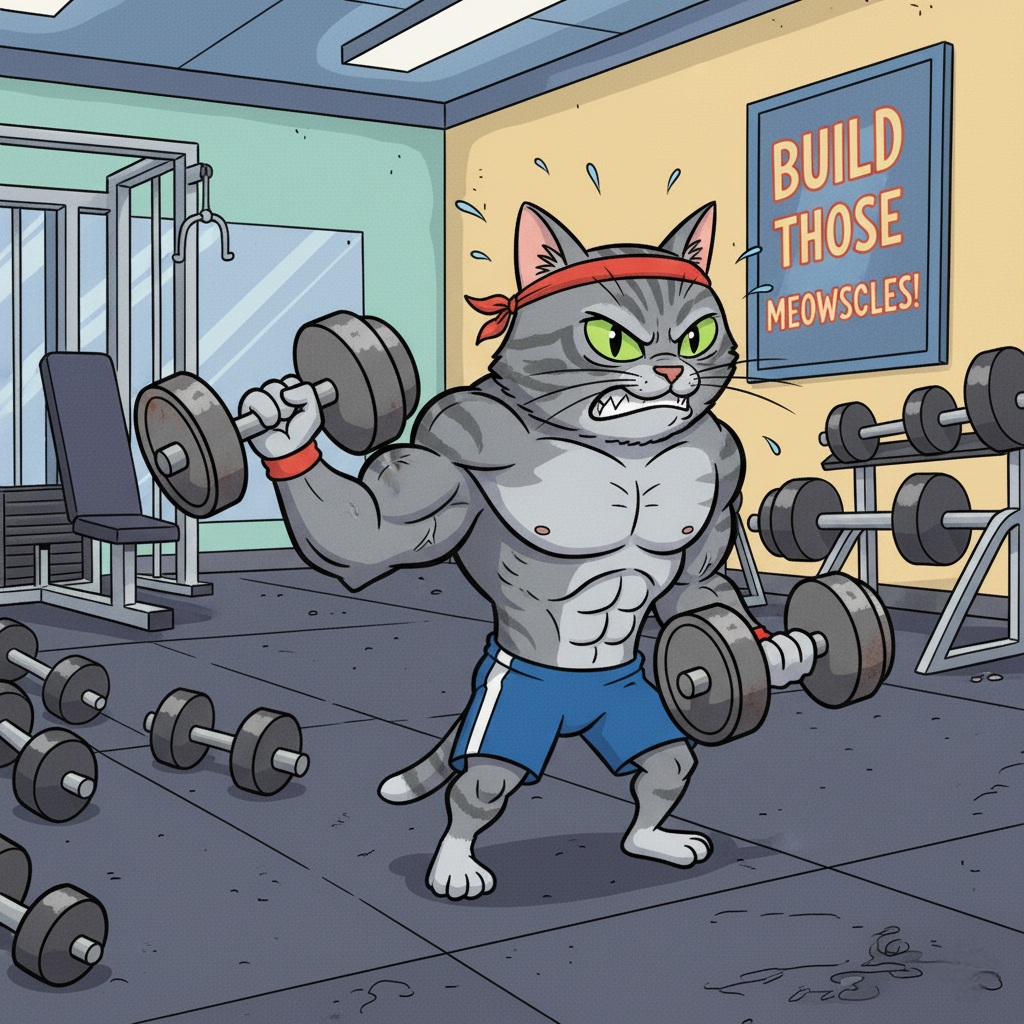
Happy Meowscular Monday! As Little Buddy the Cat says, Monday’s a good day to get ripped with intense exercises like slapping treats out of puzzle feeders and moving from one nap spot to another.
The election started as a joke but the idea caught on, the media noticed, and soon people around the world were reading about the race between about 50 pets.
Most candidates were cats, but a few neighbors entered dogs, a parrot and a guinea pig.
It’s not clear if the new feline mayor was promising to end it, address it or solicit more of it, but the slogan resonated with voters and Minerva surged ahead of the pack, defeating incumbent mayor Berry the cat and original challenger Orange Cat.
People who live in the area said the election helped make the neighborhood friendlier, fostering connections between humans and pets. We can’t wait to see what Minerva does with crime.
Some names climbed the rankings, while others are perennial favorites tied to coat colors, patterns and personalities.
Another year, another list of the most popular names for our furry overlords.
This one is based on data from a pet insurance company commissioned by US News & World Report, and while there are others based on things like chip registrations and veterinary records, they agree on pretty much all the most popular names.
So what are the top names we bestow on our little pals?
Unsurprisingly, Bella and Luna retained their top spots for female cats, while Leo ane Milo were the most popular names for male cats.
There’s not even a mention of the name Buddy, which is either a heresy which shall not go unpunished, or pretty cool because it’s kind of unique, and there are probably only like 25,000 Buddies in the US. Buddy hasn’t made up his mind yet, although I think he’s too lazy to go around punishing alleged heretics.
Credi5: Mahmoud Yahyaoui/Pexels
Interestingly, Luna and Bella are also the top names for female dogs. Leo enjoys enduring popularity due to its association with lions (panthera leo) while Milo owes its popularity at least in part to the film The Adventures of Milo and Otis.
Rounding out the list are Simba (Disney’s The Lion King), Nala from the same film, and traditional cat names like Kitty, Oreo, Shadow and Smokey, with the latter three referencing coat patterns and colors.









 Pain In The Bud