Want to dissuade criminals from targeting your home but can’t afford a fancy security system? A warning sign featuring Buddy’s terrifying visage will do!
Times are tough, everyone’s feeling the squeeze, and criminals are more motivated than ever to target homes that may have valuables in them.
That’s why Buddy, in the spirit of altruism (and the guarantee of extra turkey) agreed to lend his fierce likeness to the below poster. According to the Buddinese Center For Criminal Justice, homeowners who display this “BEWARE OF CAT” sign are 99% less likely to be the victims of home robbery or burglary, as criminals will simply move on to a home that isn’t protected by an intimidating, extremely ripped feline:
Alternate version with even more intimidating image of feline protector:
“Harm or death to an animal caused by another animal is not a criminal matter,” even when footage shows dog owners urging their pets to attack, the NYPD claims.
The NYPD says its hands are tied after a group of people sent their pit bulls after a well-known shop cat in Manhattan and cheered as they dogs brutally ended the tabby’s life.
Freddy was the resident moggie at Michelle Flowers, a florist on Amsterdam Avenue in Washington Heights. The little guy was outside the shop at about 9 p.m. on July 4 when a man and two women set their dogs loose on him, then celebrated and cheered as they killed him.
Credit: Cat Collective
The pit bull owners then “smoked, danced and ate food while taking photos and mimicking the grisly scene,” according to the New York Post. Surveillance cameras caught the attack and its aftermath, showing the three black-clad dog owners and others who witnessed the violence and did nothing.
A disgusted neighbor contacted the Cat Collective, a group of volunteers who feed and care for strays in the neighborhood, and they collected Freddy’s remains, then told the florist’s owner what happened.
“Someone deliberately set dogs on a defenseless cat while people watched and cheered,” Dan Rimada of Bodega Cats of New York told the Post.
Cat Collective is offering cash rewards to anyone who can identify the dog owners and the celebrating bystanders, but the police won’t do anything.
An NYPD spokesman told the paper that “harm or death to an animal caused by another animal is not a criminal matter,” citing a gap in the law.
A proposed bill, dubbed Penny’s law after a chihuahua that was mauled by pit bulls earlier this year in Manhattan, hasn’t made it out of committee in the New York State legislature, while New York’s city council is looking at a municipal law that would make it a crime to set dogs on other animals.
Credit: Cat Collective
It’s actually difficult to believe nothing can be done to get justice for Freddy, Penny and other animals aside from civil cases, which can only result in monetary damages.
Manhattan DA Alvin Bragg, who is controversial to say the least for creatively interpreting the law, seems like just the kind of district attorney who could find a way to prosecute the dog owners. The fact that the authorities are outright dismissing the possibility indicates Bragg doesn’t see this as a priority.
Working with the police to find ways to get justice is Bragg’s job, as well as the job of the attorneys working for him in the district attorney’s office. At the very least, they should be able to find something with which to charge the suspects, even if it really turns out there’s no way to hold them criminally accountable for Freddy’s death.
We hope Freddy’s killers are identified and held responsible, and we hope no more pets and strays have to be killed before lawmakers at the city and state level make it a priority to close an obvious gap in the law.
This is just one reason why animal advocates are not fond of breeders.
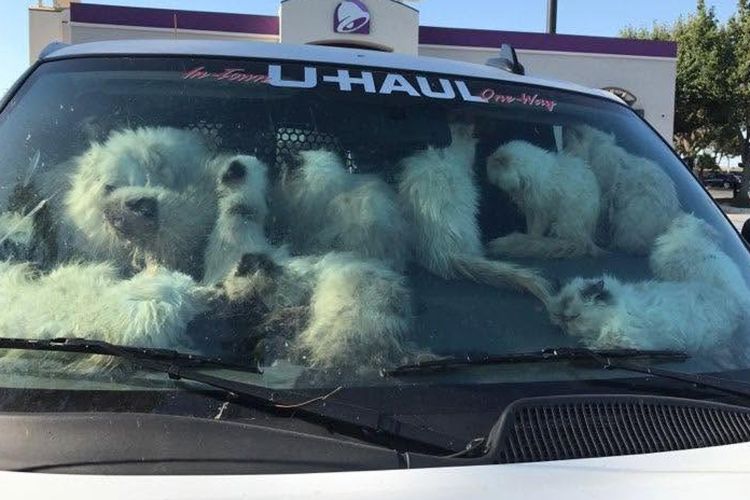
A California woman faces animal cruelty charges after police say she abandoned 134 cats in a U-Haul van without food or water in the sweltering summer heat.
The cats, ranging in age from a week to eight years old, have been removed from the van and the 106 survivors, described as “extremely emaciated,” are receiving veterinary treatment at the Merced County Animal Shelter, according to the Merced County Sheriff’s Office.
Jeannie Maxon/Facebook
A deputy found the van at 5:30 p.m. on Sunday in Santa Nella, a small town about 40 miles south of Modesto. The cats were stuffed in the U-Haul, which was left in a Taco Bell parking lot, and about 20 of them had taken up spots on the dashboard, center console and driver’s seat.
Jeannie Maxon, a 69-year-old woman from Long Beach, Calif., was charged with 93 counts of animal cruelty.
Maxon is the owner of a cat breeding business called Magicattery, which she’s touted on her personal Facebook page and an Instagram page specifically dedicated to the breeding operation. A separate site on its own domain remained up as of Tuesday evening and says the breeding operation specializes in Persian and Himalayan kittens.
A screenshot of Maxon’s Instagram page for her breeding business.
Many of the cats and kittens are dressed up, wrapped in pearls and ribbons, and posted with accessories in the photographs Maxon shared on social media. Maxon was active on Facebook and Instagram until late 2024, according to her visible public activity on both sites.
It’s not clear why she abandoned the cats. California does not have a state licensing system for breeders, but individual towns and cities may require breeders to obtain a license.
It wasn’t immediately clear if Maxon had retained an attorney.
Merced County Animal Shelter said in a Facebook post that the cats will be put up for adoption once they’re all stabilized and receive proper veterinary care.
The cats were found in extremely poor condition and were described as “severely emaciated” by police. They were abandoned without food or water. Credit: Merced County Sheriff’s Office
Los Gatos’ position in the illegal catnip market has become precarious in the wake of a federal raid and the arrest of a courier. Meanwhile, an old rival threatens to fill the power vacuum…
LOS GATOS, Calif. — Los Gatos, the premier purveyor of fine catnip and narcotics to the feline world, is looking for discreet, professional couriers following a recent setback in Costa Rica.
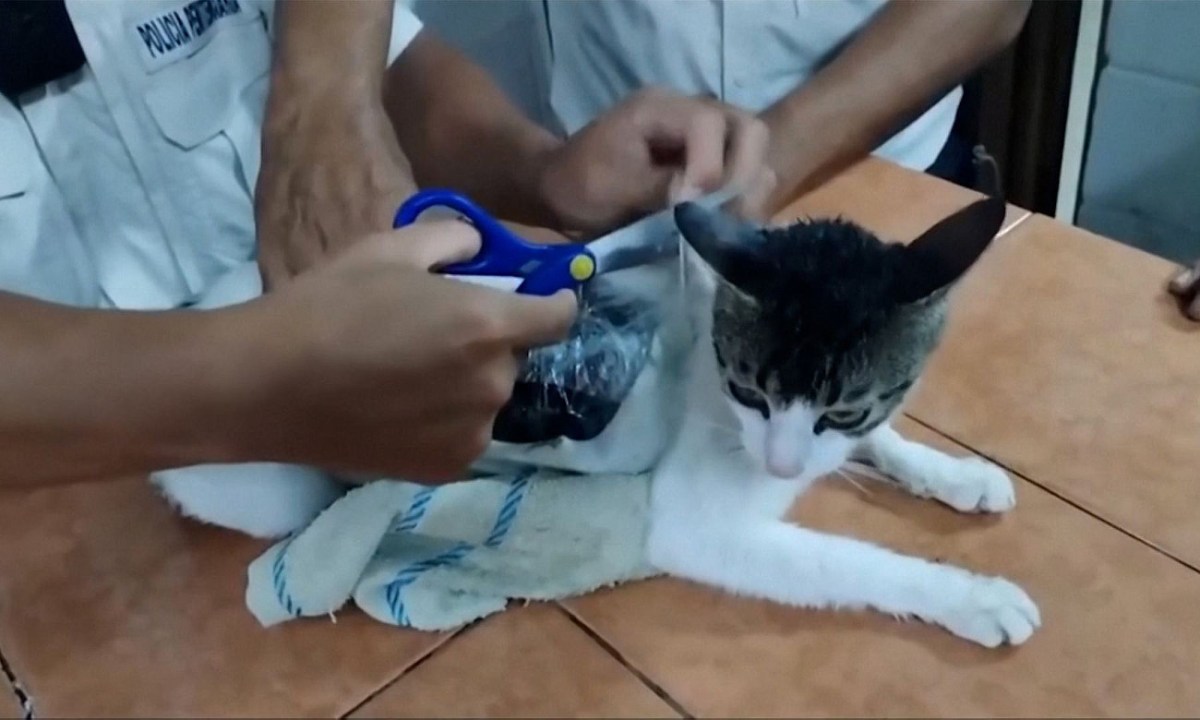
A Gatos courier was caught sneaking into Pococi Penitentiary on the night of May 22. The feline, a novice smuggler, was having difficulty navigating around a section of fence topped by razor wire when guards at the prison spotted and intercepted the kitty.
Correction officers captured the courier and found 2.4 ounces of crack-cocaine and eight ounces of marijuana wrapped tightly in plastic and taped to her body.
Under questioning, the narco feline admitted she was conducting a delivery for Los Gatos, creating legal troubles for the US-based nipcotics collective. It’s the biggest setback for Los Gatos since its 2022 war with another catnip cartel led to 14 cats getting sprayed in a drive-by urinating, an infamous incident known as the Tragedy of Tijuana.
Earlier this week, federal agents raided a Gatos compound, seizing an estimated $2.1 million in high-grade catnip and other nipcotics, the Drug Enforcement Agency said.
News footage showed several cats in handcuffs bundled into black SUVs while drug-sniffing dogs smirked.
“You’d better wipe that smirk off your face, holmes!” one Gatos lieutenant shouted at the canines, hissing out the words.
The raid and courier arrest have left Los Gatos with significantly less product — and fewer methods of delivery.
“The courier will be dealt with, as will those mangy mutts,” Los Gatos spokescat Pawblo Escobar said ominously. “In the meantime, we have customers who rely on us for timely deliveries of high-quality catnip and drugs, and Los Gatos has a reputation to uphold.”
Industry insiders say Buddy the Cat has been quick to fill the void. The longtime Gatos archrival reactivated long-dormant channels and has expanded his territory from his power base in New York.
“Buddy the Cat has the muscle, quite literally, to go paw to paw with Los Gatos and the other cartels,” said Felix Finch, a criminologist at John Jay College of Criminal Justice in Manhattan. “But obviously this isn’t a one-cat operation, which is why it’s fortuitous that Buddy has been establishing ties with the jaguars and forming a coalition with other big cats. Can Los Gatos withstand the combined might of Buddy and big cats? That’s the question on every feline’s mind right now.”
The gathering, originally billed as a vigil, turned violent when the mob began breaking windows, tore down part of a fence, and pepper sprayed a father who tried to shield his children from the crowd’s wrath.
A mob of protesters, enraged by the actions of an accused cat killer, terrorized an innocent family on Sunday night.
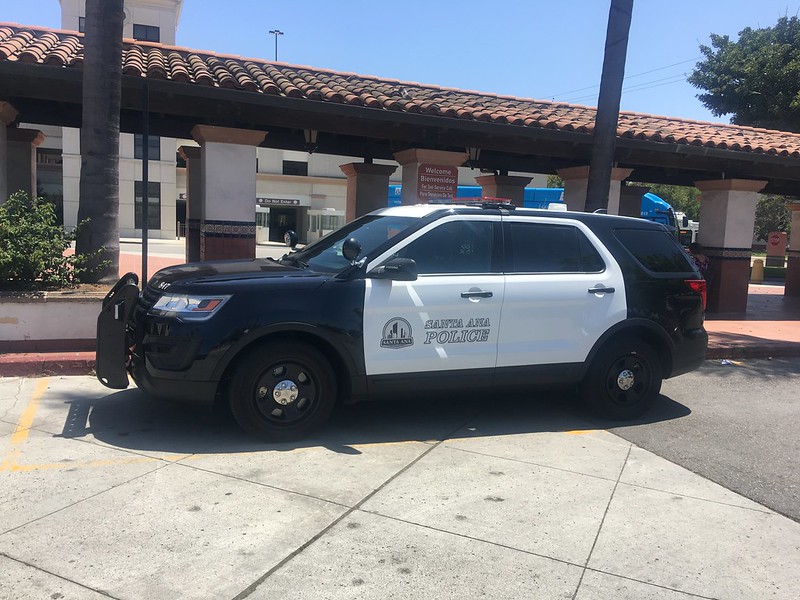
The crowd gathered in Santa Ana, Calif., for what was billed as a vigil for the slain cats and a condemnation of their alleged killer, 45-year-old Alejandro Oliveros Acosta. The Santa Ana man was arrested last week and charged with felony cruelty to animals after “dozens” of felines in the neighborhood disappeared under suspicious circumstances, per police.
With emotions running high, the crowd followed its more unruly members to a house they mistakenly identified as Acosta’s. The homeowner said he was related to Acosta’s wife but didn’t know anything about the cat killings until Acosta was arrested. He told the protesters he hadn’t seen Acosta since the arrest and asked them to calm down, but they broke windows, attacked him with pepper spray and terrorized children living there.
“The peaceful protesting wasn’t so peaceful. They’re scaring kids here. It’s scaring the whole family. There are kids, seven kids in this house. Two little babies, one that is autistic,” the man told KTTV. “You know, breaking our fences… pepper spraying us for no reason. If you did what you did, I didn’t know anything about it. You know, when we found out [about the cat murders] we were shocked.”
It took Santa Ana police an hour to respond, according to multiple news reports. Even after the police told the protesters that they had the wrong house and were breaking the law, the mob refused to leave and accused the victims of being complicit in Acosta’s alleged crimes. Officers had to manually break up the crowd by physically removing individual protesters.
On Monday, police took the unusual step of publicly commenting on the fallout from Acosta’s arrest, pleading with people to “allow the judicial process to take its course.”
“I don’t think it needs to be like this. I think it should have remained a vigil,” one protest participant told KTTV, a Fox affiliate in Los Angeles. “I knew it’d be a protest, but I didn’t think it would get violent. I don’t think anybody should be touching property.”
Needless to say, we don’t need people making the animal welfare community look like a bunch of lunatics, and vigilante “justice” is wrong. As humans, we’re at our worst when we engage in mob behavior, which obliterates reason, civility and empathy.
Although a lot of people seem to have difficulty with this simple concept nowadays, everyone is entitled to due process, and we’re a nation of laws where alleged crimes are litigated in court, not on the street, on front lawns or online.
Zeus the mighty, meowing from atop Olympus
A cat named Zeus has been turning heads lately, and for good reason: he’s huge even by Maine Coon standards.
Zeus is fluffy, imposing, and so big that he can help himself to food left on a counter just by getting up on his hind legs.
At almost 30 pounds, he’s practically three Buddies in mass. I texted a photo of Zeus to Buddy, and Bud responded with a photo of his own, claiming he’d just finished a grueling bench press session:
Bud hitting the gym to pump iron and stuff.
Hmmm.
Something tells me Buddy’s going to complain that I didn’t bestow him with the name of a Greek god. Is there a diminutive, glib deity to be found in the Olympian pantheon?









 Pain In The Bud