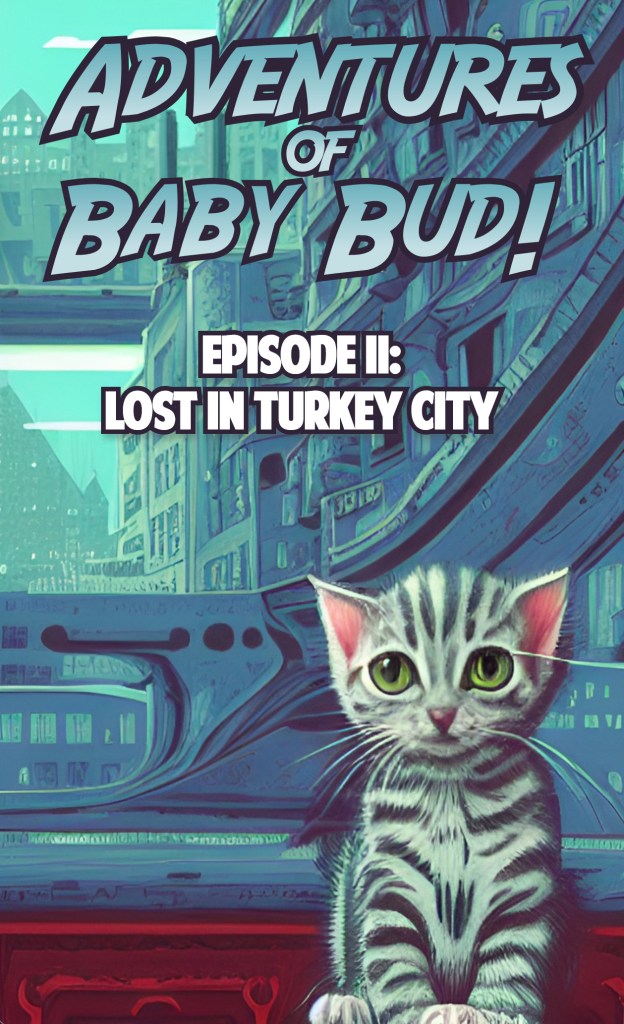
The Buddy Comics empire expands with two new titles and a new installment of The Adventures of Baby Bud.
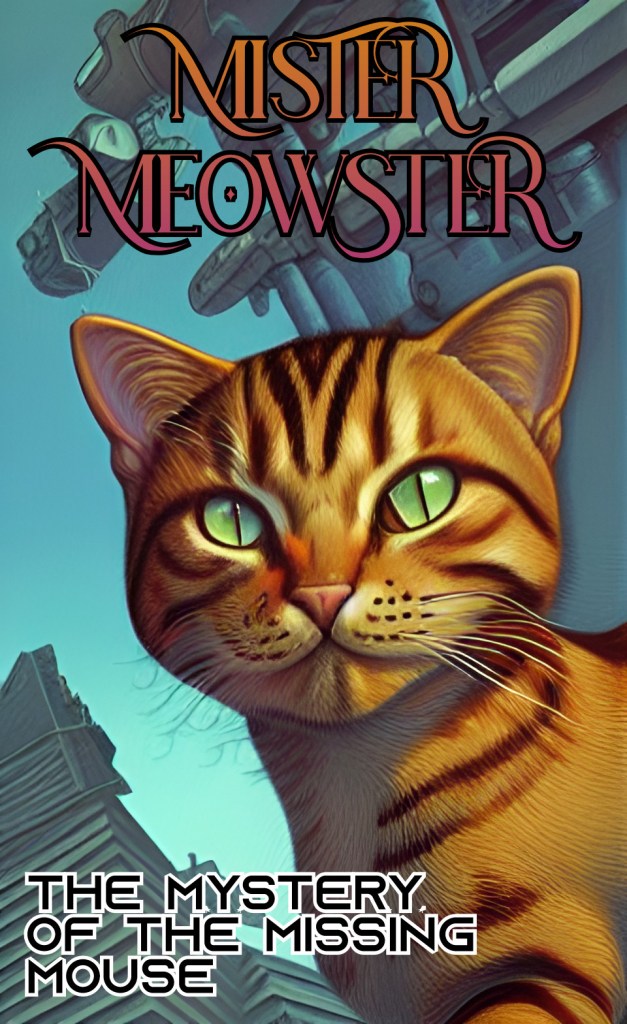
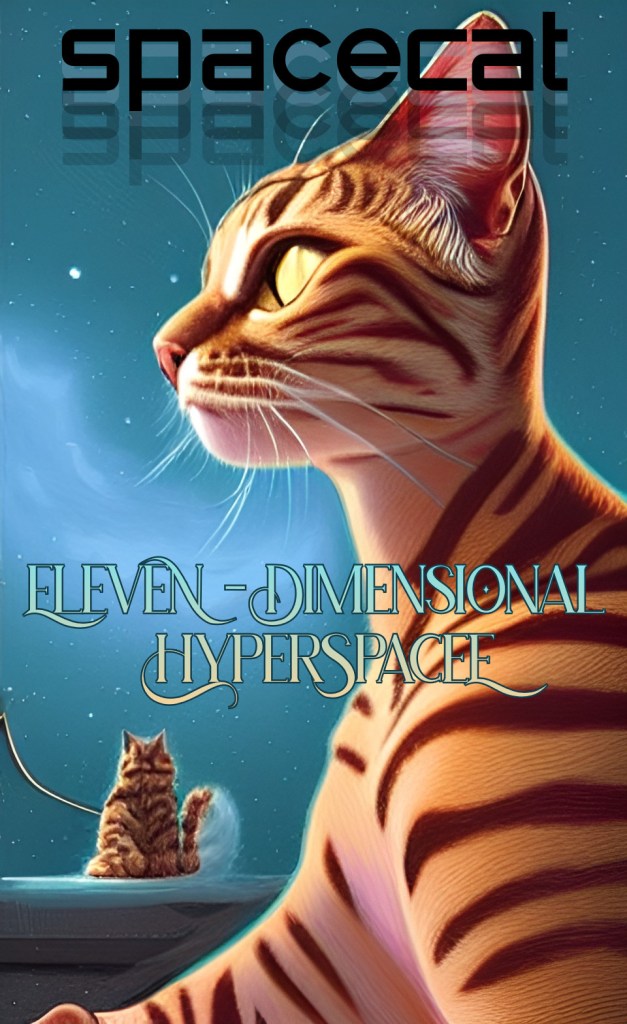
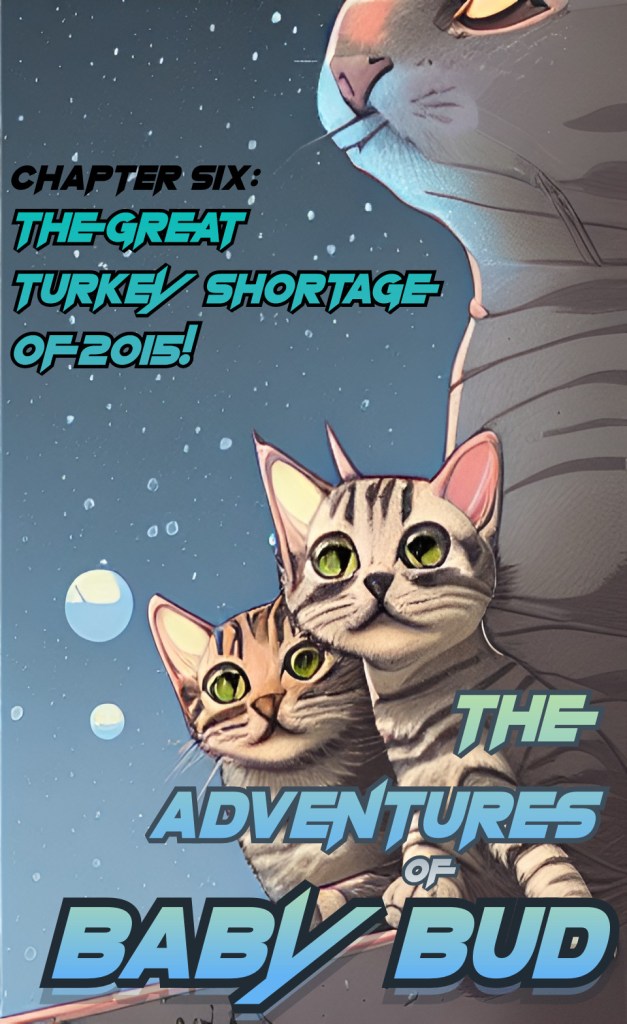
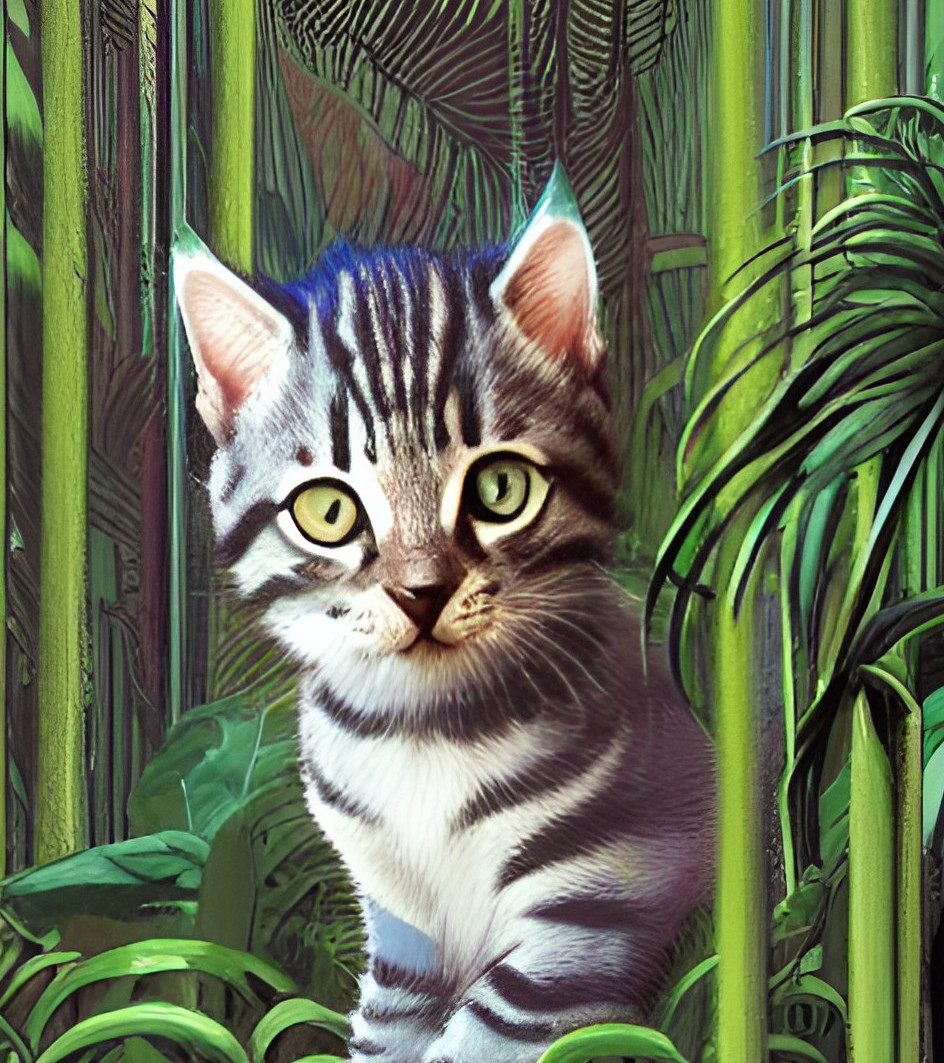
We meet Mister Meowster, the most legendary feline investigator of his neighborhood, who’s called upon to use his Sherlockian skills in search of missing mice. In 11-Dimensional Hyperspace, SpaceCat tunnels to the next iteration of reality in her starship. Finally, Baby Buddy contends with a dark chapter from the past, when there was a shortage of the very stuff of life.
All covers created via natural language AI and pixlr.
Mister Meowster is the greatest detective for at least three blocks.
SpaceCat tunnels through 11-dimensional hyperspace to reach the next stack in the braneworld! M-theory enthusiasts and cat lovers won’t be able to put this down!
Before the Great Turkey Shortage of 2021, there was the Great Turkey Shortage of 2015. In Chapter 6, we visit that grim chapter in in Buddy’s life, when he was forced to eat chicken.
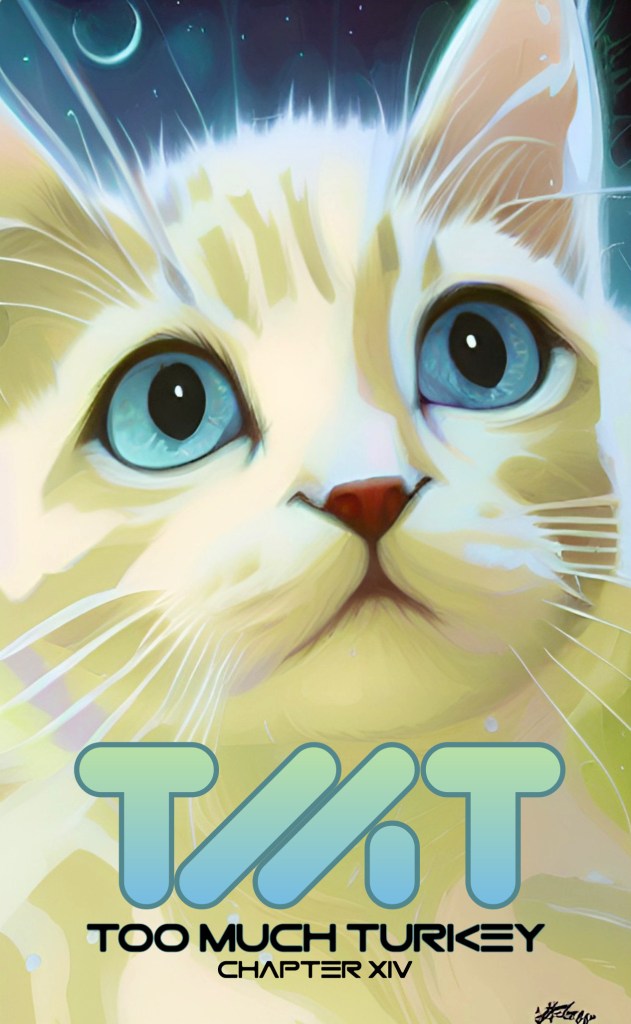
TMT: Too Much Turkey chronicles Chubby Buddy as he eats his way out of Turkopolis, the City of Delicious Turkey.
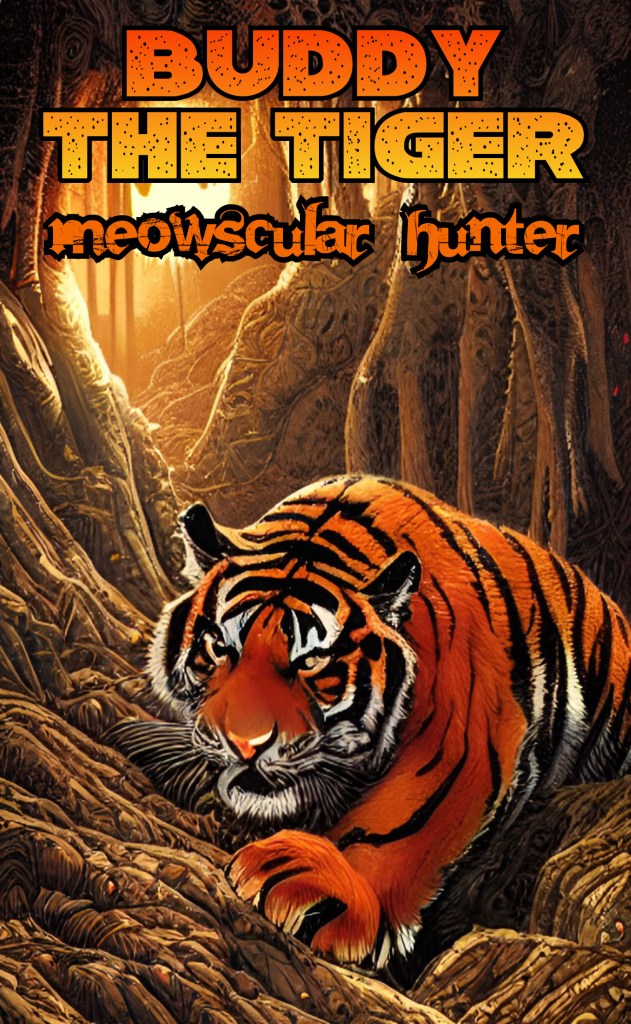
Buddy the Tiger: Meowscular Hunter follows a fully grown Buddy as he takes his rightful place as king of the jungle and doesn’t have to wait for stupid humans to feed him.
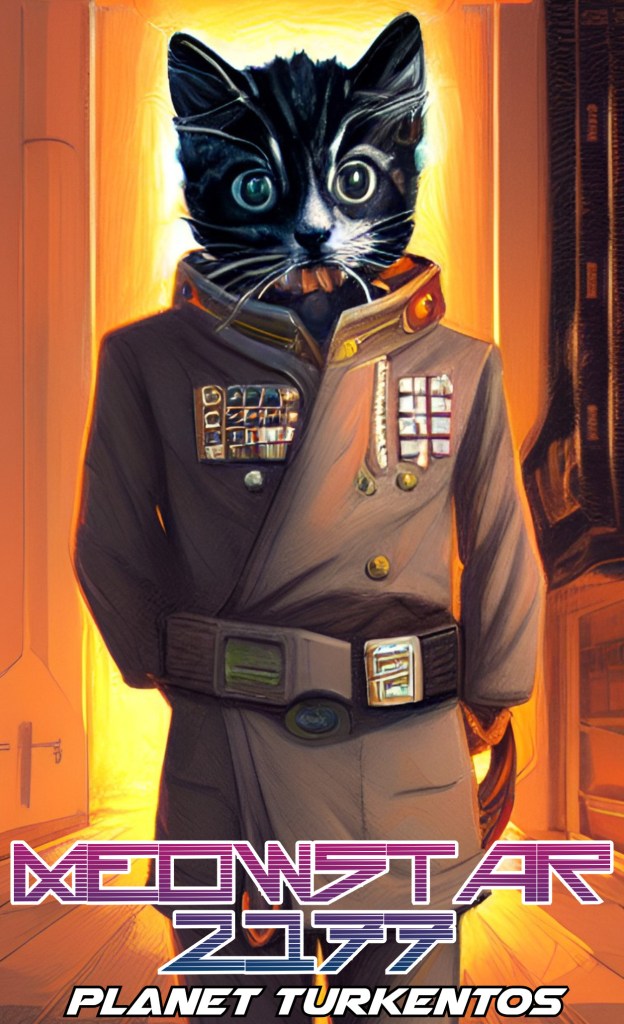
Meowstar 2177 centers on the exploits of Space Admiral Pâtéstalker and the fabled starship UCN Nap Enforcer.
Join Bud on his very first dangerous mission in Turkopolis, back when he was just a tiny kitten.
I created all the artwork in this post using a natural language processing AI and pixlr.
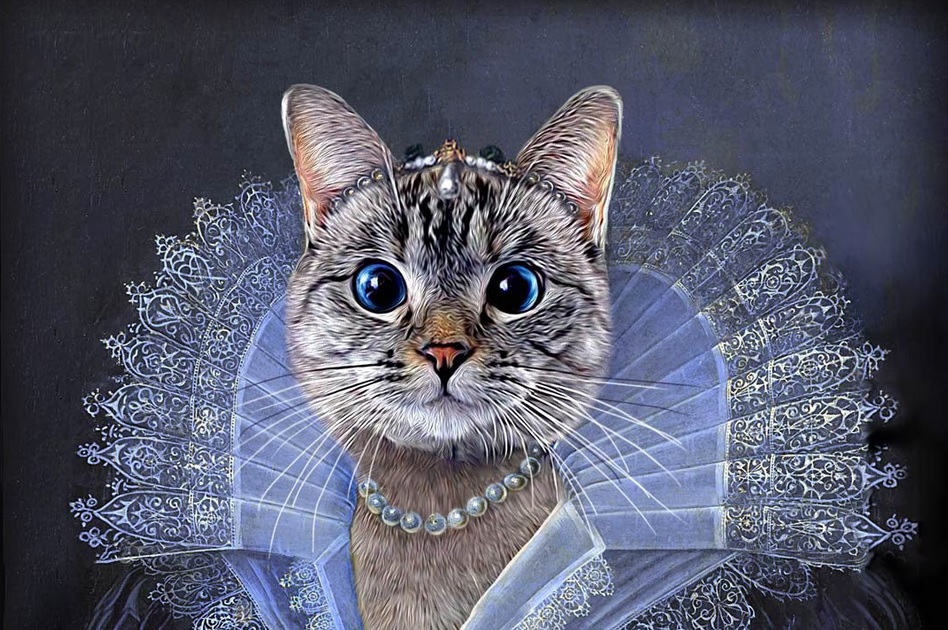
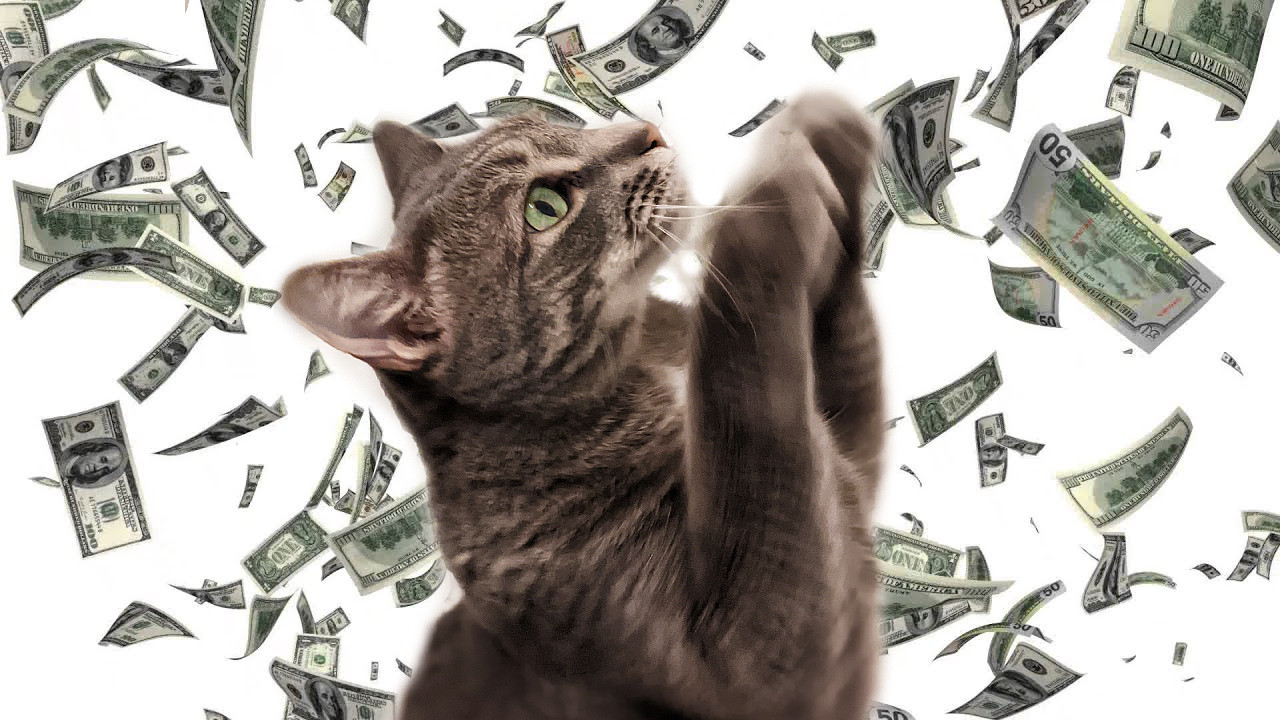
From Nala Cat the incredibly popular influencer to Tomasso the stray from Rome, these cats are worth millions.
There was quite a bit of interest in our earlier story about Choupette, pet and muse to late fashion designer Karl Lagerfeld.
While Choupette was left a large slice of Lagerfeld’s reported $200 million fortune — usually pegged at about $13 million inheritance — as well as the services of a private jet, a chef and minders to see to her needs, she’s not the wealthiest feline on the planet.
Nala Cat: Estimated net worth $100 million
Nala Cat has 4.4 million followers on Instagram, her own line of cat food, and a website that sells Nala-themed shirts, phone cases, coffee mugs, plush toys, pillow covers and even COVID masks. With her gigantic social media following, which has earned her an official Guinness World Record, Nala has enormous earnings potential, taking home five- and six-figure sums for sponsored posts hawking products like topical cream for pets and milk alternatives.
Nala isn’t too happy about getting a bath.
Chances are you’ve seen Nala even if you don’t know her name.
Olivia Benson: Estimated net worth $97 million
Unlike her celebrity ex-boyfriends, Taylor Swift’s cats don’t provide her with sad breakup material for new songs, but they do give her plenty of material for social media and additional opportunities to make money. (Because let’s face it, she needs it: The singer has amassed a paltry half-billion dollars so far.)
Swift named her most famous cat Olivia Benson, which we’re told is the name of a character on Law & Order. (Apologies but once you watch The Wire, there is no going back to network TV cop dramas where the detectives are always righteous and neatly wrap up their cases in 42 minutes.) Since she was purchased by swift in 2014, Olivia Benson has gone on to star in commercials for Coke and Keds, make guest appearances on Ellen, and cameo in Swift’s music videos.
Buddy the Cat: Estimated net worth $3.67 (dollars, not millions)
While Choupette rides the skies in a private jet, Nala cat has more fans than most celebrities and Olivia Benson is feted by talk show hosts, Buddy the Cat is no slouch either: The silver tabby is chauffeured around in style in a Honda Civic, boasts an extensive food and treat cabinet that can keep him in turkey for like three weeks, and is the proud owner of a really cool cardboard box. (Not as awesome as Olivia Benson’s boxes, obviously, but still pretty cool.)
However, Buddy also has something none of the other cats on this list have: His own site with near-daily updates chronicling his adventures, attesting to his ever-growing meowscles and expanding on his legend with every post.
Most importantly, he has the love of his Big Buddy. (Awwww.) Asked what he’d do with a fortune if he suddenly became a hugely popular catfluencer, Bud said he’d buy a Roomba to ride.
“Monetize the site, human! We could be multi-thousandaires! I could have a Roomba!”
Blackie the Cat: Estimated net worth $12.5 million
Blackie belonged to Ben Rea, a millionaire antiques dealer from the UK. According to press reports, Rea was estranged from his family when he died at age 82 in 1988, so he left millions to Blackie.
Rea had some self-awareness at least — reports say he left millions, representing the bulk of his fortune, to three animal charities of his choosing. He also left a house to a close friend and willed money to his housekeeper, gardener and plumber. (Dude really didn’t like his relatives, apparently.)
Unlike the others on this list, Blackie was certified as the wealthiest cat by the Guinness Book of World Records. It’s not clear when Blackie died or what became of the remainder of his fortune. Unless he had an outrageous catnip habit and blew millions on attractive Calico escorts, it’s safe to say he didn’t burn through all $12.5 million in his remaining time on Earth.
“I’m cold! Throw another thousand on the fire and bring me a heavier blanket, servant!”
Tomasso the Cat: $13 million
In a true rags to riches story, Tomasso was a stray living on the streets of Rome when he was adopted by a lonely widow in her 90s. The woman, Maria Assunto, had no children of her own and treated Tomasso like a son.
When she died in 2011 at the age of 94, Assunto left Tomasso and all her money to a nurse named Stefania.
Stefania had befriended Assunto and Tomasso a few years earlier after meeting them in a public park. The nurse would bring her own cat over to Assunto’s home to play with Tomasso, and cared for Assunto as her health declined. As Assunto began to fade, she asked Stefania to care for Tomasso once she was gone.
Stefania had no idea Assunto was worth millions and was shocked when the late widow’s lawyers approached her.
“I promised her that I would look after the cat when she was no longer around. She wanted to be sure that Tommaso would be loved and cuddled. But I never imagined that she had this sort of wealth,” she said at the time. “She was very discreet and quiet. I knew very little of her private life. She only told me that she had suffered from loneliness a lot.”
Perhaps it was because Stefania had cared for Assunta and Tomasso out of the kindness of her heart that the latter chose her as her sole beneficiary.
“She had become very fond towards the nurse who assisted her,” Anna Orecchioni, Assunta’s attorney, told Italian newspaper Il Messaggero. “We’re convinced that Stefania is the right person to carry out the old lady’s wishes. She loves animals just like the woman she devoted herself to right up until the end.”
Why is it always cats? Why don’t people make up stories about kids identifying as aardvarks or kangaroos?
Humans have dragged cats into the culture wars, and it seems our furry friends can’t claw their way out.
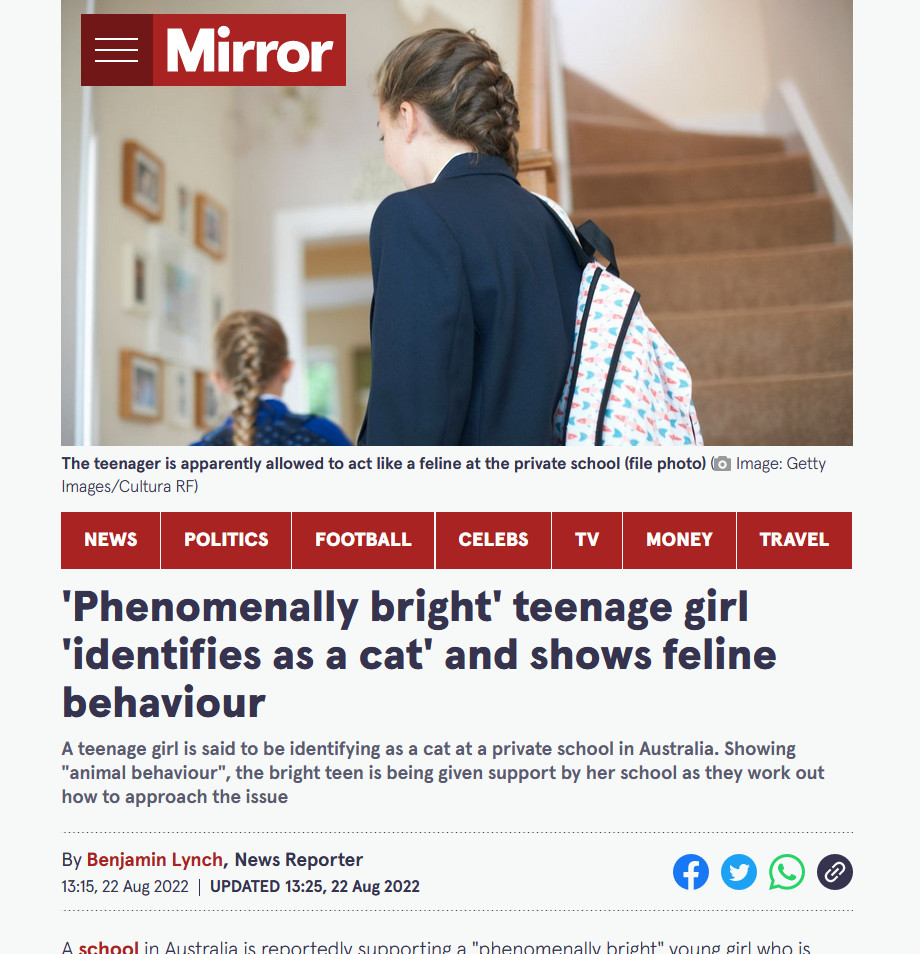
Australia’s Herald-Sun claimed this week, without any evidence, that a “phenomenally bright” teenage girl at a private school in Melbourne identifies as a cat, and the adults who run the school are cool with it as long as she isn’t too much of a distraction to her classmates.
This is the fifth or sixth viral story about school kids “identifying as cats” so far in 2022. They vary in details — some articles claim schools provide litter boxes in student bathrooms, while others assert teachers were fired for refusing to “meow back” to cat-identified children — but they’re all variations on the same theme.
There are big time red flags in this story. It doesn’t name the student, but that’s not uncommon. Unless a kid decides to speak to the media directly, most outlets refrain from naming minors. But the article doesn’t name the school and it’s based on the word of one person, with all the details attributed to someone described as “a source close to the family.”
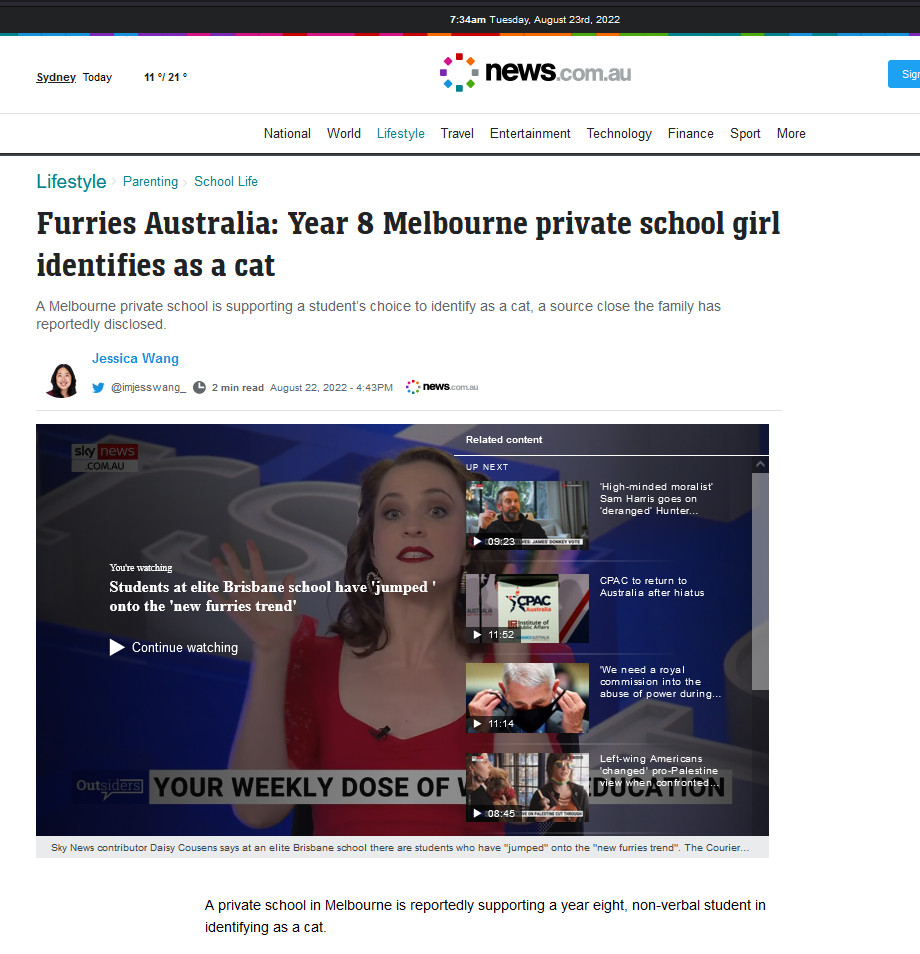
The Herald-Sun’s story has spread via News Corp.’s digital platforms to social media, clickbait sites and less scrupulous publishers.
Single-source stories are no-nos in journalism, for obvious reasons. There’s an old joke among journalists: “If your mother tells you she loves you, confirm it with a second source.”
In other words, assume nothing and verify everything, especially if the claim is unusual or extraordinary. The absolute minimum standard is two sources, preferably three.
It used to be that breaking this rule was playing Russian roulette with your career, because it’s bound to blow up in your face at some point, and no editor worth her salt would run a story like that. Unfortunately in the age of “publish now, verify never” the veracity of a story is a secondary or tertiary consideration, far less important than an article’s potential to catch fire, go viral and reel in clicks.
This story doesn’t even come close to meeting minimum standards, because the claims come from someone whose name isn’t revealed. When the source is anonymous, the need to verify becomes even more important.
Another News Corp. platform promotes the story.
In this case, if a friend of the girl’s family claims the girl is allowed to behave like a cat in school, and that friend isn’t willing to stand by that claim, no reputable news organization should run the story unless they have confirmation from the school or a legitimate document (like a letter to parents from the school) that backs up the claim.
The Herald-Sun story says the school issued a statement in response to the alleged controversy, but again, the school isn’t named so it’s impossible to confirm any details.
Finally, the Herald-Sun is a News Corp.-owned tabloid whose editors have a reputation for printing stories designed to rile up their readership and drive clicks online. The paper gives its reporters bonuses based on traffic numbers, which is an incentive to fabulate outrageous nonsense and ignore crucial but time-consuming work like serving as watchdogs of government.
The editors of the Herald-Sun may not be stupid, but they’re willing to destroy the remaining scraps of credibility the media still has to enjoy one-time spikes in traffic. They know a story like this will make the rounds on Twitter, Facebook, Youtube, TikTok and the personal sites of culture war vultures whose formula for drawing readership is whipping readers/viewers into a frenzy.
In the meantime, the most recent polls show media credibility with the public is at an all-time low, which is what happens when journalism becomes a race to the bottom. We used to laugh at junk tabloids that ran cover stories about alien abductions and Elvis sightings. Now we click on them and share them on social media.
Thankfully cats remain oblivious, and ignorance is bliss.
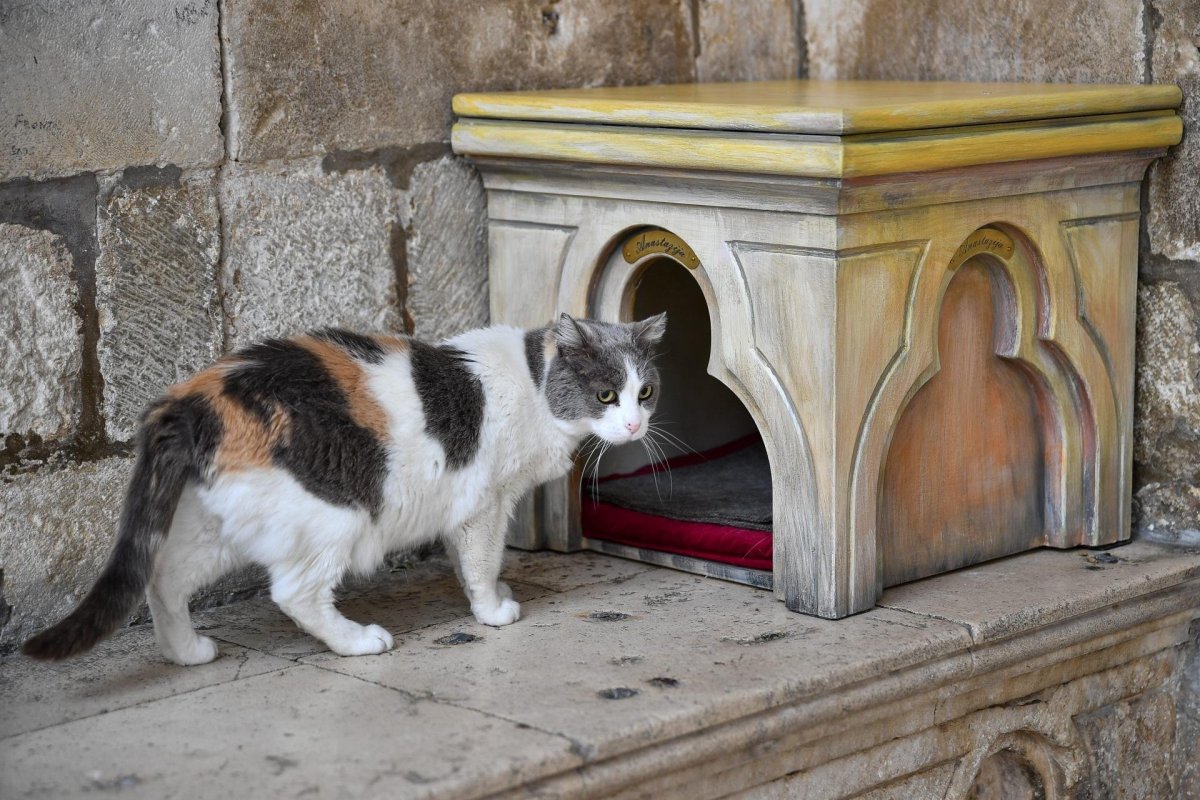
The 17-year-old Anastasia has been living on the grounds of the Rector’s Palace in Dubrovnik her entire life.
Anastasia is still living the palace life.
The community cat found herself in the middle of an uproar after staff at the Rector’s Palace, a historic site in Dubrovnik, Croatia, kicked her off the palace grounds which had been her home for 17 years.
In 2021 staff at the Rector’s Palace, a six-century-old structure which is now a museum, said Anastasia’s little nook, with food and water bowls on top of cardboard, was an eyesore and wanted her gone.
They took away her belongings in May, prompting local carpenter Srdjan Kera to build a beautiful wooden cat house that mimicked the color and architectural details of the palace, giving Anastasia a dwelling that would shield her from the elements as well as blend in with the historic building’s facade.
But palace staff wouldn’t accept the compromise and had the wooden home removed, sparking an outcry among Dubrovnik’s locals and tourists. A petition demanding Anastasia be allowed to stay was signed by more than 12,000 people — a figure greater than the number of people who voted for the city’s mayor, representing more than a fourth of the city’s population.
The furor died down and there hasn’t been much news since then, but Mark Thomas, editor of the English-language Dubrovnik Times, told PITB Anastasia is back at the Rector’s Palace and basking in her fame.
“She doesn’t have her fancy home that was built for her,” the U.K. expat told us, “but rather her spot on a piece of cardboard. She is well fed and seems to be more than happy and enjoying having her photo taken with tourists.”
Thomas said he’d last seen Anastasia just a few days ago in her usual stomping grounds at the palace.
It seems odd that staff at the palace wanted her gone because they found her original nook unsightly, then removed the aesthetically pleasing cat house created by Kera only to go back to the old cardboard arrangement, but we’re glad the senior kitty isn’t subjected to the stress of being forcibly moved from the only home she’s ever known.
Previously, staff at the Rector’s Palace said Anastasia didn’t need her shelter all year round, so perhaps they’ve come to a compromise and will allow it during the winter. Dubrovnik enjoys a mild Mediterranean climate, with temperatures bottoming out at about 50ºF (10ºC) in January, its coldest month, but while the city remains temperate, it experiences significantly more rain in the winter months.