Oh Oh Oh Ozempic For Our Oh Oh Oh Obese Cats? It’s Close To Reality

In apocalyptic news for house cats everywhere, a pharmaceutical company is kicking off a trial of a GLP-1 drug for felines.

If cats could read newspapers, chances are they’d be gripped by a cold terror right about now, wondering if they’re among the unfortunates to have their yums curtailed by the same weight loss drugs their humans have been gobbling.

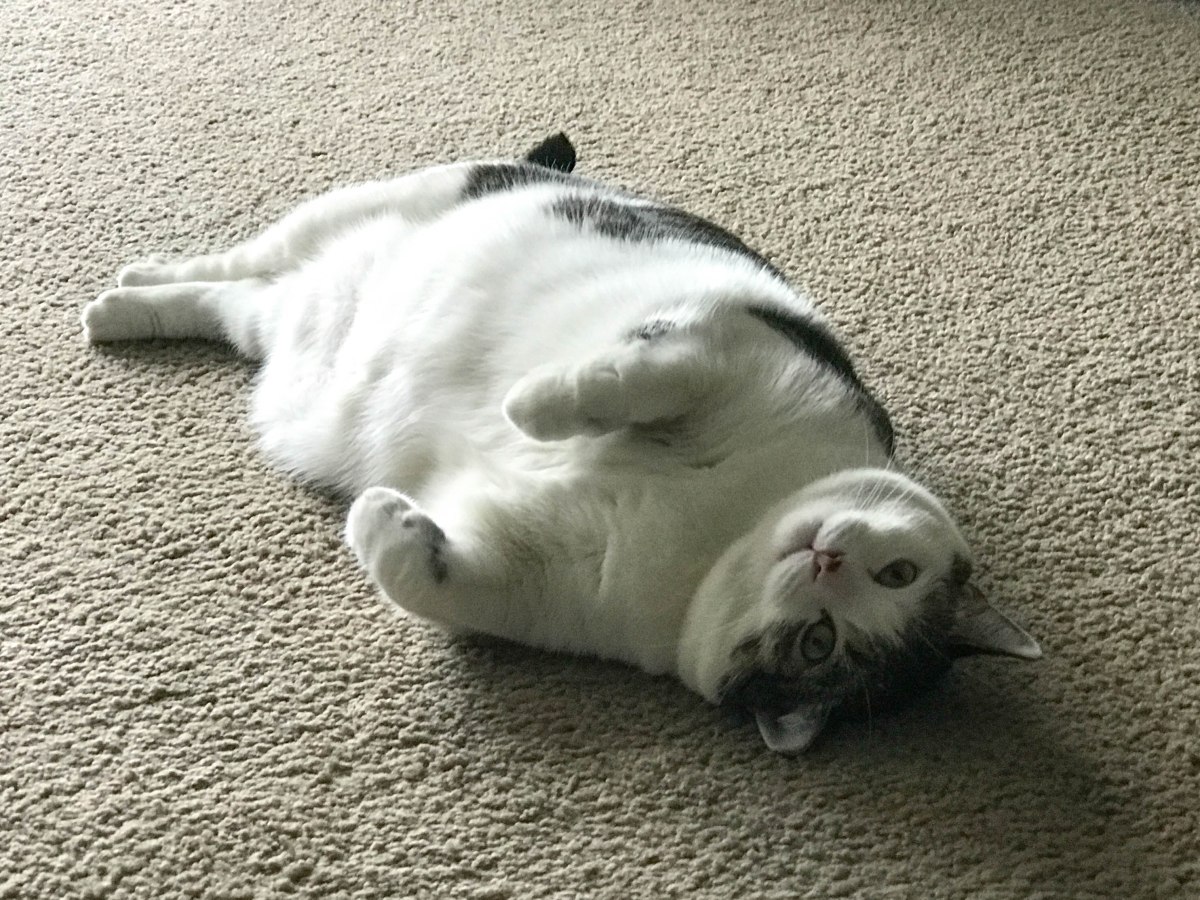
As the New York Times reports, a biopharma company headquartered in San Francisco, Okava Pharmaceuticals, is about to begin a trial to determine if GLP-1 drugs can help our chonksters slim down. More than 60 percent of American pets are packing extra pounds, the Times notes, while consequences like diabetes are shortening the lifespans and reducing quality of life for felines and canines.

“It is our belief that the condition of obesity, the condition of being overweight, is by far the number one most significant preventative health challenge in all of veterinary medicine,” Okava founder and CEO Michael Klotsman told the paper.

The upcoming study will include 50 cats. Most will receive a GPL-1 medication while a control group — about one third of the cats — will be given a placebo.

Since cats aren’t exactly known for being cooperative when it comes to taking oral medicine and weekly injections at a veterinary office are impractical, Okava has developed a system with a patch about the size of a microchip that will dispense the weight loss drugs over six months before a tiny cartridge needs to be replaced.

If all goes well with the trial, Okava will seek FDA approval and address other obstacles like convincing caretakers that their little pals can benefit from the feline version of Ozempic, Mounjaro and Wegovy.

That may be easier said than done considering our relationships with our furry friends and the role food plays in things like training, bonding and every day life

For lots of cat caretakers “their main way that they interact with and show their love to their pet often revolves around food,” Dr. Maryanne Murphy, a veterinary nutritionist at the University of Tennessee, told the Times.

How could the dynamic between cat and human change if the flow of yums is reduced to meals only? Will training — for everything from walking on a harness, to entering a carrier and fun tricks like high fives — still work if the reward is just a bit of encouragement or a scratch behind the ear?

An earlier weight loss drug developed for dogs, Slentrol, did not catch on because, as one veterinarian noted, “the main way [people] interacted with their pet was by feeding them, and seeing their excitement and happiness when they were eating the food.”

There’s also the not-so-small matter of cost. GLP-1 drugs are in high demand, and they’re expensive. One in eight Americans has taken Ozempic or one of its competitors. At times, the demand has threatened availability for diabetics, for whom the drugs were developed in the first place.

If the trials are successful and the GLP-1 drugs for pets gain FDA approval — which would require a series of much larger scale, more rigorous studies — the company hopes to offer them to consumers at a cost of about $100 per month per pet.

Even if this iteration of the drug fails, it’s unlikely to derail the larger effort. Vets have been prescribing tiny doses of the human version to cats with diabetes, and perhaps most telling of all, pet obesity continues to rise despite years of efforts by the veterinarian community to get people to play with their pets more and feed them less.

As Dr. Ernie Ward, a veterarian and founder of the Association for Pet Obesity Prevention, told the paper: “We haven’t moved the needle.”


And now we check in with our correspondent, Buddy the Cat. Buddy, what do you think about the possibility of GLP-1 for your species and the end of the proverbial gravy train?

Buddy? Bud? Are we having technical difficulties?

I’m sorry, ladies and gentlemen, we can’t find Buddy the Cat. We’ll resume this segment if and when we manage to locate him.

Mars, The Pet Food Company, Claims There’s A ‘Treat Gap’ Between Cats And Dogs

The makers of Temptations want you to feed your cats more snacks, as if they don’t get enough!

In yet another indication that some people don’t seem to pay attention to their feline masters, the Wall Street Journal reports on Mars and its internal operation “Cattitude,” which as far as I can tell amounts to a few people within the company realizing they haven’t squeezed every last dollar of revenue from people who have cats.

That’s a problem, the company realized, because more people are adopting cats, younger generations are more likely to adopt felines, and anyone who hasn’t had their head in the sand knows the little ones rule the internet with their cuteness.

Through “Cattitude,” which apparently involves everything from executives walking around the office wearing cat ears, to handing out “I Love Cats” decals and consulting with “cat parents” on products, the company says it’s identified a “treat gap” between felines and canines, with dogs as the far more frequent beneficiary of yums:

“Feline insecurity can be self-fulfilling. If you think your cat doesn’t care, you might be less likely to shower them with perks. That may be why dogs get way more treats. 

Mars launched a campaign in May that spotlights the “treat gap” by the numbers: Dogs are nearly 32% more likely to get daily treats than cats in dogs-only and cats-only households; in homes with both, 38% of parents said they don’t give the same number of treats.

The story does not say how the company arrived at those numbers. Probably market research in the form of surveys. Not exactly scientific, as these things go.

This is one of those stories that makes me wonder if these people actually have cats.

From the moment I wake up until the second I settle into bed, Bud shrieks at me for snacks. He won’t even let me stumble into the bathroom before the first shrill reminders. He demands snacks before dinner, after dinner, after he’s had snacks, and sometimes while he’s eating them.

If he could speak English and hold a bull horn, I have no doubt he’d spend the majority of his day blasting the demands into my ears: “MOAR SNACKS, BIG BUDDY! MOAR! MOAR!”

Mars should know this. One of its most popular products, Temptations, turns cats into slobbering addicts. I had to wean the Budster off them, then stupidly bought them again months later and had to wean him off the Temps again because he has a one-track mind when they’re in his bloodstream. Two are not enough. Six are not enough. Ten are not enough.

One time, I left a big tub of the damn things unattended for a minute and he managed to pop the top off by knocking it off the coffee table. When I walked back into the living room, he was dragging his jaw along the floor like a bulldozer, inhaling as many as was felinely possible into his little mouth.

Frantically, I shooed him away and began picking them up, but the damage was done. He threw up a few minutes later. Then he shrieked for more!

He always looks innocent, doesn’t he?

Interestingly, the WSJ notes that if you type “Does my cat” into Google, the first two auto-complete suggestions are “Does my cat love me?” and “Does my cat know I love her?”

And that brings us to a point on which I agree with the people at Mars: cats still aren’t well understood.

Dogs happily slobber over their people. Cats show their love in subtle ways, like proximity, head bunting and momentary contact.

Just like the whole “cats love milk” thing is half myth, half misunderstanding, so is the idea that your cat doesn’t love you unless he’s leaping into your arms to hug you as saccharine orchestral music swells in the background.

While there are always outliers, most cats don’t like being hugged or picked up, and most have hard limits when it comes to the amount of physical affection they’ll tolerate. It’s not because they don’t care for us, but because they’re semi-domesticated carnivores who still retain the skittish tendencies of their wild brethren, and because they get easily overstimulated, among other reasons.

If Mars’ Cattitude is an ongoing thing, I hope the decision-makers in the company come to what I believe are two of the most important conclusions to keep in mind when it comes to cats. Giving them your love means giving them your time and attention, and treating them like the sentient, emotional creatures they are.

The best piece of advice I ever got was to always take your cat’s emotions into consideration.

It really is that simple.

Now if you’ll excuse me, I have snacks to dispense.

‘Swift And Lethal’: Cats Have No Defense Against Bird Flu, And It Keeps Showing Up In Their Food

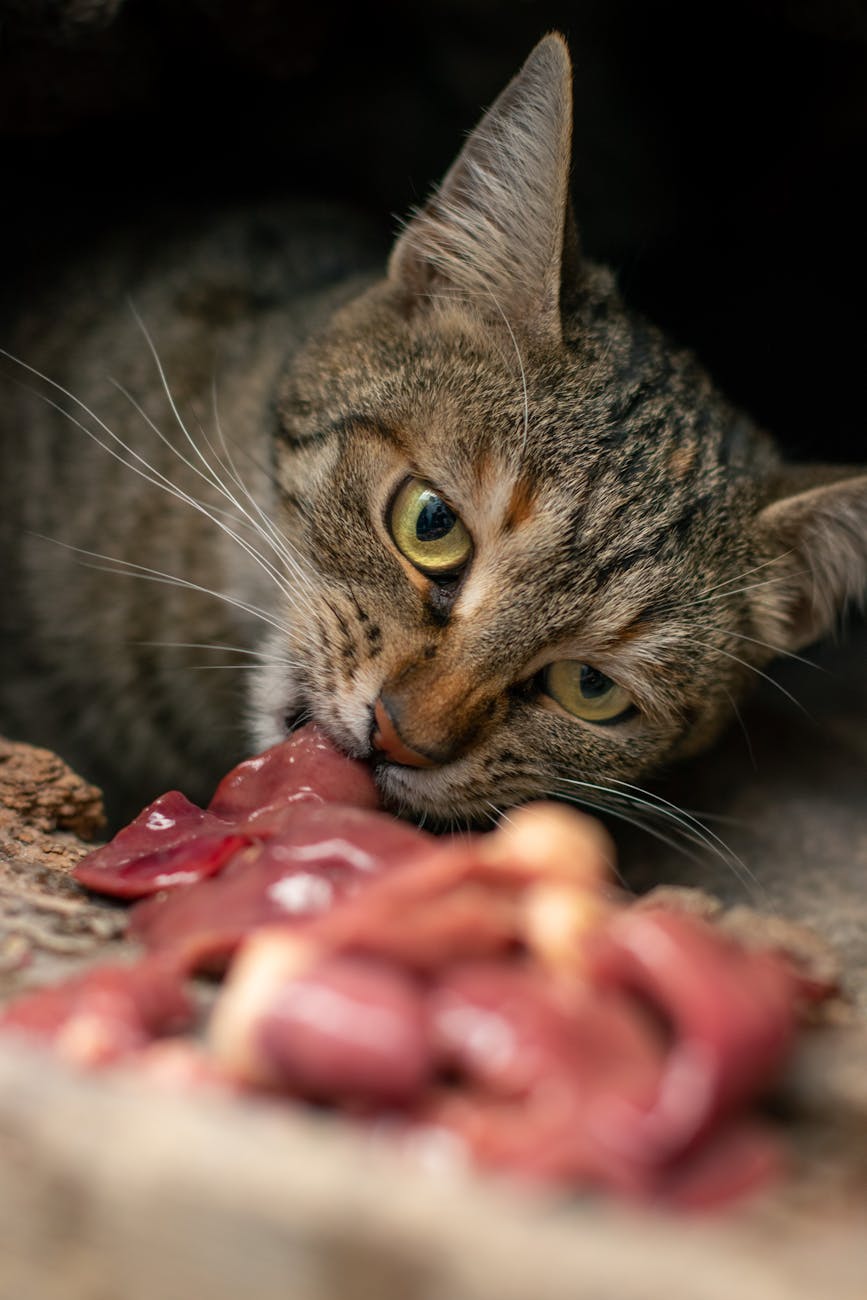
Bird flu is killing cats domestic and wild, in captivity and in nature. Experts are sounding the alarm, warning people not to feed their cats raw food, allow them to drink milk, or let them roam outside where they can easily catch the virus by going after small prey.

Highly Pathogenic Avian Influenza, the clinical name for bird flu, is a danger to all animals, but for cats it’s a virtual death sentence.

Only a handful have survived infection thanks primarily to early diagnosis, intervention and round-the-clock veterinary care. In the vast majority of cases, the virus burns through its feline victims in three or four days.

Bird flu has become even more deadly for felines of late. Of the 126 domestic cats killed by H5N1 since 2022, according to the US Department of Agriculture, half of them have have died in 2025 — and it’s only been three months.

Notably, that total doesn’t include captive wild cats and big cats, such as the 20 pumas, bobcats, tigers and other felids who succumbed to the virus at the Wild Felid Advocacy Center, a sanctuary in Washington state. Nor does it include cats living in the wild, like two pumas in the same state that died in December.

To appreciate the true scope of the problem, the more illuminating statistic may be 82 million, which is the number of chickens “culled” — killed — in the US since 2022 because they were infected or raised at facilities where other birds tested positive for the virus.

Factory farming compounds the matter: more than 1.6 million egg-laying hens and 337,000 “pullets” — chickens less than a year old — were “depopulated” at a single facility in Texas last year. As staggering as those numbers are, Texas’s Department of Agriculture noted the figure merely “accounts for approximately 3.6% of the company’s total flock.”

Per the USDA:

“To provide context on the overall size of the U.S. poultry flock, there are more than 378.5 million egg-laying chickens in the United States. In 2023, more than 9.4 billion broiler chickens and 218 million turkeys were processed in the United States.”

If there ever was an example of putting too many eggs in one basket, this is it. American food supplies are vulnerable with so much concentrated in the hands of so few companies, a lesson the general public is learning the hard way now after eggs peaked at record prices last month. Things have cooled off a bit since then, but shoppers aren’t getting any benefit as grocery chains continue to charge a premium: the nationwide average for a dozen eggs was $5.90 in February, but stores in some states are still charging $10 or more.

It also raises questions about the sustainability and ethics of eating animals. Humans slaughter more than 75 billion chickens every year, and projections indicate there will be three billion more of us by the mid-2080s.

Meat from infected chickens can still end up in your cat’s bowl

Media reports about culling give the impression that those birds are removed from the food chain, but that’s not entirely true. The pet food industry has always cut corners by harvesting meat not fit for human consumption, a category that includes everything from the carcasses of sick animals, to “meat by-products” that can include beaks, hooves, eyes, hearts and other organs.

So while the culled chickens won’t show up in shrink wrap at the grocery store, they are making it into the pet food supply chain. Most pet food is “rendered,” cooked at such high temperatures that potential pathogens have been destroyed.

But an increasingly bigger slice of the market has been claimed by companies selling “premium” raw food — and that’s been the primary infection vector for domestic cats, particularly indoor cats who otherwise would have little or no exposure to the virus. (Cats who spend time outdoors can catch bird flu by preying on infected animals, just as wild cats do, and barn cats have caught it by drinking the milk of infected cattle.)

Cats are mostly lactose intolerant, and should not be given cow’s milk, despite the common misconception that it’s healthy for them.

“The animals that were depopulated could potentially have ended up in the food chain for pets,” Laura Goodman, an assistant professor at Cornell University’s Baker Institute for Animal Health, told NBC News. “It’s not uncommon for substandard meat to end up in the pet food chain.”

That’s what happened to Tim Hanson’s beloved cat, Kira, who died in February after eating raw food from a company called Wild Coast. The company has recalled the product, Boneless Free Range Chicken Recipe. It’s one of four recalls in the last month alone.

Hudson is suing Wild Coast for the veterinary bills — about $8,000 — and said he was devastated that Kira, whom he called “the happiest cat,” is gone. He said he thought he was doing right by her by feeding her the expensive raw food, but now urges people to avoid feeding their cats raw food at all costs.

“I don’t want any more cats dying,” he said. “Hopefully people can learn from Kira’s passing.”

Top image via Pexels. All other images via Wikimedia Commons

Crumbs The Corpulent Cat Is Already Enduring Treadmill Sessions

Crumbs was rescued from a bad situation where people fed him without regard for his health. Now he’s got a lot of work ahead of him as his new caretakers help him lose weight so he can walk on his own again.

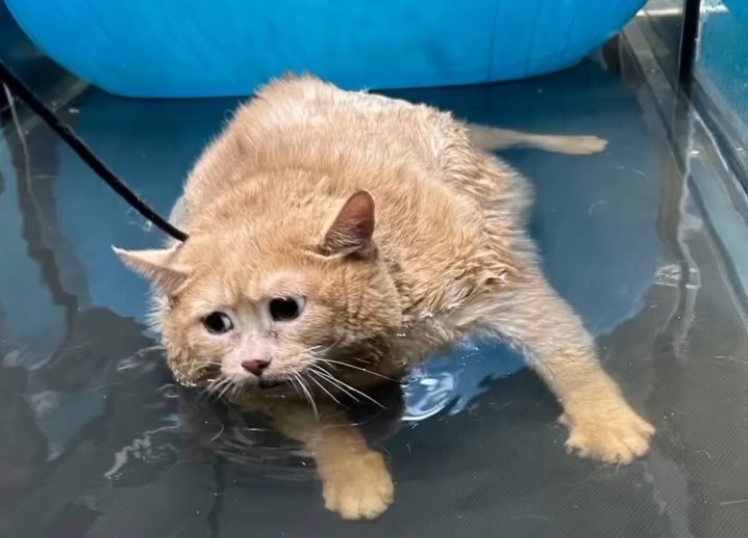
Crumbs, the morbidly obese tabby who was rescued from the basement of a Russian hospital last week, is already putting in the work to melt pounds.

That means he’s enduring two things most cats hate — exercise and water. You’ll recall from our earlier post that Crumbs weighs 38 pounds and cannot walk under his own power, so his new caretakers at Matroskin animal rescue in Perm, Russia, have him on a special waterproof treadmill where he gets the benefit of buoyancy while he gets his steps in.

The big guy is not a happy camper in the video, but he’s doing his best.

I’ve heard horror stories about the hospitals in Russia and Ukraine, so if it sounds strange that the staff at a hospital would feed cookies, soup and other inappropriate food to a cat, well, let’s just say it’s not the kind of environment most of us picture when we think “hospital.” (Which is another reason to be grateful for living in the west, where we have it much better than most of us generally realize.)

Hindustan Times article
Non-native English speaking staff at the Hindustan Times may have confused Whiskas the cat food brand with whiskey, the alcoholic beverage, or there may have been a translation error.

Interestingly, a Hindustan Times story about Crumbs claims the hospital employees served whiskey to the obese cat in addition to the junk food, a claim repeated in the headline and article.

That would add another wrinkle to an already ridiculous story, but thankfully it’s not true. Your intrepid friends here at PITB checked the original text and with the help of translation software, determined it used the Russian word for “Whiskas,” as in the cat food, not whiskey. (It probably goes without saying, but never give alcohol to your cat. As little as a teaspoon of whiskey could be fatal.)

So if there’s some small comfort here, it’s that the people who fed Crumbs for so long weren’t completely ignorant to his needs, and it appears he got at least some species-appropriate food.

Crumbs the Cat
Crumbs shortly after he was rescued. Credit: Matroskin animal shelter

It’ll Take More Than Sketchy Surveys To Prove Vegan Cat Food Is OK

“People aren’t ready for us to turn carnivore cats vegan but I’m going to do it,” the CEO of a vegan cat food brand has vowed.

In September of last year, a research paper about feline health was published to the open-access journal PLOS-One, going mostly unnoticed.

The paper’s authors claim their research proves cats fed a “nutritionally complete” vegan diet are not only just as healthy as their meat-eating counterparts, they’re actually less likely to need veterinary visits, less dependent on medication, and more likely to be given a clean bill of health by their veterinarians.

When a company called Wild Earth announced the launch of a new line of vegan cat food this month, the company pointed directly to that paper as proof that “cats fed nutritionally sound vegan diets are healthier overall than those fed meat-based diets,” as the paper’s lead author put it.

Wild Earth CEO Ryan Bethencourt, who does not have a professional background in veterinary medicine or feline nutrition, summed up his goal in a tweet: “People aren’t ready for us to turn carnivore cats vegan but I’m going to do it.”

bethencourt
Bethencourt calls the effort to put pets on vegan diets “vegan biohacking.” Credit: Wild Earth

He painted the new offering as a bold counter to skeptics who say vegan cat food is unhealthy.

“We expect aggressive resistance from the meat industry on the launch of this industry-pioneering vegan cat food, but we know there are A LOT of cat parents looking for healthier plant-based and more sustainable options and we want to be the leader in providing them with that choice,” Bethencourt wrote in a statement.

What he didn’t mention was the fact that the loudest voices opposing “vegan cat food” are animal welfare organizations like the SPCA and Humane Society, as well as veterinarians and nutritionists, the same people who see the consequences of cats who are deprived of meat. Over the years they have reiterated that felines are obligate carnivores who have evolved to get their nutrients from meat, with digestive systems that cannot process most plants, meaning they can’t break them down and derive nutrients from them. That’s why we don’t see servals or leopards foraging for fruit in the wild.

In addition, the announcement did not mention that the 2023 research was funded by ProVeg International, a non-profit dedicated to reducing global meat consumption, weaning people and animals off of meat and onto plant-based food.

That didn’t stop other credulous reports, like one from GreenQueen claiming Wild Earth’s vegan cat food is “built on research proving that felines can be healthy on a vegan diet.”

And that’s exactly the point — the “study” was conceived and published so that advocates of vegan cat food can point to it and say “science says” cats can survive on plants.

Bad data makes for bad science

Extraordinary claims require extraordinary evidence, but the 2023 study did not examine veterinary records or log the results of vet visits over years. Instead, the data was self-reported by participants.

A total of 1,418 people responded to the survey, and only 127 of them said they feed their cats exclusively vegan diets. The claims that their cats get sick less often and do better in veterinary check-ups are based on their subjective assessments and recollections. The paper’s authors don’t know which vegan brands the 127 respondents were giving to their cats, nor do they have information on whether the food was wet or dry, how often the cats were fed, and how much they ate.

wildearthfood
A cat eating Wild Earth’s Unicorn Pate, which is made entirely from plant products. Credit: Wild Earth

One of the metrics cited by the authors is “guardian opinion of more severe illness,” which means arbitrary feedback from people who aren’t experts in veterinary medicine or nutrition.

If including respondent opinions as “data” doesn’t bother you, consider how many people buy products like Airborne, concluding that it works because they didn’t get sick once on a cross-country flight. Airborne, you may recall, was “invented” by a teacher who claimed she figured out how to cure the common cold, something no physician has done in centuries of trying.

Like vegan cat food proponents, Airborne had its own “study” that claimed its efficacy. The company eventually paid out more than $23 million in a class action settlement for its false claims. That’s not to say vegan cat food makers are precisely like Airborne, but pointing to poorly conducted research is a tactic that works because most people won’t go to the effort of finding the study and reading it.

Current global meat consumption is unsustainable, but…

I’m a vegetarian and I’ve seen enough evidence to convince me that the current rate of meat consumption, especially in the first world, is untenable as the global population rises toward its expected 11 billion-plus peak. Those forecasts and the horrors of factory farming are motivation enough to hope human civilization consumes less meat in the future.

But I’m also a guy who loves his cat, and I think if you’re going tell me that my little pal, designed by nature to be an obligate carnivore with a digestive system and body plan that hasn’t significantly changed for ages, can stop eating meat entirely with no deleterious effects — despite the experts saying otherwise — then you really need to show me something better than a self-reported survey paid for by a vegan advocacy group.

Cat with a salad
This cat is not happy. Credit: r/cats(reddit)

Especially when veterinarians who have no financial interest in the pet food industry relate horror stories of their four-legged patients slowly going blind and cats with no other ailments suffering catastrophic consequences, with their organs shutting down because they’re not getting the vital nutrients and proteins they need to survive.

It’s a horrific way to die, and it happens because misguided people think human morals should apply to cats. Notice in the press releases and marketing materials from vegan cat food manufacturers, there’s no mention of what’s in the best interest of cats — it’s all about people making “bold” choices, “disrupting” industries and leading the Earth to a shiny future without meat or suffering.

The truth is, felines cannot synthesize the proteins that are absolutely necessary for their survival, and their digestive systems aren’t evolved for breaking down nutrients from plants. Those are well-established facts, and ignoring them will not change reality. So anyone who claims “vegan cat food” is healthy faces a much bigger task than asking people to take a self-reported survey. A survey paid for by a nonprofit that lobbies for veganism isn’t proof, it’s wishful thinking masquerading as science.

Even if the authors of the paper had the complete veterinary records of the same cats, it would only be one tentative first step toward challenging everything we know about cat nutrition. Questions aren’t settled after one study, especially with such a small data set. Studies must be repeatable, and the difference between correlation and causation isn’t settled with a single well-designed, unimpeachable study, much less a self-reported survey.

When the stakes are the lives, happiness and health of innocent animals, we should be absolutely sure we’re doing right by them.