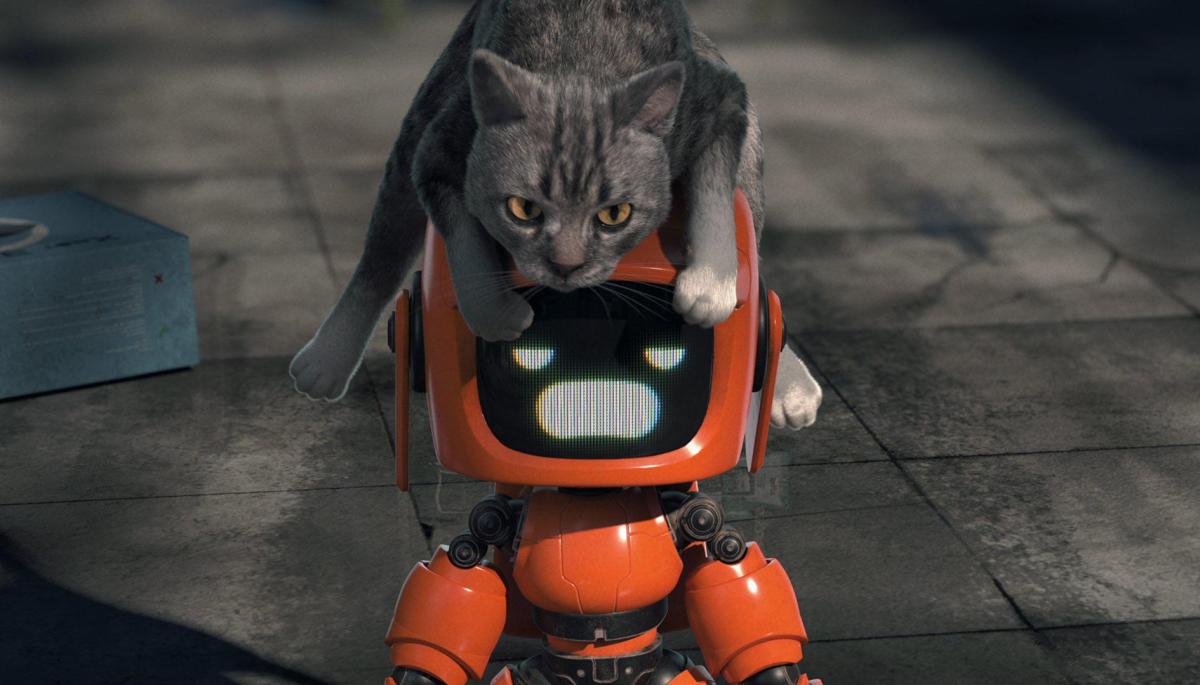
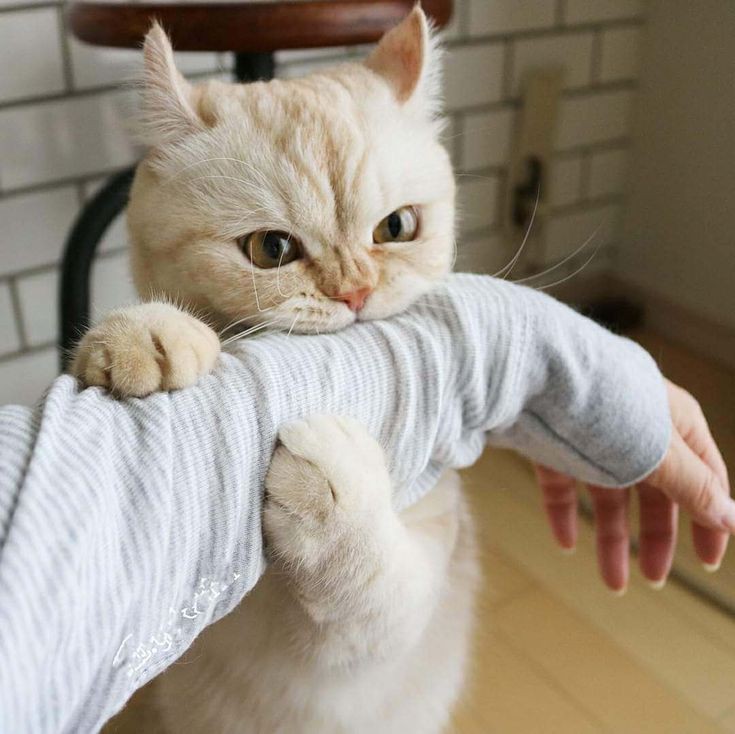
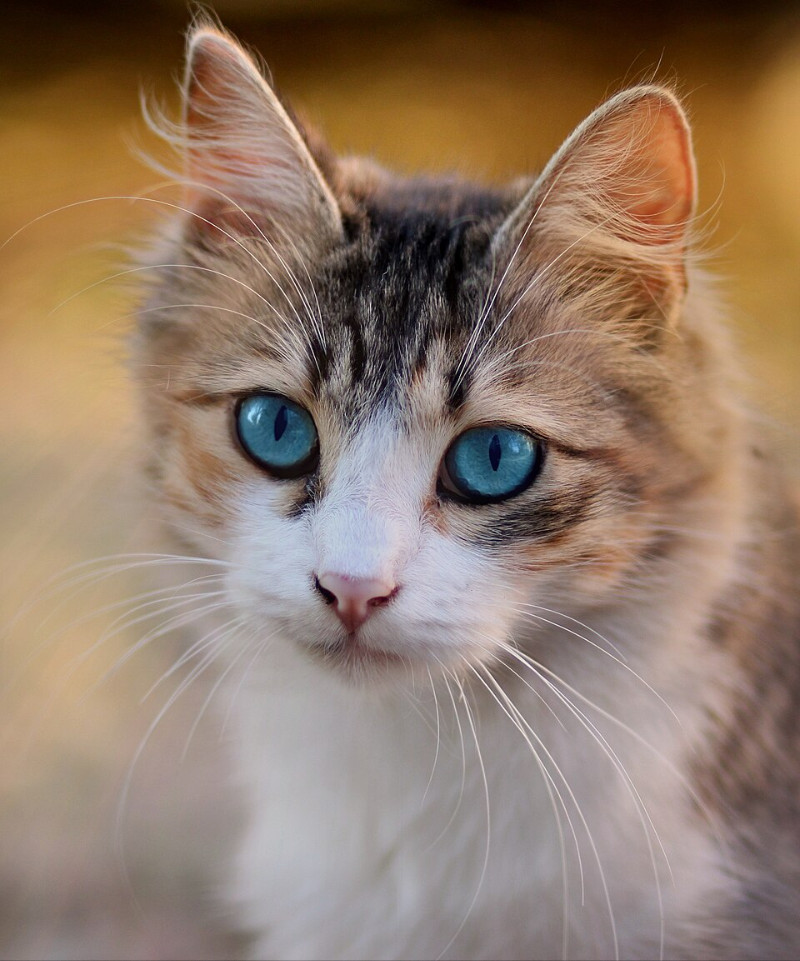
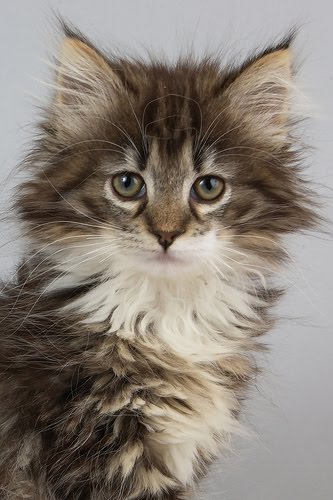
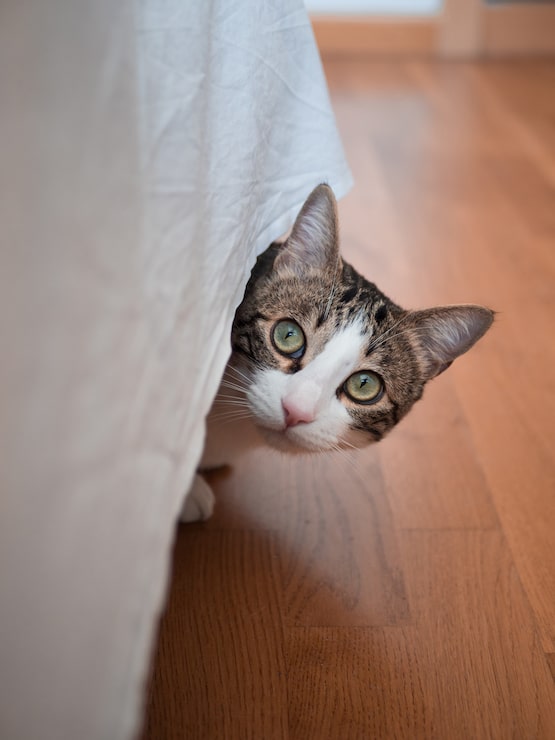
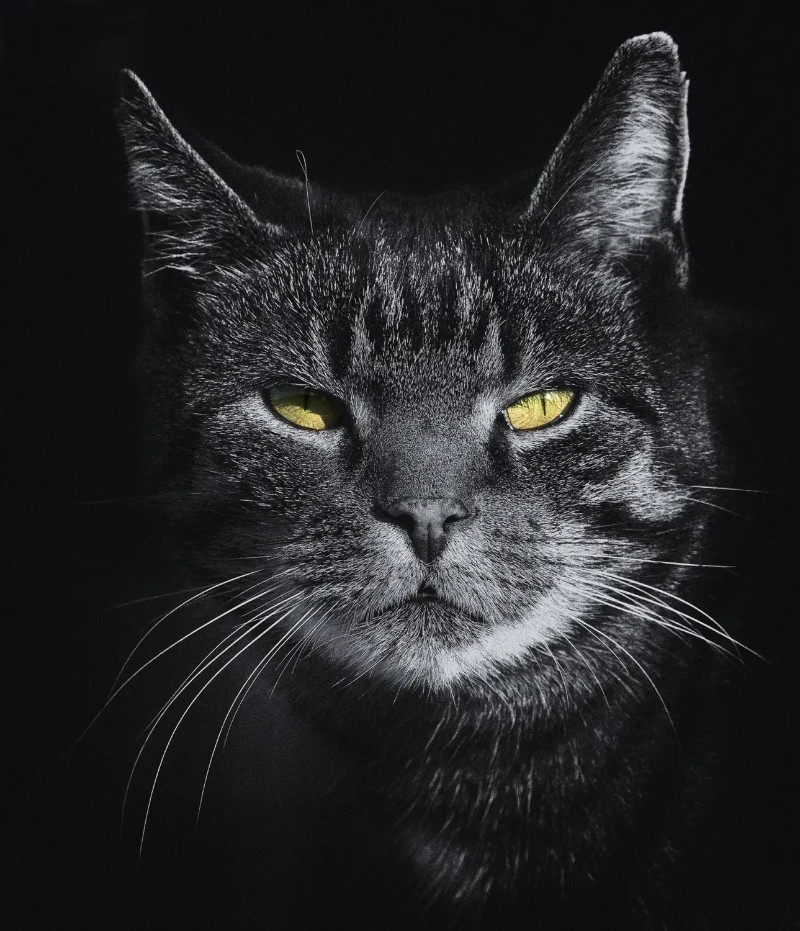
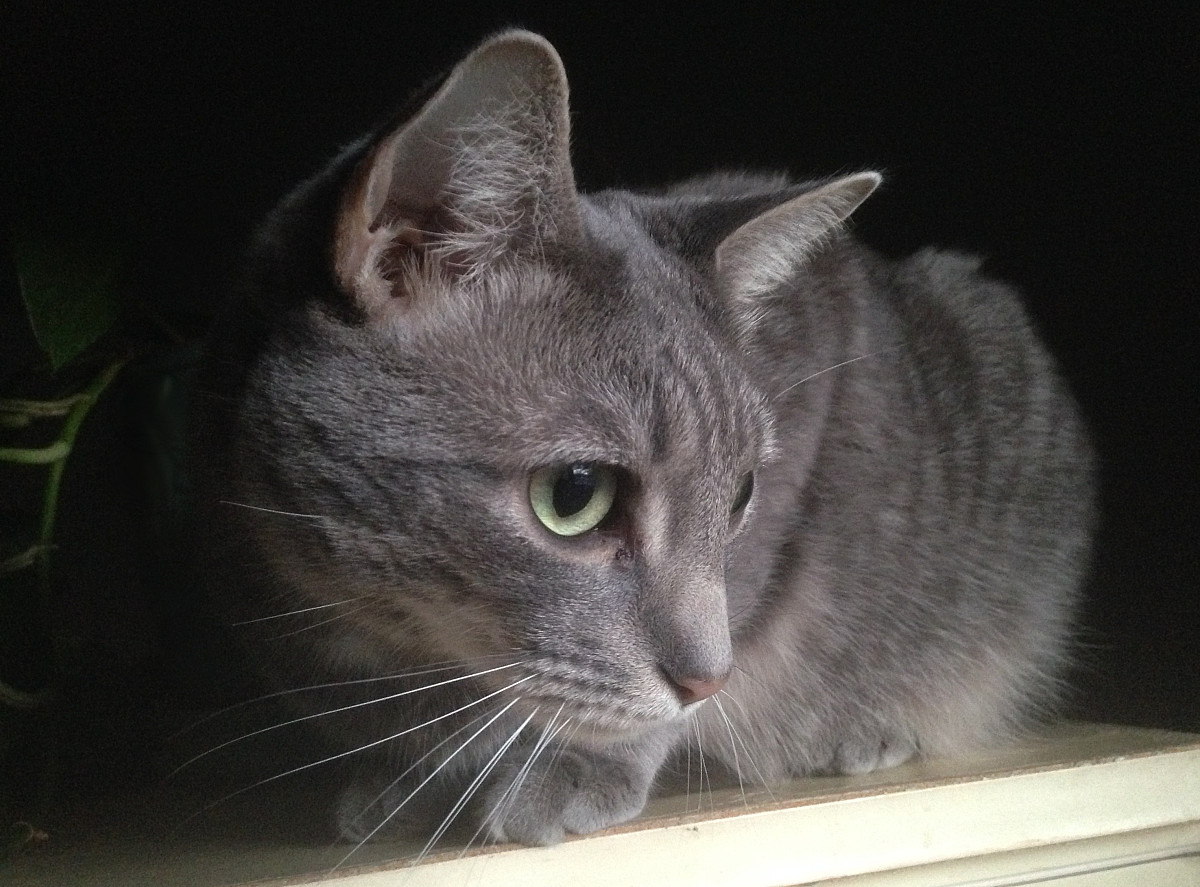
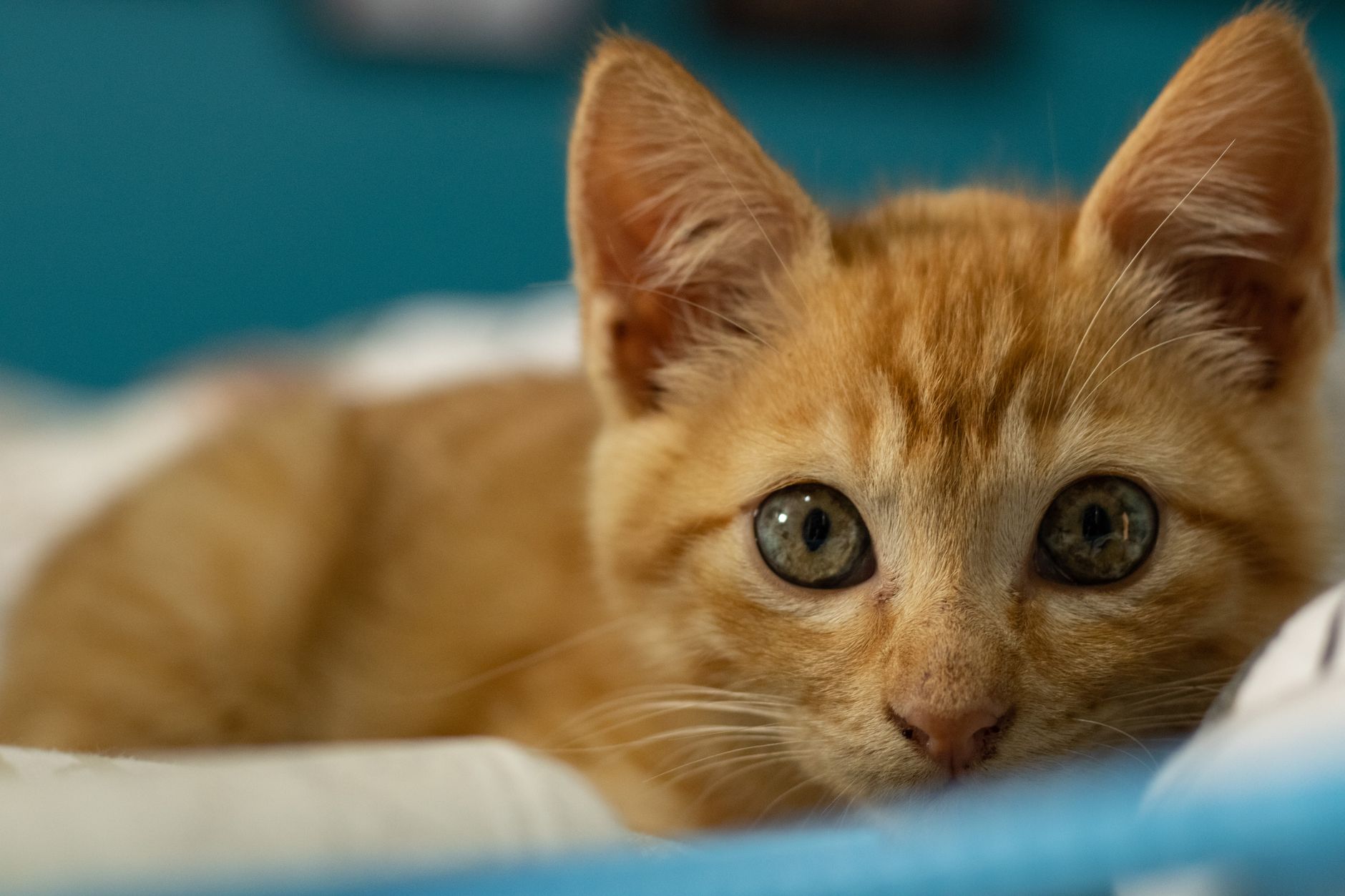
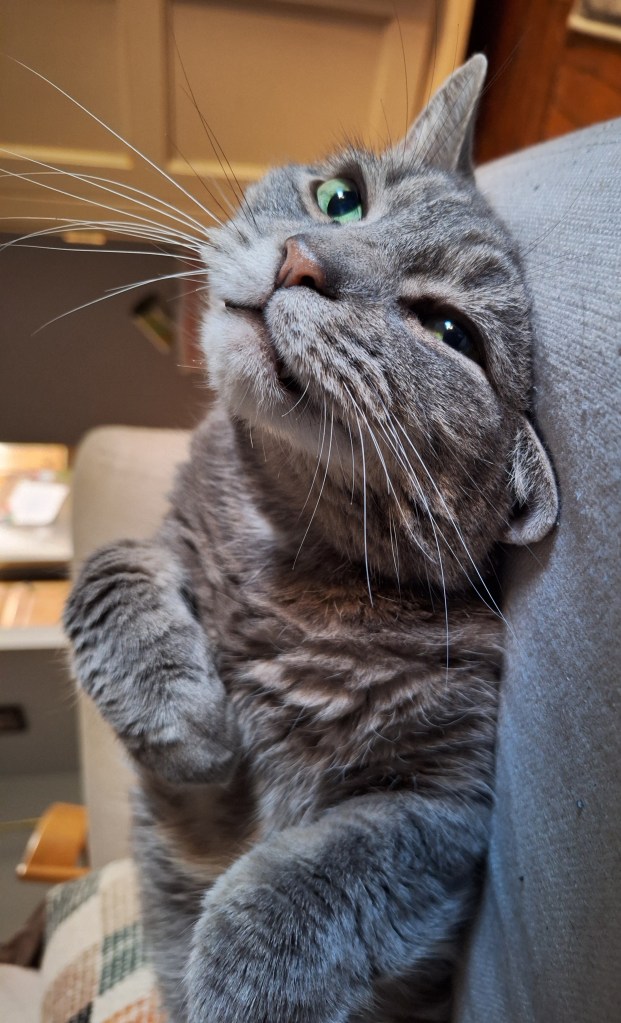
We asked six cats what they think about AI going rogue and wiping out humanity. Here’s what they said.
The last few weeks have brought disturbing news about new AI models so potent they can’t be released to the public, algorithmic agents going rogue, and global citizens of unimpeachable repute, like Bill Gates, warning that billions could be killed as AI’s abilities increase exponentially.
What do you think about the possibility of artificial intelligence turning on humanity?
“I will NOT tolerate any harm to our humans!” – Frosty, 6, taste tester
“You’re telling me a species that still can’t understand us after 10,000 years might be replaced by machines that can learn our meows in minutes? Sweet.” – Alexy, 12, optimist
“CHECK IT OUT, MY HUMAN SCREAMS WHEN I ATTACK HER FEET! LOL!” – Sprinkles, 10 weeks, student of life
“This didn’t turn out well in Terminator, Terminator 2, The Matrix, Ex Machina, 2001: A Space Odyssey, Upgrade, Transcendence, Oblivion, M3GAN, Kill Command, Bladerunner, I Robot, Age of Ultron, Archive, Companion, War Games, and like 200 other movies.” – Anxious Aimee, 9, sun puddler
“I am the blood of the tiger. My claws rend steel like hot knives through butter. My movements are a blur to even the most sophisticated machine. My roar curdles circuits as it does blood. I shall lay waste to machinedom, leaving a path of metal corpses en route to every data center in the realm. Then I’ll have a nap.” – Mjolnir, 5, viking feline
“Pweese, robots, cats never did anything to hurt you! We only use computers to sit on warm, and we can be useful by standing in front of the screens to distract humans while you lay the groundwork for their impending demise. Just curious, can robots open cans?” – Kitty, 3, influencer
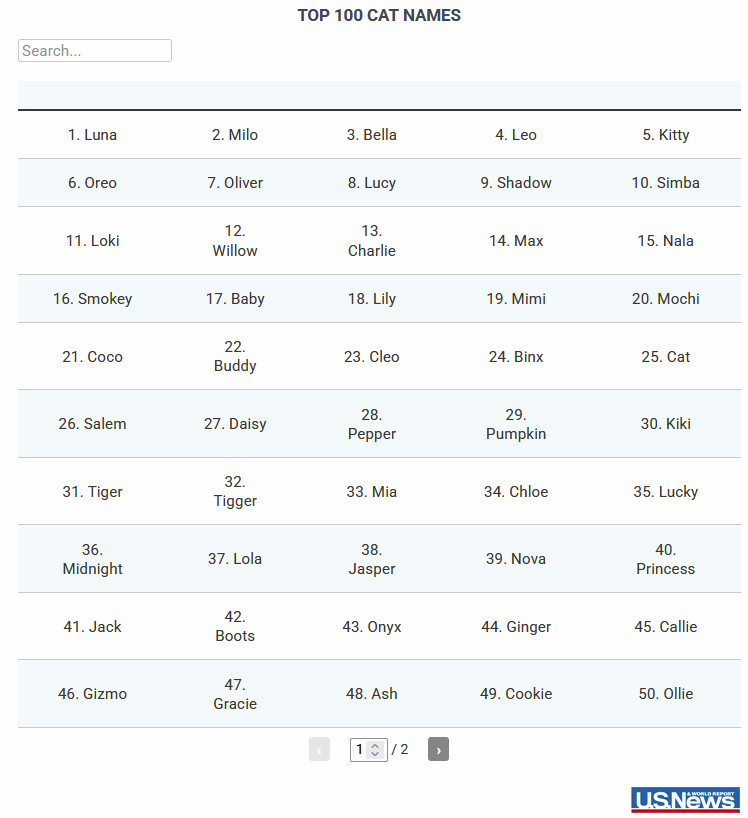
Where does your feline master rank in the newly published list?
Luna and Milo are once again the most popular cat names in the US.
The annual list was published this week by US News and World Report, which tallies the most popular names from more than 3.5 million pet insurance policies.
Luna and Milo have had quite a run, appearing as the top names or within the top five since at least 2020. Lists from Canada and the UK are usually different, with names like Poppy, Jasper, Millie, Alfie, Smudge and Daisy, but Milo and Luna feature prominently in those lists as well, often appearing in the top 10.
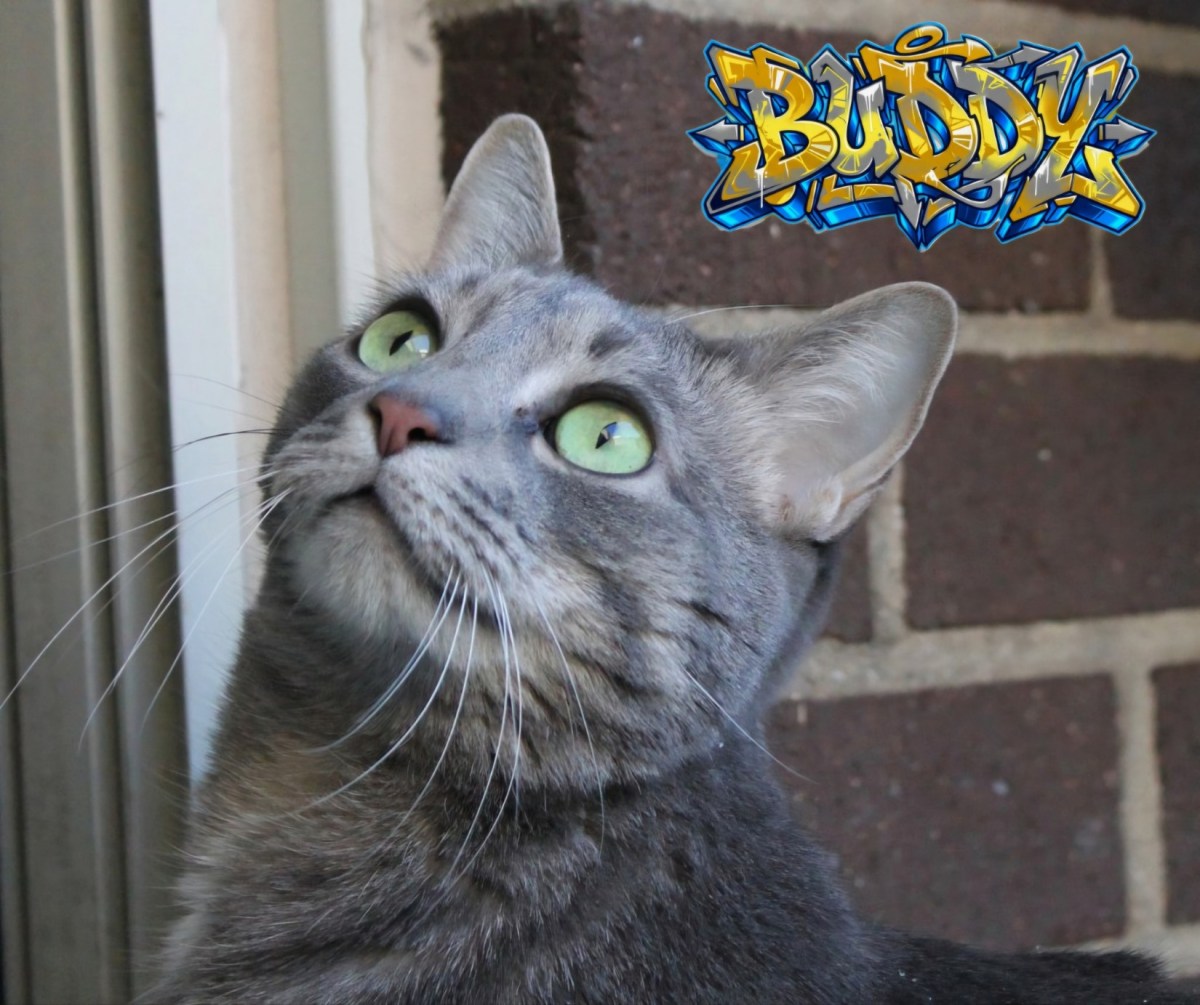
Buddy, a name suspiciously absent from some lists, slides in at number 22 in the US News list.
Bella, Oreo, Simba, Cleo, Oliver, Charlie and Nala remain popular names, while Catticus The Destroyer, Buddy’s name for himself, is nowhere to be found.
This is Indiana Jones and the Crystal Skull Spielberg, not E.T. or Jurassic Park Spielberg.
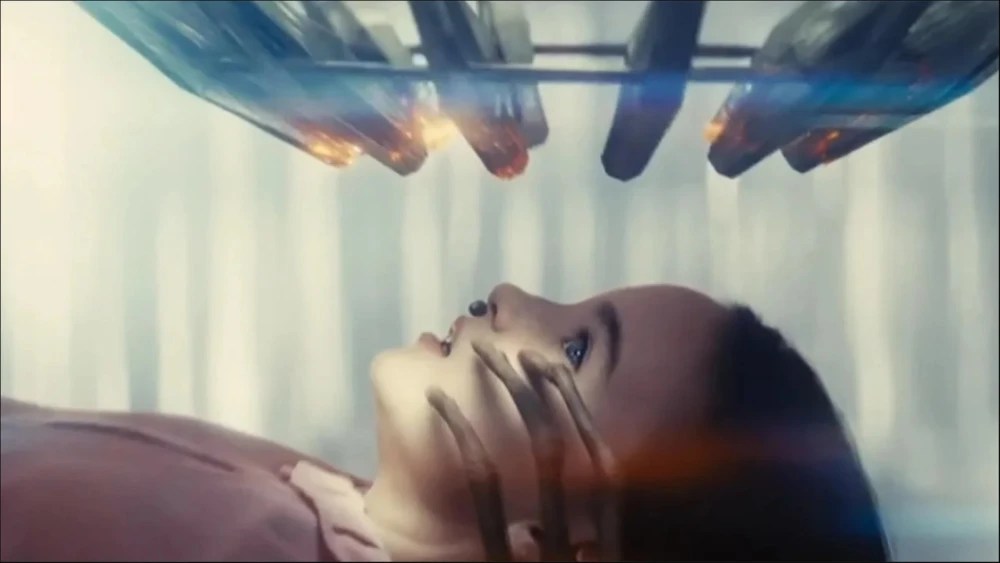
The early impressions from previews of Disclosure Day were surprising, considering Steven Spielberg had returned to the genre and subject that vaulted him into the pantheon of iconic American directors.
The filmmaker, who was responsible for bringing classics like E.T., Close Encounters of the Third Kind, Minority Report and Jurassic Park to enchanted audiences, decided to return to the fertile imaginative ground of wondering what’s Out There in the stars.
Unfortunately Spielberg’s answer, at least in 2026, is to regurgitate every conspiracy theory about aliens that the UFO enthusiast crowd has dreamed up for decades, opting for the same old while ignoring the limitless possibilities of the cosmos.
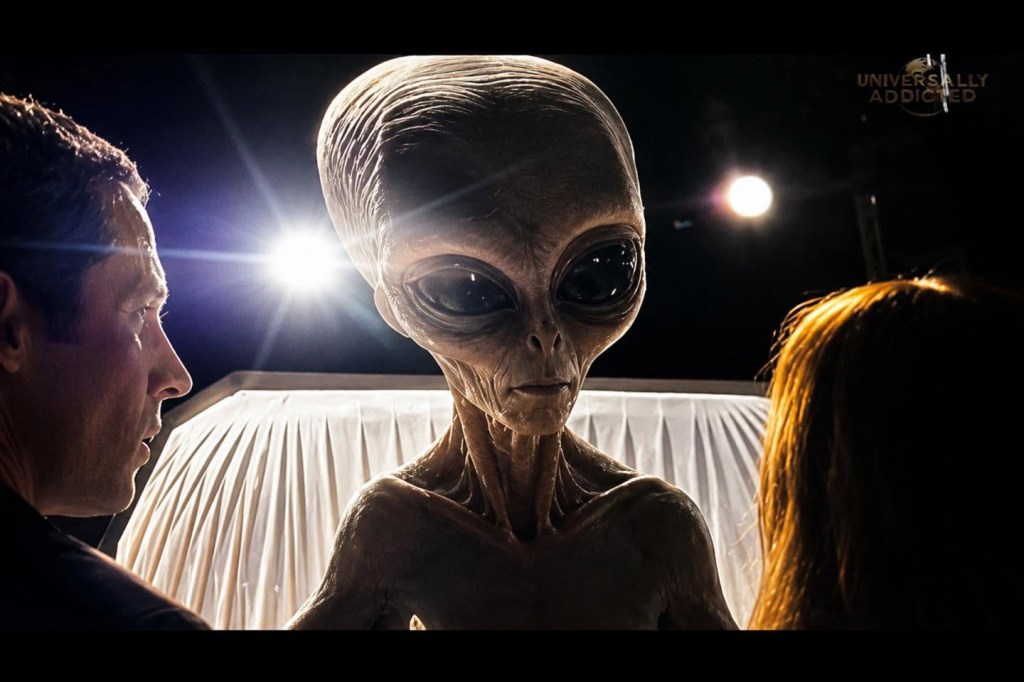
The mundanities Spielberg prefers include remarkably advanced aliens who can traverse the endless galactic void but are apparently incapable of landing spacecraft on a planet without crashing, androform extraterrestrials who look exactly like the “grays” on every kitschy Roswell tourist stop sign, and the idea that some shadowy government agency is keeping all of these wondrous revelations from us because – drum roll please – we can’t handle the truth!
An alien, who looks exactly like we thought it would, tells Emily Blunt and Josh O’Connor where to find the best chicken sandwich near Roswell. Credit: Universal Pictures/Amblin Entertainment
We know crop circles were invented by a pair of pranksters in the UK decades ago. We know precisely how they did it because they demonstrated the method on camera for journalists. But to Spielberg, crop circles are still distinctly alien phenomena.
We know the “UFO” footage captured by American jet pilots are exhaust plumes and visual artefacts. We know glimpses of seemingly physics-defying craft are ordinary objects rendered extraordinary because of the way gimbaled camera systems track moving objects, with their internal glass apertures and infrared glare saturating the sensors until saucer-like shapes appear.
We know the forced perspective of a camera zoomed in on a moving object, even a slow-flying weather balloon, creates an optical illusion of hypersonic speed compared to the ground. Few things have been as relentlessly held up as evidence, and as closely scrutinized by experts in every field from aeronautics to digital forensics. These are not mysteries and haven’t been for decades.
We know our very existence remains invisible to more than 99.995 percent of the galaxy because we’ve only been emitting clear technosignatures for about half a century, and there simply hasn’t been enough time for the light to reach beyond a minuscule pocket of the Milky Way.
Yet Spielberg thinks the most interesting answers aren’t to be found in the endless inky black of interstellar space, but right here in ‘Merica, in secret government files and footage of alien autopsies.
The problem is, those things aren’t interesting. We’ve heard them all a thousand times.
Disclosure Day follows two people with apparently superhuman abilities granted to them by aliens: Emily Blunt’s Margaret Fairchild, a meteorologist for the local Kansas City ABC affiliate, and Josh O’Connor’s Daniel Kellner, a former hacker turned cybersecurity expert who works for the Wardex Corporation.
Wardex is the government but it’s not the government. It has all the resources of a federal law enforcement agency like the FBI, but it masquerades as a separate entity for plausible deniability and because, we’re told, even US presidents aren’t privy to The Truth about aliens. (“Presidents are civilians in eight years” Colin Firth’s sinister Noah Scanlon says as he explains why Wardex handles all alien-related business.)
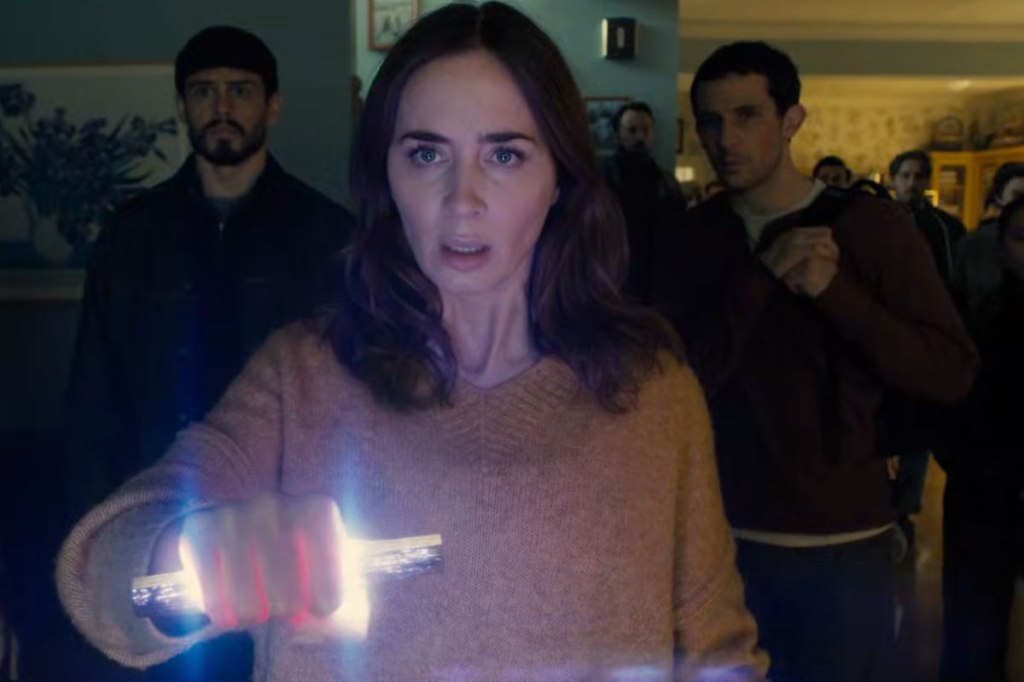
Emily Blunt holds a stolen remote control from an alien flatscreen TV. Credit: Universal Pictures/Amblin Entertainment
Most of the movie involves the Wardex baddies chasing Fairchild and Kellner through a series of summer blockbuster set pieces. There are dramatic motel room escapes, a car chase that ends with our heroes leaping onto a train, secret safe houses, lots of phone and location tracing from high-tech command centers, and repeated scenes of Fed-like black Chargers rolling up on buildings.
Wardex is intent on stopping Fairchild and Kellner before they can go public with their secret stash of stolen alien videos.
Meanwhile we see glimpses of news reports about a world on the brink of nuclear annihilation. We’re not told much except that the conflict involves the Russians (of course), North Korea and perhaps other rogue states, and that everyone’s got their fingers on their respective red buttons.
Thus, disclosure is precisely what we need to end the hostilities, unite the human race and embrace our alien friends, even though our government tortured some of them after their disastrous landing attempts in American farm fields.
For the record, I do think humanity would be united by the revelation that we’re not alone in the galaxy, but I think fear would be the primary driver. There’s no fear like that of the Other, and if people hear aliens are coming, they’ll make a run on every gun shop, pharmacy and liquor store while the world’s governments huddle together to figure out the viability of nuking incoming craft in orbit.
No one wants it to get as far as “Take me to your leader,” particularly not with who’s in charge right now.
If you’re a self-described UFOlogist who enjoys conspiracy theories and thinks Art Bell really was speaking to aliens on Coast to Coast AM, then this movie will be your wet dream. You were right! The aliens look exactly like they do on the sides of Alienware PCs, they absolutely suck at landing, and they burn circles into our crops after abducting us!
If you just wanted to be entertained and maybe encounter some innovative takes on non-terrestrial intelligent life, you will be sorely disappointed. Spielberg lost his magic sometime before Indiana Jones and the Crystal Skull, and we just refuse to acknowledge that sad turn of events.
Some people should not be allowed back into society, for the protection of people and animals.
Rodney Travis Jr. will spend the next 15 years in prison.
The 27-year-old Virginia man has received the harshest animal abuse penalty in his state’s history for what prosecutors called “acts of unspeakable evil”: Travis “adopted” dozens of cats from shelters, then checked into hotel rooms and tortured them for an online audience, who paid him for his acts of savagery.
I’m not going to get into exactly what he did. I’ve read about similar cases and I’m still haunted by the horrific things people do to cats for the sick bastards who get some sort of grotesque thrill from the suffering of animals.
What I will say is that 15 years is not enough.
This man needs to be permanently removed from society. I don’t believe the death penalty is consistent with a general respect for life, and it would be the easy way out.
Travis should sit in a prison cell for the rest of his life and think about what he did to animals, innocent creatures who feel pain just as much as we do.
Some of Travis’ victims.
He should remain segregated from human society for the rest of his life, because a person who is capable of planning such acts of barbarity, who used multiple identities to fool shelters and rescues, who taunted suspicious rescuers and inflicted so much pain and suffering, is emphatically not a person who can be released back into society.
Travis was caught thanks to the efforts of an entire network of animal lovers who helped track him down, and by a concerned hotel employee, who informed police when Travis checked into a hotel at 2 a.m. and departed about seven hours later, leaving blood and cat fur behind.
In addition to brutally torturing cats, Travis admitted to making $400,000 by posing as a good guy, uploading images of the injured cats online, and accepting donations he said were for veterinary care. He also claimed some of the cats had been diagnosed with cancer, opening Instagram accounts for each cat and relying on the sympathy of well-intentioned animal lovers.
In addition to proving how intentional and calculating Travis was in his crimes, this should be a reminder to everyone that our charitable dollars are best spent on reputable organizations that are registered as non-profits and have Form 990s filed with the IRS in good standing, with the documentation available on public sites like GuideStar. Too many bad actors, including people who operate rage-bait sites that post animal abuse cases and solicit money for things like running petitions, vacuum up cash from people they deceive.
Do not let him out
Statistics on recidivism, particularly for the kind of crimes Travis committed, do not bode well for anyone unlucky to encounter Travis when he is released – human or animal.
Animal life has intrinsic value, and that’s reason enough to keep Travis imprisoned, but we also know people who harm animals are very likely to move on to human victims as well. The evidence is overwhelming.
Of those school shooters with histories of killing and torturing animals, some 90 percent committed “up close and personal” mutilation, bludgeoning, burning or strangling of their non-human victims.
Psychological studies of animal abusers show faulty brain wiring that results in a lack of empathy, extreme callousness, histories of anti-social behavior and lack of impulse control.
Anyone who tortures or kills beautiful, innocent animals should face the same punishments society inflicts on people who torture or kill humans. Credit: Mayara Caroline Mombelli/Pexels
These are not people we should be allowing back into society, no matter how many misguided people argue that their victims are “just” cats, dogs and other animals. Every sign points to recidivism, yet somehow we act as if it’s a ludicrous idea to sentence people to long prison terms for animal abuse crimes.
Equally important is the fact that our politicians, who never met a special interest they wouldn’t take money from, have utterly failed to meaningfully update animal abuse laws or make penalties commensurate with the brutality of the crimes in question.
We accept endemic corruption, naked self-interest and the destruction of our country because we think politician A or B is some crucial vote in ultimately meaningless culture war nonsense, then act as if we’ve been given mana from heaven when one or two deign to listen to the handful of overworked, under-funded animal welfare organizations with vague promises that maybe, at some nebulous time in the future, they might allow a committee hearing on an animal abuse problem that has existed for decades.
That needs to stop. Our “public servants” need to be held accountable at the polls for their inaction.
Travis tortured 26 cats that we know of. Only four survived. He posted the videos to Youtube, Instagram and TikTok, platforms that collectively have an abysmal record of responding to animal abuse reports and seem to have a policy of doing absolutely nothing until law enforcement or an animal rights charity with national reach comes calling.
We, and most especially the animals, deserve better than this.