Clocks Fall Back And My Cat Slaps Me In The Face

With a feline in the house, forgetting about seasonal time changes is impossible.

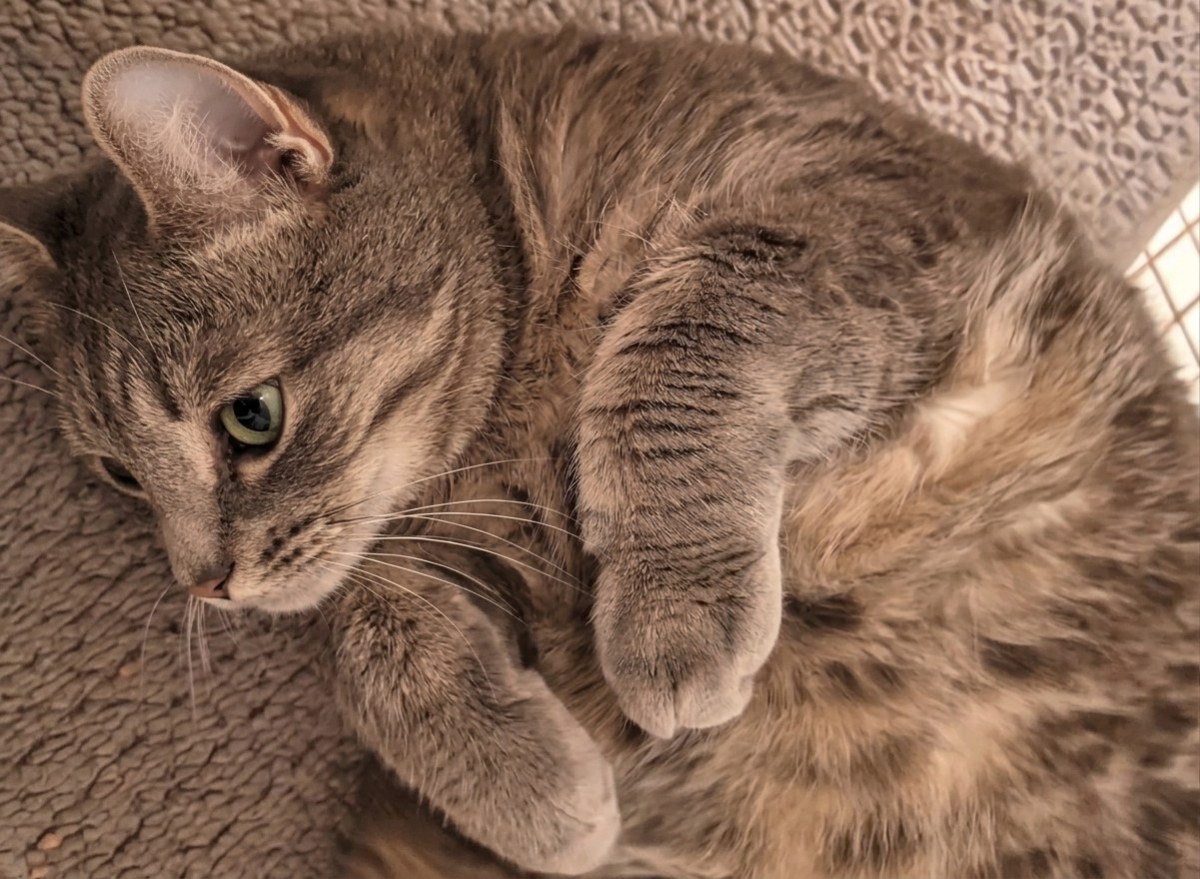
I don’t remember what I was dreaming about, just that my dream ended with a THWAP! against my cheek.

I turned away pointlessly and felt another slap against my chin, this time with an untrimmed claw scraping against the stubble.

“What the %&@$?” I mumbled, opening my eyes to find Bud sitting on my chest, his nose inches from mine, paw slightly raised to deliver another slap.

“No! No, Bud, don’t you…ow! You little turd!”

I sat up, forcing him to slide off my chest into my lap, and looked at him through groggy eyes.

“What was that for?” I asked him.

He meowed indignantly and I grasped like a blind man for my glasses and phone.
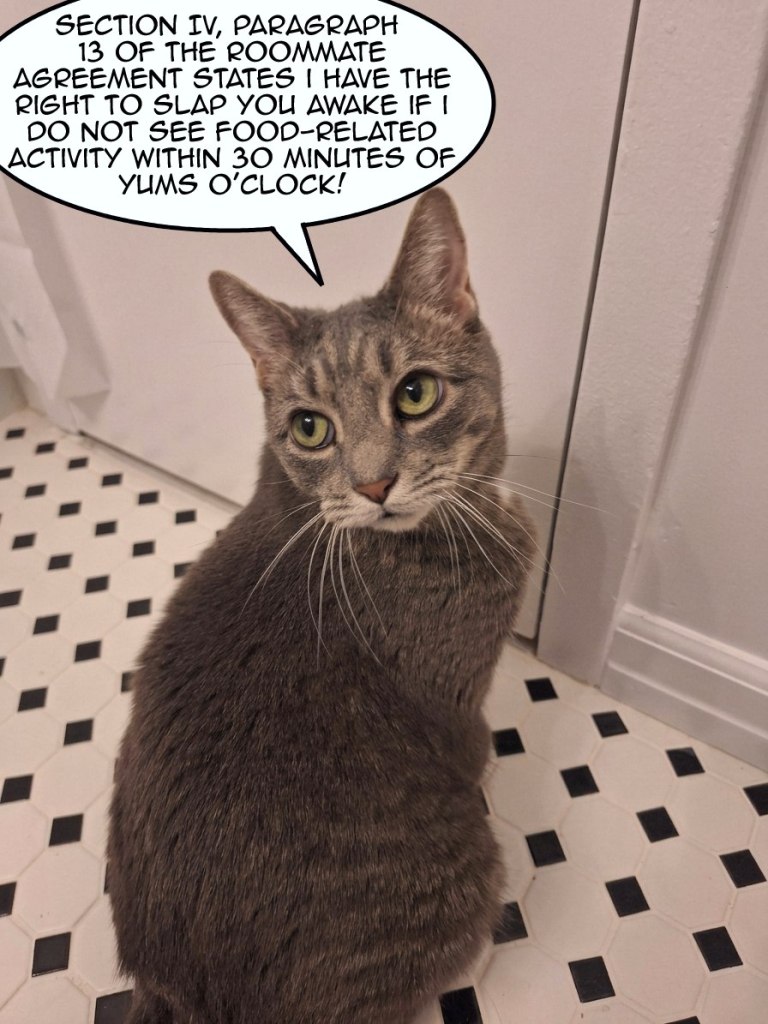
That’s when it hit me. Daylight Savings Time had ended overnight, the clocks had fallen back automatically because everything is networked these days, and from Bud’s perspective I had slept past our wake up time.

It was nearly Yums O’Clock, my feline overlord didn’t see any signs indicating I’d be rolling out of bed soon, so his solution was to slap me in the face to wake me up.

Naturally.

No hard feelings, either. Bud may be a weird cat, but he’s my weird cat and I love the little dude.

I’m writing about this not only because it’s funny, but also because feline timekeeping is shockingly accurate. Half the time I don’t even know what day it is, but my little pal knows when breakfast is due, down to the minute.

What other sort of impressive feats could felines accomplish if we can associate them with meal time in their minds?
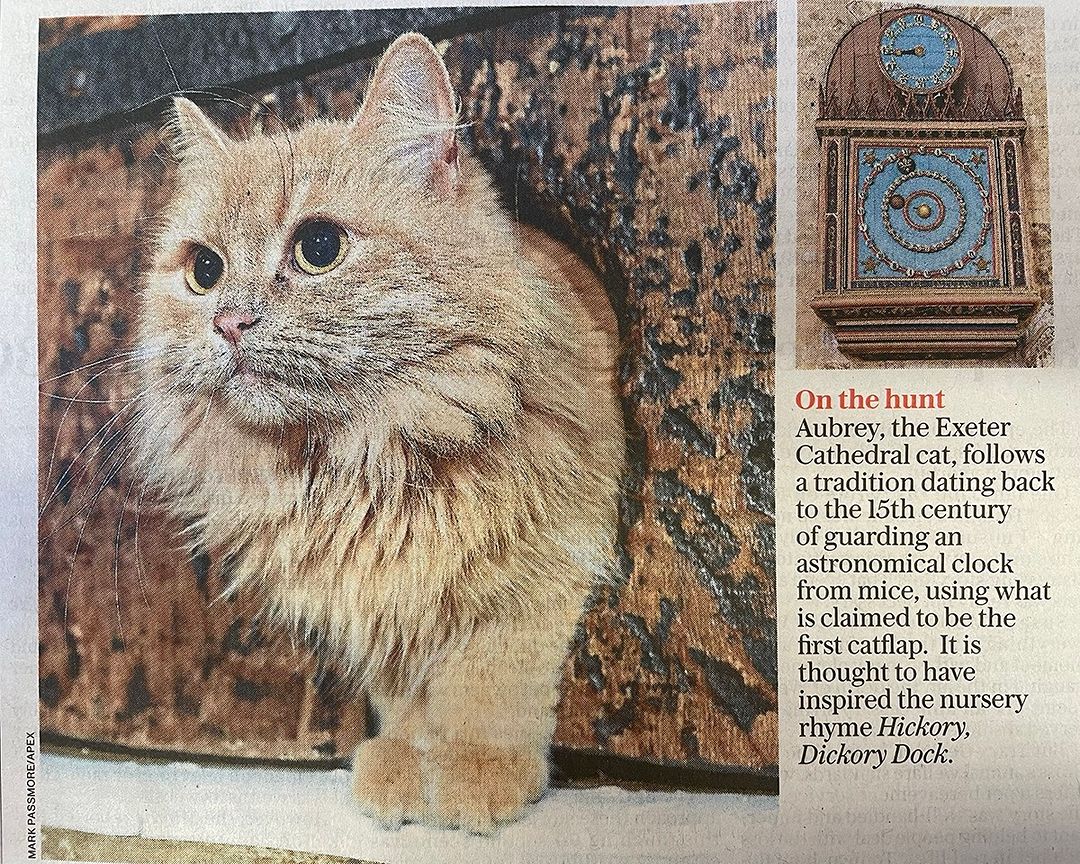
At Exeter Cathedral, Felines Have Feasted For Centuries Thanks To World’s Oldest Cat Door

Viking raiders, Roman ruins, an astronomical clock and a bishop who badly needed the services of a competent feline hunter: the story of the oldest known cat flap.

In 1598 Bishop Cotton arrived at his new post to find he had a serious rodent problem.

The new leader of Exeter Cathedral realized mice and rats were attracted to the animal fat used to lubricate the complex inner workings of the ancient structure’s astronomical clock, so he did what any sensible person would — he got himself a cat and had a flap installed so kitty had free reign of the church grounds and the chambers that held the hidden clockwork.

The newly-discovered details came to light thanks to the efforts of Diane Walker, the cathedral’s historian. One record shows the bishop paid a carpenter eight pence to cut a circular, cat-size hole in the heavy wooden door leading to the clockwork chamber, as well as ledgers showing the cat was officially on the church’s payroll.

“Back in the 14th and 15th Centuries we have records in the cathedral of payments of 13 pence a quarter for the cat and occasionally 26 pence a quarter for the cat,” Walker told the BBC. “We don’t know if that was double rations because they had been doing a good job or whether there were actually two cats.”

365692370_686569446830535_5166972407635373821_n
Credit: Exeter Cathedral

I love the idea of a happy cat licking her lips and cheerfully chowing down on medieval Temptations as reward for a job well done.

The cathedral has provided steady employment for felines, who still keep the rodents at bay on the grounds more than 400 years after Bishop Cotton hired his first mouser. Cute ginger tabby Audrey, pictured above, holds down the fort these days.

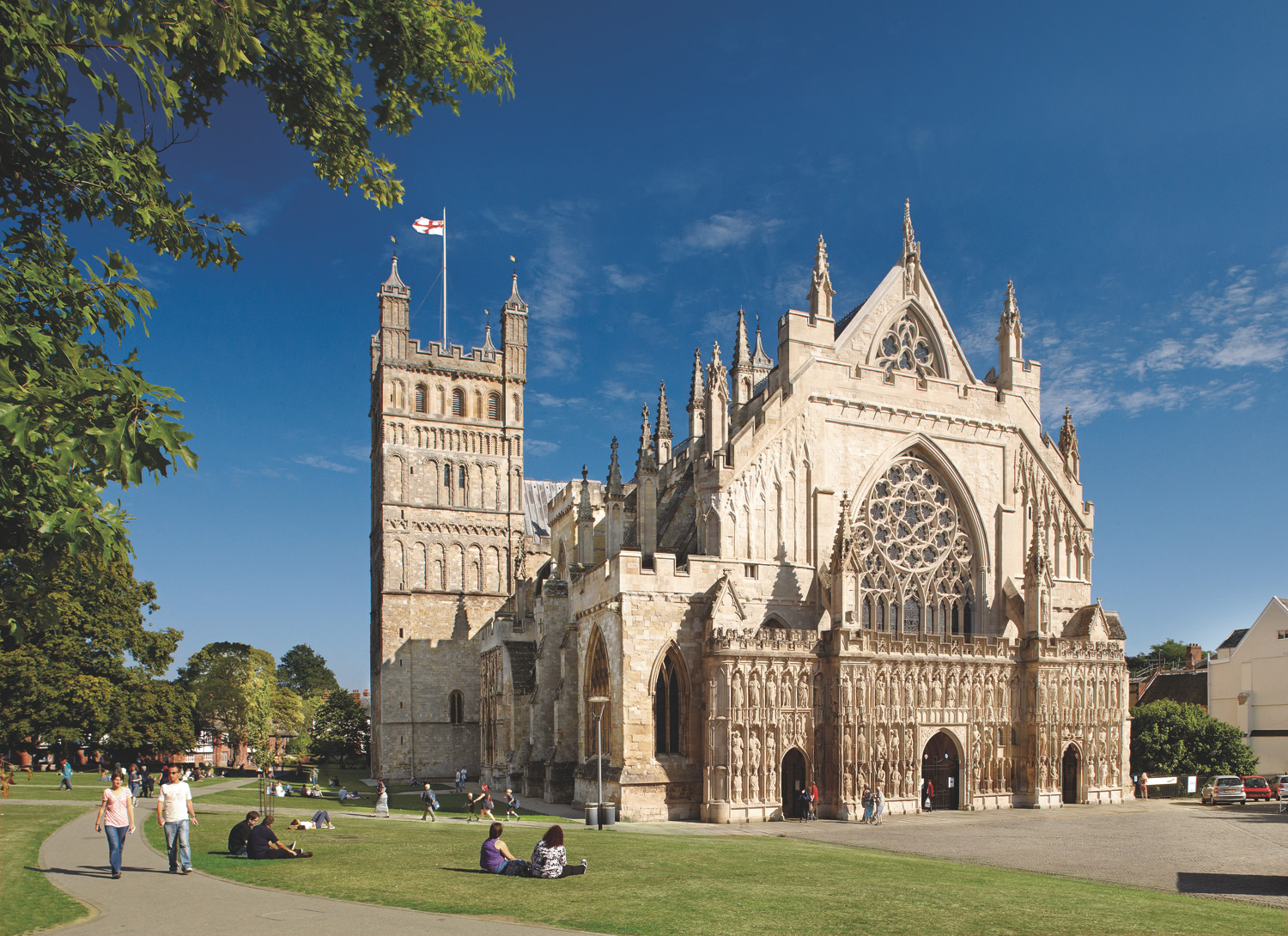
Exeter Cathedral has an interesting history besides its feline employees. It owes its existence to the vikings: the church decided to build a new cathedral as the bishop’s seat because his previous post was located near river routes and was vulnerable to raids from viking invaders.

Exeter Cathedral
Credit: Exeter Cathedral

Previously the site of several Roman structures, including a public bath house, the grounds were chosen because Exeter was a prosperous, bustling city and church officials thought it had a bright future.

The cornerstone was laid in 1112 and it took almost 300 years to finish, becoming one of the finest examples of a gothic cathedral in the Norman style.