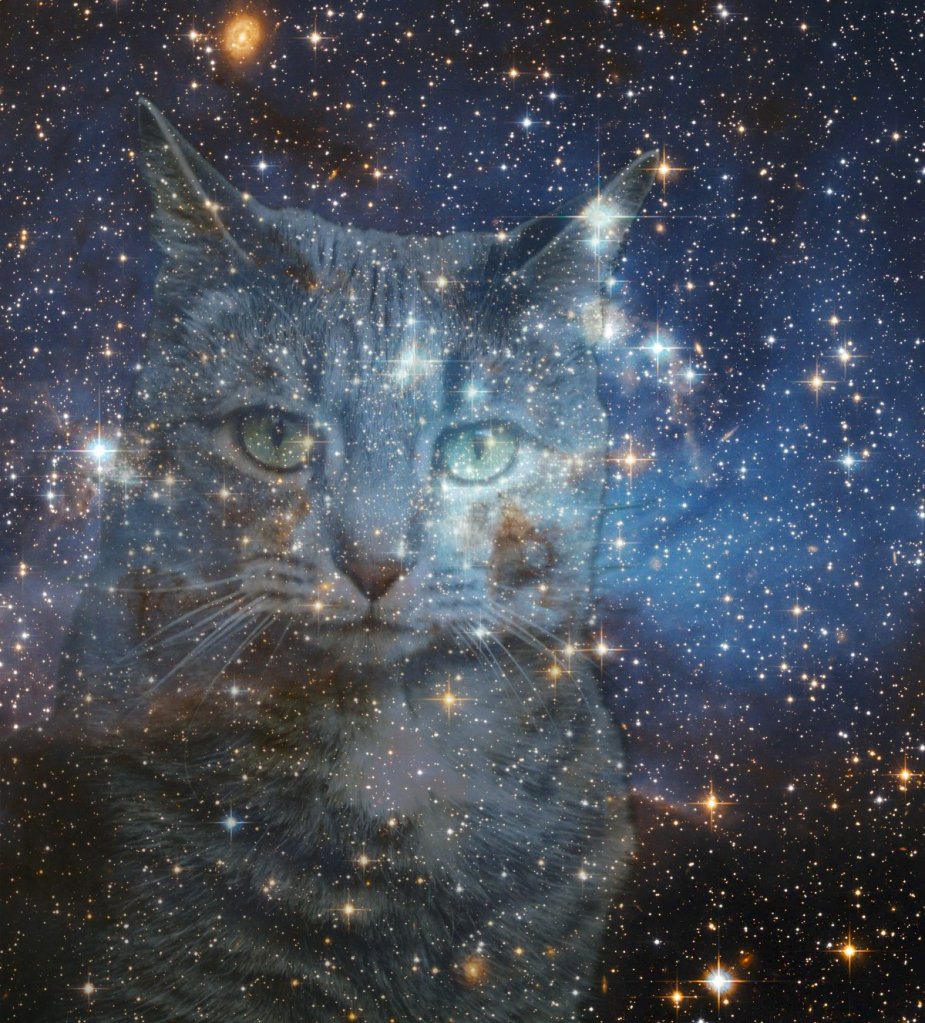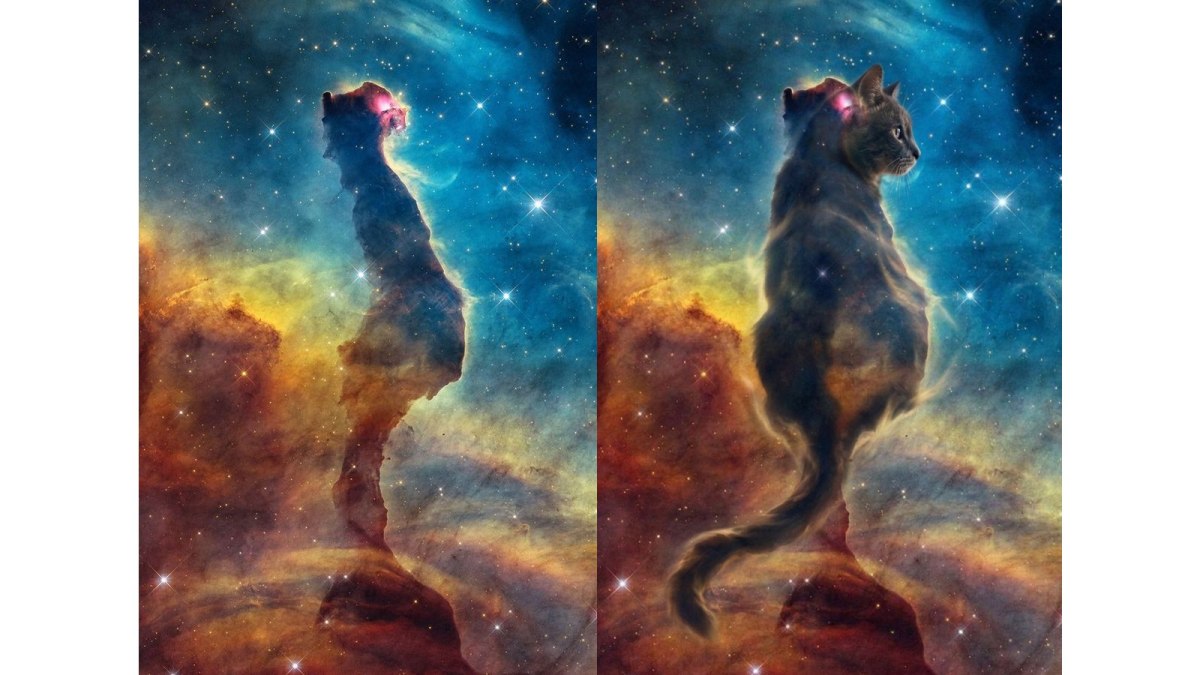
It’s meowing at us from across the cosmos!
A distinctly feline feature of a far-off nebula is capturing the imaginations of space-heads and cat lovers alike this week after NASA released a new image of the stellar parturition zone taken by the James Webb Space Telescope and its predecessor, Hubble.
The image combines data taken from the two telescopes: Hubble’s input comes from the visible light spectrum, while the JWST’s contribution is a ghostly infrared representation.
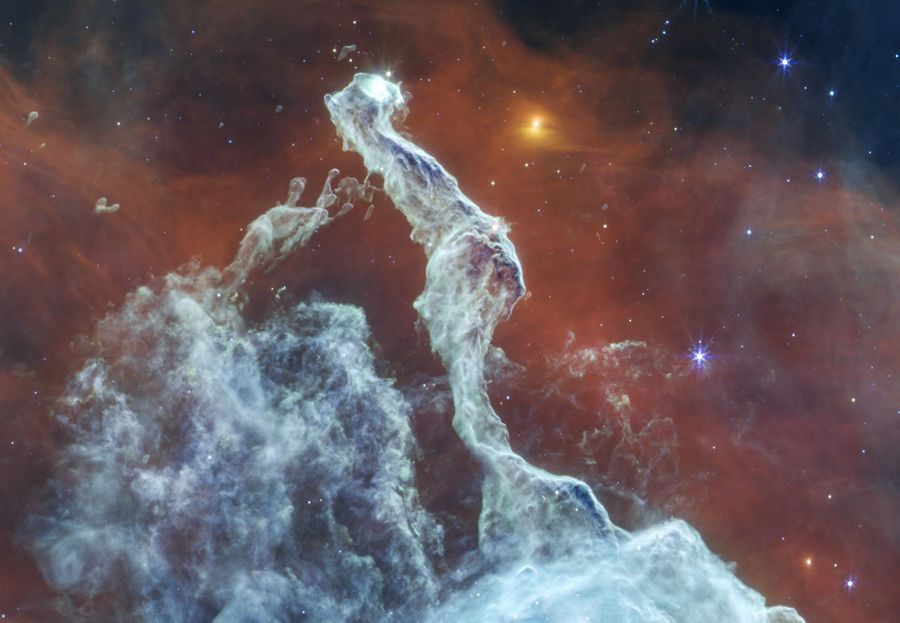
The Cat’s Head Nebula may be new to millions of people, but it was first discovered, by western sky surveyors at least, by the French astronomer Nicolas-Louis de Lacaille in 1752.
de Lacaille discovered Caldwell-92, also known as the Carina Nebula, during an astronomical expedition to South Africa’s Cape of Good Hope. The location was critical because the nebula, with an apparent magnitude of 4.8, can be seen with the naked eye, but not from Europe or North America. Located 60 degrees below the celestial equator, observing it requires traveling to the southern hemisphere.
The Carina Nebula is massive, with a radius of 230 light years, and the Cat’s Head Nebula is just a small part of it, about 7,500 light years from our star system.
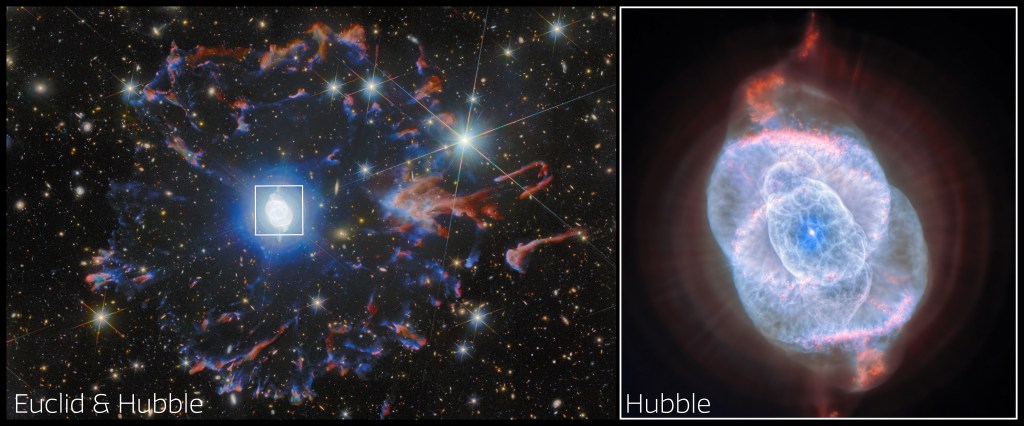
As for nebulas, while they’re known for being among the most incredible spectacles in the cosmos, they are both stellar nurseries and graveyards, with the massive clouds of gas and dust kicked up and stirred by the incomprehensible energies involved in the births and deaths of stars.
Since cats have captured the hearts of humans and are the undisputed stars of the internet, it’s only fitting that we see them everywhere we look, including space. Aside from the Cat’s Head Nebula, there’s the Cat’s Paw Nebula (NGC-6334), the Cat’s Eye Nebula (NGC-6543), the Smiling Cat Nebula (Sh2-284), the Space Cheshire Cat (SDSS J1038+4849) which is actually a group of galaxies an astounding 4.6 billion light years away, the constellation Leo, Leo Minor, the Lynx constellation, and the late Felis, discovered by the cat-loving French astronomer Jérôme Lalande in 1799. Unfortunately Felis no longer exists as it was “absorbed” into the nearby constellation Hydra and fell out of use in star charts.
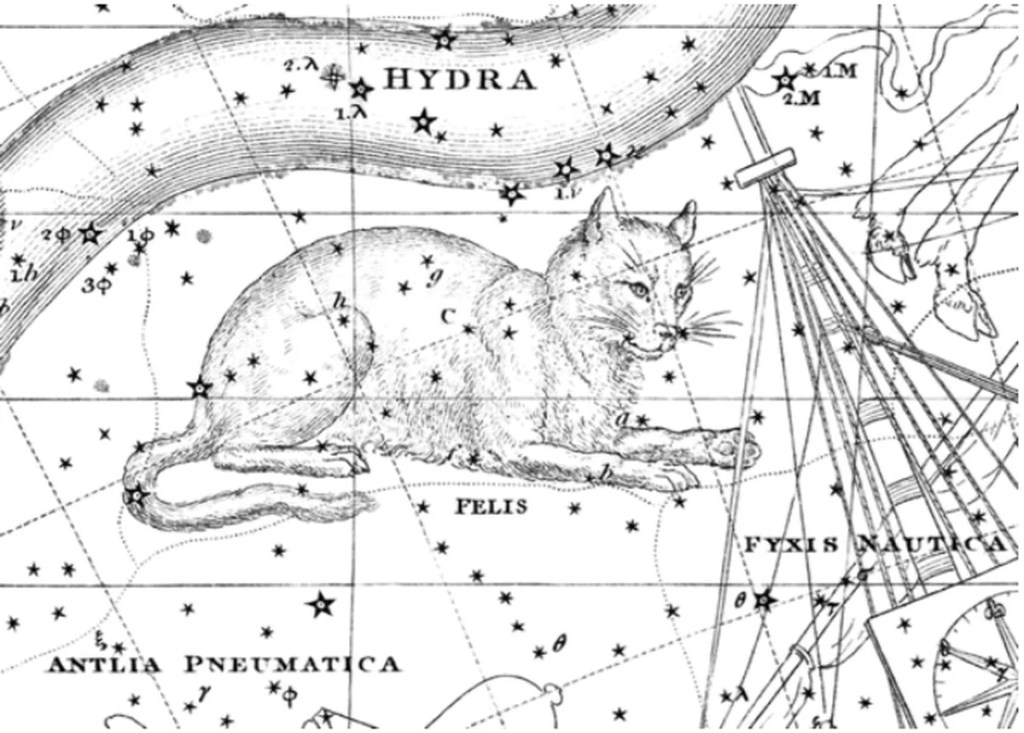
It was a great crime, absorbing Felis into Hydra! I feel this calls for a new one, the Buddy Nebula. Consider this a stand-in until a suitably regal location is found for the little guy: