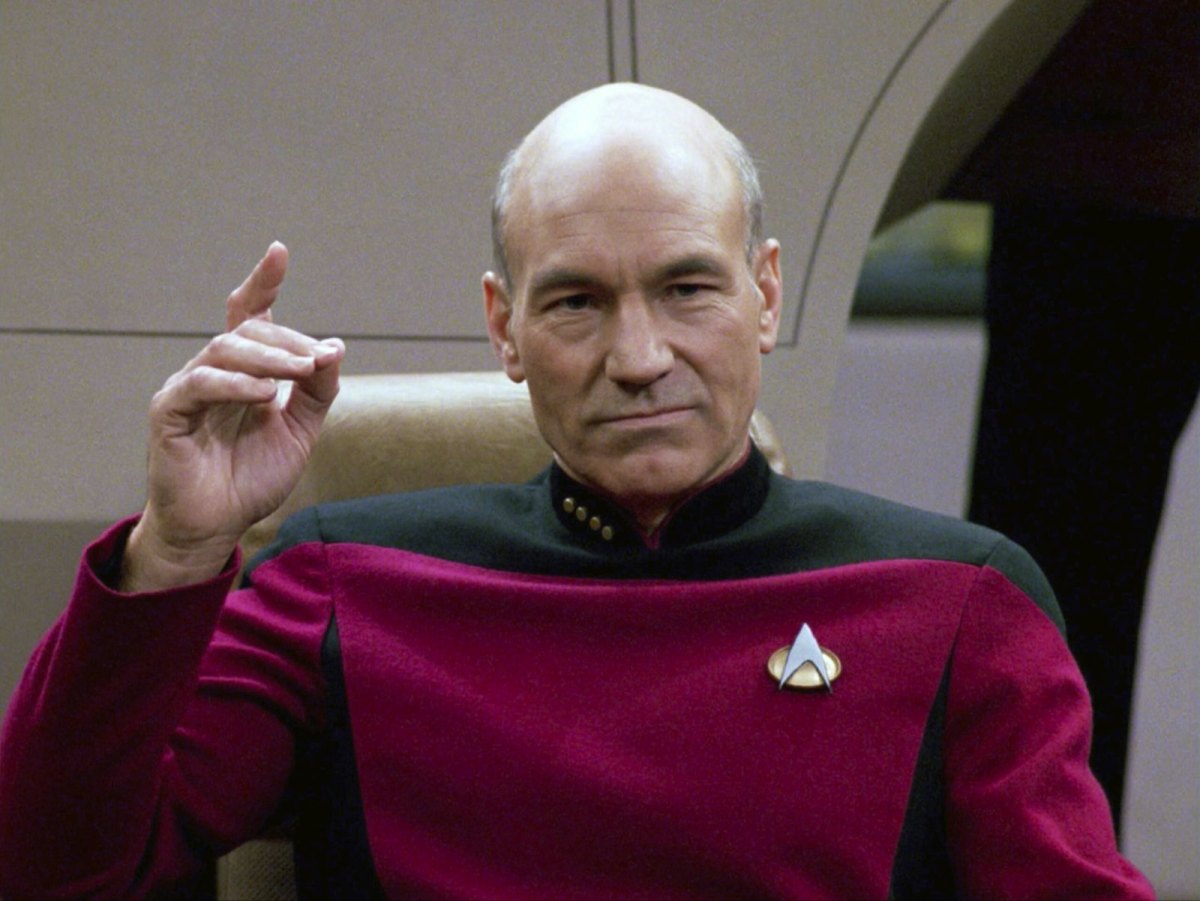
Remembering Sir Patrick Stewart, Icon And Starfleet Captain

From a small village in the UK to Hollywood and the command seat of the USS Enterprise, Patrick Stewart entertained generations of dreamers and showed us that a sharp mind is always better than a heavy fist.

In one of my favorite Star Trek episodes ever, dubbed “The Survivors,” Captain Jean-Luc Picard and the USS Enterprise-D are dispatched to a Federation colony in response to a desperate distress call.

A mysterious alien armada had arrived in orbit and began bombarding the planet without warning. By the time the Enterprise arrives at Delta Rana IV, the colony planet, the ship’s sensors report total devastation except for one tiny, perfectly square patch of land where a lone house still stands unscathed, its lawn as green as ever even as ruins smolder in the distance.
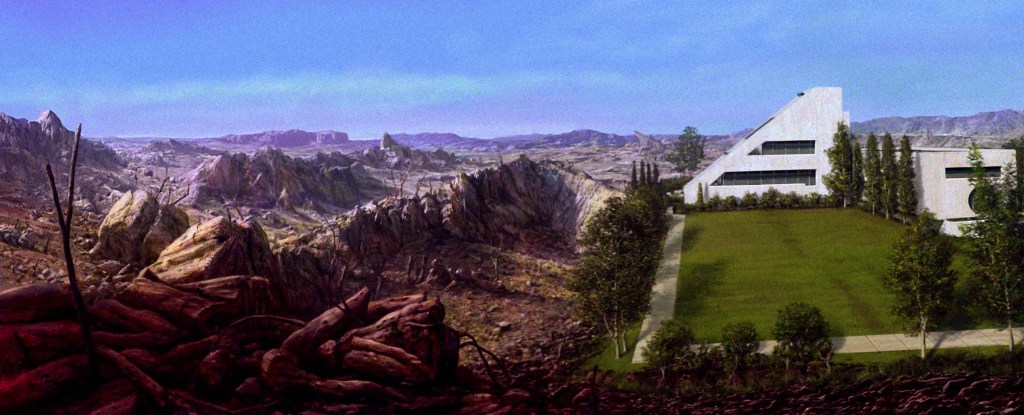
A futuristic white building set against a dramatic mountainous landscape, featuring sparse greenery and rocky terrain in the foreground.
The Uxbridge home on Rana IV, a combination of a live-action shot and a matte painting. Credit: Paramount

Kevin and Rishon Uxbridge, an elderly couple, live in the home but refuse to be rescued. They tell Captain Picard they’re going to tough it out on the scorched, desolate colony world, and they’re strangely unconcerned by the reappearance of one of the alien ships, which deploys powerful weapons to chase the Enterprise away several times.

After a cat-and-mouse game between the alien vessel and the Enterprise, Picard realizes there’s something deeply wrong with the Uxbridges, catches Kevin in a lie and questions the couple. That’s when Kevin Uxbridge admits he’s not human – he’s a powerful, immortal energy-based being called a Douwd who had sworn himself to pacifism and married a human woman.

But when the invading Husnock armada destroyed the colony, and took the life of his beloved wife Rishon, Kevin lost his mind and in a moment of grief and rage wiped out the Husnock.

“You don’t understand the scope of my crime,” Kevin tells Picard and his crew. “I didn’t kill just one Husnock, or a hundred, or a thousand. I killed them all. All Husnock everywhere. Are eleven thousand people worth fifty billion? Is the love of a woman worth the destruction of an entire species? This is the sin I tried so hard to keep you from learning now. Why I wanted to chase you from Rana.”
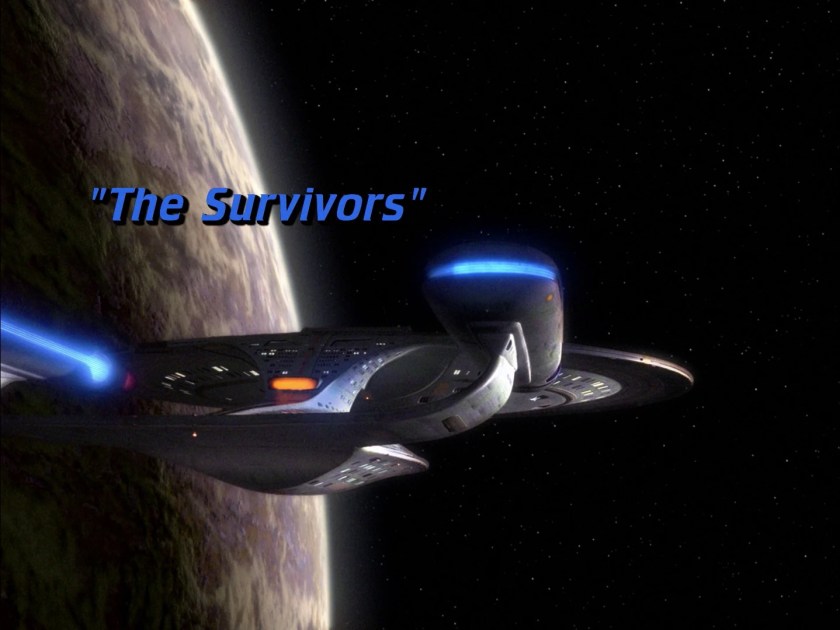
A starship gliding through space near a planet, with the title 'The Survivors' displayed prominently.
The episode’s title card, with the Enterprise pictured in orbit around Rana IV. Credit: Paramount

The episode ends on a somber note as Picard leaves Kevin and the resurrected Rishon to themselves, telling Kevin: “We’re not qualified to be your judges. We have no law to fit your crime. You’re free to return to the planet and to make Rishon live again.”

Just before the credits roll, Patrick Stewart’s theatrical voice cuts in for a captain’s log.

“We are departing the Rana system for Starbase One Three Three. We leave behind a being of extraordinary power and conscience. I am not certain if he should be praised or condemned. Only that he should be left alone.”

The episode is a fine example of the way Patrick Stewart played Picard, not as a swashbuckling, frequently-brawling, alien-skirt-chasing captain in the mold of James T. Kirk, but as a cerebral leader who was primarily an explorer and diplomat, not a military commander.

Time and again, Stewart imbued Picard with the judicious, insightful demeanor that would become the character’s trademark. When Captain Picard was at the helm, you felt confident that in this fictional world, humanity was sending its absolute best to represent our species among the stars.

Stewart was one of my heroes as a 90s kid who grew up on reruns of The Next Generation, and I loved Star Trek despite getting years worth of shit for it from literally everyone – my brother, my friends, girlfriends, cousins, coworkers, even my mom.

The English actor, who was knighted by Queen Elizabeth in 2010, passed away Thursday. He was 86 years old.

To most of us, he was Picard and the X-Men’s Professor Xavier, but he was so much more than that. He was a bona fide stage actor, spending most of his early career playing just about every role Shakespeare had to offer. He’s played Moby Dick‘s Captain Ahab, A Christmas Carol‘s Ebenezer Scrooge, and took on a shocking role as white supremacist leader Darcy Banker in the 2015 thriller Green Room, showing his considerable range. Most recently Stewart lent his voice to a character in this year’s The Sheep Detectives. It was his last role to be released while he still lived, with his final appearance yet to hit screens in the upcoming Avengers: Doomsday.
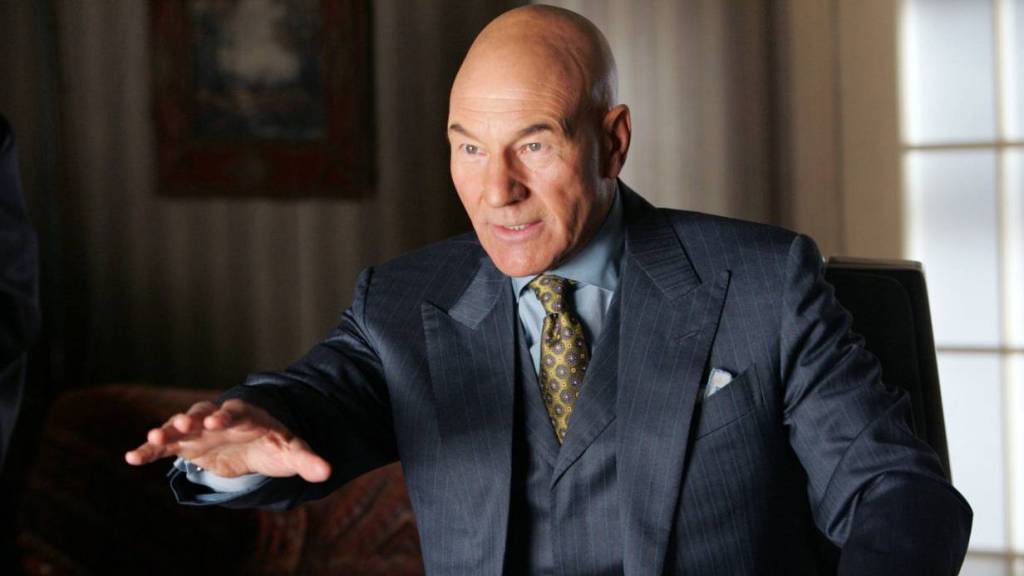
A man in a formal suit gestures confidently while seated at a table, showcasing a professional demeanor in a well-lit office setting.
Stewart as Professor Charles Xavier, leader of the X-Men. Stewart played the role in nine movies across 27 years. Credit: Fox

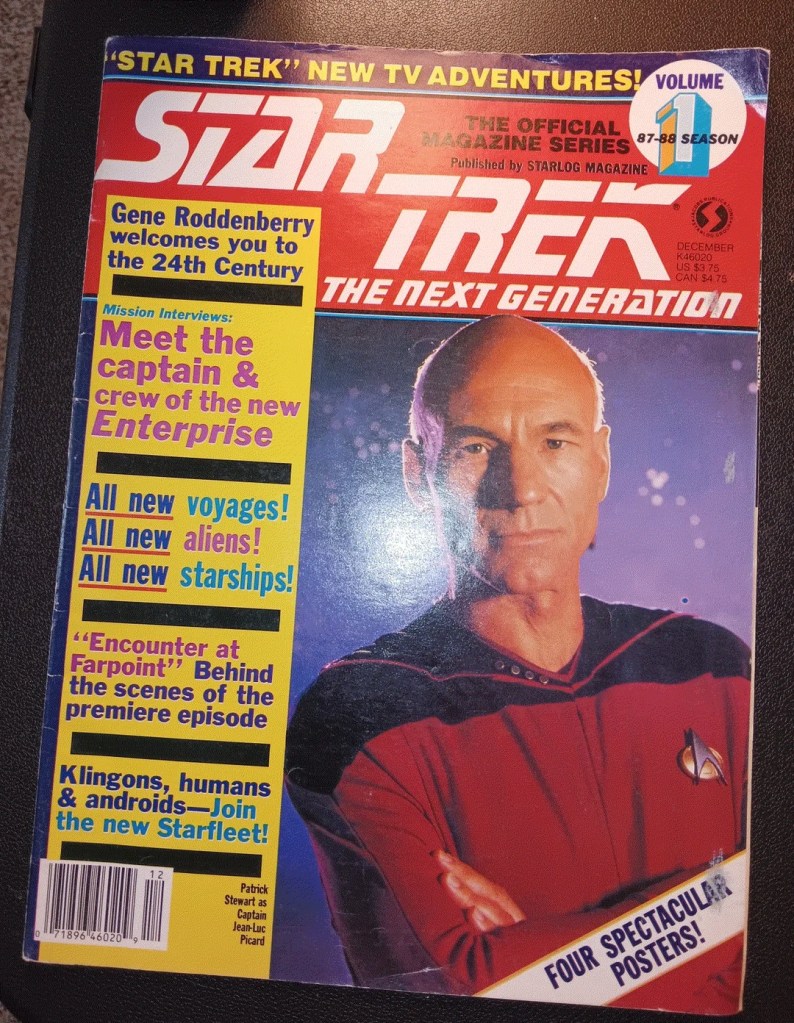
Most people will remember him fondly as Picard during a seven-season run that straddled the late 1980s and early 90s. As strange as it may seem now, The Next Generation was widely expected to fail, with critics expressing skepticism that audiences would warm to a starship Enterprise without Kirk, Scotty, Bones, Uhura, Chekov, Sulu and Spock.

“Can a New Crew and a ‘Bald Frenchman’ Starship Enterprise Live Up to the Legend?” TV Guide asked in a 1987 feature previewing the new show.

Stewart, for his part, was told not to unpack his bags. His agent assured him the series would fail and Stewart would be back in London, sipping his Earl Gray tea and reading for theater roles again within a few weeks.
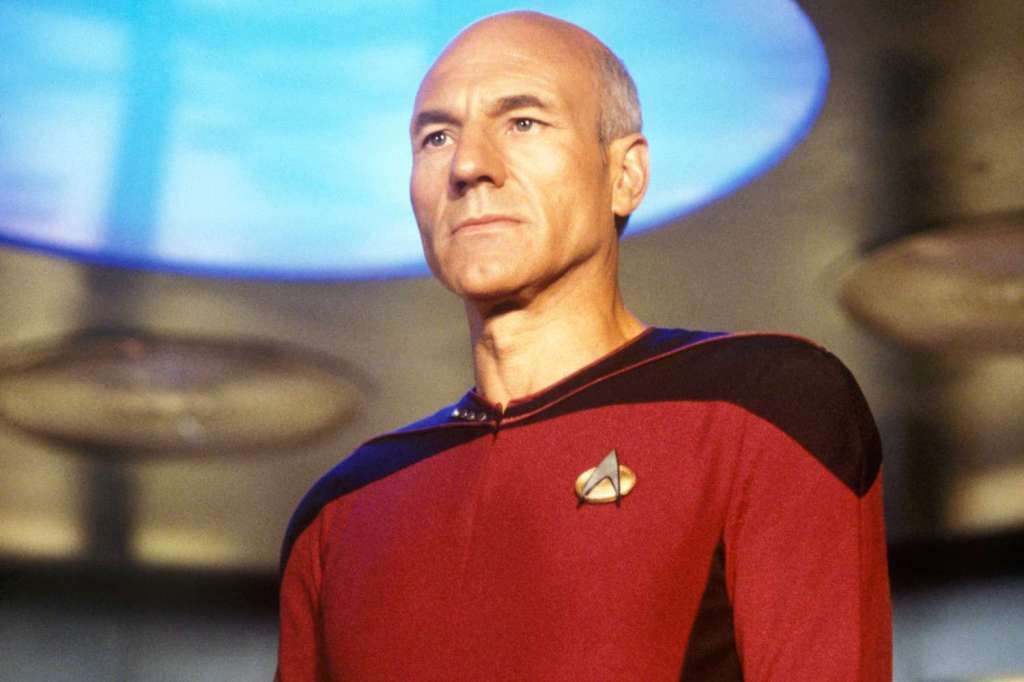
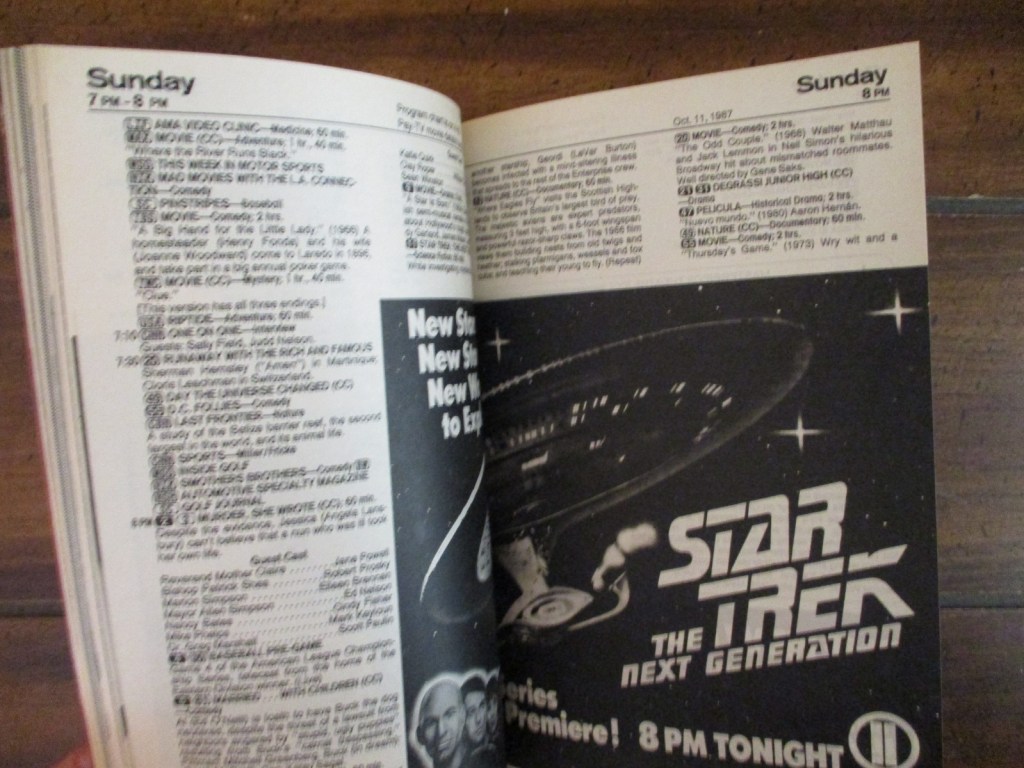
After admittedly finding the show and its premise ridiculous, Stewart gradually began to understand Star Trek’s significance in the public imagination, and the opportunities it afforded him as the face of the franchise.

“When it first started, I didn’t think that I would survive beyond the pilot,” Steward later said. “I thought the producers would come to their senses and realize they’d made a grave error in casting me. I was certain that I’d be on my way back to London… Eventually, it became clear to me that not only wasn’t I going to go away, the series wasn’t going to go away. I stayed, and have relished every moment.”

The Englishman led a revival of the 1960s franchise that spawned two more TV series set in Picard’s era (Deep Space Nine and Voyager), the unfairly-maligned Star Trek Enterprise, four theatrical releases featuring The Next Generation crew, and the modern era of Star Trek that includes Discovery, Strange New Worlds and Picard, which saw Steward reprise his most famous role as the iconic captain – now an admiral – is called upon once again to use his wit, insight and skills as a starship commander to save the Federation of Planets.
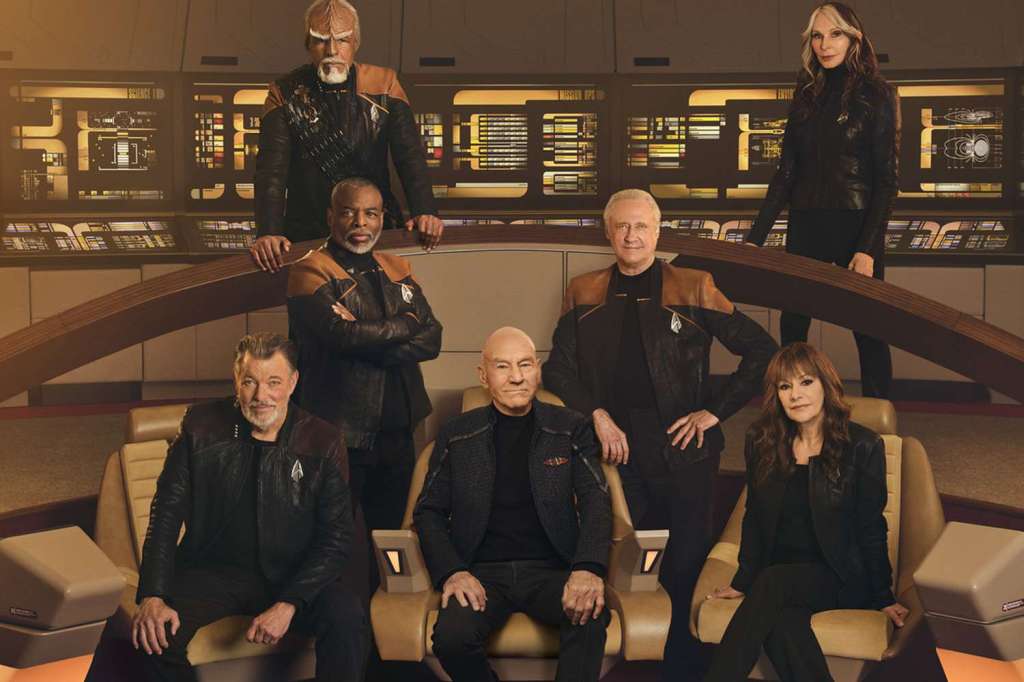
A group of seven characters dressed in futuristic uniforms posed in a starship bridge setting, featuring a mix of male and female figures with diverse hairstyles and facial expressions.
The last hurrah: Steward and original cast members reunited for the third season of Picard, sending the characters out on a high note as they saved the Federation one last time. Credit: Paramount

Stewart was known as a consummate gentleman, a man who grew up poor in a home where domestic violence was a regular occurrence, an advocate for women and animals, and a voice who urged calm during turbulent times. The only time I ever saw the man express anger toward anyone was during an awards show in London in 2010, when he lashed out at James Corden for appearing disengaged and disinterested while hosting the event.

And really, who among us has never had an urge to yell at James Corden, whom Balthazar restaurateur Keith McNally once described as a “tiny little cretin”?

The actor also kept in touch with fans through social media, showing his gift for self-deprecation and sharing moments from his life, like his first-ever slice of pizza in 2013.

Stewart had his first slice of pizza at 72 years old. Credit: Patrick Stewart/Instagram

Unlike William Shatner, who famously went to low Earth orbit and experienced the Overview Effect’s powerful feelings of awe and human connectedness reported by many astronauts, Stewart never went to space.

But he wasn’t quiet about his feelings, and when asked about Star Trek’s Utopian vision of the future, he didn’t sugar-coat his opinion of humanity.

“I would like to see us get this place right first before we have the arrogance to put significantly flawed civilizations out onto other planets,” he said, “even though they may be utterly uninhabited.”

I’d like to think Stewart is sitting in the captain’s seat of a celestial Enterprise right now, finally getting a proper look at new life and new civilizations. And when he looks back at our pale blue dot, I hope he sees us appealing to our better angels to “get this place right.”
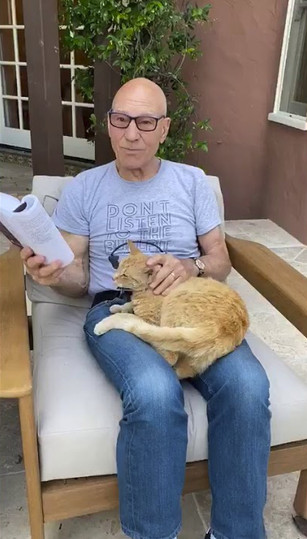
Stewart with his cat, Glen. h/t Leah A.: Thanks, Leah!

Grudge The Cat Makes Her Star Trek Debut

Grudge the Cat makes her long-anticipated debut on Star Trek: Discovery’s third season.

One of the most anticipated new characters in Star Trek: Discovery’s third season made her debut this week, continuing a proud tradition of felines in the Federation.

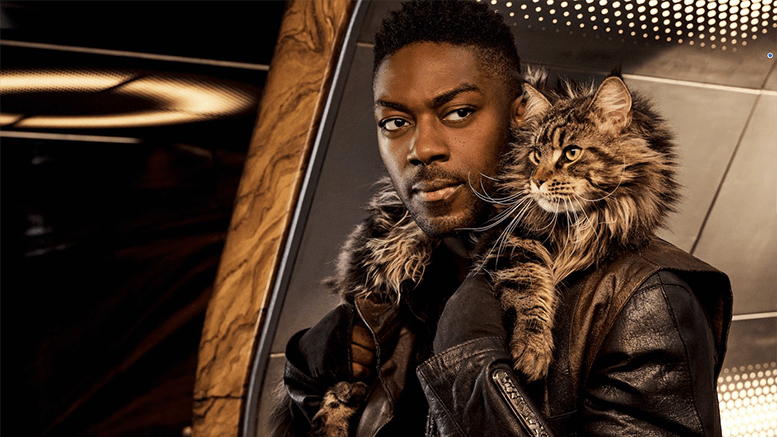
Grudge the Cat is a Maine Coon and the beloved pet of new character Booker Cleveland, played by David Ajala. (Ajala should be familiar to science fiction fans of his roles as Captain Roy Eris from Nightflyers and Drifter from Kill Command.)

Ajala’s Booker plants a kiss on Grudge’s head as the floofy feline hangs out on the bridge of his starship. Later, when a mercenary courier tries forcing Booker to reveal the location of priceless cargo and Booker refuses, the mercenary threatens Grudge.

“She is a Queen!” Booker says indignantly, clearly more upset at the threat to his cat than to his own personal safety.

F4BD022E-AACD-4770-A890-155EEFF79B52

Grudge is played by Leeu, a male Maine Coon who was chosen after the producers put out a call for a large domestic cat.

The floofy tabby follows in the paw steps of Spot, Commander Data’s beloved orange tabby on Star Trek: The Next Generation, as well as the show’s most prominent species of felid aliens, the Caitians.

Now we just need to get Buddy his own guest spot on Star Trek — preferably as the captain of his own ship.

Captain Buddy and the Voyages of the USS Yums

Captain Buddy and the USS Yums arrive at the Dog 359 system to assess the species Canidae’s candidacy for membership in the Furrderation.

Catptain’s Log, Stardate 20.20 dash 6.22 dot Yums:

We have arrived in orbit around Canis Prime in the Dog 359 system, home to a primitive pre-warp species known as Canis Familiaris.

Despite the presence of a team of interpreters, our diplomats have been unable to get the inhabitants of Canis Prime to calm down and stop trying to hump them.

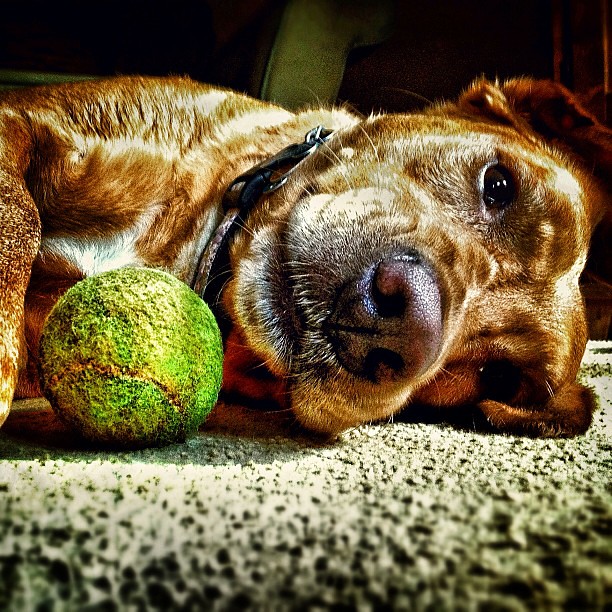
After presenting the primitive canids with a ball, a recreational object meant as a gift of goodwill, the canids pointedly refuse to accept the gift, insisting that our diplomats throw it, only for the canids to bring it back to them covered in a revolting membrane of canid slobber and demand they throw it again.

Our Interstellar Dog Intelligence and Observation Team (IDIOT) clearly failed to prepare us for these strange creatures and their repulsive rituals.

“Captain, I beg you to beam us up,” my normally stoic first officer, Commander Stryker, implored. “Please. These beings are too primitive and stupid to join the Furrderation.”

dogslobber
A member of the primitive species Canis Familiaris with the desecrated goodwill ball. Credit: Flickr

Tensions reached a boiling point when the members of my away team dug a latrine a few klicks from the primary canid settlement, Good Boyistan, and returned later to find a crowd of canids fighting amongst themselves to consume the team’s eliminations.

Shortly afterward we received a hail from the Canid Welcoming Committee on the surface, formally requesting to tour the ship, with an uncomfortably specific number of questions about our ship’s litter system, as well as how and where our waste is disposed.

I’ve ordered my Chief of Security, Lieutenant Wharf, to post guards at all privy chambers on the vessel. I will not have my ship used as a dining facility by these strange creatures.

I regret having to conclude my report by advising against allowing the Canidae membership in the Furrderation. There’s just something fishy about them, aside from the whole eating our poop and slobbering things. They are too friendly, suspiciously friendly even, and their culture does not appear to have any concept of personal space. In addition, they are embarrassingly easy to manipulate with simple praise, which would create a security risk for our Furrderation member species.

Captain Buddy out.

Lieutenant, have the transporter room recall the away team immediately and set a course for the Fowl 62c system, warp five. It’s time we get the hell away from these filthy, disgusting, smelly…is this thing still recording?

The Cats of Star Trek

From Data’s cat Spot to the Caitians of the Federation and the Kzin warrior cats, Star Trek’s universe is populated by our furry friends.

Fair warning: It’s about to get real nerdy up in here.

Cats have been a mainstay in science fiction, more so than any other animal.

Whether it’s Cordwainer Smith’s spacefaring cats obliterating aliens in “The Game of Rat and Dragon,” Sigourney Weaver’s Jonesy the Nostromo ship cat surviving the eponymous Alien, or Fritz Lieber’s beloved Gummitch the Super Kitten, felines have long played major roles in speculative fiction.

They’ve been mousers on interstellar starships, companions on long-haul freighters and — like Speaker to Animals, the Kzin from Larry Niven’s classic science fiction novel Ringworld — warriors of galactic repute leading dangerous expeditions to alien worlds.

Star Trek is no different.

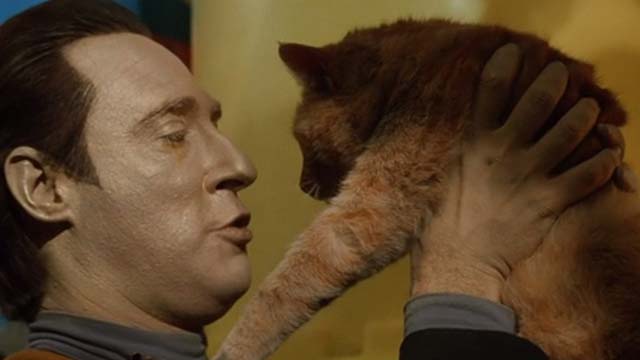
Mention the topic of cats to any Trekkie and the first thing that probably comes to mind is Spot, the orange tabby cat who belonged to Commander Data on Star Trek: The Next Generation.

Spot was a mainstay on the Enterprise-D, earning the respect of the Klingon Commander Worf and serving as Data’s muse for a hilarious poem in the cat’s honor, “Ode to Spot.”

One of the highlights of Star Trek: The Next Generation is watching the gruff Klingon learn that, unlike dogs, cats don’t give a damn about commands.

But cats play a much bigger role in the wider Star Trek universe than even many Trekkies realize.

The Caitians

caitian2
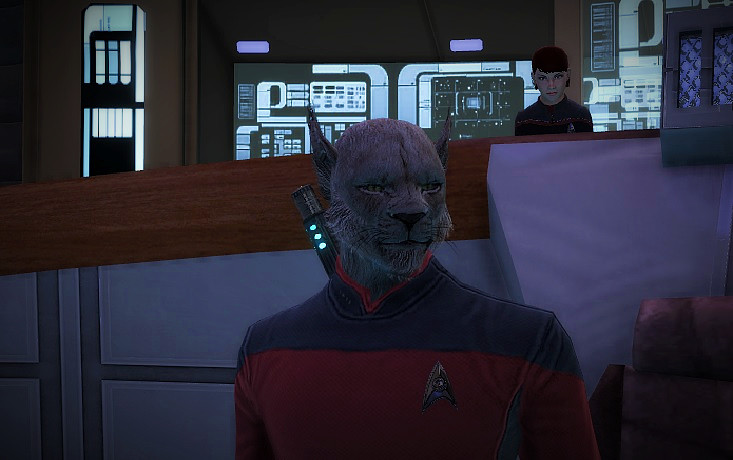
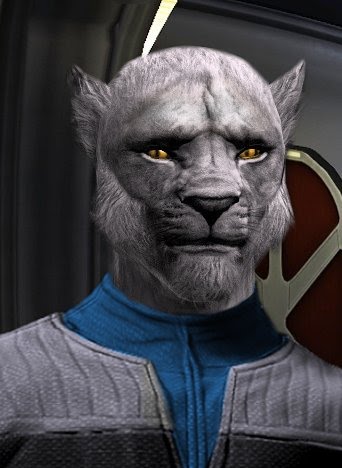
A Caitian science officer in his Starfleet uniform. Source: STO

As fans of Star Trek know, the Federation is an alliance of peaceful worlds and races committed to exploration of the galaxy, friendship with new species and non-interference with developing civilizations.

What many may not realize, however, is just how many species are involved in the Federation. Some, like the Bajorans, Andorians and Betazoids, are seen pretty frequently in Trek shows and movies, but others have made only a few on-screen appearances.

Among the latter are the Caitians, described in Memory Alpha (the wiki of canon for Star trek) as “a warp-capable species resembling felines.”

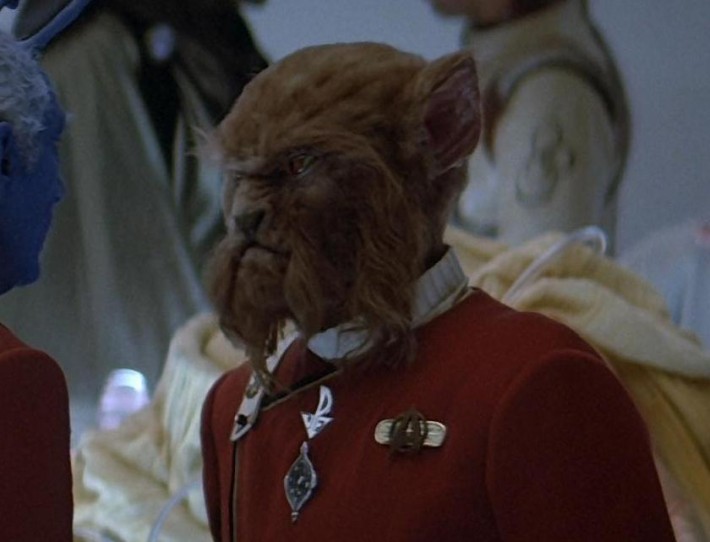
Their home planet is known as Cait to other races, and Ferasa to the Caitians themselves, and is located within the Lynx constellation. They made their first live-action appearance in 1986’s Star Trek IV: The Voyage Home:

Star Trek's Caitians
A Caitian Starfleet officer from Star Trek IV: The Voyage Home.

Because of its origins as a network television show, budget has always been a major factor in the way aliens are depicted in Star Trek.

The show’s writers have come up with an elaborate back story for why so many alien species are humanoid, closely representing humankind, but the minor differences of most species — the ridged foreheads of Klingons and elfin ears of Vulcans — are for the most part remnants from the days when production crews had little money or time to create elaborate props and effects.

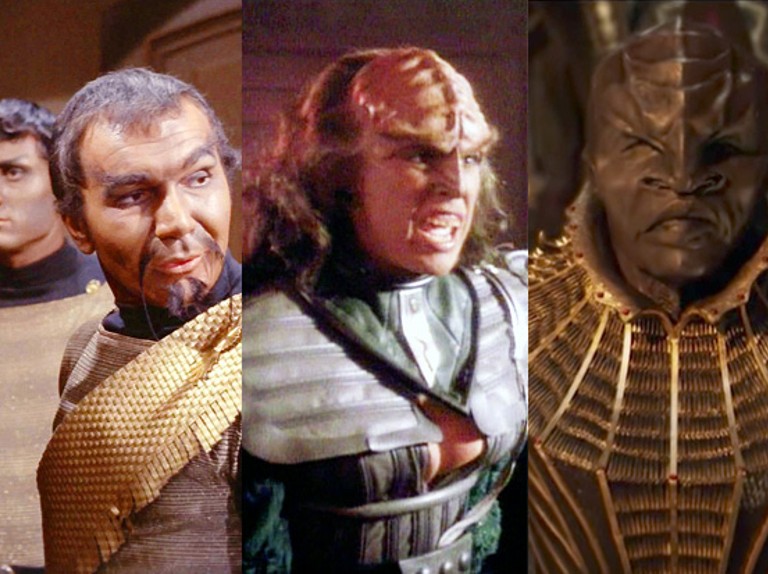
It’s also the reason why the Klingons, for example, were radically redesigned in the 2009 Star Trek reboot, with its lavish budget and SFX.

Klingons
Klingons have been redesigned several times through the decades thanks to larger budgets and advances in special effects.

With a species like the Caitians, however, you either go all-in or not-at-all. That’s why the species has made only three appearances in Trek films to date, and why most of their exploits have been reserved for Trek novels and comics.

But the internet loves cats, and Star Trek Online, the massively multiplayer online game set in the Trek universe, saw enormous positive feedback when it added Caitians as a playable species back in 2011.

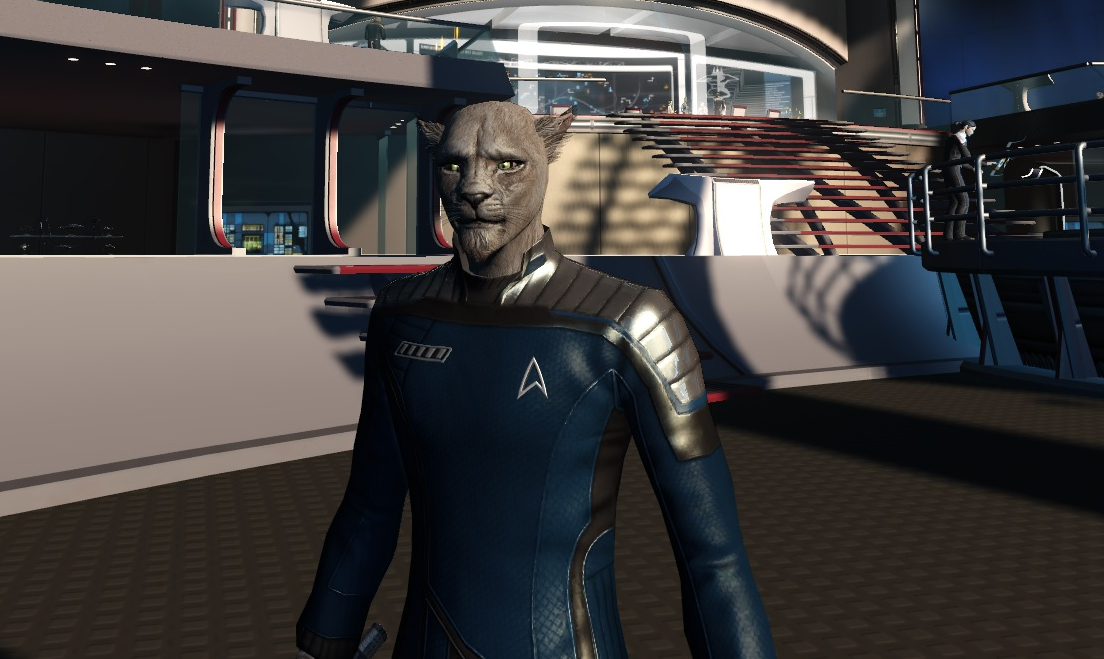
Here’s my very own Caitian starfleet captain from the game:

Buddy Trek
My Caitian character: The blue uniform indicates he rose through the ranks as a science officer before becoming a member of Starfleet’s admirality.

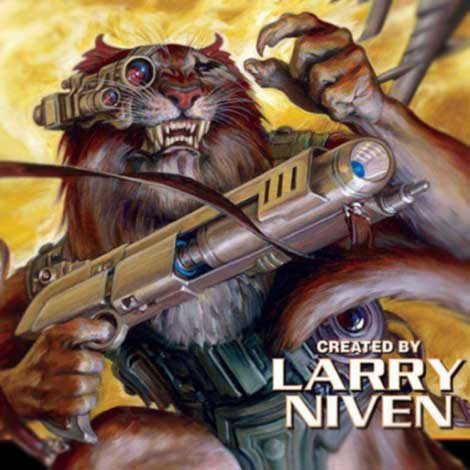
According to Star Trek lore, the Caitians share distant ancestry with the Kzin, the aforementioned war-like race of feline aliens from Niven’s Ringworld books.

That’s because Niven himself had a run as a writer for Trek comic books in the 1980s, and wrote his own creation into the wider Star Trek universe.

kzin3

kzin2
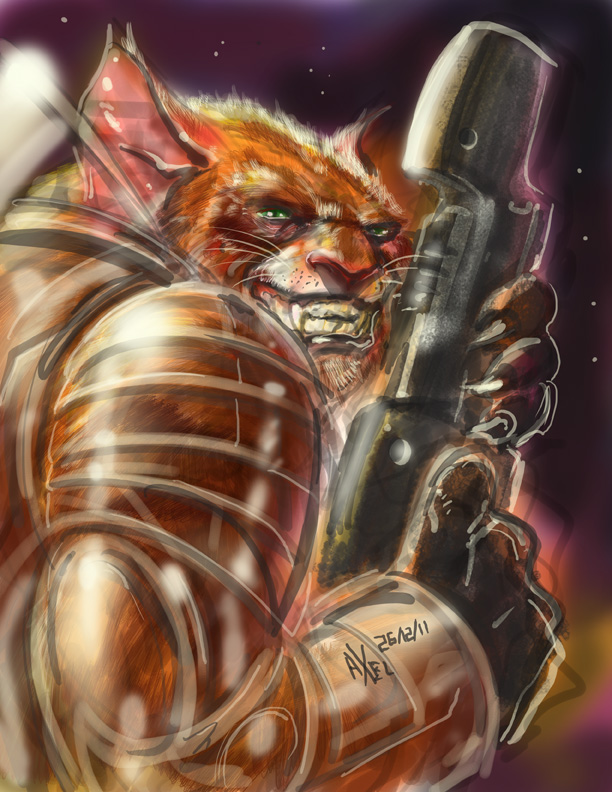
Kzinti warriors from Larry Niven’s Ringworld. The feline aliens were later introduced to the Star Trek universe by Niven himself when he penned a series of Trek comics.


Just like cats have a range of personalities, and breeds have their own unique characteristics — the gentle giant Maine Coons, the talkative Siamese — the felines of Star Trek have different lineages and dispositions.

While the Caitians are peaceful and staunch allies of humans and the Federation, the Kzinti are a bunch of war-loving lunatics who find great joy in blowing things up.

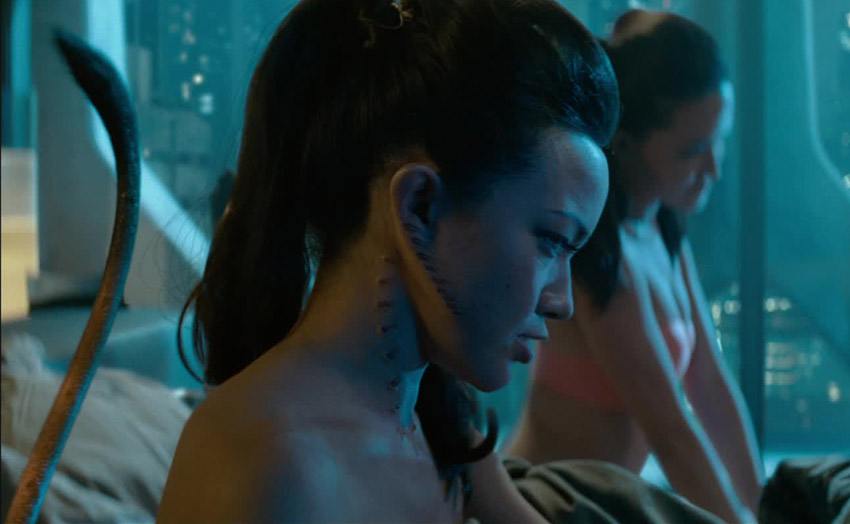
Thanks — or no thanks — to JJ Abrams, there are even “sexy Caitians,” like the pair we see in 2013’s Star Trek: Into Darkness. In the film we see Captain James T. Kirk, played by Chris Pine, waking up in a bed with two women. Both women have long, feline tails, and Abrams would later confirm they’re the alternate universe version of Caitians.

caitian3
These Caitians are quite different. (Star Treek 2009 reboot.)

Maybe, just maybe, a handful of you non-Trekkies have made it this far. Maybe your love of cats kept you interested in this story, and you’re thinking to yourself, “I wonder what Star Trek is all about…”

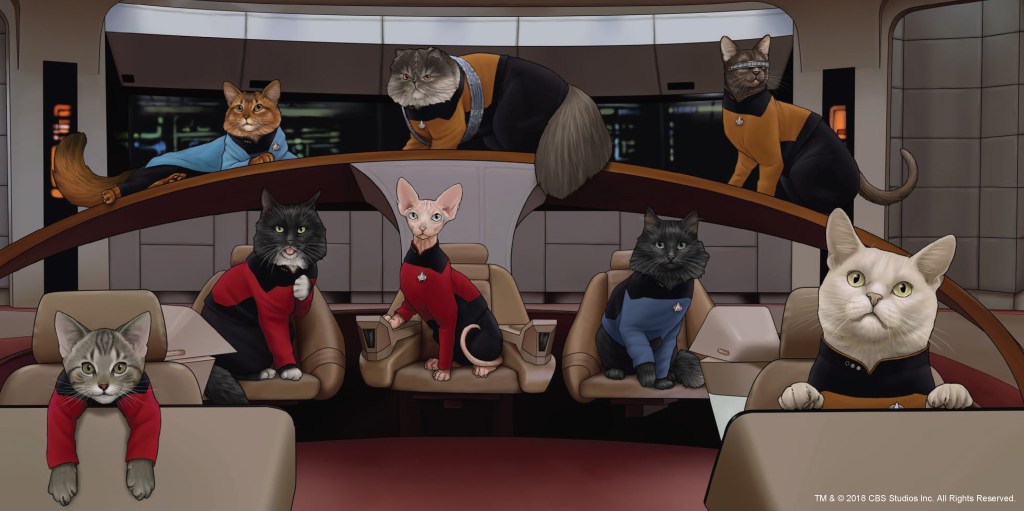
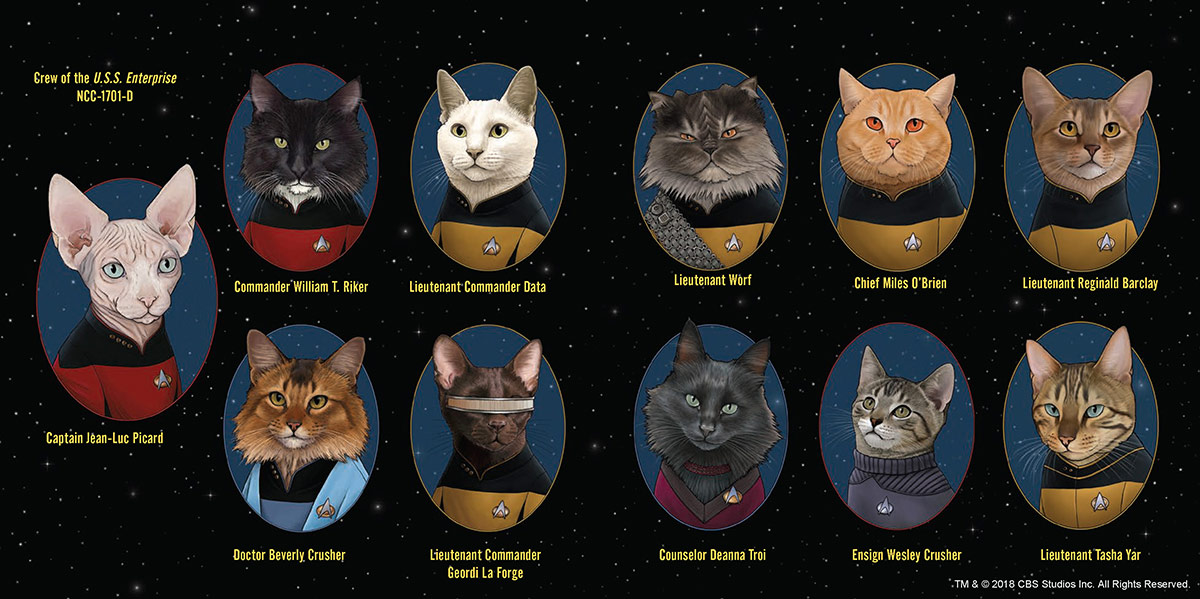
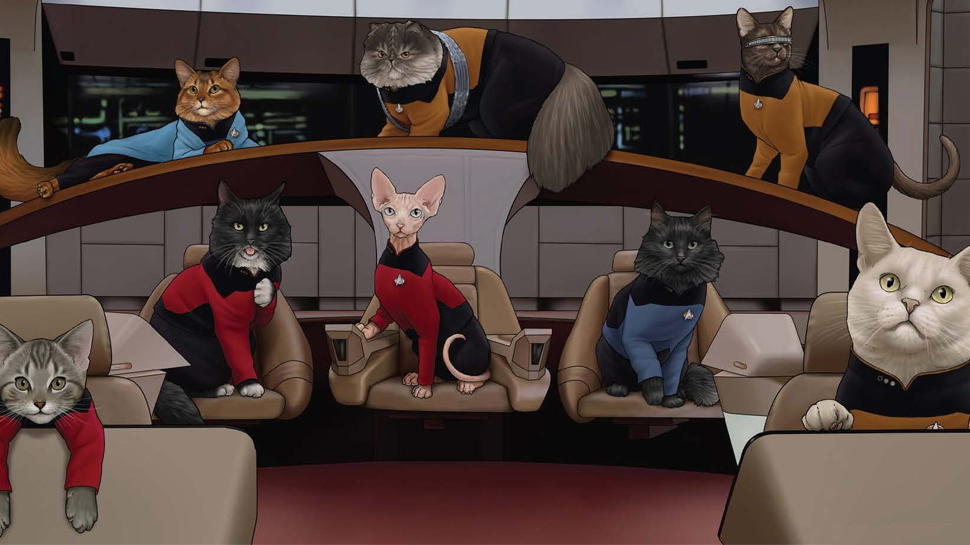
In the spirit of the Federation, I leave you this parting gift. During these dark days of quarantine, should you browse Netflix and find yourself tempted by Star Trek: The Next Generation, here’s a guide to the entire cast that imagines each of them as cats. And not just any cats: Each kitty resembles its Enterprise crew counterpart.

Live long, my friends, and prosper!

(Star Trek Cats by artist Jenny Parks. Check out more at her site!)

Cats of Star Trek
Credit:Jenny Parks

TNG-Cats
The crew of Star Trek: The Next Generation as kitties. Credit: Jenny Parks

Ode to Spot: Nerdy Appreciation for Cats

In Star Trek, cats are along for the ride as humans explore the galaxy.

People who hate on Star Trek think it’s all technobabble about tachyon fields and Starfleet officers shouting things like “Captain, shields are at 60 percent and falling!” during yawn-inducing battle sequences.

Au contraire, my feline-loving friends! Star Trek is not only awesome, it’s written by people who love cats, and kitties have always had a place on the USS Enterprise.

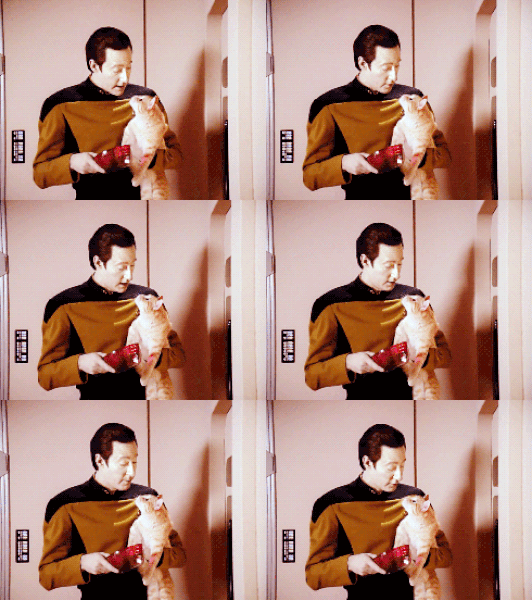
Perhaps the most famous of those cats is Spot, a ginger tabby who belonged to Lt. Commander Data in Star Trek: The Next Generation.

Even in space, it appears, cats are still picky and want attention on their own terms — Data famously tried 221 different types of cat food “formulas” before finding one Spot approved of, and when Spot wasn’t wandering the corridors of the Enterprise 1701-D, he was hanging around his human android, demanding attention and affection.

In season six of the iconic TV show, much to the chagrin of his fellow crew mates, Data read a poem about how much he loves his cat. The poem is called “Ode to Spot”:

Felis catus is your taxonomic nomenclature
An endothermic quadruped, carnivorous by nature
Your visual, olfactory, and auditory senses
Contribute to your hunting skills and natural defenses
I find myself intrigued by your sub-vocal oscillations
A singular development of cat communications
That obviates your basic hedonistic predilection
For a rhythmic stroking of your fur to demonstrate affection
A tail is quite essential for your acrobatic talents
You would not be so agile if you lacked its counterbalance
And when not being utilized to aid in locomotion
It often serves to illustrate the state of your emotion
Oh Spot, the complex levels of behavior you display
Denote a fairly well-developed cognitive array
And though you are not sentient, Spot, and do not comprehend
I nonetheless consider you a true and valued friend


“Ode to Spot” has become a favorite of Star Trek fans who also happen to be cat lovers. Perhaps unsurprisingly, there’s quite a bit of overlap.

I do, however, feel the poem is in need of an update on those last two lines:

Because you are sentient, Spot, I know you comprehend
That I consider you a true and valued friend

The episode aired in 1991, but in 2019 there are still people who don’t know cats are sentient. Cats think, they feel, they’re aware of the world around them. They have a full range of emotions, experiencing things like happiness, sadness, anger, excitement, anticipation, anxiety, jealousy and contentment.

71280ec861512a2d1275de16e97ac657ee19b488_00

Most people who share their homes with cats and dogs would say it’s obvious that animals have emotions, but thanks to the efforts of modern scientists, we now have evidence.

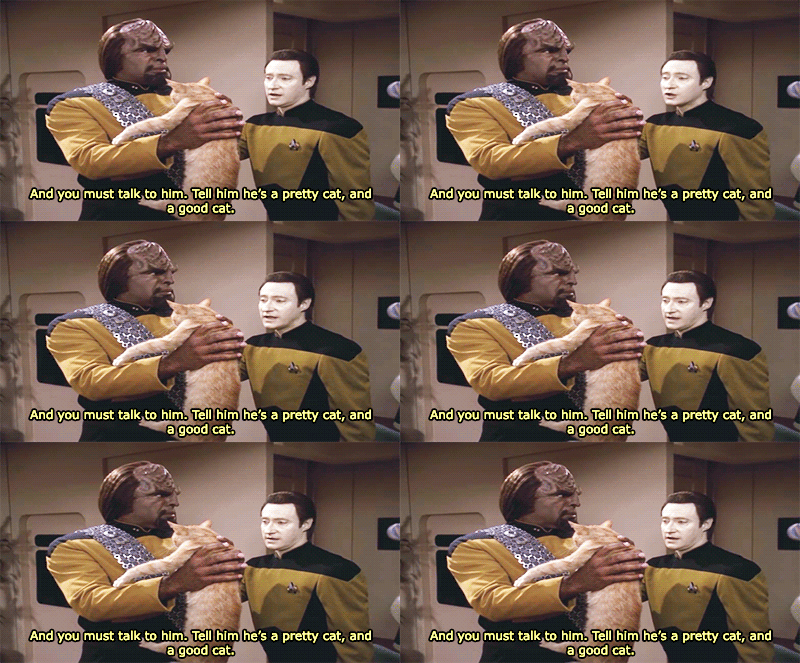
Perhaps Star Trek’s writers simply got their terminology wrong. After all, in one episode, Data needs to find a cat sitter and settles on Worf, the Klingon chief of security on the Enterprise. Data is clearly worried about how Spot will get on in his absence, rattling off a list of things Worf needs to do to take care of the cat.

“And you must talk to him,” Data adds, worry creasing his forehead. “Tell him he’s a pretty cat, and a good cat.”

Worf, already looking uncomfortable as he holds Spot, glares at Data and deadpans: “I will feed him.”

Data, who realizes he’s pushing his luck, takes one last look at Spot and nods.

“Perhaps that will be enough.”

tumblr_p1sv4uV2aF1u501aoo4_400

4094c82068ff268f91c1c8e3d6a54d32
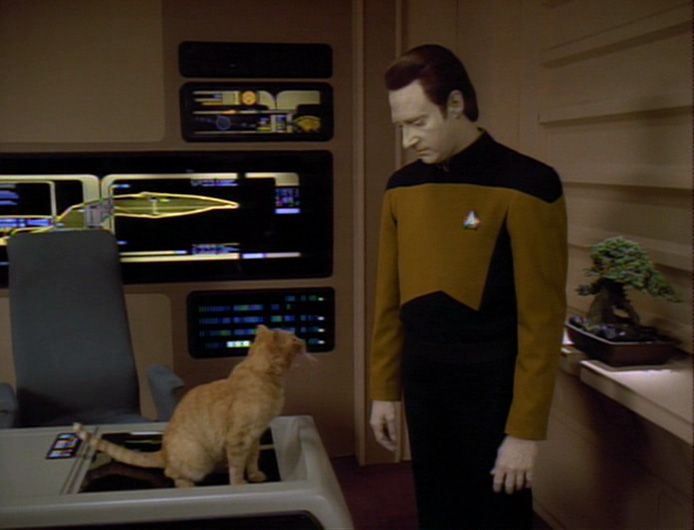
Data and Spot. Originally, Spot was a lighter orange and was played by a male cat. In later seasons he was replaced by a female with a darker coat.