Blog Posts

PITB Reviews: The Electrical Life of Louis Wain

The Electric Life of Louis Wain tells the story of one of Victorian England’s most revered artists who was known almost exclusively for his humorous cat illustrations.

Movie: The Electrical Life of Louis Wain
Director: Will Sharpe
Genre: Biopic, drama
Medium: Amazon Original (streaming and in theaters)

Louis Wain was an artist in the employ of The Illustrated London News, one of the most popular newspapers in Victorian England, when advances in photography and printing made it possible for newspapers to regularly include photographs in their pages.

Demoted from staff illustrator to contributor, Wain’s professional skills seemed destined for obsolescence when he and his wife, Emily, returned to their cottage one rainy afternoon in 1886 and heard the distressed mews of a kitten. They found an adorable tuxedo cat soaked and shivering in their garden, brought him inside and were instantly smitten.

They named the baby Peter, and in the months that followed Wain made the growing kitten the subject of most of his idle drawings, sketching him in various situations and with increasingly anthropomorphic features. Wain’s cat sketches were only intended for his wife, but when Sir William Ingram, editor at The Illustrated News, saw the whimsical cat drawings he commissioned Wain to fill two pages with cats as a special feature for the paper’s Christmas edition.

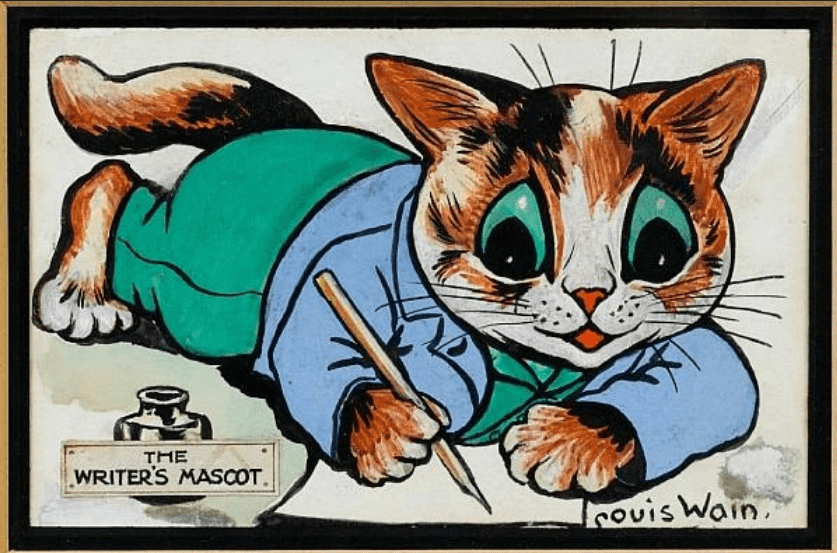
Wain’s cats were a huge hit with readers, marking the beginning of a second, much more successful career as a pet portraitist and one of Victorian England’s most beloved artists. Wain gave his cats human expressions, had them do human things, and put them in contemporary clothing to the delight of newspaper readers and, later, book publishers who sold many thousands of copies of illustrated books featuring nothing but Wain’s anthropomorphic cats.
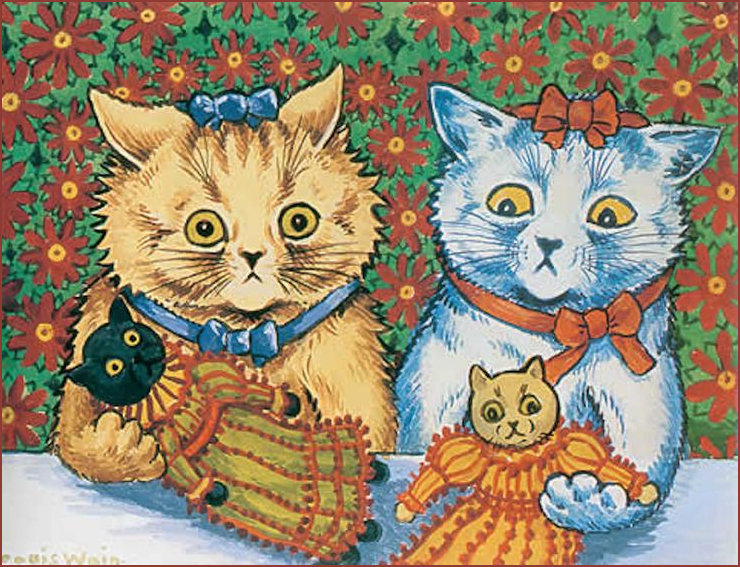
Louis Wain
A pair of young female cats play with cat dolls.

The Electrical Life of Louis Wain weaves a narrative from its subject’s professional life and his lesser-known private life. A polymath, philosopher, amateur boxer and author of some particular ideas about cats and electricity, Wain (played by the always-excellent Benedict Cumberbatch) was an eccentric and not particularly happy with his life until his family hired Emily Richardson (Claire Foy) as governess — a home teacher — for Wain’s younger sisters.

Despite the fact that Emily was a decade his senior and such relationships were looked down upon in Victorian England, Wain and Emily married, made it clear they didn’t care what others thought about them, and learned to enjoy life in each other’s company. With the addition of little Peter, the Wains were a happy family.

Louis Wain did not, however, have an easy life. Three years into their blissful marriage, Emily was diagnosed with terminal breast cancer. Her illness, the subsequent mental deterioration of one of Wain’s younger sisters, and Wain’s own eventual struggles with mental illness cast long shadows over his outlook and his work.
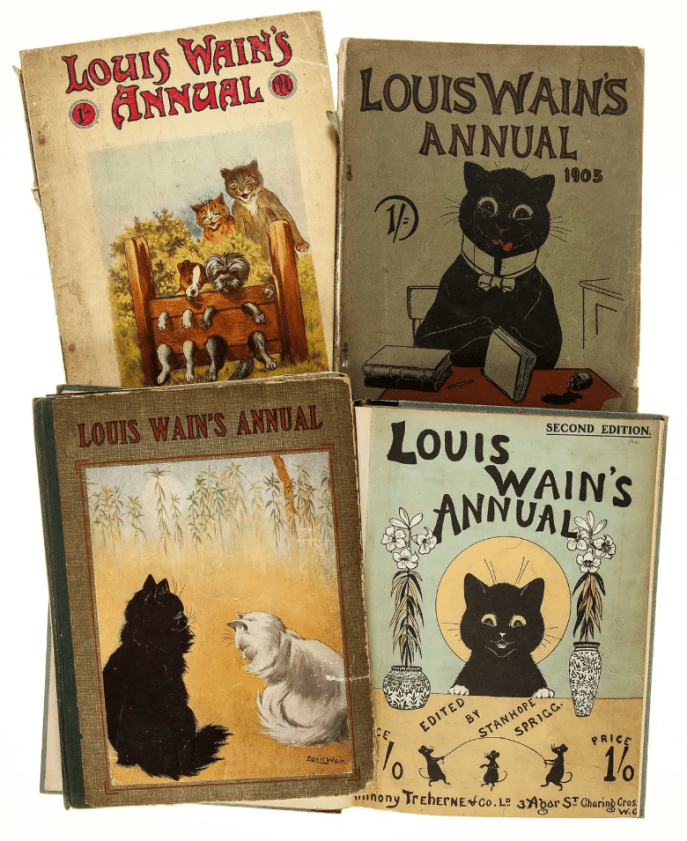
Louis Wain's Annuals
Wain’s cat drawings were so popular, they were sold in stand-alone books in addition to filling the pages of widely-read publications in Victorian England.

Today, psychologists, art critics and scholars of the man’s career still debate whether — and to what degree — his mental state was reflected in his artwork as his cats took on increasingly psychedelic and abstract qualities. What began as simple kitten sketches morphed into whimsical scenes of expressive cats and eventually trippy images that wouldn’t have looked out of place as album art in the late 1960s and 1970s.

Did Wain truly suffer from severe mental illness, or was he a casualty of a society that banished its “undesirables” to asylums and “lunatic houses”? Was Wain on the autism spectrum? Did the increasingly psychedelic bent of his drawings stem from medications he was given at a time when mental illness was poorly understood and poorly treated?

It depends on what you see in the illustrations. For a man so revered by the public, Wain was remarkably casual about his output — a quality Cumberbatch displays admirably throughout the film — and he didn’t bother to date his drawings. He was prolific, completing many hundreds of cat images throughout his career, in addition to the journalistic images and livestock renderings of his early career, when he was a newspaperman.
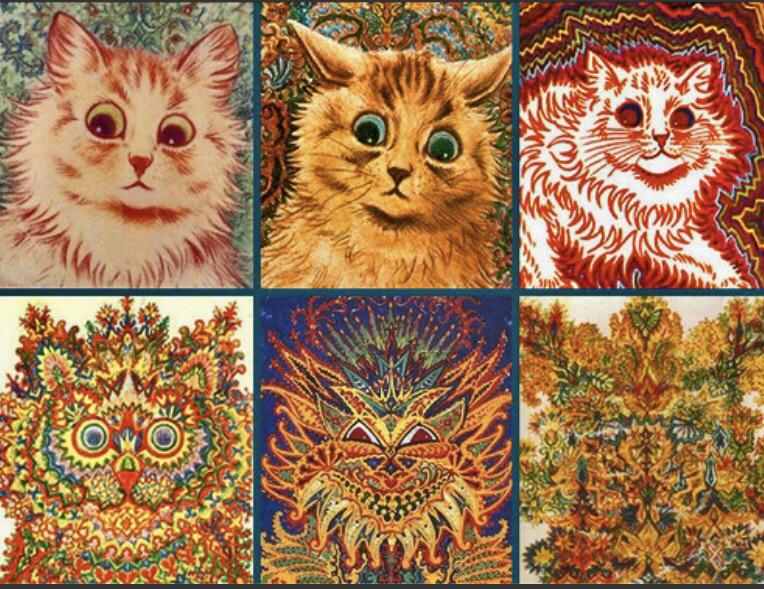
Louis Wain's Cats
Wain’s cat illustrations took on more psychedelic qualities as the years passed.

What is absolutely clear is that Wain saw something in cats that others didn’t see until he showed it to them with his pencils. He was credited with a major shift in attitude toward cats and the normalization of keeping cats as pets rather than as mousers. Although cats enjoyed companion animal status in various other cultures earlier in human history, the idea of keeping a feline as a pet was novel in Victorian England.

The shift in public attitude was treated humorously — as much of the subject matter is — by the film, with a bewildered Wain accepting the presidency of the Cat Society of England at a fete in his honor, then explaining his theory that tabby markings were the result of electricity flowing through fur.

The subject of electricity comes up again and again in the film, bringing to mind Tesla and another famous British eccentric, Alan Turing, who was also played by Cumberbatch in the 2014 biopic The Imitation Game. Not coincidentally, both movies show that service to crown and country mattered little when British eccentrics were deemed too odd to tolerate. Like Wain, Turing — a war hero who famously cracked the legendary German Enigma cryptography machine — found himself on the wrong side of the UK’s mental institutions when he was convicted of indecency in 1952 after admitting to police, during an interview in an unrelated investigation, that he’d once had a relationship with another man.

Turing was subsequently placed on synthetic estrogen and drugs prescribed to “cure” his mental condition, which had the opposite effect: Turing, a shadow of his former self, his genius blunted by chemicals, committed suicide by eating an apple he’d laced with cyanide in 1954.

The Electrical Life of Louis Wain finds humor in both the light and dark moments of its subject’s life, and it’s a credit to the film’s writers, director and actors that lighthearted moments don’t spoil the more serious narrative themes. For his part, Wain was a man who endured a lot of suffering in his life, and if there’s a lesson to be learned here, it’s that no matter what life throws at us, spending time with cats makes things more bearable.

Guy Kicks Girlfriend Out After She Admits To Tossing Cat Outside

A man ended his relationship with his girlfriend after she tried to get rid of his cat.

Reddit’s “Am I The Asshole?” is described as a “catharsis for the frustrated moral philosopher in all of us, and a place to finally find out if you were wrong in an argument that’s been bothering you.” It’s also a goldmine for people who wish they could read an advice columnist’s slush pile.

On Tuesday, a user asked the community if he’s “the asshole” for kicking his girlfriend out of his home after she tried to get rid of the kitty by “pick[ing] him up and put[ting] him outside to wander off.” Here’s the full post:

According to the OP, his cat didn’t do anything to prompt his girlfriend from booting the little guy.

“She knows he can’t survive outside… She didn’t seem to have any regrets about her actions and no, she never lived with cats before,” the poster added in response to follow-up questions from the community. “She said she couldn’t stand cats and that she couldn’t live with one.”

A few users pointed out that kicking a house cat with no survival skills out of a home is not only dangerous, but kicking a black cat out on or near Halloween could have tragic consequences. As for the original poster, he says he’s placed Raven in the temporary care of a friend until his girlfriend moves out, as he’s worried she might try to hurt the cat — or throw him out again — out of spite.

Others said he was doing the right thing even if Raven wasn’t in danger.

“If she thinks it’s acceptable to do that with something as important as a pet, then she thinks she can do that with any aspect of your life she doesn’t like,” one user wrote. “The cat is important, but almost irrelevant in the scope of red flags she’s throwing out.”

For whatever reason, even though women are more likely to be cat caretakers than men — and men are statistically more likely to take their relationship frustration out on pets, especially cats — the last few viral stories about relationship conflicts over cats have implicated women. Obviously if the situation had been reversed, the boyfriend should have been thrown out, or the girlfriend should have left with her cat. Gender isn’t the issue here: The issue is jerks who take their frustrations out on innocent animals.

Jurassic Park With A Cat Instead of A T-Rex

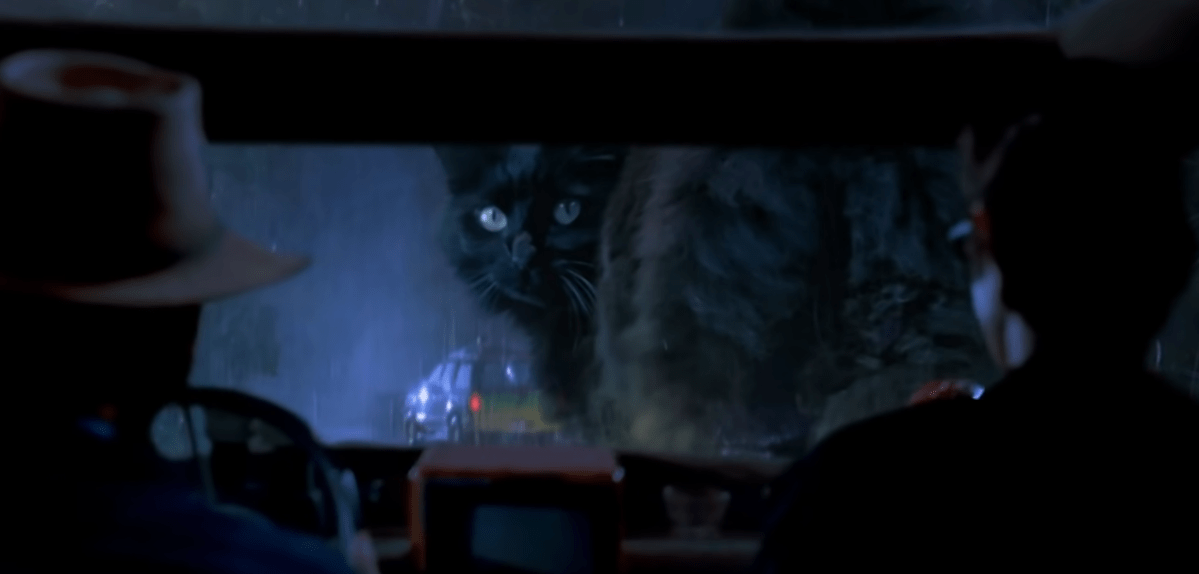
Owl Kitty’s human puts his beloved feline into an iconic scene from 1993’s Jurassic Park.

Owl Kitty’s human has put his house panther into The Matrix, John Wick, Home Alone, Titanic — and now the original Jurassic Park as a stand-in for the terrifying tyrannosaurus rex.

Despite standing at least 20 feet tall and weighing several tons, Jurassic Owl Kitty is a kindler, gentler threat to Sam Neill, Jeff Goldblum and the kids. Kitty just wants to rub up against the Jeep and purr, and perhaps score some cat food, not eat people like that evil dinosaur.

Plus we can now confirm that, even if they were twice the size of African elephants, cats would still be cute:

Why Scaring Cats Isn’t Funny

Scaring your cat with cucumbers or animatronic Halloween toys will damage your cat’s trust in you.

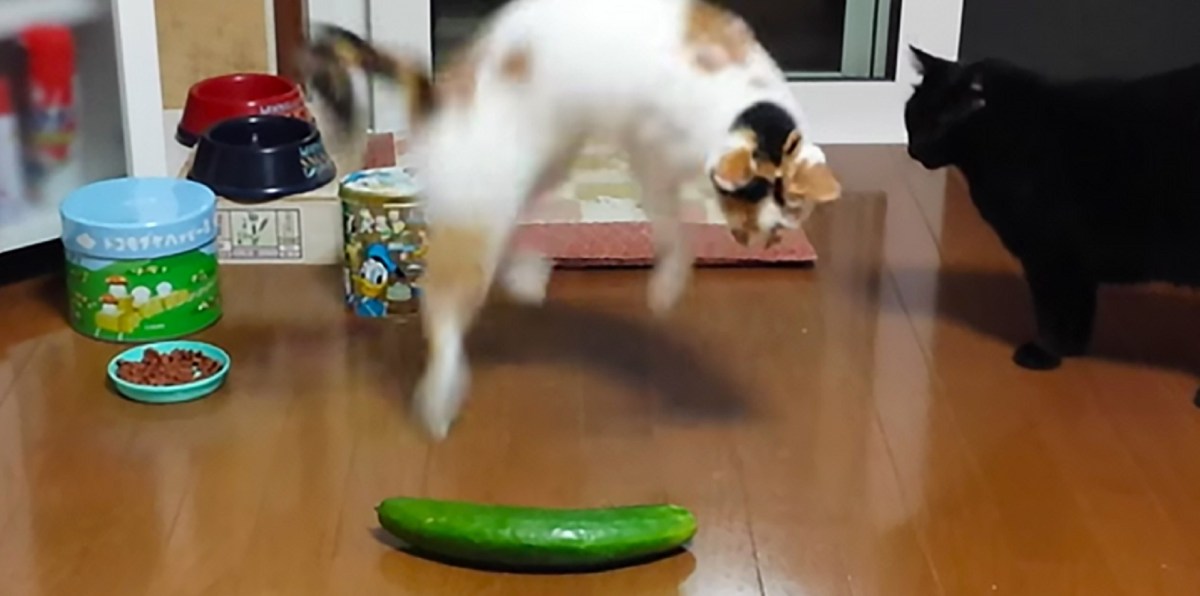
Whether they’re surreptitiously placing cucumbers behind their cats’ backs while the kitties are eating or filming their felines’ terrified reactions to Halloween props, some people apparently love scaring their furry friends.

Since many of the resulting videos go viral, people hungry for online fame have even more incentive to “prank” their cats as they chase clicks. The result is potentially thousands of house cats terrorized by people with ambitions of being the next TikTok or YouTube star.

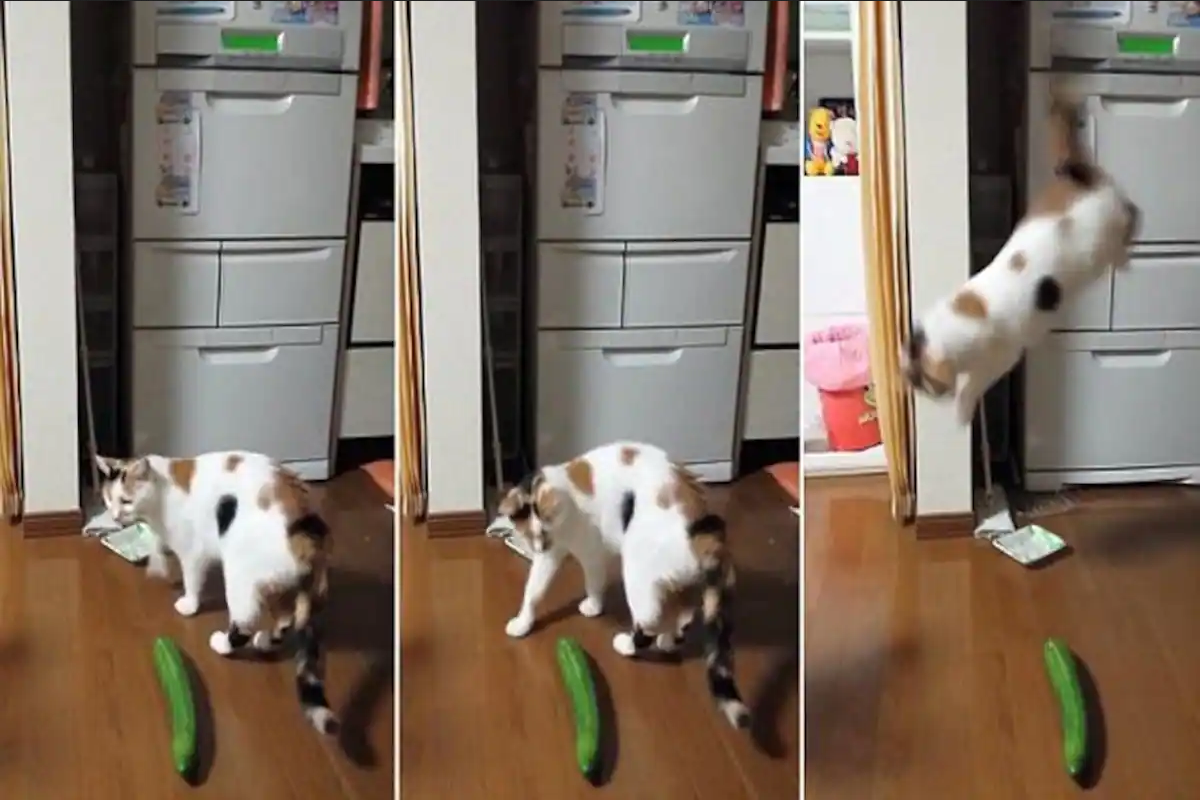
On the surface, the way cats respond to being startled might seem comical. The term “scaredy cat” didn’t manifest out of nothingness, and cats who are truly frightened have a cartoonish way of leaping back and pumping their little legs while they’re still in the air like Looney Tunes characters.

But when you think about it from your cat’s perspective, in the context of feline evolution and psychology, the cruelty of scaring a cat for “lulz” becomes obvious.

Screenshot 2021-11-01 at 08-48-55 245 jpg (WEBP Image, 1200 × 800 pixels)

First, cats are ambush predators. It’s why they love boxes, why they do the adorable crouch-and-butt-wiggle routine before pouncing on their toys, and why they like vantage points where they can see but not be seen.

They particularly dislike surprises, which is why they bolt. Cats are supposed to get the jump on other animals, not the other way around. The impulse to flee as quickly as possible — and return unseen — is hardwired into the feline brain, as natural to them as burying their poop or kneading when they feel content. Because domestic cats are small and can be predator and prey, that impulse is even stronger, but it also exists in 500-pound tigers or 200-pound jaguars.

So when you intentionally frighten your cat with an object that will be perceived, however briefly, as a predator, you’re triggering a fight-or-flight response, a rush of adrenaline and fear.

catwiggle

However, scaring a cat in its own territory (your home) or in a place he or she feels especially secure (feeding areas) adds another layer. A cat walking around outside will be naturally wary, but if you’re giving your cat a good home, as well as the love and space she deserves, she’ll feel comfortable. She’s on her home turf, in a closed environment where threats don’t pop up unexpectedly.

When a cat turns around after enjoying some yums and sees a cucumber, her hardwiring takes over, she registers the intrusive vegetable as a snake and goes into flight mode, scrambling to get away as fast as possible. It’s not just that kitty’s shocked or can get hurt scurrying away from a perceived threat, it’s also the inherent cruelty in teaching your cat that the place she thought was absolutely safe from intruders may not be.

We’re not immune to this kind of conditioning ourselves. If you settle down for a nap one day and your spouse, a sibling or a friend thinks it’s funny to wake you by dropping an ice cold bucket of water on your face, will you feel comfortable dozing off on the couch next time?

Trust is implicit in our relationships with our cats. If we abuse that trust, especially for something as meaningless as social media likes, we’re endangering our human-feline friendships and making our cats feel unsafe in their own homes.

I Was A Good Boy On Halloween, Now Give Me Snacks!

Buddy agrees to dress up for Halloween in exchange for catnip and treats.

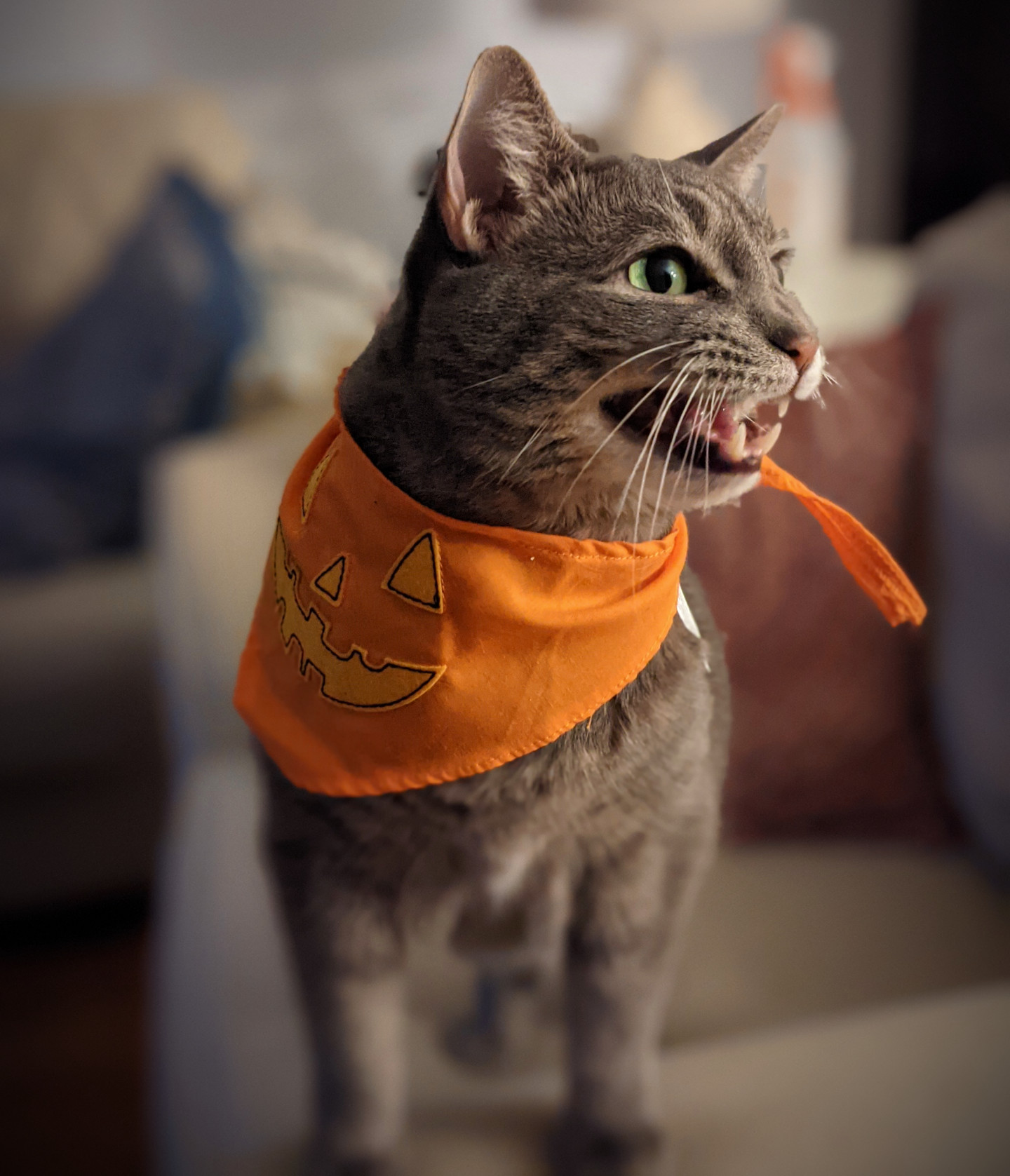
Bud won’t tolerate a costume and I wouldn’t make him wear one, but he’s cool with wearing a festive scarf courtesy of my mom, who insists she doesn’t like him but somehow ends up buying stuff for him.

The cool thing about having an unusually curious and friendly cat is that he dashes to the door like a dog whenever someone knocks. Halloween is no exception, and Bud has been helping me hand out candy since he was a kitten.

When trick or treaters come by, the little guy can’t wait to see who’s in the other side of the door. He sits on the threshold and just takes it all in — the new people, the funny costumes, the strange human ritual that involves helping children get an epic sugar high and upset stomach.

For Bud it’s a night of excitement without any anxiety since no one’s actually stepping into his territory. They all keep a respectful distance, like supplicants with an audience before a powerful but benevolent king, and in turn the king allows his servant to reward their fealty with gifts of candy.

Bud on Halloween
“Let’s just get this over with, human. Remember, you said I could have catnip AND extra yums if I wear this infernal scarf!”

Sadly Halloween was a dud this year even more than last year, which was our first pandemic All Hallow’s Eve. Living in an apartment building, especially on the first floor, usually means a steady stream of kids, but this year I had maybe six or seven knocks on the door, and the kids were trick or treating in ones and twos. (All kids are chaperoned by parents these days too. It makes me wonder how my brother and I — and our friends — survived as kids, going out into the big bad world ourselves to trick or treat!)

unrecognizable men in glowing halloween masks driving car at night
You’d think Halloween was Purge Night by how parents hover over their kids. Credit: Erik Mclean/Pexels.com