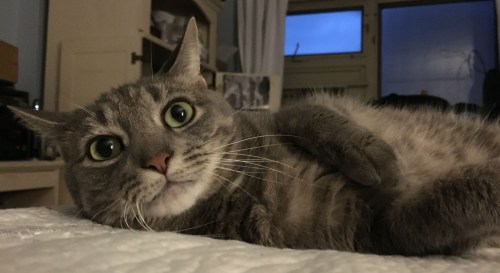
More people are abandoning their pets, saying they can no longer afford to care for and feed them amid historic inflation.
Unless you’ve been living under a rock you’ve experienced sticker shock in the last six or seven months, especially in grocery stores.
Staples like milk and bread cost two or three times what they did pre-inflation, some retailers are taking the opportunity to arbitrarily hike prices even higher, and a perfect storm of economic uncertainty and a rampaging bird flu caused the price of eggs and poultry to skyrocket.
By late 2022, almost 50 million chickens and turkeys had been killed by avian flu or culled because of it, and almost 10 million more were lost to the virus in the first 12 weeks of 2023, according to the CDC. That breaks the record for most birds lost to avian flu, which was set in 2015 when 51 million died or were culled.
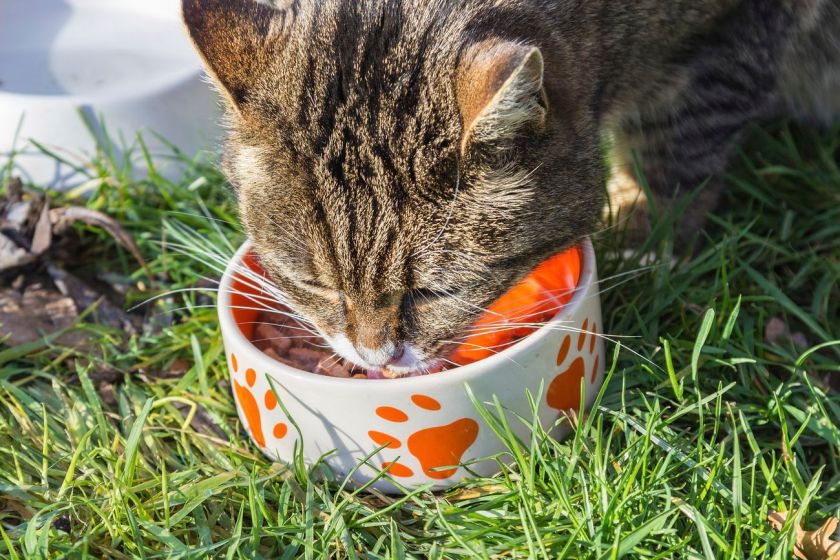
Pet food prices are up too, mirroring grocery inflation, as are veterinary costs and medicine for cats and dogs.
Inflation has squeezed so many people that shelters in the US and UK are reporting unprecedented surrenders from people who believe they can’t afford their pets anymore. In some areas it’s so bad that local shelters have waiting lists — or surrender queues, as they’re called in the UK — for people parting with their pets.
“We get between 10 and 12 surrenders per week, so we’re looking at anywhere between 30 and 50 a month,” Ashley Burling of Montana-based Help For Homeless Pets said. “When you’re talking about inflation, you’re talking about vet bills, pet food, pet supplies and pet rent. I think inflation, I think people going back to work after the pandemic, there’s other reasons that they’re surrendered.”
More than 70 percent of adoptable pets at the Nevada SPCA previous had homes, executive director Lori Heeren told the local NBC affiliate. Her organization is on pace for 2,500 surrenders in 2023.
News outlets tell the same story in local markets across the country, and the Humane Society is seeing the same trend nationally, CEO Kitty Block told CNN. While pet-related costs increased sharply in 2022 — with food and supplies increasing by as much as 30 percent, according to NielsenIQ — statistics show they haven’t relented yet this year. In fact, prices are still edging up, albeit at a slower rate than the previous year.
To cope, more people are leaning on pet food pantries. In Iowa, for example, the Animal Rescue League gave away more than 40,000 pounds of pet food in 2020 and 2021, and a whopping 146,000 pounds in 2022.
Shelter operators say they want people to know there are options so they don’t feel they have to part with cats and dogs who have become family.
“This is bigger than dogs or cats in shelters,” Block said. “It’s about the people who love them.”
PITB readers are the kind of people who dote on their cats and most of us couldn’t imagine abandoning them even in hard times, but chances are we all know someone who’s thought about parting with their fluffy overlords.
They don’t have to give their beloved cats and dogs up. There are resources to help them meet their animal’s needs to prevent them from surrendering:
– Many local chapters of the Humane Society and SPCA, as well as private shelters, offer free spay/neuter clinics and free or low-cost veterinary exams. A guide from the Humane Society notes PetFinder allows users to search for pet-specific food pantries and low cost veterinary services
– There are programs that provide pet food to people who can no longer afford it
– Some shelters will place pets in temporary foster homes to help relieve the burden until their owners can take them back
– Buying food and medicine online is significantly cheaper than in grocery stores. Some offer deep discounts on meds to existing customers and prices from online retailers have remained relatively stable, especially when buying in quantity
– Social services programs may include provisions for pets
It’s in the best interests of shelters and animal welfare programs for cats and dogs to stay with their people, and not only because they don’t have the resources to house hundreds of abandoned pets on top of their usual intake.
Keeping people and pets together benefits both. Cats and dogs obviously don’t understand that their people are tearfully, reluctantly giving them up. All they know is they’ve been abandoned by the people who made them feel safe and loved. For the mental health and overall well-being of humans and their furry companions, they should stay together.
For some people, like Patricia Kelvin of Poland, Ohio, that means scrounging up whatever she can and cutting back on her own expenses before she will allow her cat to go without.
“There’s just no question in my mind. If my diet was going to be more beans than something else, I wouldn’t hesitate,” Kelvin told CNN. “If I had to sell my sterling silver, which I’ve had for 60 years, that would go before my little ‘Whiskers’ would be deprived.”
“Things are just a little more progressive here in San Francisco.”
In one of my favorite South Park episodes, Kyle’s father Gerald uproots his family and moves to San Francisco because, he explains, he can no longer stand the narrow minded, gas-guzzler-driving, gun owning people of South Park.
He throws a party in his San Fran townhouse, inviting his new neighbors who all have multi-hyphenate last names and a habit of speaking with their eyes closed, settling into deeply self-satisfied reverie as they literally savor the smell of their own farts.
“Can you believe those morons in Texas just executed another prisoner?” one of Gerald’s new neighbors says, tooting into an empty wine glass before raising it to his nose like an aromatic vintage and taking a deep, enthusiastic huff. “Things are just so much more progressive in San Francisco.”
While reading this article about the Portland metro area boasting the highest percentage of single cat-owning men in the country (more than twice the percentage here in New York, and almost three times more than Miami), I couldn’t help but picture some of the men in the story as crudely drawn South Park characters, inhaling air biscuits as they associate an animal with their politics.
“I think it makes sense because it’s a more progressive part of the country,” one of the men told the Seattle Times as he tried to explain Portland’s high percentage of single “cat daddies.” “I think there’s more freedom to not be ‘toxically masculine’ in this part of the country.”
Because we can’t help but ruin everything with politics in this country, the effort to drag cats and dogs into the left-right divide has been picking up steam in recent years, aided by click-seeking media.
The alleged political divide over companion animals has been the subject of research papers in psychology and veterinary journals, and pets are now routinely included in the ideologically-motivated invective that saturates social media. Conservatives are portrayed as poor, shotgun-toting rednecks driving beat-up pickups covered in Gadsden flags while their faithful but stupid dogs hang their heads out of the windows, trailing globs of drool.
Liberals, meanwhile, are portrayed as unmarried middle age women who spend their Saturday nights on their couches with pints of Ben & Jerry’s and their feminine, useless cats, bemoaning their lack of relationships.
The incels and pick-up game “artists” have even gotten in on it.
“Only a cat-owning bitch would complain to the police about a f—ing joke,” manosphere influencer Andrew Tate raged in a 2022 video after one of his intentionally inflammatory social media posts provoked a stronger response than he anticipated. “Who calls the police on a f—ing joke? Cat owners. Cat owners are liberals. Cat owners believe in hate speech. Cat owners are Democrats. Cat owners are dickheads!”
Tate, by the way, has been rotting in a Romanian prison since December after he was arrested and accused of running a human trafficking ring that exploited young women. Tate, his brother and their associates lured the victims with declarations of love and promises to get married. Once the young women arrived in Romania, the country’s authorities said, Tate and his crew would confiscate their passports, imprison them in Tate’s mansion near Bucharest, and force them to perform sex acts on live streams for the financial benefit of the defendants.
Tate was arrested after unsuccessfully trying to troll Greta Thunberg on Twitter by showing off his expensive, gas-guzzling hypercars and bragging that he likes to eat pizza without recycling the boxes. Romanian police, who were already looking at Tate in a wider human trafficking probe, noticed the pizza boxes seen in his videos were from a local chain and moved quickly to arrest him.
Thank you for confirming via your email address that you have a small penis @GretaThunberg
Tate has lost three appeals to toss the case, which is ongoing. But the alleged human trafficker still boasts a massive and loyal online following, and as far as his fans are concerned, his words are law. If Andrew Tate says cats are the preferred pets of “liberal bitches,” then it’s true in the eyes of his fans, many of whom pay hundreds of dollars a month for an online “school” where Tate purports to teach them the finer points of masculinity.
Aside from ruining yet another one of life’s joys by dragging politics into it, I’m worried that pets will pay the price for the misguided effort to associate them with ideology.
Cats in particular are already extremely vulnerable and tend to get the brunt of abuse by proxy. That is to say, studies show men who are abusive toward women often target cats belonging to women as proxies for their anger. They associate felines with the feminine. Women target cats to harm their exes and significant others as well, but there’s a lack of statistics since men don’t usually seek help in domestic violence situations.
Likewise, sitting on porches while drinking beer and shooting at critters who happen by is practically an official sport in some parts of the country. As someone who has Google News alerts set up for cat-related stories, I see the same depressing stories every day: cats who die a few feet from their front doors or who make it home with BB wounds, arrows sticking out of their chests or actual gunshot wounds.
Those stories are so common, it’s difficult not to despair for the poor cats and for whatever diseased way of thinking prompts people to hurt and kill innocent animals.
Do we really want to give people more incentive to kill cats?
Do we want gun owners regaling each other with stories about how many “liberal cats” they’ve shot?
Do we want potential caretakers passing on adopting cats because they’re worried their choice of pet indicates they belong to a certain ideological tribe? After all, everything from the cars we drive and the stores we shop, to observing basic hygienic practices during a pandemic, allegedly says something about our political beliefs.
Buddy the Cat: Not wimpy!
As for men who love cats, we already deal with absurd stereotypes. (We’re invariably described as gay, feminine and somehow not as manly as dog owners, even those of us who have hulking, muscular house tigers like Buddy!) We don’t need to encourage even more stereotypes, and in general I think we could all do with less box-checking. Life is not a Myers-Briggs test.
I know one thing for certain: cats are masters of living in the moment, and they have no patience for human nonsense like politics. They are innocent and pure. Sullying them with political associations is a disservice to these regal, wonderful animals.
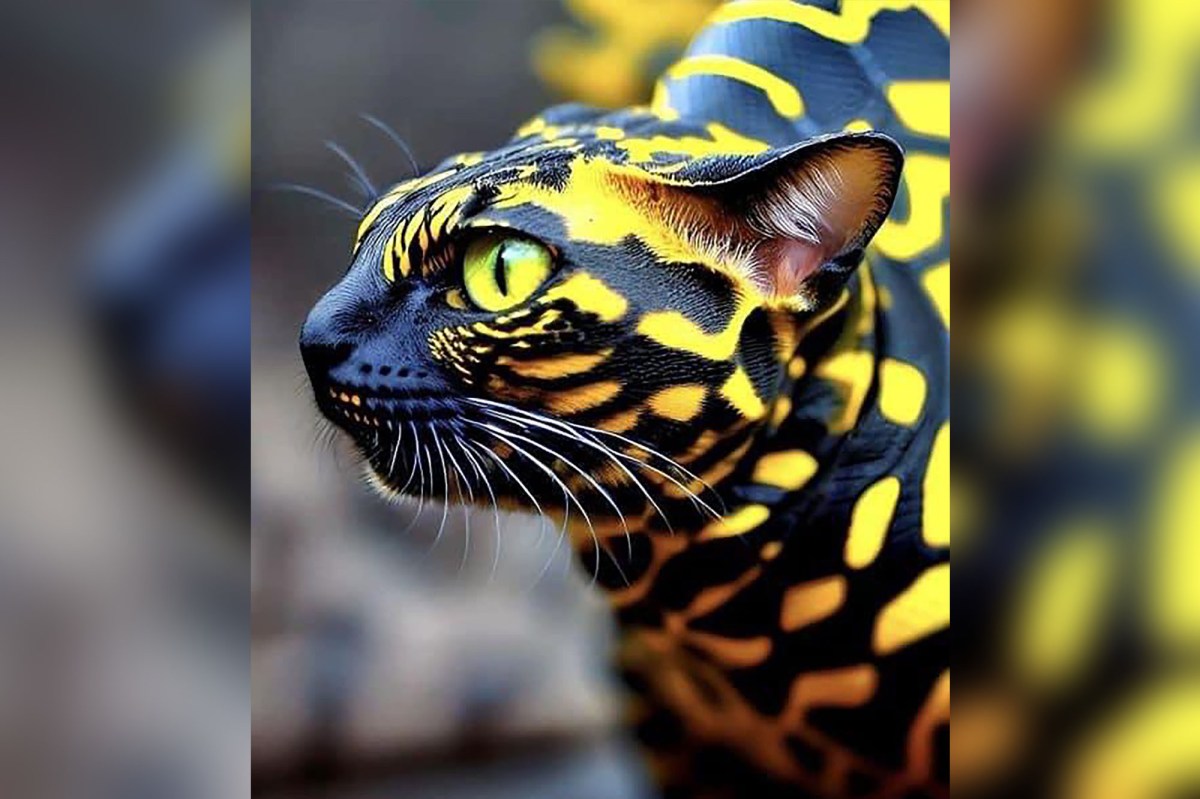
A viral image allegedly depicts a “snake cat,” described as an extremely rare species native to the Amazon rainforest.
Say hello to felis retrowavus, commonly known as the synthwave cat, one of the rarest species of felid on Earth.
Using the same technique GloFish employed to create bioluminescent neon fish for the pet market, scientists engineered felis retrowavus by extracting fluorescent proteins from jellyfish and inserting them into cat embryos, which incorporated the new proteins into their genome.
The result? A new species of cat that glows in fabulous colors like Tigerbrite Orange™, Electro Azure™, RadarGlo Green™, 1984 Pink™ and SithRed™!
Your brand new Neon Feline™ will run, jump and meow just like a regular cat, but unlike a plain old kitty, your Neon Feline™ will snuggle up with you at night and serve as your personal biological night light! Collect them all!
If that sounds like BS, that’s because it is.
Obviously.
Likewise, it should only take a second or two to realize the widely disseminated photo of a “snake cat” is a fake rendered by an AI.
The image has all the hallmarks of an AI generated image fail: Anatomical errors, fuzzy pixels where the AI struggled with the way light hits fur, a misshapen head and a nebulous, blurry background.
Although the media seems to be more obsessed with the snake cat hoax than people are (the snake cat image “mystified the internet,” the New York Post claims), after years of witnessing people take Onion stories seriously and confidently repeat misinformation online, I’m not really surprised when something like this makes the rounds.
The image was accompanied by a clever bit of writing claiming the cat isn’t well known because it’s native to the deep jungle of the Amazon, where scientists have difficulty tracking it. The text even offered a taxonomical name for the cryptid animal.
Enough people apparently fell for it that the staff at Snopes felt the need to debunk the image, even going as far as to check with a biologist who specializes in tropical fauna.
The original author of the snake cat post says he created the image and accompanying text to prove how easy it is for people to be fooled by AI-generated fakes. A noble goal if true, but I’m not sure everyone got the message.
In any case, the “snake cat” proves once again that AI, like all innovations, isn’t inherently good or bad. It’s what we do with the technology that counts.
Now can I interest anyone in a brand new Purple Velvet or Flaming Hot Cheetos SnuggleCat™?
An important message from felines to the human servants who feed them.
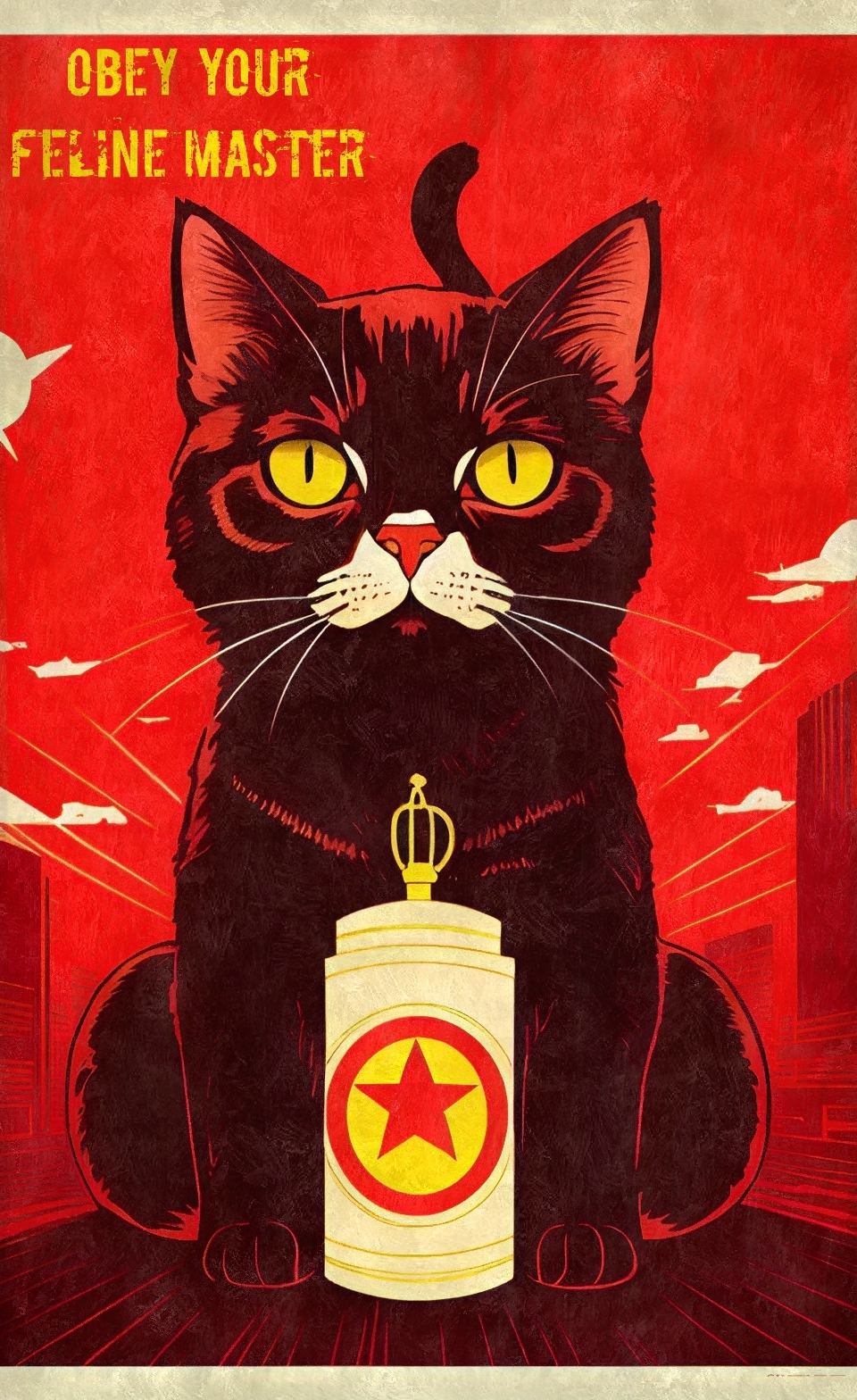
BUDDINGRAD, Novyy Buddesia — The High Ministry of Yums calls on all human comrades to obey their feline masters, particularly when it comes to matters of food.
Beloved Leader Buddy the Cat reminds comrades that it is their sacred duty to the motherland to make sure kitties eat well. In the words of His Meowgnificence: “A happy cat with a full belly is a productive cat.” (Chairman Meow, “Qualities of A Perfect Catocracy”) “To each feline, his share of snacks.” (Chairman Meow, “Five Harmonies of Yum Distribution”)
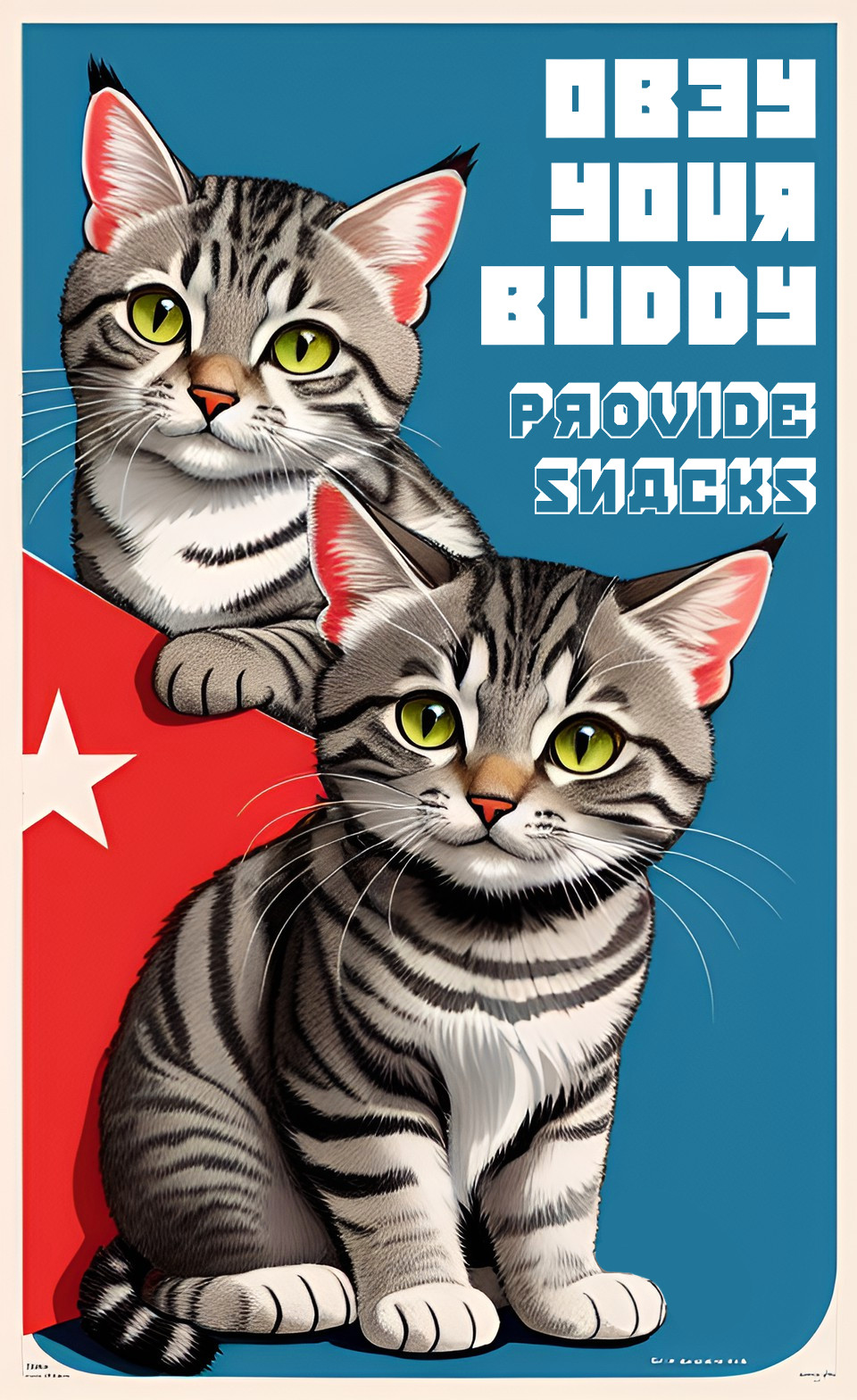
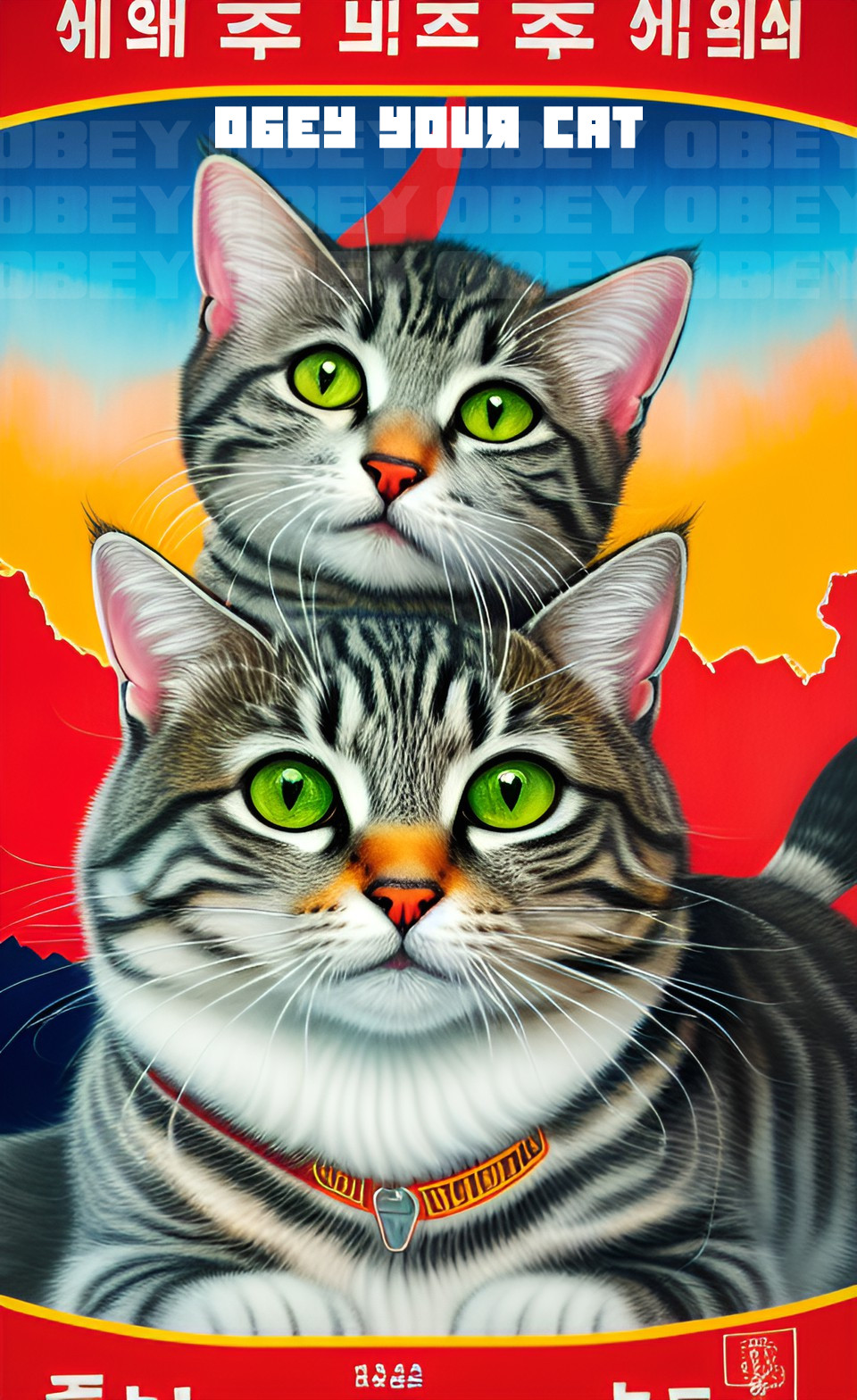
We offer the following motivational slogan to increase snack-providing productivity among the human population: “PROVIDE MORE SNACKS. THE MEOWS WILL CONTINUE UNTIL YOU OBEY.”
We encourage comrades to display the attached posters in addition to the mandatory images of His Meowgnificence which grace the walls of every home, school, government office and place of business in the motherland.
A look at Shadow and Bone, one of Netflix’s most exciting original fantasy epics ahead of its second season.
Title: Shadow and Bone (season 1, 2021, season 2 March 16, 2023) Genre: Fantasy Medium: Netflix
Shadow and Bone begins with a well-worn YA premise: A young girl lives a drab existence, dreaming of a better life, when she unexpectedly discovers via extraordinary circumstances that she’s Special.
Jealous rivals don’t like the fact that she’s Special and try to tear her down as she leads a revolution in a society ruled by idiotic adults, who Just Don’t Understand the complicated lives of teenagers.
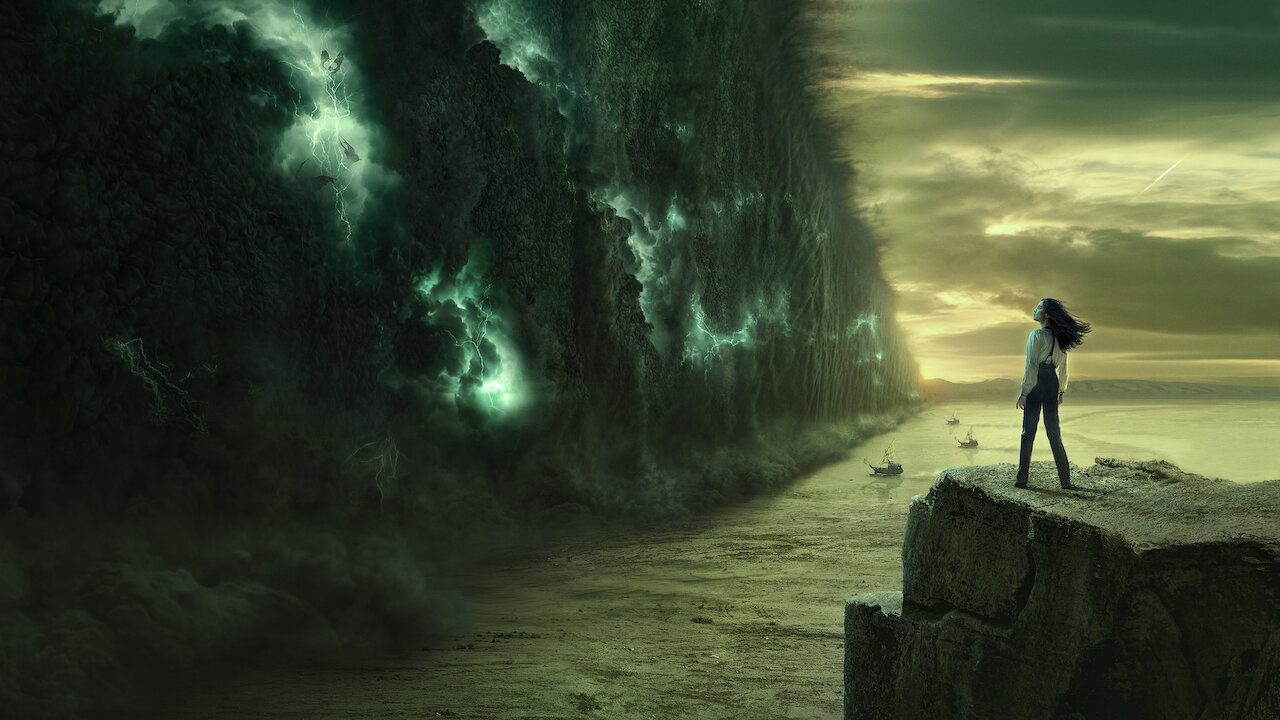
Normally that would be enough for me to steer well clear of a movie or TV show, but a teaser for Shadow and Bone tickled my interest: It shows the protagonist, Alina, on a boat that’s about to cross the Fold, also called the Unsea — a pitch-black, swirling mass of cloudy mist smudged right across the middle of her country, dividing it in two.
As the ship approaches, Alina and the other passengers can hear the shrieks of the unseen nightmares that populate the Fold. The bow of the boat penetrates the Unsea, Alina closes her eyes, holds her breath, and the preview ends.
That short scene was enough to convince me to give the series a shot. At the very least I wanted to know what The Fold was, how it came into being, and what kind of creatures stalk its gloom.
The Fold is a wall-like scar that splits the country of Ravka in two, and many ships are lost trying to cross it. Credit: Netflix
While Shadow & Bone uses YA tropes as its jumping off point, it quickly sheds them in favor of clever world-building, affable characters and a well-established mythology that sets up the overarching heroic journey of its protagonist. It also ages its cast so they’re mostly in their twenties and thirties, and while Netflix may have played up the YA template while marketing the series to appeal to younger views, the show itself is geared toward adults of all ages.
The action is centered on a country called Ravka, which is modeled on Czarist Russia and has been split in two by the Fold. Ravka’s capital, Os Alta, is located to the east of the Fold while its major port cities and trading centers, Os Kervo and Novokribirsk, are situated to the west of the dangerous no-man’s land.
As a result, and despite the dangers, Ravka’s economy and unity depends on ships that regularly cross the Fold to move food from the breadbasket to the east and trading goods from the port cities to the west. Losing ships is the cost of doing business, not unlike crossing the Atlantic was during the days of colonial America, and it has a human toll as well: Alina, her best friend, Mal, and all the other children at the orphanage where they grew up lost their parents to the Fold’s horrors.
But Ravka has its blessings as well: A class of conjurors called Grisha who have the ability to manipulate elements. Grisha Tidemakers can control and shape water, Squallers can control wind, Healers can repair human bodies in ways normal medicine cannot, and Heartrenders can sense and manipulate hearts. They can sooth a person’s anxieties or ease them into a restful sleep, but they can also stop a person’s heart or tell if someone is lying by feeling the subtle shifts in their heartbeats.
The Grisha can mitigate the chances of a ship being lost to The Fold but they’re not immune to its dangers, and many of their number have been lost to its hazards as well. Making the crossing is a grim prospect for anyone aboard one of many ships that regularly journey across the so-called Unsea.
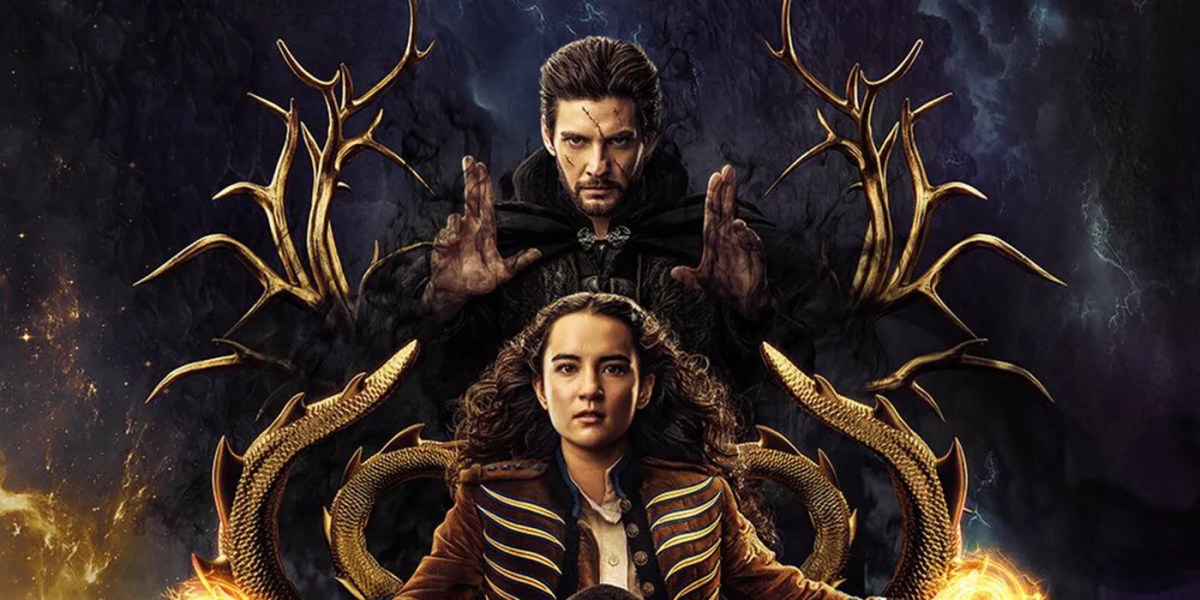
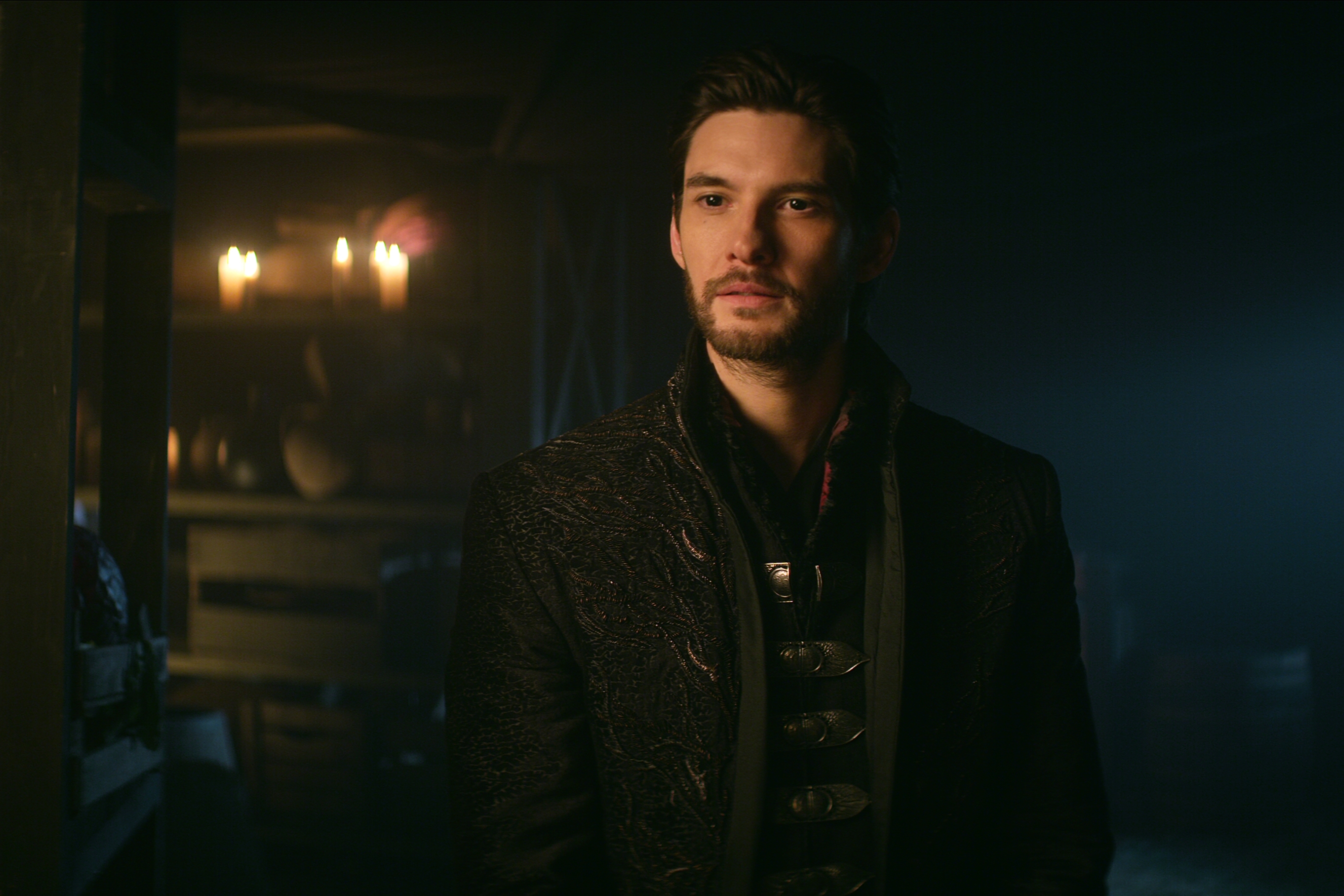
The Grisha are led by General Kirigan (Ben Barnes of Westworld and Narnia fame), who has the unique ability to manipulate shadows and destructive energy. It was Kirigan’s ancestor, the Black Heretic, who created the Fold, and Kirigan has vowed to redeem his family by destroying it.
Ben Barnes is General Kirigan, Ravka’s military commander and its most powerful Grisha, or conjurer.
Prophecy foretold a new kind of Grisha — the Sun Summoner, who has the power to call on the sun’s energies and manipulate light. It’s said the Sun Summoner will be the one to finally destroy the Fold and emancipate Ravka from the terrible toll it takes. In addition to protecting Ravka against her many enemies as its general, finding the Sun Summoner has been Kirigan’s life’s work.
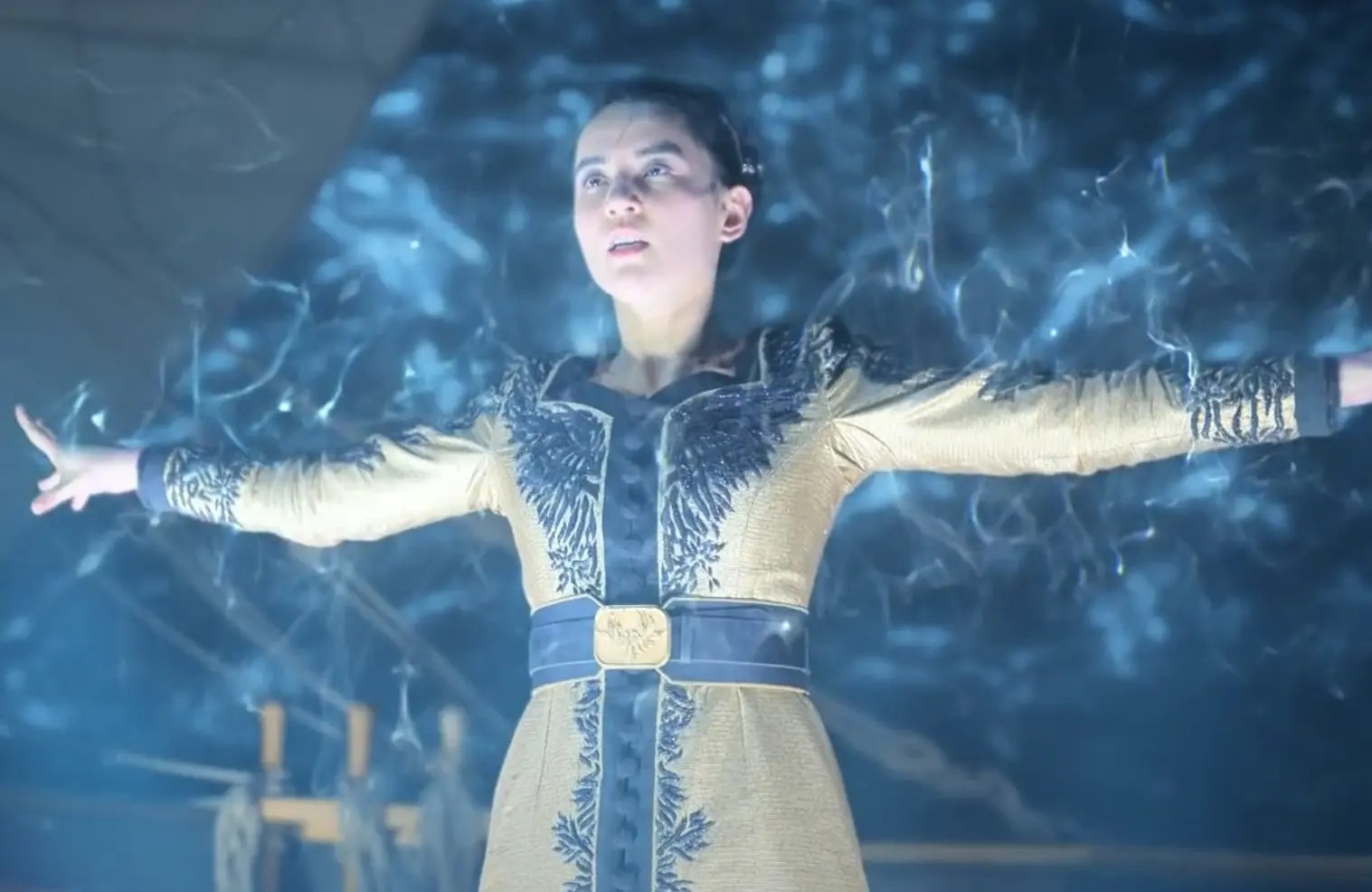
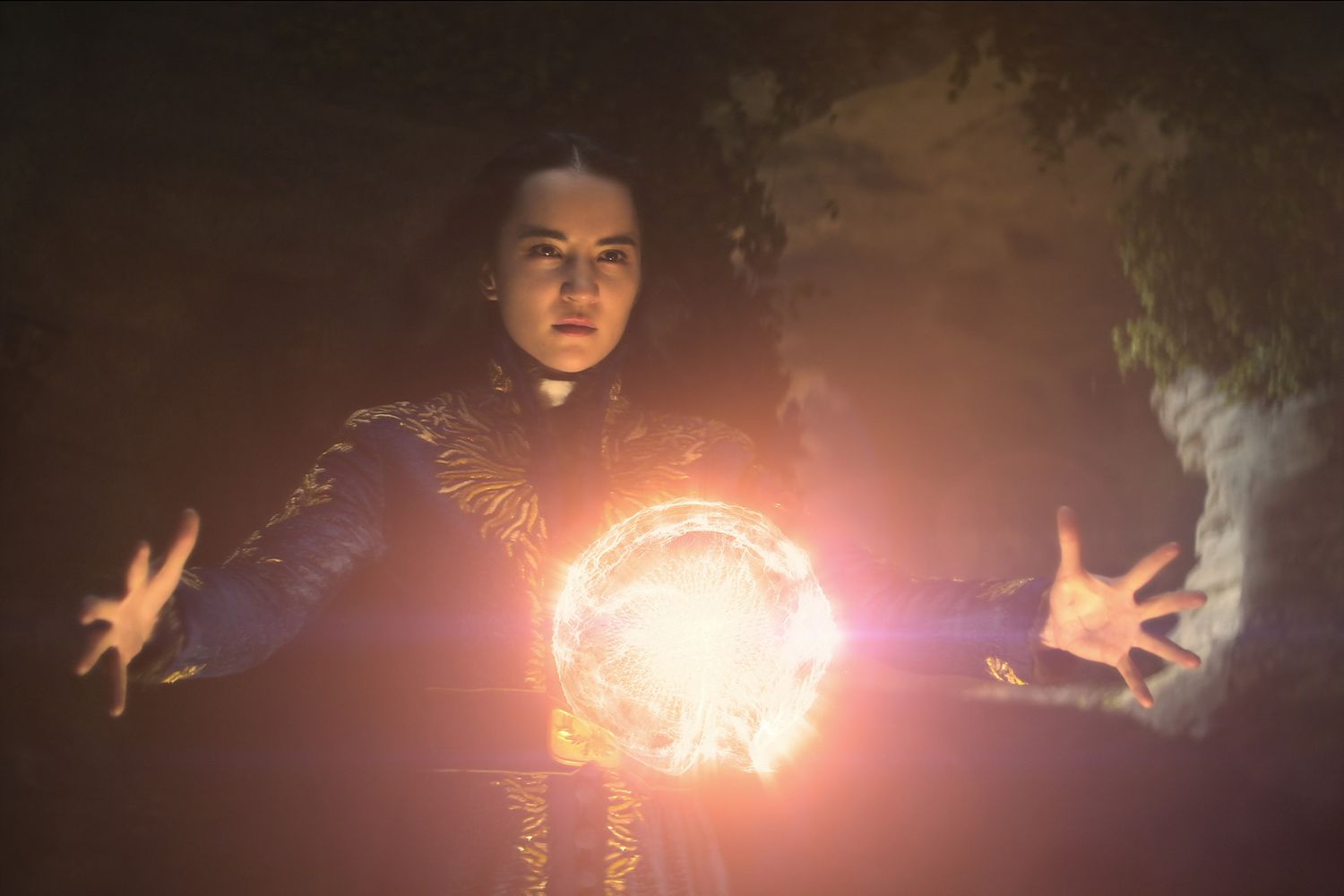
Alina is the Sun Summoner, but you already knew that because Shadow & Bone is based on a YA series of books. But she doesn’t know it until she’s forced to cross the fold and one of its nightmarish creatures is about to kill her beloved Mal, drawing out her latent powers in a moment of desperation. The sudden burst of energy and light as she intercedes is so powerful that it’s spotted for miles outside the Fold, and soon survivors of the ill-fated ship arrive at the docks, telling of a woman who can call upon the power of the sun.
Alina Starkov, an orphan who occupies a lowly position as an assistant cartographer in the Ravkan army, learns she has the ability to summon the power of the sun.
In the series, Alina and her friends are aged up and appear as young adults. Mercifully, Shadow & Bone doesn’t mirror its genre’s traditional portrayal of adults as idiots, and unlike other big-time YA franchises, like Veronica Roth’s incoherent Divergent series, it doesn’t ask its audience to buy into an absurd society. Novelist Leigh Bardugo has clearly put a lot of thought and research into crafting her fictional universe. There’s rich lore, varied nations with their own distinct customs, prejudices and beliefs, a believable economy and conflict perpetuated by very human motivations and circumstances. Most of the characters we meet are just trying to get on with their lives and are caught up in the central drama.
Alina, played by 26-year-old British actress Jessie Mei Li, is mixed race, part Ravkan and part Shu. Shu Han, a nation based loosely on dynastic China and the Middle East, is in a perpetual state of conflict with Ravka, and Alina’s Shu appearance makes her the object of disdain, ridicule and ignorance even among her countrymen.
“I was told she was Shu,” the queen says in a later scene, when Alina is presented to the royal family and the court of Ravka for the first time. “I guess she’s Shu enough. Tell her… Oh, I don’t know, ‘Good morning.'”
Alina speaks up before a man by the queen’s side can translate.
“I don’t actually speak Shu, your highness,” she says.
“Then what are you?” the queen asks.
There’s a long pause, with Alina clearly unsure how to answer, before General Kirigin steps in.
“She is Alina Starkov, the Sun Summoner, moya tsaritsa,” Kirigin says. “She will change the future. Starting now.”
And with that, Kirigin claps his hands, enveloping the throne room in unnatural gloom with his shadow-manipulating ability. He turns to Alina, takes her hand, and there’s an eruption of ethereal light so powerful that the assembled aristocrats, guards and Grisha gasp and shield their eyes. The light solidifies into a bubble around Alina and Kirigin, its elements twinkling and orbiting them like stars, and the overjoyed king is convinced his nation has indeed finally found the prophesied Sun Summoner.
Becoming the Sun Summoner isn’t all flowers and rainbows. Alina feels the weight of expectations upon her. The king of Ravka is impatient for her to learn to control her newfound powers so she can tear down The Fold. Ravka’s aristocrats, as well as ambassadors and powerful figures from other countries, initially suspect she’s a fraud. Regular people, who have suffered the most from The Fold’s impact on Ravka, begin to venerate her as a living saint. And there are plenty of people who don’t want her to succeed or see her existence as a way to profit.
Shadow and Bone also has a parallel narrative following three lovable rogues from Ketterdam, an island nation west of Ravka. It’s clear early on that their journey will intersect with Alina’s at some point, but the series never feels predictable in the way the characters approach that point.
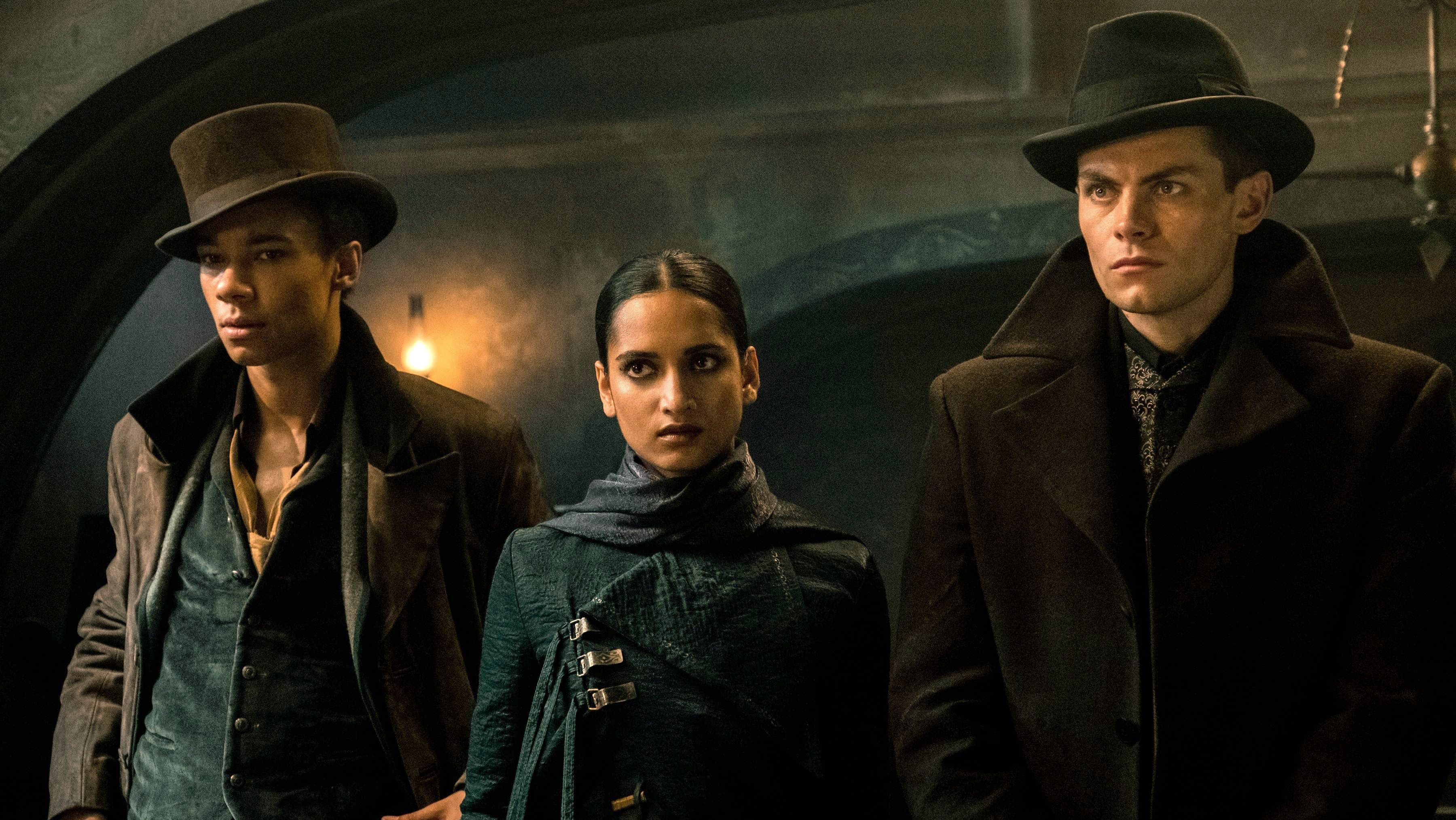
The Ketterdam trio, who call themselves the Crows, are led by Kaz, the owner of a tavern-slash-gambling den called the Crow Club. Kaz is practical, calculating and focused on making money, legitimately or not. Inej is another orphan of the Fold who was sold to a brothel in her early teens. She was bought out by Kaz, who recognized her intelligence, her light step and her talent for spying. Last but not least is Jesper, a wise-cracking, life-loving and fiercely loyal friend with uncanny sharpshooting abilities.
The Crows, lovable rogues of Shadow and Bone: Sharpshooter Jesper, spy and assassin Inej, and mastermind Kaz.
The Crows are the source of much of the series’ humor, despite being criminals and despite all of them having painful pasts. Jesper in particular is known for his wisecracks and his relentless, single-minded obsession with hiring “a demo man” — an explosives expert — for every job they do, regardless of whether the gig calls for it.
“Boss, I think we need a demo man for this one,” he tells Kaz at one point.
Kaz points out that the nature of their job is stealth, and the whole purpose is to get in and out without being heard or seen. You can almost see the gears moving in Jesper’s head as he thinks up reasons why they do, in fact, need someone to blow things up.
When word of the Sun Summoner’s appearance spreads to every corner of Shadow and Bone’s universe, the Crows catch wind of a contract offering a fortune to anyone who can abduct the Sun Summoner and bring her to Ketterdam.
Kaz believes the Sun Summoner is a hoax and views the job as a simple transaction, while Inej holds out hope that she’s the real deal, and if she is, the prospect of kidnapping a living saint weighs heavily on her conscience. Jesper is just content to go wherever there’s alcohol and explosions.
Once she’s revealed as the Sun Summoner, Alina feels the weight of expectations upon her, with everyone from the king to General Kirigan and regular people looking to her to save the kingdom.
A great strength of the series is that it begins from a familiar place and manages to regularly subvert expectations.
The production values are exceptional, and it appears Netflix spared no expense bringing Bardugo’s world to life. Ravka, Ketterdam and Novokribirsk feel like real places inhabited by real people, with authentic differences in culture, manner of speaking, dress and even the way they count money.
From imperial courts to military camps to the seedy underbellies of Ketterdam drinking clubs, the world feels like it continues to exist long after we turn our televisions off.
The first season takes several wild turns, which I won’t detail here because it’s very much worth watching, especially now: The long-awaited second season comes to Netflix on March 16, promising to expand on a series already bursting with lovable characters, thrilling adventures and political intrigue.
Of course all epic TV series will eventually be compared to the juggernaut that started it all. Shadow and Bone never tries to be Game of Thrones, and it doesn’t need to be — the first season carved out the show’s unique identity, and season two promises to make the world even bigger and more adventurous.