Blog Posts

A Woman Wanted This Gorgeous Kitty Euthanized For Litter Box Issues

A veterinarian realized kitty was healthy and put her in the care of a local no-kill shelter, where she remains while hoping for a forever home.

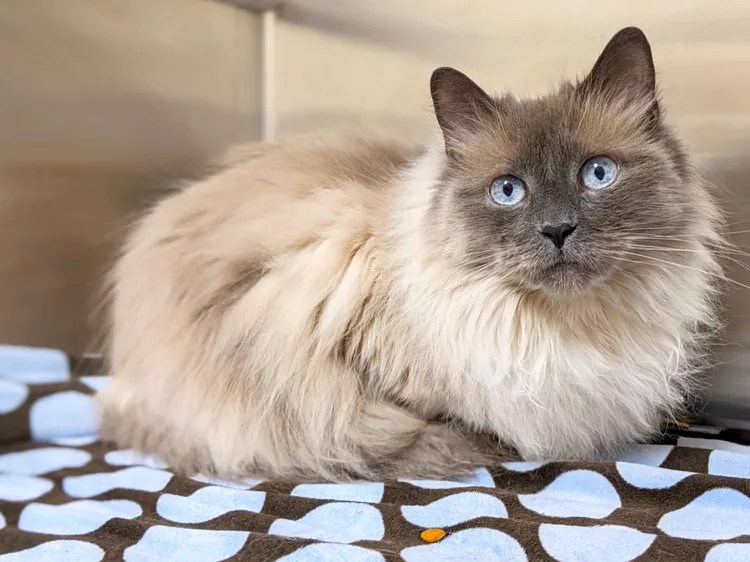
Lulu is 13 years old and began eliminating outside her litter box last year after a long life of doing her business properly.

Instead of realizing that a change in behavior was almost certainly precipitated by health issues — and attempting to get those issues sorted out — Lulu’s “owner” brought her to a veterinarian to be euthanized.

The vet realized Lulu was healthy and her issues were easily remedied, wisely persuaded the woman to sign over ownership of Lulu and brought the Himalayan to the local SPCA. She’s been there since December.

Lulu had urinary crystals which were remedied after a change in diet, and she hasn’t had an “accident” in months.

Staff at the SPCA want people to know that they don’t have to surrender a cat for litter box issues or other behavioral changes even if they think they can’t afford veterinary treatment.

“If your pet is not behaving or their behavior has changed, the first step is to get them to a vet to see if something is medically wrong. Even if it is not a medical condition, there are numerous resources — many available at Dutchess County SPCA — to help resolve the issue and avoid both euthanasia and surrender to a shelter,” Lyne Meloccaro of the Dutchess County SPCA told People. “Medical assistance, expert guidance, and management plans, and training referrals are all available for you.”
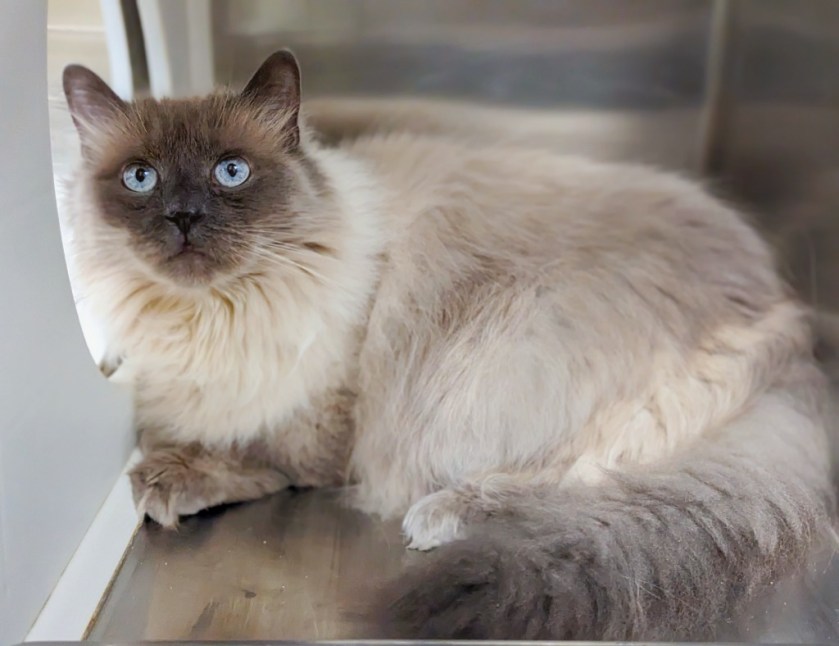
Lulu
Lulu has a regal bearing, an epic coat and beautiful coloring. Credit: Dutchess County SPCA

Dutchess County, which is about 75 miles north of New York City, happens to be the former college stomping grounds of Big Buddy. I graduated from Marist College and lived in the area for some years after. The SPCA there does good work, and its law enforcement division has handled some high profile animal-related crimes over the years.

It’s sad that Lulu lost her home after 13 years, but maybe it’s for the best if she ends up with a devoted servant who will really love her. Her caretakers at the SPCA say she’s stubborn, demands affection on her own terms and wants an “emotional support human.”

Lulu is still available for adoption. The SPCA says she’ll do best as an only cat in a quiet household, and we have no doubt she’ll bring joy to the lucky person who brings her home.

Choupette, Karl Lagerfeld’s Millionaire Cat, Has Been Invited To The 2023 Met Gala

One of the most pampered kitties in human history has been invited to the “most prestigious” fashion event, which will honor her late human servant this year.

She drinks out of silver bowls, is toted around in a custom $3,000 Louis Vuitton carrier and pads out her fortune by earning millions hawking makeup and luxury vehicles.

Now Choupette, the sapphire-eyed cat who belonged to the late fashion designer Karl Lagerfeld, has been invited to the most exclusive party in the world.

Choupette’s agent, Lucas Berullier, confirmed receipt of a Met Gala invitation to the New York Post, but was coy when asked if Choupette would actually show up.

The Birman cat was personally invited by Vogue editor-in-chief Anna Wintour, who oversees the event, and the Post points out Choupette could play a central role because the 2023 gala will honor Lagerfeld and his career as the creative director for Chanel.

Choupette is credited with mellowing the icy German designer, who quickly fell in love with her and made her his muse, adding her to fashion shoots where she lounged in the arms of models like Vanessa Paradis and Cara Delevingne.

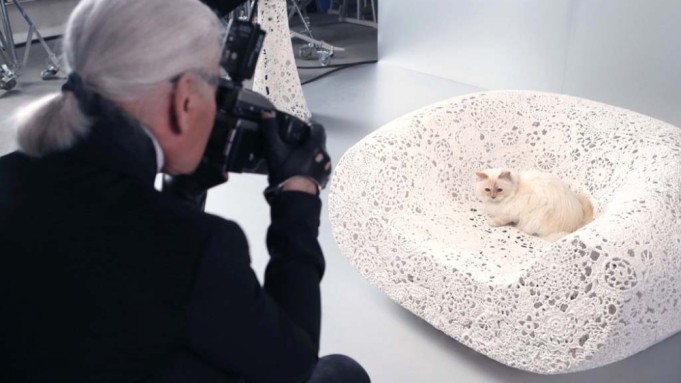
Choupette and Lagerfeld
Lagerfeld photographs Choupette, his beloved Birman cat.

Choupette appears in the current issue of Vogue, cradled by supermodel Naomi Campbell on a bridge in Paris’ Grand Palais. The photo and others in the gallery were shot by Annie Leibovitz.

The exact size of Choupette’s fortune has never been publicly disclosed, but publications like Forbes have reported Lagerfeld left $13 million of his $200 million-plus net worth to the pampered feline. Choupette has added to her largess over the years, amassing further millions as she appears in advertisements, fashion campaigns and photoshoots.

Lagerfeld’s former housekeeper, Françoise Caçote, cares for Choupette and manages her social media accounts.

The Met Gala is a charitable event, so normally it wouldn’t feel right to snark about it, but “the most prestigious fashion event” of the year looks like a Zoolander scene come to life. Guests are required to attend in haute couture outfits by prominent fashion designers, which means the typical attendee’s clothes and accessories cost more than many Americans earn in a year.

There’s a theme every year — aside from the usual preening privilege and a collective effort to ignore reality — and the outfits are ostensibly “costumes,” but no one’s showing up in stuff they bought from Party City.

V-Magazine-Choupette-1
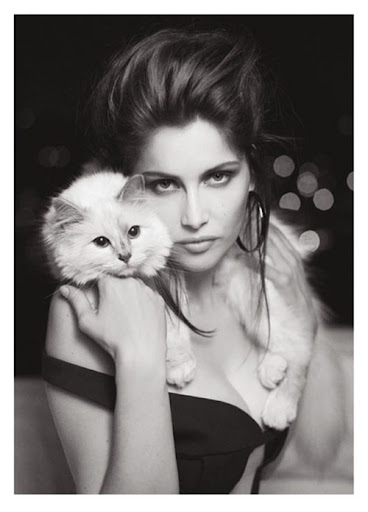
Choupette and supermodel Laetitia Costa pose for V Magazine. Choupette has also appeared on the cover of Vogue several times.

And while the gala is technically a charitable event, the proceeds won’t help starving kids or war victims — as the brainchild of Wintour, the event is designed to raise money for the fashion world to further celebrate itself.

When I see people like Wintour, the celebrities in her orbit and the old money types who like to be photographed at these events, I enjoy thinking about how they’d react if their jets went down over a place like the Amazon, and all the Dolce and Gabbana in the world can’t help them build a fire or catch dinner. “Do you know who I am?” doesn’t work in jungles.

But the one character I will never insult is Choupette herself. Buddy looks very handsome in a tuxedo, and I shall realize my plan to sneak him into one of these parties, have the two of them “accidentally” bump into each other, and let Buddy’s charm do the rest. Then he’ll really be living large. 🙂

Happy Easter From The Easter Buddy!

Wishing everyone a happy and healthy Easter from your friends, the Buddies.

Happy Easter from the Easter Buddy, his feline-rabbit friends, and his humble human servant.

We hope our readers get to enjoy the day with family and friends, and as always, Buddy says this is a great day for turkey.

He’s also demanding I take down the images of him with rabbit ears, calling it “undignified for a fierce and renowned predator of my stature,” but I’m pretty sure I can distract him with snacks. Besides, he looks kinda cute as a weird cat-bunny hybrid.

Please feel free to use the comment thread on this post as a general Easter chat or greeting thread, and I hope you all have a wonderful holiday.

easterbuddyandfriends
The Easter Buddy and Friends.

Kitty Climbs On Imam, Demands Pets During Ramadan Prayer

The cute calico joined an Algerian imam for evening prayers, climbing up to his shoulder as he led his mosque in worship.

A cat in Algeria reminded an imam that members of her species get scritches when they want them — even in the middle of prayers during Islam’s most sacred month.

Cats are allowed to come and go as they please in mosques, and Muslims view cats favorably, in part because the Prophet Mohammad was fond of them. There’s even a famous story about Mohammad cutting his sleeve off instead of disturbing one of his favorite cats, who was sleeping comfortably on the sleeve when the prophet was getting up for prayer time.

On Wednesday, Imam Sheikh Walid Mehsas was leading tarawih — an evening prayer — when a calico rubbed up against his legs, meowed and then climbed up to his shoulder. She continued rubbing affectionately against him as he continued the prayer:

The prayers were broadcast on a live stream and the moment quickly went viral, with many praising the imam for his patience and love for the cat even as he led an important prayer. (Some comments on the live stream indicated the cat may belong to the imam, or the other way around, although that has not been confirmed.)

After leaning into the microphone as if she was going to join in the evening prayer, kitty thought better of it and hopped down off the imam’s shoulder, opting instead to claim a few more humans as her servants by rubbing up against their legs.

Whether by demanding pets during religious ceremonies, invading the diamond and pitch during baseball and soccer matches, or casually strolling on stage during concerts, cats have shown little regard for human activities and, true to their reputations, have made it clear that cat time takes priority over human time.

Despite that, or perhaps in part because of it, we still love the little stinkers. Perhaps that explains why I can never be mad at Bud, even when he plops himself in front of the screen during crucial moments in video games or tugs down at a book I’m reading, to demand I give him his scritches. I am his humble servant.

Tiny Sand Cats Have The Largest Ranges Of All Felines, Study Says

The little-known, Lilliputian species of feline thrives in some of the harshest environments on Earth, proving cat species are capable of remarkable adaptations to their surroundings.

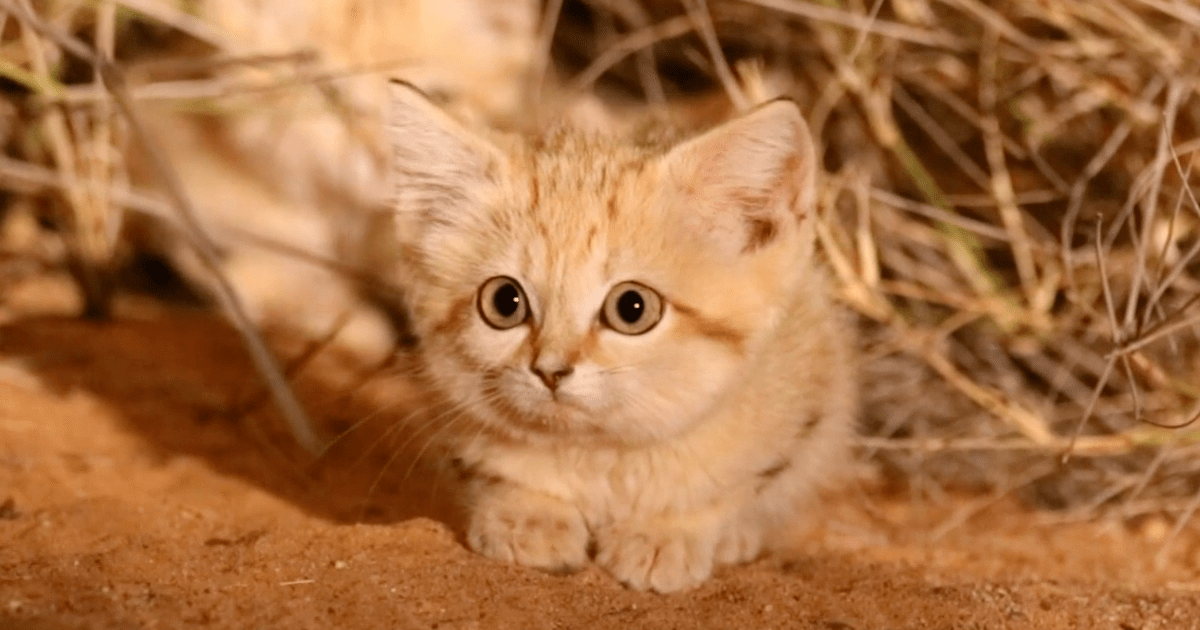
There’s a lot we don’t know about felis margarita, so much so that kittens of the elusive and stealthy species weren’t photographed in the wild until 2017.

Now a study has unveiled a surprising fact about sand cats: despite being tiny in stature, they occupy huge ranges that can rival the size of territories claimed by big cats like tigers and jaguars. One cat claimed 1,758 square kilometers — about 1,093 square miles — for himself according to Gregory Breton, the study’s author, who said the cat’s behavior showed sand cat ranges are “considerably larger than previously estimated.”

That individual maintained his impressive range for more than six months before moving on. His behavior and the movement of 21 others tracked via radio collars suggests the species could be semi-nomadic, moving or adjusting their ranges as they look for prey and water in some of the hottest, most arid environments on the planet.

“If true, this type of movement in response to rainfall is previously unrecorded among wild cat species,” wrote Breton, who is managing director of the cat conservation group Panthera in France.

In addition to following sources of water, the cats may maintain such large ranges because prey are more spread out compared to biomes like jungles, forests and wetlands where other species of cats make their homes.

(Above: Tap or click the images for full resolution versions.)

Impressive ranges weren’t the only surprise the tiny cats had for researchers. Breton and his colleagues managed to catch and examine more than 40 sand cats before releasing them back into the wild and noted they were all healthy, with few scars, no fresh wounds and no broken teeth.

The lack of wounds “means that it is likely that sand cats exhibit little territoriality and tolerate each other across their ranges,” Breton wrote  “This beloved cat may indeed share habitat with others of its species — maybe their perception does match their nature, at least towards other sand cats.”

Sand cats can be found in the Algerian Sahara, the deserts of the Arabian Peninsula and countries like Chad, Niger and Morocco. The Panthera team tracked the Lilliputian felines in the latter country, traversing the desert and arid landscapes of southwestern Morocco where temperatures peaked at 122 degrees Fahrenheit (50 degrees Celsius) during the day.

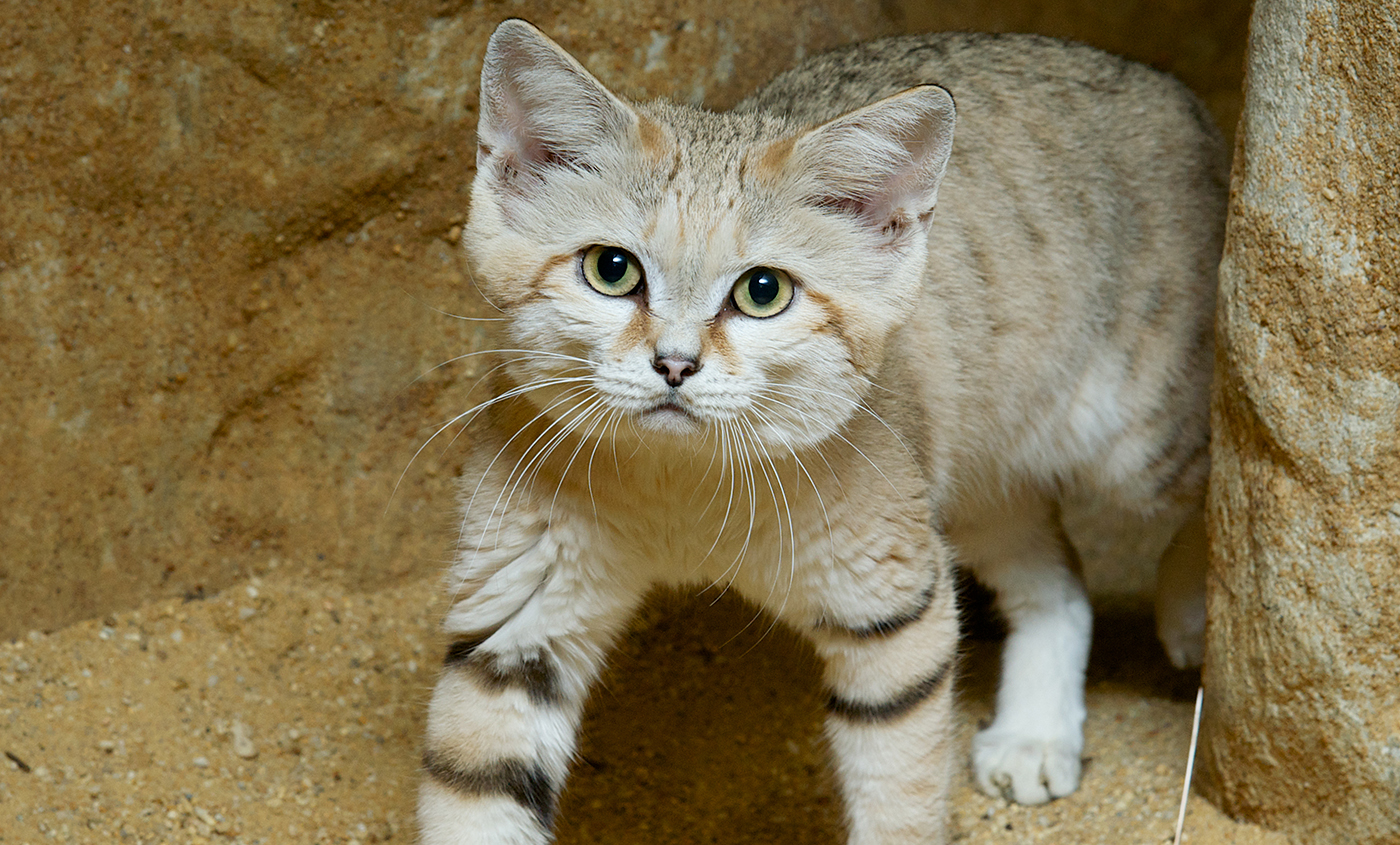
Sand cats have what Breton describes as “whimsical faces,” sporting wide, swept ears to go along with the general horizontal appearance of their heads.

They have golden, classic tabby markings and sand-colored fur with well-defined dark rings on their limbs, allowing them to expertly blend into their surroundings. Sand cat camouflage is so effective and the species is so quiet that one of the best ways to find them is at night, using search lights to pick out their reflective inner eyelids amid the desert landscape.

They’re also considerably smaller than house cats, weighing up to 7.5 pounds.

Breton said his team’s research is critical for estimates of sand cat population, which in turn will help authorities determine the conservation status of the elusive feline.

20130418-001CN
Credit: Panthera