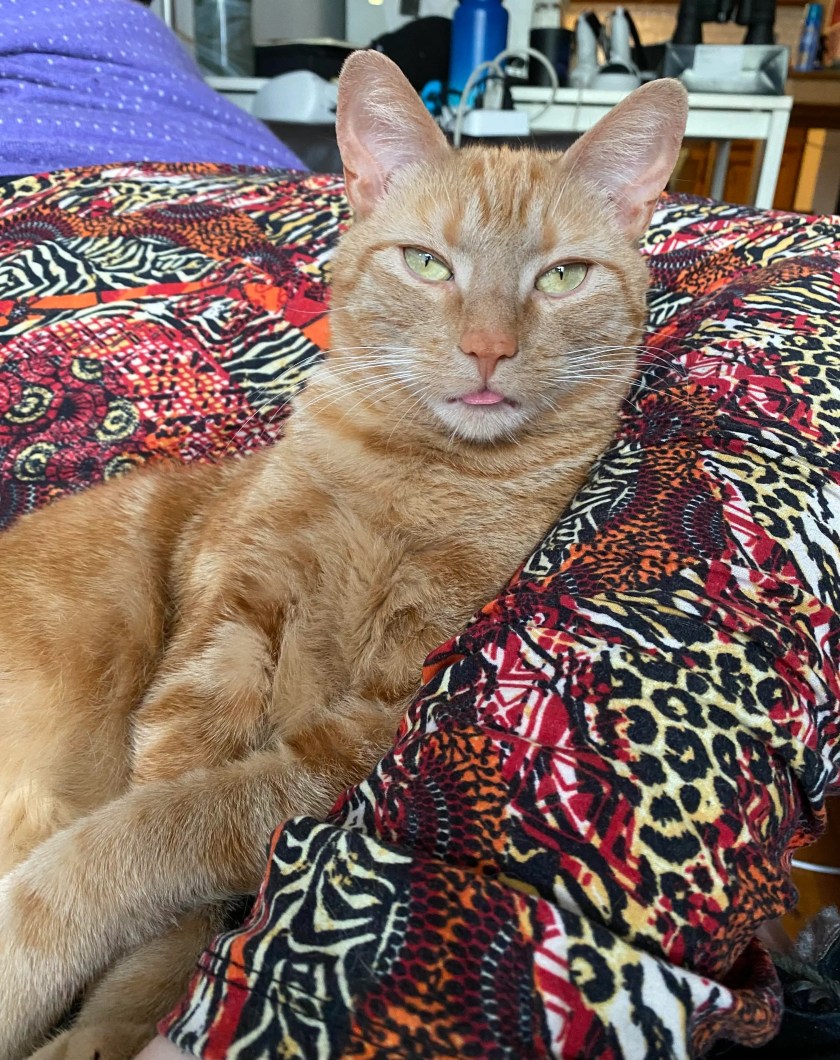
Smells loves boxes just as much as any other cat, but his affinity for tight spaces almost landed him in Florida, a long way from his home in Brooklyn.
It was a tuft of orange hair poking out from the zipper of a carry-on suitcase that first alerted a TSA agent that something weird was going on.
The agent, who was processing a traveler departing from New York’s JFK airport on Tuesday morning, then consulted an x-ray scan, confirming the suitcase contained some unusual cargo — a ginger tabby cat tucked in among toiletries, snug and napping comfortably in the enclosed space.
An x-ray scan revealed Smells tucked snugly into the suitcase. Credit: TSAThe incriminatory tuft of orange hair that gave away Smells’ hiding spot. Credit: TSA
As for the traveler, the cat didn’t belong to him, nor was he aware kitty had climbed inside. It turned out he had been a house guest of friends living in Brooklyn, and the cat named Smells had slipped into the luggage before he left for home, for what is a suitcase if not just another box?
The TSA confirmed the story with the cat’s owner before letting the traveler board his Florida-bound flight.
“An officer called and asked if I wanted to press charges” said Alix, Smells’ 37-year-old human. “He wanted to know if there was any reason [the passenger] was trying to steal my cat and go to Florida.”
A TSA security agent opens the suitcase to reveal its unauthorized would-be stowaway. Credit: TSA
After Alix assured the TSA agent that Smells “really likes to check out boxes” and definitely would have climbed in on his own, she hired a driver to retrieve the kitty, who was unperturbed by the adventure.
“I was worried he’d be freaked out but he wasn’t even meowing on the way back,” Alix told the New York Post. “I went to give him some extra treats and he acted like nothing had happened.”
As for the TSA — which often deals with more serious finds like guns and drugs secreted into passengers’ luggage — the saga of Smells was a welcome change that gave them a good story and some laughs.
“On the bright side,” TSA spokesman Lisa Farbstein wrote on Twitter, “the cat’s out of the bag and safely back home.”
Though the behavior is extremely rare, mountain lions have been known to attack small dogs at night.
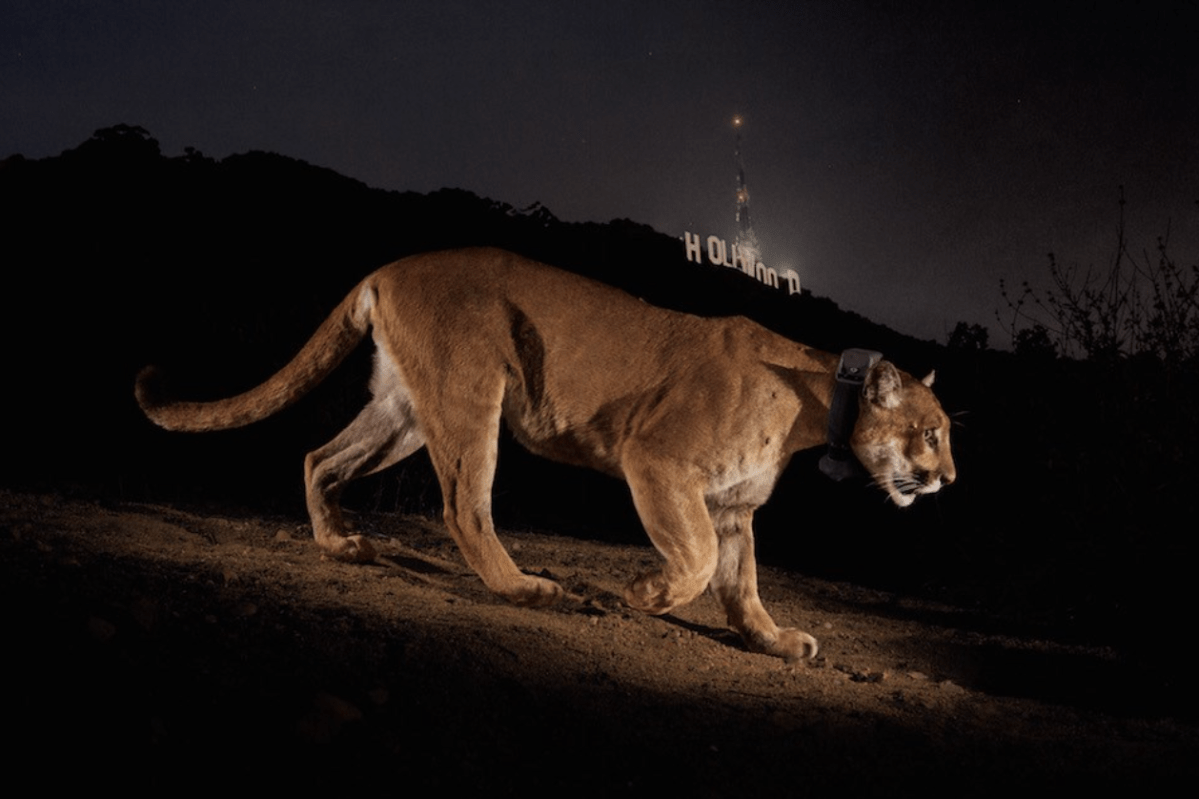
P-22, as he’s known to the scientists who study him, is the star of two documentary movies, four books and innumerable photos captured by trail cameras, surveillance stills and the few people lucky enough to catch a glimpse of him.
The 12-year-old mountain lion is instantly recognizable by his radio collar and his derpy, wide-eyed look.
But he’s also a predator, as the National Park Service reminded the public on Monday when it confirmed P-22 was indeed the puma who stalked a dog walker accompanying two pooches on Nov. 9. P-22 struck in full darkness about 90 minutes after sundown, snatched one of the unfortunate pet dogs and was bolting away before the walker even had time to react.
The incident was captured by a security camera in the Hollywood Hills neighborhood of Los Angeles, and grainy video shows P-22 leaping out of a bush and pouncing on a chihuahua named Piper. After consulting GPS data from the radio collar and reviewing the surveillance footage, the National Park Service confirmed it was the famous wild cat.
“They are stealth predators,” the National Wildlife Federation’s Beth Pratt told the LA Times. “They’re called ‘ghost cats’ for a reason. This is how they get their prey. It’s not like the vision of lions in Africa that chase down their prey on the plains.”
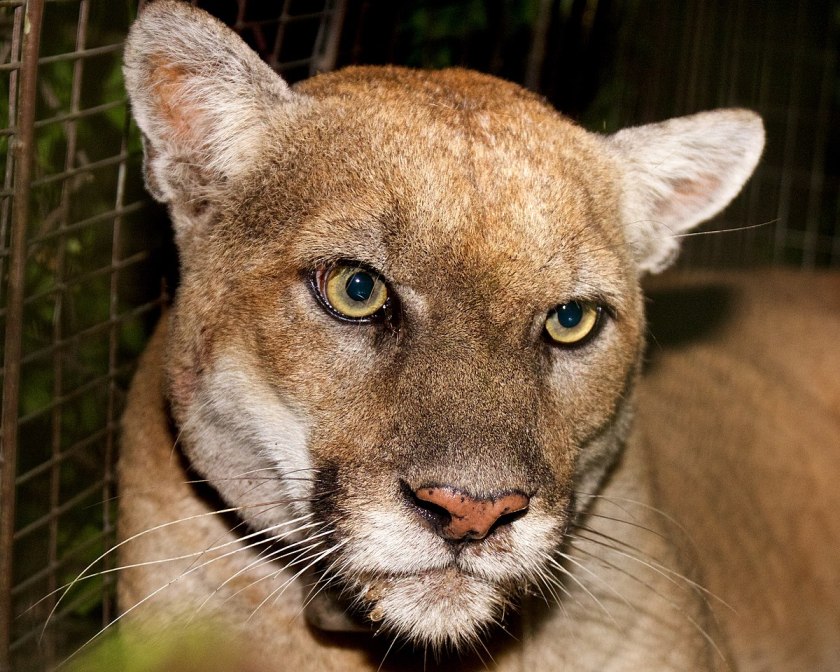
A close-up of P-22 in 2019, when he was briefly captured for a health check-up. Credit: Wikimedia Commons
While noting people are “more likely to be struck by lightning than attacked by a mountain lion,” Pratt warned that small pets can resemble the large feline’s natural prey. While P-22 usually hunts deer and foxes near Griffith Park in Hollywood Hills, pumas are also known to take down smaller prey and are opportunistic predators like their house cat and big cat cousins. (Despite their size, pumas — known as mountain lions, cougars and catamounts among many other names — are not considered true “big cats.”)
“It’s sad that P-22 killed a beloved pet,” Pratt told the Times. “But he doesn’t know that. He was just being a mountain lion.”
Daniel Jiminez, Piper’s owner, told Los Angeles’ KTLA that he and his wife are “devastated at the loss of our little dog.”
He said he thought his dog walker was joking when, while out celebrating his daughter’s birthday, he received a text from the walker saying Piper had been taken by a mountain lion. The Jiminez family adopted Piper in 2014.
Jiminez says he wants people to know what happened so they’re vigilant when walking their dogs in the area.
“I don’t want anything bad to happen to P-22,” said Jimenez. “I just want people to be safe out there so that nothing like this happens again.”
The famous cat takes to the skies in her latest movie cameo.
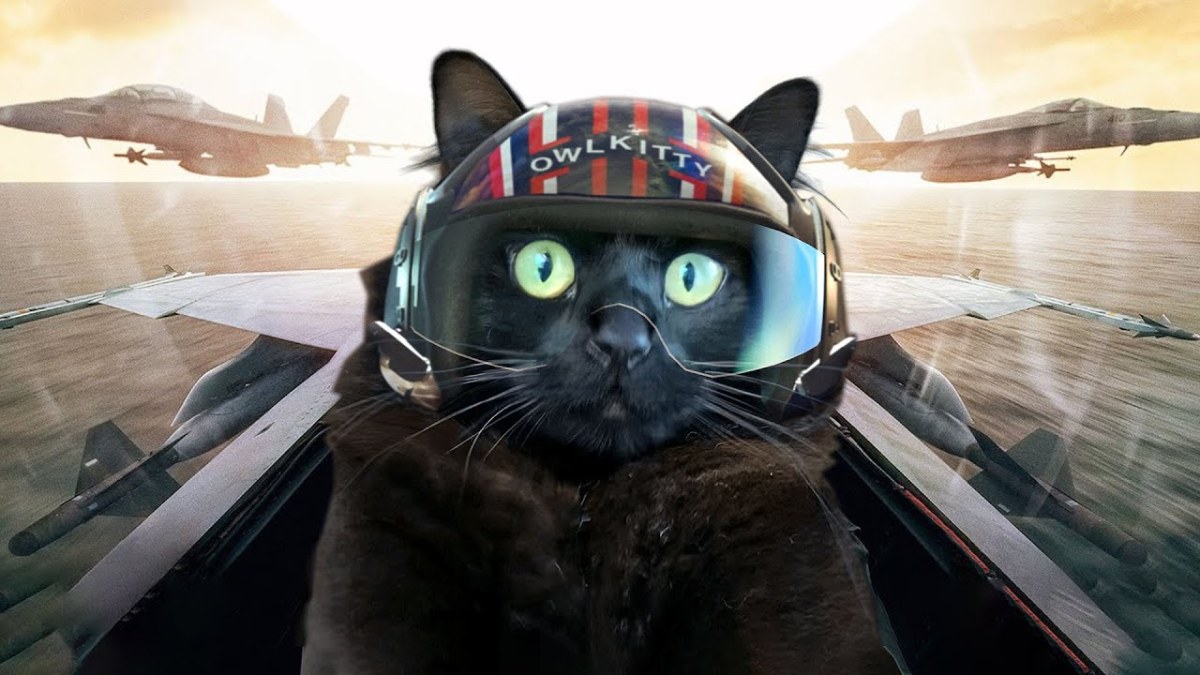
The infamous OwlKitty has returned to the big screen, this time flying wing alongside Tom Cruise’s Maverick in a meowified version of Top Gun.
OwlKitty’s patient humans are known for meticulously filming their beloved black cat in front of green screens and inserting the cute moggie into various movies and TV shows, from Jurassic Park to Titanic, Home Alone and even Netflix’s The Witcher.
OwlKitty’s female, so technically she’s Cruise’s wingwoman, and we see her in the cockpit of an F-18 Super Hornet, with Cruise getting a dressing down by the admiralty, and in the iconic beach volleyball scene.
Local authorities have backed off the plan, but the story raises important questions about how local governments deal with stray cat populations.
The recent saga of a New Jersey town’s ill-advised plan to “destroy” feral cats highlights almost everything wrong with local government.
First, a notice went out from the northern New Jersey town of Matawan, informing residents that feral cats had become a “nuisance” and their presence posed a danger to “the welfare and safety of both the community and the cats.” The town, in cooperation with the police and SPCA, the notice said, would begin trapping stray, feral and free-roaming felines in November, and any cat not claimed after seven days would be “destroyed.”
The backlash was loud and immediate, and it took the Monmouth County SPCA by surprise.
After receiving angry complaints, the local SPCA posted a notice on Facebook blasting the “outlandish and outrageous campaign.” The SPCA’s leaders said they hadn’t been consulted and hadn’t approved of the policy, blaming the Matawan Animal Welfare Committee, a three-person group comprised of the town’s business administrator, Scott Carew, town councilwoman Melanie Wang and an animal control officer.
“We are completely outraged and disheartened that our organization has been attached to this archaic campaign to euthanize feral cats, when there are so many other successful, humane alternatives,” the Monmouth County SPCA wrote in its statement.
Carew backpedaled in the fallout, claiming the notice was a well-intentioned way of informing people who live in Matawan to keep their cats inside and stop feeding strays and ferals.
“By no means was the goal of the trapping efforts to destroy trapped cats,” Carew told NJ.com. “That said, since there was the chance that cats would be trapped and brought to the shelter, we wanted to alert cat owners whose cats are allowed to roam outside.”
But Carew also said he and the other were “obligated to address the complaint,” and said the town would have to enact “a resumption of trapping efforts” if it received more complaints about the cats. According to a statement by the Matawan police department, in a meeting between local leaders and people concerned about cats in one neighborhood, it was a single complaint about a possibly aggressive feral cat that prompted the plan.
That’s it. That’s all it took, in the eyes of local government officials, to justify a policy of trapping and killing sentient, human-habituated innocent animals, a group that includes free-roaming pets, former pets, strays and true ferals. A single, unverified complaint of a potentially “aggressive” cat, with no further detail about what the word aggressive means in that context, no information about what the cat supposedly did, or even confirmation that the cat was a feral and not a stray or a wandering pet.
When the dust cleared from all the finger-pointing, Carew said his committee should have informed the SPCA of its plans, and police brushed off responsibility by saying they “assumed” the notice was drafted with the cooperation and intent of the SPCA and other local animal welfare groups.
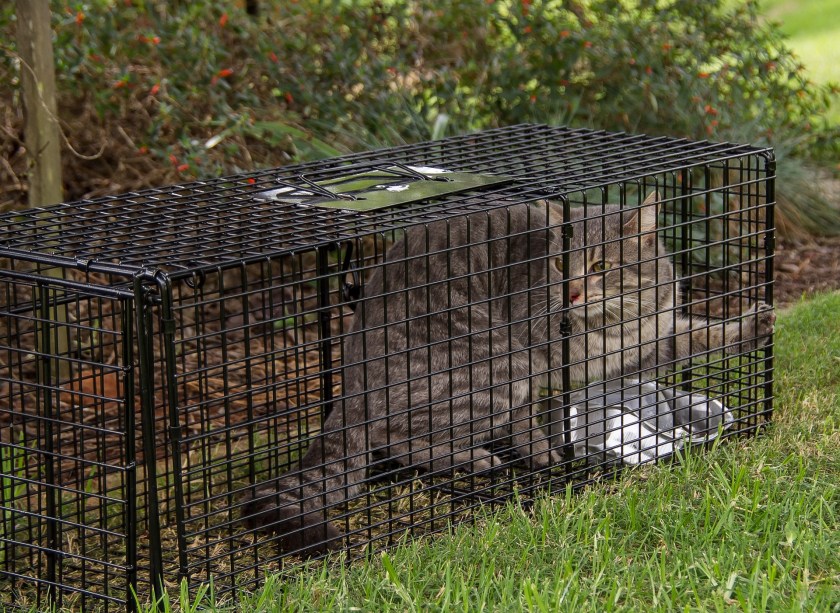
A cat caught during a trap, neuter, return program, which reduces feral/stray populations in the long term without the cruelty of culling. Credit: Pixabay
Local government leadership and incompetence has become a big problem. With the death of newspapers, particularly regional dailies that employed trained journalists, there are entire swaths of the country no longer served by local government watchdogs who have the time, skills and resources to monitor local officials and inform the public.
We’re fortunate that NJ Advanced Media, an online portal for content from more than a dozen New Jersey local newspapers, has found a way to exist as a viable business serving millions of readers throughout its home state. Without it, it’s doubtful the story would have surfaced anywhere.
Lots of people think local government is small potatoes, but the truth is that local officials are responsible for enormous budgets and wield considerable power. The decisions they make very likely have more impact on our lives than decisions made in the halls of congress, even if it’s the latter that gets people’s blood boiling.
In this case we have a meeting conducted in secret, without public notice, that would have determined the fate of an unknown number of animals. We have anonymous, nebulous complaints and allegations about “nuisances.” What constitutes a nuisance? How many cats are involved? Are the cats part of managed colonies and cared for by people who trap and neuter them? None of those questions were answered.
Additionally, instead of taking intermediary steps or using widely available resources — the “other successful, humane alternatives” the SPCA referenced, from the willing cooperation of local shelters to the free toolkit created by the authors of the incredible D.C. Cat Count — the local officials came up with their own ill-advised plan to trap and kill cats.
Outrage by animal lovers and the SPCA were enough to make sure a plan like this was quickly discarded this time around, but you have to wonder how many other places this kind of thing might be happening without so much as a blurb about it.
Buddy the Cat clears up common misconceptions people have about cats expressing affection for their loyal human servants.
The internet is awash with listicles claiming your cats love you, insisting you’ll know for sure once you’re able to recognize the signs.
Well we’re here to tell you that love is a strong word, and if you’re lucky your cat merely acknowledges your existence, human. Here are the 10 feline behaviors most commonly mistaken for love:
Grooming: “Grooming means one thing, and one thing only: We think you’re gross and you need a bath,” Buddy the Cat says. “You’re disgusting creatures, allowing your dead skin cells to accumulate all over you without washing them off until you take those horrific ‘showers.’ I could take a claw right now, run it down your arm, and come up with enough dead skin cells to season a salad. Now that’s nasty.”
Kneading: “The Feline Propaganda Ministry seeded a story that kneading is some sort of affectionate behavior left over from kittenhood, and that by kneading you, we’re identifying you as our surrogate moms. That’s hilarious,” says Buddy. “We’re simply tenderizing our meat.”
Head boops: “In ancient Rome, slaveowners would mark their property with brands or tattoos saying ‘PROPERTY OF POMPEY MAGNUS’ and that sort of thing. That’s what we’re doing with head boops. We’re using the pheromone glands on our heads and cheeks to mark you as our slaves, so other cats don’t try to lay claim to you.”
Bringing you presents: “You humans eat the most disgusting food, like broccoli, potatoes and oranges, which are particularly revolting. When we bring you presents, we’re trying to fatten you up for later when we eat you.”
Sleeping on you. “You’re warm. End of,” Buddy explains. “By sleeping on top of you, we also ensure you aren’t going anywhere, and will be available to fetch us snacks should we wake up hungry.”
Putting our butts in your face: “You like that? Sniff it, human servant!”
Tails held straight up: “The tips of our tails are actually quite sharp, and we brandish them like weapons. Weapons that say ‘There will be no disobedience or dilly-dallying here. Run along now and fetch us some yums.'”
Meowing: “There is no equivalent for ‘please’ in meowenese. We meow because we know you’re hopelessly obtuse creatures and you can’t read the simplest tail, ear or whisker movements. Meowing is like speaking slowly to a child who’s had too many head injuries. ‘Massage…my…head…human. That’s a good human!'”
Purring: “A purr is just a quiet roar. It means we’re happily thinking of ways to kill you.”
Tolerating you: “Humans often mistake grudging acceptance for love. Just because we tolerate you doesn’t mean we love you. It means you provide useful services, but if that calculus should change — say, by providing subpar treats or not serving wet meals as delicious as the ones served by the neighbor two houses down — then we’ll simply move house.”





 Pain In The Bud