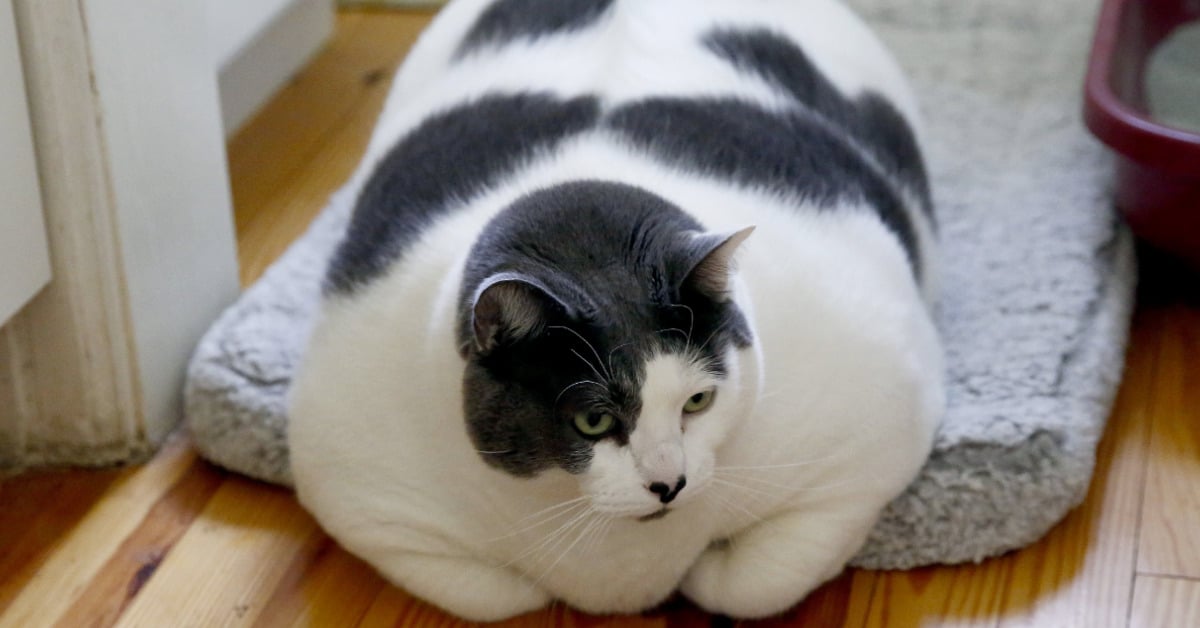
Scientists have uncovered the elusive mechanisms behind coat color expression, opening the door to a new question: is fur pigment connected to personality?
When Professor Hiroyuki Sasaki retired, he wasn’t done with science. He just wanted to use it to better understand his cats.
The Japanese geneticist raised more than $73,000 from Japanese and international cat lovers and put together a team, including partners from the US. Then he began the hard work of scrutinizing feline DNA to find out why some cats are orange, and why most all-orange cats are male while virtually all calico and tortoiseshell cats, whose coats have splotches of orange, are female.
It turns out there’s no genetic instruction telling the fur to take on an orange pigment — it’s the absence of a segment of DNA, which governs pigment production, that does it.
In other words, ginger cats are mutants.
Most fully-orange cats are male because the mutation removes the DNA segment in the X chromosome. As males have X and Y chromosomes, they only need the mutation in the single X chromosome for their coats to express in that shade.
Lots of cat lovers swear that coat color and temperament are connected.
Females have an XX chromosomal arrangement, so they need the mutation in both chromosomes to turn tangerine. If the mutation only shows up in one chromosome, you get patches of the color instead of a consistent coat.
That explains why 80 percent of ginger cats are male, and why only one in 3,000 calicos and tortoiseshells are male. A male cat would need an extra X chromosome, XXY, to be born with a calico or tortoiseshell coat. One of the side effects, however, is sterility.
Scientists estimate only one in a thousand male calicos/tortoiseshells can reproduce and pass their unique mutations on.
It’s not just coat color either. The mutation impacts skin and eye color, which is why a ginger cat might have a pink nose compared to the terracotta shade of a void cat or a silver tabby.
Are orange cats really more friendly and silly?
So how does this relate to temperament, and the many people who attest to a particular personality associated with orange cats? Some people say ginger tabbies are more loyal, affectionate and social than cats of other coat colors, but they’re also more prone to doing boneheaded things.
The stereotypes have picked up steam online, where people often share memes depicting orange felines as earnestly derpy, but they may be on to something — or at least, it can’t be ruled out until we know more.
Ginger cats are not the sharpest claw on the paw, according to popular memes.
Because of the missing piece of genetic code, a specific gene, ARHGAP36, isn’t “expressed.” Like so many genes, scientists don’t fully understand everything ARHGAP36 impacts, or how alterations can lead to unexpected changes elsewhere.
“Many cat owners swear by the idea that different coat colours and patterns are linked with different personalities,” Sasaki told the BBC. “There’s no scientific evidence for this yet, but it’s an intriguing idea and one I’d love to explore further.”
Cats were built by mother nature to stalk by starlight.
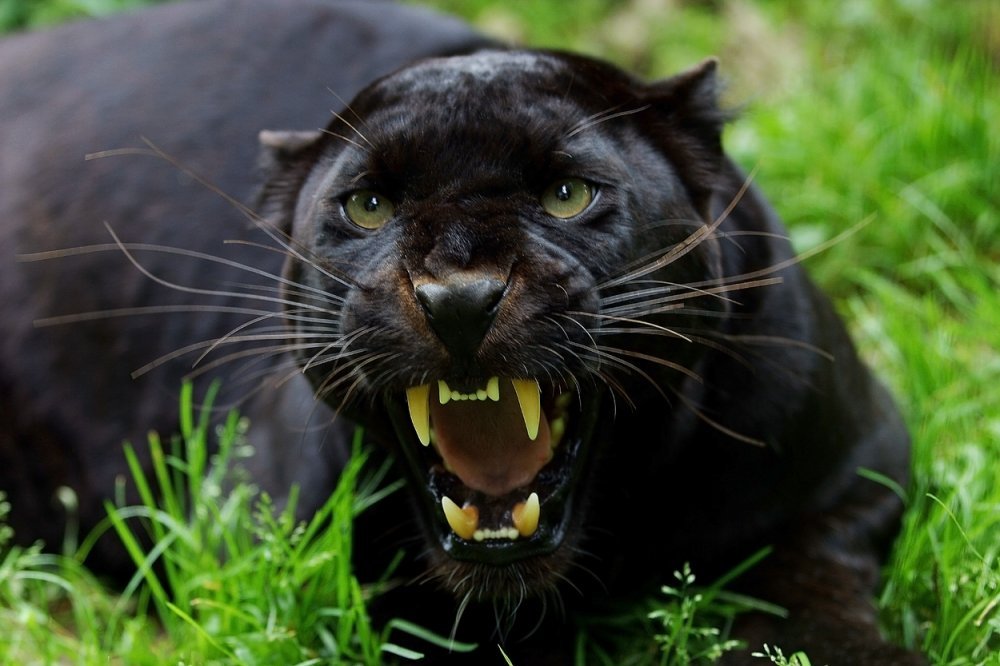
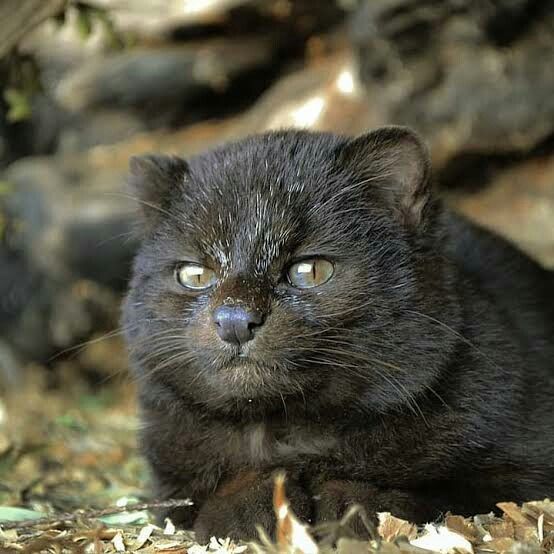
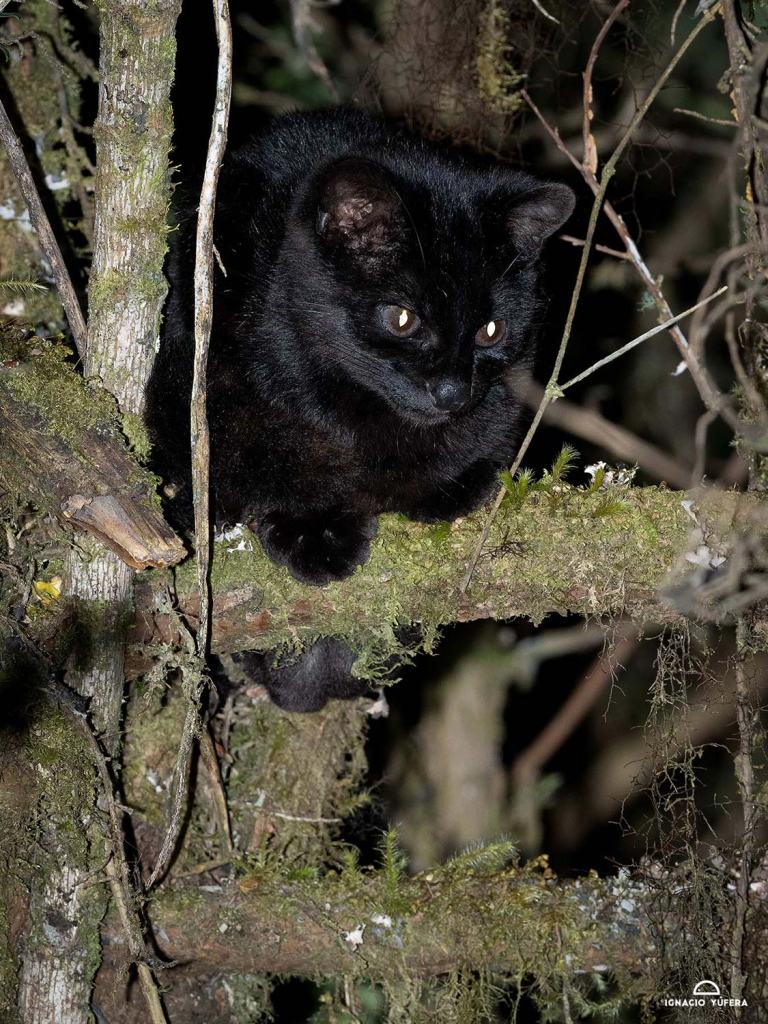
From the African savannas to the Andean mountains, the jungles of the Amazon to the Hollywood hills, and everywhere in suburban America, cats of all types and sizes prowl the night. With eyes that are up to eight times more sensitive in the dark, incredibly sensitive hearing, and whiskers that can pick up the slightest change in air density, felids were built by mother nature to stalk by starlight.
Some cat species are crepuscular, some are nocturnal, but as ambush predators, they’re all at their best when hunting under the cover of darkness.
Image credits, top to bottom: Per Karlson/PVKFoto, Reddit r/natureisf***inglit, Cockscomb Basin Wildlife Preserve, Wikimedia Commons, Steve Winter/National Geographic, National Park Service, Colorado Parks and Wildlife
Cats and dogs communicate primarily by scent, touch and body language, but human efforts to understand them have focused exclusively on meows and barks. If we want to truly understand our non-human friends, we need to take an approach that considers the other ways animals “talk” to each other.
A few years ago when MeowTalk made a minor splash in the startup world, I was pretty bullish on its potential to help us understand our cats better.
Sure, the app had an unhelpful habit of attributing improbably loving declarations to Buddy, but I thought it would follow the trajectory of other machine learning models and drastically improve as it accumulated more data.
More users meant the app would record and analyze more meows, chirps and trills, meaning it was just a matter of time before the AI would be able to distinguish between an “I want attention!” meow and a “My bowl is dangerously close to empty!” meow.
Obviously that didn’t happen, and what I personally didn’t take into account back then — and should have, given how obvious it is in retrospect — is that cats don’t just communicate via vocalizations.
In fact, cats don’t normally incorporate vocalizations into communication at all. Pet kitties do it entirely for our benefit because they know we’re generally awful at interpreting body language and we are completely useless when it comes to olfactory information.
It’s actually amazing when you really think about how much of the heavy lifting cats do in our efforts to communicate with each other. They recognize we can’t communicate the way they do naturally, so they try to relate to us on our terms. In return, we meet them less than halfway.
No wonder Buddy sometimes looks frustrated as he meows at me, as if I’m the biggest moron in the world for not understanding the very obvious thing he’s trying to tell me.
“Human, how can you not understand the simple feeling of innerer schweinehund I’m trying to convey here? The cringe is killing me!”
Now the Chinese tech giant Baidu is throwing its hat into the ring after filing a patent in China for an AI system that uses machine learning to decode animal communication and “translate” it to human language.
Machines are designed to process things from a human viewpoint according to human logic, so if Baidu wants to succeed where MeowTalk has not, its engineers will need to take a thoughtful approach with the help of animal behavior experts.
This is a hard problem that encompasses animal cognition, neuroscience, linguistics, biology, biochemistry and even philosophy. If they approach this strictly as a tech challenge, they’ll set themselves up for failure.
Without the information and context clues provided by tails, whiskers, facial expressions, posture, eye dilation, heart rate, pheromones and even fur, an AI system is only getting a fraction of the information cats are trying to convey.
Trying to glean meaning from that is like trying to read a book in which only every fourth or fifth letter is legible. There’s just too much missing information.
Even if we can train machines to analyze sound visual, tactile and olfactory information, it may not be possible to truly translate what our cats are saying to us. We may have to settle for approximations. We’ve only begun to guess at how the world is interpreted differently among human beings thanks to things like qualia and neurodivergence, and the way cats and dogs see the world is undoubtedly more strange to us than the way a neurodivergent person might make sense of reality.
“He grimaced. He had drawn a greedy old character, a tough old male whose mind was full of slobbering thoughts of food, veritable oceans full of half-spoiled fish. Father Moontree had once said that he burped cod liver oil for weeks after drawing that particular glutton, so strongly had the telepathic image of fish impressed itself upon his mind. Yet the glutton was a glutton for danger as well as for fish. He had killed sixty-three Dragons, more than any other Partner in the service, and was quite literally worth his weight in gold.” – Cordwainer Smith, The Game of Rat and Dragon
An animal’s interpretation of reality may be so psychologically alien that most of its communication may be apples to oranges at best. Which is why I always loved Cordwainer Smith’s description of the feline mind as experienced via a technology that allows humans with special talents to share thoughts with cats in his classic short story, The Game of Rat and Dragon.
In the story, humans are a starfaring civilization and encounter a threat in the void between stars that people don’t have the reaction speed to deal with. Cats, however, are fast and swift enough, and with a neural bridge device, teams of humans paired with cats are able to keep passengers safe on interstellar journeys.
The narrator, who is one of the few people with an affinity for teaming up with felines, hopes he’ll be paired with one of his two favorite cats for his latest mission, but instead he’s assigned to partner with an old glutton of a tomcat whose mind was dominated by “slobbering thoughts of food, veritable oceans of half-spoiled fish.”
The narrator wryly notes that the last time one of his colleagues was paired with that particular cat, his burps tasted of fish for weeks afterward. But the cat in question, despite being obsessed with fish, is a badass at killing “dragons,” the human nickname for the bizarre entities that attack human ships in space. (The software that allows felines and humans to link thoughts also portrays the “dragons” as rodents in the minds of the cats, stimulating their ancient predatory drive so they’ll attack instantly when they see the enemy.)
We can’t know for sure if Smith’s interpretation of the feline mind is accurate, but another part rang true when he wrote that cat thoughts were all about the moment, filled with sentiments of warmth and affection, while they rapidly lost interest in thoughts about human concerns, dismissing them “as so much rubbish.”
If the mind of a cat is that relatable, we’ll be incredibly lucky. But in reality we’re dealing with animals who evolved in drastically different ecological niches, with different priorities, motivations, and ways of looking at the world — literally and figuratively.
That doesn’t mean we shouldn’t try to understand our furry friends. Research has yielded interesting information about the way animals like whales and elephants communicate, and AI is at its best when it augments human creativity and curiosity instead of trying to replace it.
Even if we don’t end up with a way to glean 1:1 translations, the prospect of improving our understanding of animal minds is tantalizing enough. We just need to make sure we’re listening to everything they’re saying, not just the meows.
Bud and I wish the best of days to all of our readers who are mothers, as well as sons and daughters spending time with their moms today. And how can we forget all the cat moms out there who put so much care and love into raising their babies?
As the expressions of some of these cat moms make clear, whether human or animal, kiddos and kittens have a way of making sure there’s never a dull moment. But that’s just one awesome thing about moms: no matter how much we might drive them crazy sometimes, they still love us!
And to my own mom, thank you for being there for me no matter what I’ve stressed over or how stupid I’ve been, and thank you for teaching me to strive to be a decent person.
In Switzerland you can be charged with a crime and face significant fines for feeding other people’s cats. Meanwhile. the “kids identifying as cats” culture war rumors are back and as inane as ever.
The Swiss seem to take cat theft pretty seriously, to the point where they’re perfectly willing to drag people to court for feeding other people’s cats.
That’s what happened to a 68-year-old woman in Zurich who is accused of being so nice to Leo, a neighbor’s cat, that the little guy decided her house was now his house.
According to local media reports, a Zurich prosecutor wants to fine her 3,600CHF (Swiss francs), which is $4,370 in ‘Merican greenbacks! That’s a lot of money for giving a cat some Temps and cans of tuna.
To be fair, Leo’s original family isn’t happy, especially because they specifically asked the woman to stop feeding their cat. She can’t claim she accidentally adopted him, since she let him into her apartment and even installed a cat flap for him, according to Swiss media reports.
“Cases like this are increasingly ending up in court because the rightful owners report the “feeders”. Under Swiss law, cats are “other people’s property” and systematic feeding and giving a home to another person’s cat is considered unlawful appropriation.
But if a neighbour’s cats are only fed occasionally, this is not a punishable offence in Switzerland.”
There’s really not enough information to form an opinion about this particular case. Was Leo mistreated or not getting enough to eat? Did his new human have designs on him from the beginning? Did she just think she was doing the right thing?
“Gimme the nomnoms, human!” Credit: Wikimedia Commons
As for me, this is another good reason to keep Bud inside. If I let him roam the halls of the building unsupervised, he’d probably start a bidding war between me and neighbors in two or three other apartments, making it clear that whoever supplies him with the most delicious and most frequent snacks will enjoy the great honor of serving him.
Kids identifying as cats: the fake controversy that won’t die
Just a quick recap, for anyone who hasn’t been keeping up on this uniquely American culture war spectacle: Politicians of a certain stripe really like rumors about kids identifying as cats, so much so that they’ve confidently asserted it’s happening all over America, telling anecdotes about it while on the campaign trail during the 2020, 2022, and 2024 political cycles.
That encompasses two presidential elections and a midterm year, but it’s not relegated to federal cycles. State-level pols love to talk about it too.
It’s a culture war dog whistle, and politicians from both parties love stuff like this because it gets everyone all riled up, which means no one’s talking about all the grift, insider trading and other fun activities our “leaders” involve themselves in.
The thing is, to date not a single one of the claims has been backed up by proof. I know this because I’ve investigated every one of them, and invariably they turn out to be rumors. I’ve gotten emails and comments telling me I’m a fool for debunking the claims, and I’ve literally begged people to give me a real example of cat-identifying kids dropping deuces in litter boxes, but again, all the claims collapse under minimal scrutiny.
Every time a politician has told a story about allegedly cat-identifying kids and litter boxes in schools, it follows the same pattern: they insist it’s true, double down on the claim, try to change the goalposts, and finally, they grudgingly admit they can’t point to a single example.
In a week or two, we go from righteous condemnation and fury to “Well, my wife’s best friend teaches sixth grade, and she said she heard from a teacher in another district that kids were meowing in class.”
Furries outside a convention, not a school. Credit: Furscience
Texas state Rep. Stan Gerdes is in the righteous condemnation stage after introducing the Forbidding Unlawful Representation of Roleplaying In Education Act, aka the FURRIES Act.
Gerdes wants to ban meowing, hissing, barking, litter boxes, leashes and animal costumes from school grounds and events, but in his wisdom he’s excluded school mascots and Halloween costumes.
He is, however, fast approaching the “my cousin’s best friend’s co-worker said” stage, after he couldn’t point to a single cat- or furry-related incident when pressed during a committee meeting on May 1. He eventually named a school district, saying he’d gotten a “extremely concerning” and verified account of an incident there, only for the district to issue a statement saying it didn’t happen.
Gerdes did call to ask if there were litter boxes in the school, the district said, and when he was told there was not, he insisted a manual check of all school bathrooms, which also came up empty. Let’s see how long he sticks to his story before he finally admits he has no proof.