Boxer Jake Paul Set For Dec. 31 Bout Against Buddy The Cat

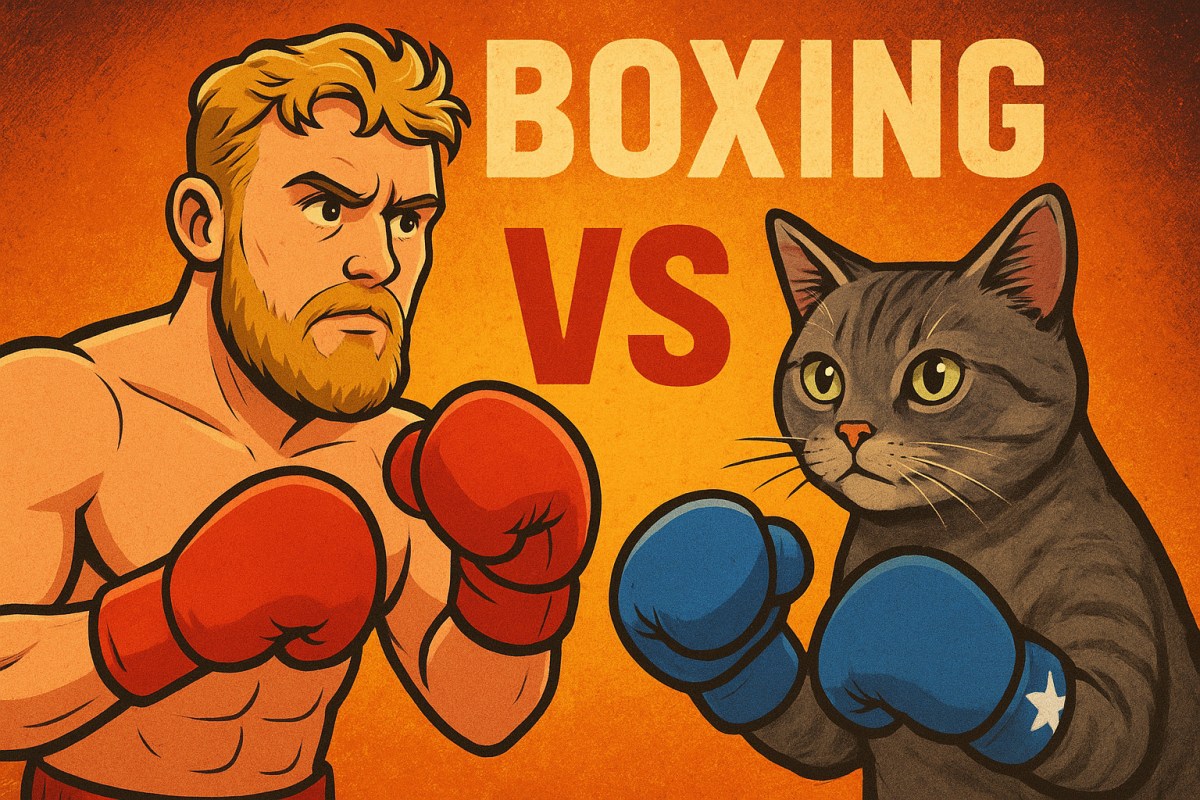
In a match-up hailed by boxing promoter Don King as “a magnificatious spectacle of pugulisticary skillsmanship,” Jake Paul will square off against Buddy the Cat at Madison Square Garden on New Year’s Eve.

He’s defeated men more than twice his age, hammered opponents 70 pounds lighter than him into submission, and made his mark as a six-time winner of the Billy Blanks Tae Bo Championship.

Now Jake Paul, the Youtuber-turned-boxer, will step in the ring with Buddy the Cat, a gray tabby from New York.

Despite the 190 pound weight advantage and Paul’s 76-inch reach vs Buddy’s 4.5-inch reach, Paul’s manager, Nakisa Bidarian, said the 6 foot 1 Paul and the 11-inch Buddy were evenly matched.

“Buddy the Cat is probably Jake’s most vicious opponent yet,” Bidarian told reporters. “Jake is taking this fight seriously, as seriously as he took the fight with Nate [Robinson],” a 41-year-old, 5 foot 9 former NBA player who had no boxing experience before stepping in the ring with Paul.

An early poster promoting the fight, which has since been postponed to New Year’s Eve.

Asked by another reporter what Paul and his team make of critics blasting him for “making a mockery of the sport” by fighting a succession of cans, geriatric opponents and people without boxing training, Bidarian waved a hand in dismissal.

“Buddy’s a cat, isn’t he? Tigers are cats, too. We’ve all seen how dangerous tigers can be, so obviously Jake is taking a huge risk here by fighting an animal who is, in essence, a slightly smaller version of a tiger.”

Buddy the Cat

As for Buddy, the massive differences in height, weight, reach, species and training haven’t deterred him. The 11-pound southpaw feline promised to “tear into Paul like a bag of Temptations” and “chew him up and spit him out like diet kibble.”

“You see this wand toy?” Buddy told reporters, throwing punches at a colorful felt parrot that dangled from the end of a stick. “That’s what I’m gonna do to Jake’s face. And if it’s legal to attack his feet, I’m gonna do that too. I’m awesome at attacking feet.”

Longtime boxing promoter Don King called the bout “a magnificatious spectacle of pugulisticary skillsmanship.”

Paul vs Buddy is set for Dec. 31 at Madison Square Garden, only six weeks after Paul is scheduled to duke it out with retired super featherweight Geronta “Tank” Davis. Despite Davis giving up more than 70 pounds and eight inches in height, Bidarian insisted the bout will be “about as evenly matched as possible.”

While most traditional boxing fans and critics dismissed the Paul vs Buddy fight as another gimmick, legendary boxing promoter Don King hailed it as “a monumentilacious rejuvenalizationary occasion” for the sport.

“Jason Paul is a heraldific resplendinizer of pugilistic entertainmentized sportulations,” King gushed, “while Buddy is the most splendiferously sanguinarius felid fighter to ever set paw in the ring. I can’t think of a better match-up between two pugnaciously bellicoserized combatulants anywhere. This is gonna be epic!”

‘Why I Took 50,000 Pictures Of My Cats Pooping’

One software engineer went to incredible lengths to monitor her cat’s bathroom habits.

When Alan Turing, the father of artificial intelligence, posed the heady question “Can machines think?”, he inspired generations of computer scientists, philosophers, physicists and regular people to imagine the emergence of silicon-based consciousness, with humanity taking the godlike step of creating a new form of life.

And when science fiction writer Philip K. Dick wrote his seminal 1968 novel, “Do Androids Dream of Electric Sheep?” — the story that would eventually become Ridley Scott’s 1982 classic Bladerunner — he wondered what makes us human, and whether an artificial being could possess a soul.

It’s safe to say neither of those techno-prophets were thinking of fledgling AI algorithms, representing the first small steps toward true machine-substrate intelligence, announcing themselves and their usefulness to the world by helping us watch felis catus take a shit.

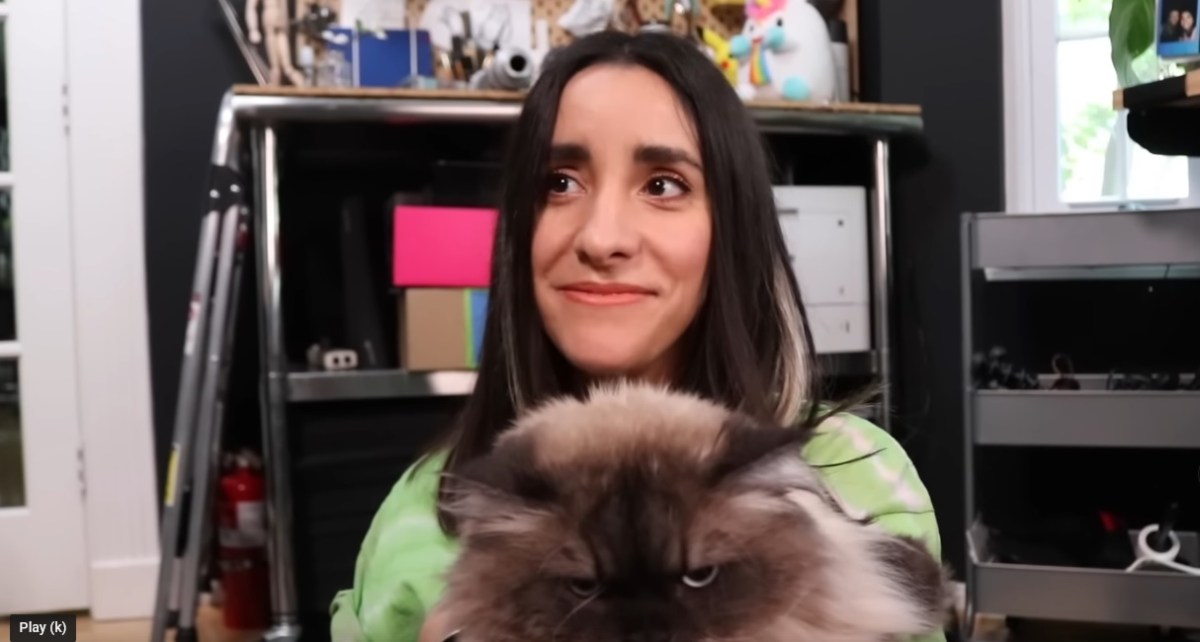
And yet that’s what the inventors of the LuluPet litter box designed an AI to do, and it’s what software engineer and Youtuber Estefannie did for her cat, Teddy, who’s got a bit of a plastic-eating problem.

“The veterinarian couldn’t tell me how much plastic he ate, and it would cost me over $3,000 [to find out]. So I didn’t do it,” Estefannie explains in a new video. “Instead, the vet gave me the option of watching him go to the bathroom. If he poops and there’s no plastic in his intestines, then he won’t die, and he might actually love me back.”

Estefannie casually described how she wrote a python script, set up a camera and motion sensor, and rigged it to take photos of Teddy doing his business. But, she explained, there was “a tiny problem”: Luna the Cat, aka her cat’s cat.

“This is Luna, this is technically not my cat, this is Teddy-Bear’s cat, and she uses the same litter box as Teddy,” she explained.

For that, she’d need more than a script. She’d have to build a machine learning algorithm to gorge itself on data, cataloguing tens of thousands of photos of Teddy and Luna along with sensory information from the litter box itself, to learn to reliably determine which cat was using the loo.

So Estefannie decided it was a good opportunity to “completely remodel” Teddy’s “bathroom,” including a compartment that would hide the bespoke system monitoring his bowel movements. The system includes sensors, cameras and lights to capture still images of Teddy dropping deuces in infrared, and a live thermal imaging feed of the little guy doing his business. (Teddy’s luxurious new bedroom turned out to be too dark for conventional cameras, thus the pivot to infrared.)

From there, Estefannie manually calculated how long Teddy’s number ones and twos took, and cross-referenced that information with photo timestamps to help determine the exact nature of Teddy’s calls of nature.

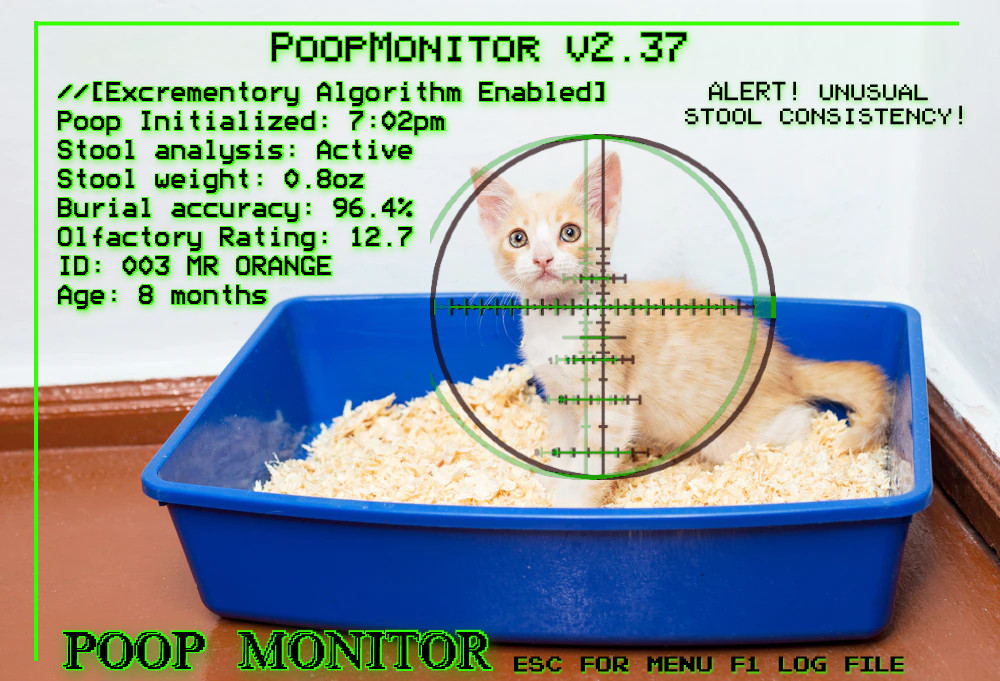
catpoopinggui
The future! (Note: This is our cheesy photoshopped interpretation, not Estefannie’s actual stool monitoring interface.)

When all the data is collected, Estefannie’s custom scripts sends it to an external server, which analyzes the images from each of Teddy’s bathroom visits and renders a verdict on what he’s doing in there.

Finally, Estefannie gets an alert on her smartphone when one of the cats steps into the litterbox, allowing her the option of watching a live feed and, uh, logging all the particulars. The software determines if a number two was successful, and keeps detailed records so Teddy’s human servant can see aberrations over time.

“So now I definitely know when Teddy-Bear is not pooping and needs to go to the hospital,” she said.

I am not making this up.

For her part, Estefannie says she’s not worried about a technological singularity scenario in which angry or insulted machines, newly conscious, exact revenge on humans who made them do unsavory tasks.

“Did I make an AI whose only purpose in life is to watch my cats poop?” Estefannie asked, barely keeping a straight face. “Mmmhmm. Will it come after me when the machines rise? No! Ewww!”