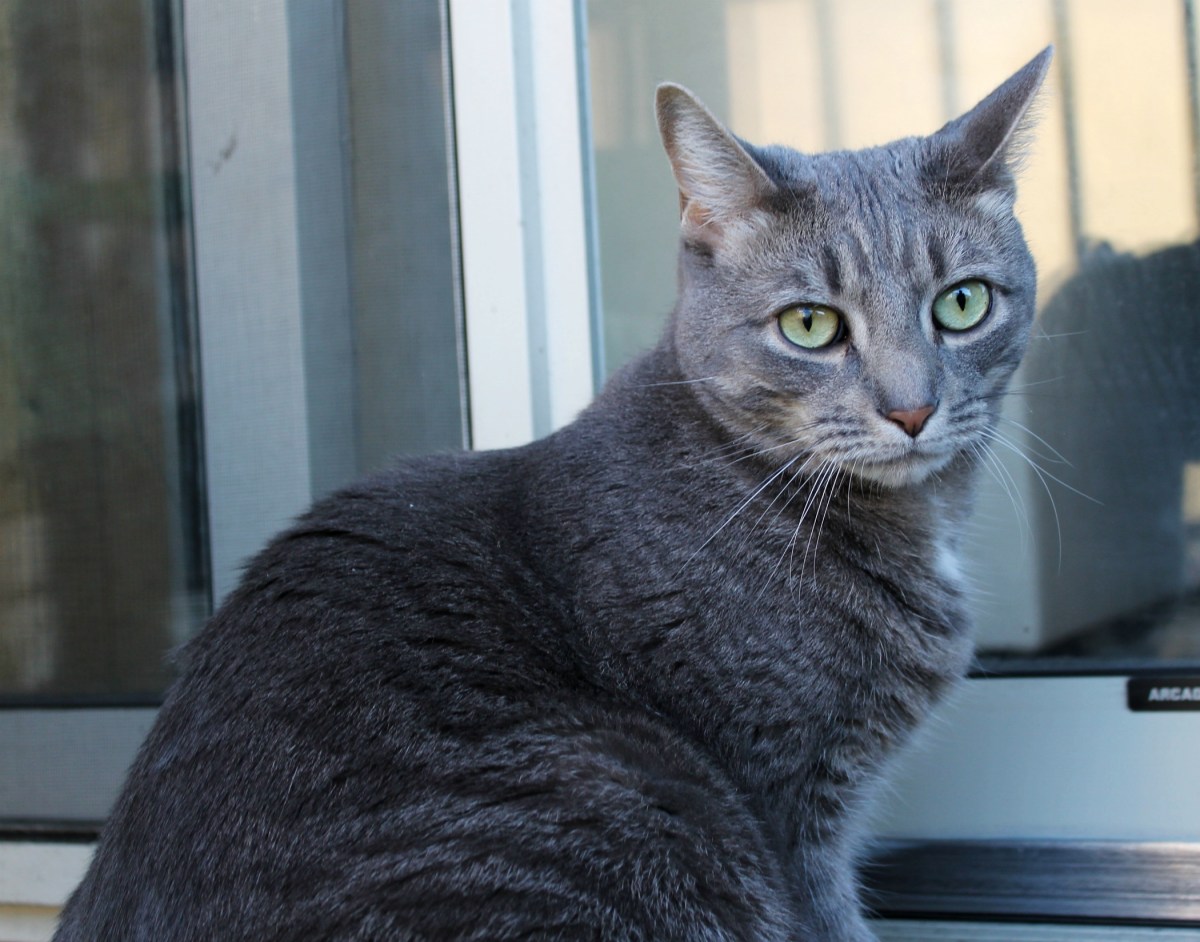
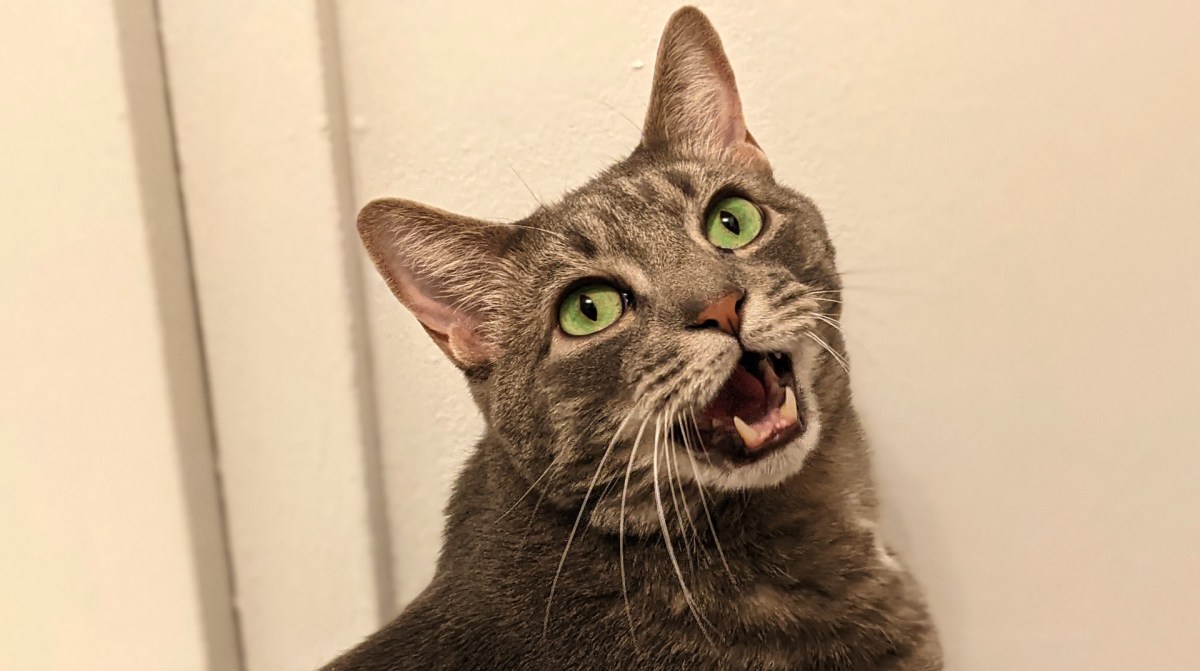
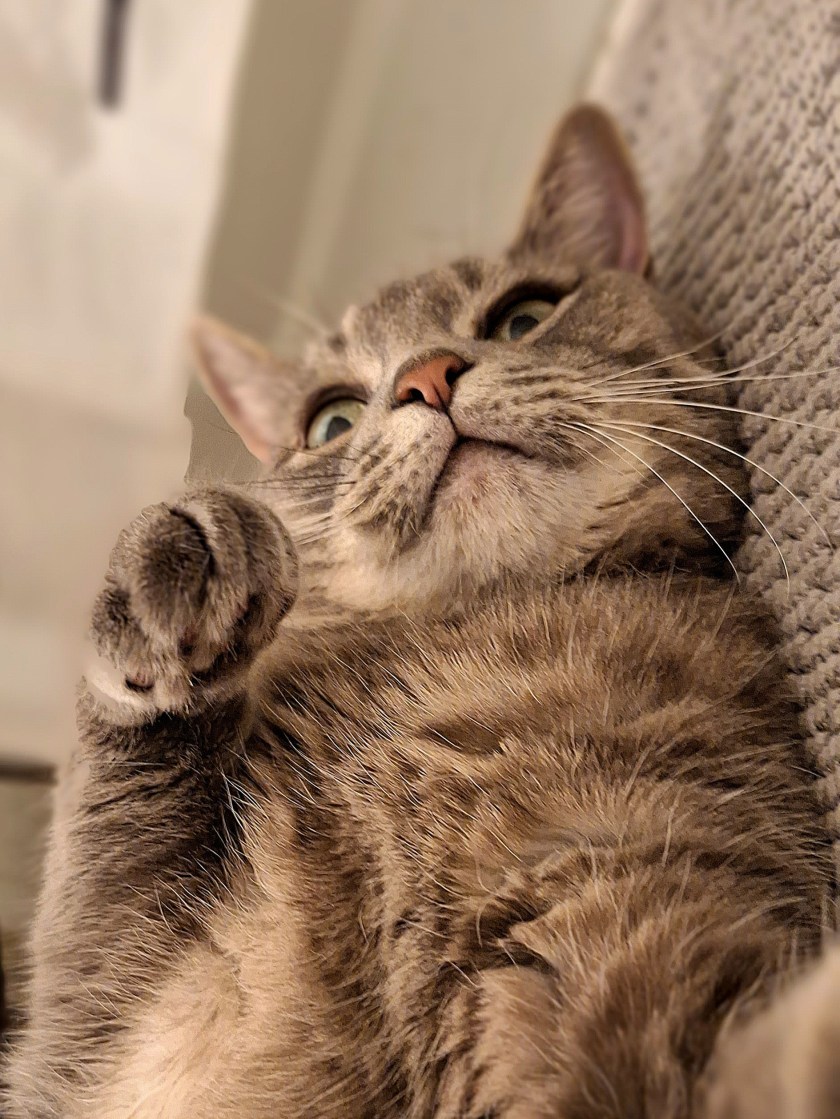
I love my cat, except when he’s standing on my head and screeching into my ear at 80 decibels to make sure sleep is not an option.
Regular readers of this blog know I dote on my cat.
I don’t call him “Your Grace” without reason. He always eats first. He regularly uses me as his pillow. He knows how to manipulate me, he always gets what he wants, and I’ve been told many times how he’s got me “wrapped around his paw.”
He rules the roost, and has done so since the night he arrived as a baby and came striding out of his carrier like a furry little Ghenghis Khan, conquering everything in sight.
No one can doubt that I love the little guy.
But if you were a fly on the wall when I wake up, well, you might think differently. Bud is, to put it bluntly, absolutely relentless when he wants something, which puts us at odds when it comes to that most crucial commodity, sleep.
Some of the most vile things that have ever come out of my mouth have been prompted by the little guy’s snooze-disturbing antics. I’ve called him ALF (Annoying Little F—-er), I’ve threatened to sell him to the local Chinese restaurant, I’ve thrown pillows at him, and when my sleep-deprived brain can’t come up with something more creative, I half-mumble “Shut up, you furry little turdball!”
Buddy the Cat: Never at a loss for meows.
Those are the more tame ones! The worst thing, the bit that makes me feel bad, is that Bud just wants me to wake up so we can hang out and be buddies.
He doesn’t want food. He’s got a bowl of dry food set out for him before bed every night precisely so he doesn’t have to wake me up. Nope. He wants to knead my shoulder, purr up a storm and have me scratch his chin while I tell him what a good boy he is. And instead of that, I’m turtling up beneath the blanket, pillow over my head, telling him he’ll be served as General Tsao’s Buddy if he doesn’t shut his trap.
All this time I’ve told myself that it’s okay because he doesn’t understand what I’m saying, and he knows I wouldn’t harm a hair on his head.
But what if he does understand some of it?
That’s the subject of a new column by Karin Spicer. Writing in the Dayton Daily News, Spicer describes her morning ritual with her cat, Pip, and how she’s encouraged her naturally vocal cat to vocalize even more by talking to him.
“No sleep for you, human! There are foreheads to rub, chins to scratch and ‘good boys’ to be said!”
Like Pip, Bud is a naturally talkative cat, and like Pip, his motor mouth tendencies have been cultivated by plenty of attention, affection and interaction.
“Cats want to bond with their owners,” says Catster’s Michelle Gunter, who is quoted in Spicer’s column about Pip. “If you take the time to communicate with them in soft, calming tones, that bond will strengthen faster. Your tone and the affection you offer during these periods can help show your cat that you love them and want to spend time with them.”
You mean to tell me all this time I’ve been undoing some of that bonding by hurling vile invective at my Buddy when he tries to annoy me out of sleep?
You mean to tell me he can infer by my tone of voice that I’m threatening to sell him to Somali pirates for $15 and a pack of gum?!?
Sheeeeit!
Disclaimer:No Buddies were harmed in the creation of this content, except perhaps for some bruised egos.
Have you ever wanted to own or design your own zoo?
Visitors to Buddy’s Tropical Paradise are greeted by friendly staff who man the entrance, a broad vertical garden shaped like an arch that straddles the main path leading inside.
When they walk through the gate a new vista opens up before them: tiered tropical gardens, waterfalls, and wide boulevards lined with palm trees and flowers. They hear the rumble of big cats calling to each other in the distance and monkeys shrieking as they fling themselves from branch to branch.
Welcome to Buddy’s Tropical Paradise!
A monorail carries passengers above, its tracks looping over animal enclosures and threading tunnels that emerge amid the terraced jungle, eateries and souvenir shops.
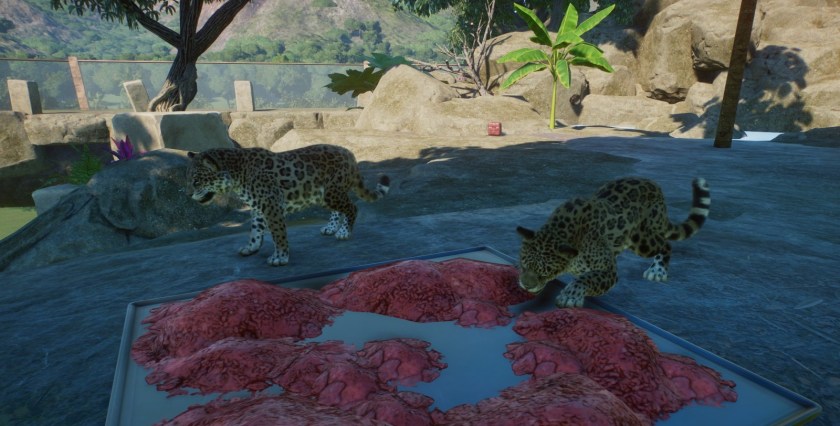
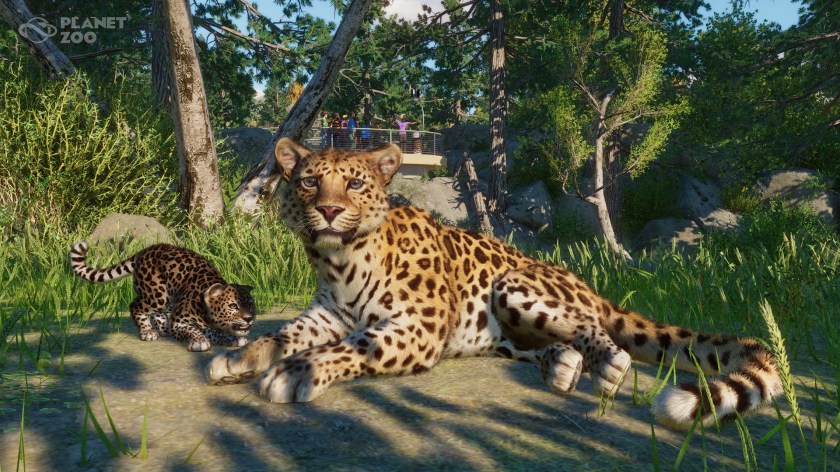
And straight ahead, the first exhibit: a sprawling habitat occupied by jaguars who are enjoying some yums and will probably have a nap in a few minutes.
Buddy’s Tropical Paradise doesn’t exist in the real world, of course. It’s my first attempt at fully functional, guest-attracting park in Planet Zoo, a simulator that allows you to do practically anything you can think of.
You can design your own habitats, enclosures, buildings and scenery. Fancy a monorail that laps the entire zoo? You can do that. Picturing a 1940s style Tarzan-themed jungle boat ride where visitors can see caiman, capuchin monkeys and jaguars up close? Start carving up the river, my friend!
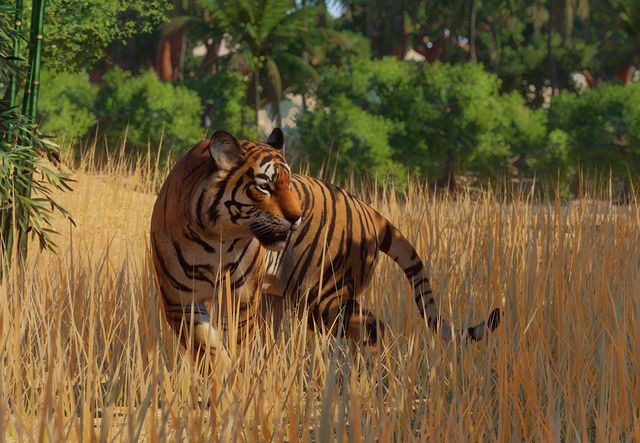
A Bengal tiger stalking the tall grass in Planet Zoo.Lunch time in the jaguar habitat, followed by the all-important nap time.
As the zoo’s architect, you’re responsible for everything. You’ll need veterinary facilities, animal quarantine, keeper huts. You’ll need to staff your park with veterinarians, keepers, security officers, maintenance staff and mechanics.
And don’t forget the vendors to run the souvenir shops and man the food stalls, where your guests can grab hot dogs or cool off with slushies on a hot day.
A suitable home for your animals
Designing a habitat is about a lot more than reserving space for your animals. You’re tasked with picking the right barriers, mindful of which species can climb or leap great heights. A good habitat should reflect the animal’s home in the wild with appropriate flora, temperatures the species thrives in and a feeding system that mimics the way they’d naturally obtain food.
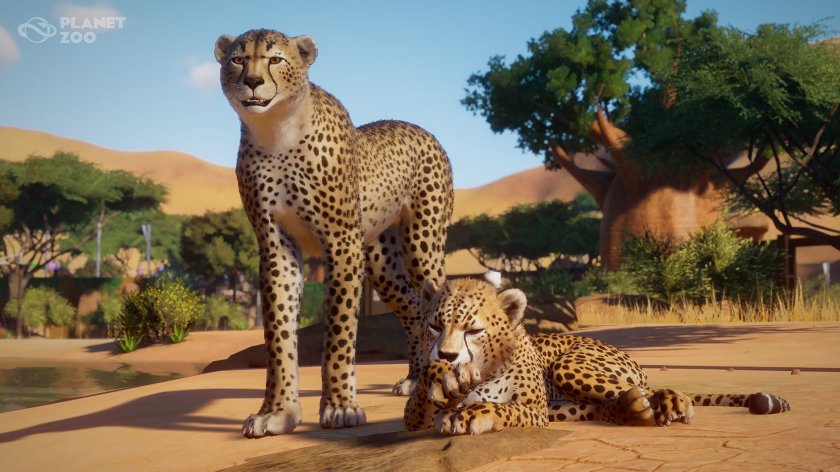
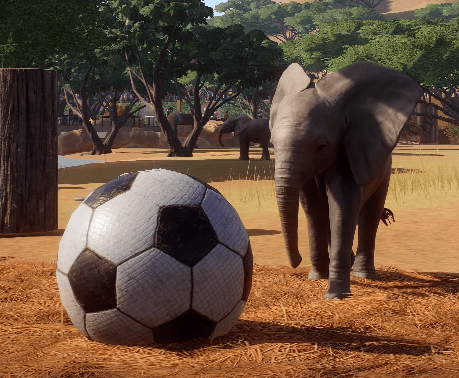
Elephants cool off in their enclosure in Planet Zoo. Every habitat must be designed with the right atmosphere, flora, terrain, shelter and enrichment appropriate for the species it houses.A wide view of my orangutan habitat. Two orangutans are at the base of the stone steps in the distance.Cheetah sisters.
Then there’s enrichment. Trees for your monkeys to climb, ponds for your tigers to take a dip, bushes for your elephants to strip. Different species enjoy different toys and challenges. An ice block with meat in the middle would hit the spot for carnivores on a hot summer day, but your pandas will want bamboo.
Designing habitats and getting them just right is not only fun, it’s an intuitive way to learn about the needs of individual species and how they live.
The leopard learning incident
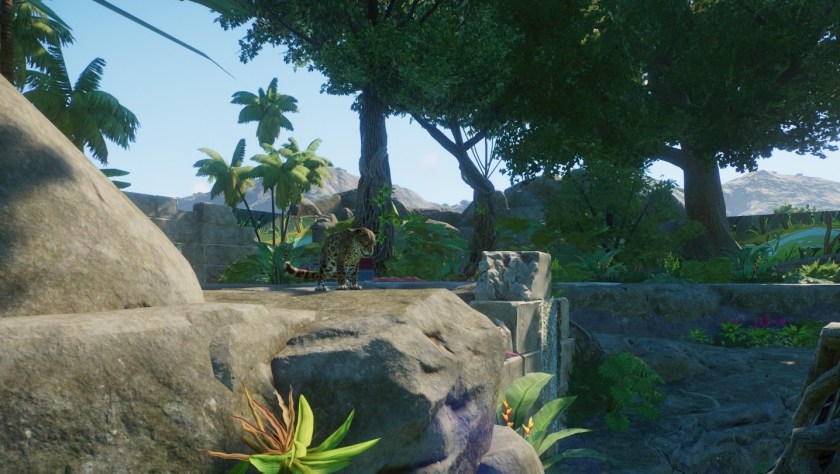
My first stab at building a leopard enclosure was a disaster. It looked pretty enough with its Hindu-inspired temple architecture and pond. There were plenty of scratching posts and trees that could withstand claws.
I installed a sprinkler to help the big cats cool off, designed a series of raised platforms for them to climb, and scattered enrichment items all over the habitat. The leopards had balls to bat around, boxes to sit in, rubbing pads, logs and rocks to climb, and plenty of cover and shade.
But when I had the leopards brought into the zoo, through quarantine and into their exhibit, I realized you can’t just design a home for animals from an aesthetic perspective. I’d used several plant and tree species that weren’t native to leopard habitats, the terrain was wrong and I hadn’t paid any mind to ambient temperature.
Making those mistakes was truly educational. When your animals aren’t happy in Planet Zoo, protesters show up, and it’s up to you to read the alerts about where you went wrong and how to remedy your mistakes. It’s an intuitive and fun way to learn about each species and the environments they thrive in.
The escaped jaguar
I’m still learning the ropes, although I do have a basic knowledge of the way the game is designed thanks to some time playing Frontier’s theme park building game, Planet Coaster. The first time I tried to build a jaguar enclosure, I forgot to wall off a viewing cave with protective glass, which my guests did not appreciate.
Even though jaguars don’t like to confront humans, a big cat is a big cat, and the game sent me urgent warnings as people ran for the exits. When I found the escaped jag, he was lounging not far from his enclosure, watching people freak out.
Enrichment is a key aspect of habitat design. Toys, puzzles, obstacles, climbing platforms for arboreal species, ponds for animals who like to get wet — they’re all necessary to keep animals healthy and happy.
In real life it’d be a disaster, but I was able to revert to a previous save, make sure the viewing cave was sufficiently protected, and this time around I placed only two jaguars — a male and a female — in the large enclosure.
After a while, while I was tinkering with an exhibit meant for capuchin monkeys, the game sent me an alert: the female jaguar was pregnant! She gave birth to two energetic, curious cubs who are currently having fun chasing each other around the enclosure and going for dips in their pond.
Part of the main boulevard in Buddy’s Tropical Paradise, viewed at night. Players are responsible for everything you see here — lighting, shops, flowers and plants, benches, waste baskets and more.Shops and a monorail station in an unfinished Asia-themed area of the zoo.
As in real life, the game has you source animals from an international pool, with information on breeding and genetics so you can contribute to conservation. When you adopt animals, their first stop is the veterinary facilities for examination, then quarantine. When they pass quarantine, you can have your staff release them into their enclosures.
It took me several hours to familiarize myself with the basics, design an entrance and a main boulevard for the guests, create some tiered gardens with eateries and shops, and get my jaguar and orangutan exhibits up and running.
My monorail currently runs out of track a quarter of the way through the park, and my river boat ride looks pretty cool, with dense jungle, towering trees and the ruins of Mayan temples not far from shore, but completing it will require appropriate barriers to keep the animals in as well as building out more scenery.
A jaguar in her habitat.
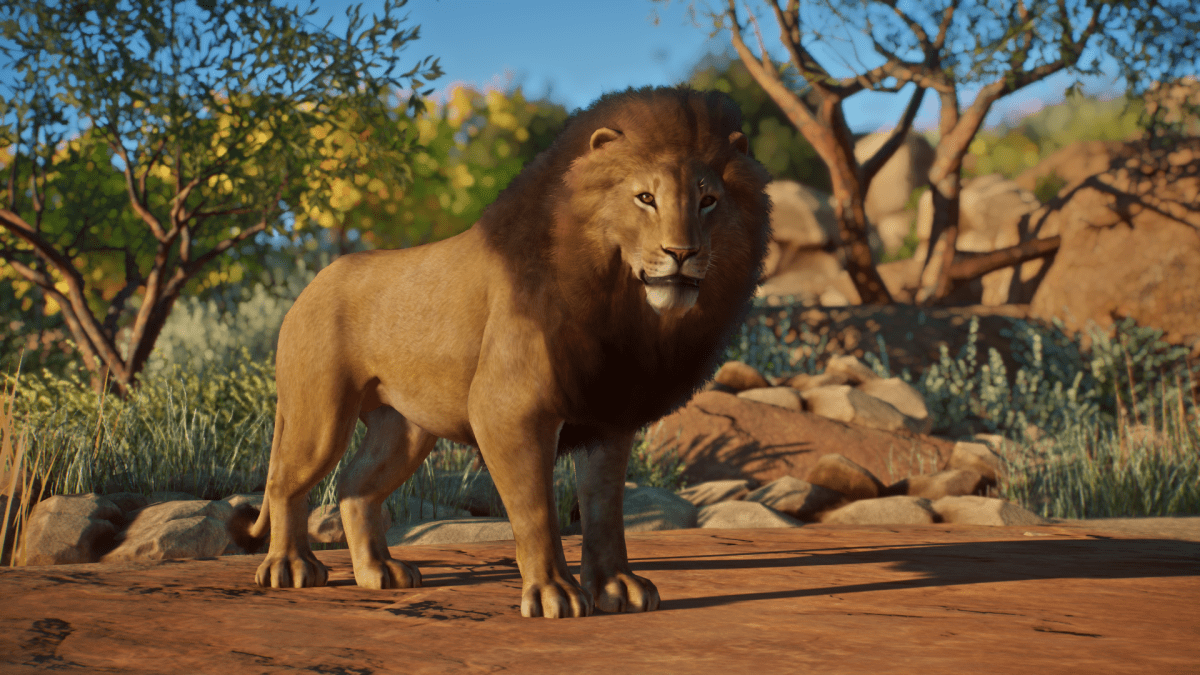
I’ve got my sights set on an elephant exhibit next. It will be necessarily huge, so it’s good to reserve the land early and plan smaller exhibits and facilities around it. I’d also like to put the elephants, lions, zebra, giraffes etc into one Africa-themed section of the park, while the tigers, giant pandas and snow monkeys will be housed in an Asia-themed section, with buildings that reflect the architectural styles of countries like Japan and China.
There are also aquatic exhibits, animals for your own reptile house and aviaries. Those enclosures are more complex than the relatively straightforward orangutan exhibit, for example, so I’ll have to spend some time figuring out what makes a good home for peacocks, sharks and komodo dragons.
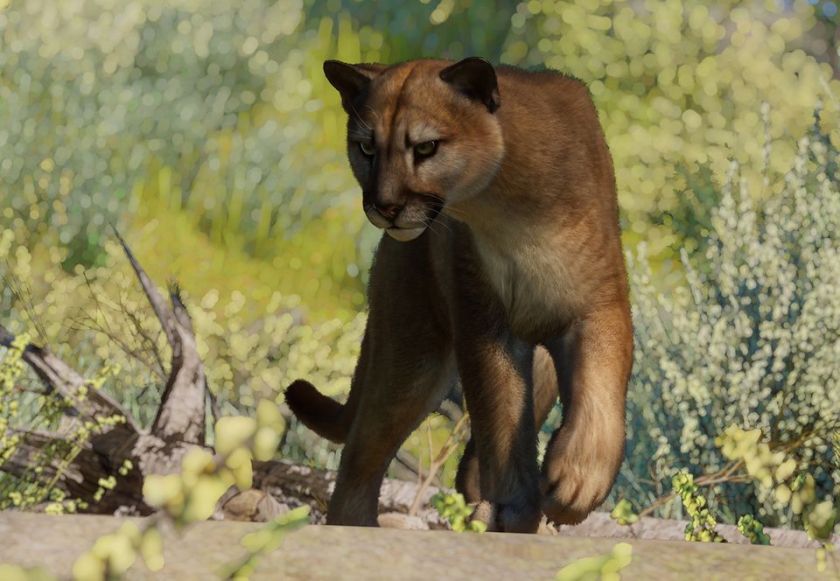
So far I’ve resisted the temptation to make one giant felid park, with snow leopards, pumas and cheetahs joining the tigers, lions, jaguars and others. Of course I did name it Buddy’s Tropical Paradise, so I may be forced down the all-cat road if Bud gets his say.
Planet Zoo is not a traditional video game. There are no winners or losers, and there’s no “end state” unless you intentionally include one.
It’s more relaxing and much slower-paced than your typical game, and it’s a great feeling when you’ve managed to take something from your imagination and perfect the design. When you want to check your progress or just admire your own work, you can set the camera to follow guests and watch as people stroll through your zoo, taking in the sights and sounds.
In that sense it’s more like a virtual model train set or living diorama. You can load up the game and tinker with your zoo when you’ve got a spare 15 minutes, or spend a few hours getting absorbed in the finer details of how to keep pangolin and red pandas happy.
Planet Zoo is appropriate for all ages, although its depth and complexity would probably be a lot for younger kids. In that case, it’s probably best to have an adult guide them so they understand the game is built on interlocking systems: exhibits need power and water, shops need staff, veterinary surgeries need veterinarians and so on.
It’ll have enormous appeal to kids who enjoy Lego, Minecraft and other building games, so if you’ve got a little builder in your life, this could be a good fit. But make no mistake, there’s a lot here for adults to enjoy too.
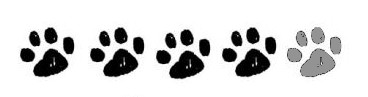
PITB verdict: Four out of five paws!
The only thing keeping Planet Zoo back from a five-paw rating is the DLC (downloadable content) scheme, which requires users to pay extra for certain “packs” containing extra animals, scenery pieces and scenarios. That’s a problem plaguing the larger video game industry, but if you wait for a sale, the normally $44.95 game can be had for as low as $11.24 on Steam. DLC is likewise discounted. Steam’s summer sale is a great opportunity to get games like this for a fraction of their normal price. This year’s summer sale is scheduled for June 27, though it’s possible Planet Zoo could be put on sale before then as well.
Matt Damon rescued a stray living on the periphery of a Costa Rican jungle.
Matt Damon stopped by the Late Show With Stephen Colbert this week, and somehow they got on the topic of Damon’s cat.
The Oppenheimer actor described how he and his wife gained the feline’s trust while staying at an AirBnB in Costa Rica. The cat, who was living on the edge of the nearby jungle and “fighting for his life every night,” gratefully accepted food from the Damons and grew to trust them over the month they spent at the rental.
“By the end we were like, ‘We have to take this cat. This guy’s gonna die. Now he’s relying on us.'”
It turns out the little brawler was done with living rough and enthusiastically took to the life of a pampered house cat.
“He moves into our house, and I’m thinking ‘I have a little yard out in LA, it’ll be great out there [for him],'” Damon told Colbert. “He never went outside ever again.”
Damon’s cat had a serious health scare, but the story has a happy ending and it’s better to hear Damon tell it, so turn up your speakers/headphones:
Yes, Damon’s cat may be “jacked,” and he may even be the Arnold Schwarzenegger of felines, but surely he doesn’t compare to the OG of ripped and meowscular cats.
The challenges of getting a lazy cat interested in play time and toys again.
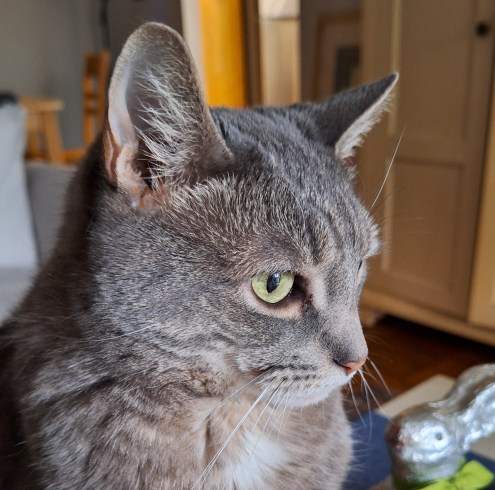
Buddy is friendly, outgoing and incredibly vocal, but he’s always been a bit lazy.
His preferred method of getting down from the couch isn’t jumping — although he does jump sometimes — it’s slowly oozing off the cushion like he’s liquid, taking the path of least resistance and letting gravity do all the work until he drops down and lands with a “Mmmrrrrrppp!”
When we wake up, the first thing he does is demand a snack, then he lays down for First Nap, apparently because the act of chewing and swallowing is so demanding.
“Now’s an excellent time for a nap.”
While he used to chase the laser with a fury and jump several times his own height to paw at it — even after figuring out it’s light fired out of a pen held by me — nowadays he can’t be bothered. At best he halfheartedly chases it for a bit and then loses interest even though I make an effort to move the laser like prey, as I do with his wand toys.
Worst of all, catnip makes him even lazier because he doesn’t just sniff the damn stuff, he eats it. I try to get him interested in his favorite wand toy when he’s buzzing on a heady combination of ‘nip and silver vine, but he won’t chase it. He just rolls onto his back and paws at it lazily, maybe getting in a few “rabbit kicks” if he’s feeling feisty.
All of this would be funny if he wasn’t about to turn 10 years old and if he didn’t tip the scale at about a pound and a half to two pounds above his normal body weight when the vet weighed him a few months ago.
“Hey fat boy!” I tell him, getting the familiar “Brrrrrr!” in response. (He’s a big time triller. Feline linguists estimate at least 60 percent of the Buddinese dialect consists of trills of various pitch, length and intensity.)
Fat Boy lost most of the excess weight during a particularly brutal stretch when he screeched at me for snacks constantly and I had to deny him most of the time. At least with kids you can explain things to ’em. I’ve got no way of communicating to the Budster that he’s a Chubster.
Since then he’s put some of the weight back on, so I’ve gotta do something.
Here’s my plan:
Training him to do new tricks. He already knows come, stop, sit and high-five, so we’re gonna have to try something new, like teaching him to roll and maybe teaching him to jump on my shoulder and “ride” around with me. Training is mentally stimulating, it should be fun for him, and it lays the groundwork for more challenging tricks.
A cat obstacle course! I can rig something up with his tunnel, some boxes and some “hazards” that he must traverse in order to get his paws on some catnip.
Snacks dispensed via puzzle feeder only. None of that free-feeding when he gavones the stuff down like he’s starving.
Rotating toys. Admittedly I haven’t been very good about doing that. Almost every guide mentions rotating cat toys so your little buddies don’t get tired of them.
A mirror so he can see how ripped chubby he’s gotten. He really needs to see himself loafing. It’s not pretty.
Okay that last one is a joke, mostly because I’m pretty sure he’ll just admire his “meowscles” in the mirror. Cats are masters of self deception. Bud is scared of rustling paper bags and absolutely terrified of vacuums, yet he still thinks he’s a hulking tiger. That’s impressive cognitive dissonance.
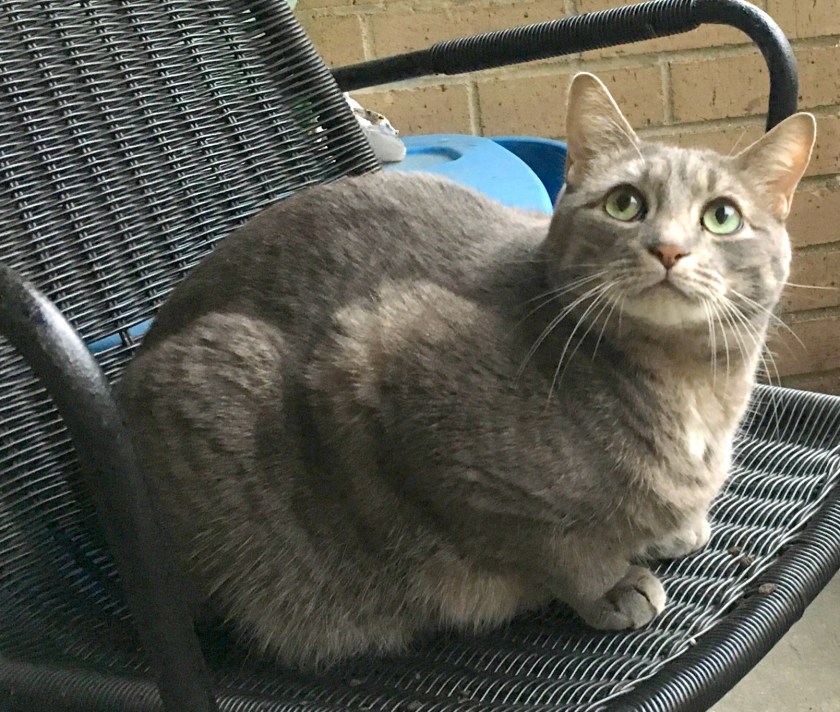
This is by far the fattest-looking photo of Buddy I could find. He’s in a super-meatloaf pose here, looking like a chonkmaster.
So we shall embark on this grand endeavor, and I’ll report back here to catalog successes and failures. Hopefully more of the former.
Buddy will always be like a baby to me, and I can’t quite wrap my head around the fact that he’s now a “senior” cat, but he is and it’s on me to make sure he remains active so he hopefully lives at least another 10 years in good health. There are many adventures yet to be had, many more schemes for world domination to hatch, and more turkey to eat.
The begging/praying motion is one of the most unusual feline behaviors, but what does it mean, and why do some cats do it?
Readers of this blog know I love my cat dearly, but he’s also very weird.
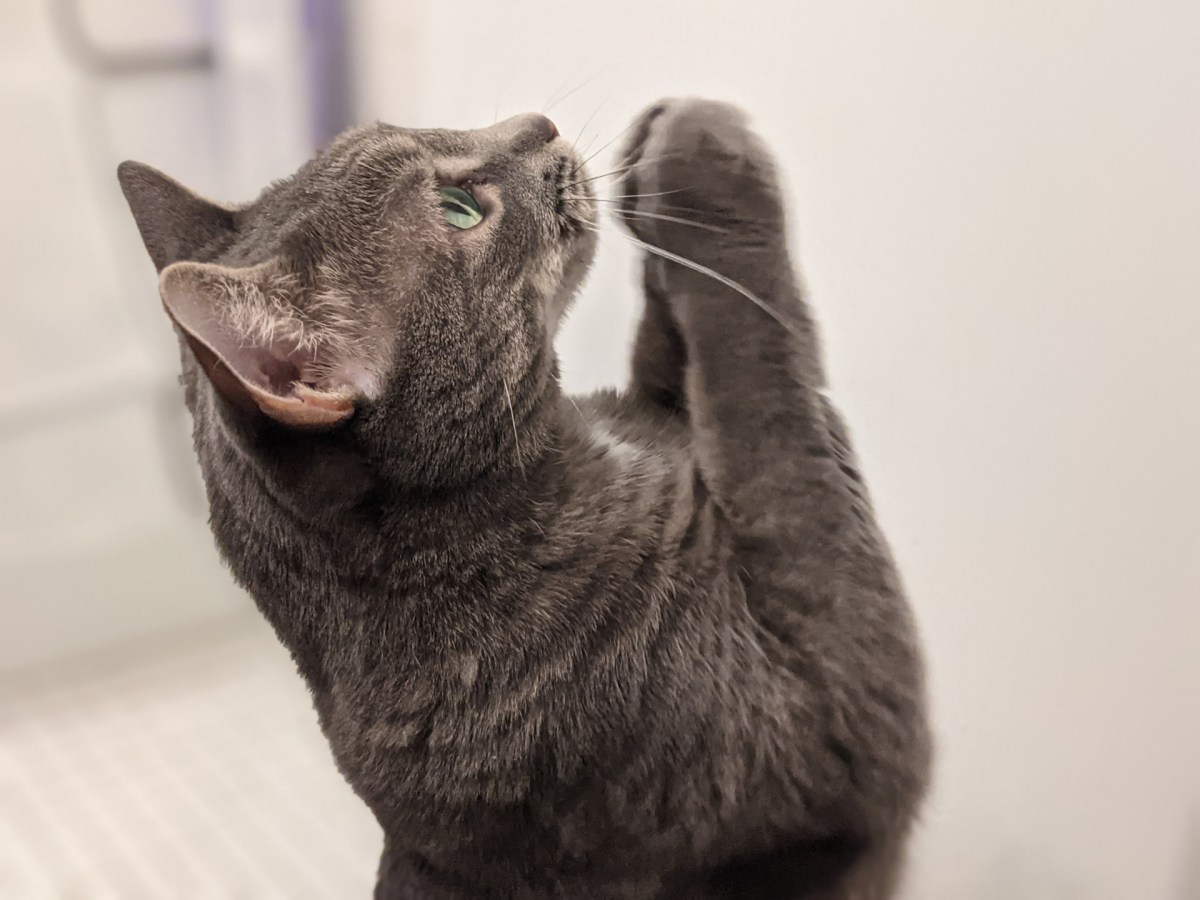
Perhaps his strangest, most mysterious behavior is what I call his “praying” gesture: Buddy sits up on his hind legs, puts his front paws together and raises them up and down as if in fervent prayer.
The behavior is extremely rare. Out of many millions of cat videos hosted on the internet, only a handful show cats engaging in it.
Here’s Buddy demonstrating his “prayer” form, set to De La Soul’s 1989 track, “Buddy”:
It’s seemingly random and impossible to predict, which is why it’s been so difficult for me to get a decent clip of Bud doing it. The above video is the third time I’ve managed to capture it, and only the second time I’ve been able to get a clear shot following an earlier capture:
Some cats do it much more frequently, like the ginger tabby below whose humans have decided it’s an expression of gratitude toward them for giving him a forever home:
I’m confident in saying that, for my cat at least, it’s not an expression of gratitude or a form of begging. First, Bud doesn’t do gratitude, and he doesn’t beg so much as he demands. If he feels I’m not responding quickly enough to one of his directives, he goes right to screeching at me: “Snack now, human!” and so on.
Likewise in the video above, Charlie’s humans say the orange tabby does it “randomly.” They’ve even caught him making the motion on camera when no one else was around, which tracks with my own observations of my cat.
So why do cats do it?
“I’ve seen the ‘begging paws’ online and I wish I had a nice, clear explanation for you,” cat behaviorist Mikel Delgado told us.
Some cats, she noted, learn quickly that it elicits a response from their humans.
“My best guess at why cats continue to do this behavior is that it gets them attention,” Delgado said. “That however, does not explain why they do it in the first place.”
Nancy Meyer, a feline behavior consultant who volunteers for Tabby’s Place in New Jersey, said she believes cats in some of the videos are indeed signaling to their humans that they want something. For example, one clip shows a cat “begging” in front of a refrigerator — which his humans say he often does — while another shows a cat facing its reflection in a mirror while pressing its paws together and moving them up and down.
Some of those cats would be well aware that their behavior is a good way to get their humans’ attention, which could indeed lead to them getting what they want.
“It’s like a meow or gaze alteration; it’s a way of communicating that a cat wants to get something that’s currently out of reach,” Meyer told PITB. “The owners reward the cat for this behavior so the behavior perpetuates.”
In my own anecdotal experience I have witnessed Buddy engage in the behavior when he doesn’t realize he’s being observed, and he’s just as likely to break out in “prayer” while facing away from me. I suspect that because he does it so infrequently, he doesn’t realize it results in attention.
It’s unlikely we’ll get definitive answers unless the behavior becomes the focus of research, but that seems unlikely because of its rarity and its unpredictable nature.
Most of the time it appears benign, but Delgado says caretakers should pay close attention if their cats are engaging in it constantly.
“My only concern is that in some of these cats, the behavior appears almost compulsive – like they can’t/won’t stop,” she told PITB. “I also would recommend chatting with a veterinarian to see if they have any thoughts about whether this might indicate any physiological issue.”
Otherwise it appears benign, so if your kitty occasionally breaks out in “prayer,” enjoy the quirk — and good luck trying to get that elusive footage!