Cops: Wannabe Rapper ‘Ritually Sacrificed’ Cat To Promote Music

David Mosley wanted attention and allegedly killed a cat on camera to promote his Satanist-themed music.

What to do when you want to be a famous music artist, but your tunes are abominably awful and your gimmick is infantile?

If you’re David Mosley, apparently you beg the internet to notice you exist by allegedly murdering a cat.

The 26-year-old Bronx man was initially gleeful after sharing video and photos showing a dead cat in his Fordham North hovel surrounded by candles and a bunch of nonsense, including the word “SATAN,” spray painted on the walls.

“You should have heard the little bih squeal lol,” Mosley wrote on Instagram alongside a photo of a bloodied and dead cat in his apartment.

“I’m the king, n—a,” Mosley said in a follow-up video after mocking people who were upset that he allegedly killed the cat. “I can reach through the camera and put spells on you like that! That easily! I hexed you through the phone, through the camera. Ya’ll know I do f—ing voodoo, so don’t even call me delusional.”

Mosley during a live stream, during which he claimed supernatural powers.

A relevant question here: who adopted a cat out to this guy? I went through what felt like a CIA-level background check when I first went to adopt, and this Satanist who thinks he’s a wizard apparently had no problem just waltzing into a shelter and walking out with a cat.

Apparently angry that no one turned up to the first “show” in his illustrious music career, Mosley said he was going to take things to the “next level” with another “sacrifice” on Halloween night. In his musical endeavors he called himself Church of Ububal, with the latter word a reverse spelling of “Labubu” in reference to the viral toys.

“Be there or be square,” he wrote, per a screenshot posted to Reddit. “Like I said at my first show and no one came. But you will be at this one. Grab popcorn.”

When he got the attention he wanted, but not the reaction he wanted, he backpedaled during a live stream, claiming he found the already-deceased feline.

By that point, furious Redditors in a Bronx subreddit had closed in on his identity and exact location, and were pestering the NYPD to grab Mosley.

“Y’all are soft for falling for cheap parlor tricks” Mosley said during the live stream.

Incredibly, Bronx criminal court Judge Harold E. Bahr let Mosley walk free without having to post bail after a preliminary hearing this week, and adjourned a hearing this week after Mosley’s original attorney was not present. It’s not clear if that attorney will continue to represent Mosley.

Bahr must be confused about which decade this is. Constituents should (politely) register their displeasure with his office. People from several local cat rescues have already done so.

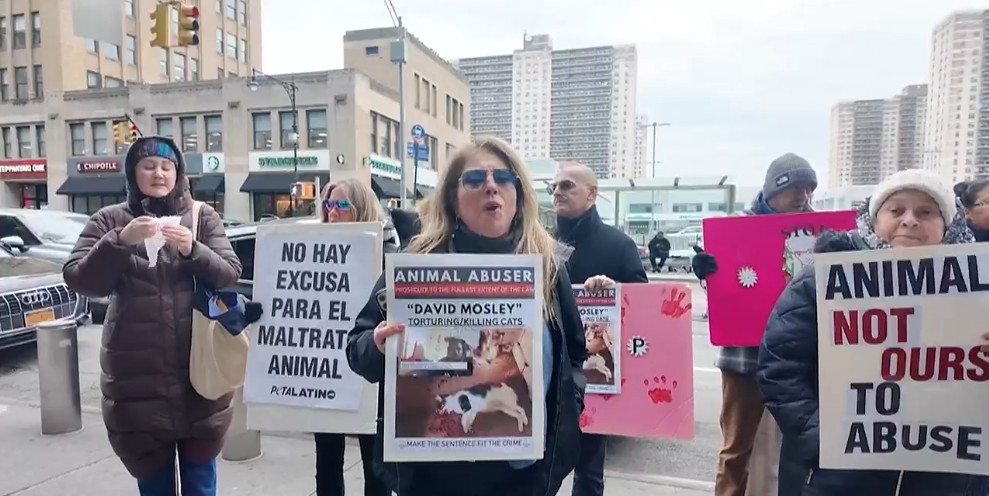
“We want the judge to take this seriously. We cannot wait for another crime like this to happen,” local animal welfare activist Rachel Ejsmont told News12 Bronx.

Mosley was initially charged with criminal mischief and aggravated cruelty to animals at his Oct. 30 arraignment. Activists are pushing the district attorney for more serious charges.

The court hasn’t set a date for Mosley’s next hearing after the Nov. 12 adjournment. We hope the scrutiny and his mounting legal troubles dissuade him from trying to get attention through violence again.

Lastly, I usually keep my mouth shut about this sort of thing because I know emotions run high and most people are well-intentioned, but already there are grifters latching onto this incident and using it to beg for donations for their activism, which amounts to little more than grumbling about this stuff on social media.

Be careful about who you donate to and make sure you’re giving to registered organizations with financials listed on Charity Navigator or Charity Watch. Donate your hard-earned money to groups that really do make a difference, such as the Humane Society, SPCA and local rescues that do outstanding work, like New Jersey’s Tabby’s Place. A transparent, effective charity will feature its IRS Form 990 on its website and use at least 75 percent of its revenue from donations on program spending. Be wary of “influencers,” people who say outrageous things for attention, clicks and donations, and anyone who claims they have special access to, or influence over, authorities.

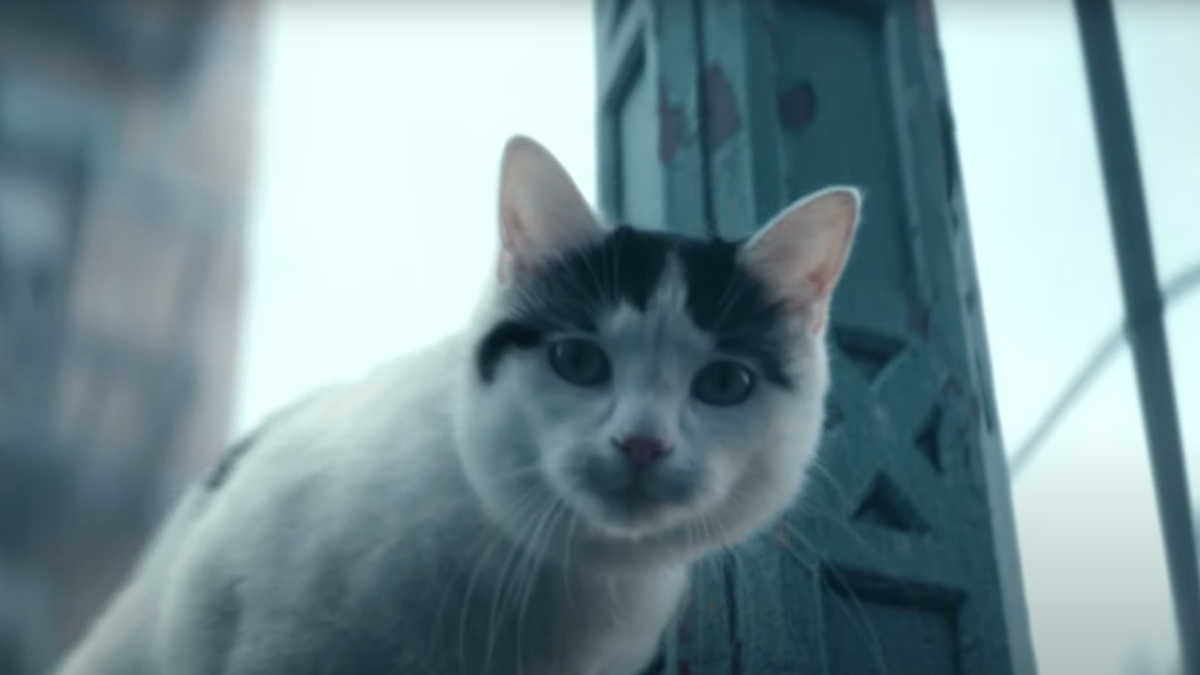
Header image via News12 Bronx (screencap)
Some People Bestow An Absurd Number Of Nicknames On Their Cats

Pity the poor pets who must endure being called Shmubbles, Miss Hissy Cakes and Mr. Oo Oo Ah Ah.

In a viral Reddit thread, a user reveals she’s given her cat more than 20 nicknames, and a surprising number of fellow Redditors have weighed in with long lists of names they call their furry friends.

The original poster’s list is extensive: “Milo (his real name), Milosh, Baby, Mr Baby, Mr Meh, Mr Mrreh, Mr Moo, Mr Milo, Mr Handsome, Mr Eh Eh, Mr Oo Oo, Mr Oo Oo Ah Ah, Mr Baum Baum, Mr Grumpidy Bumpidy, Mr Ping, Mr Pink Pitty Pads, Mr Orange, Mr Punchy, Mr Puffy Pants, Mr Pretty Pants, Mr Princess”

“Valentina. AKA Tina, Valley Girl, Teenie, Teenie Weenie, Queenie Teenie Beanie, Tina Beana, Fluffer, Fluffercakes, Missy Hissy Cakes, Missy Floofy Pants, Felix, Felick, Felicky, Baby Girl, Mama’s Baby Girl.” another wrote.

Another: “Luna, which turns into Lu, Fluff, Fluff Bucket, Fluff Butt, Fuzz Butt, Fuzz face, or various meowing sounds.”

Most of the people who responded to the thread have handles that mark them as female, and I’m going to go ahead and assume the vast majority of the others are too.

You just can’t call your cat Shmubbles or Mr. Grumpidy Bumpidy and retain your man card. It is not possible.

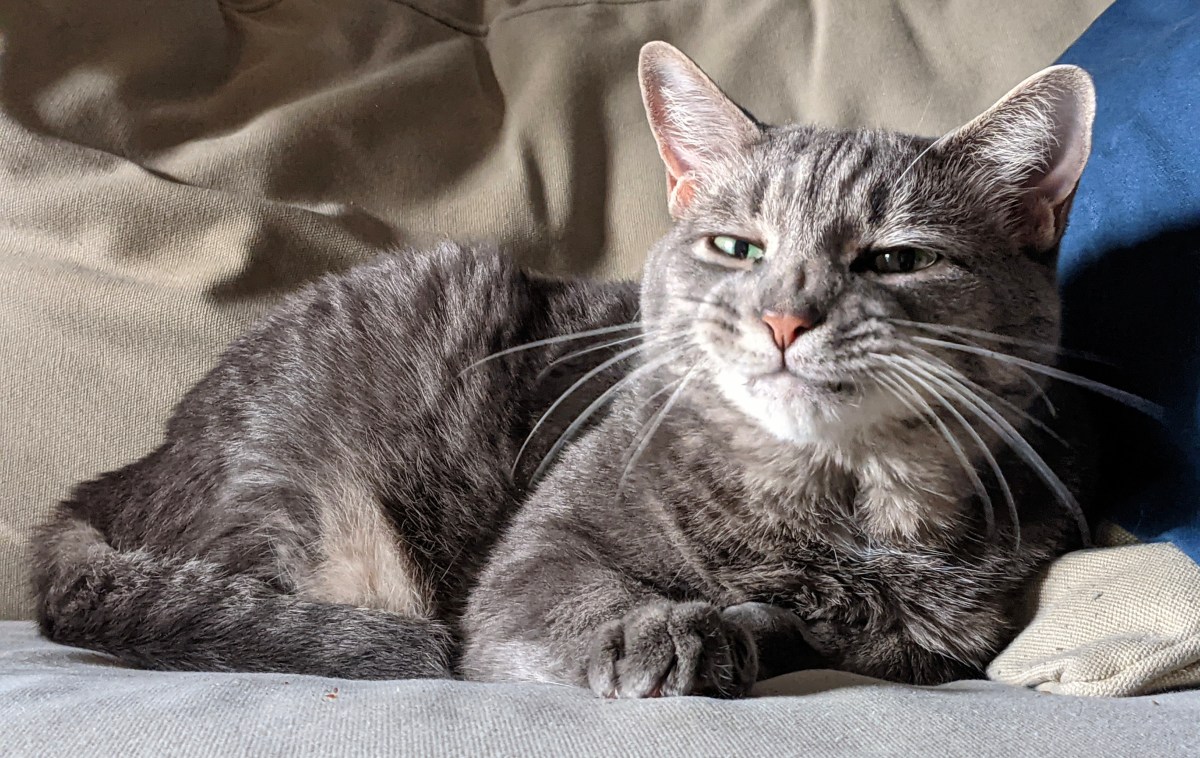
Here at Casa de Buddy, we keep it simple: Bud or Buddy. I feel like if I just start freestyling names, little man is going to be confused.

Call me “Mr. Buddy Wuddy” and I’ll murder you, human.

Indeed, that’s the subject of Mollie Hunt’s Oct. 6 post, “What’s In A Name?”, which notes we should call our cats by their proper names for good, practical reasons: not confusing the little ones, getting them accustomed to responding to their names, and the peace of mind that comes with knowing they’ll respond in an emergency.

Research has repeatedly confirmed what we’ve all known anecdotally: domestic felines know their names and they even know the names of other cats they live with. They may not always deem a human worthy of a response, but they hear us and they know we’re calling for them.

I do call Bud other things, but they tend to be invented by my sleep-deprived brain when he insists on screeching in my ears or standing on my face to get me out of bed.

They’re not really nicknames so much as they’re insults, but don’t worry — no egos were bruised in the process. In the past I’ve thrown pillows at him for his relentless assaults on my sleep, and he seems to think that’s hilarious.

So yes, in the momentary anger of getting woken up for the fifth time in an hour, while he’s standing on my face and the tips of his back claws are digging into my cheek, I might mumble “Shut up, you furry little turdball!” or threaten to defenestrate him like an out-of-favor Russian oligarch.

But I dote on the little guy, function as his faithful servant, and try to give him his best life. I’ve also seriously considered constructing a throne for him. What’s a little “annoying little jerk” between friends? It all evens out!

A Cruel, Emotionally Manipulative New Scam Targets Cat Owners

“I had to leave work because I was a wreck, fully believing my cat was on the verge of life and death. It’s cruel that people do this,” one victim said.

Two weeks after his beloved cat vanished, Justin Hills received a phone call that simultaneously gave him hope and filled him with dread.

The man on the line spoke with practiced professionalism and told him that his cat, Little Wayne Shorter, had been found badly injured after he was hit by a car.

Little Wayne urgently needed surgery, said the man who identified himself as a staffer with Seattle Animal Shelter. Veterinarians were ready to begin surgery if Hills gave them the go-ahead and sent $2,800 via Venmo.

“The back of my head is screaming, ‘This is a scam. This is a scam.’ But at the same time, because it’s such an emotional pull, I’m thinking, even if there’s only a 10% chance that this is real, you know, I want to go ahead with it,” Hills told Seattle’s WKIRO.

Little Wayne Shorter

“The guy was rehearsed, was smooth. He sounded like, you know, an experienced person,” Hills said. “They had done some research on me before they called. You know, they knew my name. They knew my cat’s name, you know, the address and all this.”

When Hills called his bank, they warned him it was a scam. Hills said he’s glad he didn’t send the money but also devastated his cat is still missing — and that he was given false hope by someone trying to manipulate him in his desperation to be reunited with Little Wayne.

He’s not alone. In a post to Facebook group for missing pets in King County this week, Seattleite Harris Alex described a call from a person who claimed to work for Seattle Animal Shelter.

“They said someone found my cat, Binx, and that he had been hit by a car. They told me if I didn’t pay for surgery, he would die or be paralyzed within the next hour,” Alex wrote.

A caller said Binx, above, was seriously injured and needed urgent — and expensive — veterinary care.

Alex grew suspicious when the caller asked for a payment via Venmo, Paypal or Chime.

“I called the shelter to confirm they do not have him,” Alex wrote. “I had to leave work because I was a wreck, fully believing my cat was on the verge of life and death. It’s cruel that people do this. Be careful out there.”

Staff at Seattle Animal Shelter, which is run by the city, are aware of the scam and have gotten several calls from people asking if the shelter has their cats after being in contact with the impersonators.

“We would never ask somebody over the phone to make a payment,” said Don Baxter, manager of field services at the hospital. “We’re going to get that pet to a veterinarian and get it care and treatment, and then we’ll work out how to get the pet back to the owner after that.”

The lost/injured pet scam isn’t limited to Seattle, and the perpetrators will often switch to targets in another city if too many people become aware of their efforts, only to pop back up again later. The scam’s combination of social engineering and emotional urgency encourages victims to act quickly without giving the situation too much thought.

Experts advise people to keep their cool despite their hopes or fears, and demand proof that the person has the animal:

“This is one of the more difficult scams to deal with emotionally. If someone really has your pet, they should be able to at the very least send photos. Most people should be able to do a video call.

In general, scammers will pressure you to send money in advance. They will often make lots of excuses for not being able to provide proof they have your pet or meet in person.”

This general category of scam isn’t new, but social media has enabled scammers to believably pose as shelter staff using information pulled from the victim’s own lost pet posts and profiles, the FBI notes. The bureau also warns of several variations on the scheme.

Binx

The people running the con find their victims by scanning local missing pet groups on sites like Facebook and Reddit. They gather names and descriptive details, spin a narrative that shocks their intended victims, and create a sense of urgency by saying the cat will die if there’s any delay in performing surgery.

That’s what happened to Susan Burgess, who’d posted about her 15-year-old tabby cat, Linus, going missing. The caller said Linus was hurt and he needed to confirm her name, but Burgess realized he would have known it if he’d scanned Linus’ microchip.

She gave the scammer a piece of her mind before hanging up on him.

“On the off chance that you do have my cat, I hope that you are able to show some compassion and do the right thing,” she told the caller. “But I’m pretty sure that you don’t, and what you’re doing is very cruel.”


PSA: Speaking of scammy behavior, I can’t control the ads that are shown on PITB, but if you’re seeing ads for an amazing-looking, ultra-realistic toy rabbit presented as a great Easter gift, don’t fall for it. Here’s a video revealing what you’ll actually get from the deceptive seller:

‘Relax, It’s Just A Cat’ Guest Says After Shoving Kitty Off Couch

A woman asks Reddit if she overreacted when she tossed her friend out over the way the friend treated her cat.

A Redditor has been assured she didn’t overreact after recounting a disturbing incident involving one of her friends and her cat.

Describing her cat as “super friendly, but a little skittish” and prefacing the anecdote by noting she always asks guests “to be gentle with her,” the Redditor relayed what happened when her cat jumped onto the couch near the seated guest.

“Out of nowhere, my friend shoved her off the couch. Not a little nudge—an actual shove that made her hit the floor hard. My cat ran and hid under my bed, and I lost it. I asked them what the hell that was, and they just laughed and said, ‘Relax, it’s just a cat.'”

“I told them to get out immediately. They acted like I was overreacting, saying they didn’t mean to hurt her and that it wasn’t a big deal. But my cat was terrified, and I don’t care if it was intentional or not—that kind of reaction to an innocent animal is not okay with me.”

The offending party is telling mutual friends that the Redditor “threw them out over ‘nothing,'” but others in their social circle have “admitted they never liked how this friend treated animals.”

Still, some told the woman she may have been too harsh for telling the cat-shover to leave immediately.

What do you think?

Tornado of claws!

For what it’s worth, most people who responded to the AITA (“Am I The Asshole?”) thread sided with the poster, and others pointed out that someone who will casually shove a cat off a couch while the caretaker is right there might do much worse if no one’s around. In other words, don’t let that person watch your cat under any circumstances.

I have never had this problem, obviously, because no one would dare shove my incredibly ripped and meowscular cat.

Jokes aside, I can’t imagine anyone I’m friends with would harm him when they know how much little dude means to me.

And as much of a wimp Bud is when it comes to vacuums, loudly crinkling paper bags and Swiffers, he has absolutely no fear of people. If someone tried to shove or toss him off a couch, I’d actually feel sorry for them, because the next instant would involve 11 pounds of furball screeching like a furious Elmo while producing a tornado of claws.

Reddit’s AITA is a reliable source of insight into antisocial behavior and social faux pas, which makes it fun to browse, but it also offers people a chance to gauge if they’ve overreacted in heated situations.

What would you have done if you were in the Redditor’s shoes?

A Quiet Place Day One: Are ‘Service Cats’ A Real Thing?

Service animals and emotional support animals are not the same thing.

A Quiet Place: Day One stars Lupita Nyong’o as Samira, a terminally ill woman, and Joseph Quinn as her nurse, Eric.

But it’s the third main cast member — a feline named Frodo — who’s been hailed as the surprise star of the film, which one reviewer called “a love letter to cat owners.”

Nyong’o’s Sam has been given the equivalent of a death sentence with her aggressive cancer diagnosis, but when the nightmarish creatures who play the antagonists of the Quiet Place franchise arrive, Sam fights for her life with her trusty “service cat” by her side.

“You can’t have a cat in here,” the clerk at a bodega tells Sam early in the film, before she fixes him with a no-nonsense stare and flatly declares: “He’s a service cat.”

Frodo the Cat
The adorable Frodo, co-star of A Quiet Place: Day One.

Service cats: Fact or fiction?

So are service cats a real thing?

Unfortunately, no. In the US, only dogs and miniature horses can be registered as service animals, and that’s by law. The latter are more rare, but horses labeled emotional support animals are no more official than an emotional support llama.

You’ve probably heard stories or seen photos of people trying to take other animals into places they’d normally never be allowed. In 2019, a woman decided to push the boundaries by taking a miniature horse onto a domestic flight, forcing passengers to share extremely limited space with the olfactorily potent, skittish animal. She even scolded social media users who didn’t get the horse’s pronouns “correct.” (They’re she/her, by the way. We’re not making this up.)

https://x.com/barstoolsports/status/1167440007956746240

https://x.com/tsturk8/status/1167472085918240768

The woman, who says she needs the horse because she suffers from PTSD, told Omaha, Nebraska’s KMTV that the managers of a grocery store allegedly violated her rights by asking her to leave rather than allow her to march a horse through a place where people buy food and its operators are required to follow Department of Health rules.

“I was treated so poorly and the manager’s responses when I followed up were poor,” she said. “They are going to be hearing from the Department of Justice and I’m definitely going to be pursuing legal means as well.”

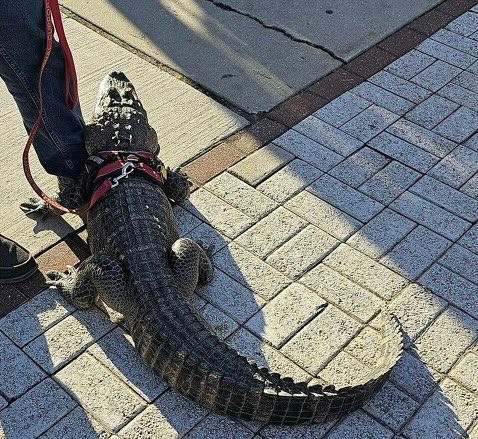
In 2023, a man tried to take a “service alligator” to a Phillies game at Citizens Bank Park. Stadium security weren’t buying it and he was turned away, but not before other fans snapped photos of the attempt. In Nevada, a man who had his USDA license revoked for “multiple violations of the Animal Welfare Act” argued that authorities couldn’t confiscate his 10 tigers because he claimed they are emotional support animals.

“My doctor has written that she feels that the tigers are beneficial to my psychological well-being and so therefore I got what the law requires,” Karl Mitchell told KTNV, an ABC affiliate in Las Vegas.

Emotional support tiger
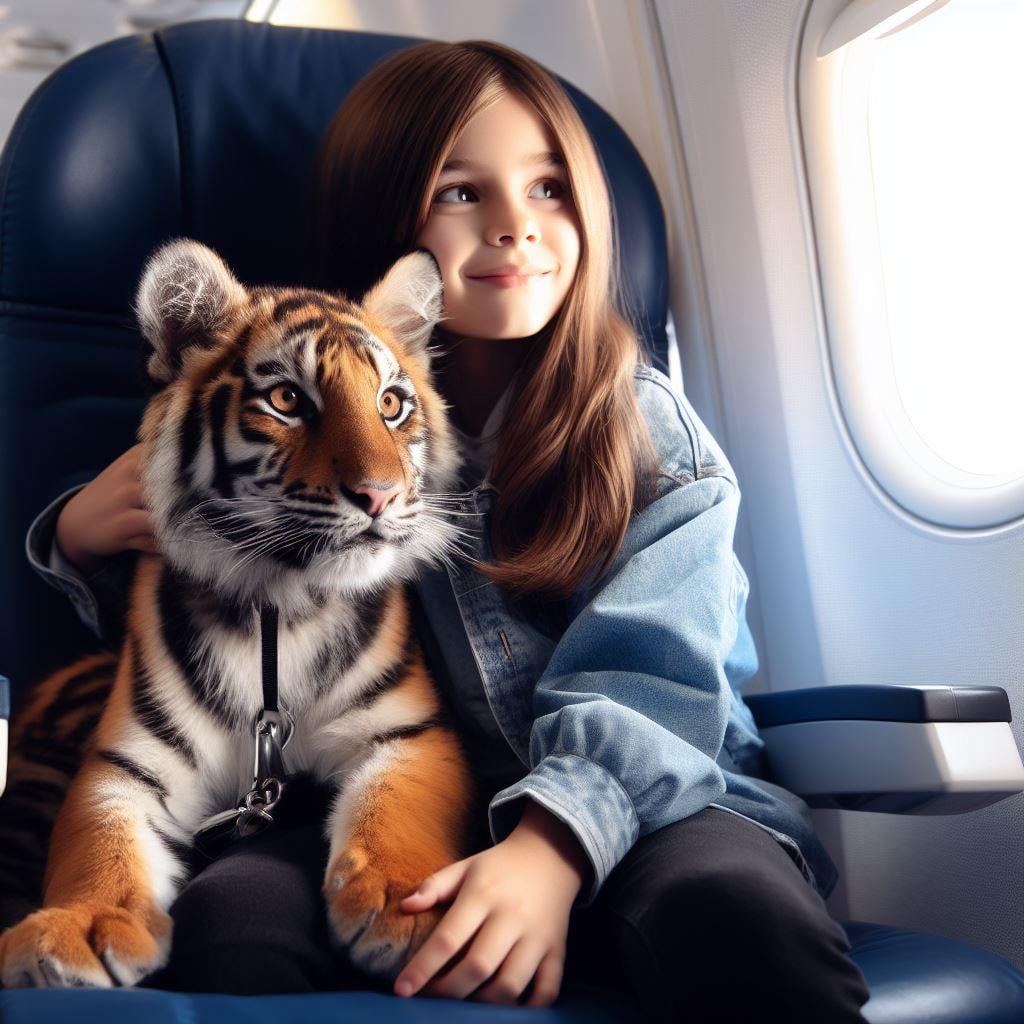
An emotional support tiger depicted in a Reddit photoshop contest for the most ridiculous “service animals.” Maybe some ambitious dreamer will cook up a service elephant or an emotional support bison.

Since then the FAA and Department of Transportation have issued new rules clarifying emotional support horses, peacocks, flying squirrels, parrots and other animals are not allowed on planes, prompting one flight attendant to quip that “The days of Noah’s Ark in the sky are over.”

That, however, has not put a dent in the confusion over what constitutes a service animal versus an emotional support animal, and what rights people have when it comes to bring their furry (or scaly, or feathered) friends into public and private spaces.

Although we’re happy to see Nyong’o in her first lead role since 2019’s freaky horror thriller Us, unfortunately A Quiet Place: Day One is almost certain to contribute to that confusion with its fictional “service cat” character.

A service animal and an emotional support animal are not the same thing

First, there’s an important distinction between a service animal and an emotional support animal.

Service animals can only be dogs or miniature horses, and must be trained. People who depend on service animals can train them themselves, but the animal must meet specific needs, like guiding the blind or vision-impaired.

Emotional support animals, by contrast, are not trained, certified or “official” in any capacity. Anyone can adopt or buy an animal and call it an “emotional support animal.”

Emotional support alligator
A Phillies fan’s “emotional support alligator.” The stadium turned him and his carnivorous apex predator companion down. Credit: Howard Eskin/X

Unfortunately due to the confusion involving service animals vs ESAs, predatory sites have popped up online promising to “officially register” ESAs for a fee.

In addition to charging for something that doesn’t exist, the proprietors of those sites also tell people they can take their “officially registered” support animals into places normally off limits to pets, like stores and restaurants. Some sites offer consultations with alleged mental health professionals who will “diagnose” customers remotely and write letters on the customer’s behalf.

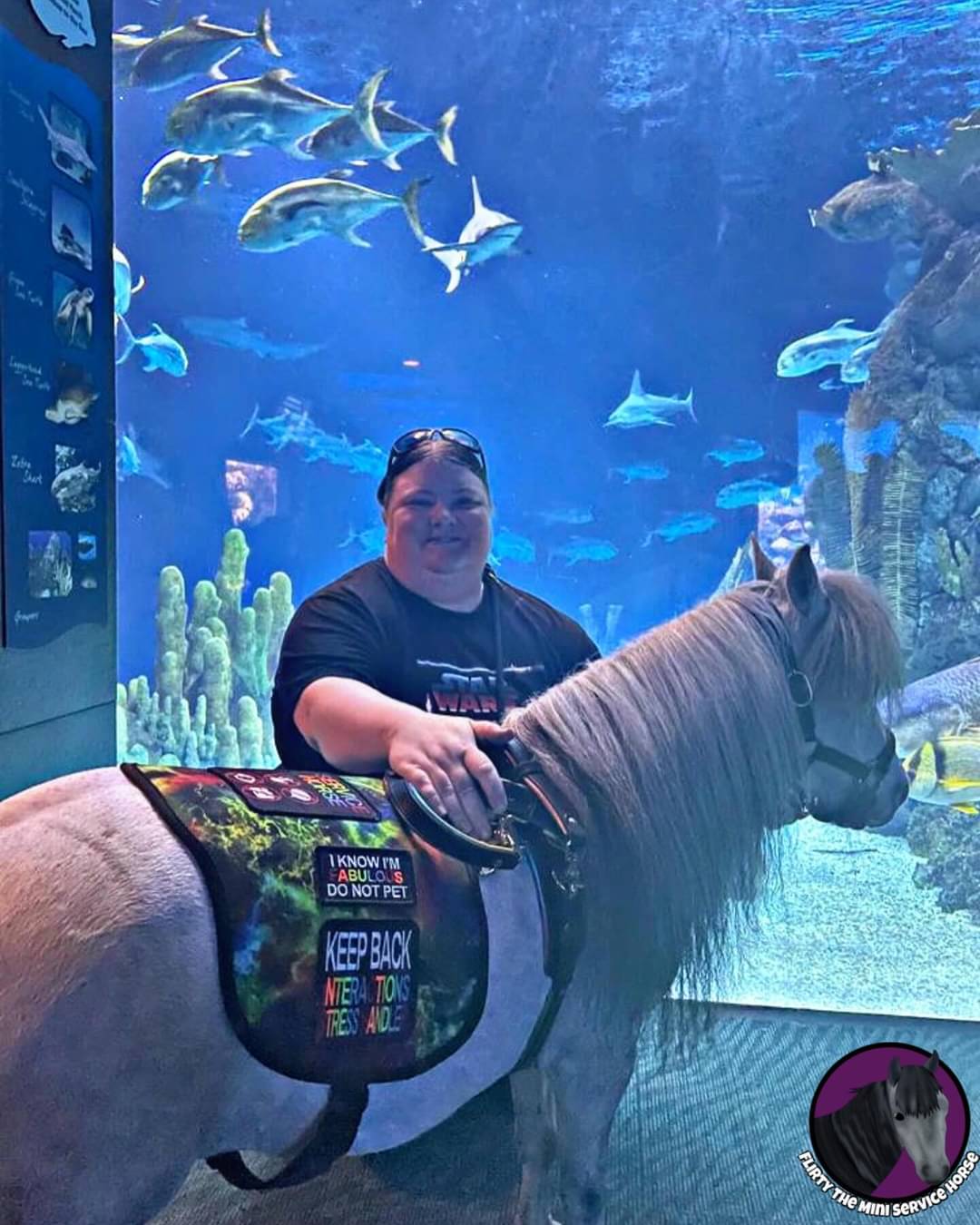
Abrea Hensley with miniature horse
Abrea Hensley with her miniature horse, Flirty, in an aquarium. Hensley’s social media accounts document all the places she goes with the animal.

Those sites operate similar to the numerous “buy a star” sites that claim celestial objects can be officially owned. Like their emotional support animal “registry” counterparts, the star sale sites offer official-looking paperwork, but they’re selling something that can’t legally be sold, and the certificates are legally and practically meaningless.

Buying a “certification” won’t make your cat a service feline, and contrary to how they’re portrayed in the movie, calling a pet an emotional support animal does not allow you to bring it anywhere you like.

For legal purposes, there’s only one perk to be had by claiming an emotional support animal: under the Fair Housing Act, landlords generally cannot refuse tenants who have emotional support animals. The act specifies that allowing emotional support animals is limited by “reasonable accommodations.” That means a dog or a cat is okay, but you can’t keep an animal that poses a danger to your neighbors, negatively impacts their quality of life, or requires the landlord to make major and costly alterations.

The general trend in recent years has involved curbing the limits of emotional support animals, a trend that appears likely to continue as more people abuse the privilege, burdening other members of the public by insisting they must silently endure the inconvenience, potential allergic reactions, sanitary concerns and practical problems caused by bringing animals into spaces that are not designed to accommodate them.

While we’re certainly sympathetic to pet owners — this blog wouldn’t exist if we were not — the fact is that the more people abuse societal boundaries with emotional support animals, the more difficult it makes things for people who have legitimate service dogs and rely on them to navigate life and maintain their independence.

Note: This post has been updated to further distinguish between service animals and emotional support animals. An earlier version contained a paragraph with potentially confusing phrasing.

h/t Susan Mercurio for pointing out that emotional support animals are coveted by the Fair Housing Act