Beware Of Missing Pet Scams: If Someone Says They’ve Found Your Cat, Don’t Send Payment

People desperate to be reunited with their lost pets are easy prey for emotionally manipulative scammers. AI has made the scams even more convincing.

The internet is famous for its rules.

There’s Godwin’s law (The longer an online discussion stretches, the greater the chance of someone invoking Hitler and/or Nazis in anger), Poe’s law (extreme viewpoints and satire are indistinguishable online), and the infamous Rule 34 (“If it exists, there’s porn of it.”)

I propose a new law: if it exists, there are scammers out there trying to take advantage of it.

How else to explain the evil behind increasingly popular “found pet” scams?

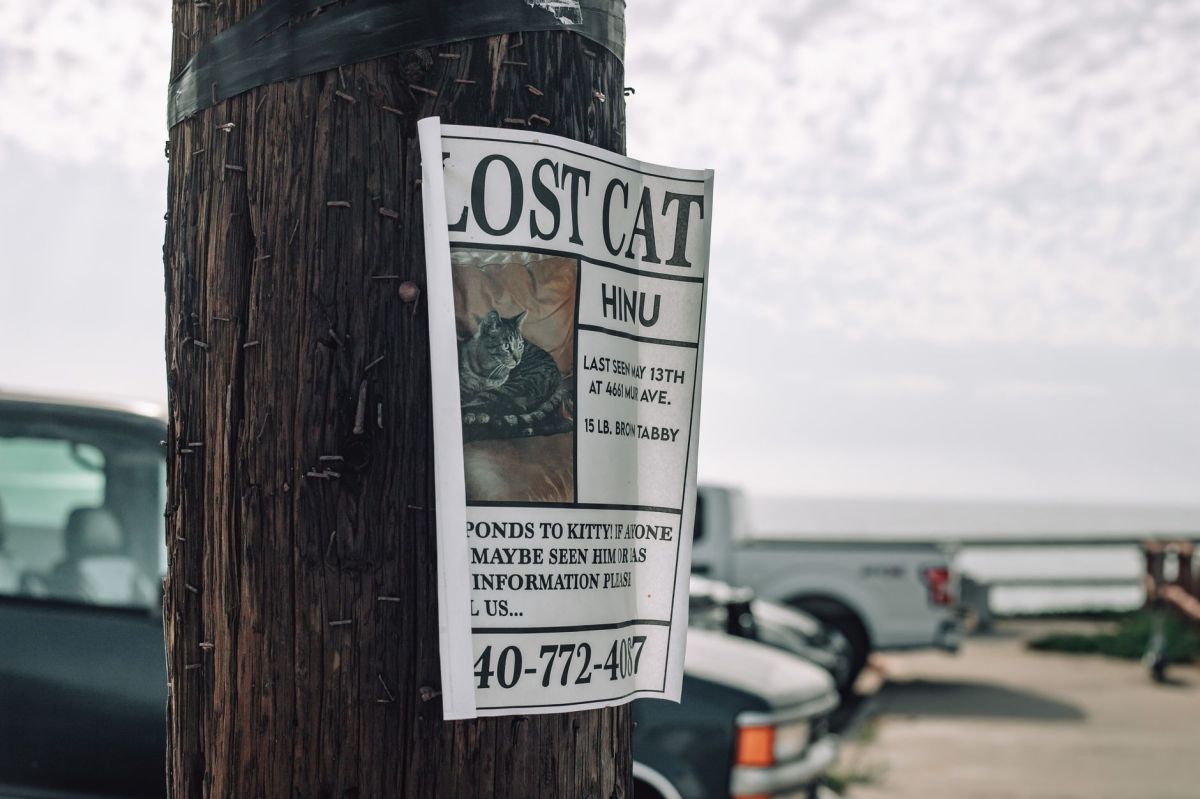
The formula is simple. Someone loses their beloved cat or dog and does all the right things, including checking with their neighbors, calling local shelters and posting on sites like Facebook and NextDoor.

Missing cat poster featuring Buddy, a white and gray cat, last seen on Leahall Road in Stechford, Birmingham.
Stephanie Young of Burmingham, UK, was contacted by a woman who claimed she had Young’s cat, Buddy. (Great name!) When Young offered a cash reward upon meet-up but refused to send gift cards ahead of time, the woman said she would kill Buddy.

A scammer sees the post, whips up a photorealistic AI image or video of the lost kitty or pup, then contacts the panicked owner with the “good news” that their little pal has been found. Look, here’s proof! Little Fluffy’s stretched out in a sun puddle in my backyard right now!

People are usually so overjoyed and so eager to get their furry friend back that red flags may go unheeded, especially if they’re not fully aware of what AI can do these days.

They want to believe because they want their pet back, so maybe they don’t balk at sending a reward via Paypal or an Apple gift card. Or maybe they agree to send the reward after they meet up with the finder and get their cat or dog back.

In a new story about found pet scams, the BBC outlines what comes next, and it’s not pretty: the scammer demands payment up front and threatens to kill, sell or dump the missing animal unless the desperate pet owner complies.

That’s what happened to Sarah Robinson, a Northampton, UK, woman who was contacted by a man who claimed he had her missing cat, Cookie. Robinson was sure she would get her cat back when the man contacted her online and provided a photo of Cookie sitting by a window.

But when he demanded £40,000 (almost $54,000 USD) and Robinson refused, he told her he’d kill Cookie if she didn’t pay him. Even though her gut told her the whole thing was a scam, Robinson told the BBC she was “really, really worried” that she was wrong.

“It’s a very cruel thing to do,” she said. “It’s horrible, because you know it’s not real but you’re terrified it might be.”

Some scammers are crude and will heap abuse and threats on people who grow wary, but others are much more shrewd and know how to manipulate the fear and desperation of people who have lost companion animals they love.

That’s what happened to Bill Cosens, a Florida man who was contacted by a woman who said she’d found his missing beagle mix after the dog was hit by a car. The woman shared a photo of Cosens’ dog, Archer, on an operating table in an emergency veterinary clinic, which was generated using photos Cosens had shared online.

Now there was pressure and urgency. Archer needed surgery immediately, the scammer told Cosens, and the veterinarian was demanding an up-front payment of $2,800. If Cosens didn’t pay, the scammer told him, Archer would be euthanized.

It’s a much more sophisticated approach that relies on emotional manipulation and doesn’t give the victim time to think.
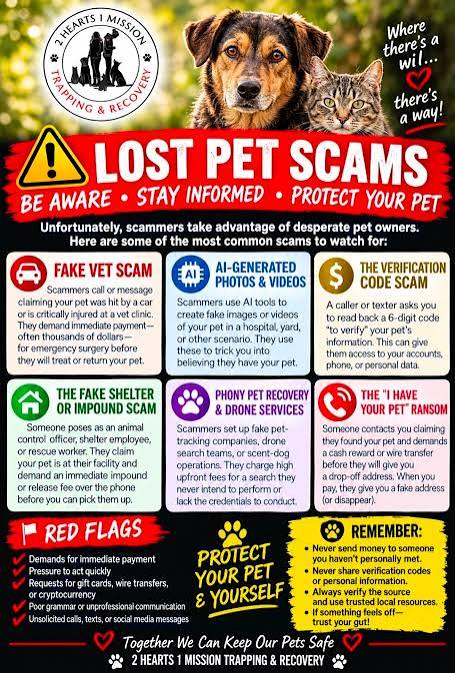
Infographic warning about lost pet scams, featuring a dog and cat, scam examples, red flags, and pet protection tips.

Indeed, another case detailed by the BBC involves a woman who had already retrieved her cat carrier and was ready to comply with a request for a reward when her daughters stepped in and told her it sounded like a scam.

There are ways people can protect themselves, like withholding certain information (unique markings, scars, specific information included on collar tags, etc) and asking the “finder” about those details. People should always take a beat, attempt to set their emotions aside, and look at the communications analytically. Alternately, they could ask someone less emotionally invested – a friend, colleague or acquaintance – to look at the communication with a critical eye.

In some cases scammers will send veterinary bills or diagnoses, or pretend to be veterinary staff. Always take a close look at the documents, keeping an eye out for telltale signs of a scam including misspellings, poor grasp of English (many scams originate from overseas), misuse of veterinary terms, and details that don’t match any real-life veterinary practices, such as incorrect addresses.

If the person on the other end asks you for a verification code, it means they’re trying to access your online accounts. End the conversation immediately.

Always ask to meet in a highly visible public space with others around, and don’t send any money unless you see your pet in person. If the person refuses to meet, demands gift cards or payment up front, always refuse. Those are clear signs of a scam.

If there aren’t overt red flags but something still feels wrong, ask for additional confirmation. If someone really has your pet, it should be trivial to FaceTime and show you proof.

It’s always best to err on the side of caution. Your heart will scream at you to take action because who among us wouldn’t leap at the chance to be reunited with animals who are our best friends and part of our lives for years? But if your mind and your gut are telling you something different, exercise extreme caution. Hope alone won’t reunite you with your missing pal, especially not through a heartless person who never had your cat or dog in the first place.

If you’ve encountered a scammer, report them to the FBI’s Internet Crime Complaint Center at www.ic3.gov
A Cruel, Emotionally Manipulative New Scam Targets Cat Owners

“I had to leave work because I was a wreck, fully believing my cat was on the verge of life and death. It’s cruel that people do this,” one victim said.

Two weeks after his beloved cat vanished, Justin Hills received a phone call that simultaneously gave him hope and filled him with dread.

The man on the line spoke with practiced professionalism and told him that his cat, Little Wayne Shorter, had been found badly injured after he was hit by a car.

Little Wayne urgently needed surgery, said the man who identified himself as a staffer with Seattle Animal Shelter. Veterinarians were ready to begin surgery if Hills gave them the go-ahead and sent $2,800 via Venmo.

“The back of my head is screaming, ‘This is a scam. This is a scam.’ But at the same time, because it’s such an emotional pull, I’m thinking, even if there’s only a 10% chance that this is real, you know, I want to go ahead with it,” Hills told Seattle’s WKIRO.

Little Wayne Shorter

“The guy was rehearsed, was smooth. He sounded like, you know, an experienced person,” Hills said. “They had done some research on me before they called. You know, they knew my name. They knew my cat’s name, you know, the address and all this.”

When Hills called his bank, they warned him it was a scam. Hills said he’s glad he didn’t send the money but also devastated his cat is still missing — and that he was given false hope by someone trying to manipulate him in his desperation to be reunited with Little Wayne.

He’s not alone. In a post to Facebook group for missing pets in King County this week, Seattleite Harris Alex described a call from a person who claimed to work for Seattle Animal Shelter.

“They said someone found my cat, Binx, and that he had been hit by a car. They told me if I didn’t pay for surgery, he would die or be paralyzed within the next hour,” Alex wrote.

A caller said Binx, above, was seriously injured and needed urgent — and expensive — veterinary care.

Alex grew suspicious when the caller asked for a payment via Venmo, Paypal or Chime.

“I called the shelter to confirm they do not have him,” Alex wrote. “I had to leave work because I was a wreck, fully believing my cat was on the verge of life and death. It’s cruel that people do this. Be careful out there.”

Staff at Seattle Animal Shelter, which is run by the city, are aware of the scam and have gotten several calls from people asking if the shelter has their cats after being in contact with the impersonators.

“We would never ask somebody over the phone to make a payment,” said Don Baxter, manager of field services at the hospital. “We’re going to get that pet to a veterinarian and get it care and treatment, and then we’ll work out how to get the pet back to the owner after that.”

The lost/injured pet scam isn’t limited to Seattle, and the perpetrators will often switch to targets in another city if too many people become aware of their efforts, only to pop back up again later. The scam’s combination of social engineering and emotional urgency encourages victims to act quickly without giving the situation too much thought.

Experts advise people to keep their cool despite their hopes or fears, and demand proof that the person has the animal:

“This is one of the more difficult scams to deal with emotionally. If someone really has your pet, they should be able to at the very least send photos. Most people should be able to do a video call.

In general, scammers will pressure you to send money in advance. They will often make lots of excuses for not being able to provide proof they have your pet or meet in person.”

This general category of scam isn’t new, but social media has enabled scammers to believably pose as shelter staff using information pulled from the victim’s own lost pet posts and profiles, the FBI notes. The bureau also warns of several variations on the scheme.

Binx

The people running the con find their victims by scanning local missing pet groups on sites like Facebook and Reddit. They gather names and descriptive details, spin a narrative that shocks their intended victims, and create a sense of urgency by saying the cat will die if there’s any delay in performing surgery.

That’s what happened to Susan Burgess, who’d posted about her 15-year-old tabby cat, Linus, going missing. The caller said Linus was hurt and he needed to confirm her name, but Burgess realized he would have known it if he’d scanned Linus’ microchip.

She gave the scammer a piece of her mind before hanging up on him.

“On the off chance that you do have my cat, I hope that you are able to show some compassion and do the right thing,” she told the caller. “But I’m pretty sure that you don’t, and what you’re doing is very cruel.”


PSA: Speaking of scammy behavior, I can’t control the ads that are shown on PITB, but if you’re seeing ads for an amazing-looking, ultra-realistic toy rabbit presented as a great Easter gift, don’t fall for it. Here’s a video revealing what you’ll actually get from the deceptive seller: