
The internet is famous for its rules.
There’s Godwin’s law (The longer an online discussion stretches, the greater the chance of someone invoking Hitler and/or Nazis in anger), Poe’s law (extreme viewpoints and satire are indistinguishable online), and the infamous Rule 34 (“If it exists, there’s porn of it.”)
I propose a new law: if it exists, there are scammers out there trying to take advantage of it.
How else to explain the evil behind increasingly popular “found pet” scams?
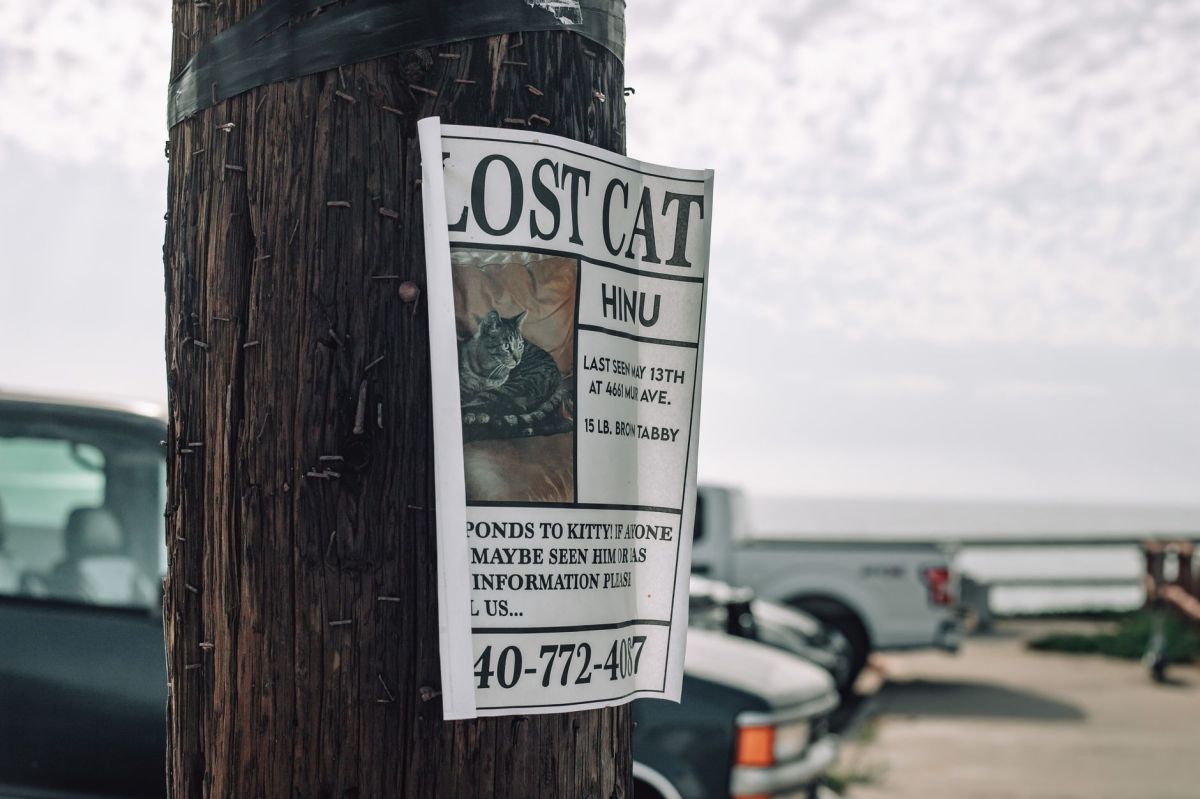
The formula is simple. Someone loses their beloved cat or dog and does all the right things, including checking with their neighbors, calling local shelters and posting on sites like Facebook and NextDoor.

A scammer sees the post, whips up a photorealistic AI image or video of the lost kitty or pup, then contacts the panicked owner with the “good news” that their little pal has been found. Look, here’s proof! Little Fluffy’s stretched out in a sun puddle in my backyard right now!
People are usually so overjoyed and so eager to get their furry friend back that red flags may go unheeded, especially if they’re not fully aware of what AI can do these days.
They want to believe because they want their pet back, so maybe they don’t balk at sending a reward via Paypal or an Apple gift card. Or maybe they agree to send the reward after they meet up with the finder and get their cat or dog back.
In a new story about found pet scams, the BBC outlines what comes next, and it’s not pretty: the scammer demands payment up front and threatens to kill, sell or dump the missing animal unless the desperate pet owner complies.
That’s what happened to Sarah Robinson, a Northampton, UK, woman who was contacted by a man who claimed he had her missing cat, Cookie. Robinson was sure she would get Cookie back when the man contacted her online and provided a photo of Cookie sitting by a window.
But when he demanded £40,000 (almost $54,000 USD) and Robinson refused, he told her he’d kill Cookie if she didn’t pay him. Even though her gut told her the whole thing was a scam, Robinson told the BBC she was “really, really worried” that she was wrong.
“It’s a very cruel thing to do,” she said. “It’s horrible, because you know it’s not real but you’re terrified it might be.”
Some scammers are crude and will heap abuse and threats on people who grow wary, but others are much more shrewd and know how to manipulate the fear and desperation of people who have lost companion animals they love.
That’s what happened to Bill Cosens, a Florida man who was contacted by a woman who said she’d found his missing beagle mix after the dog was hit by a car. The woman shared a photo of Cosens’ dog, Archer, on an operating table in an emergency veterinary clinic, which was generated using photos Cosens had shared online.
Now there was pressure and urgency. Archer needed surgery immediately, the scammer told Cosens, and the veterinarian was demanding an up-front payment of $2,800. If Cosens didn’t pay, the scammer told him, Archer would be euthanized.
It’s a much more sophisticated approach that relies on emotional manipulation and doesn’t give the victim time to think.
Indeed, another case detailed by the BBC involves a woman who had already retrieved her cat carrier and was ready to comply with a request for a reward when her daughters stepped in and told her it sounded like a scam.
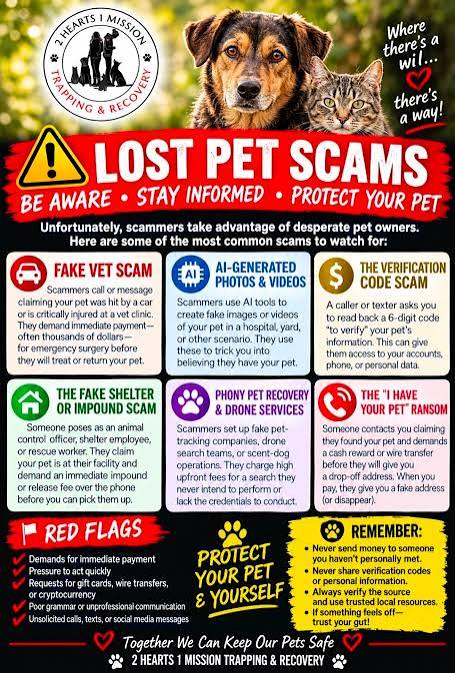
There are ways people can protect themselves, like withholding certain information (unique markings, scars, specific information included on collar tags, etc) and asking the “finder” about those details. People should always take a beat, attempt to set their emotions aside, and look at the communications analytically. Alternately, they could ask someone less emotionally invested – a friend, colleague or acquaintance – to look at the communication with a critical eye.
In some cases scammers will send veterinary bills or diagnoses, or pretend to be veterinary staff. Always take a close look at the documents, keeping an eye out for telltale signs of a scam including misspellings, poor grasp of English (many scams originate from overseas), misuse of veterinary terms, and details that don’t match any real-life veterinary practices, such as incorrect addresses.
If the person on the other end asks you for a verification code, it means they’re trying to access your online accounts. End the conversation immediately.
Always ask to meet in a highly visible public space with others around, and don’t send any money unless you see your pet in person. If the person refuses to meet, demands gift cards or payment up front, always refuse. Those are clear signs of a scam.
If there aren’t overt red flags but something still feels wrong, ask for additional confirmation. If someone really has your pet, it should be trivial to FaceTime and show you proof.
It’s always best to err on the side of caution. Your heart will scream at you to take action because who among us wouldn’t leap at the chance to be reunited with animals who are our best friends and part of our lives for years? But if your mind and your gut are telling you something different, exercise extreme caution. Hope alone won’t reunite you with your missing pal, especially not through a heartless person who never had your cat or dog in the first place.
If you’ve encountered a scammer, report them to the FBI’s Internet Crime Complaint Center at www.ic3.gov

