The famous feline embraces the role of a beloved tiger in a reboot of the Academy Award-winning film. Critics praised the casting, noting Buddy’s strong resemblance to Richard Parker.
LOS ANGELES — Buddy the Cat will star as the main antagonist in an upcoming remake of Life of Pi, Variety reported on Monday.
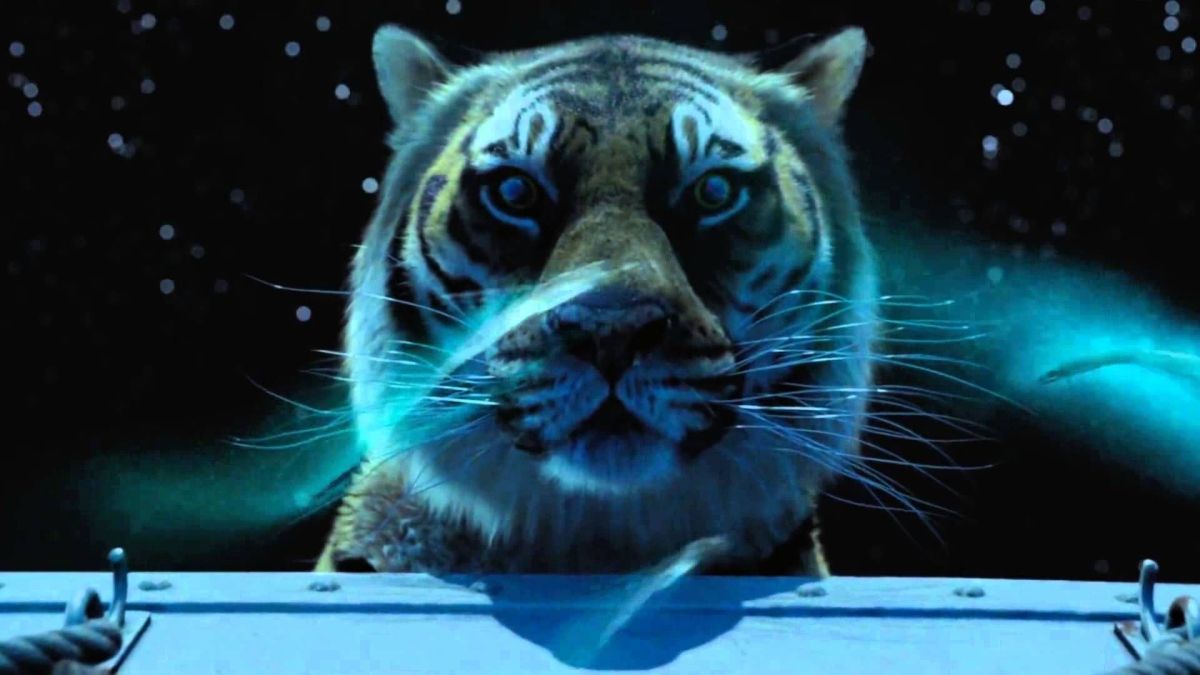
The silver tabby cat will pad into the role of Richard Parker, a Bengal tiger who finds himself sharing a small boat with a teenage boy named Pi after they survive a storm that sinks their ship.
Alone, hungry and scared, Pi and Richard Parker must learn to trust each other as they drift west with no land in sight.
In one memorable scene from the 2012 original, a gluttonous Richard Parker hoards hundreds of fish while refusing to share with Pi.
“A lot of people think Richard’s being greedy,” Buddy said, “but put yourself in his paws. You can’t get turkey out there. Pi isn’t exactly volunteering to open cans of the good stuff. It’s a cat eat fish world.”
(Above: Buddy the Cat as Richard Parker is “indistinguishable” from the original character, the movie’s casting director says.)
One of the most memorable sequences involves the duo drifting toward an island paradise under the stars as the ocean glows a bioluminiscent blue. The scene takes on a trippy quality as boy and tiger hallucinate tasty, juicy fish paddling lazily through the night air.
“As an actor, you embrace the challenge of imagining all these scrumptious, decadent fish and, you know, your stomach just rumbles,” Buddy told an interviewer.
The silver tabby said the film is helping him grow as an actor.
“When my agent sent me the script, I thought ‘Life of Pie?’ You know, I like pie. Shepherd’s pie, chicken pot pie, paella, steak and guiness pie,” he said. “So to prepare for the role, I ate a lot of pie.”
Service animals and emotional support animals are not the same thing.
A Quiet Place: Day One stars Lupita Nyong’o as Samira, a terminally ill woman, and Joseph Quinn as her nurse, Eric.
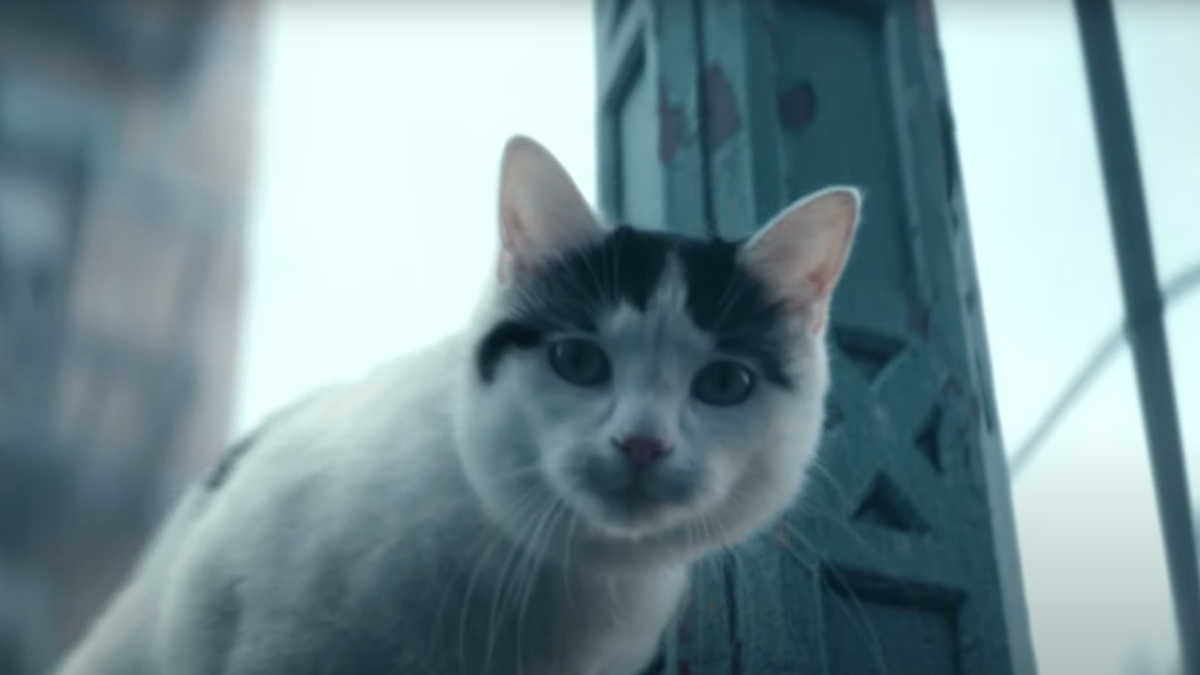
But it’s the third main cast member — a feline named Frodo — who’s been hailed as the surprise star of the film, which one reviewer called “a love letter to cat owners.”
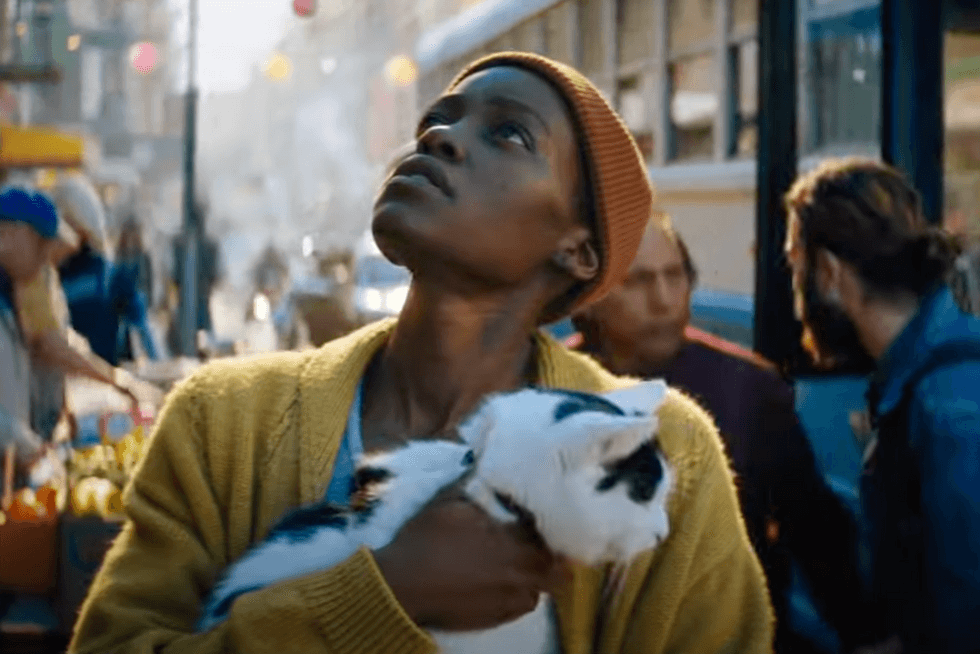
Nyong’o’s Sam has been given the equivalent of a death sentence with her aggressive cancer diagnosis, but when the nightmarish creatures who play the antagonists of the Quiet Place franchise arrive, Sam fights for her life with her trusty “service cat” by her side.
“You can’t have a cat in here,” the clerk at a bodega tells Sam early in the film, before she fixes him with a no-nonsense stare and flatly declares: “He’s a service cat.”
The adorable Frodo, co-star of A Quiet Place: Day One.
You’ve probably heard stories or seen photos of people trying to take other animals into places they’d normally never be allowed. In 2019, a woman decided to push the boundaries by taking a miniature horse onto a domestic flight, forcing passengers to share extremely limited space with the olfactorily potent, skittish animal. She even scolded social media users who didn’t get the horse’s pronouns “correct.” (They’re she/her, by the way. We’re not making this up.)
The woman, who says she needs the horse because she suffers from PTSD, told Omaha, Nebraska’s KMTV that the managers of a grocery store allegedly violated her rights by asking her to leave rather than allow her to march a horse through a place where people buy food and its operators are required to follow Department of Health rules.
“I was treated so poorly and the manager’s responses when I followed up were poor,” she said. “They are going to be hearing from the Department of Justice and I’m definitely going to be pursuing legal means as well.”
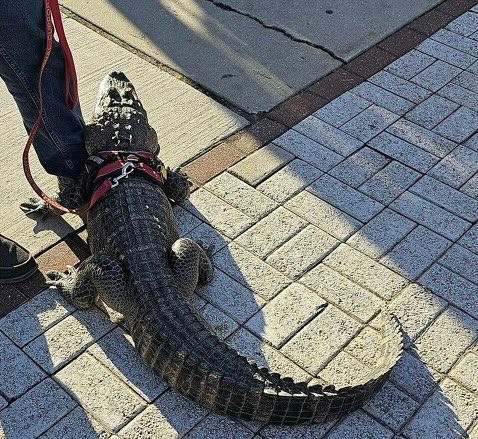
In 2023, a man tried to take a “service alligator” to a Phillies game at Citizens Bank Park. Stadium security weren’t buying it and he was turned away, but not before other fans snapped photos of the attempt. In Nevada, a man who had his USDA license revoked for “multiple violations of the Animal Welfare Act” argued that authorities couldn’t confiscate his 10 tigers because he claimed they are emotional support animals.
“My doctor has written that she feels that the tigers are beneficial to my psychological well-being and so therefore I got what the law requires,” Karl Mitchell told KTNV, an ABC affiliate in Las Vegas.
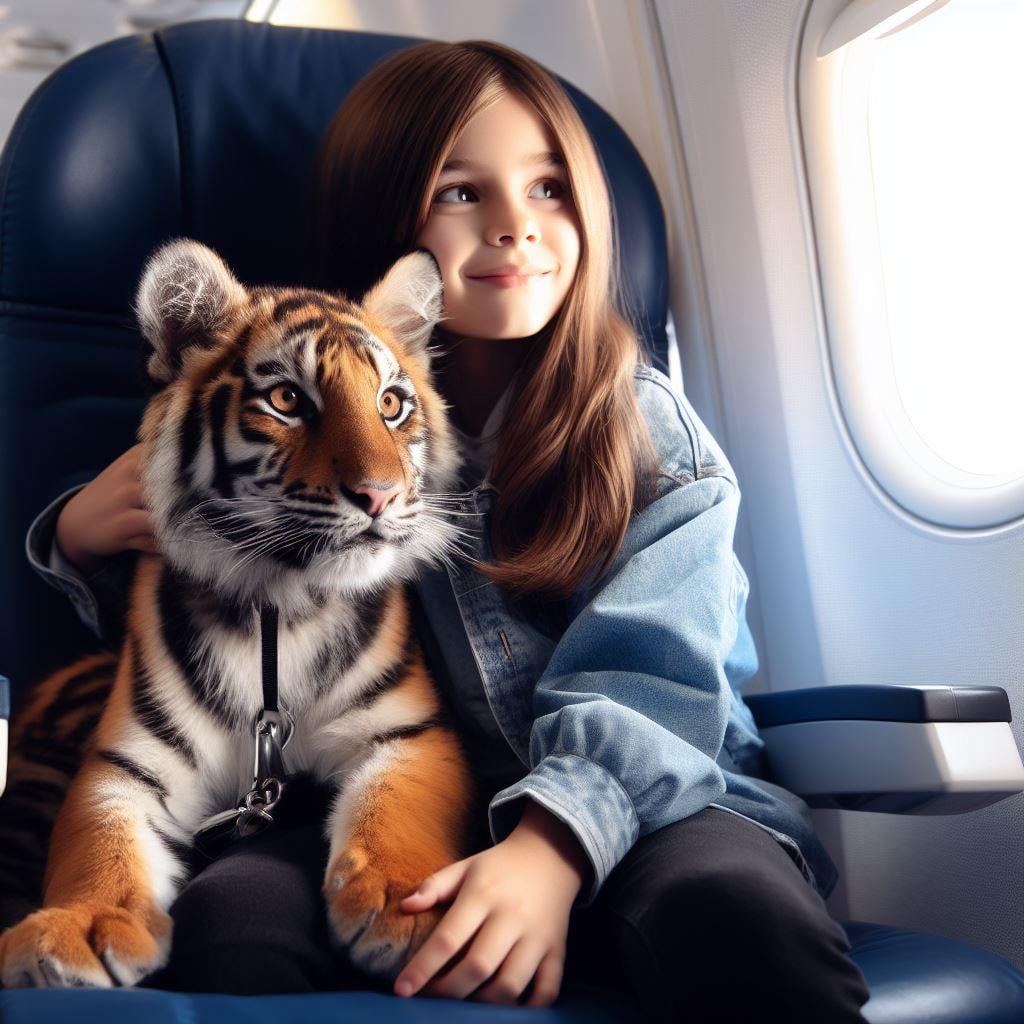
An emotional support tiger depicted in a Reddit photoshop contest for the most ridiculous “service animals.” Maybe some ambitious dreamer will cook up a service elephant or an emotional support bison.
Since then the FAA and Department of Transportation have issued new rules clarifying emotional support horses, peacocks, flying squirrels, parrots and other animals are not allowed on planes, prompting one flight attendant to quip that “The days of Noah’s Ark in the sky are over.”
That, however, has not put a dent in the confusion over what constitutes a service animal versus an emotional support animal, and what rights people have when it comes to bring their furry (or scaly, or feathered) friends into public and private spaces.
Although we’re happy to see Nyong’o in her first lead role since 2019’s freaky horror thriller Us, unfortunately A Quiet Place: Day One is almost certain to contribute to that confusion with its fictional “service cat” character.
A service animal and an emotional support animal are not the same thing
First, there’s an important distinction between a service animal and an emotional support animal.
Service animals can only be dogs or miniature horses, and must be trained. People who depend on service animals can train them themselves, but the animal must meet specific needs, like guiding the blind or vision-impaired.
Emotional support animals, by contrast, are not trained, certified or “official” in any capacity. Anyone can adopt or buy an animal and call it an “emotional support animal.”
A Phillies fan’s “emotional support alligator.” The stadium turned him and his carnivorous apex predator companion down. Credit: Howard Eskin/X
Unfortunately due to the confusion involving service animals vs ESAs, predatory sites have popped up online promising to “officially register” ESAs for a fee.
In addition to charging for something that doesn’t exist, the proprietors of those sites also tell people they can take their “officially registered” support animals into places normally off limits to pets, like stores and restaurants. Some sites offer consultations with alleged mental health professionals who will “diagnose” customers remotely and write letters on the customer’s behalf.
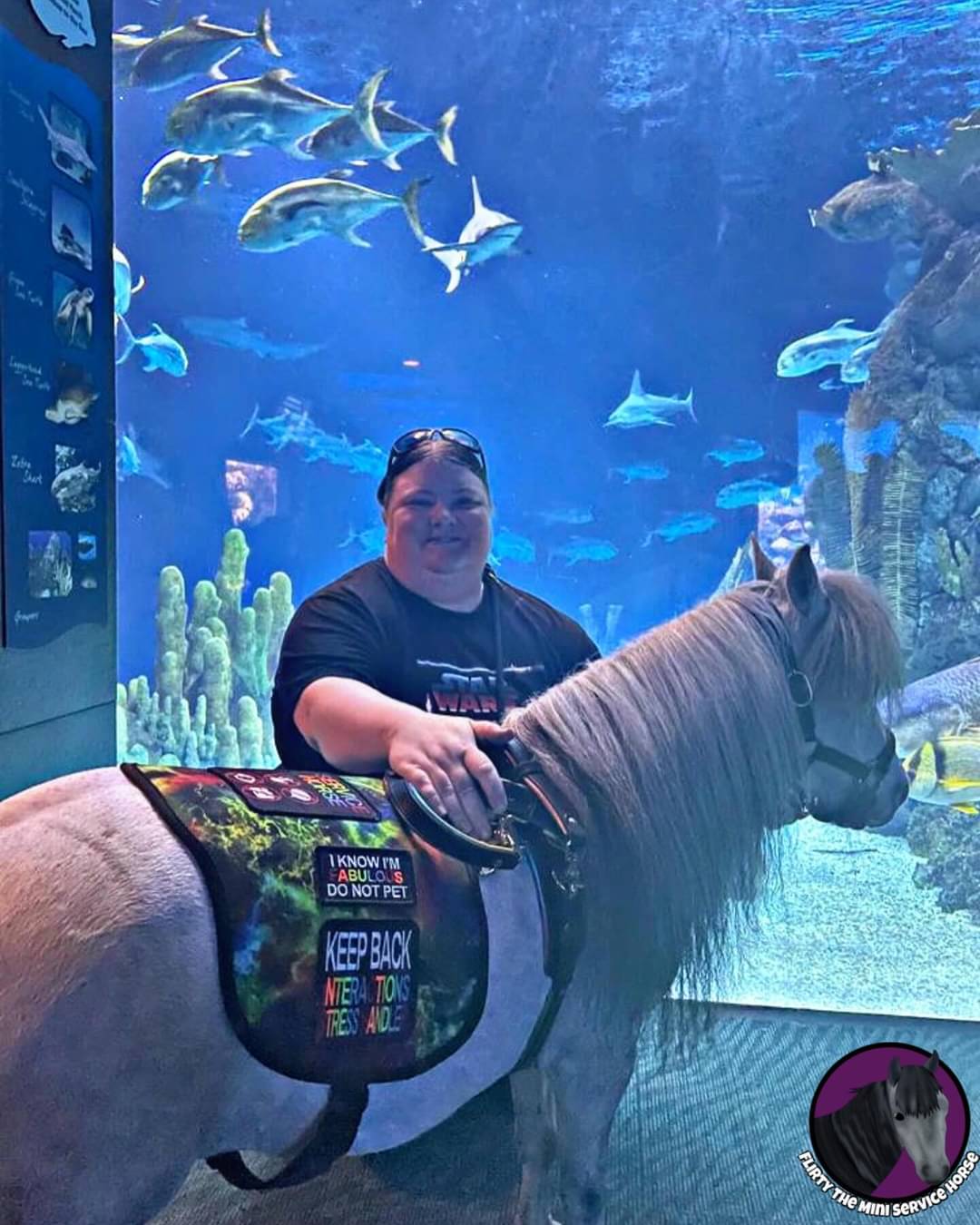
Abrea Hensley with her miniature horse, Flirty, in an aquarium. Hensley’s social media accounts document all the places she goes with the animal.
Those sites operate similar to the numerous “buy a star” sites that claim celestial objects can be officially owned. Like their emotional support animal “registry” counterparts, the star sale sites offer official-looking paperwork, but they’re selling something that can’t legally be sold, and the certificates are legally and practically meaningless.
Buying a “certification” won’t make your cat a service feline, and contrary to how they’re portrayed in the movie, calling a pet an emotional support animal does not allow you to bring it anywhere you like.
For legal purposes, there’s only one perk to be had by claiming an emotional support animal: under the Fair Housing Act, landlords generally cannot refuse tenants who have emotional support animals. The act specifies that allowing emotional support animals is limited by “reasonable accommodations.” That means a dog or a cat is okay, but you can’t keep an animal that poses a danger to your neighbors, negatively impacts their quality of life, or requires the landlord to make major and costly alterations.
The general trend in recent years has involved curbing the limits of emotional support animals, a trend that appears likely to continue as more people abuse the privilege, burdening other members of the public by insisting they must silently endure the inconvenience, potential allergic reactions, sanitary concerns and practical problems caused by bringing animals into spaces that are not designed to accommodate them.
While we’re certainly sympathetic to pet owners — this blog wouldn’t exist if we were not — the fact is that the more people abuse societal boundaries with emotional support animals, the more difficult it makes things for people who have legitimate service dogs and rely on them to navigate life and maintain their independence.
Note: This post has been updated to further distinguish between service animals and emotional support animals. An earlier version contained a paragraph with potentially confusing phrasing.
h/t Susan Mercurio for pointing out that emotional support animals are coveted by the Fair Housing Act
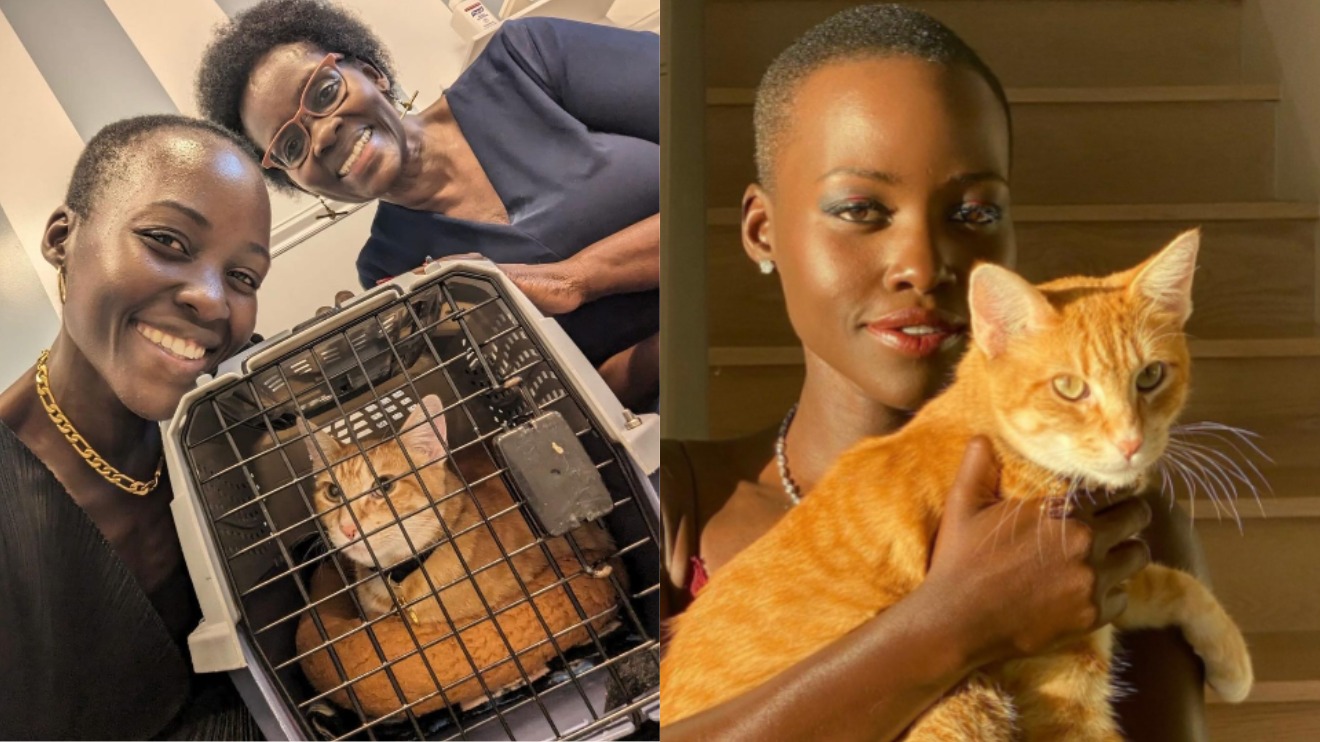
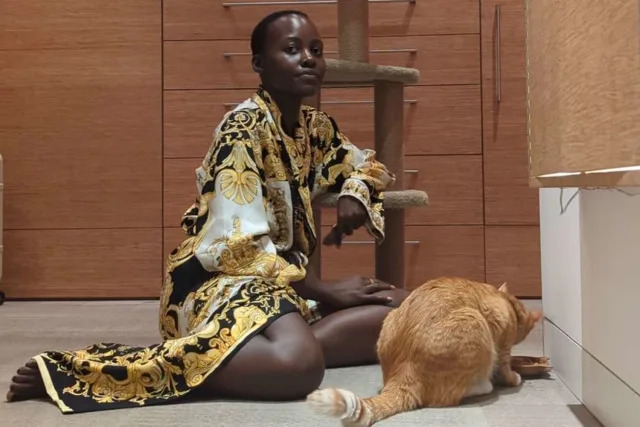
Lupita Nyong’o not only shares the screen with a feline co-star in the new film A Quiet Place: Day One, she’s also a devoted cat mom to a ginger tabby named Yoyo.
Although I haven’t seen most of Lupita Nyongo’s movies — I really liked her performance in Us and her voice work in Disney’s Jungle Book remake — I’m a big fan now that I know she’s a cat lover.
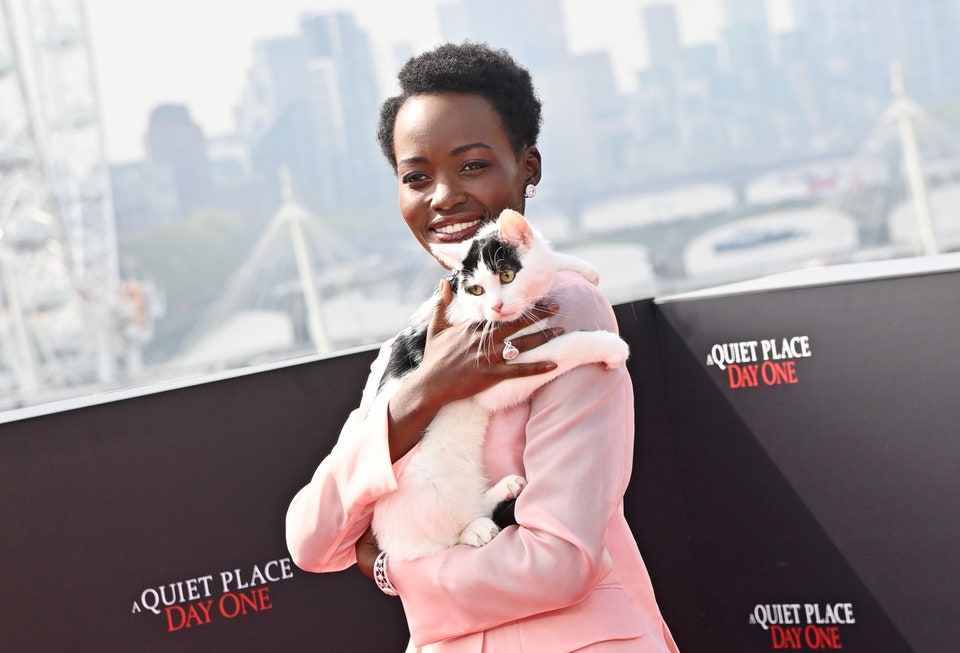
Nyong’o took to the red carpet for the premiere of her newest film, A Quiet Place: Day One in London on Wednesday, and her plus-one was a cat named Schnitzel, who also stars in the movie. Photos show Nyong’o posing along co-star Joseph Quinn, smiling as she cradles Schnitzel in her arms.
Lupita Nyong’o with her cat, Yoyo. In addition to posing with a cat on the red carpet premiere of her new film, Nyong’o proudly dotes on Yoyo and mentions him often. Credit: Lupita Nyong’o/Instagram
A Quiet Place is a 2018 film about a family that lives a completely silent life on a farm after the civilization has fallen to monstrous creatures that can’t see but are exceptionally sensitive to sound.
The film received nearly universal positive reviews for its use of sound — and the complete absence of it for long stretches — as a tension-building device, and a 2020 sequel continued the story.
Day One, which hits theaters on June 28, promises audiences a look at how the creatures appeared and civilization collapsed.
Schnitzel’s role isn’t entirely clear, but if it’s anything like 2022’s Prey, cats will fill their usual niche as predators, highlighting the difference between terrestrial and extraterrestrial hunters.
Caring for a cat in a world like A Quiet Place could be a double edged-sword: a super vocal cat like my Buddy wouldn’t last very long unless he quickly learned to keep a lid on his constant commentary, but cats are also incredibly sensitive to things that pass beneath the notice of us humans.
Thanks to their incredible hearing, exceptional sense of smell, the advantage of an extra olfactory organ and whiskers that pick up even the slightest stirring, felines are keenly aware of their surroundings.
As for Nyong’o, while Schnitzel is not her cat, she’s the proud cat mom of Yoyo, an orange tabby she fostered in late 2023. It only took her three days of fostering the little guy before she realized “I could not give him up,” she said last year shortly after the adoption was made official.
“I never understood people whose phones were full of photos and videos of their pets — now I am one of those people,” she wrote when she adopted the tabby. “It may look like I saved Yoyo, but really, Yoyo is saving me.”
Lupita Nyong’o with Yoyo. Credit: Lupita Nyong’o/Instagram
The director was very specific about the way his cats should be treated in his absence.
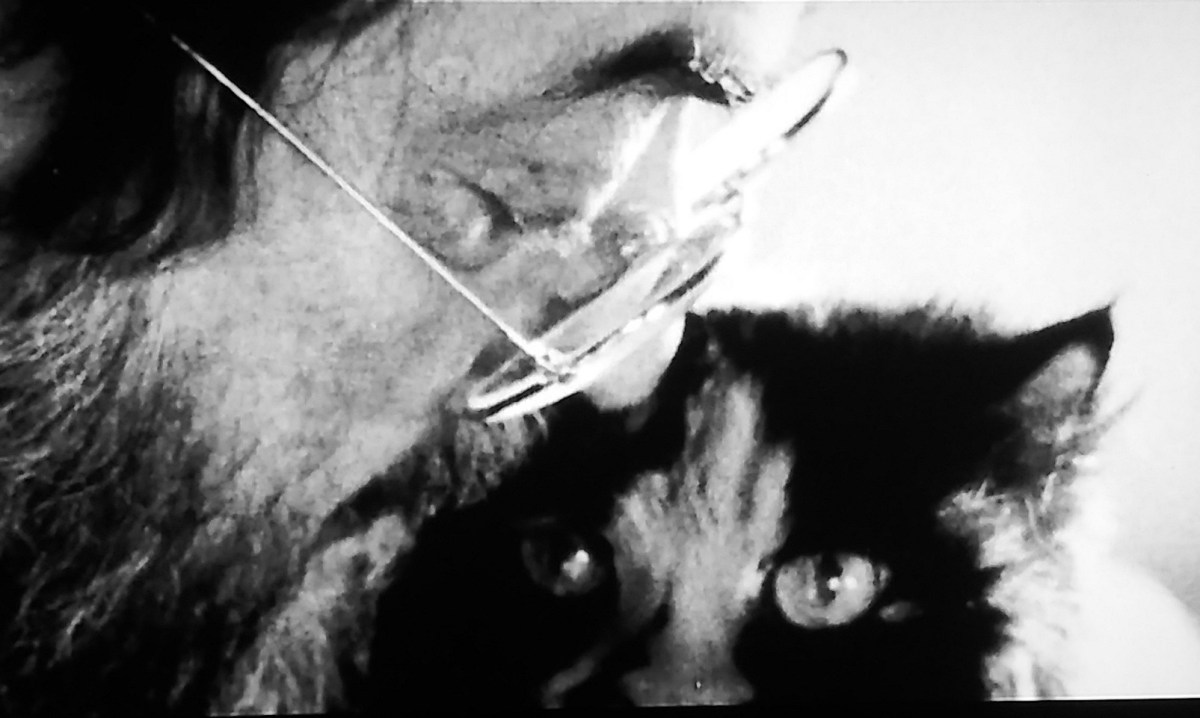
Stanley Kubrick was so particular about his cats, he created a 15-page guide to caring for the beloved felines while he was away making films.
Kubrick, who is considered one of the greatest film directors of all time, was a homebody and recluse — when he wasn’t working behind the camera — whose eccentricities have been documented in books and interviews over the decades.
Of course having cats isn’t an eccentricity, but Kubrick was very particular about how his pride of house lions should be treated, how they should eat and drink, and how their behavior should be monitored.
His lengthy instruction booklet detailing the particulars of their care had at least 37 sections!
His daughter, Katharina Kubrick-Hobbs, said the guide was titled Care Instructions: How To Look After The Animals, and the director left a version of it behind when he went to Ireland to shoot 1975’s Barry Lyndon. The 37th item dealt with breaking up potential fights among the kitties, Kubrick-Hobbs recalled:
“When we went to Ireland on Barry Lyndon, he left this 15-page document, Care Instructions: How To Look After The Animals. And the 37th instruction is: ‘If a fight should develop between Freddie and Leo–‘ and that was the father and son tomcats that we had– ‘the only way you can do anything about it is to dump water on them. Try to grab Freddie and run out of the room with him. Do NOT try and pick up Leo. Alternatively, if you open a door and just let Freddie get out, he can outrun Leo. But if he’s trapped in a place where you can’t separate them, just keep dumping water, shouting, screaming, jumping up and down, and distracting them, waving shirts, towels… just try and get them apart and grab Freddie.‘”
Kubrick died at age 70 in 1999 after a film career that spanned five decades, from 1953’s Fear and Desire, and 1960’s Spartacus starring Kirk Douglas as the eponymous warrior, to Full Metal Jacked (1987) and Eyes Wide Shut in 1999. One of his best-known works was 2001: A Space Odyssey, a 1968 collaboration between Kubrick and celebrated science fiction novelist Arthur C. Clarke. The film was groundbreaking for its realistic portrayal of space travel and exploration, and created a visual shorthand that still defines the genre today.
Stephen King adaptation The Shining (1980), Cold War black comedy Dr. Strangelove (1964) and A Clockwork Orange (1971) are among his most popular films.





 Pain In The Bud