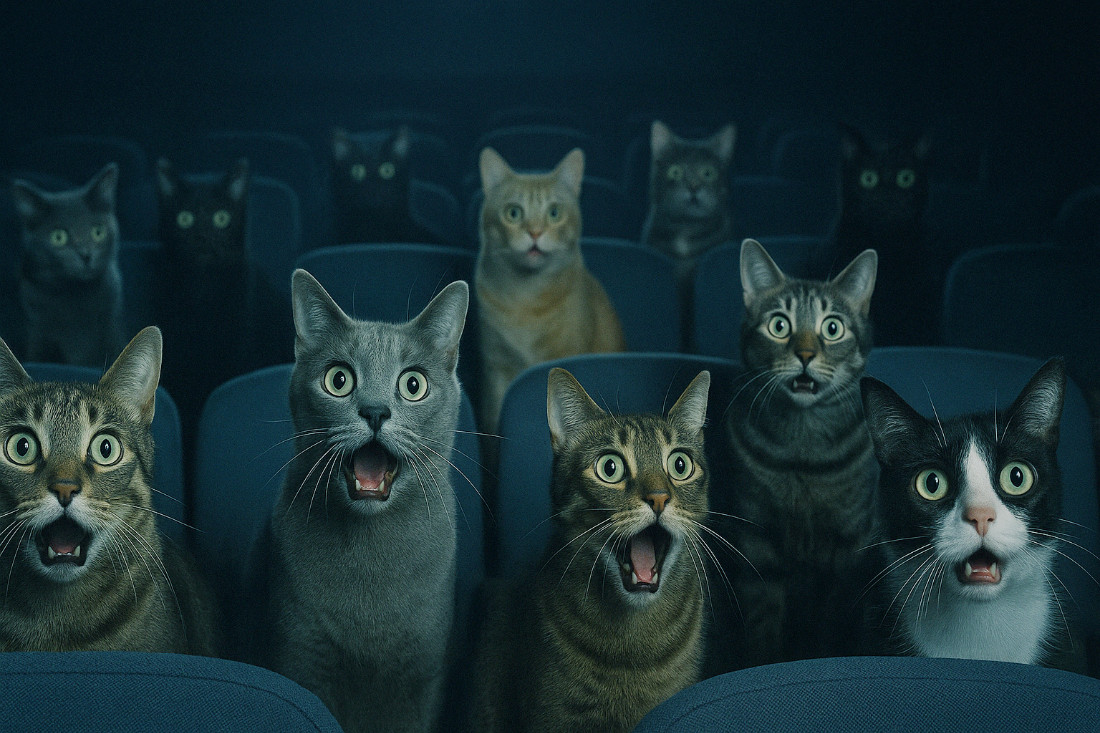
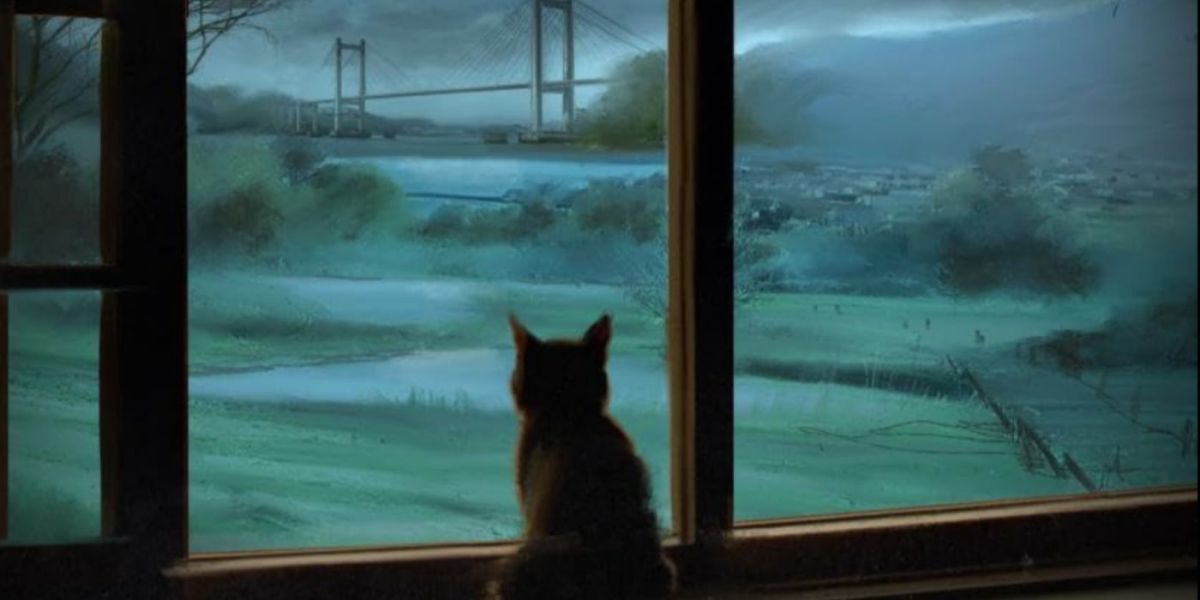
“I found myself subconsciously rationing my popcorn as I sat in the theater,” one critic wrote of the harrowing experience that is ‘The Empty Bowl.’
With a Rotten Tomatoes critic score of 94 percent and an equally enthusiastic reception by fans, Buddy the Cat’s directorial debut. “The Empty Bowl,” has already cemented his place among the modern masters of the horror genre.
The movie follows Dubby, a tabby cat from New York who awakens one day to find his human gone, and most horrifically, his food bowl essentially empty, with just a few morsels pushed to the sides of the ominously hollow container.
Time is measured in the growls of Dubby’s stomach and the lengthening shadows inside his domicile as a sinister score ratchets up the tension.
“Buddy the Cat presents a master class in exploring trauma via the absence of yums,” Associated Press critic Misty Lemire wrote. “We feel Dubby’s hunger as he carefully rations out his remaining pieces of kibble, made worse by the unknowns in front of him: when will Dubby’s human return? Will it be five minutes from now, or five hours? What if there’s nothing left in the cat food cupboard, and he has to go to the store? These are harrowing questions the audience is asked to ponder.”
The film “makes us feel Dubby’s hunger on a visceral level,” feline horror aficionado site YummyDisgusting noted in its review.
Indeed, test audiences indicated they “felt guilty” chowing down as they watched Dubby writhe with hunger.
“I found myself subconsciously rationing my popcorn as I sat in the theater,” New York Times critic Meowchio Mewkatani wrote. “How could I enjoy the buttery goodness in the bucket on my lap as Dubby’s stomach growled in excruciating Dolby surround sound? This is a film that really makes you stop and consider.”
The director told reporters he “wanted to tap into authentic fear, not the fantasy violence that often comes with genre cinema.”
“Obviously there’s something aesthetically primal about an evil, slobbering dog emerging from the shadows,” he said. “But I’m interested in pushing boundaries, not taking the well-padded path. The fear that our minds create is often much more terrifying than any trope.”
In one particularly brutal sequence, Dubby’s human returns home toting several heavy grocery bags, and the snap of a tin can of tuna opening is precisely timed to the crescendo of the orchestral score.
The camera focuses on the meaty morsels tumbling into the bowl, landing with saliva-inducing, moist thuds.
Dubby races toward the feast, his tongue comes within millimeters of the juicy tuna…and he awakes tragically in a cold sweat to find himself laying in a still-empty apartment rendered dark as the last of the sun’s rays disappear over the horizon.
“If that doesn’t hit you right in the feels,” Lemire wrote, “then you’re not a real feline.”
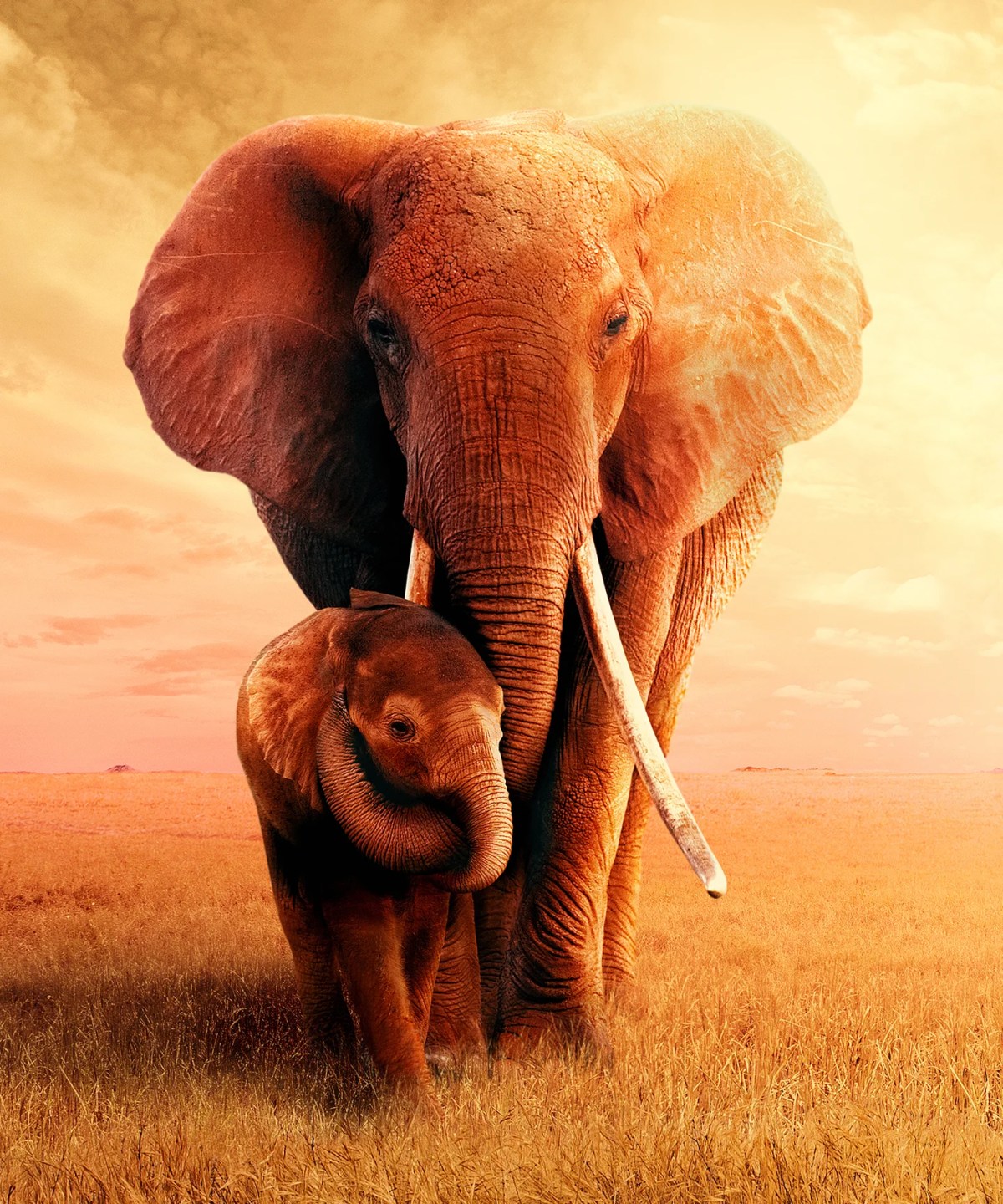
The filmmakers spent four years with matriarch Athena and her herd.
Athena learned the seasonal migratory path from sanctuary to sanctuary from her mother, who in turn learned from her mother, in an unbroken chain that goes back as long as elephants have walked the savanna we call the Maasai Mara.
Every bend, every life-sustaining water hole, every spot where the most nutritious plants grow — and especially the final resting places of her relatives, those who didn’t survive the long journeys to water and shade during drought seasons.
The 50-year-old matriarch, one of the Earth’s last “super tuskers,” has seen her family through so many difficult times that the members of the herd don’t question her even when her decisions could mean life and death for them.
She is their matriarch, and their trust in her is absolute.
During times of drought, all animals converge on the same watering holes. Credit: Apple TV
Athena is also the herd’s protector, which means being wary of humans is her default. It has to be, since humans have poached her kind to the brink of extinction to feed the insatiable Chinese ivory trade.
Filmmakers Victoria Stone and Mark Deeble spent four years with Athena and her herd while filming The Elephant Queen, and earning Athena’s trust was a laborious process.
At first, the wise matriarch wouldn’t let the documentary team anywhere near her family. That slowly began to change as they showed her they meant her no harm.
“But we could see that with her herd, with her family, she was a really calm, beautiful, temperate matriarch,” Deeble explained after a film festival screening of the documentary “And we would just spend time with her.”
‘Over the course of several weeks, Athena had allowed the small crew closer and closer, until they were about 40 meters from her. One day, Athena walked away to let her calf stand between her and the crew. That’s a rare occurrence for a mother.
“At that stage two things can happen,” Deeble said. “Either she can realize that it was a mistake, and if we’re in the middle of them we’re going to get trampled, or, and what I like to think happened, she was just testing us. Because after a while, she made a very low rumble and the calf looked up, and she wandered very calmly around the front of the calf. And from that day on, she allowed us amazing access.”’
The Elephant Queen first finds Athena’s herd during a time of plenty, when water and food are abundant, and the herd’s babies — curious Wewe, a boy, and little Mimi, a female and the youngest member of the herd — get to splash around and explore their new world.
Satao, a male “super-tusker,” arrives at the watering hole for hydration and to find a mate. Credit: Apple TV
But every year there comes a time when the water hole starts to dry out and the herd must begin a long march spanning more than 100 miles to reach a more reliable source of water.
The year Stone and Deeble began following the herd, the drought was so severe that Athena made the difficult decision to march for a far-off sanctuary, the closest known permanent water hole fed by an underground spring.
It’s a long, exhausting journey, and newborns can’t make it, so Athena is forced to delay their departure for as long as she can to give Mimi and Wewe enough time to feed and grow stronger.
Elephant calves are dependant on their mothers’ milk for two years. Credit: Wikimedia Commons
The gestation period for African elephants is about two years, and the entire herd is protective of the babies. The adults cooperate to shield them from predators and the sun, using their bodies to do both. They’re also extremely cautious around hazards like rapidly drying mud holes, which can trap young elephants.
The Elephant Queen’s stars are its titular species, but the documentary does an outstanding job not only showing us the other animals who inhabit the elephant kingdom, but also making clear the many ways those animals depend on elephants for their survival.
From geese, frogs and terrapins who rely on elephants to dig water holes, to dung beetles for whom elephant waste is a bounty, to kilifish whose eggs hitch a ride on the massive animals toward the next water source, the entire ecosystem is balanced on the broad backs of the gentle giants.
As narrator Chiwetel Ejiofor (Doctor Strange, The Martian, 12 Years ASlave) notes, elephants are tactile creatures, and when they nudge a terrapin or knock a frog off a tree branch, it’s curiosity, not malice, that motivates them. They’re herbivores, despite their enormous size, and gain nothing from harming other creatures.
Credit: Wikimedia Commons
It’s impossible to watch a documentary like this without looking into the eyes of elephants like Athena and wondering about the intellect behind them, the thoughts and emotions that motivate their actions.
In one scene, as Athena leads her herd through a parched landscape with nothing but dust and dead trees in every direction, she stops. There’s no water or food. There’s only an elephant skull, the remains of a family member who died on one of the treacherous journeys toward refuge during drought season.
The elephants crowd around the skull, gently running their trunks along its tusks the way they do every day to greet one another. Even with the body long since decomposed, with nothing but a skull remaining, they recognize one of their own.
Some will dismiss the idea that the elephants are mourning, claiming that ascribing emotions to animals is anthropomorphizing them. But if they’re not mourning, what are they doing? If they’re not remembering an individual they loved, why would they stop when it’s crucial to find water and food?
Indeed, the only other time Athena calls a halt is when one of her pregnant sisters goes into labor.
Credit: Wikimedia Commons
Documentaries like The Elephant Queen don’t exist solely for entertainment value. Despite intense efforts to protect elephants, poachers still kill an estimated 20,000 each year.
Just 100 years ago, 10 million elephants inhabited almost every corner of Africa. A 2016 study put their number at 415,000, and while there have been successes in conservation efforts, it’s difficult to ascertain whether they balance out the relentless poaching and habitat loss.
The Elephant Queen acknowledges threats to the continued existence of elephants, but doesn’t dwell on them. There’s good and bad to that: in some ways it’s a missed opportunity to galvanize viewers, but it also ensures the film is family friendly, without gore or violence. The film doesn’t sugar coat the fact that nature is unforgiving, but you’re not going to see a poacher raid on a herd.
The Elephant Queen is an Apple TV documentary and premiered on the streaming service after a limited theatrical run. I stumbled upon it as a subscriber after it appeared prominently in the app.
And while it was released in 2019, its message is still as relevant today. Whether you’re fascinated by elephants or appreciate wildlife in general, The Elephant Queen is a great example of how powerful documentaries can be, especially in transporting us to real places that exist in our world, but remain out of reach for the majority of us.
The animated feature about a cat surviving an apocalyptic flood has racked up awards and earned universal acclaim.
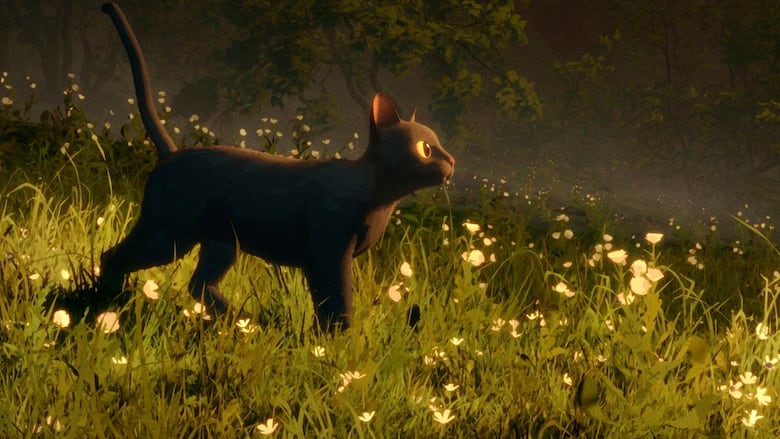
It’s been quite a year for Latvian animator Gints Zilbalodis and Cat, the star of Flow.
Their film won an Oscar for best animated feature film, racked up wins at the Golden Globes and smaller film festivals, became the most-watched film in Latvian history, snuggled its way into the hearts of audiences in the US, Europe and Asia, and enjoys incredibly rare universal accolades from critics and viewers alike, scoring 97 and 98 percent with each group respectively on film review site Rotten Tomatoes.
Now Cat has officially recognized his Oscar by doing precisely what his species loves to do. In a short video posted by Zilbalodis, Cat smacks the golden statue off the railing of his boat and onto the deck, to the annoyance of his lemur buddy.
In Nightbitch, Amy Adams stars as a woman who feels cheated by motherhood, so she reclaims her feminine energy by taking her rage out on her toddler and her cat, among other innocents. How brat is that?
In 2020, just after the height of the George Floyd protests, comedian Bill Burr hosted Saturday Night Live, and he was not kind to people who used the moment to complain about their minor misfortunes.
“Somehow, white women swung their Gucci-booted feet over the fence of oppression and stuck themselves at the front of the line,” Burr said. “‘My life is so hard. My SUV and my heated seats! You have no idea what it’s like to be me.'”
That’s Nightbitch in a nutshell, with some added animal and child abuse thrown in for good measure. And when I say “some,” I mean horrifically graphic, uncomfortably-long scenes depicting the murder and torture of animals and the total dehumanization of a baby.
Nightbitch was released as a book in 2021 to critical acclaim despite its risible plot, which says just as many unfortunate things about the publishing industry and media as it does about the book. (The US publishing industry was almost 80 percent white women in 2016, a survey found, resulting in a worrying lack of perspectives. The figures have remained similarly lopsided in the years since, and the industry’s output reflects that. Male readers are essentially ignored, as are women who aren’t of a certain socio-economic class.)
Nightbitch has now been adapted as a major motion picture, slated for a Dec. 6 wide release starring Amy Adams.
Adams plays a feminist and artist whose “art” involves butchering small animals on stage for audiences of over-educated NPCs stuffing themselves with fondue and artisanal fudge. (Think the modern art world isn’t quite so outrageous? Think again.)
Her art brings her adulation, but she wants more. She resents her husband for working too much, she resents her toddler for requiring too much of her time, and she resents her cat for seeking affection. None of the primary characters have names, because someone in the author’s MFA program said names are so out this season, so we get “son”/”the boy,” “woman”/”mother” and so on.
“Who ruined mommy’s life by existing? You did, didn’t you?”
Most people would be grateful they get to stay home and raise their kid in his formative years, especially in an age of almost mandatory two-income families when so many people struggle to put food on the table. Most people are enchanted by the love of a cat, and the indescribable feeling of cuddling up on the couch with a soft, furry animal who literally buzzes with affection.
But if you’re a graduate of Vassar and you think torturing animals is feminist art, that’s not the life you envisioned for yourself. The main character was told she could have it all, and she’s indignant that the world didn’t give her what she believes she deserves.
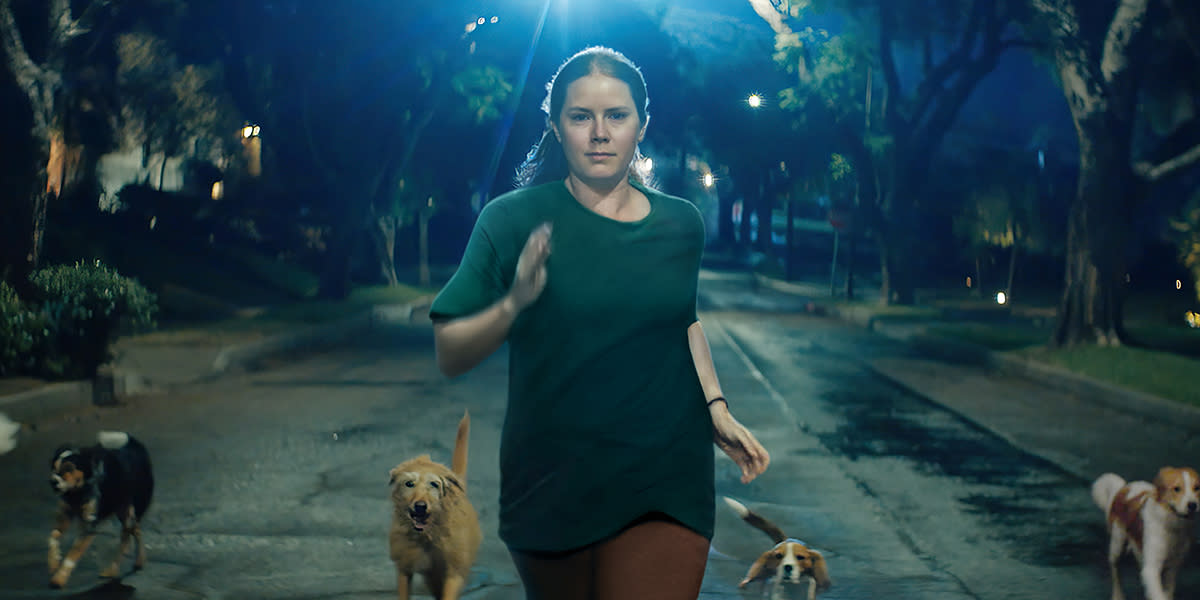
So while jogging through her neighborhood at night, she starts to transform into a feminist dog/werewolf thing.
She sprouts fangs, grows the beginnings of a tail, and notices tufts of canine fur on her back. She develops a taste for raw meat, and becomes a de facto pack leader as neighborhood dogs join her on her after-dark runs. Most of all, she unleashes her “nightbitch” energy, reaching deep within herself to find all the power she knew she had.
Yaaasss queen, slay!
What’s “nightbitch”? It’s never explained. How does the protagonist transform into a werewolf? We’re never told.
An actual scene from Nightbitch.
When we review movies with animal-related subject matter here on PITB, the first thing readers want to know is: does anything horrible happen to the animals? If I don’t address that in the review, I’m guaranteed to get emails and comments about it.
Nightbitch doesn’t just have elements of animal abuse. It glorifies and revels in it. It dedicates long, explicit passages to the butchering of innocent, helpless creatures. It makes the case that murdering animals is some sort of step on the way to feminist empowerment.
And yes, we can confirm the upcoming film adaptation’s cat murder scene, among other twisted elements, remains intact.
Nightbitch, which “explores the strange transformation of Adams’ character as she may be turning into a dog, generated laughter but also audible reactions during graphic scenes of tail-cutting, menstruating in the shower and the murder of a house cat,” Variety reports, noting the movie isn’t going over well with early audiences on the film festival circuit.
The fangs come out.
In this twisted world view, a cat and a baby aren’t pure innocents who deserve to be cherished and protected. They’re objects of resentment, the things holding Nightbitch back from the fabulous life of cocktail parties, jet-setting and art world acclaim that she believes is her birthright.
In this perverse universe, it’s “empowering” to put a dog collar on your toddler, exchange his crib for a kennel, feed him raw meat and have him drink from a bowl. He’s probably going to grow up to perpetuate the patriarchy, so what do we say to dehumanizing him? Yaaass, queen!
The film’s defenders, like their book counterparts, will doubtless argue that Nightbitch is part black comedy, so anyone who is disturbed by its subject matter is being a bore.
The problem is, the only laughs here are unintentional.
I’ll be surprised if the people involved in this film don’t suffer the ire of animal welfare groups even if no real animals were harmed in the filming. We already have enough problems with cruelty to animals in this country without movies and books promoting it as some sort of cathartic way to reclaim gender-based power.
Hardly a day goes by without news stories about pet cats who are killed or paralyzed for life by people shooting them with BBs, arrows or rounds from a real firearm. Cats are often victimized by men and women in domestic situations who try to hurt their spouses or partners by harming their beloved pets. People kill cats on a whim, for fun, for target practice. We’re talking about intelligent, loving, sentient, innocent creatures.
As for the child abuse content, it’s equally as depressing and horrific, but sadly I’m less certain it’ll result in condemnation. That’s the world we live in.
Nightbitch stars Amy Adams and Scoot McNairy, and is set to hit theaters on Dec. 6. It’s rated R for mature themes and graphic violence.
As the world ends, Manel doesn’t lose sight of his most important priorities: making sure his cat is safe and well-fed.
Shhhh, don’t meow!
With A Quiet Place: Day One and Apocalypse Z: The Beginning Of The End, it looks like the “protagonist and cat surviving the world’s end” thing might be a growing subgenre.
While Day One lit up theaters in spring and early summer, Apocalypse Z is a zombie flick out of Spain, currently sitting atop Amazon’s Prime Video charts as a major crossover hit.
It stars Francisco Ortiz as Manel, the owner of a small solar power business and servant of a talkative cat named Luculo. Manel’s brother-in-law works for the Spanish military, and as reports of a deadly and spreading virus hit the news, his sister relays privileged information from her husband warning Manel to hide during mandatory evacuation and find a way to join the family on the Canary Islands, where Spain’s military and civil leaders have fled.
After weathering the initial wave of the virus by huddling in his apartment in Galicia, Manel seeks out a way to make the 2,400km (about 1,500 mile) journey to safety.
One thing I loved about this movie was Manel’s absolute devotion to Luculo. When he tries to stock up at a store being ransacked by panicked locals, the first thing he does is grab cat food. When he finds a set of wheels at one point — a sporty motorcycle — he straps Luculo’s carrier securely to the back of the seat.
No matter how impractical, no matter how much danger it puts him in, Manel refuses to abandon his pal, even though the little guy can’t keep his mouth shut.
Manel with Luculo the cat in his carrier, strapped to the back of the motorcycle.
While watching Day One, all I could think about was how conveniently silent Sam the cat was, and how dead I’d be trying to survive with Bud in the same situation.
Luculo is incapable of being quiet, although he’s not as loud or insistent as Bud is. He’s named after the Roman statesman and conqueror Lucinius Lucullus, described as “the greatest glutton of antiquity, who stunned Rome with his lavish feasts” and his dedication to bringing recipes for the tastiest dishes from the provinces back to the capital.
“He came, he ate, he conquered” might be an appropriate motto for Lucullus, and his feline namesake is similarly food-obsessed, often seen scarfing down yums as if the apocalypse is just a minor obstacle between meals.
Manel refuses to leave his buddy behind, going to great lengths to keep Luculo safe as the world goes to hell around them.
Apocalypse Z isn’t a walk in the park, given the genre, but it’s significantly less gory than The Walking Dead, The Last of Us or even Zombieland. The film’s infected are Danny Boyle-style zombies, the terrifyingly fast baddies from 28 Days Later and 28 Weeks Later, rather than the slow shufflers of Romero-influenced productions. Accordingly, they’re much more dangerous and enable more intense action sequences.
Finally, because this is a cat blog and I’ll most certainly get emails and comments if I don’t address the tabby in the room: nothing terrible happens to Luculo. His greatest ordeal is having too many admirers, who are shocked to see a guy who’s survived so long with his pet cat.
Luculo does quite a bit of hissing at the zombies, who stand between him and his beloved yums.
Apocalypse Z: The Beginning of the End is the first part of a bigger story, as the title suggests. It rocketed to the top as the most-streamed movie in more than 90 countries, so we should be hearing news about a sequel soon.
If you’re a fan of genre movies and escapism, Apocalypse Z is a fun way to spend a few hours.
Apocalypse Z is available now to stream on Amazon Prime Video. The stream will default to an overdubbed version, but we highly recommend enabling English subtitles and switching the audio track to its original Spanish.