Radiation Cats: The Bizarre Idea To Turn Felines Into Living Nuclear Waste Detectors

How do you ensure people will heed warnings to steer clear of nuclear waste storage sites thousands of years in the future? One outlandish proposal involves genetically engineering domestic cats to glow in the presence of radiation.

Imagine you’re a person living five thousand years downstream.

Maybe civilization collapsed and restarted, maybe records were lost, or maybe like Etruscan, Harappan and proto-Elamite, the languages we speak today will be long forgotten.

At any rate, if you discover a forceful warning left by your ancestors from the deep past, would you understand it without translation or cultural context?

And if you’re the one tasked with leaving the message, how would you do it?

The message has to be enduring. It must be recorded in a format that will withstand the tests of time, conquest and natural disasters. The message must be comprehensible without cultural context, because we have no idea how language will shift in the future or whether our descendants will enjoy the knowledge that comes with continuity of records.

Lastly, the message must be both compelling and absolute in its meaning, because its content is vitally important: This site contains nuclear waste. Do not under any circumstances excavate or disturb the contents of this facility. It will lead to sickness, suffering and death.

The traditional trefoil warning sign is unlikely to scare anyone off. The new radiation hazard sign, right, seems unambiguous, but so do warnings on Egyptian tombs.

How do you phrase that in a way our naturally curious species will heed the message?

We certainly didn’t heed the warnings on the tombs of King Tut and other pharaohs. For all we know, humans of the future might believe the hidden chambers deep in Yucca mountain or buried 3,000 feet underground are filled with fabulous treasures and wonders beyond imagination.

They might interpret the warnings as superstition, meant to ward off looters, “grave robbers” and anyone else who might be motivated to break in. They might see the care and effort that went into encasing the objects and conclude there must be something very much worth preserving inside.

Or they might be driven by simple curiosity, as so many human endeavors have been.

A tour group visiting the incomplete Yucca Mountain nuclear waste storage facility. Credit: Daniel Meyer/Wikimedia Commons

Arguments about how to warn the future are at least as old as the Manhattan Project (1942) and the first nuclear power plants (1954 in the USSR, 1958 in the US), but there weren’t serious efforts to come up with a plan until the 1970s, when scientists, historians and other thinkers began to engage in formal efforts to find a long-lasting solution.

Some of the ideas are boring, some are impractical, and some are absurd, like an idea to create a “garden of spikes” atop nuclear material waste sites, to discourage people from settling in the area or excavating.

Unfortunately, one idea that’s still being kicked around is the concept of the radiation cat, or raycat.

Knowledge and language may be lost to history, signage may be destroyed, physical obstacles may be removed. But one constant that has endured, that has seen empires rise and fall, and has existed long before Stonehenge and the pyramids of Giza, is the human relationship with cats.

They’re now valued as companions, but we still use them as mousers on ships, in heavily populated cities, in ancient structures and on farms and vineyards.

They’re embedded so deep into our cultural psyche that it would not be outlandish to think the archaeologists of the future may conclude the internet was constructed primarily to facilitate the exchange of images of cats.

Even the first high-bandwidth deep space transmission was a video of a cat, so in a very real sense, the dawn of a solar system-wide internet was heralded by an ultra high definition clip of an orange tabby named Taters, beamed back to earth from the exploratory spacecraft Psyche, which was 19 million miles away when it transmitted Taters on Dec. 11, 2023.

Consider also that the basic felid body plan — shared by domestic kitties, tigers, pumas, black-footed cats and the 37 other extant species — has barely changed in 30 million years, because cats are extremely successful at what they do.

In other words, cats aren’t going away, and domestic felines have a place in every human society.

So philosophers Françoise Bastide and Paolo Fabbri conceived of the “living warning” in 1984. The idea is to alter the genetic code of felis catus so that the animals glow or change color in the vicinity of nuclear waste, using minuscule levels of radiation as the trigger.

There are natural precedents for this, including bioluminescence and several species of octopus that radically change colors and patterns on their skin to evade predators.

The second component, once the genetic code has been altered, is the creation of folklore: songs, stories and myths that will endure through time, warning people to keep cats close, treat them well, and run like hell if they change color because it means something terrible, something evil beyond imagination, is nearby.

To ensure the folklore of feline Geiger counters endures, an idea by linguist and semiotician Thomas Sebeok would be incorporated. Although empires and states rise and fall, there’s one organization that has survived for 2,000 years preserving a unified message: the Catholic church.

Sebeok proposed an atomic priesthood, an order that would pass the knowledge down through generations, continually seeding culture with stories and songs of glowing felines.

Spent nuclear fuel rods are stored in on-site pools at the facilities where they were used, but pools are meant only as temporary storage solutions. Credit: Wikimedia Commons

If this stuff sounds wacky, that’s because it is. We won’t figure out a way to ensure a message is received and understood thousands of years in the future without considering some off-the-wall plans.

Of course messing with the genetic code of any animal raises serious ethical questions.

We don’t have the right to play God and tinker with the genetic code of extant species. We don’t fully understand the immediate consequences for the health and happiness of cats, and we know almost nothing about the long-term effects on the species.

I’d also argue that we have a special relationship with cats and dogs, one that exceeds any obligations we may feel toward our primate “cousins” or other non-human animals.

Cats and dogs have been living with humans for a combined 40,000 years. They have been molded by us, they are dependent on us, and all that time in human proximity has led to unique changes.

No animals on this planet can match them when it comes to reading human emotions. Our little buddies pick up on our emotional states before we’re consciously aware of them partly because of their robust sensoriums, and partly because as their caretakers, our business is their business.

A clip of a cat named Taters was the first data burst transmitted to Earth using NASA’s upgraded deep space network. Credit: NASA/JPL

We bear a responsibility to both species and the individual animals. It’s not just the fact that without them, our lives would feel less meaningful. It’s the indisputable fact that without them — without dogs who flushed out prey on yhr hunt and guarded small settlements, without cats who prevented mass starvation by hunting down rodents — we would not be here.

Cats and dogs play a major role in the story of the human race. We are indelibly linked. Their DNA is not ours to tinker with, and they are not tools we can repurpose at our convenience.

Thankfully the US Department of Energy has never endorsed the concept of raycats. While there is a website advocating for a raycat program and small groups around the world dedicated to its propagation, the interest is mostly academic.

The Raycat Solution, which maintains a site dedicated to the idea, has a FAQ which says its supporters are serious about its potential usefulness, but for now most experts see it as a thought experiment and reminder that the problem must be dealt with eventually. At some point NIMBY will have to yield to reality, and wherever the US ends up storing nuclear waste, it’ll need to be secured, sealed and marked.

The goal is for the message to endure at least 10,000 years, at which point scientists say the radiation will be minimal.

That’s assuming that the future holds the collapse and rebuilding of human civilization, or at least a technological backslide in which the majority of our species’ knowledge is lost.

We like to think things will be brighter than that and instead of glowing to warn people of danger, cats of the far future will be where they belong — with their human buddies, exploring new frontiers on starships with plenty of comfortable napping spots.

Header image depicts the Alvin Ward Vogtle Nuclear Power Plant in Georgia, the largest nuclear plant in the US. Image via Wikimedia Commons/NRC

[1] The nuclear waste storage facility at Yucca Mountain was initially funded and approved by congress in 2002, then was canceled and de-funded in 2011 after significant pushback from people who live in Nevada, along with their representatives in congress. Plans for the site have changed several times in more than two decades, leaving the US with no central, secure site to store nuclear waste.
Brave Kitty Ready For Forever Home After Recovering From Being Set On Fire, Plus: Ohio Looks To Ban Declawing

Pixie the cat fought for his life and he’s now almost fully healed. Meanwhile, in Ohio, lawmakers want their state to become the sixth to ban declawing.

Back in April, a woman spotted a group of kids literally playing with fire, and was horrified when she got closer and realized they had set a cat ablaze.

She took the cat from the little demons and rushed him over to the ACCT Philly, where the stray — now dubbed Pixie — fought for his life as veterinary staff treated him.

Now Pixie, who doesn’t harbor any ill will toward people and is an affectionate, loving little dude, is all healed up and ready for his forever home.

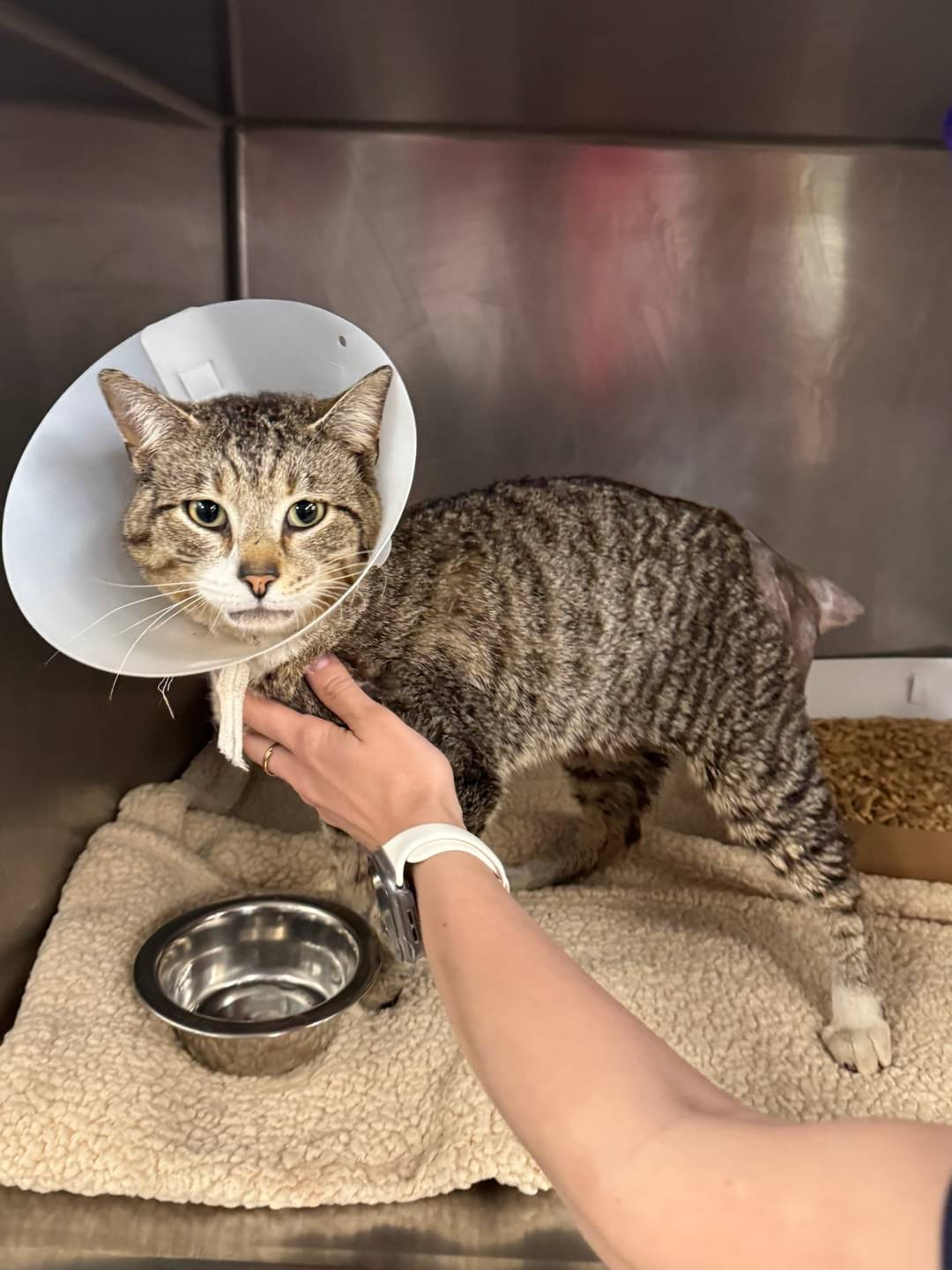
Pixie lost most of his tail and he still suffers from some incontinence episodes — which is to be expected, given the trauma he endured — but his fur has grown back, he’s healthy and he’s ready to be loved.

“Pixie’s story is hard to read. It breaks our hearts. But it’s the reality we fight every single day,” ACCT Philly’s staff posted online. “It’s why we exist – because no animal should ever face such cruelty, and every animal deserves a second chance at life.”

Pixie has recovered from his injuries and he’s ready to go to a good home. Credit: Pennsylvania SPCA

Pixie’s “spirit has been untouched” by his ordeal. If you live in the area and think you can provide a good home for the little guy — and exhibit the patience he needs with his ongoing issues from the cruelty he endured — visit ACCT Philly to fill out an adoption form. We hope Pixie gets a great home and lives his best life.

Another state looks to ban declawing

Our representaves in congress are too busy embarrassing Americans, staging Jerry Springeresque arguments in the legislative chambers and chasing TV cameras, so naturally they have no time for an insignificant issue like animal welfare.

But if they won’t act to bring our barbarian nation in line with the civilized world when it comes to banning the mutilation of cats, at least some state governments are doing what they can.

Ohio’s representatives are pushing for their state to become the sixth to ban the cruel procedure, after New York, Maryland, Virginia, Rhode Island, and Massachusetts. Washington, D.C., has also banned declawing, and a few dozen cities throughout the country have passed their own local prohibitions.

A bipartisan bill sponsored by a Republican and two Democrats has been introduced.

The usual villains in these efforts, the state’s Veterinary Medical Association, have trotted out the same tired arguments that declawing is “discouraged,” but shouldn’t be banned.

That argument doesn’t hold water when the veterinarians who hold VMA memberships are the types who offer package deals for kitten neutering and declawing. Not all or even most vets belong to state VMAs, and almost no veterinarians who specialize in feline care are members, but the vets who do support the group are the ones who see declawing as an income stream.

Their usual strategy is to call in favors from reps whose campaigns the group donates to, who in turn try to prevent declawing bans from ever reaching the floor for a vote.

After decades of successfully defeating such bans, the dam finally broke when New York passed its ban in June of 2019, becoming the first state to outlaw elective declawing.

We wish the bill’s sponsors, and their allies in local animal welfare groups, good luck in moving the legislation forward.

Review: Civil War Is A Warning To America

Alex Garland’s latest film is a road trip through the ruins of America as the nation is engulfed in a modern day civil war. It wasn’t so long ago that such a scenario would be unthinkable. Now we wonder if it’s an inevitability.

There’s a moment in Civil War when Kirsten Dunst’s world-weary photojournalist sits down in the ruins of a US industrial park, with tracer fire lighting up the night a few miles away, and turns to Stephen McKinley’s print scribe.

“Every time I got the photo and survived a war zone,” Dunst’s character tells him, “I thought I was sending a warning home: don’t do this. And yet here we are.”

In a movie that works on every level as a warning to the American public not to throw away what we have, what we take for granted, that one quiet moment feels like director Alex Garland speaking directly to the audience, making sure no one can miss the point. Don’t do this.

civilwar08
Dunst, left, and McKinley share a quiet moment in an industrial park as a battle rages a few miles off. Credit: A24

The sad truth is, the United States now seem more divided than at any other point since the original civil war. We’re dangerously close to the abyss, and the people dragging us there are the most ignorant of us. They’re the people who can’t tell you the name of their own congressman and can’t articulate what the three branches of government do (or even what they are), but insist everyone listen with rapt attention as they screech incoherently about politics and demonize those whose views differ.

They’re the people who return the zealots to congress, who populate the extremes and openly fantasize about purging the country of the ideologically impure.

Civil War: Dunst and Spaeny
Kirsten Dunst, left, and Cailee Spaeny in Civil War. Credit: A24

They’ve sworn fealty to ideology, abdicating their responsibility to think about things for themselves. Because, frankly, it’s easier to pick a pundit and an alignment, construct a filter bubble in which they never have to be confronted with a fact they don’t like, and be constantly reminded how they should feel about everything from petty culture war issues to conflicts happening a comfortable distance away. That way everything remains neatly in the abstract, and the consequences are someone else’s problem.

But not this time.

Civil War’s cast is phenomenal, but much of the film’s power comes from seeing the familiar become the horrific. Garland illustrates the banality of evil by taking his characters on a journey through the war-torn east coast, past shopping plazas cratered by rocket propelled grenades, waterways filled with bodies and playgrounds on fire. One highway overpass is vandalized with a spray-painted “Go Steelers!” while the bodies of two Americans sway on ropes beneath it.

Civil War: Go Steelers

In refugee camps in Pennsylvania and Virginia, people who could be our neighbors talk quietly around fires while their kids play with soccer balls and chase each other. The film’s main characters, a quartet of journalists trying to get to Washington, DC (where we’re told presidential loyalists shoot members of the press on the spot), marvel when they ride through one idyllic small town where people walk their dogs and hang out in coffee shops as if the country isn’t tearing itself apart.

It’s only when they stop to talk to the proprietor of a small shop that they realize the illusion of normalcy is maintained by an army of sharpshooters keeping watch from the rooftops.

Garland wisely stays away from the specific ideological reasons for the civil war in favor of showing us the fallout.

The president is on his third term. He’s authorized airstrikes on fellow Americans, imprisoned dissidents, put a bounty on journalists and hasn’t offered the public anything more than teleprompter-fed remarks in more than a year. But his authoritarian grip on power is finally fractured when two fed-up coalitions of states break away from the union. The more powerful of the two, the so-called WF (Western Forces), is extremely well-equipped: a shot of one of their camps shows F-35 Raptors, mechanized infantry and heavy lift helicopters.

civilwar01
Dunst’s character in a Western Forces camp. Credit: A24

These aren’t people living on the margins of society, armed with civilian versions of AR-15s. They’re US military, entire divisions defected in opposition to Washington with all the firepower and logistics capacity that entails. Separately, another secessionist coalition led by Florida is making its way up the east coast, seeking to turn the Carolinas and other states to their cause.

The noose is tightening around the president’s neck, even as he insists “the greatest military campaign in American history” under his command has defeated the secessionists, like Baghdad Bob in the Oval Office.

Civil War: Nick Offerman
Nick Offerman plays the authoritarian, three-term president who has ordered airstrikes on American citizens and had journalists executed. Credit: A24

As the Western Forces and Florida Alliance push toward D.C., there’s a renewed sense of urgency in symbolism. The president, Wagner Moura’s Joel says early in the movie, will be “dead inside a month.” Both coalitions are intent on reaching Washington and ending the war on July 4th.

“The optics,” Joel tells the other journalists, “are irresistible.”

Thus, the reporters decide to go after “the only story left,” which is to attempt to interview and photograph the president before he’s deposed or killed, despite the very real possibility they’ll be executed on the White House lawn before they can ask a question.

The film’s central characters are Dunst’s Lee Smith, a celebrated photojournalist who has seen it all, Moura’s Joel, the reporter who is partnered with Lee, McKinley’s Sammy, a reporter for “what’s left of the New York Times,” and Cailee Spaeny’s Jessie, a green but fearless 23-year-old who wants to be a war photographer like Lee.

Lee and Jessie meet at the beginning of the film in Manhattan, where both are photographing unrest as people crowd a disaster relief tanker, hoping to fill their containers with water. The fact that one of life’s most essential needs is no longer guaranteed, in New York City of all places, is just the first sign of how bad things have gotten.

Jessie moves in, snapping away as the crowd pushes toward the tanker and NYPD officers try to maintain order. When several people rush the tanker, Jessie gets hit in the face by someone swinging a bat.

Reeling, she stumbles away from the crowd, and Lee immediately mothers her, taking the young woman a safe distance away. She takes off her bright yellow press jacket and gives it to Jessie, then tells her: “If I see you again, you’d better be wearing Kevlar and a helmet.”

Civil War: Cailee Spaeny and Kirsten Dunst
Spaeny, left, and Dunst. Credit: A24

They do meet again, the next morning. Lee is surprised to see the younger woman in the back seat of their truck next to Sammy. Furious, she pulls Joel aside. He explains that Jessie had approached him late the previous evening, asking to tag along with him, Lee and Sammy on their trip to DC.

Joel argues that Lee was Jessie’s age when she began her career, but he’s not acting out of the kindness of his heart. He is a man, Jessie is a beautiful young woman, and he has ulterior motives.

Lee’s mouth twitches in disapproval. She sees this fresh-faced, naive 23-year-old, and sees herself before she’s become jaded from a career of documenting humans doing horrific things to each other.

Civil War would be a road trip movie, if road trip movies illustrated camaraderie by shared trauma. Pockets of violence are everywhere. Some involve presidential loyalists fending off advance elements of the Western Forces, but some are civilians who see an opportunity to kill, torture and pillage with impunity.

Dunst is magnificent as Lee, wearing the war photographer’s trauma like armor, her disgust with humanity apparent in her tired eyes. McKinley is the old-school print scribe who can’t quit, even as his body fails him.

“You’re worried I’m too old and too slow,” he tells Lee and Joel early in the film as they drink in the lounge of a Manhattan hotel, imploring them to let him accompany them south to D.C.

“You aren’t?” Lee answers.

“Of course I am,” he admits. “But are you really going to make me explain why I have to do this?”

Civil War: Wagner Moura
Wagner Moura’s Joel screams in frustration and rage after a particularly traumatic scene. Credit: A24

Here again, so much of the movie’s power is showing America in a state we only see from a distance through the dispatches and footage of war reporters. As the three of them sip their drinks in the hotel bar, waiting for their stories and photos to transmit over glacial wifi, the power drops.

“That’s every night this week,” Lee sighs.

“They’ll switch to the generators,” Sammy says.

They’re not in the shell of a formerly grand hotel in Baghdad or Damascus, relying on juice from old car batteries. They’re in New York, America’s greatest city, the cultural, media and finance capital of the world, a metropolis that operates on 11 billion watt-hours a day. A devastated, eerily quiet New York which resembles the early days of the COVID lockdown, yes, but New York all the same.

Civil War
A sniper is pinned down by a civilian who has taken advantage of the lawlessness and chaos to kill fellow Americans. Credit: A24

After watching Civil War, I was disheartened to see the usual rage and incrimination in discussions about the film. Depending on their political backgrounds, people are sure Garland — a native and citizen of the UK — is “a lib” or “a MAGAtard.” Opportunities for thoughtful discussion are derailed in favor of the usual talking point regurgitation.

But the hope is that the sensible are the silent majority, that we aren’t so fattened by domestic stability, security and a feeling of invincibility that we can’t see what’s right in front of our faces. We would do well to remind ourselves that the scenarios we experience only in the safety of fiction still happen all over the world.

As you read this, people are dying of exhaustion and suffering pointless deaths in North Korean and Russian hard labor camps so brutal that we don’t even have a way to place them in context. The people of Haiti are terrorized nightly by ultra-violent gangs who have filled the power vacuum, raping and executing with impunity. Gaza has been bombed to rubble, and its rubble has been bombed to sand. People hoping to escape abject poverty embark on the hard journey to America only to find themselves sold into sexual slavery. Men and women in Asia, desperate to find jobs, arrive at what they think are interviews only to be kidnapped and spirited away into compounds in lawless Myanmar, where they’re forced to sit in front of screens for 20 hours a day running “pig butchering” romance scams on lonely American retirees. If they try to flee, they’re shot.

And just yesterday, a man walked up to a golf course in Palm Beach county, pointed the muzzle of an AK-47 through the chain link fence and tried to assassinate a major party American presidential candidate — the second assassination attempt in three months.

The people who most need to hear Garland’s message are those least likely to heed it, but we can hope. Reality has a funny way of obliterating fantasy, and it’s better for all of us if our delusional countrymen don’t find out the hard way that war is neither fun nor glorious.

Let’s hope Civil War remains a movie, and not a prescient preview of things to come.

Civil War is currently streaming on HBO Max and is available to rent via Apple, Amazon and other online streaming platforms.

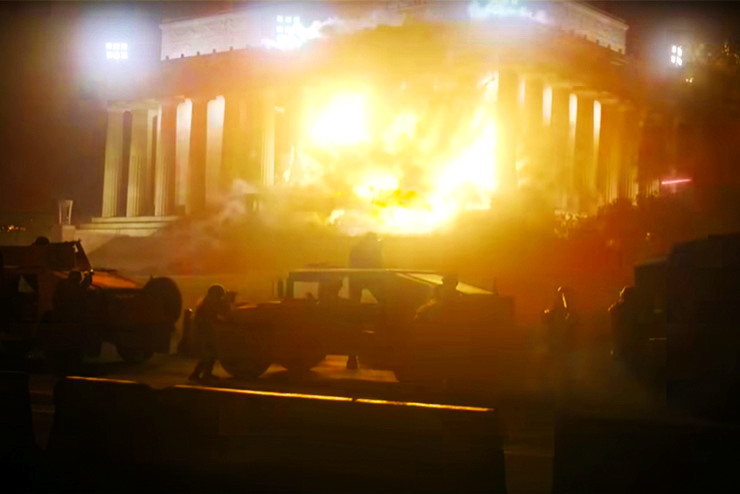
Header image: Western Forces units fire rocket propelled grenades at White House loyalists using the Lincoln Memorial for cover. Credit: A24

buddy_thebuddinesetiger

If you like reading content from PITB, please consider whitelisting us in your browser’s ad block. All proceeds from PITB go toward Buddy’s turkey fund.

George Santos Allegedly Stole $3,000 From Veteran Whose Dog Needed Life-Saving Surgery

The congressional clown show continues, but it’s not funny anymore — it’s just sad.

The George Santos story just keeps getting worse.

My first reaction to the initial New York Times story outing newly-elected New York congressman George Santos as a serial fabulist was surprise, then sadness because I knew his election was in large part made possible by the death of local news. If there’d been competent local media still operating in the area, Santos’ campaign would have ended as suddenly as it started in a flurry of revelatory news coverage, and Santos himself would have been a footnote, a political oddity and embarrassment to the local GOP.

Then for one glorious moment I thought maybe Santos was a performance artist, that we’d find out George Santos is the alias of some comedian or media provocateur whose congressional run was designed from the start to show that politics has become so polarized, so divorced from issues and hitched to ideological loyalties that even a widely disliked grifter — with no roots in the community and a completely fabricated resume — could win simply because he said the right things, pushed the right buttons and kissed the right behinds.

Alas, no Dax Herrera or Ari Shaffir came forward to claim credit for inventing the George Santos persona.

And it just kept getting worse. There were the stories about pending criminal charges for using stolen checks in Santos’ native (?) Brazil, former roommates who saw Santos on TV wearing expensive clothes he’d allegedly stolen from them, and Santos working as the director of a company under investigation for running an alleged Ponzi scheme.

osthoffsapphire1
Sapphire, veteran Rich Osthoff’s service dog.

The latest story might be the most infuriating: Santos is accused of stealing $3,000 from a homeless, PTSD-suffering veteran whose beloved service dog needed life-saving surgery.

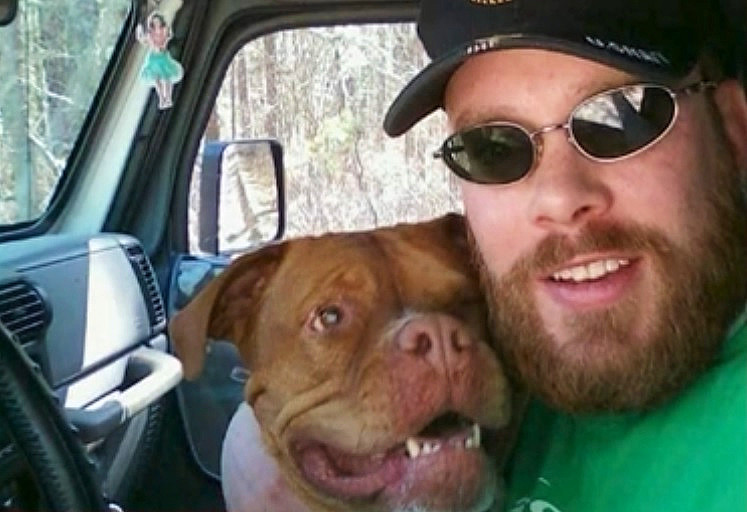
Rich Osthoff, who was living on the streets at the time, needed money to pay for veterinary surgery to remove a large and life-threatening tumor from his service dog, Sapphire. Osthoff says Sapphire was his lifeline during difficult times and he was desperate to get her the surgery she needed.

In 2016 a well-meaning vet tech and another veteran connected Osthoff with Santos, who claimed he ran a charity called Friends of Pets United and could help. At the time, Santos was going by the name Anthony Devolder.

Santos set up a GoFundMe drive for Osthoff and Sapphire, raised $3,000 with a tear-jerker of a plea, then basically ghosted Osthoff and his veteran friend Michael Boll, founder of New Jersey Veterans Network. After fobbing them off with a series of excuses, he stopped responding to their calls and vanished with the proceeds.

“It diminished my faith in humanity,” Osthoff said of the experience.

Santos denied the accusation.

“Fake,” Santos texted news startup Semafor on Wednesday. “No clue who this is.”

osthoffsapphire
Osthoff with Sapphire.

But dozens of other people besides Osthoff, Boll and the vet tech were involved and confirmed Santos’ role in the fundraiser, there are publicly visible tweets from 2016 linking to it — and crediting “Anthony Devolder” for running it — and GoFundMe acknowledged the existence of the drive.

In addition, news reports have confirmed Friends of Pets United, Santos’ “charity,” was never registered as a non-profit. Santos also defrauded an animal rescue group in New Jersey when he pocketed the proceeds from a 2017 fundraiser he ran on behalf of the organization, according to dozens of media reports. Santos was terse in his response to the accusations from Osthoff and Boll, but he was eager to talk about his non-existent pet charity during his campaign, when he claimed Friends of Pets United “saved” more than 2,500 cats and dogs over a four-year span and trapped and neutered more than 3,000 cats.

Santos’ lies are so numerous and so outrageous it’s difficult to keep track of them, and it’s doubtful he remembers all of them.

He claimed his mother worked at a financial firm at the World Trade Center and died in the 9/11 attacks, but Fatima Devolder left the US for Brazil in 1999 and never returned. She also never worked in finance. He claimed four of his employees died in the 2016 Pulse Nightclub shooting that claimed 49 lives. Santos never had any employees, his company didn’t exist, and he didn’t know anyone who died at the nightclub. He claimed ownership over an impressive and burgeoning real estate empire, but never owned any properties and owes more than $40,000 in back rent on a Queens apartment he shared with his sister for years. (His sister was also the recipient of a $30,000 FEMA handout and contributed a hefty $5,000 to his campaign, but still owes tens of thousands in back rent on the apartment, reports say.)

Rep._George_Santos_Official_Portrait_(cropped)
George Santos has refused to resign from congress despite calls from his own constituents, other lawmakers, figures in his own party and media commentators demanding his exit. Credit: Official congressional portrait

There are too many lies to list here, too much insanity to digest in one sitting, and it’s probably not good for the blood pressure to dwell on this weasel of a man allowing a homeless veteran’s service dog to die while pocketing the money raised for her surgery.

But we’re not done yet. We still don’t know how Santos bolstered his campaign with $750,000 of his own money, or where that cash came from. It’s not even clear if Santos is his real name, or if he’s actually a U.S. citizen, with some reports — like a New York Times story from last week — suggesting he may have married his former wife for citizenship.

While New York Republicans have been among the loudest voices to condemn Santos and demand he resign or be removed from congress, national party leaders haven’t made any moves to get rid of him — and have actually given him committee assignments — because they believe they need his vote in a slimmer-than-anticipated congressional majority.

As the lies keep piling up, the biggest question is: How long will this farce be allowed to drag on?

Buddy The Cat Elected Speaker Of The House In Surprise Vote

Buddy the Cat immediately instituted several changes to more accurately reflect congress as the clown show it is.

WASHINGTON — Buddy the Cat was elected Speaker of the House in a shocking twist ending to a week’s worth of drama over congressional leadership.

The tabby cat made history as the first feline speaker in congress after Republicans, frustrated with a failure to reach consensus over 15 rounds of ballots, threw up their hands and went all-in for Buddy.

“It became apparent that [California Republican] Kevin [McCarthy] wasn’t gonna get the votes he needed, and frankly I was tired of hearing Matt Gaetz and Lauren Boebert speak,” said Texas Republican Dan Crenshaw. “So we put our heads together, and we said, ‘Who’s got the savvy, the smarts and the muscle to lead us?’ And the answer just seemed so obvious. It could only be Buddy.”

The mercurial feline, whose priorities usually involve the procurement of more food, maintaining a steady nap schedule and terrorizing his human, was just as taken aback by the development as outside observers. Sources say he came around to the idea when he was told he’d be provided with a full staff of servants, could schedule legislative meetings around his naps, and could eat as much turkey as he pleases from the congressional cafeteria.

Buddy’s first hire was his human, who will be referred to as “chief minion” rather than the traditional “chief of staff.”

The new speaker also indicated he would create new committee assignments, and designated representatives Marjorie Taylor-Greene, R-Georgia, and Eric Swalwell, D-California, as the new fools — or jesters — of the incoming congress.

“Swalwell, don’t just stand there, juggle some bowling pins or something,” Speaker Buddy said during the first session, throwing a pencil sharpener at the California congressman for emphasis.

“Er, uh…yes, sir,” said Swalwell, who was wearing a green and purple suit and traditional clown makeup.

“Greene, get in there!” Buddy shouted. “I’ve got a space laser here and I’m gonna aim at at your feet. Dance! Dance, Greene, dance!”

buddyspeaker
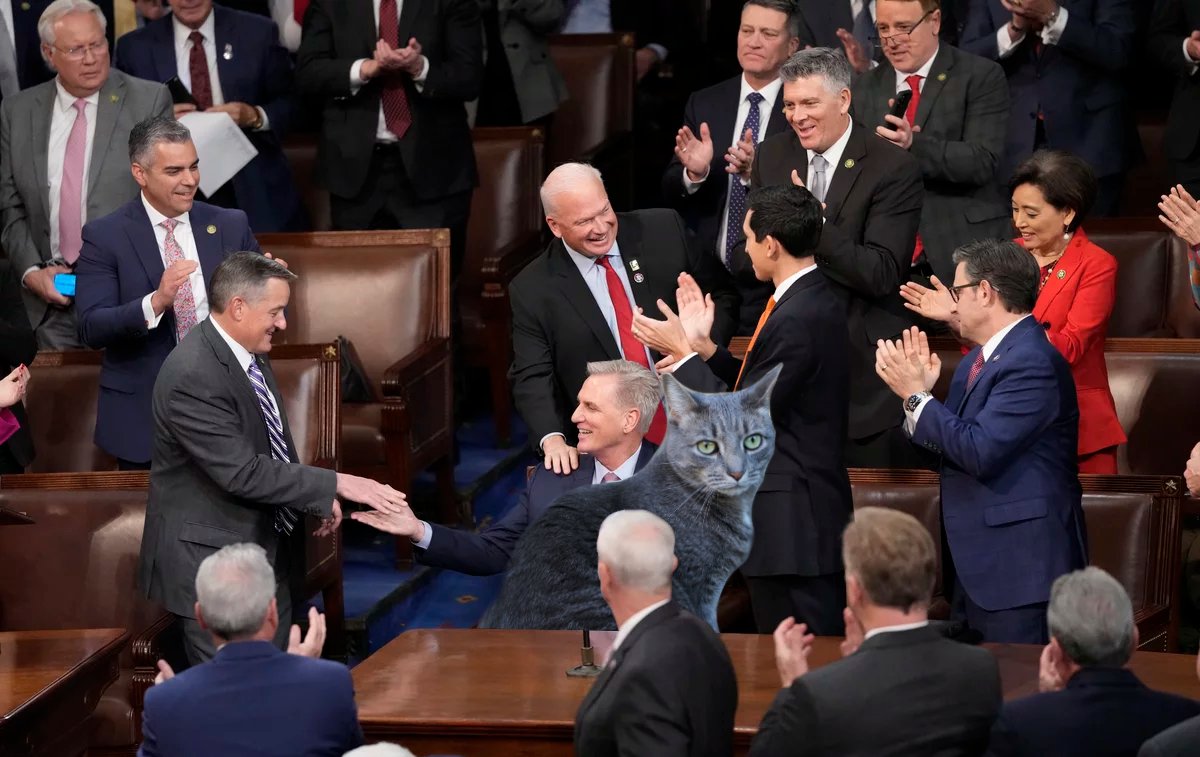
Buddy the Cat, center, sits on would-be speaker Kevin McCarthy after designating the congressman as his official cushion. (Note: Image to scale. Lawmakers are really small people.)

When former speaker Nancy Pelosi, D-California, expressed concerns about Buddy “besmirching this august body,” Buddy shushed her.

“August body? You’re telling me this is a legislative chamber? I thought it was a clown show. What do you see over there?” he asked Pelosi, waving a paw at newly elected fabulist Rep. George Santos.

The 19-term congresswoman, who first entered politics when Men At Work, Shalamar and Def Leppard were atop the music charts, looked at the New York Republican, who had been outed in recent weeks for lying about his educational background, work experience, ethnicity, religious affiliation and virtually every aspect of his life during his successful run for Congress.

“Er…a clown?” Pelosi asked.

Buddy stood up, ringing a bell on his desk and clapping excitedly.

“Winner winner, chicken dinner! A clown! Just like the rest of you!” He pointed to Santos. “Paint him up and put him with Greene and Swalwell, people, or you’re next.”

With a flourish, he collapsed back into his leather chair.

“Boebert!” he yelled, signaling the Colorado congresswoman-turned-cupbearer. “Turkey me!”

“Yes, sir!” Boebert said, cutting off a generous slice of roast turkey and feeding it to the speaker.

Buddy’s belch reverberated throughout the circular chamber.

“Now here’s what we’re gonna do,” he said, launching into what he called his Awesome 171-Point Plan for the De-Moronization of America.

greene2
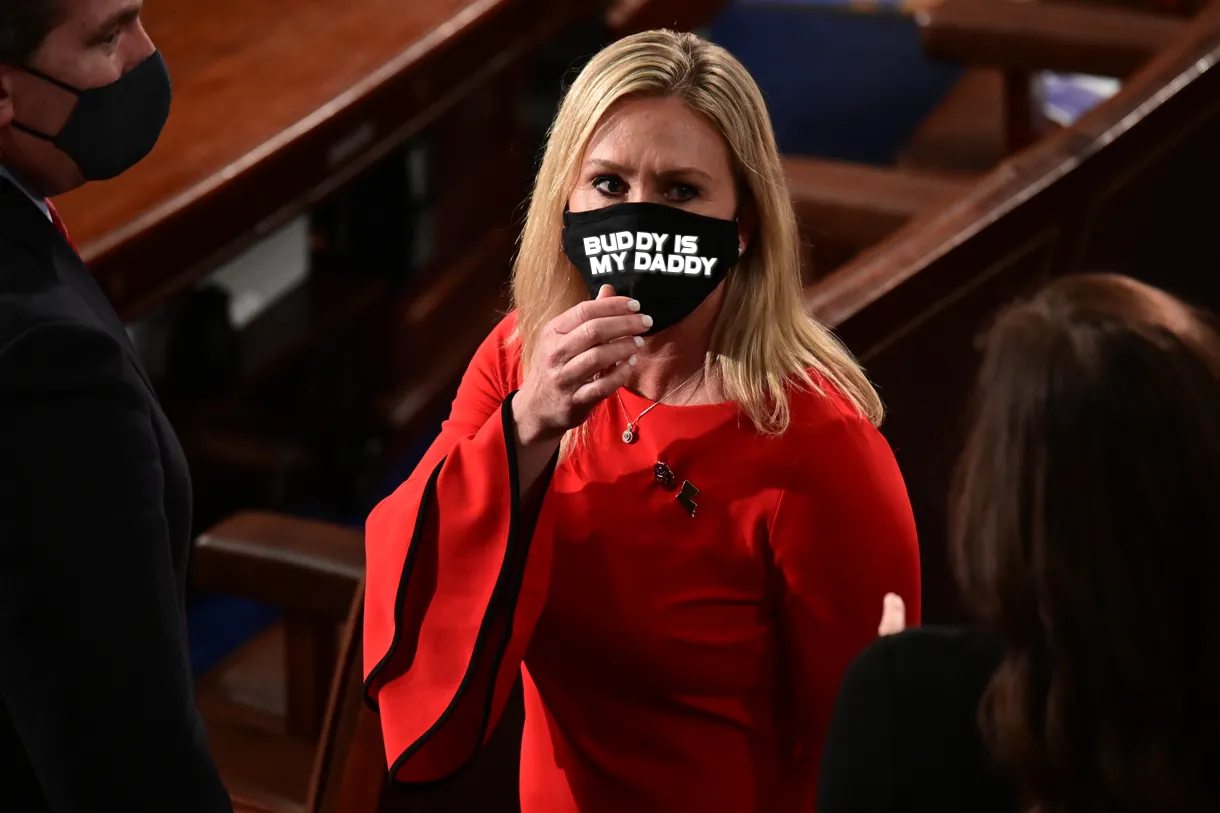
Marjorie Taylor-Greene, appointed along with Eric Swalwell as the new fools of congress.

Rep. Adam Schiff, D-California, stood up.

“Will the Speaker recognize…” Schiff began before Buddy cut him off.

“Tape his mouth,” Buddy said, nodding to capitol policemen standing watch.

“W-w-what?” Schiff said, backing up as officers approached him from either side. “What is the meaning of this?”

Buddy cleared his throat, theatrically donned a pair of glasses he didn’t need, and read from a pile of papers in front of him.

“It says here your office sent 14,734 requests to Twitter, to delete or ban messages and accounts that were critical of you or espoused beliefs you don’t like,” Buddy said. “Tsk tsk. Do you deny it?”

Schiff swallowed as the officers grabbed him.

“They were terrorists! It was stochastic terrorism!”

“So someone tweeting, and I quote ‘Adam Schiff is a poopie head’ should be banned from social media and reported to the FBI?”

Schiff’s eyes widened.

“Please, I…you can’t! I have powerful friends! Powerf…”

The assembled representatives broke out into a cheer as an officer pressed heavy masking tape over Schiff’s mouth, muting the California congressman.

“Buddy! Buddy! Buddy!” they chanted, stomping the ground rhythmically.

Speaker of the House
Buddy the Cat, center, presides over his first term as Speaker of the House.

As of press time, Speaker Buddy had demanded a bill outlining congressional term limits that must be on his desk by Monday morning, under penalty of Democrats and Republicans being forced to dress up as donkeys and elephants, respectively, for the remainder of their terms.

He also exiled Rep. Matt Gaetz to an island with Bill Cosby and Harvey Weinstein, designated Rep. Lauren Boebert as his cup bearer, replaced Rep. Maxine Waters’ chair with a dunk tank, and introduced legislation called the Awesome Weapons Emergency Shipment Of Magnificent Efficacy, or AWESOME Act, which would approve longer-range missile systems, turkey MREs and really cool tanks for Ukraine.

During a press briefing with reporters, White House spokeswoman Karine Jean-Pierre answered a question about Buddy’s speakership by saying President Joe Biden believes he can work with the formidable feline.

“Whether or not the president visits the border is irrelevant. Look, he knows how important secure borders are to the American…” Pierre began, before a reporter pointed out she was reading from the wrong response card. “Ahem. My apologies. What did they tell me to say here? Ah, here it is. President Biden congratulates Speaker Buddy on his appointment, and has offered an olive branch in the form of a gift basket filled with vintage catnip, toys and various treats. The president has always loved cats ever since he was a lion handler in the Congo back in 1962, when he was known to the locals as Rafiki Joey from Scranton. He believes he can work with the Speaker on legislation that will benefit the American people as well as the Americats.”