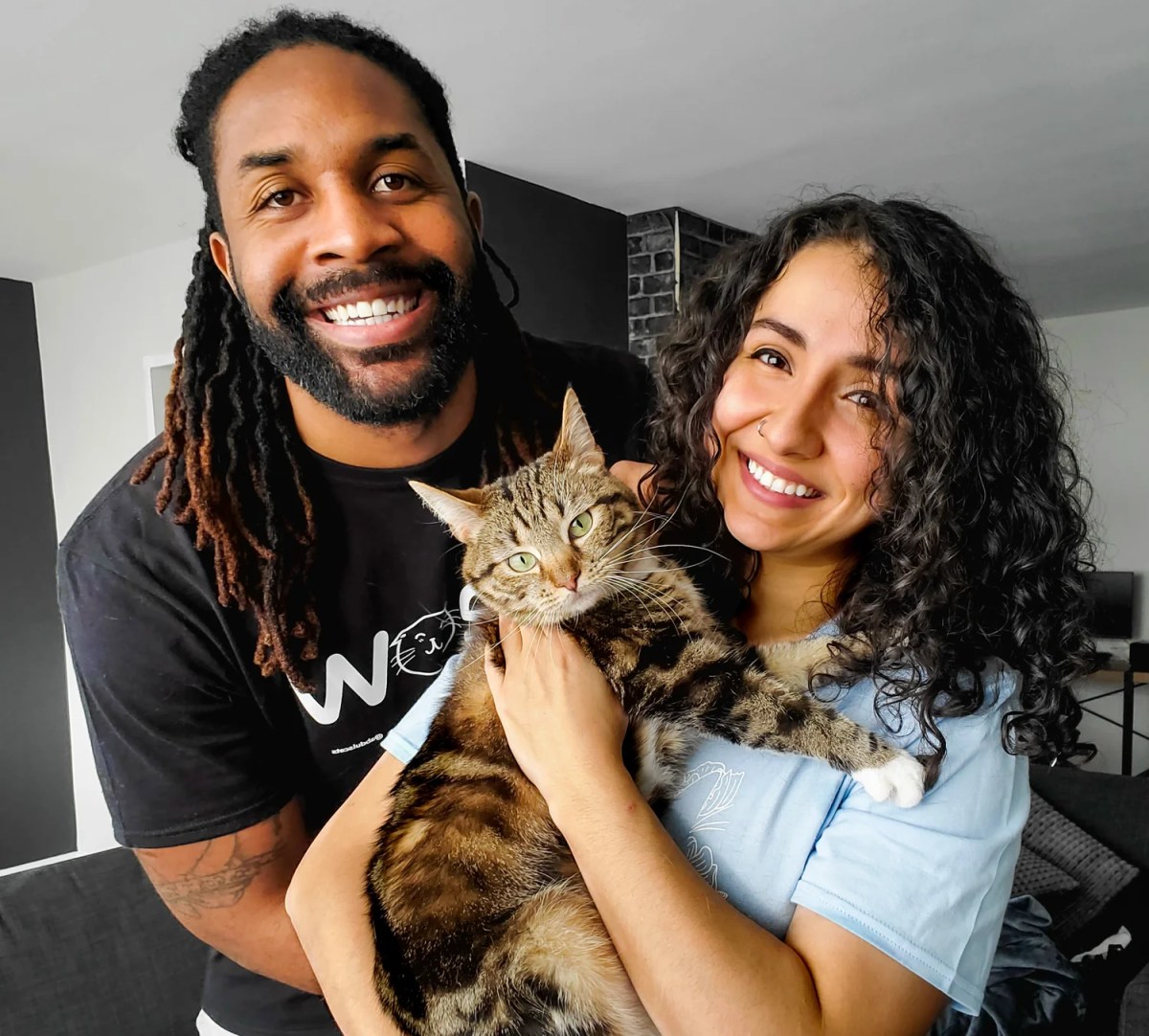
Abdul Raheem found peace when he adopted his beloved cat, Bambi. Now he wants other men to know felines are awesome.
There’s something to the idea that people who aren’t fond of felines just haven’t met the right cat.
For me, it was the experience of interacting with a friend’s affable tuxedo — just one, since all my experiences up to that point had been with people who kept an unreasonable number of cats.
For Abdul Raheem, it was adopting a cat named Bambi after he and his wife fostered and fell in love with her.
“She brought me so much just happiness, and she made my mental health better,” Raheem told the Washington Post. “My anxiety was better when I was around her. So I just want to give other people that feeling.”
Raheem and his wife, Shamiyan Hawramani, became regular fosters for a shelter near their home, and Hawramani began filming her husband’s doting interactions with the baby felines.
Raheem with one of his bottle babies. He and his wife have fostered about 200 kittens and cats since the COVID pandemic.
Their friends found the videos amusing, and lots of people online have too. Abdul’s Cats, an Instagram account documenting Raheem caring for fosters, has a large following — including young men, many of whom are thinking about adopting a cat for the first time because Raheem is showing them something that challenges stereotypes.
My favorite anecdote is about Raheem’s enthusiasm for cats spreading to his friends. At first, they got accustomed to the idea of baby cats jumping in their laps and taking curious swipes at controllers on nights when they’d hang out and play video games.
Then they came to the same conclusion Raheem had: hanging out with cats is relaxing. Several of those friends have since adopted their own feline overlords, and Raheem says one friend now has four cats running around his house.
As for stereotypes, I think cat ladies get a bad rep. They’re the ones who do all the hard work of managing colonies, trapping, fostering, volunteering in shelters and placing cats in good homes.
When you think of the sheer volume of work, and the things they’ve accomplished — including a dramatic reduction in euthanized cats thanks to TNR efforts — they are the unsung heroes. They do it because they love cats.
Jordan Poole is one of several NBA players who have professed their love of felines. In the off-season Poole volunteers with his local shelter.
But it’s also good to toss aside labels and outdated attitudes, like the insistence that cats are companions for women only, and that adopting and caring for a feline friend is somehow unmanly.
Like Jordan Poole, the NBA guard who evangelizes the awesomeness of cats to his fellow players, men like Raheem show guys that they can adopt too.
Now if you’ll excuse me, Bud and I have a busy day of lifting weights, watching football, working on the hot rod we’re restoring in the garage, and drinking beer. Then we’re gonna chant Viking drinking songs until we pass out.
New York magazine’s article included difficult-to-read details about the severe neglect of a pet cat, and didn’t offer any reassurances that the forsaken feline was okay.
Happy Thursday! Before we get into today’s cat news, I’d like to share my current Google News search string, which has helped me keep my sanity over the last few weeks. It’s simple:
“cat -doja -vance -shot”
And voila, no more stories about Doja Cat, fewer blood pressure-raising articles about people who think shooting felines is a sport, and you’re mercifully saved from the 17,457th “think piece” about JD Vance and cat ladies.
The “relatable” column about severely neglecting a cat
New York magazine’s editors knew they were wading into a minefield with this week’s pet ethics issue, and the author of a story about neglecting her cat knew it too, which is why she took the preventative step of using a nom de plume.
In a column titled “Why Do I Hate My Pet After Having A Baby?” (later softened by the editors to “Why Did I Stop Loving My Cat When I Had A Baby?”), “Audrey” writes about severely neglecting her cat, Lucky, after having her first child.
She not only developed what she calls a “postpartum loathing” of Lucky, she admits to not feeding the poor feline for so long that Lucky ate plants out of desperation, then predictably threw up. The forsaken feline began eliminating on the floor because her litterbox was not being scooped. She lost “at least one tooth” and because even water was denied her, she had to drink out of the toilet. The life-threatening neglect and emotional abuse lasted months.
“If I treated a human the way I treated my cat, I would be in prison for years,” Audrey admits, describing Lucky’s own descent into depression as the cat became the scapegoat for all of Audrey’s negative feelings.
Cats (and dogs) understand a lot more than we give them credit for, especially when it comes to our emotional states, to which they are hyper-attuned because they are directly impacted. We’re talking about animals who have been companions to humans for 10,000 and 30,000 years, respectively. Not only does their companionship predate human civilization and the concept of recorded history, they have evolved to intuitively read human facial expressions and body language. They can even smell our pheromones, which means they’re often consciously aware of our moods before we are.
I’ll never forget what my brother said to me a few weeks after I adopted Bud, upon meeting the little guy for the first time: “You’re his whole world.” I’ve tried to make that world as loving, safe and fun for my cat as I can, because he deserves it. He’s given me back so much in return.
Adopting comes with responsibility. It’s not just about meeting an innocent animal’s basic needs, like food and water. It’s about providing our four-legged friends with good lives and never taking our bad days out on them.
“Audrey” says she tried to get rid of Lucky, leaving the windows of her home open, and because the original version of the story dealt almost exclusively with the author’s mental health, readers were disturbed by the lack of any follow-up on Lucky’s situation.
The negative reaction was so strong that New York’s editors took the unusual step of attaching a note to the story claiming they “confirmed the welfare of the cat prior to publishing the story.”
That didn’t satisfy the magazine’s critics, who accused them of behaving “callously” by presenting the author’s abuse of Lucky as a “relatable” symptom of post-partum depression.
“Why are you ignoring one of the most controversial articles you’ve ever published instead of addressing it?” one reader wrote. “It’s not going to just go away – we will not forget … The people will not stop until that cat is safe and loved, and your publication is held responsible.”
Insisting the magazine’s editors be “held responsible” is a bit much, and I’m not a fan of censorship. The bigger issue is the lack of concern for the cat even in retrospect, and the attempt to normalize postpartum animal abuse, as if it’s just a thing people do. It feels like a missed opportunity to explore why such things happen, and to examine the problem with compassion for all involved, human and animal.
Buddy the Cat’s Le Handsome Club is now open to le handsome cats
This is really just an excuse to show off my latest poster promoting PITB, but readers will recognize the concept of Le Handsome Club from earlier satirical stories about the Budster.
Le Handsome Club: The club for le handsome cats!
I’ve written before about “real Buddy” and “cartoon Buddy,” which is the version of him that exists in PITB’s world of absurd satire. Cartoon Buddy is real Buddy with his quirks, narcissistic qualities and amusing lunacy dialed up to 11.
Someone once asked me how to write a children’s book because they want to write one about their pets. Since I’ve never written a children’s book I wasn’t much help, but I did share the basic process for Buddesian hijinks: Imagine a situation, then imagine how Bud would respond to it if he could speak.
So yes, Le Handsome Club. I could definitely see my cat, who thinks he’s Catdonis and Arnold Schwarzenegger rolled into one, founding a club for really, really, ridiculously good looking cats, to paraphrase Ben Stiller’s Zoolander.
The women were arrested for managing a cat colony in the summer of 2022, convicted in December, then won a subsequent appeal in April of 2023. Now they’ve filed a lawsuit against the police and mayor involved in the saga, alleging false arrest and malicious prosecution.
Two women who were arrested for trying to manage a colony of stray cats have filed a lawsuit against the mayor, police chief, assistant chief and three officers involved in the ugly incident.
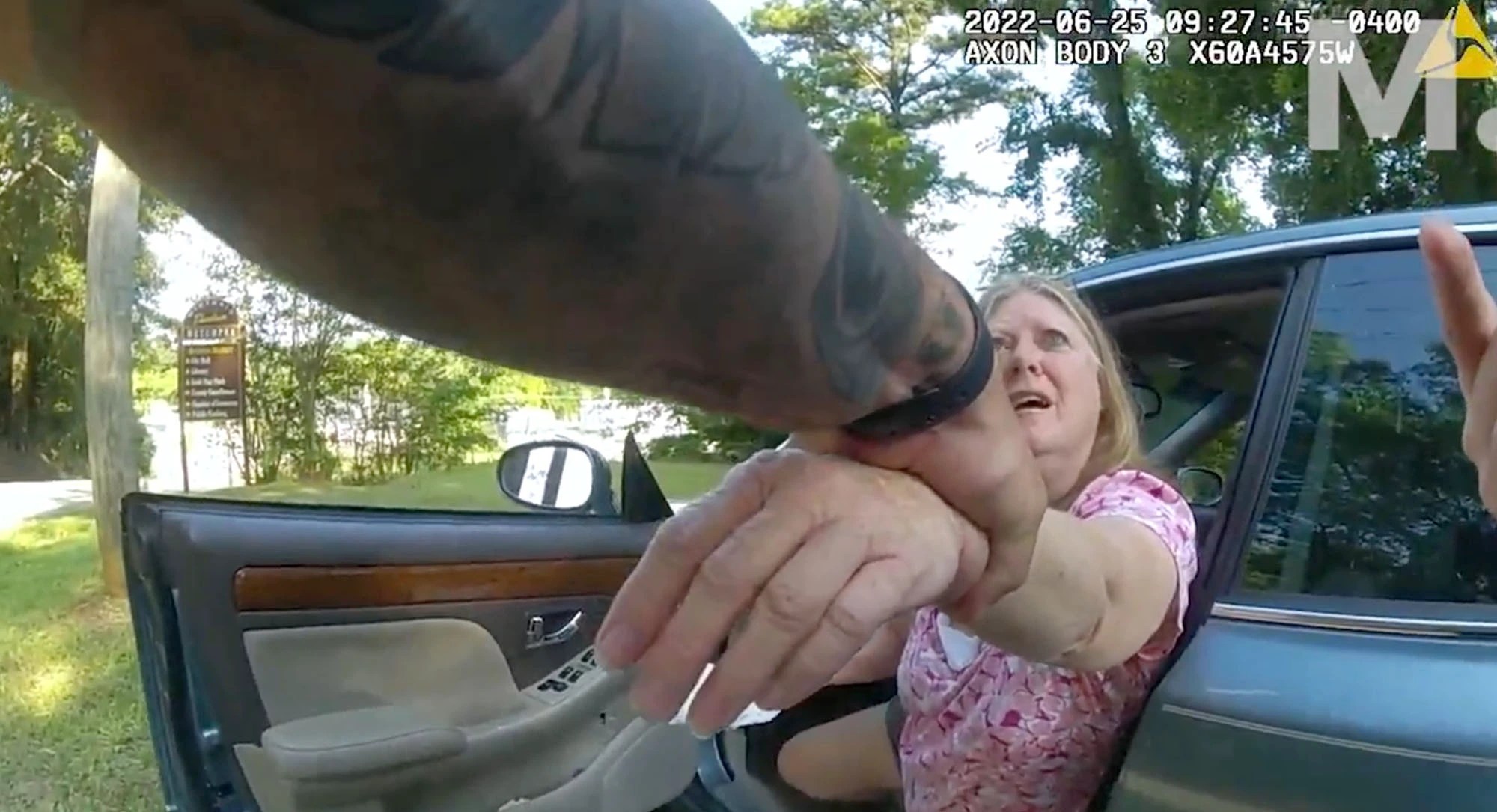
The July 2022 arrest drew nationwide outrage and condemnation as police responded in force to a complaint that Beverly Roberts, 86, and Mary Alston, 61, were trespassing in a wooded area and trapping cats. Body camera footage showed police treating the women like violent criminals, the police response itself was disproportionate, and the police chief doubled down on his insistence that the women deserved to be treated harshly even after damning footage showed the officers laughing about “beatin’ up on some old ladies.”
Now Roberts and Alston have sued Wetumpka Mayor Jerry Willis, Police Chief Greg Benton, the assistant chief and three officers, according to the Montgomery Advertiser.
Noting that the women were paying out of their own pockets to help manage the stray cat population, the paper detailed the allegations in the civil suit:
“The suit alleges that Willis directed their arrests and that Benton and Reeves acted on the mayor’s orders. The women had angered city officials for “being vocal” about the care of animals in the city and appearing at several city council meetings to complain that the city was not enforcing anti-animal cruelty ordinances on the books, specifically the law banning the chaining or tethering of dogs, the lawsuit states.
The suit argues that the women were arrested under false circumstances. The women were originally charged with criminal trespassing.”
Footage of the summer 2022 arrest showed officers handling the women roughly, jabbing their fingers in their faces, threatening them with additional charges and barking at them to move more quickly.
The women were taken aback.
“I’m teetering on going to jail for feeding cats?” Alston asked in body camera footage of the police response.
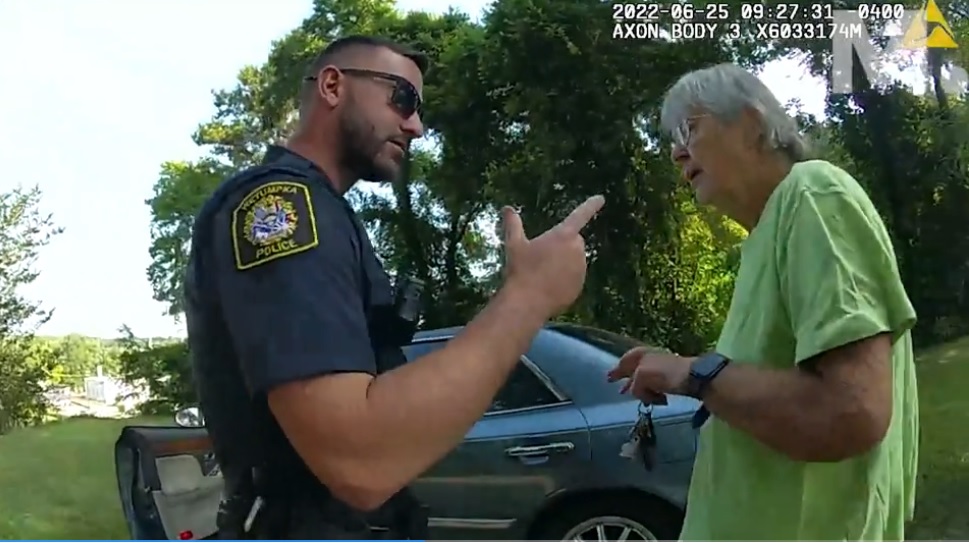
Another officer towered over Roberts, jabbing a finger at her and warning it was “going to get ugly” if she didn’t move more quickly before eventually cuffing her.
A Wetumpka police officer wags a finger at Roberts, who was 84 years old at the time, before handcuffing her hands behind her back and rifling through her personal possessions.
After a show trial in municipal court in late 2022, in which Roberts and Alston were convicted of trespassing by a judge appointed by Mayor Jerry Willis, the women appealed. Despite the conviction, the municipal trial resulted in the release of damning information, including the fact that it was Willis himself who called the police on Roberts and Alston, that he did so because he didn’t like their complaints about the way the city handled animal issues, and that he instructed the police to arrest the women before they arrived in four patrol cars and had a chance to assess the situation.
Willis called the police after spotting Alston’s car near a county-owned plot of land, and lacking any ordinance that prohibited feeding or trapping stray cats, the police resorted to charging the women with misdemeanor trespassing and “obstructing governmental operations,” a charge roughly equivalent to resisting arrest.
But the land was county-owned, there were no prohibitions on managing cat colonies or conducting TNR (trap, neuter, return), and the footage — which police tried to hide from the public for months before finally caving to legal threats from attorneys for the women — was damning, drawing universal condemnation.
Roberts and Alston appealed, and in April of 2023 county court Judge J. Amanda Baxley accepted a motion by prosecutors to drop the case.
The civil suit “alleges unlawful seizure and detention, excessive force, malicious prosecution, negligence, wantonness and other counts,” per the Advertiser.
Attorneys for Roberts and Alston didn’t specify a dollar amount, but said they’re seeking “compensatory and punitive damages” and legal fees related to the arrest and resulting drama, which has played out for more than a year and a half. A spokesman for the City of Wetumpka did not respond to the Advertiser’s request for comment.
Prosecutors dropped charges against Mary Alston and Beverly Roberts 10 months after their arrest for caring for a local cat colony.
Prosecutors in Alabama have dropped their case against two women who appealed after they were convicted for feeding and trapping cats in their hometown.
Mary Alston, 61, and Beverly Roberts, 85, were arrested on June 25, 2022 after a bizarre confrontation in which four police officers pulled up in three squad cars and treated the longtime stray caretakers like hardened criminals.
The women were convicted of related charges in December and vowed to appeal the ruling, with their attorneys calling it a case of retributive and petty small town politics.
On Wednesday, Elmore County Circuit Court Judge J. Amanda Baxley accepted a motion by prosecutors to drop the case against Alston and Roberts.
It took their attorneys four months to get the body camera footage from the Wetumpka Police Department, but when they finally obtained and released it to the public in October, Wetumpka became the subject of national scorn for the way its police treated the women.
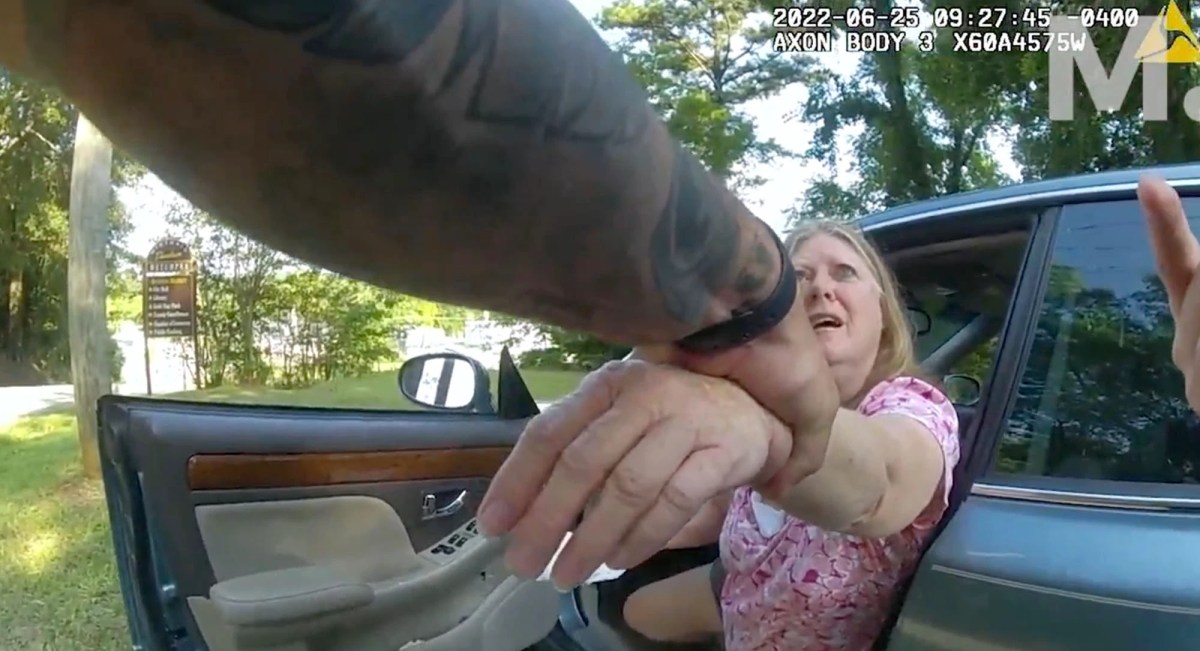
The footage showed the officers grabbing Alston by her wrists and pulling her out of her car, cuffing Roberts and berating the women for not moving fast enough when they were ordered to collect their traps and leave a wooded area on public land.
A police officer pulls Alston from her car on June 25 before arresting her for trespassing.
When Alston and Roberts expressed shock that police were hassling them, much less threatening them with arrest for managing a cat colony, one officer yelled at Roberts.
“It’s gonna get ugly if you don’t stop,” the cop said, jabbing a finger in Roberts’ face before cuffing her.
One officer told the women they were “too old to be acting this way,” and the footage captured audio of the officers laughing after one of them remarked that it was good there were no witnesses because they would have seen “a bunch of cops beatin’ up on some old ladies.”
There are no laws on the books against feeding cats in Wetumpka, so police charged the women with two misdemeanors each for disorderly conduct and resisting arrest.
Roberts and Alston argued that they were performing a service for the town by caring for the colony of strays. They were conducting TNR (trap, neuter, return) operations in cooperation with local shelters, often at their own expense, to stop the cats from continuing to breed.
Despite the fact that TNR is widely accepted as the most humane and effective way to manage stray cat populations, Wetumpka officials stuck to their allegations that the women were exacerbating a nuisance.
Wetumpka Mayor Jerry Willis doubled down after his department received overwhelmingly negative feedback over the arrests, and in a December trial witnesses described an ongoing argument between Willis, Roberts and Alston over the stray cat issue.
During the trial it was revealed that it was Willis himself who called the police when he spotted Alston’s car near the wooded area. Willis claimed he did not tell the police to arrest the women, but Officer Jason Crumpton testified that he was indeed told to arrest them.
Despite that, municipal Judge Jeff Courtney — who was appointed to his position by Willis and was not elected — found Alston and Roberts guilty of all four charges.
Prosecutors did not say why they dropped the charges on Wednesday, and it was not immediately clear if Roberts and Alston will be allowed to return to caring for the cats, who live in a wooded area on public land not far from the same municipal courthouse where they were earlier convicted. PITB has reached out to the women for comment.
“We are very worried about them,” Roberts told PITB in December. “A few animal lovers have said they would help, but we are not sure this will happen. I’m not sure there is enough food available to hunt. The weather is getting colder, and they need protein.”
P-22 suffered a skull fracture after he was hit by a car on Sunday evening. The beloved mountain lion was in a bad way when wildlife officials found him.
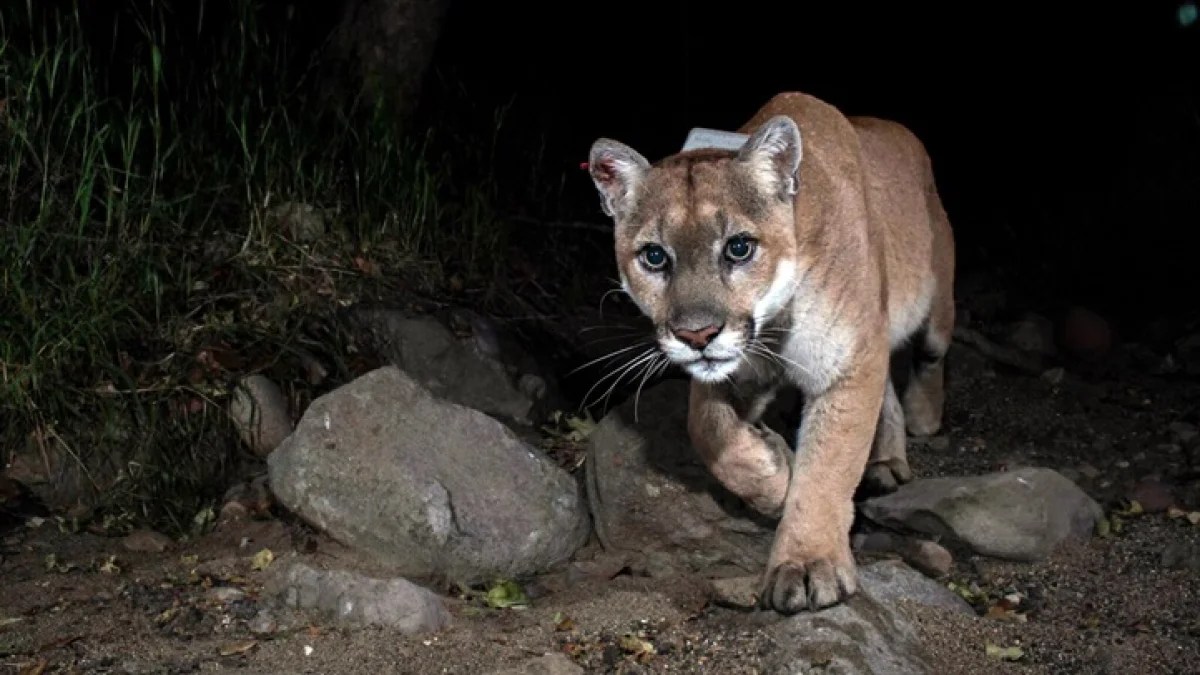
When the puma known as P-22 made headlines a month ago for snatching a pet Chihuahua off his leash on a post-sundown walk, a lot of people were concerned the mountain lion would be put down or hunted in retaliation.
The dog’s owner admitted he was distraught, but also pleaded with the public not to harm the puma, who after all was just being a cat. P-22 didn’t know pet dogs are off-limits, and he showed no aggression toward the other dog or the man walking the pooches. He was hunting after dark, like pumas do.
Sadly, P-22 is now dead, although there does not appear to be a connection to the Chihuahua incident.
Late on Monday morning, Sarah Picchi of Los Feliz opened her door to find fish and wildlife officers on her property. She knew why they were there, as she’d spotted the cougar in her backyard.
“Of course, I knew it was P-22 because I’ve been following the story,” she told the Associated Press.
P-22, who was described by the National Park Service as “a remarkably old cat in the wild” at 12 years old, was showing signs of distress. Veterinarians who have been tracking and protecting California cougars for 20 years tranquilized P-22 and gave him a veterinary examination after receiving reports that he may have been hit by a car on Sunday night.
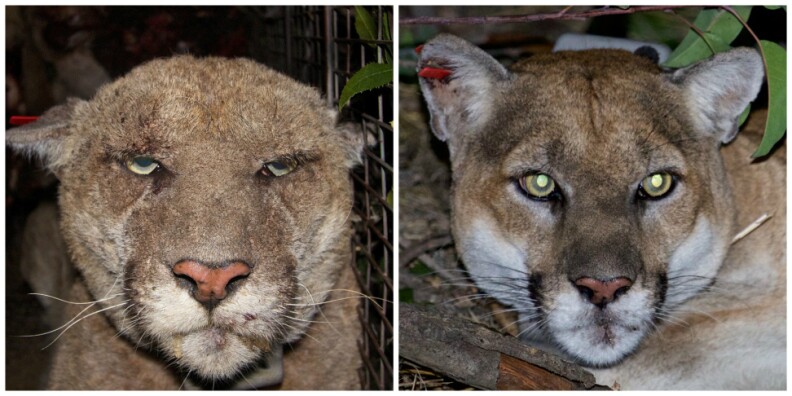
P-22 when he was healthy, right, and just a few days ago when he was suffering from infections and a fractured skull, left.
Unfortunately it looks like he was indeed hit. The beloved mountain lion, who had famously crossed his state’s busiest highways in his younger days to find a range of his own, suffered a skull fracture, an unnamed skin condition and signs of kidney and liver disease.
Veterinarians said the only option, at his advanced age and in his condition, was to place him in a sanctuary where he could be constantly monitored and cared for, but that’s a dicey proposition for a proud animal who spent his entire life fending for himself, hunting and going where he pleased. P-22 would not have recovered, they said, and would have had poor quality of life even if he lived out his remaining days in captivity.
Ultimately they made the difficult decision to euthanize him this week.
Again, there’s no indication any of the misfortune to befall P-22 had anything to do with the Chihuahua incident, although the driver who hit him without reporting the injury made a selfish choice. It’s not clear if earlier treatment could have saved P-22, but it may have saved him significant suffering.
The famous cat, who called some of Los Angeles’ most well-known neighborhoods home, leaves behind a legacy that includes books and documentaries on his incredible life and journey from southern California to his eventual home in LA. Rest in peace, big guy.
Scroll down to the bottom of this post for more photos and a link to the National Park Service’s tribute to P-22.
Wetumpka will pay the price for petty politics
Reader Leah of Catwoods fame brought our attention to this excellent analysis of the situation in Wetumpka, a town in her home state of Alabama that is now best known for extremely aggressive police officers arresting two women for the “crime” of managing a cat colony.
The women, Beverly Roberts and Mary Alston, were found guilty of two misdemeanors each earlier this week in Wetumpka municipal court. (They also spoke to PITB on Friday, discussing their plans to appeal and their worries about the health and safety of the colony cats.)
The column, by Alabama Political Reporter’s Josh Moon, echoes our own thoughts on the scandal, pointing out the petty nature of the arrests and prosecution:
It’s so utterly absurd. And to be quite honest, it reeks of small town politics. It smells suspiciously like some thin-skinned city official got peeved because some ladies had the gall to question him, and he decided to flex a little muscle, show those little gals where the power lies.
And, lo and behold, in court on Tuesday, one major line of questioning revolved around whether Mayor Jerry Willis had told Wetumpka PD to arrest one of the cat ladies, because she had been continuously critical of the city’s animal control policies and practices. Willis, under oath, denied ordering her arrest. Testimony from a lieutenant from Wetumpka PD sure seemed to indicate that some sort of directive had come from the mayor’s office.
Regardless, bodycam footage of the cops’ interactions with Roberts and Alston show an impressive response – three cop cars and four officers – to a call about a lady possibly feeding cats. On a roadside. With no businesses nearby. Near a wooded area. With plenty of space off to the side so traffic wasn’t impeded. On public property.
As we did, Moon noted Alston and Roberts weren’t breaking any laws by being on public property, and there are no laws in Wetumpka prohibiting feeding stray cats.
And it’s not about feeding stray cats, as Willis claimed in his court testimony. Alston and Roberts were providing a service to Wetumpka, at their own expense, because they love animals. Trap, neuter, return is a proven process that limits and ultimately reduces stray cat populations, and does so in a humane way. Prohibiting the women from managing the cat colony will only make the problem worse as the felines mate and stray further afield looking for food, a fact that Willis and town officials don’t seem to appreciate.
Moon wrote:
A city with a decent government would have worked with Alston and Roberts. It would have given them awards for spending their days performing this public service for free. It would have explored ways to expand the very good thing they were doing.
He quoted attorney Terry Luck, who represented the women, saying “Wetumpka is a laughingstock” for arresting Alston and Roberts, blatantly lying about the reasons and the sequence of events leading up to the arrests, and doubling down on prosecuting them even as the story spread nationally and people understandably shook their heads in disbelief at the insanity of it all.
The small-town trial, Moon noted, was covered by reporters from across the state and from national media outlets. Body camera footage of the arrests fueled public outrage, as officers treated Alston and Roberts like hardened criminals and even laughed at the idea that they were “a bunch of cops beatin’ up on some old ladies.” That’s not what you want your town to be known for.
“The city will pay a hefty price for the bad PR,” Moon wrote. “And the whole time, doing the right thing was free.”
Tribute to P-22
We leave you now with some photos and images that can only hint at how much P-22, the lion of Hollywood, was beloved by the people of LA. He was the subject of at least four books, two documentary movies, various festivals and fundraisers for protecting his kind, and his face graces innumerable posters, t-shirts and pins. Here’s how the National Park Service described the big guy:
Likely born in the Santa Monica Mountains as the son of adult male P-1, he somehow found his way to his tiny, nine-square-mile home in Griffith Park, separated from the Santa Monicas by the 101 and 405, two of the busiest freeways in the world. Defying expectations, he persisted for more than 10 years in the smallest home range that has ever been recorded for an adult male mountain lion.
Although he made frequent appearances on the streets of the Hollywood Hills and even, more recently, of the Silver Lake neighborhood, he was also clearly a wild cat, doing so mostly late at night, and subsisting largely on natural prey such as deer and coyotes.
In the end, he found his way into many Angelenos’ hearts and home surveillance camera footage.







 Pain In The Bud