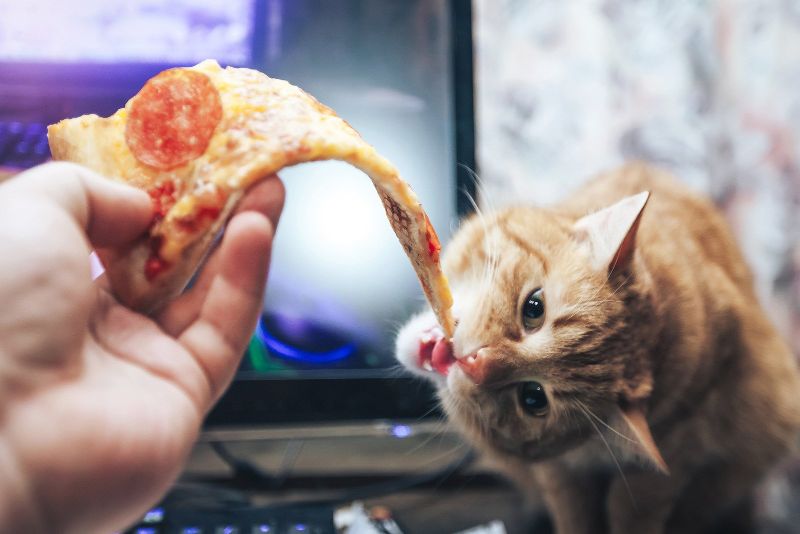
One meat lover’s pie with extra pate coming right up!
I’m pretty sure Buddy regrets teaching me all about animal cognition and emotion, which led me to adopting a vegetarian diet in 2015.
He’s never gone on the kitchen counters (such a good boy!) and when he does express interest in the fridge, it’s more of a rote status check, a defeatest confirmation that there’s nothing of interest for him in there aside from cheese.
But Bentley has no such scruples. The feisty feline from Oregon got his greasy little paws on a pizza one night and loved it so much that he’s become obsessed with the microwave, which is where he found that fateful slice.
Bentley’s human, Britney Shizo, said she put the leftover pizza in the microwave, then forgot about it until she returned to the kitchen and found Bentley happily feasting.
“The microwave is wide open and the pizza is on the floor and it’s gone, pretty much,” Shizo said.
Footage of Bentley, which has since gone viral, shows him determinedly trying to open the microwave door, gripping the handle with both front paws and using all the strength in his little body to get to that sweet, delicious pizza.
But, alas, he’s foiled by a child safety lock, which he refuses to accept as he strains, pulls and pushes the microwave in the hilarious footage:
I have to admit, as cute as Buddy was as a kitten, I don’t miss the “war on sleep” phase.
A woman who adopted a kitten set up a camera to film what happens while she sleeps, like the main characters of the surprisingly scary 2007 film Paranormal Activity, except instead of doors opening and slamming shut by themselves, TVs turning on randomly and other freaky ghost stuff, she got footage of her new kitty gleefully waking her, mostly by belly-flopping on her snoozing human:
I know the experience all too well, and I’d imagine most people who have had a kitten know it too.
Buddy was absolutely ruthless as a baby! He’d scurry into a corner or hide under my desk, wait until I was snoring or just on the cusp of sleep, then climb up and screech the kitten equivalent of “Geronimo!” as he kamikaze’d himself onto my stomach.
Not a fun way to wake up. At all.
Bud would celebrate with delighted trilling, then pad back into the shadows to wait for his next opportunity. Oftentimes I’d hear squeaky little kitten chirps and imagine him laughing as he planned his next attack. He had entirely too much fun torturing me at night.
But fear not, Jenna, it gets better! I’m happy to report the Budster is much sweeter and more considerate as an adult cat. He still wakes me up, but often not to the level of fully awake, and instead of a cat landing a triple lutz, double axle on my stomach, I’m treated to super-soft fur against my face and the calming vibration of the little dude’s purrs.
It might take the better part of a year, but your kitten will chill out, adjust to your sleep schedule and realize a peaceful snooze is more satisfying than nighty games of Harass the Human.
The feline tendency to sit on your face and screech into your ear if your cat’s hungry or really wants your attention? Unfortunately that never goes away…
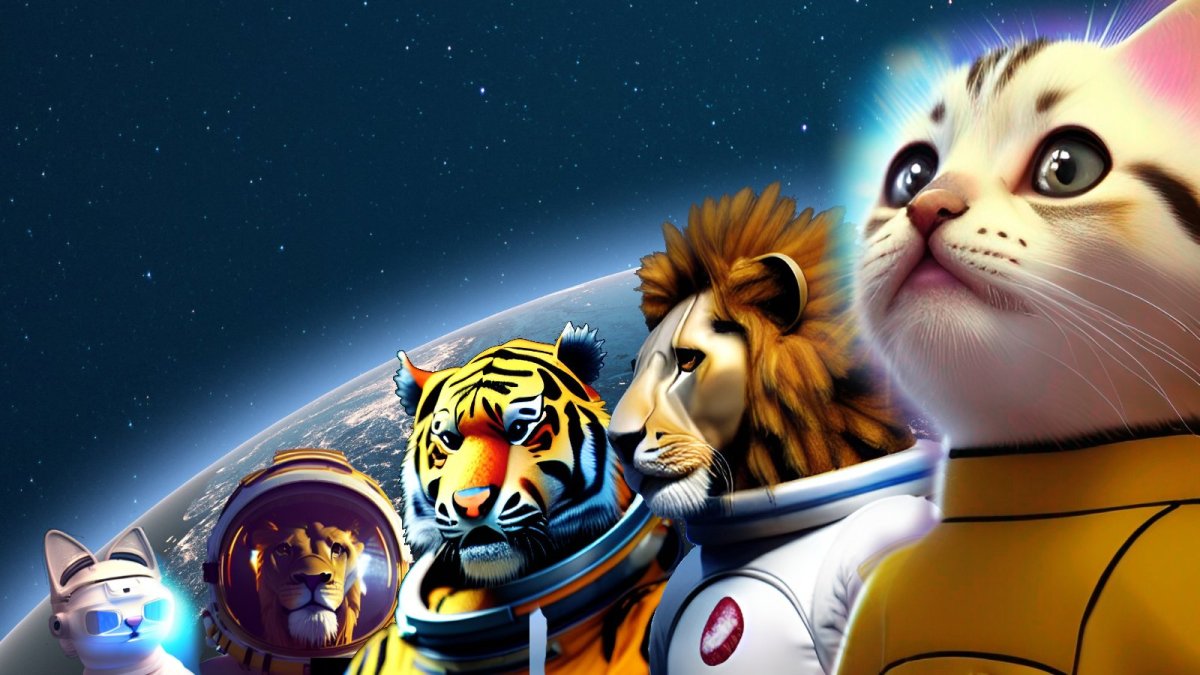
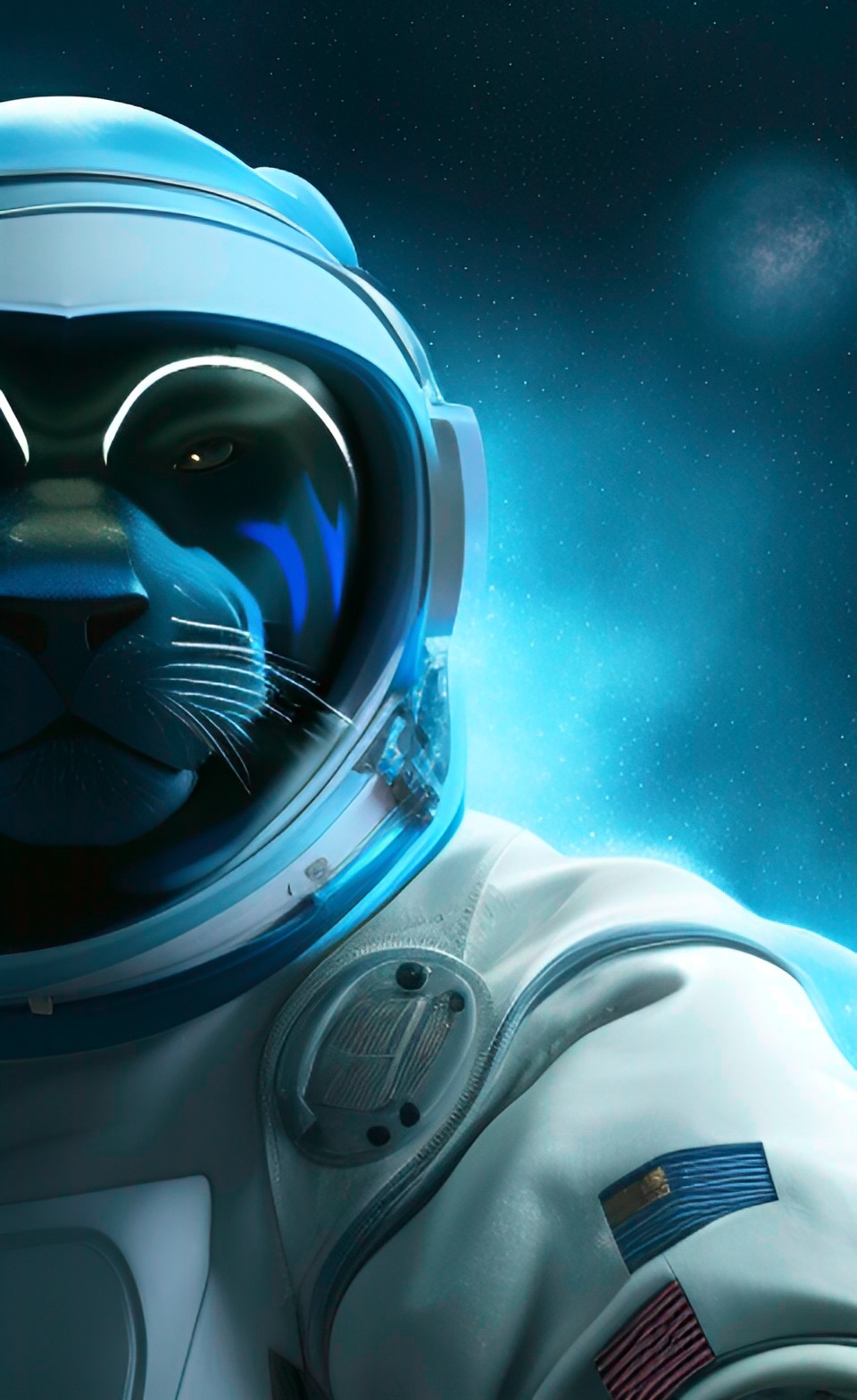
Kittens back home on Earth ask the brave catstronauts about their mission and life in space!
STAR COMMANDER BUDDY’S LOG, STARDATE 12142022, Aboard the USS Fowl Play
Lt. Commander Freddie Ferocious has command of the bridge while I’ve retired to my ready room for the important task of answering video messages from kittens in Mrs. Meowmore’s Kittengarden class.
Lt. Commander Freddie Ferocious, executive officer of the USS Fowl Play.Star Commander Buddy, commanding officer of the USS Fowl Play.
Myles, a three-month-old tuxedo who wants to be a catstronaut when he grows up, has asked me how catstronauts eat and use the litter box in zero gravity.
“Well, Myles,” I tell him, “as you may have guessed, regular litter is no good without gravity! You can’t bury your business, obviously, and you run the risk of free-floating poops and granules of litter escaping into the ship’s habitable areas, so a litter box is out of the question. That is why we have a sealed Litter Chamber and a special suction device. It takes some getting used to, especially since it tends to pull on your fur while you’re doing your business!”
Sophia, a five-month-old Calico, asks us what we eat in space.
“This morning at 0100 hours I was informed that our food replicators are malfunctioning, which means the entire crew has had to make do with freeze-dried kibble and pate MREs. No wonder we’re all so cranky! I have ordered the engineering department to devote all available resources and catpower toward the repair of the replicators. This simply cannot be allowed to go unresolved, for a cranky crew can easily become a mewtinous one, and I don’t want to have to start spacing kitties out of the airlock. Er, I mean throwing ’em in the brig! Chief Engineer Meowdi LaForge tells me the replicators should be back online by breakfast.”
Chief Engineer Meowdi LaForge
Simba, three and a half months, asks: “Dear Commander Buddy, how far are you from the place you’re traveling to, and what will you do when you get there? Is it true there might be monsters? That would be scary!”
“Thanks for writing, Simba! It’s 10.47 light years to the Epsilon Eridani star system, which is a long ride! Fortunately the USS Fowl Play is a pretty big, comfortable ship, with lots of stuff to do to keep her running, and some pretty cool options for entertainment and R&R when we’re off duty. We’re less than two light years away from our destination now, which means the Fowl Play has already flipped and is engaged in a prolonged deceleration burn. We have to do that, see, so we don’t sail right on past Epsilon Eridani!
“Where did you hear about the thing with the monsters? It’s not true, okay? I don’t know what anyone told you, probably that jealous jerk Commander Calvin, but I totally did not run screaming from a monster during the expedition to Luyten 726-8, okay? That’s fake news!
“What happened was, I saw the monster and issued a blood-curdling battle cry, but then I hit the wrong button on my Planetary CatRover, which caused it to spin around and run in the other direction. I was trying to inspire my team, not abandon them. I would have turned around and battled the monster too, except by the time I realized my mistake I was already more than half way back to the lander and the others had scared the monster away with their laser pointers.”
That’s my rover on the left, and the Scary Monster on the right. As you can see, I’m very brave for facing the Scary Monster:
Buddy’s Planetary Rover
The Evil Monster, whom Buddy was totally not scared of.
Five-month-old Pepper asks: “Star Commander Buddy, do you think smart aliens are out there? What do they look like? Will they be nice when you meet them?”
“Hi, Pepper! Those are good questions. Well we should remember that we cats are not only a super intelligent species, but we are intimidating too! We have sharp teeth and claws, some of us can roar, and we look really strong and tough! So maybe the aliens will be scared of us!
“I think there will be smart aliens even though we haven’t found other intelligent life on Earth. I mean, there’s humans, but they’re simple-minded creatures, aren’t they? That’s why they’re our servants! LOL! Maybe the aliens will only have fur on their heads like humans. Maybe they’ll look like dogs. Gross, I know! Or maybe they’ll look like a cross between elephants, manta rays and aardvarks.
“We just don’t know, which is why we’re trying to find out. Picture it: Star Commander Buddy, fearlessly leading the first expedition to make contact with smart aliens. It’ll be pretty cool to be in the history books. Tell ya what, Pepper. If we find smart aliens, you and the rest of Mrs. Meowmore’s class will be the first to know. After NASA, of course. We’ll send you pictures. Deal?”
Lt. Loki pilots our lander, and he’s a good example of how intimidating our species can look! Will aliens be scared of him?
Vice Admiral Yo’oko Nahsuareo. Did you know jaguars make up only 4% of the Catstronaut Corps? They are usually sleep specialists, designing cryosleep pods for space travel and constantly improving comfortable napping spots on our ships.
PLUS: Get the Army Corps of Engineers’ whimsical 2023 Cat Calendar!
A mountain lion got more than it bargained for when it found itself face to face with a ferocious furball last week.
The puma was taking a breather near a home on Jan. 5 when it turned, realizing there was a pair of eyes watching it. Those eyes belonged to the resident cat, a 13-year-old moggie who was not pleased to see a wild intruder in its territory.
The puma initially squared off on the other side of a sliding glass door as if saying “You want some of this?” but seemed shocked when the domestic cat, rather than backing down, launched into a series of feints and yowls.
The puma flinched a few times, then decided to vacate the premises.
Clearly, the wild cat found itself wondering about the identity of the tabby.
“Is that Buddy the Cat? Oh crap! If it’s him, I’m in trouble! They say he has huge meowscles and is a master of 36 styles of Kung Fu!”
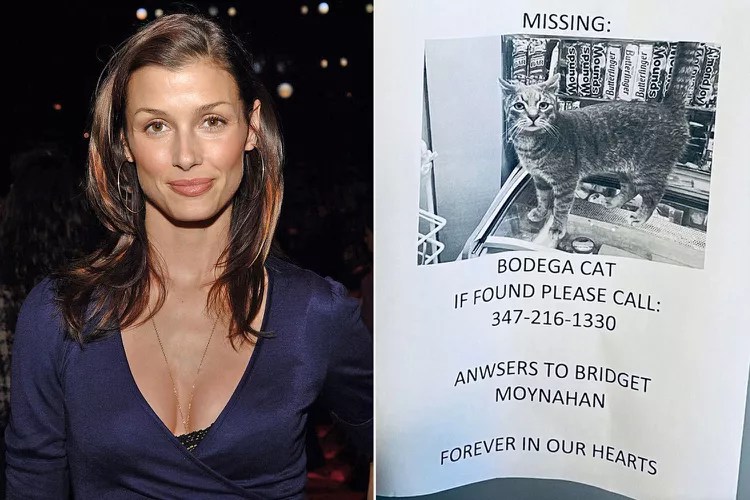
Bridget Moynahan joins the search for Bridget Moynahan
Blue Bloods actress Bridget Moynahan gave a boost to the search for a missing cat bearing her name.
The 51-year-old actress lent her star power to the search by posting about it on Instagram, where she has 345,000 followers.
The missing kitty belongs to the owner of a Manhattan bodega, and spends her days napping on the shelves and being admired by customers.
There are an estimated 10,000 bodegas in New York City, where traditional grocery stores don’t really fit into an urban lifestyle where most people don’t own cars and can’t load up two weeks’ worth of groceries in a minivan.
To keep mice and rats at bay, most of New York’s bodegas have cats. They’re technically illegal, but because having a cat in the store carries the same $300 penalty as having rodents, bodega owners opt for the former. The cats are beloved by New Yorkers, and the city is mostly content to overlook their presence unless there are major health violations.
Get the Army Corps of Engineers 2023 Cat Calendar for free
If you still haven’t picked up a calendar for the New Year, the Army Corps of Engineers has got you covered.
Their 2023 Cat Calendar features magnificent moggies in giant form, scratching, lounging and napping on ships, jetties, dams and dredges.
Click here to download the printable PDF of the calendar.
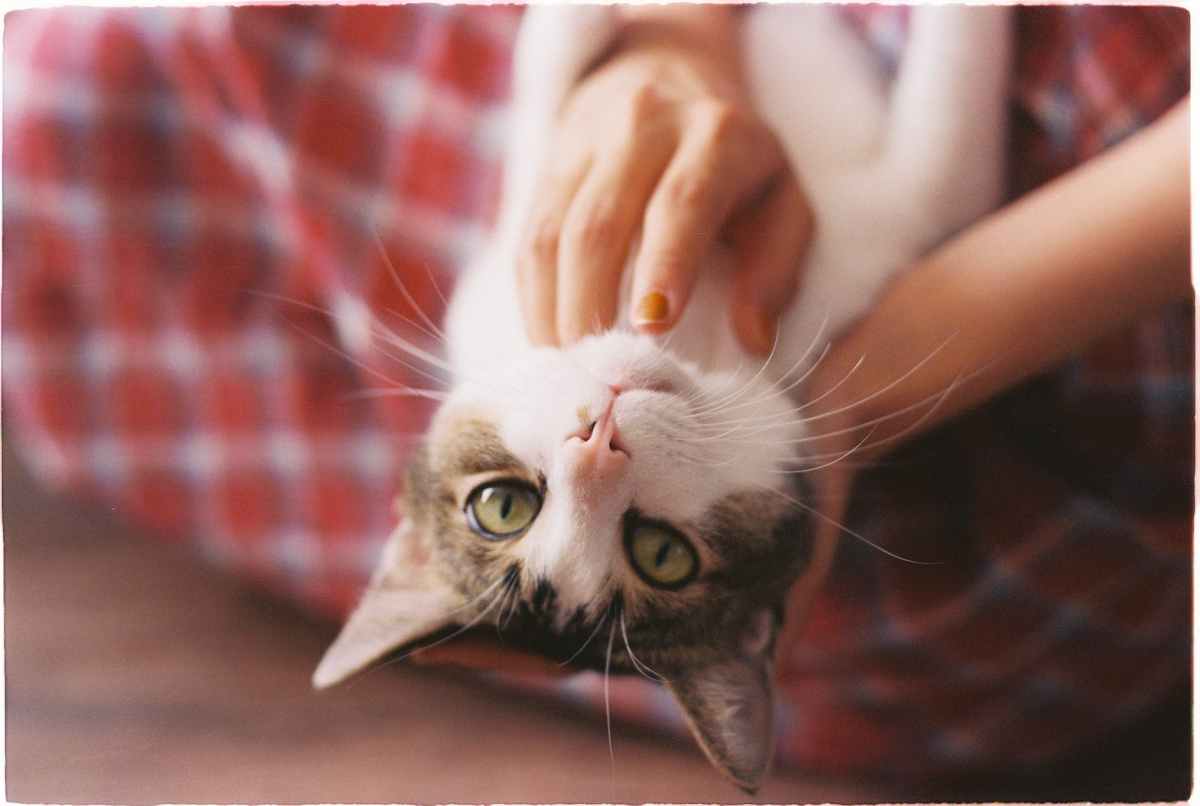
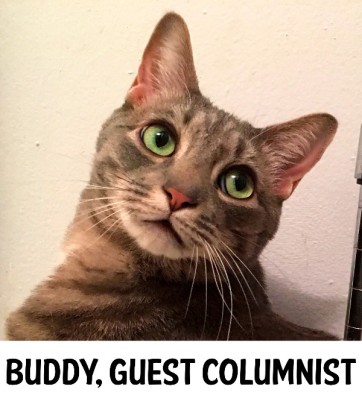
Buddy the Cat wants his human to keep scratching his head, while Buddy the Cat has had enough!
“Don’t Stop! Scritch Me More, Yeah!”
No! No, no, no, no, no! Do not stop! Bring those magic fingers back over here, right above my ears and…yeah!
That’s the good stuff!
Oh man. Down a little. Right there. That hits the spot! In fact, I bet it’ll feel even better when I help you out and lean into the scratches. Oh. I was right, that does feel good!
Hey, where are you…HEY!Who told you we’re done here?
Sheesh, you’d think I nip at you if you pet me too long or something.
You didn’t spend an adequate enough time on my chin yet, and you know I like it when you swing back around for a sort of “greatest hits” and go through the whole rotation again. Now I’m going to assume you don’t need additional instruction, so I’ll just close my eyes and purr away. Don’t stop until the precise moment you should. That’s a good human.
“Don’t You Humans Know When Enough Is Enough?”
All right already, sheesh! The petting was good for like 3.275 seconds, but it got really played out after that, and you just kept going!
Well whose fault is it that I delivered a warning bite? Me, or the person who couldn’t tell when it was clearly time to stop rubbing my head?
What is it with you humans, huh? Learn to read the room. If I want more scritches, I’ll ask for them.
But no. When I was tired of it, you allowed another two tenths of a second to elapse before ceasing all massaging activities. TWO TENTHS OF A SECOND! I should have you flogged for your insolence!
You’ve had years to improve at this, human. That’s thousands of scritches and massages delivered to my chin, my cheeks, the top of my head and behind the ears. What can account for your complete failure to anticipate the exact millisecond the petting should stop?
You disappoint me.
Point-Counterpoint presents two essays taking opposing positions on a topic. Join us again next week, when Buddy the Cat will debate Buddy the Cat on another important topic.





 “Don’t Stop! Scritch Me More, Yeah!”