

For all the advances in optics and camera technology over the last 20 years alone, there are two kinds of people who love blurry, low-resolution footage: UFO enthusiasts and people who are convinced the UK is like a cold, rainy Africa with big cats lurking in every bush and field.
To be a member of either group you’ve got to shut down critical thinking faculties, suspend disbelief and put faith in the highly improbable. (Or the impossible when it comes to people who insist little green men are zipping across the night sky in sleek ships that defy all we know about physics and aerodynamics.)
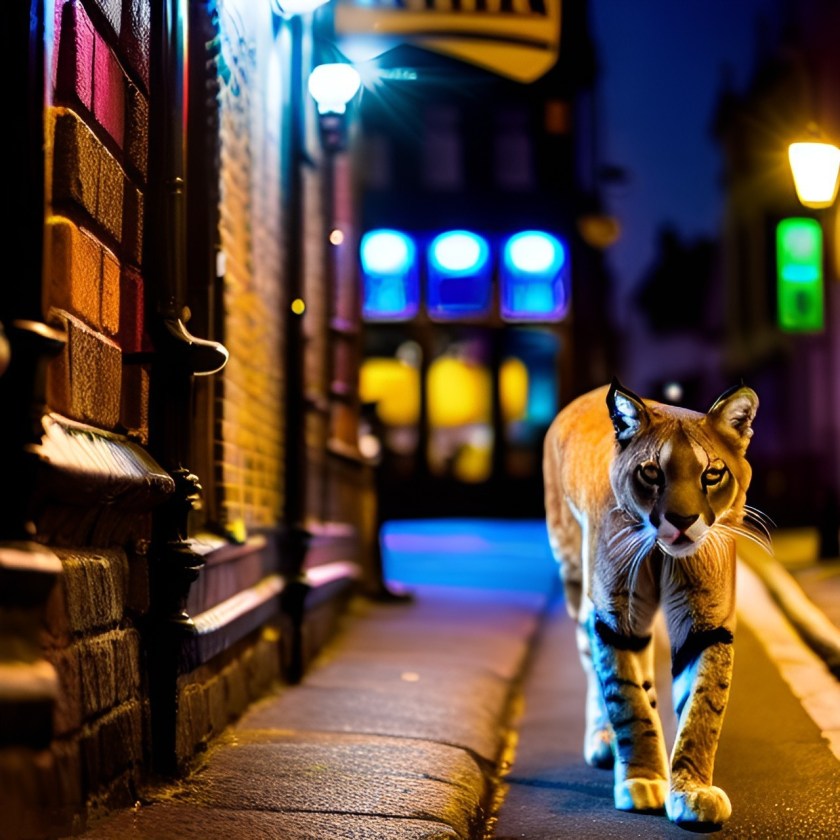
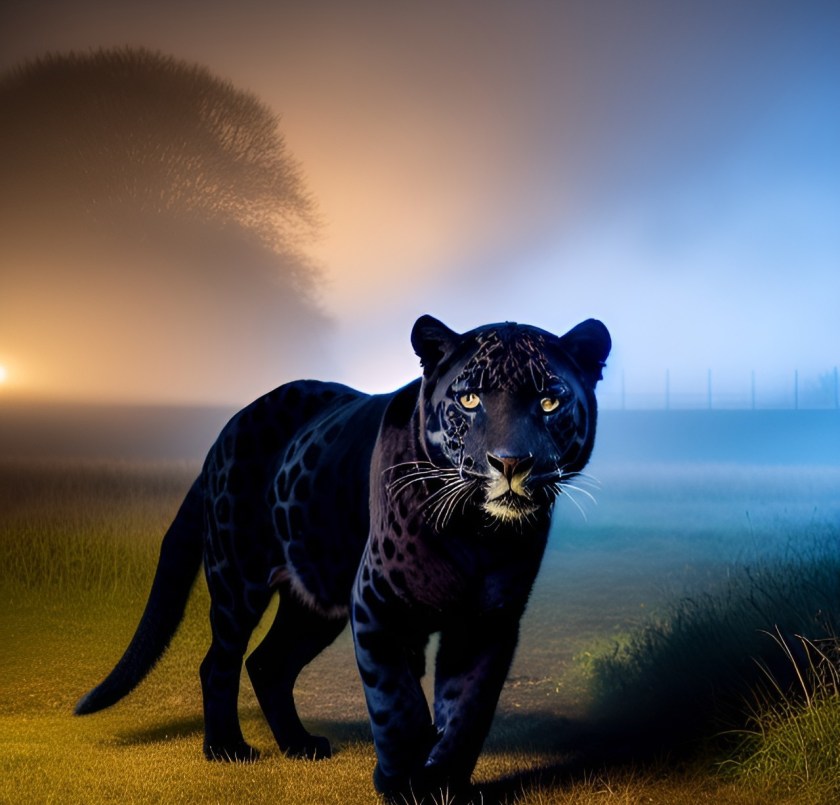
The UK’s big cat believers claim the country is home to a thriving native population of large felids. Some of them think they’re “panthers,” not specifying which species of cat they think is out there, while others claim jaguars, leopards or tigers are prowling the English countryside, spotted only fleetingly at the edges of fields or in the brush, and only by people who own two-decade-old Nokia flip phones with rudimentary cameras.
They believe a native, breeding population not only exists, but for centuries has eluded capture and avoided leaving compelling evidence.
The phantom cats have remarkable stealth abilities. They’ve never tripped a trail camera or appeared in a single frame of CCTV footage. Not a single tree marked for territory, not a single pile of cow bones picked clean by giant barbed tongues, not a single clump of panthera dung. Not even a hungry cub drawn into a village by the smell of barbecue on a summer night.
The reported sightings say more about human capacity for imagination — and how poor we are at estimating size over distance — than they do about the crypto-pumas and melanistic tigers some people swear they’ve seen.
When alleged big cats are spotted in the UK, they’re always seen fleetingly and from afar. When witnesses try to confirm what they’ve seen, the animals are gone.
“I was coming up to Jolly Nice from Oxford at around 7.50pm and the car in front of me was travelling at a steady pace. I looked to the verge of the other side of the road because I saw a bright pair of eyes low down. Upon further inspection, I suddenly realised there was a large outline of a low and stocky cat that was huge.”
That’s the testimony of a UK man who told the Stroud Times, a local newspaper, that he encountered a big cat a few minutes before 8 p.m. on Friday in Nailsworth, a town of about 5,600 people a little more than 100 miles west of London. His description mirrors that of others who say they’ve spotted large felids, mostly in the UK’s countryside and small villages.
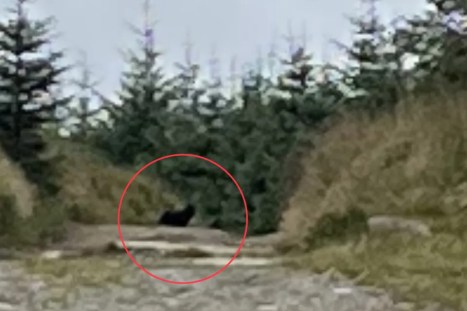
The story’s headline reads: “Big cat expert’s verdict: beast spotted was a leopard.”
The expert in question is Rick Minter, an amateur biologist who has made UK big cat legends into something of a cottage industry by publishing books, hosting a podcast and frequently speaking to newspapers about the phenomenon. It’s not clear how Minter decided the animal in Friday’s sighting was a “black leopard,” but he’s said in previous interviews that he believes most alleged big cat sightings in the UK are leopards, with pumas accounting for most of the others.
Neither animal is native to Europe. Pumas range from South America to the American northwest and midwest, with isolated populations in places like Florida. Leopards are native to Africa and Asia, with ranges that overlap with lions on the former continent and tigers on the latter, mostly in India.

Some have floated the possibility that the mysterious felids are escaped pets who have successfully adjusted to the countryside. Minter says the evidence points to breeding populations.
If there are thriving populations, the cats would need to exist in numbers, with at least 50 on the extreme low end. If they’re escaped pets, the authorities would know.
Unlike the US, where big cat ownership was banned in the vast majority of states even before the recent Big Cat Public Safety Act was passed, owning a massive carnivore slash killing machine isn’t illegal in the UK. But owners have to register their animals, seek approval for the habitats and enclosures they’ve built, and submit to annual inspection.
There have been a handful of escapes over the decades and each time the authorities were able to capture or kill the animals, often tracking them via livestock kills. Pet tigers and leopards might be dangerous, but they’re still at a disadvantage compared to their wild brethren, meaning they go for the easy, guaranteed kills when they’re hungry. Nothing’s easier than a docile farm animal that’s never seen a big cat.
More recently, big cat hunters in the UK have tried to find more compelling evidence than a couple of blurry photographs of house cats out for a stroll. They’ve touted suspicious-looking pug marks, and in August 2022 found black fur on a barbed wire fence. According to the believers, a UK lab confirmed the fur belonged to a leopard, but there was no chain of custody, no documentation of how the sample was found and handled. Big cat experts remain skeptical.
Indeed, Oxford’s Egil Droge, a wildlife conservationist, points out that in places where big cats live, you don’t have to go hunting for evidence. It’s everywhere.
“I’ve worked with large carnivores in Africa since 2007 and it’s obvious if big cats are around. You would regularly come across prints of their paws along roads. The rasping sound of a leopard’s roar can be heard from several kilometres,” Droge wrote, noting that leopards in particular are not discriminating about what they kill and leave ample evidence of their handiwork when they’ve hunted.
Still, as improbable as the sightings are, the big cat enthusiasts of the UK have one up on UFO enthusiasts and hunters of cryptics like Big Foot, the Loch Ness Monster and the Jersey Devil: the creatures they’re looking for actually exist and may surprise us yet.
 Pain In The Bud