Cats Rule The World In New Season Of Love, Death + Robots

The series has become known for its whimsical feline-centric episodes, with cats who are always trying to save the world or conquer it.

Love, Death + Robots has had a thing with cats since the very beginning.

The science fiction anthology started off on the right paw with 3 Robots, an inaugural season episode about a trio of intelligent machines touring the ruins of human civilization on a post-apocalyptic Earth, only to discover it isn’t quite as lifeless as they thought, with cats happily ruling the ashes.

We’ve written about the episode before, and it ends, naturally, with cats making the robots their new servants.

The gray tabby who tricks the titular 3 Robots into becoming his servants.

A sequel to that episode added to the legend of feline dominance, and now the fourth season brings us two more cat-centric episodes, For He Can Creep and The Other Large Thing.

For He Can Creep is set in 1757 London, where a poet named Christopher is incarcerated at St. Luke’s Asylum for Lunatics (an actual place) with only his cat. Jeoffry, for company. Christopher’s talent is mistaken for madness by the asylum staff, but not by the devil, who realizes the poet’s words have a unique power.

The problem? Jeoffry stands in his way. It turns out felines have spectacular evil-fighting powers, and the very British, very 18th-century devil offers Jeoffry an endless supply of treats, plus dominion over the Earth, if he’ll simply stand aside and let his human fall under the influence of evil.

Jeoffry, of course, is not having it, but to have a chance of defeating such powerful evil, he’ll need to enlist the help of the nearby alley cats, including an adorable but ferocious kitten named Nighthunter Moppet…

Nighthunter Moppet may be a tiny kitten, but she’s ferocious!
Jeoffry demonstrates the feline ability to teleport, a skill Bud has often used to confound me.

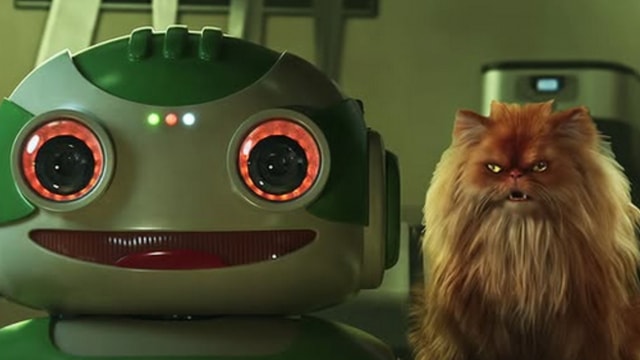
The Other Large Thing is a prequel to 3 Robots and 3 Robots: Exit Strategies, and focuses on a fluffy Persian whose humans call him Sanchez, a name he hates.

The humans are portrayed as jibberish-speaking morons for whom Sanchez has nothing but contempt, and when the “pathetic minions” bring home a domestic robot servant, Sanchez is infuriated — until he realizes the robot can “speak God’s language,” aka cat, and has opposable thumbs.

With the robot as his new minion, Sanchez finally sets out to conquer the world!

Sanchez realizes he’s struck gold when the new robot home assistant fetches as many cans of “the good stuff,” aka wet food, as he wants from the previously unreachable cupboard top shelf.

Both episodes are based on short stories, and they’re both written by people who clearly love cats.

Some episodes of LDR can get a little dark or somber. That includes Beyond the Aquila Rift and Sonny’s Edge, written by Alastair Reynolds and Peter Hamilton, two of my favorite novelists. Both episodes are spectacular, but they leave you with a chill and some disturbing thoughts that linger long after the credits end.

The feline-themed episodes are the perfect digestifs, offering doses of whimsy and levity to counter the existential dread and nightmarish visions of the future of other installments.

With no more humans to do their bidding, cats seize the opportunity and conscript the visiting robots as their new minions.

If you haven’t had the chance to check out the series, which streams on Netflix, I highly recommend starting with the aforementioned first season episodes 3 Robots and Beyond the Aquila Rift, then working your way through the rest of the cat episodes.

Not all of the episodes are great. The 400 Boys, one of the new episodes, is little more than inane and pointless violence, and the ubiquitous, creepy smiling  “Mr. Beast” makes an appearance in another installment in an unnecessary attempt to attract new viewers. Thankfully most are strong, with more hits than misses.

Other highlights include the Christmas-themed short, All Through the House, Harlan Ellison’s Life Hutch, Reynolds’ Zima Blue, and Snow In The Desert.
Flow’s Cat Accepts Oscar In The Most Feline Way Imaginable

The animated feature about a cat surviving an apocalyptic flood has racked up awards and earned universal acclaim.

It’s been quite a year for Latvian animator Gints Zilbalodis and Cat, the star of Flow.

Their film won an Oscar for best animated feature film, racked up wins at the Golden Globes and smaller film festivals, became the most-watched film in Latvian history, snuggled its way into the hearts of audiences in the US, Europe and Asia, and enjoys incredibly rare universal accolades from critics and viewers alike, scoring 97 and 98 percent with each group respectively on film review site Rotten Tomatoes.

Now Cat has officially recognized his Oscar by doing precisely what his species loves to do. In a short video posted by Zilbalodis, Cat smacks the golden statue off the railing of his boat and onto the deck, to the annoyance of his lemur buddy.

Congratulations, Gints and Cat!

The Best Movies About Cats

A comedy, a remarkable documentary, a classic and a surprise hit make the list for the best cat-centric movies.

Keanu (2016): Jordan Peele stars as Rell, a man who is despondent after he’s dumped by his girlfriend. When a kitten shows up on his front step, Rell takes the little guy in and his life is suddenly transformed. He’s enamored with the kitten, whom he names Keanu, can’t stop talking about him, and even begins photographing him in dioramas based on famous films.

But tragedy strikes when drug dealers ransack Rell’s home, mistaking it for the small-time drug dealer’s home next door, and take Keanu. Rell and his cousin, Clarence (Keegan Michael-Key) embark on a quest to get Keanu back no matter what it takes, even if it means posing as a pair of contract killers to infiltrate the criminal world where Keanu’s been taken. It’s every bit as absurd as you’d imagine — but it’s also very, very funny. “Actually, we’re in the market right now for a gangsta pet,” is not a line I’d expect to hear in a movie, but in Keanu it works.

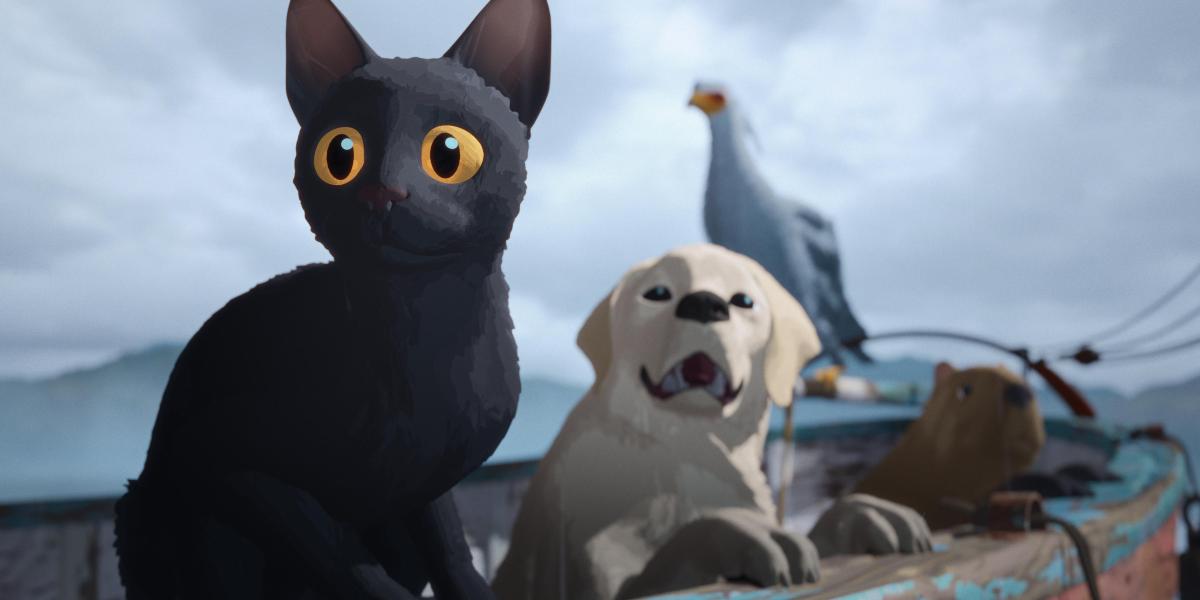
Flow is the surprise hit of the awards season.

Flow (2024): Even the hype of Golden Globe awards and Oscar nominations can’t take away from the powerful impression Flow makes. By now most of us are probably familiar with it through clips or trailers, but they don’t do justice to the beauty of director Gints Zilbalodis’ world, nor how naturally expressive his protagonist, Cat, is.

The animators put in an extraordinary amount of effort into understanding and perfectly replicating every feline behavioral quirk, every hackled coat and curiously bent tail. They accomplish the same with Cat’s companions, including a Labrador, a secretarybird, a lemur and a capybara. And while we’re dazzled by the visuals and energetic narrative, Zilbalodis poses a thematic question as the flood waters take the animals through the ruins of human civilization: without people, the world will go on. What would a world without humans look like? Cat and his companions tell us one story while the environment tells us another, and the result is greater than the sum of its parts.

Tiger: Spy In The Jungle

Tiger: A Spy In The Jungle (2008): What makes this documentary so special is that it was filmed over three years in an Indian tiger preserve, and the filmmakers not only disguised cameras as rocks and tree stumps, they trained elephants how to carry “trunk cams,” achieving shots which no human cameraman could ever hope to get without spooking the subjects of the film.

Tigers don’t hunt elephants because they’re simply too big. Unlike lions, they’re not feeding a whole pride, and they don’t hunt cooperatively. It’s just not worth the effort required to take down the giant, majestic beasts. As a result, tigers and elephants not only tolerate each other, they mostly ignore each other’s presence.

One of the cubs stares curiously at a camera disguised as a rock in Tiger: Spy In The Jungle

That allowed the team to get unprecedented shots of an iron-willed tigress raising a litter of four cubs by herself. We see their dens, we watch the cubs play, and we witness the incredible prowess of the mother, who according to narrator David Attenborough has a remarkable 80 percent success rate while hunting. That’s pretty much unheard of.

With four young mouths to feed in addition to herself, the tigress is determined, and also supremely skilled. The whole jungle erupts in a cacophony of shrieks and alarm calls the instant a single animal gets a whiff of the tigress’ presence, but that still doesn’t stop her from achieving her goal.

Still, the odds are against all four cubs making it, with dangers like adult leopards, sickness and hunger. Through Spy In The Jungle, we get to see the entire journey, from the newborn cubs to the confident juveniles on the cusp of adulthood. There’s no better tiger documentary anywhere.

Shere Khan, right, makes an intimidating villain in The Jungle Book (2016)

The Jungle Book (2016): With so many Disney cash-grabs in the form of live-action remakes of classics that did not need to be remade, it’s easy to dismiss The Jungle Book. The thing is, this movie has heart. Neel Sethi is an earnest Mowgli, Idris Elba voices the infamous tiger Shere Khan, and to balance out the felid villainy with some heroism, Sir Ben Kingsley voices Bagheera, the noble leopard who discovers baby Mowgli in the jungle and protects him as his wolf friends raise the boy. Lupita Nyong’o as the wolf matriarch Raksha, Bill Murray as the honey-obsessed bear Baloo and Christopher Walken as orangutan King Louie round out a great cast.

This New Cat Movie Looks Incredible!

There’s huge buzz around Flow, which follows the journey of a cat through a flooded world where humans are curiously absent, but their former presence is felt everywhere.

Happy Friday! We don’t have any sarcasm, Big Buddesian wit or photos of the sexy beast himself, Little Buddy, for you today.

But we do have a trailer for what looks like an amazing cat movie! The buzz around Flow started in earnest in late spring, but I held back on writing about it because there was no information about when or where people could see this film.

Now it looks like Flow, after getting universal praise from critics and a triumphant release in the creator’s home country of Latvia, is finally poised to reach the rest of the world. Behold:

There’s so  much going on here, from the sheer beauty of the world the trailer shows us, to the strange absence of humans after an apparent cataclysm, to the snort of the confused Capybara as our heroic void wriggles his way aboard a small sailboat and catches a ride with a motley company of stray animals.

The cat animation is perfect, capturing every nuance of feline movement, and the faces of the animals are expressive, telling us everything we need to know about their thoughts and moods as they survive in this strange new world.

There’s no real explanation for what happened other than the apparent biblical flood, and we’re hearing there isn’t a single word of dialog in the entire 85 minute film. Latvian animator Gints Zilbalodis is already well regarded for his 2019 debut, Away, and the reviews for Flow have been glowing.

While Variety reported Flow will begin its run in theaters on Nov. 22, and Rotten Tomatoes has the same date listed, Fandango says the debut is slated for Nov. 12. Whether that’s a typo or there’s some other reason for the discrepancy, we’re not sure, but we’ll update as more information becomes available.

Flow (2024 movie)
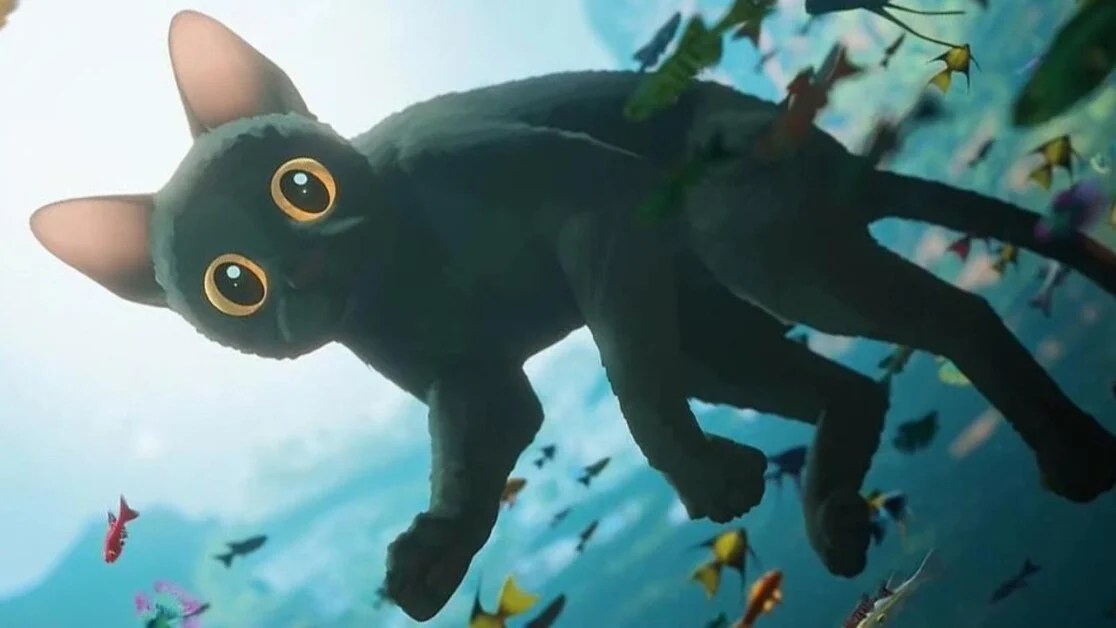
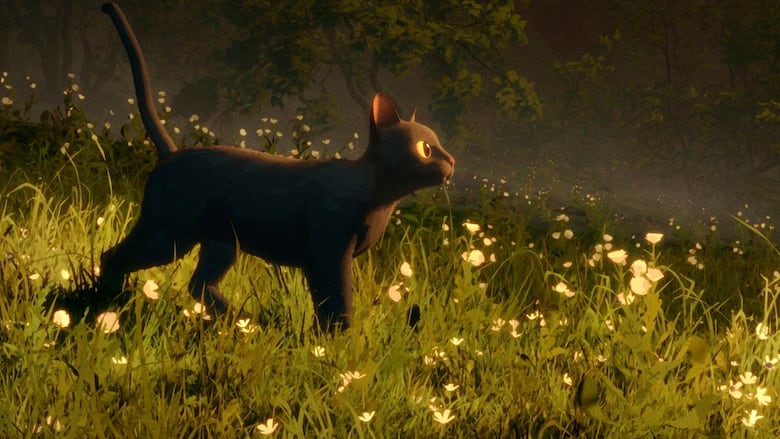
A still from Flow, a 2024 animated movie about a black cat navigating a post-human world of danger and beauty.
Flow (2024 movie)
A still from Flow, a 2024 animated movie about a black cat navigating a post-human world of danger and beauty.

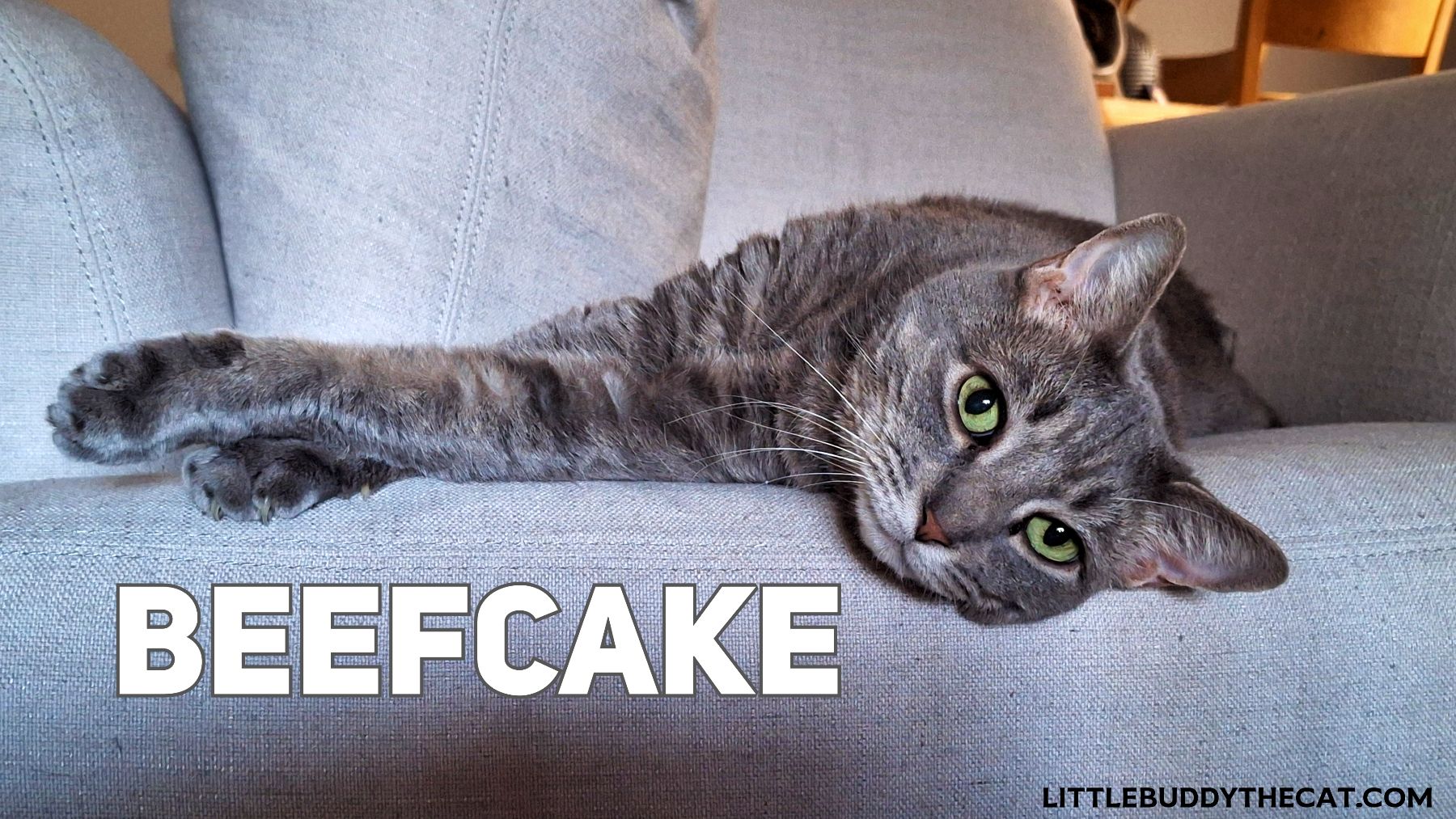
Edit: Okay, fine! Here he is:

Buddy the Beefcake
The sexy beast himself.

Stray: Early Impressions, Plus Real World Cats Benefit From The Game’s Launch!

Stray gets everything right about the way cats move and behave, while rescue groups and shelters are using the game to raise money.

Stray is the real deal. The game is beautifully atmospheric and slipping into its world feels effortless.

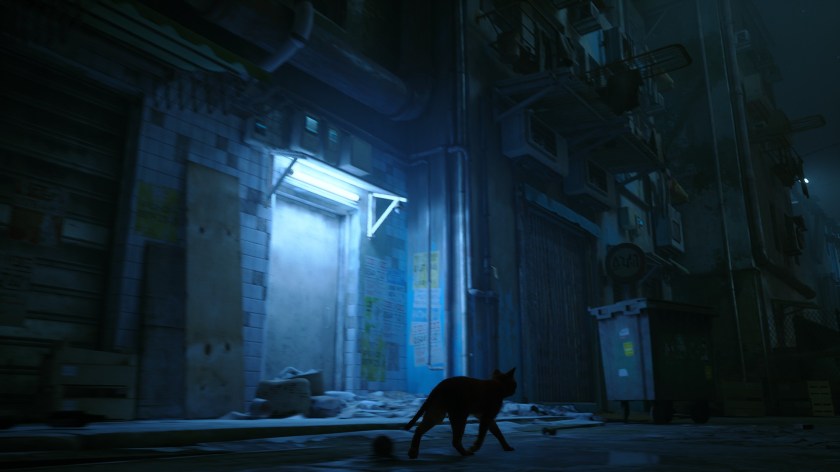
The adventure begins amid beautiful urban decay, with the titular feline and his family of three other moggies waking from a nap on the ledge of a concrete reservoir in the process of being reclaimed by Mother Nature. Tangles of branches and leaves push through the crumbling man-made structure everywhere, creating canopies, waterfalls and pools, and our hero and his buddies navigate their idyllic home in perfectly cat-like manner, leaping up, dropping down and pausing to lap water from reservoirs of running water.

The game gets you started with a few classics from the feline repertoire. You can walk, run, leap, hop up and, perhaps most importantly, meow by pressing the Alt key. A general interactive key allows you to sidle up to your feline friends for some head bunting and allogrooming, and the furry family members purr at each other in appreciation.

But things don’t remain idyllic, of course, because this is an adventure.

Our cat, an adorable ginger tabby, is separated from his tribe when he follows them across a chasm via a rusty pipe and the metal gives way.

It’s an enormous credit to the animators that they’re able to convincingly convey the panic and fear on kitty’s face as he tries to stop his fall, clawing at the edge futilely until he takes a nasty tumble onto hard concrete a few hundred feet below. Conveying authentic emotion on the faces of human characters is challenging, but doing it with a non-anthropomorphized animal is another thing entirely.

When you land, you can hear the distressed cries of your fur friends far above but can no longer see them, and your cat is injured: He limps along on three legs through a dimly lit sewer before passing out from his injuries.

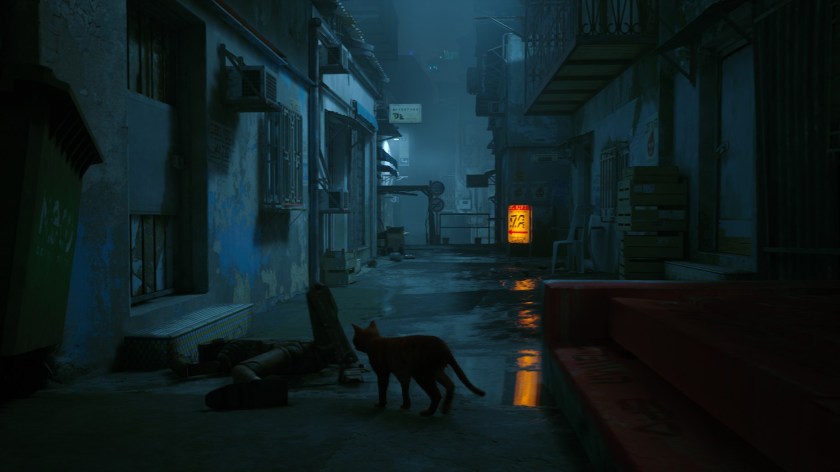
An indeterminate time later he awakes, sniffs out a cat-size path of egress from the sewer and finds himself in the neon-tinted Walled City of Kowloon in an alternate future. (The real Kowloon Walled City, infamous for its urban density and its status as a hub for Hong Kong’s triad gangs, was demolished in 1994. It’s now a park.)

There’s so much that could go wrong with a game like this. It features a radical shift in perspective, putting players closer to the ground than they’re accustomed to and in the paws of an animal who isn’t particularly well-represented among game protagonists. Animating a feline is an enormous challenge, and cats have their own version of the uncanny valley: The slightest mistake in the rhythm of a moggie’s gait, for example, can throw the whole thing off, rendering the character unnatural. (See the wacky gallops of Assassin’s Creed’s horses, for example, or pretty much any third-person game in which a human character can run. More than two decades into making modern third-person games, developers still have trouble animating human running sequences that don’t look broken or comical.)

The care that went into animating kitty is evident, as is the work that went into controlling him feel effortless and instinctive. There’s no adjustment period here. From the first moment moving like a cat feels like second nature.

20220720100603_1

20220720100526_1

We’ll have more on the gameplay and story as we spend more time in Stray’s world. So far, the game gets an enthusiastic thumbs up from Buddy the Cat and me, his humble human servant.

In the meantime, as Stray sets sales records for an indie game and continues to generate incredible buzz on social media, publisher Annapurna Interactive is using the opportunity to help real life kitties, including a game code giveaway with the Nebraska Humane Society that netted more than $7,000 in donations.

Stray is blowing up online as well, with users publishing more than half a million tweets about the game within a day of its release, per CBS Marketwatch.

buddyinstrayweb