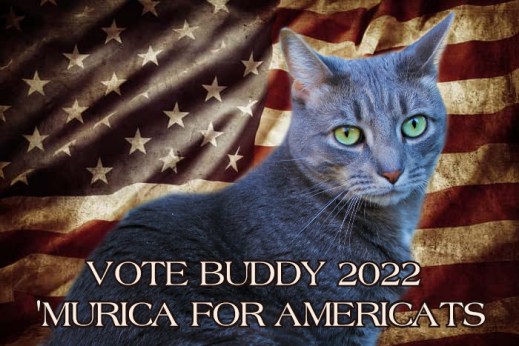
Americats need great leadership. Who but Buddy can lead ‘Murica into the shining future?
Today is Tuesday, Nov. 8, and Buddy needs YOU to vote!
As patriotic Americats know, our beloved President Buddy was impeached after jealous rivals claimed his brilliant plan to move the Earth closer to the sun to fight Coronavirus would have been disastrous, and enlisted the help of “scientists” who scared felines into believing our planet would be in danger despite President Buddy assuring everyone that we’d all have nice weather.
Also, there was the small matter of a “scandal” involving turkey embezzlement, but that was never proven in a court of law.
Real patriotic Americats know Buddy was the best president of all time, and it’s their duty to lay the groundwork for his triumphant return in 2024 by voting in his hand-picked candidates today! If turkey raining down from the sky, treats aplenty and mandatory siestas 10 times a day sound like good policies to you, then obviously you’re a smart kitty, you’re patriotic, and you should vote Buddy!
If you like the idea of Roombas for every cat, catnip dispensaries on every corner, a new government agency dedicated to developing new toys, and a badly-needed infusion of new boxes, you should vote Buddy! Because you’re smart!
If for some reason a Buddesian-aligned candidate is not listed on your ballot, you should write in “Buddy the Cat” and send a strong message that you’re an intelligent, patriotic voter.
Paid for by BUDDY 4 PRESIDENT and THE UNITED PATRIOTS FOR BUDDY ASSOCIATION. ‘Murica!
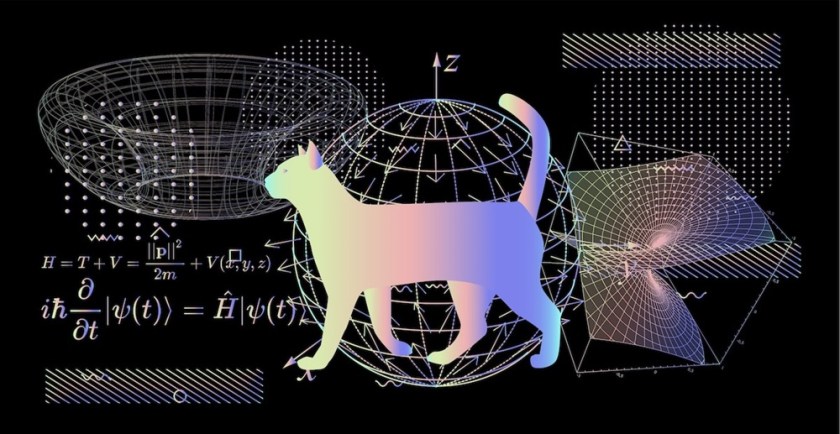
Cats are at the heart of one of the most famous thought experiments in science.
If you’ve spent time around physics types, listened to media appearances by science educators like Michio Kaku and Brian Greene, or even watched episodes of The Big Bang Theory, you’ve almost certainly heard of Schrödinger’s cat.
But what is it, why is it important, and what does it really have to do with cats? Most importantly, if you’re a cat lover, does it involve harming cats?
I promise you, if you stick with me and have a little patience, you’ll not only understand Schrödinger’s cat, but a hugely important element of physics will be demystified for you.
Let’s take a step back. First, we all learned in school that Isaac Newton was the “father of physics,” and Albert Einstein came along about two centuries later, revolutionizing physics by adding to Newton’s work and coming up with his own, more accurate model.
To this day, Newton and Einstein are in a class by themselves among physicists because they single-handedly changed everything we know about the natural world.
We all remember the famous story about Newton watching an apple fall from a tree, wondering why the apple fell down instead of up, and eventually developing his theory of gravity. Newton went on to develop his theories, which describe everything we see in the natural world, from that apple falling to the complexities of orbital mechanics.
Everything seemed to work perfectly, until a physicist named Max Planck came along in 1905 and published a paper introducing quantum physics.
What is quantum physics?
Now the word “quantum” has been incorporated into practically everything these days and has been so utterly abused as a marketing buzzword, a way to add a veneer of science to things that are otherwise nonsense, that it’s essentially a meaningless word to most people. Practically everything is described as quantum, from deodorants to claims of psychic telepathy.
But the gist of it is this: While Newtonian physics does indeed describe everything we see with our own eyes accurately, it does not accurately describe things at the subatomic level.
In other words, there are two sets of rules in our universe. Everything larger than an atom behaves according to one set of rules in our universe, and everything the size of an atom or smaller — which includes subatomic particles — behaves according to a different set of rules.
Not only that, but at the quantum scale, things get really, really weird.
They behave in ways that are completely at odds with everything we intuitively understand about reality, so much so that even Einstein himself was disturbed by what he found. Einstein famously described quantum entanglement — the ability of two different objects to be linked and share properties, regardless of how far apart they are — as “spooky action at a distance.”
So what the hell does this have to do with cats?
Ready to get even weirder?
Thanks to Planck, Einstein, John Stewart Bell and innumerable physicists — who are still studying these concepts, and still winning Nobel prizes for them in 2022 — we know that two particles can be “entangled” and will remain that way no matter how far apart they are.
You could take one particle, transport it 10,000 light years away, and it would still be entangled with the other particle.
But it gets even stranger than that.
Our entangled particles have certain properties, such as their spin, which are unknowable until we measure them. In fact, they exist simultaneously in all possible states until the moment when we observe them, at which time the wave function “collapses.” It’s called quantum superposition.
Not only that, but when we measure one particle in an entangled pair, the second particle’s wave also “collapses” (settles on a certain state) and we know its spin instantaneously, regardless of how far apart the particles are.
If I measure an entangled particle here on Earth and find its spin is up, I know the corresponding particle that’s been moved to, say, Epsilon Eridani, 10.47 light years away, is spin down.
You can see why this would be profoundly disturbing to scientists. It violates the speed of light, and it’s completely counterintuitive. How can the mere act of observation change something in the physical world, and how can it change something else potentially thousands or millions of light years away? Everything we know, every gut instinct we have, screams that this should not be true.
But it is true.
These aren’t just ideas kicked around by scientists smoking the sticky stuff, by the way. They’ve been proven experimentally many times over. No matter how much we might dislike the idea, no matter how weird or spooky it may seem, it’s true.
Enter Erwin Schrödinger, an Austrian physicist. He devised a thought experiment that goes like this:
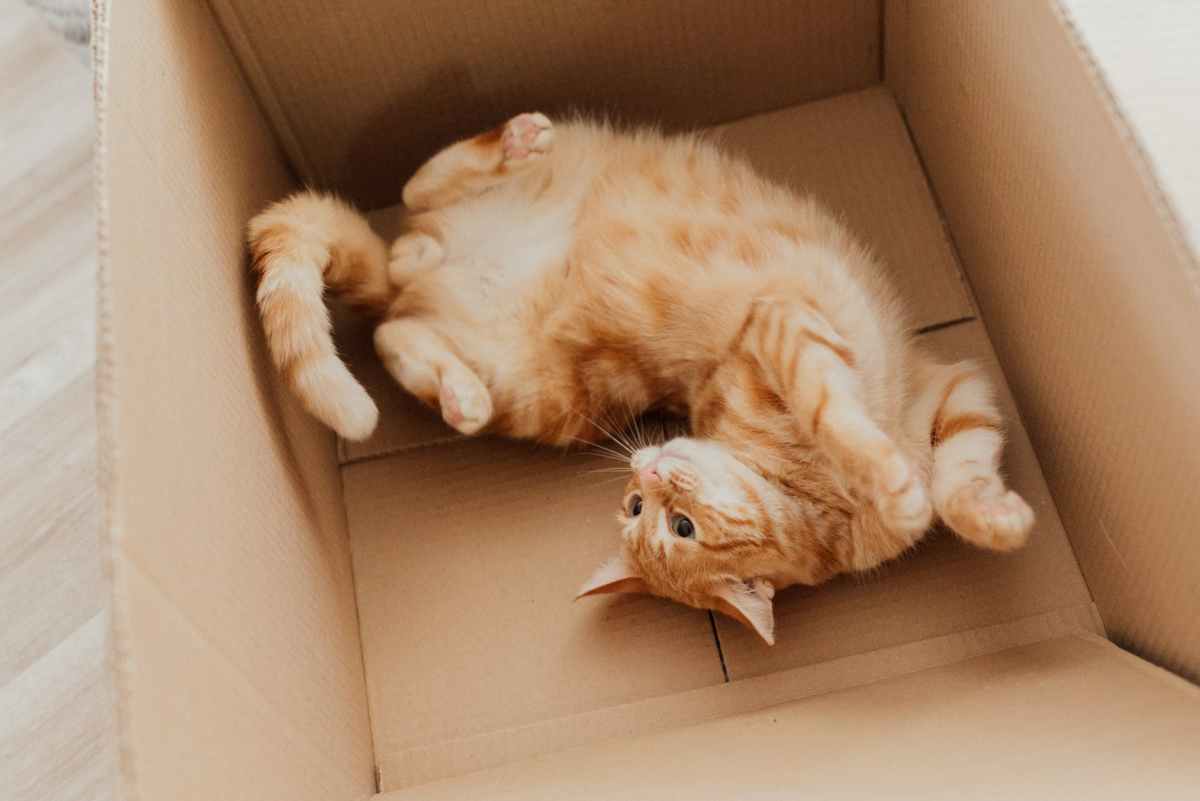
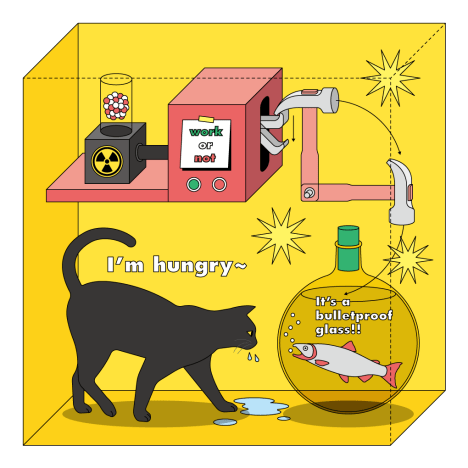
Imagine you have a sealed box with a cat inside. Inside the box are two buttons: One button feeds the cat a yummy treat, the other button kills the cat. There is an equal (50/50) chance of the cat pressing either button. (Other versions use a more complex system involving radioactive material, or poison, that could kill the cat, again with a 50/50 chance.)
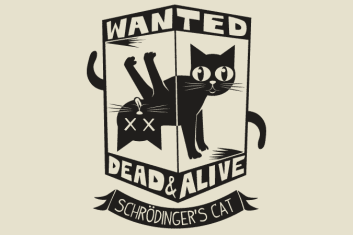
We don’t know if the cat is alive or dead until the moment we open the box. So in this thought experiment, we can think of the cat as both alive and dead until we “measure” or “observe” by opening the box.
That’s what’s happening in the above example of quantum entanglement and the idea that a particle is neither in one position or another until we measure it.
Why is measurement the key here? No one knows. Scientists are still arguing about that. Some believe that there’s some special quality of consciousness that interacts with the universe, so the mere act of observing something can change physical reality.
Others scoff at that idea and insist we’re missing something, that it’s not the act of observation that determines the final state of a particle at all.
Regardless, the important thing here for cat lovers is that Schrödinger’s cat is just a thought experiment.
Schrödinger never had a cat, as far as anyone has been able to ascertain, and no one has used an actual cat in an attempt to reconstruct the thought experiment because 1) You wouldn’t learn anything, since cats are not subatomic particles, and 2) Anyone intelligent enough to be a physicist is presumably intelligent enough to understand how absurd, pointless and cruel it would be to use a living being in an experiment that can’t give you any answers.
For those of us who aren’t geniuses, here’s Sheldon explaining the thought experiment as a child (in Young Sheldon) and as an adult (in The Big Bang Theory):
Meet the Feline Federation’s heroes, led by the dashing and brave Star Commander Bud!
In Catstronauts Vol. III, we meet Lieutenant Luna, a hotshot young pilot, Star Commander Leonidas, a stalwart explorer, the brothers Star Commander Zeus and Star Commander Taro, massive and fearless tiger warriors, Star Commander Hera, the most feared tigress in the galaxy, Lance Cpl. Oliver, a rising star in intelligence, Star Commander Alexandros, a decorated veteran of many galactic campaigns, Star Commander Xysto, the Felid Fleet’s most respected and capable captain, and Star Commander Buddy, whose bravery and prolific napping are the stuff of legend. (Click to view larger versions of each portrait.)
Star Commander Hera
Star Commander Buddy
Star Commander Alexandros
Lance Cpl. Oliver
Star Commander Leonidas
Lt. Luna
Star Commander Hesperus
Star Commander Zeus
Star Commander Taro
Star Commander Xysto
Star Marine Ajax
Star Admiral Heracles
Star Admiral Astraeus
The Battle of Dog 359, Stardate 2662
Star Commander Xysto and the fleet’s flagship, the USS Sparta, led a task force to the Wolf 359 system that included Zeus and Taro on their redoubtable USS Voidclaw, and Buddy with his dependable USS Fowl Play.
After the early evening Fleetwide Nap Time (FNT), the task force engaged the Gorn approximately 6.4 AU out from the system’s binary helix and earned a resounding victory. Cats occupying the bridges, engineering decks and gunneries of all three ships broke out catnip — the good stuff laced with silvervine, not that weak ‘nip made by domestic companies — and were toasting each other when their consoles meowed warning of approaching ships.
The celebration was short-lived as the flotilla was ambushed by a larger Gorn force that emerged from the shadow of an icy moon orbiting the system’s most impressive gas giant. The Felid Fleet was victorious once more in the ensuing combat, but at a cost: both the USS Sparta and the USS Voidclaw sustained heavy damage, while Star Commander Buddy was able to avoid enemy fire by hiding behind the other ships conducting a tactical retreat. Crew members from the other ships reported hearing Star Commander Buddy crying over the fleet-wide comms channel during the battle.
“I believe the commander was saying he was too young and handsome to die,” said Lt. Silverpaw, a science officer serving on USS Sparta. “We heard the commander’s own officers trying to calm him down, but the rumor — and again, I’m not saying this is definitely true — is that he soiled the captain’s chair before his XO was able to get him off the bridge and into his cabin.”
Star Commander Buddy, however, recounted the events differently.
“On Stardate 2262.45, the fleet under the command of Star Commander Xysto engaged with a Gorn expeditionary force that had been raiding colonies in the Outer Realm. While our forces engaged the first Gorn detachment, those sneaky lizards had a second group of ships flank us in an ambush pincer movement. Both the USS Sparta and USS Voidclaw were heavily damaged in the ambush, but my own USS Fowl Play evaded enemy fire due to my deft maneuvering and brilliant tactical handling. Taking command of the fleet, I was able to save the day. In fact, my leadership was so effective that before the battle was done, I declared I was going to have a nap and left the mop-up duties to my executive officer as I retired to my quarters.
“I recommend the admiralty give me medals and commendations and stuff, and ignore the obviously false and defamatory reports of my jealous rivals, who have concocted an absurd story about me ordering my ship to hide behind the others. I haven’t done that since I was a kitten!”
After action reports indicate Star Commander Buddy’s USS Fowl Play resumed its course in time for the regularly scheduled Fleetwide Nap Time (FNT) and returned to Starbase 12, home of the Feline Federation’s most widely celebrated restaurants, including Cluckin’ Clancy’s Turkey Extravaganza.
Ziggy’s an “honorary student,” and faculty say he’s got an attendance record other students should aspire to.
Ziggy the cat must figure school is an interesting place if his two young human siblings walk there every day, so he’s taken it upon himself to go too.
The four-year-old cat is such a common sight at Drury Primary School in Wales, about 30 miles south of Liverpool, that faculty there consider him an “honorary student.” Ziggy makes himself comfortable for naps on the headmaster’s desk, attends school assemblies and likes to run around the playground.
Ziggy, who pops in and out of classrooms as he sees fit, walks 10 minutes to the school every day with his humans, Megan Roberts, 10, and Chloe Roberts, 7.
Mark Bitcliffe, Drury’s head teacher, told local daily The Leader that it’s “impossible” to keep Ziggy out, so the school has accepted him as a “student.” The cat shows up so reliably that Bitcliffe said he’s “an example to other pupils.”
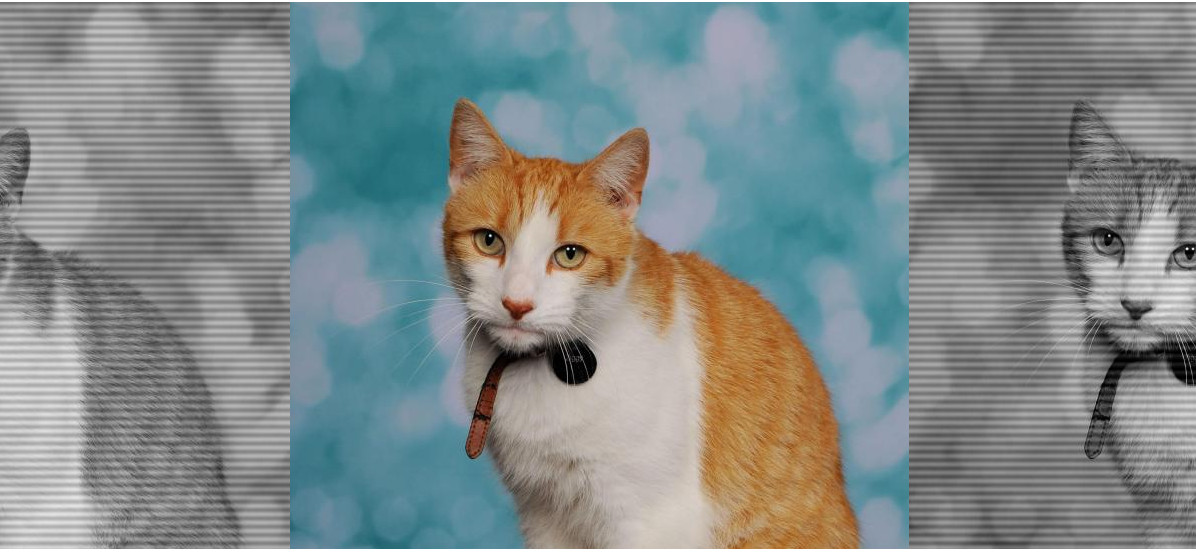
But Ziggy really “took the biscuit” during school picture day during the last week of September, mom Emma Roberts said. The orange and white feline waited until he felt it was his turn to pose for a school photo, then hopped up onto the chair in front of the photographer as if it was the most natural thing in the world. The school sent his photos home along with school portraits of Chloe and Megan.
“Chloe handed the letter to me [after school] and I expected it to be her photos. But then when I looked I was just in floods of laughter and so were the other mums standing by me,” Emma said. “I asked her what had gone on and she said he just jumped on the chair. He didn’t need any encouragement, he just got up there for a photo.”
A preview of Ziggy’s school photos, which was sent home to his humans like every other student’s portraits.
Ziggy’s an honorary student.
Ziggy walks to school with Chloe and Megan.
Bitcliffe, the faculty and the students at Drury love Ziggy’s antics, and they say he’s been educational too, as he’s given kids without pets the opportunity to learn how to interact with animals.
“It’s difficult to keep a cat off the school grounds, even if you wanted to, but thankfully he’s one of the nicest cats I’ve ever come across,” Bitcliffe said. “He thinks he’s a pupil so it’s fitting he’s had his own photo. I think it’ll be put up on the staff noticeboard. One time he was on the top ledge of the shelves in the secretary’s office and he’s been known to sneak into mine, sit on the chair and fall asleep. It’s his second home I think. His attendance is not an issue and he’s actually setting a good example to the other children.”
“We’ve not been looking to have a school cat or dog really, but he chose us.”
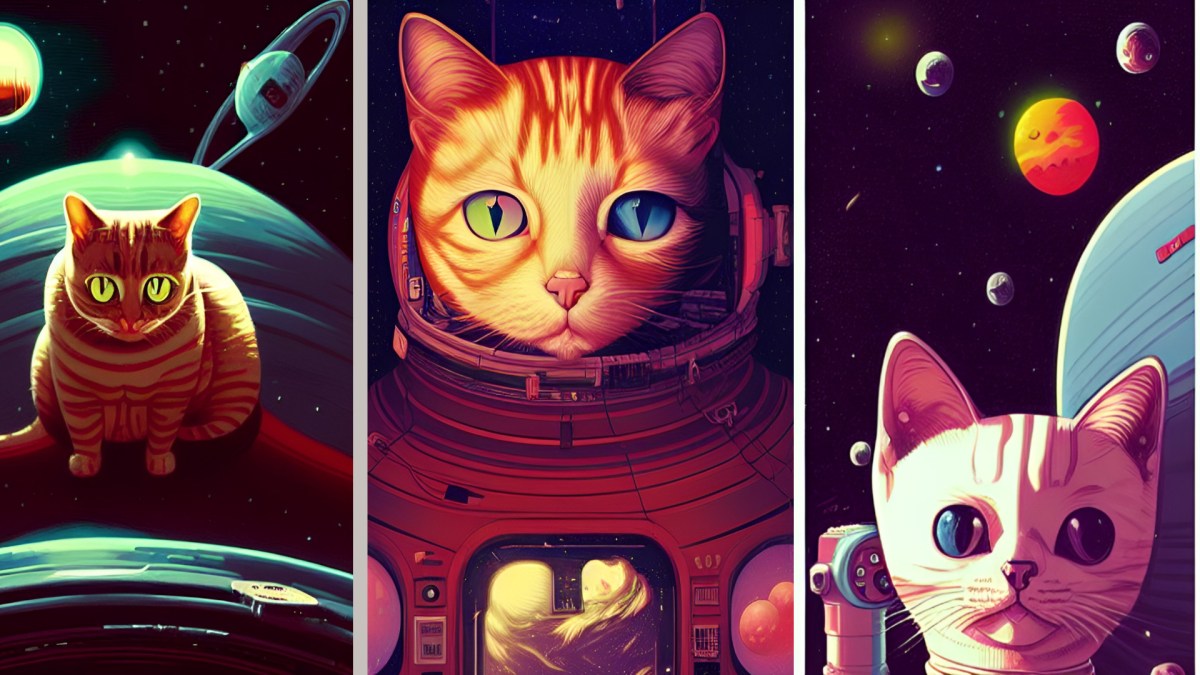
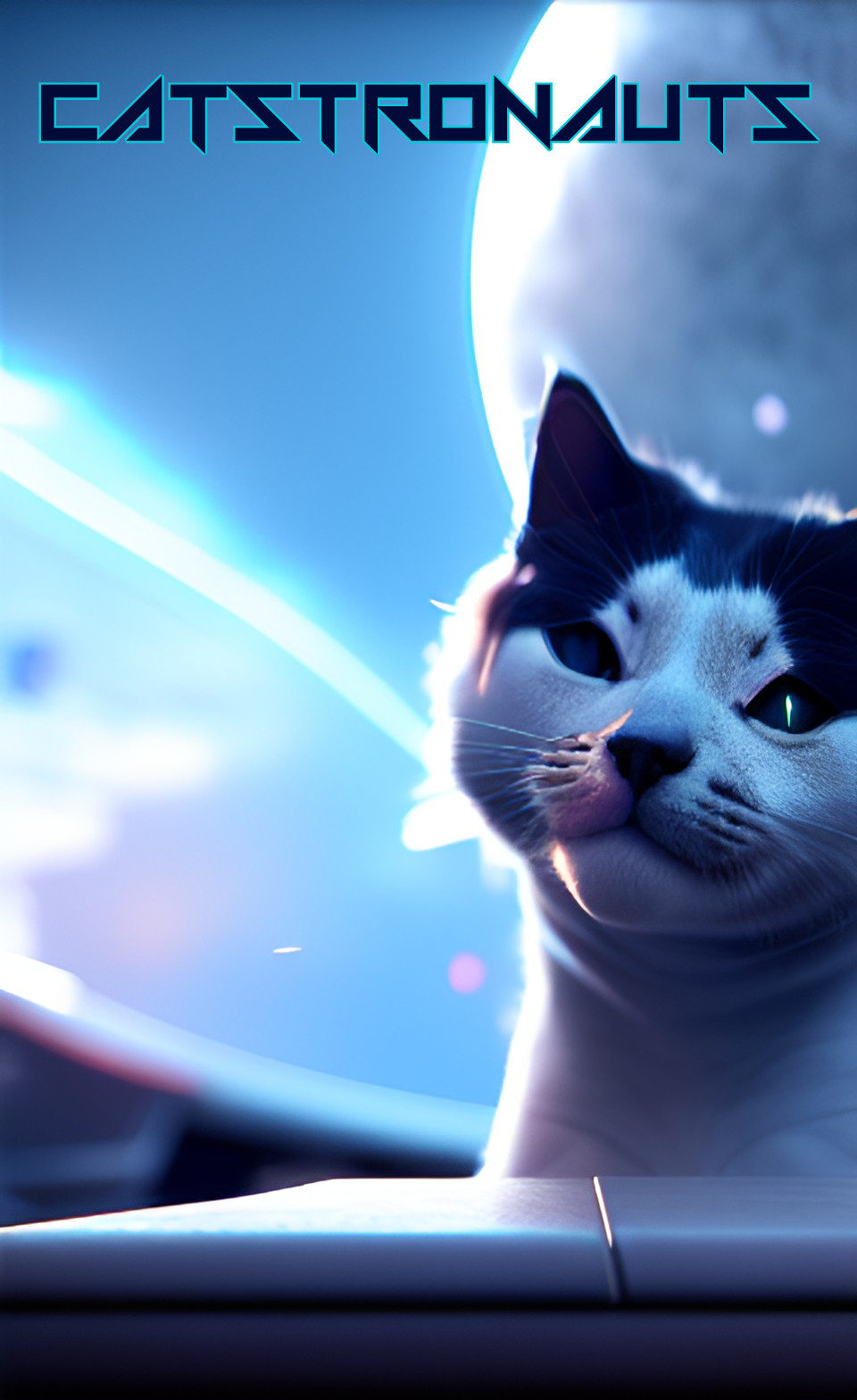
Felines explore the final frontier in these new images from Catstronauts Series I and Series II.
Why do cats explore space? Will they still need humans in the future? How do they squeeze litter boxes into those space suits? What about litter boxes in zero G on their starships? Is it the USS Enterprise, or the USS Enterpurrize? If aliens are observing Earth from afar, will they correctly identify felines as the superior species on this planet?
These are all pressing questions. Little Buddy and Big Buddy invite you to ponder them as we reveal Catstronauts, a project we’ve been working on. Watch out for new series of Catstronauts in the future as kitties boldly go where no feline has gone before. Click images for full-size versions.








 Pain In The Bud