“Harm or death to an animal caused by another animal is not a criminal matter,” even when footage shows dog owners urging their pets to attack, the NYPD claims.
The NYPD says its hands are tied after a group of people sent their pit bulls after a well-known shop cat in Manhattan and cheered as they dogs brutally ended the tabby’s life.
Freddy was the resident moggie at Michelle Flowers, a florist on Amsterdam Avenue in Washington Heights. The little guy was outside the shop at about 9 p.m. on July 4 when a man and two women set their dogs loose on him, then celebrated and cheered as they killed him.
Credit: Cat Collective
The pit bull owners then “smoked, danced and ate food while taking photos and mimicking the grisly scene,” according to the New York Post. Surveillance cameras caught the attack and its aftermath, showing the three black-clad dog owners and others who witnessed the violence and did nothing.
A disgusted neighbor contacted the Cat Collective, a group of volunteers who feed and care for strays in the neighborhood, and they collected Freddy’s remains, then told the florist’s owner what happened.
“Someone deliberately set dogs on a defenseless cat while people watched and cheered,” Dan Rimada of Bodega Cats of New York told the Post.
Cat Collective is offering cash rewards to anyone who can identify the dog owners and the celebrating bystanders, but the police won’t do anything.
An NYPD spokesman told the paper that “harm or death to an animal caused by another animal is not a criminal matter,” citing a gap in the law.
A proposed bill, dubbed Penny’s law after a chihuahua that was mauled by pit bulls earlier this year in Manhattan, hasn’t made it out of committee in the New York State legislature, while New York’s city council is looking at a municipal law that would make it a crime to set dogs on other animals.
Credit: Cat Collective
It’s actually difficult to believe nothing can be done to get justice for Freddy, Penny and other animals aside from civil cases, which can only result in monetary damages.
Manhattan DA Alvin Bragg, who is controversial to say the least for creatively interpreting the law, seems like just the kind of district attorney who could find a way to prosecute the dog owners. The fact that the authorities are outright dismissing the possibility indicates Bragg doesn’t see this as a priority.
Working with the police to find ways to get justice is Bragg’s job, as well as the job of the attorneys working for him in the district attorney’s office. At the very least, they should be able to find something with which to charge the suspects, even if it really turns out there’s no way to hold them criminally accountable for Freddy’s death.
We hope Freddy’s killers are identified and held responsible, and we hope no more pets and strays have to be killed before lawmakers at the city and state level make it a priority to close an obvious gap in the law.
From summer 2014 when Bud was about five months old.
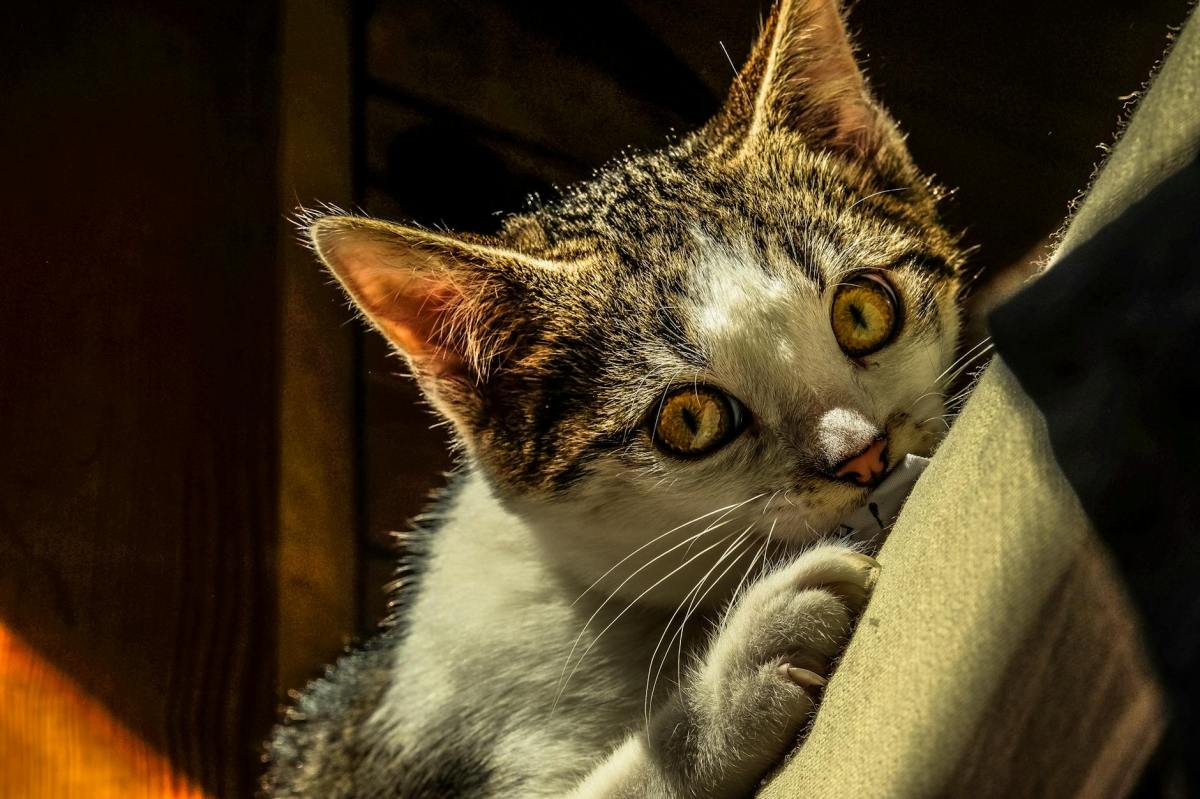
Bud says: “Derp derp derp! I’m a bug-eyed kitten! Derp!”Bud says: “Now THIS is a more regal image befitting my status as a handsome feline!”Bud says: “Here I am in action! As you can see, I was ripped but not quite as meowscular as I am now.
Rhode Island’s law has some teeth: veterinarians who violate it will have their licenses suspended or revoked.
Five down, forty five to go.
With a new law going into effect in the fall, Rhode Island joins New York, Maryland, Virginia and Massachusetts in banning the declawing of cats.
Declawing may sound like a sort of kitty manicure, but the neutral name disguises a cruel form of elective mutilation that involves amputating a cat’s toes at the first knuckle.
It’s the equivalent of chopping off 1/3 of each finger, all to prevent potential damage to inanimate objects like furniture.
“Declawing is painful, unnecessary and inhumane. It’s no way to treat any pet,” said Rhode Island state Sen. Melissa Murray, one of the bill’s co-sponsors. “Fortunately, there has been growing awareness of the risks and cruelty of declawing. Our state must recognize that declawing is animal abuse and prohibit it altogether.”
Rhode Island’s new law is more prohibitive than some of the others: veterinarians who declaw cats once the law goes into effect on Sept. 1 will have their licenses suspended or revoked entirely.
Declawing doesn’t “just” cause short term pain from the procedure. It forces cats to change the way they walk and move in general, altering their gaits. As a result, declawing leads to early onset arthritis among a host of other medical problems.
Declawing also results in psychological and behavioral problems. Cats who are declawed often become depressed, and they’re more likely to avoid the litter box since standing on litter is painful for them.
Since the procedure also takes away their primary defensive mechanism, declawed cats are much more likely to bite, which along with litter box avoidance means they’re more likely to end up abandoned in shelters.
Bud’s got this one, which is sold as the Ultimate Scratcher, which is about 3 feet tall and sturdy, offering an optimal place for cats to literally scratch their itch.
Cats should never be declawed!
There are several viable options for keeping them from scratching furniture, including nail caps and redirecting them to scratchers. The latter are a bare necessity if you have a cat, as scratching is a natural feline behavior and our little friends will find something to scratch if we don’t provide them with appropriate scratching surfaces.
Since cats like to stretch while they scratch, I highly recommend getting a large tower scratcher with a secure base. Bud has one, he uses it constantly, and he does not touch the couch or the chair in the living room, nor does he touch any other furniture. It can be done, it just requires patience and consistent redirecting, with positive encouragement.
Negative reinforcement, such as yelling at your cat, will not achieve results. The only thing it will accomplish is damaging your relationship and trust with your cat.
Since New York became the first state to ban declawing in 2019, more states have considered similar legislation. Although routinely opposed by state Veterinary Medical Associations — special interest groups that represent a portion of veterinarians who see declawing as a reliable money-maker — lawmakers have allied with veterinarians in support of bans, as well as groups like the Humane Society, the SPCA, the Animal Legal Defense Fund and the Paw Project to overcome opposition and get bills passed.
Bodega cats are the stars of a popular online series and could soon become legal in New York, where they’ve helped keep delis and small groceries rodent-free for as long as such places have existed.
Although it’s way too early to celebrate, Pennsylvania could become the fourth state to outlaw cruel declawing procedures after two lawmakers there introduced a new bill.
The Pennsylvania declawing ban proposal closely mirrors laws already passed in New York, Maryland and Massachusetts, and would outlaw the procedure except in cases where it’s medically necessary. (Although extremely rare, sometimes cats suffer from cancer of the nail bed and other maladies that necessitate surgery, but that’s a far cry from the elective declawing currently legal in 47 states.)
The state’s Veterinary Medical Association, the usual villain in these situations, is opposed to the ban. State veterinary medical associations argue that outlawing the procedure — which amputates a cat’s toes up to the first knuckle — would limit options for veterinarians and caretakers.
The veterinary medical associations, which contrary to their names do not represent all or even most veterinarians, also claim that declaw bans lead to more surrenders, but that claim has been repeatedly debunked by statistics from states and municipalities where bans have passed. In each of those cases, surrenders actually decreased, which is not a surprise to those who understand declawing, rather than “solving” any behavioral issues, actually causes cats to lash out even more because of the suffering they endure from the mutilation.
Here in New York, the Veterinary Medical Association successfully prevented declawing bans from making it out of committee for years, despite organizations like the Humane Society, SPCA, Alley Cat Allies and others wholeheartedly opposing elective declawing. Each state VMA buys influence with campaign donations, and relies on the lawmakers they support to kill declawing bans. Let’s hope Pennsylvania’s Veterinary Medical Association proves less adept at derailing that state’s bill.
The Last Cat of the Skies: The Iconic F-14 Tomcat
When I was a kid, the two Dream Machines that adorned posters on my wall were the Lamborghini Countach and the F-14 Tomcat. The Countach remains a car without equal with its inimitable, angular design that still manages to look futuristic more than half a century since the first models rolled out of the factory.
The twin-engine Tomcat is kind of like the Countach of fighter jets with its variable wing geometry, prominently angular air intakes and unique silhouette that makes it easy to distinguish even from the ground.
A Tomcat from the Nimitz-class aircraft carrier USS Theodore Roosevelt (CVN 71) during a combat flight over the Persian Gulf in 2005. Credit: U.S. Air Force photo by Tech. Sgt. Rob Tabor
Grumman’s air superiority fighter was immortalized in pop culture when Tom Cruise’s ace fighter pilot, Maverick, flew the aircraft in 1986’s Top Gun, and the Tomcat enjoyed a nostalgic encore in 2022’s excellent Top Gun: Maverick, displaying its staying power in a film that also heavily featured newer aircraft like the F-18 Super Hornet and the sixth generation prototype “Darkstar,” based on Lockheed Martin’s secretive SR-72.
The F-14 is the last of Grumman’s “cat” aircraft, after the Wildcat and Hellcat, and while it no longer fills a role in the US military, it remains a potent weapon for other countries half a century since its first flight. You can read all about the Tomcat in The Aviationist’s new feature here.
The Tomcat’s variable wings were a technological marvel when the aircraft was first released. The wings are swept forward for takeoff and landing, and typically swept backward during high speed, high altitude flight, allowing the fighter to maneuver in ways other aircraft could not. The wings can also shift to an asymmetrical configuration, allowing for unique capabilities in flight.
New York’s deli cats get their say
Bodega cats, longtime fixtures of New York’s answer to grocery stores, are enjoying a moment thanks to a major push to finally legalize their presence, and popular social media accounts featuring photographs of the beloved mousers keeping watch over their stores and snoozing in snack aisles.
A bodega cat in New York takes a siesta from his usual napping, eating and rodent-hunting duties. Credit: Wikimedia Commons
Now the New York Times has a feature on the popular TikTok series Shop Cats, which features “interviews” with the neighborhood felines.
Like Buddy, they seem to have an odd fascination with Mao Zedong, and their answers don’t make much sense, but that’s part of their charm. Check it out here.
While the sensational claims have spawned headlines around the world, a closer examination raises more questions.
According to dozens of articles, a pair of new studies throws doubt on the commonly-held view that cats self-domesticated 10,000 years ago by helping themselves to rodents invading human grain stores.
The conventional wisdom for some time has been that house cats are the domesticated ancestors of felis sylvestris lybica, the African wildcat. Their genomes are nearly identical, it’s often difficult even for experts to tell the species apart, and they’re much more tolerant toward humans than the comparatively hostile felis sylvestris, the European wildcat.
But two new papers are raising eyebrows for their fantastic claims that feline domestication was actually human-driven and began about 5,000 years ago in Egypt.
Specifically, the papers claim cats were sacrificed en masse by the cult of Bastet, an Egyptian feline goddess, guiding the species toward domestication in a way that doesn’t quite make sense with what we know of evolution.
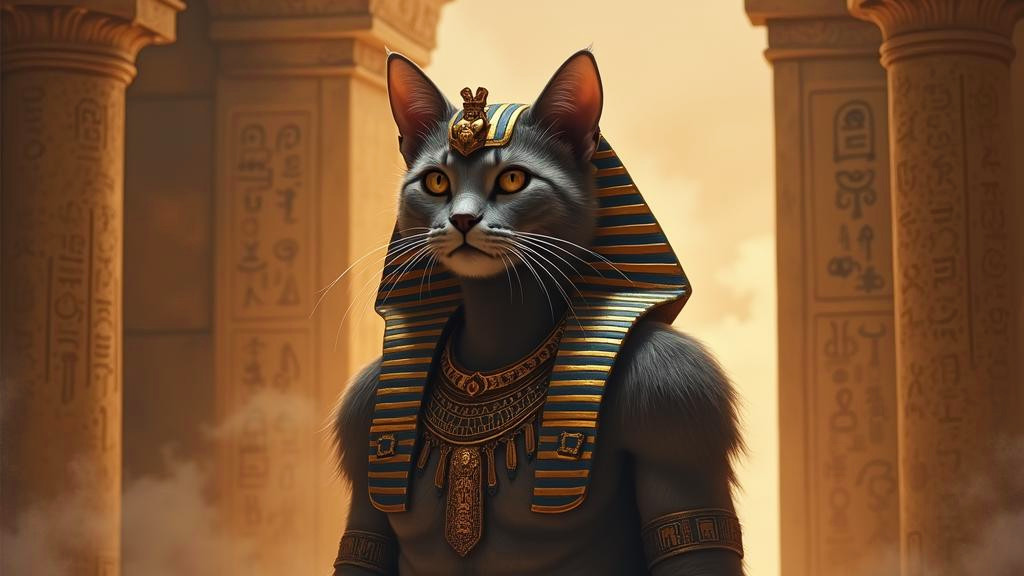
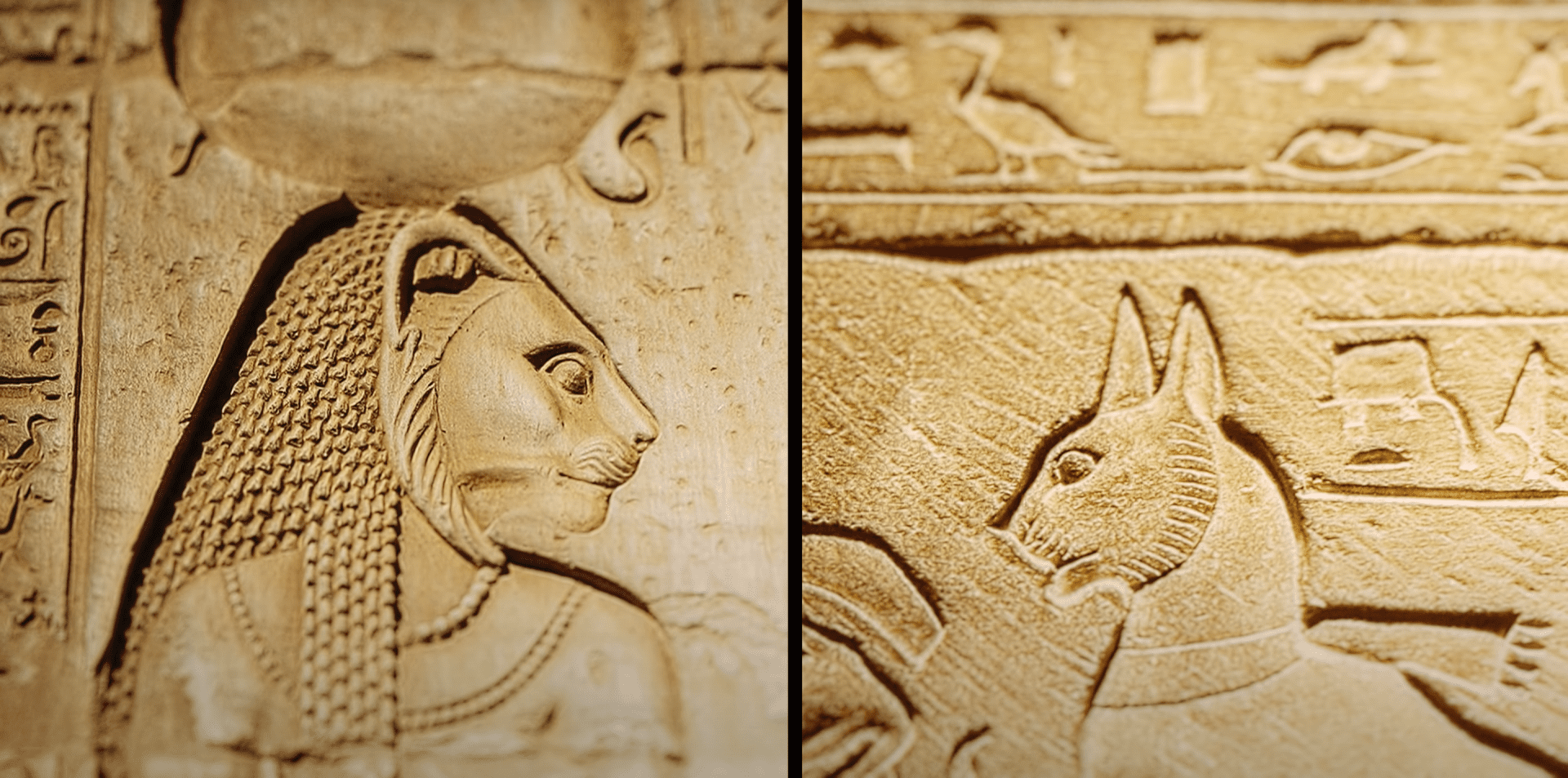
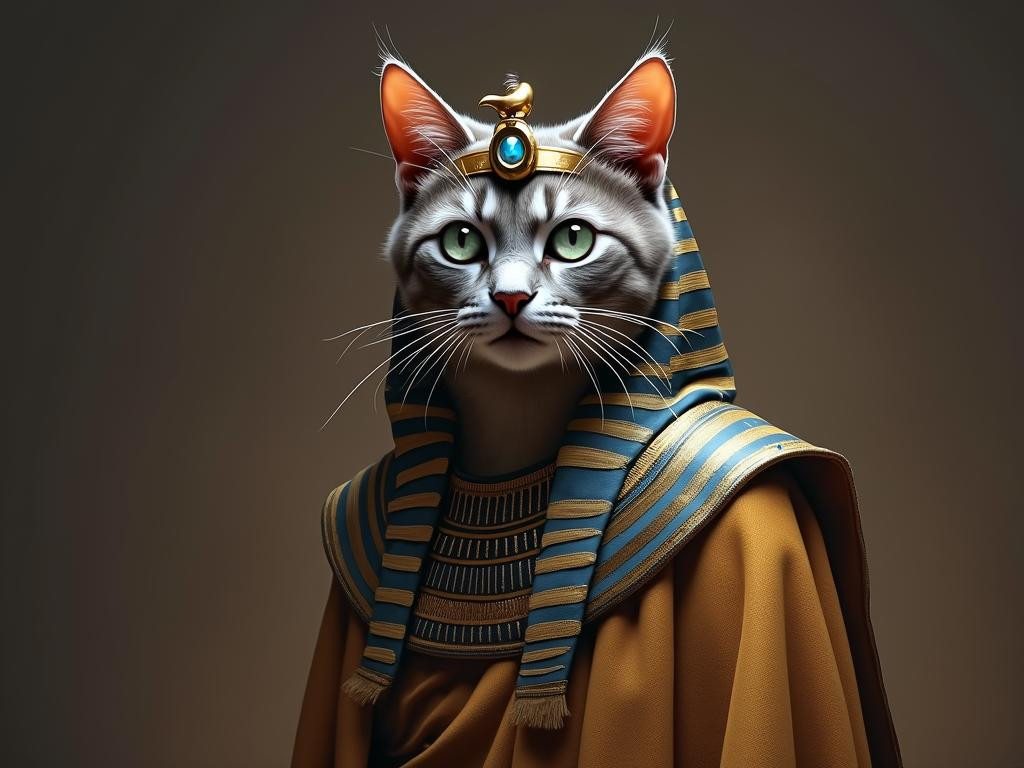
Bastet was originally depicted with the head of a lion, but the imagery around her evolved as she became a more prominent deity in the Egyptian pantheon. Later glyphs depicted her with the head of a domestic cat or African wildcat.
There are two main elements to the new claim:
The earliest grave in which a cat was buried with a human was dated to about 10,000 years ago, and was found in Europe. But an analysis of the cat’s remains indicate it had DNA somewhere between a wild cat and a domestic feline. That, the authors claim, throws into doubt the idea that cats drifted into human settlements, drawn by the presence of rodents.
If domestication was closer to 5,000 years ago, that would coincide with the rise of the cult of Bastet, the Egyptian cat goddess, around 2,800 BC.
Instead of the feel-good, fortuitous sequence of events the scientific community has accepted as the likely genesis of our furry friends, the authors of the new papers claim aggressive and fearful traits were essentially murdered out of the feline population by Bastet cultists who sacrificed cats in large numbers and mummified their corpses.
Neither paper has been peer-reviewed yet, and experts on ancient Egypt, genetics and archeology have already begun pushing back.
The new timeline, they say, doesn’t quite add up, with cat mummies found throughout different periods in Egyptian history, not just during the height of Bastet’s popularity in the Egyptian pantheon. Bastet’s popularity came approximately 700 years later than the authors claim the sacrifices began, and early imagery of the felid goddess depicts her with a lion head. It wasn’t until later centuries that Bastet was represented with the features of a domestic cat.
The powerful Pharaoh Budhotep I, considered an apocryphal king by some, sent a fleet of ships to the Americas to bring back turkey, according to legend. Credit: The Royal Buddinese Archaeological Society
Separate from timeline concerns is the lack of historical evidence. Cats were revered in ancient Egypt, and while there are an abundance of cat mummies — as well as the mummified remains of many other animals — that does not mean the cats were ritually sacrificed.
Indeed, archaeological, hieroglyphic and anthropological evidence all show cats enjoyed elevated status in the Egypt of deep antiquity, long before the nation became a vassal state of the Greeks, then the Romans.
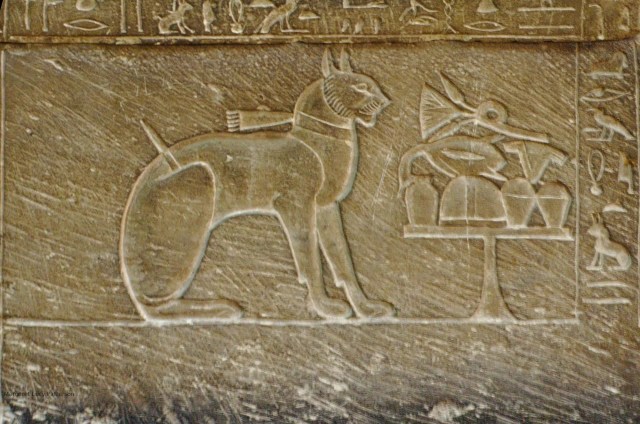
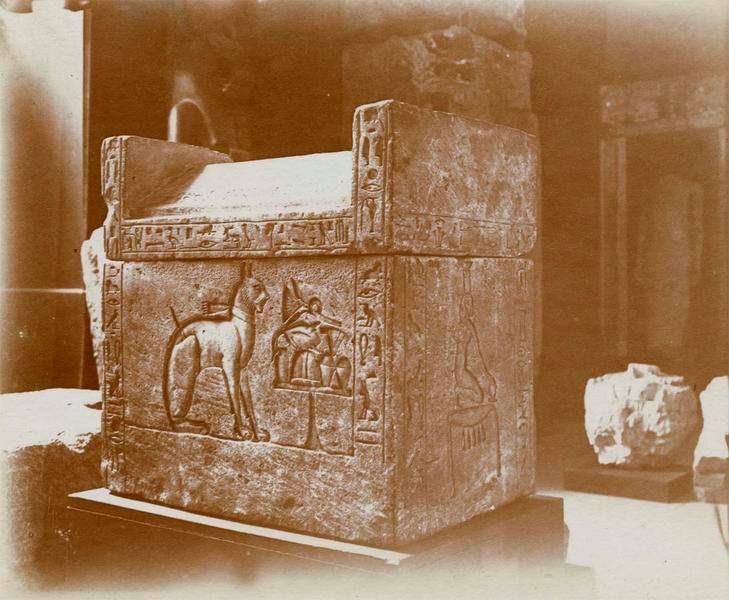
Cats were associated with magic, the divine and royalty, and cats who were the favored pets of Egyptian elites were given elaborate burials. Like Ta-miu, Prince Thutmose’s cat who is known for her grand sarcophagus decorated with images of felines and prayer glyphs meant to guide her to the afterlife.
Cats were sacred companions to the Egyptians
When cats are found buried with humans, the more common explanation is that those cats were the pets and companions of those humans. If the authors of the two new papers want to prove their claim that cats were ritually sacrificed by the tens of thousands — slaughter on a scale that would influence evolution — they’ve got a lot more work ahead of them. (And the burden of proof rests squarely with them, as the originators of the claim.)
Not only does their research attempt to change the origin stories of kitties to an ignominious tale of human barbarity, if we take their assertions at face value, we’re talking about a case of “domestication by slaughter.”
While it may be true that the earliest evidence of companion cats outside of North Africa revealed hybrid DNA, that doesn’t cast doubt on the commonly-accepted view of feline domestication, it strengthens it. Domestication is a process that takes hundreds of years if not more, and it occurs on a species level, so it makes perfect sense that cats found in burial sites from early civilization would be hybrids of domestic and wild. Those felines were of a generation undergoing domestication, but not quite there yet.
A detail from the sarcophagus of Ta-miu, Prince Thutmose’s beloved cat.Ta-miu, Prince Thutmose’s beloved cat, was buried in an elaborately decorated sarcophagus with glyphs and offerings meant to guide her to the afterlife. Thutmose, son of Amenhotep III and Queen Tiye, lived in the 14th century BC.
Killing off docile cats?
Which brings us to another significant problem with the claim: if the ancient worshipers of Bastet were selecting the most docile and easiest-to-handle wildcats for their sacrifice rituals, as claimed, then they would be influencing evolution in the other direction.
In other words, they’d be killing off the cats who have a genetic predisposition toward friendliness, meaning those cats would not reproduce and would not pass their traits down. It would have the opposite effect of what the papers claim.
So despite the credulous stories circulating in the press and on social media, take the assertion with a grain of salt. Something tells me it won’t survive peer review, and this will be a footnote about a wrong turn in the search for more information on the domestication of our furry buddies.
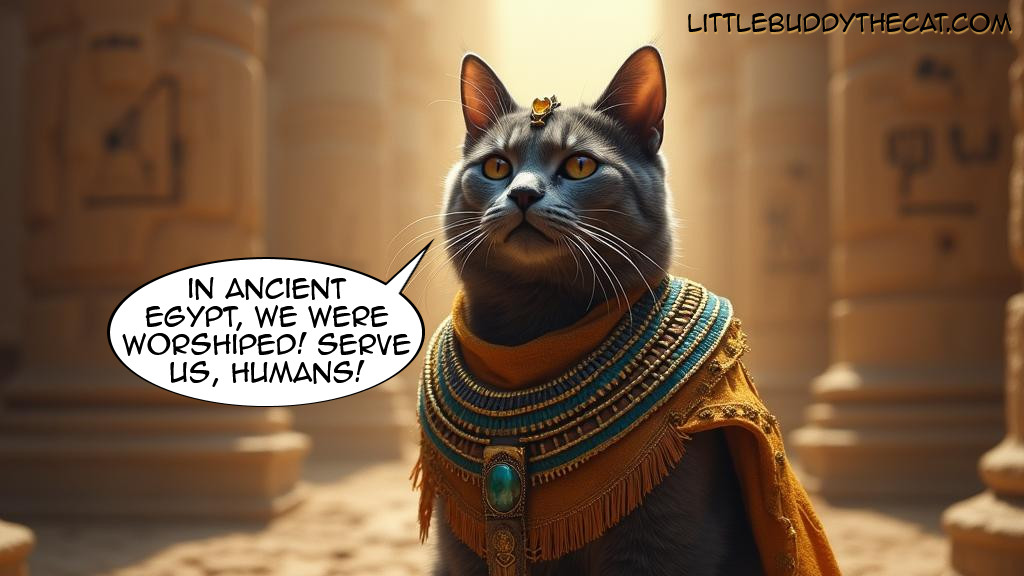
Cats would like human civilization to return to the good old days.