Happy birthday to us, happy birthday to us! Happy birthday dear Buddies, happy birthday to us!
We received a notification from WordPress congratulating us on four years with WordPress, although this blog isn’t technically four years old. It started as a place for my random scribbles about Buddy and as a sort of travelogue for my trip to Japan, and it wasn’t until September of 2019 that I registered the domain and started blogging in earnest, transforming the site into the Pain In The Bud we all know and love today.
Over the last few years we’ve been fortunate enough to merit the attention of critics, who have lavished praise on us:
“There’s a reason young kittens the world over have posters of Buddy on their walls. He’s effortlessly charming, possessed of inimitable wit and he’s got one hell of a singing voice.” – Fat Cats magazine
“An indictment of the American education system. I feel dumber for having read it.” – Oprah Winfrey, O Magazine’s guide to the Worst Blogs On The Internet
“An extraordinary blog focused on an exceptional cat whose wit is sharper than Valyrian steel. Endlessly entertaining.” – The Buddesian Times
“A catnip junkie and the human who enables him. Gives all cats a bad rep.” – Veterinary Association of America
“Has there ever been a cat more handsome and interesting than Buddy? That’s a rhetorical question, by the way.” – The Chronicle of Higher Buddy
“It’s difficult to tell who’s the bigger moron, the human or the cat. They enable each other, launching their idiotic schemes to take over the world and horde its turkey. Thankfully they’re as incompetent as they are clueless.” – Jefferson Nebula, host of My Cat From Hades
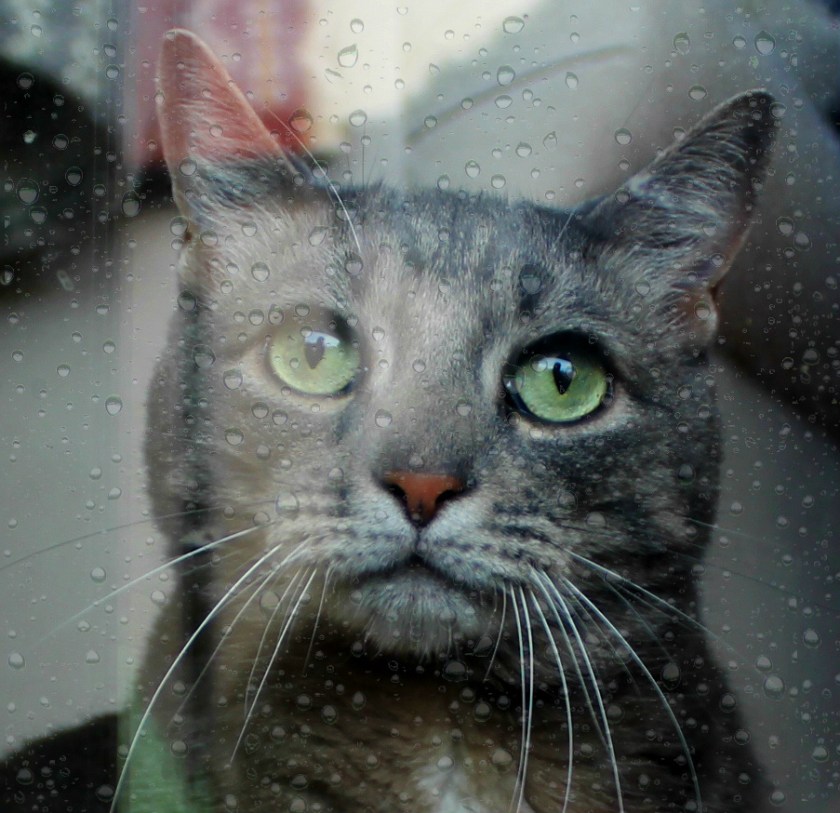
Of course we would not be here if not for our readers. Thanks for finding us, sending us your ideas and most of all, feeding Buddy’s ego by telling him what a charming, interesting and ferocious tiger he is.
On a related note, since I’m not sure of Buddy’s exact birth date, we celebrate his birthday and adoptiversary around the third weekend of April.
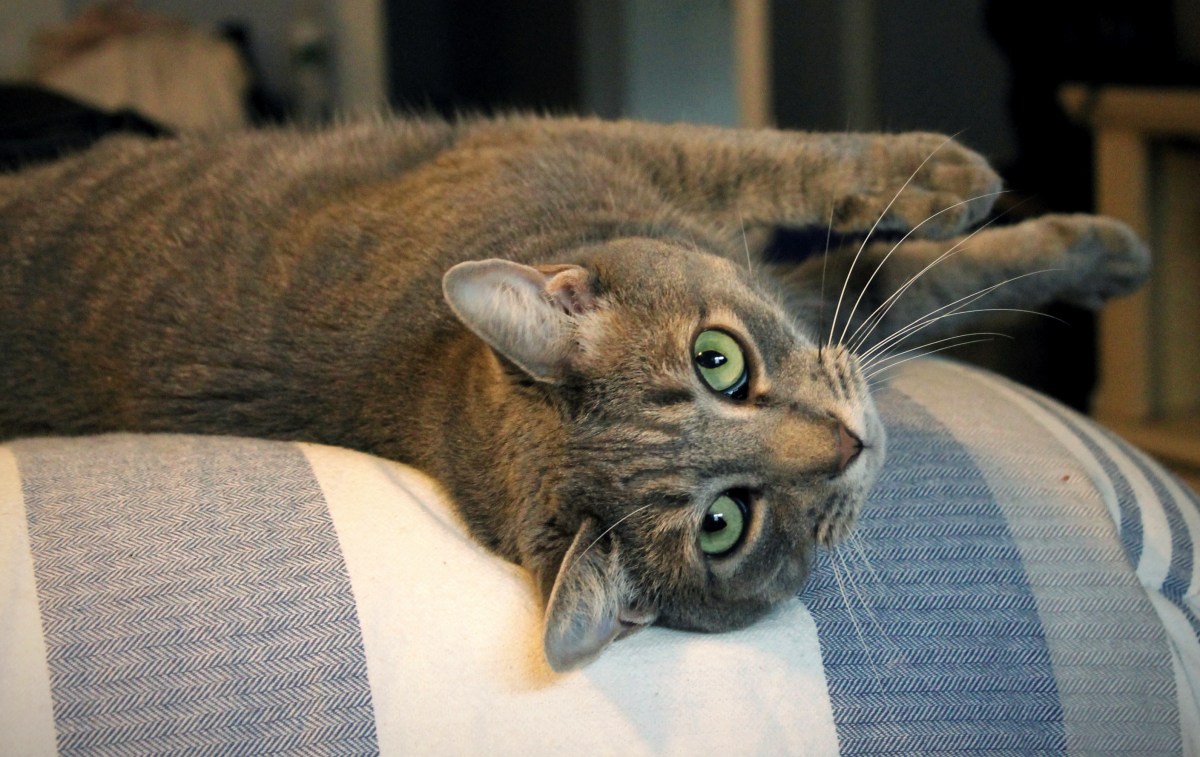
Happy birthday, Bud!
Bud, you sexy beast, you!
How the heck is the little guy nine years old? That doesn’t seem possible. The age equivalency chart says that’s the equivalent of 52 human years, but Bud still has a spring in his stride, meows like a little baby and likes playing with his toys, especially the game called “Mighty Hunter” in which I manipulate wand toys like prey and he ambushes them. Since he doesn’t know he’s supposed to deliver a “kill bite” and hasn’t made the connection that hunting = food, he happily bobbles the toy with his front paws while bouncing around on his feet, then rushes to cover to reset the game.
I will not dwell on or speculate about how long he’ll be with us because I turn into a blubbering mess despite being a grown ass man, so I’ll just say I’m extremely grateful that he’s healthy and happy, and I’ll continue to enjoy every minute with him.
Except when he meows really annoyingly when his food is late. And when he wakes me up by grooming my face. Oh, and his insistence on walking 1/10th of a stride in front of me so I’m always in danger of tripping on him. Also, when he goes into super annoying determined mode and tries to wake me by punching the door flap on his litter box, knowing the squeak of the hinges drives me crazy.
He is very accomplished at annoying me, but that’s okay. He’s my little Buddy.
Plagiarized, you say?
Thanks to those of you who alerted us to a PITB story that was plagiarized by a pet-focused site recently. We’re aware of it, and unfortunately it’s not the first time.
It takes a lot of time and effort to create readable, entertaining content, and there are people who simply don’t care and help themselves to the content without scruples. Almost all of them are based in countries whose authorities don’t respect US intellectual property rights and won’t cooperate with any takedown notices or legal threats.
The Drudge Report, for example, famously links to DNUYZ, a site run by an Armenian guy who steals content from the New York Times, Washington Post, The Atlantic, The Financial Times and other news sites. Google canceled DNUYZ’s AdSense account, but the operator simply signed up with a different ad server, and he makes a tidy profit by stealing content en masse.
If major media organizations can’t stop this nonsense, I have no hope. I’ve had some luck petitioning sites that host third-party content, but many don’t respond and I don’t even get an apology from those who do acknowledge that my content was posted to their sites, earning them pageviews and ad revenue.
There is a way you can help, however. Every time someone links to a PITB article, it incrementally increases our legitimacy in the eyes of Google, and that’s important because it means PITB shows up first when people search for an article or topic on this site, rather than the plagiarized versions copied by content scrapers in countries like India and Russia.
I am not asking people to randomly link to PITB. That wouldn’t help anyway. However, if there’s a story you really like, consider sharing it on social media and help spread the word. Organic virality is the name of the game, and Buddy and I think we do offer something relatively unique in the cat-o-sphere with a blog from a dudely perspective with a focus on absurdist cat humor, big cat conservation and important news stories that impact our furry little friends.
And if that’s not reason enough, well, just look at him. He’s a sexy beast, and surely your cat-loving friends would be angry with you if you did not tell them all about Buddy and his adventures. Don’t make them upset. Do them a solid and invite them to the Wonderful World of Buddy!
One of the most pampered kitties in human history has been invited to the “most prestigious” fashion event, which will honor her late human servant this year.
She drinks out of silver bowls, is toted around in a custom $3,000 Louis Vuitton carrier and pads out her fortune by earning millions hawking makeup and luxury vehicles.
Now Choupette, the sapphire-eyed cat who belonged to the late fashion designer Karl Lagerfeld, has been invited to the most exclusive party in the world.
Choupette’s agent, Lucas Berullier, confirmed receipt of a Met Gala invitation to the New York Post, but was coy when asked if Choupette would actually show up.
The Birman cat was personally invited by Vogue editor-in-chief Anna Wintour, who oversees the event, and the Post points out Choupette could play a central role because the 2023 gala will honor Lagerfeld and his career as the creative director for Chanel.
Choupette is credited with mellowing the icy German designer, who quickly fell in love with her and made her his muse, adding her to fashion shoots where she lounged in the arms of models like Vanessa Paradis and Cara Delevingne.
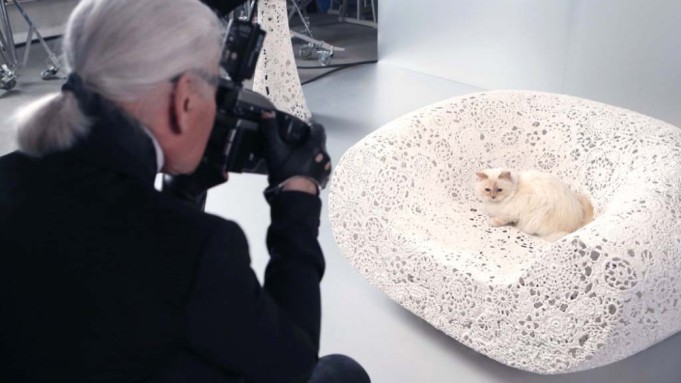
Lagerfeld photographs Choupette, his beloved Birman cat.
Choupette appears in the current issue of Vogue, cradled by supermodel Naomi Campbell on a bridge in Paris’ Grand Palais. The photo and others in the gallery were shot by Annie Leibovitz.
The exact size of Choupette’s fortune has never been publicly disclosed, but publications like Forbes have reported Lagerfeld left $13 million of his $200 million-plus net worth to the pampered feline. Choupette has added to her largess over the years, amassing further millions as she appears in advertisements, fashion campaigns and photoshoots.
Lagerfeld’s former housekeeper, Françoise Caçote, cares for Choupette and manages her social media accounts.
The Met Gala is a charitable event, so normally it wouldn’t feel right to snark about it, but “the most prestigious fashion event” of the year looks like a Zoolander scene come to life. Guests are required to attend in haute couture outfits by prominent fashion designers, which means the typical attendee’s clothes and accessories cost more than many Americans earn in a year.
There’s a theme every year — aside from the usual preening privilege and a collective effort to ignore reality — and the outfits are ostensibly “costumes,” but no one’s showing up in stuff they bought from Party City.
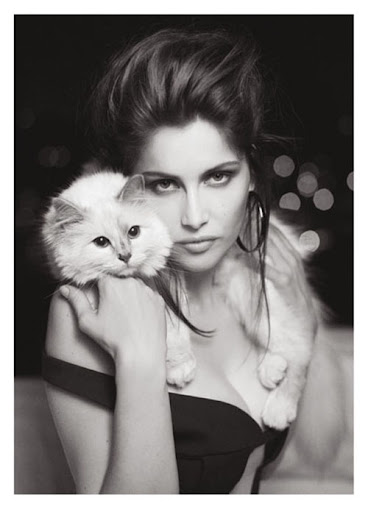
Choupette and supermodel Laetitia Costa pose for V Magazine. Choupette has also appeared on the cover of Vogue several times.
And while the gala is technically a charitable event, the proceeds won’t help starving kids or war victims — as the brainchild of Wintour, the event is designed to raise money for the fashion world to further celebrate itself.
When I see people like Wintour, the celebrities in her orbit and the old money types who like to be photographed at these events, I enjoy thinking about how they’d react if their jets went down over a place like the Amazon, and all the Dolce and Gabbana in the world can’t help them build a fire or catch dinner. “Do you know who I am?” doesn’t work in jungles.
But the one character I will never insult is Choupette herself. Buddy looks very handsome in a tuxedo, and I shall realize my plan to sneak him into one of these parties, have the two of them “accidentally” bump into each other, and let Buddy’s charm do the rest. Then he’ll really be living large. 🙂
Staff are demoralized, volunteers are spooked and the shelter has been buried in negative reviews after a TikToker picked a fight over an adoption fee and her army of followers went vigilante.
The voicemail is chilling not only for the explicit threat the person on the other end makes, but for her chipper tone as she casually threatens the lives of the people working at a west Michigan animal shelter.
“So anyway,” the caller says at the end of the unhinged message, “I’ll blow this number up and I’ll blow your location up as well. Hope you have a wonderful day!”
It’s one of three bomb threats the shelter has received since TikTok influencer Chloe Mitchell began the saga of what she calls “the $900 cat.”
Mitchell adopted a kitten from Michigan’s Noah Project, a small no-kill shelter, in early March. Staff say she didn’t balk at the adoption fee and they thought she was happy with the sweet kitty she took home, but the next day Noah Project’s phones began ringing incessantly with callers heaping abuse on the shelter’s volunteers and staff.
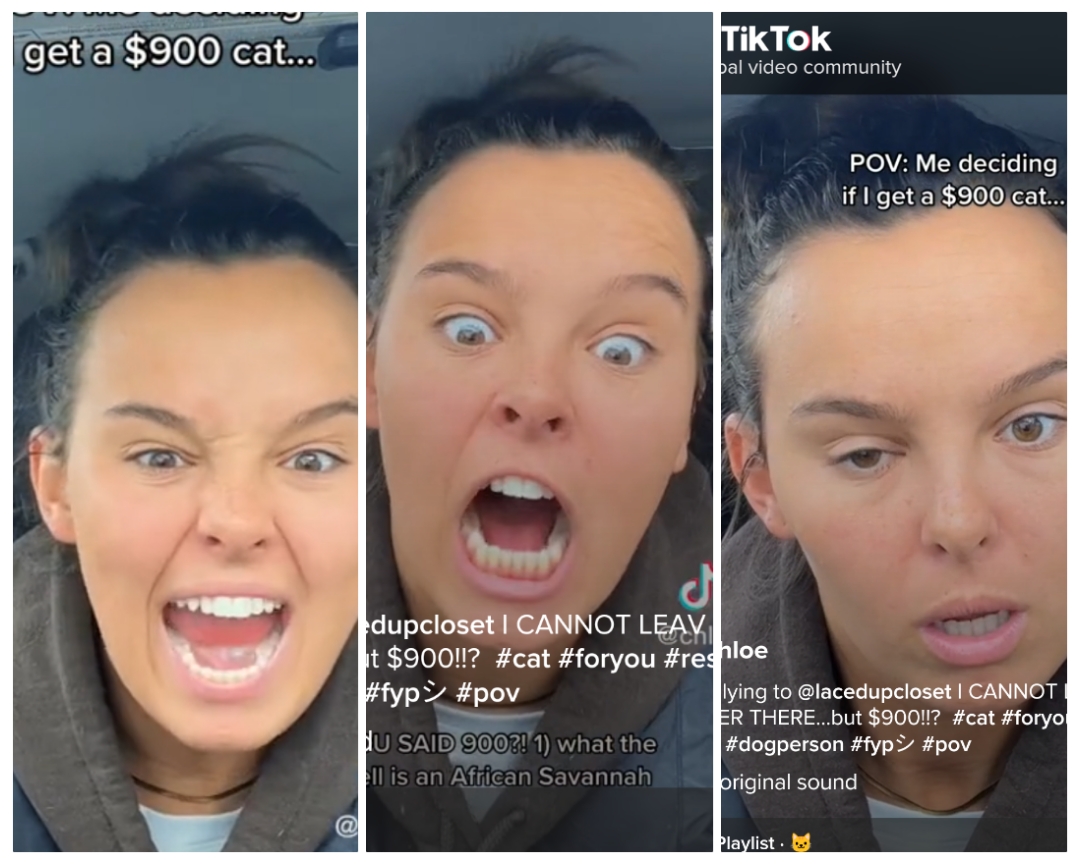
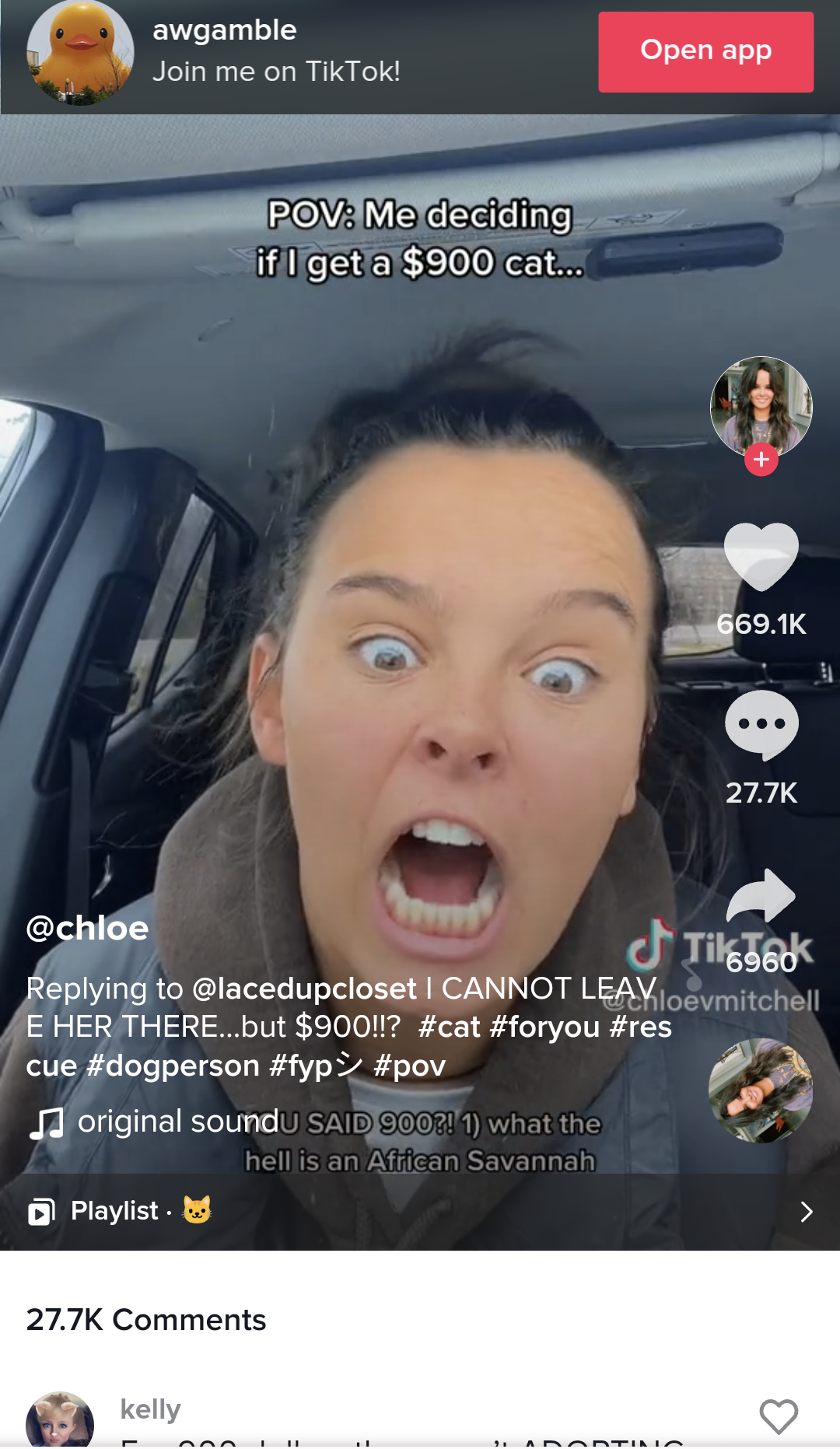
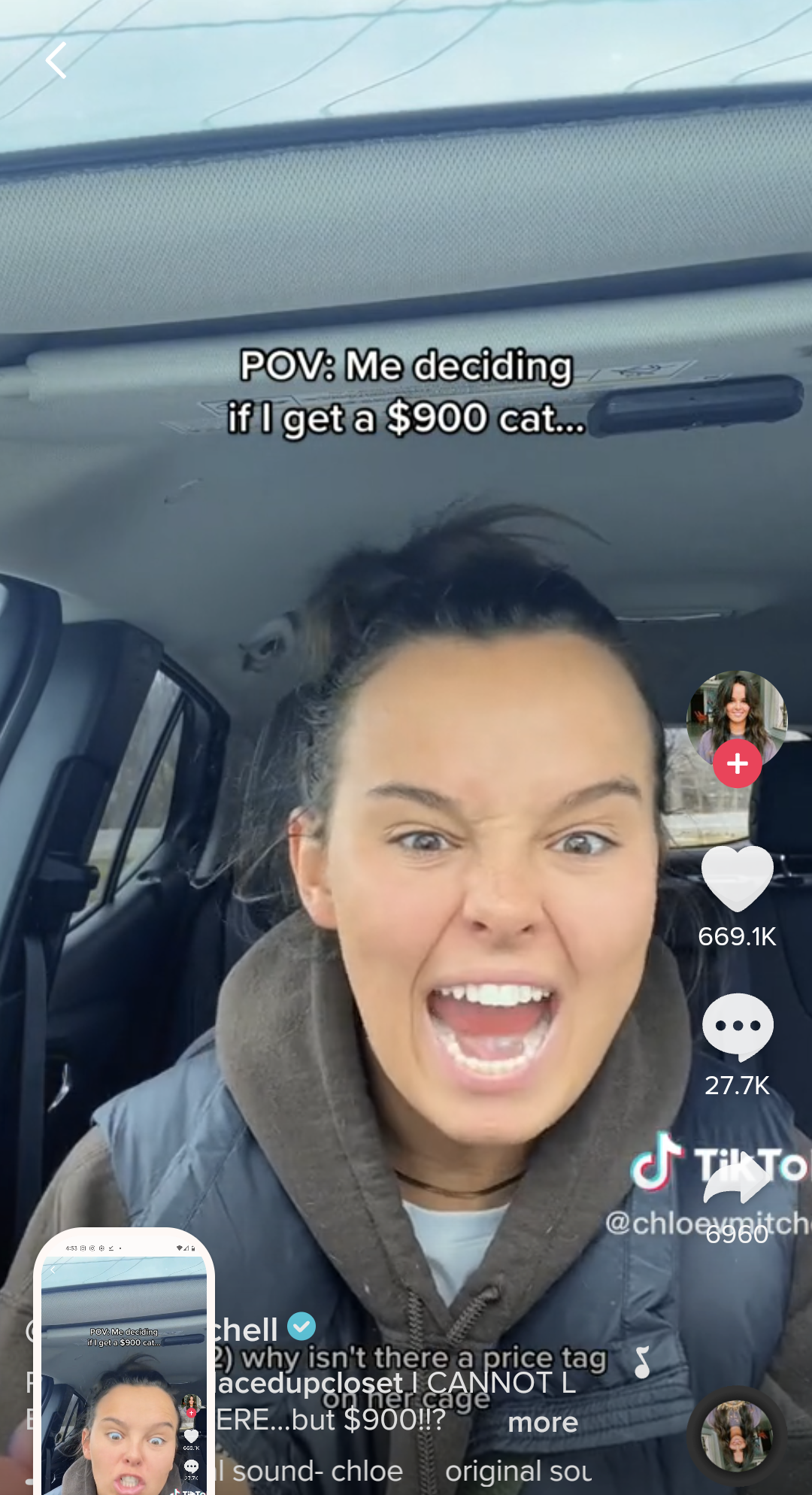
Apparently in the throes of adopter’s remorse, Mitchell uploaded a video to TikTok, the popular Chinese social media app, and raged about the adoption to her three million followers, screaming into the camera as she accused the shelter of identifying her as an easy mark and making a tidy profit off the kitten’s adoption fee.
Sickly kittens and sizable veterinary bills
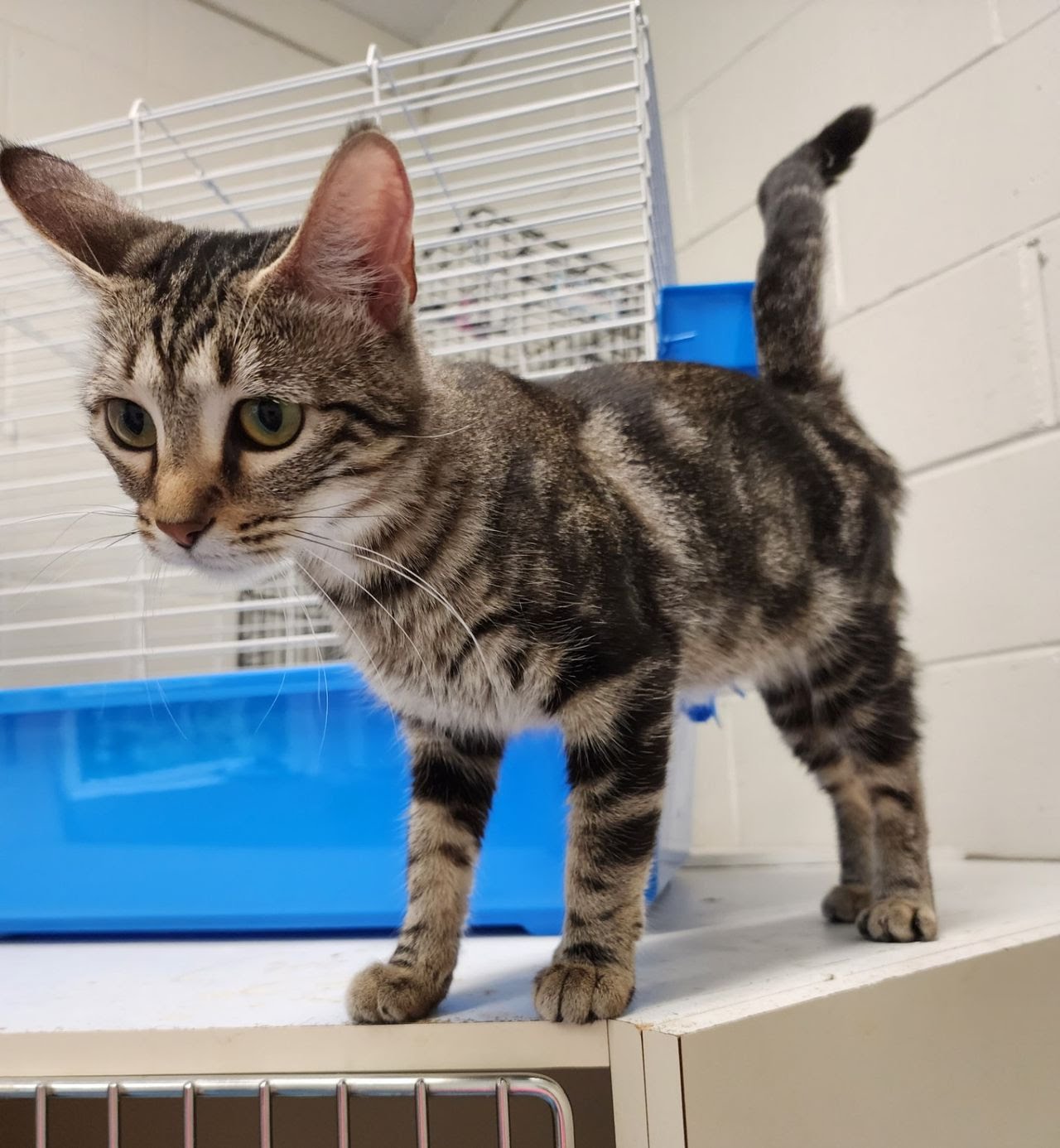
Mitchell originally came to the shelter, camera in tow, asking specifically for a cat named Heart. The influencer filmed her visit and gushed to her viewers that she’d fallen in love with Heart, a mixed-breed kitten with Savannah heritage.
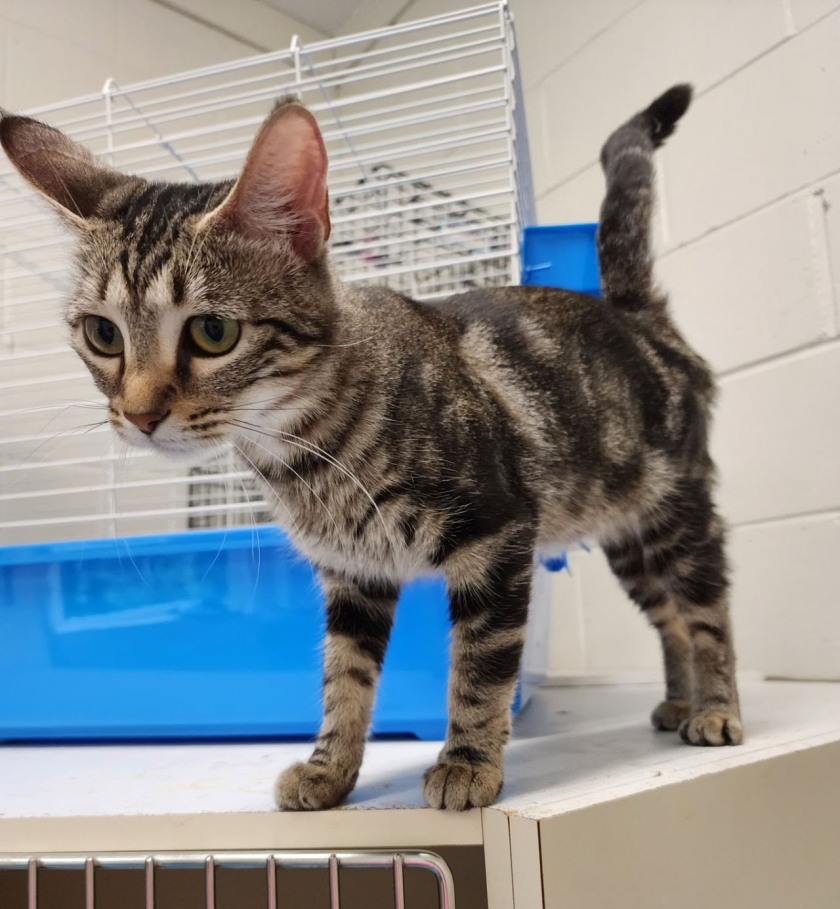
Heart, or as Mitchell calls her, “the $900 cat.” Credit: Noah Project
Shelter staff explained the kitten was from one of two litters that were brought in with serious ailments after a woman purchased a pair of queens from a breeder.
The former breeder cats went into heat and had babies, predictably, and the situation quickly grew out of control. When the woman realized she couldn’t care for the cats and their many ailing babies, she brought them to the Noah Project, which took on the Herculean task of caring for kittens that had problems ranging from anemia to developmental deformities like swimmer’s leg, also known as deformed leg syndrome.
Noah Project staff had to rush three of the kittens to an emergency veterinary hospital. Another required a leg amputation. Two kittens died, and the remaining babies had to be nursed back to health over three months, with special diets, medication and care on top of the normal costs associated with spaying/neutering, micro-chipping and vaccines.
Taking on that many sick kittens would stretch the resources of any animal shelter, let alone a small rescue, and the Noah Project set the adoption fees at $900 per kitten to help recoup the considerable costs.
Whipping an army of followers into a frenzy
Mitchell wasn’t phased by the fee, shelter staff said, but things quickly turned sour when she went home and posted the dramatic video, sparking the ire of her followers.
After that first video racked up almost six million views and almost 28,000 comments, Mitchell turned the experience into her own miniature “season” of online television, making half a dozen monetized videos in which she accuses the non-profit of lying to her about Heart’s breed and scamming her with the adoption fee.
Collectively, the videos have more than 30 million views, and Mitchell’s increasingly pitched rhetoric has whipped her three million followers into a frenzy.
In the video above, Mitchell acts out an alleged conversation with the shelter and confuses coat pattern for breed, saying “Feline experts have approached me online to say that she is in fact not an African Savannah and is more of a tabby-looking animal.”
“And they’ve stayed that I did get wrongfully charged that $900 in your shelter, which isn’t looking to re-home animals [but] make a profit off of them, and that’s not okay… I was taken advantage of, and that really sucks, I gave you my money for a reason that you were being truthful about her breed.”
Prompted by Mitchell’s insistence that the shelter was “scamming” adopters, her followers turned vigilante, review-bombing the Noah Project on Google and harassing its staff by phone. The shelter, which has been named the best rescue in west Michigan by its local newspaper several years in a row among other plaudits, saw its five-star Google review rating evaporate as negative reviews piled up, and the angry calls keep coming in. (“Unethical scammer! …shady, greedy business!” one of Mitchell’s followers wrote, while others dubbed Noah Project a “retail rescue” that “prioritizes profits over placing animals in a loving home.”)
The experience has been bewildering for shelter volunteers who aren’t accustomed to being the target of international ire.
“One woman [who answers phones at the shelter] doesn’t want to come back this week because it was so bad for her,” said Mashele Garrett-Arndt, Noah Project’s director. “It’s hard to explain to someone in their 60s or 70s. They don’t understand how [followers] can be so loyal to a person in a video. They don’t understand how people can be so cruel.”
Volunteers and staffers have taken the brunt of the abuse from Mitchell’s followers. Several don’t feel comfortable returning to the shelter because of the threats, Garrett-Arndt said.
The callers have said “they hope we die. They hope that we suffer and lose our jobs, they hope our families suffer. Horrible, horrible things,” she said.
As a result of the abuse and the threats, the Noah Project went to the local police, who are now keeping watch over the shelter. They’ve also hired private security, installed cameras covering the property, and have taken to scheduling staff to man the building overnight to watch the premises.
In an effort to end the squabble, Garrett-Arndt reached out and offered to refund Mitchell’s adoption fee, but said the influencer will no longer return the shelter’s calls.
Despite that offer, there’s no end in sight to the drama: Mitchell repeated her accusations that the shelter was trying to “profit” from her in an interview last week with MLive, a website that serves readers of a dozen newspapers across the state, and did an interview with the local Fox affiliate, WXMI, for a news segment that aired Monday.
Mitchell claims the shelter never mentioned the medical issues as the reason why the adoption fee was higher than usual, and says shelter staff told her Heart was “a super rare African Savannah” as rationale for the fee. She suggested she’ll continue her campaign to shame Noah Project until the shelter “proves” Heart is a Savannah, a mix of a wild serval and domestic cat.
“All of this will go away if they send me the certified paperwork ensuring she [is] in fact an African Savannah and I was rightfully charged $900,” the TikToker told WXMI.
But in her initial video Mitchell admitted she didn’t know what a Savannah cat was, and in another video she says she doesn’t care if Heart is a particular breed.
“I trusted you and I gave you my money for a reason, believing that you were being truthful with me about her breed, which didn’t matter to me at all, because I just love this animal,” she says in the video.
The constant stream of new videos about the situation and the behavior of Mitchell’s enraged followers has had a dramatic impact on the rescue.
“It has just been consuming our lives for the past four weeks,” one staffer told WXMI.
No one gets into animal rescue to make money, despite Mitchell’s claims that Project Noah’s staff are using animals in some sort of get rich quick scheme, and Garrett-Arndt told MLive she’d gladly open the shelter’s books to Mitchell or anyone else with concerns to show exactly how much was spent on vet bills and the other expenses involved in saving the sickly kittens and their mothers.
Pleading poverty and punching down
In her first video taking issue with Heart’s adoption fee, Mitchell pleads poverty and suggests the shelter saw her as an easy mark.
“I could just not eat,” she says with a theatrical expression, complaining that the fee is “two thirds of a Yorkie” and a quarter the price of a Louis Vuitton bag.
“I spent $900 on a fuzzy scratch ball that’s going to puke all over my furniture,” she says.
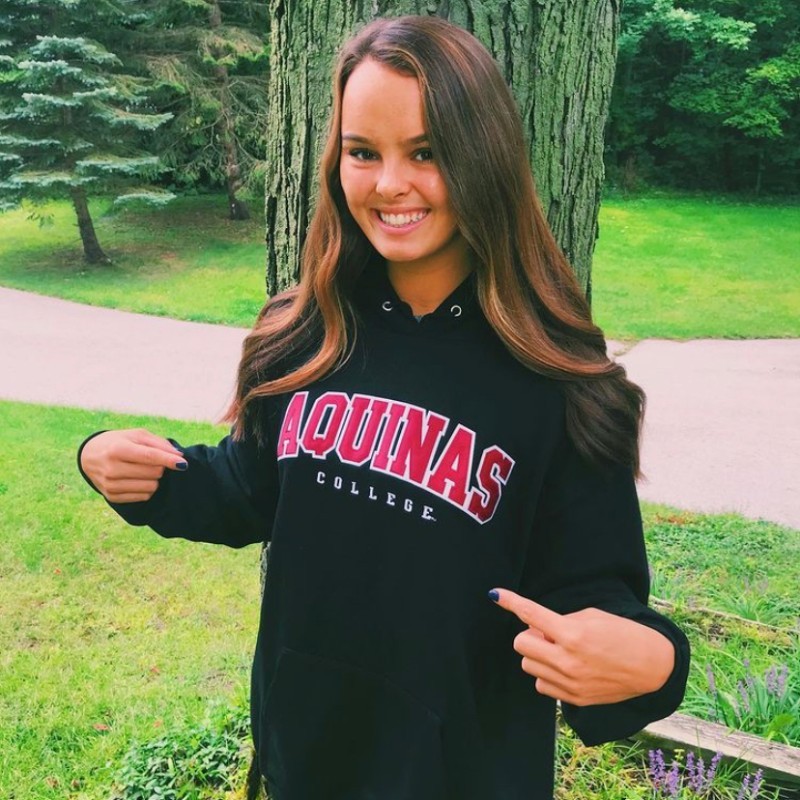
But Mitchell is not the typical college student working a part-time job and eating Ramen noodles to stretch her budget. As a volleyball player at Michigan’s Aquinas College in Grand Rapids, she’s well known as the first collegiate athlete to profit from the NCAA’s new NIL (name and image likeness) deal, which pays college athletes when their names and likenesses are used in broadcasts, promotional materials, video games and other revenue-generating activities tied to their sports.
Mitchell went on to found a company that guides other athletes on NIL deals, and she makes a considerable amount of money on TikTok. Creators on the platform who have three million followers can expect to earn about $15,000 a month from viewership alone, and articles going back to 2021 state Mitchell receives lucrative sponsorships on her videos.
“Five-figure deals are her baseline” for sponsored posts, a story on MLive notes, saying Mitchell was earning up to $20,000 per sponsored post at the time, when she had fewer followers than she does now.
If Mitchell scores a conservative two sponsored posts per month, that could put her earnings at $55,000 a month from TikTok alone, not including money earned from her NIL deal. Very few college students earn that kind of cash, yet Mitchell claimed the $900 adoption fee was “life-changing money.” In addition, she refers to her new pet almost exclusively as “the $900 cat.”
She dismissed the idea that she was creating problems for the Noah Project, telling WXMI that she doesn’t think she’s responsible for what her followers do.
“I never asked for the internet to go call them or to leave Google reviews in my defense whatsoever,” she said. “I’m not asking to be defended, I’m just asking to be heard.”
With 30 million views on her videos about “the $900 cat” saga, she’s been heard. The shelter? Not so much.
“To call people scammers, that’s a huge thing,” Garrett-Arndt told PITB. “You don’t just say someone scammed you. For her to say that about Noah Project, that hit hard for everyone.”
Garrett-Arndt said Noah Project’s social media staffer is hard at work trying to rectify the one-star reviews Mitchell’s followers left on the shelter’s Google listing, and said it’s taken considerable time to combat the damage to the shelter’s reputation.
Time spent dealing with negative reviews, filing police reports and reassuring spooked volunteers means less time dealing with the rescue’s primary mission — saving animals.
Garrett-Arndt said she consulted an attorney about taking to TikTok to tell the shelter’s story, and the attorney warned her that doing so could provoke an even stronger reaction from Mitchell, who has an enormous megaphone.
She said she doesn’t want to anger Mitchell for fear of what the influencer could do in the future, but believes the whole saga was manufactured for the benefit of the influencer’s TikTok account and followers. When the story blew up, she ran with it and wouldn’t return calls from the shelter in an attempt to fix the situation.
“She needed content, so it’s like ‘Let’s go get a cat,’ and then it got out of hand,” Garrett-Arndt said. “She has three million followers, but we have to stand our ground. The truth will come out.”
In the meantime, Mitchell — perhaps with an eye toward creating more viral content — says she’s getting a DNA test for Heart and has threatened to contact the other adopters who took home cats from the same two litters.
“Five other people paid the $900 adoption fee and not one of those people had an issue with it,” Garrett-Arndt said of adopters who took home the other kittens from the sickly litters.
The offer of a refund still stands, and staff at the Noah Project hope there’s an end to the madness.
“Why wouldn’t she come back to us? We’ll refund her,” Garrett-Arndt told PITB. “If you’re that unhappy about the $900, bring the cat back. Adopt another cat so we don’t have to [deal with] this and we don’t get dragged through the mud.”
After a TikToker raged about an adoption fee for a cat who had medical issues, her army of followers began harassing the shelter and its staff.
I don’t advocate criminality, but if some enterprising, preternaturally skilled hacker were to go Tyler Durden on TikTok and not just disable it for a few hours with a DDoS attack, but nuke it to oblivion by taking down its servers, backups and back-end code, that hacker would be a hero.
Songs would be written for this legend of a human being, performed to raucous applause by bards in taverns. A reincarnated Abraham Lincoln would lead a parade of patriots to the White House to wrap the benevolent hacker in the American flag and present the presidential Medal of Freedom. A bald eagle would alight on a Rose Garden cherry tree, raising a wing in salute to our hero, and fireworks would inaugurate a new federal holiday in honor of the glorious deed and its magnificent author.
But that’s not going to happen, so I have to type the words “TikTok influencer” and try not to gag as I relate the story of one Chloe Mitchell, a Michigan college student who sicced her army of three million followers on a non-profit, no-kill animal shelter.
Mitchell is one of those people who makes you wish life had mute buttons. She tells her side of the story with theatric facial expressions, frequently screaming — literally screaming — into the camera as she claims she fell in love with a cat at Michigan’s Noah Project and didn’t balk at the $900 adoption fee.
She says she’s happy with her cat, Puka, and loves her. But she still has adopter’s remorse.
“I spent $900 on a fuzzy scratch ball that’s going to puke all over my furniture,” she says at one point in a video she made after the adoption.
She bemoans the adoption fee, saying the cat costs “two thirds of a Yorkie” and a quarter the price of a new Louis Vuitton bag.
“Why isn’t there a price tag on her cage?” Mitchell screams. “Why can’t she be a $25 cat? … That’s life changing money, $900. I could just not eat.”
Mitchell’s followers, who called the shelter operators “scammers” and said they “played” Mitchell, among less charitable comments, have been targeting the shelter online and by phone, making “profanity-laced calls,” according to MLive.
Mitchell says the shelter told her the adoption fee was so high because Puka is an F5 Savannah, a fifth-generation hybrid of a domestic cat and an African serval. In her video she admits she doesn’t know what a Savannah is and confuses a tabby coat pattern for a breed.
But Mashele Garrett-Arndt, Noah Project’s director, told MLive the adoption fee reflected the substantial costs the shelter incurred by rescuing Puka, her litter mates and kittens from the other litters she came with, who had multiple medical issues. The shelter paid for veterinary surgery, including procedures for one cat who had two legs amputated, as well as shots, microchips, spaying/neutering, and special diets for the ailing kitties.
Puka, originally named Heart by the shelter. Credit: Noah Project
The Noah Project took in the young cats and their mothers from a woman who purchased the momma cats from a breeder. The mother cats went into heat again, predictably, and the problem multiplied litter by litter until the woman realized it was out of her ability to control and passed the problem along to the shelter.
The Noah Project took the mother cats and kittens, like any good rescue would, but an intake like that would stretch the resources of most shelters, let alone a small local operation. (See the appeals for assistance when larger organizations like the SPCA take in cats from hoarding situations, for example.) That this happened on the cusp of kitten season makes it even more difficult.
Since adopting Puka — and making a video in which she goes back and forth between saying she already adopted her and claiming she was thinking of adopting her — Mitchell has made at least half a dozen additional monetized videos about “the $900 cat,” including one in which she introduced her parents to their “$900 grandfurchild” and another in which she seemingly pretends to be on the phone with someone from the shelter, lecturing them about “taking advantage” of people and “profiting” off them. In the video, she does not pause long enough for the alleged person on the other end to speak.
“I’m so mad about this because she’s not only lying about this story but she’s making a profit off this,” Garret-Arndt said. “These cats came from an older woman in her 80s who bought these cats and overbred and couldn’t handle the situation. They all had medical issues and that’s the reason they were $900.”
Garret-Arndt told MLive her books are open for Mitchell and anyone else to inspect. In addition, the IRS 990 forms of non-profits are available via sites like Guidestar, allowing donors to check information like percentage of revenue spent on programs, meaning the amount that goes to the charitable cause after overhead.
Mitchell’s series of videos on her “$900 cat” saga had amassed almost 30 million combined views as of March 24
Mitchell isn’t hurting for cash despite her claim that she might have to go without eating after adopting her “$900 cat.” As a college volleyball player, she’s known as the first NCAA athlete to profit financially from NIL (name and image likeness), co-founded a company for other athletes looking to capitalize on NIL, and says she paid for Puka with money she made from the TikTok Creator’s Fund. In addition, she’s bragged about her many sponsorships.
An earlier story about Mitchell’s earnings said that in addition to the money she earns directly from the NCAA NIL deal, “five-figure deals are her baseline” for sponsorships.
Mitchell earns up to $20,000 per sponsored post, the story notes — and that was in 2021, when her follower count wasn’t as high. That’s an extraordinary amount of money for anyone, let alone a college kid, and doesn’t match up with her video pleading poverty over an adoption fee.
With 3 million followers, Mitchell could earn as much as $15,000 a month directly from TikTok alone, not including the lucrative sponsorships. Her initial post about the saga of her “$900 cat” registered almost six million views, some 28,000 comments and more than 660,000 likes. In all, her series of videos on the cat saga have amassed almost 30 million views. Most creators can only dream of those engagement numbers and the revenue associated with them.
In other words, Mitchell is not the typical college student working a part-time job in between classes and eating Ramen noodles to stretch her budget, and it wouldn’t be inaccurate to say she’s punching down by picking a fight with a small local rescue.
“I feel like she (Mitchell) got that cat as a stunt for her followers,” Garret-Arndt said. “She specifically asked for that cat. We were told she was an African Savannah cat but we don’t know.”
To her credit, Mitchell does seem taken with Puka, and we hope she cherishes the beautiful kitten regardless of whether she’s got serval lineage or is just a “basic” cat. Every cat is worthy of love and deserves a good home, and it appears Mitchell is doting on Puka, buying her lots of toys and cat furniture and cuddling with her.
Take it from me, loyal servant to a “basic” no-breed kitty: what’s important is the bond you form and the memories you make together, not the rarity of the breed. I wouldn’t part with Bud for $900,000, let alone $900.
In the meantime, the Noah Project continues to take abuse from the “influencer’s” followers, “swearing at us and calling us a horrible organization,” Garret-Arndt said.
“We don’t scam people,” she told MLive. “If they want to see my books and what I paid for medical, they can.”
She said the Noah Project is a small organization that focuses on making sure cats go to good homes instead of ending up in kill shelters where they’re likely to be euthanized.
“All of our animals leave here fixed and with all of their shots and preventatives, as well as being microchipped,” she wrote in a Facebook post in response to the manufactured controversy. “This all-costs money. No one is making a profit here, everything goes back into the shelter for medical supplies, food, etc.”
Mitchell says she’s ordered a DNA test for Puka and plans to do a reveal on TikTok, providing more material for more monetized videos in her ongoing saga of “the $900 cat.” She says she’ll “defend” the shelter to her followers if the DNA test does reveal serval lineage, but the damage has already been done, and we can’t help but wonder if she’ll be willing to offer a meal culpa after quadrupling down on claims that the shelter ripped her off.
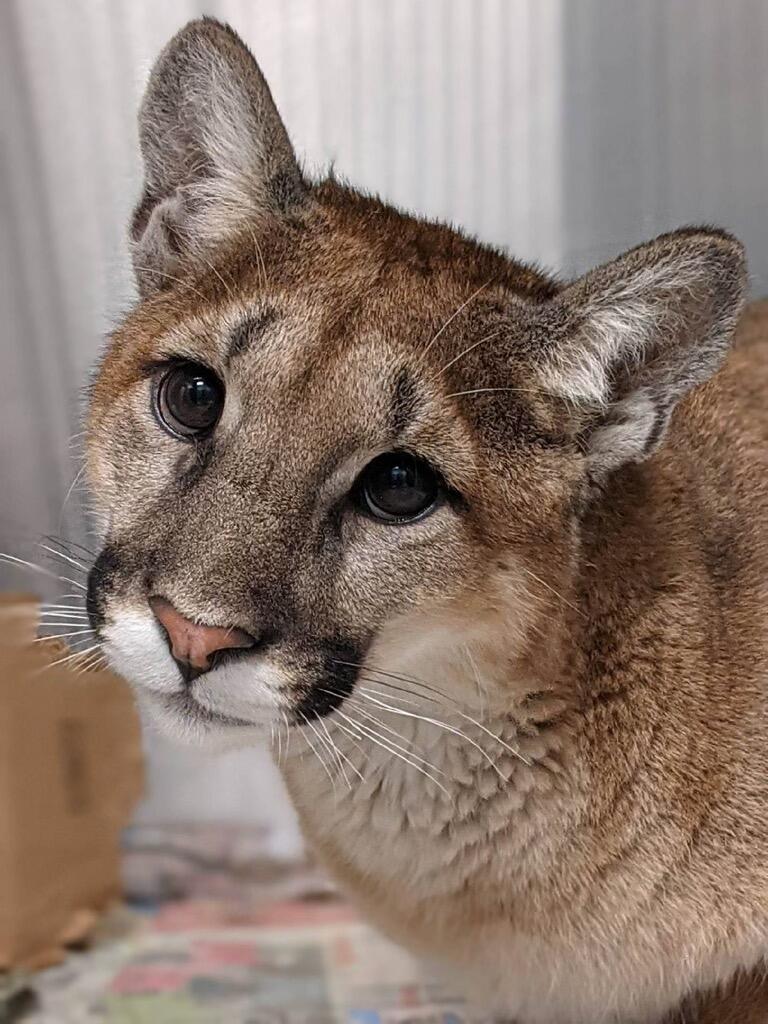
Nicholas was orphaned and severely injured as a cub as he and his mother tried to cross a busy highway. He’s settling into his new home, where he will have his own habitat, den and even his own pond.
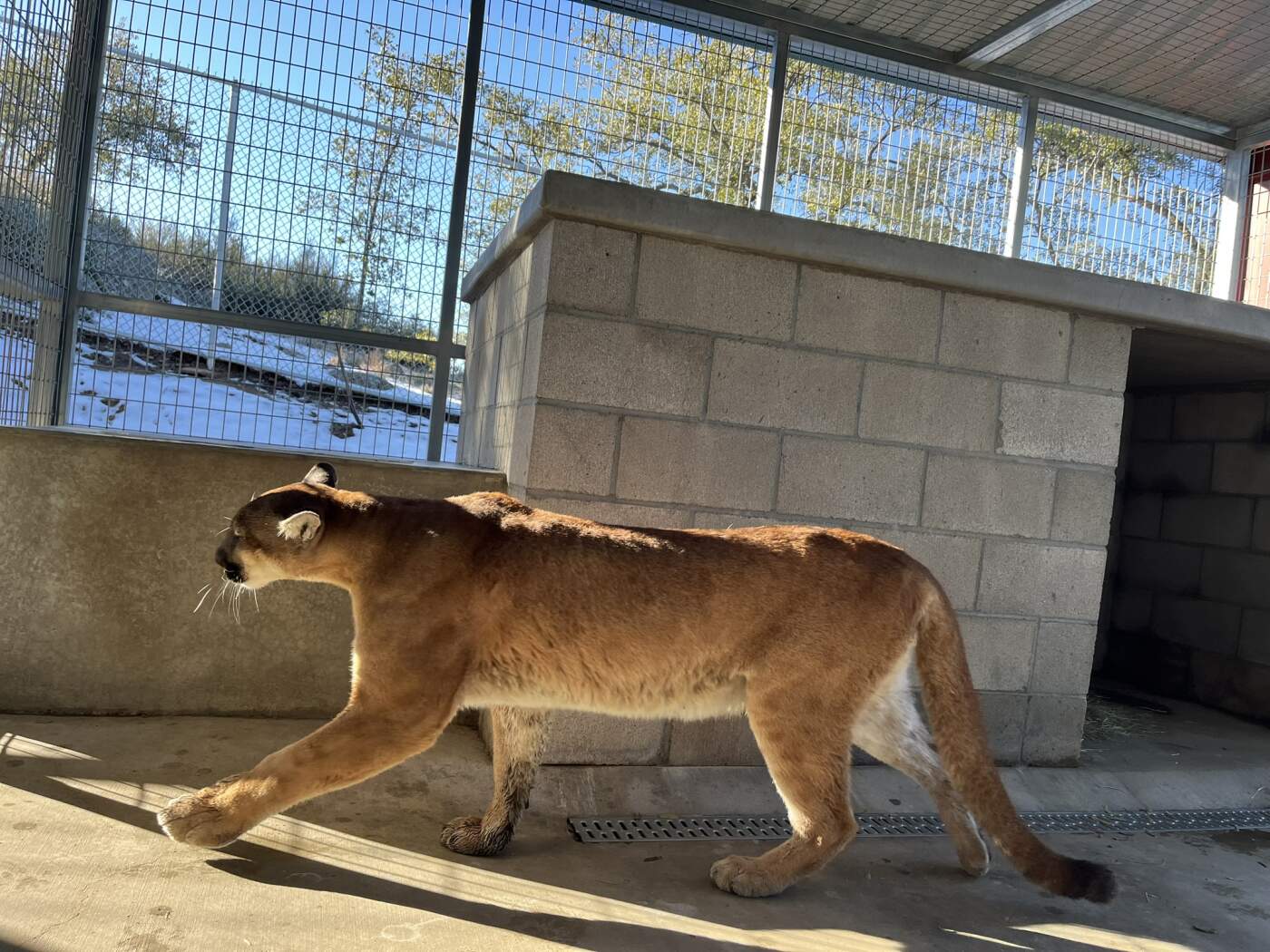
Nicholas the mountain lion has a beautiful home waiting for him with his own pond, a rock den, a grassy area where he can run around and several other little hideaways where he can enjoy some privacy and naps.
But first the three-year-old puma will have to clear quarantine and become more comfortable with his new surroundings and new caretakers.
“He’s doing really well but he’s still very scared, he’s a very timid cat, so we’re just taking it really slow, day by day and the keepers are taking some quiet time with him,” said Bobbi Brink, the founder of San Diego County-based Lions, Tigers and Bears, Nicholas’ new home.
Nicholas stretches his legs in quarantine as he awaits the move to his own habitat. Credit: Lions, Tigers and Bears
The golden-coated feline with an expressive face has had a tough journey to the 93-acre sanctuary that will be his permanent home.
In 2020 when he was just a cub, Nicholas was following his mother across a busy highway when both were struck by a car. Nicholas was badly injured and his mom was killed in the collision, an unfortunately common fate for members of their species as their longtime habitats are increasingly fragmented by new developments and highways.
Because they require about two years with their mothers to learn how to survive on their own, it’s almost impossible to release orphaned pumas back into the wild. Unlike, say, the orphaned orangutans of Borneo and Sumatra, who can usually be taught to successfully fend for themselves because humans can show them how to physically manipulate their surroundings, there’s no way to teach orphaned pumas how to select prey, stalk, pounce and deliver kill bites.
A sanctuary in northern California provided a home for Nicholas for about three years, but recently went bankrupt, so the staff at Lions, Tigers and Bears secured him, prepared a habitat for him and took on the Herculean task of transporting him to San Diego County.
Nicholas’ case is even more complicated because he has lasting neurological damage from the car crash that killed his mother, including a pronounced head tilt that worsens when he’s scared.
Brink told PITB it’s normal for cats like mountain lions to be spooked by the commotion and uncertainty of a move, as well as leaving everything they know behind. Nicholas is simply obeying his wild instincts, which urge him to be guarded. But he’s got a loving team of caretakers who will work with him, as well as veterinary specialists who are well versed in caring for animals with neurological damage.
“Sometimes it can take (animals like Nicholas) a month, sometimes it can take three months to build up that trust,” Brink said. “His biggest need is he’s very afraid, so we’re gonna have to work around his fear so we don’t scare him more.”
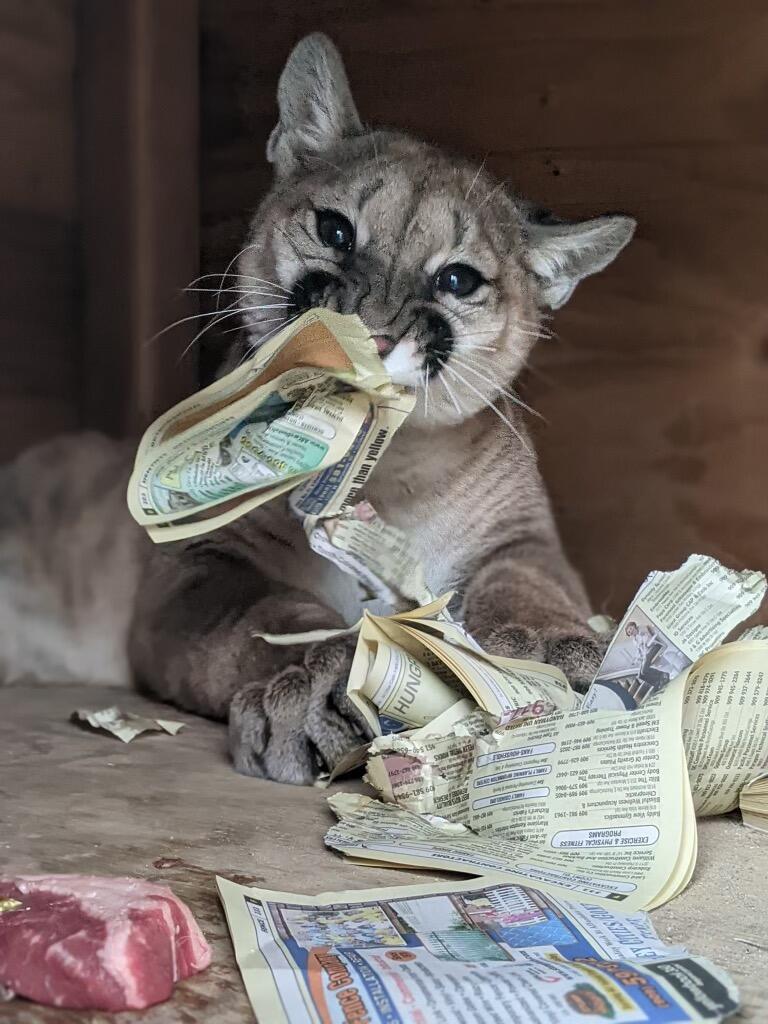
Despite their impressive size, pumas are more closely related to domestic cats than the big cats of the panthera genus. Like their house cat cousins, pumas enjoy tearing up paper and playing with toys. Credit: Lions, Tigers and Bears
While Nicholas will have his own habitat and can keep to himself as much as he likes, recent observations of his secretive species have shown that pumas have “secret social lives,” and Nicholas will have the opportunity to meet and interact with other mountain lions if he’s comfortable with it.
Pumas — which are known by the scientific name puma concolor and are also called mountain lions, cougars, panthers, catamounts, screamers, painters, gato monte and many other names — are among the most adaptable felids in the world and range from the southernmost edge of South America to just over the Canadian border. They’re able to thrive in mountains, tropical regions, deserts, forests, human-adjacent rural areas and even in urban population centers, as the famed “Hollywood Mountain Lion” P-22 did for more than a decade in Los Angeles.
Their ability to adapt has served them well in a changing world, but they’re not immune to the pressures of human expansion.
In California their habitats have been carved up by the state’s busy and deadly highways, leaving the cats in genetically isolated pockets. Pumas who strike out in search of their own ranges are extremely vulnerable to vehicle traffic. P-22 famously crossed several of the world’s busiest highways to reach his eventual home in LA’s Griffith Park, but others like Nicholas and his mom aren’t so lucky.
Solutions like the $90 million Wallis Annenberg Wildlife Crossing, currently under construction in Los Angeles County, can connect fragmented ranges and give pumas, coyotes, foxes, deer, rabbits and other animals safe passage. But experts point out that they are just one component in a long-term solution that must include more careful zoning, fences to funnel animals toward safe crossings, and options like tunnels that run under highways, since not all animals will use overpasses.
As planners and wildlife experts figure out new ways to ensure the survival of wildlife in an increasingly crowded, human-dominated world, sanctuaries like Lions, Tigers and Bears play a crucial role by caring for the innocent animals who are injured, displaced and rescued from bad circumstances.
To learn more about Lions, Tigers and Bears or support their ongoing efforts to provide safe, stimulating and comfortable homes for wild animals, visit the non-profit’s site. To receive updates on Nicholas and the other animals at the sanctuary, follow Lions, Tigers and Bears on Instagram and Facebook. Readers who live in the California area can book guided educational tours or visit during one of the sanctuary’s special events. Thanks to Bobbi Brink and Olivia Stafford for allowing PITB to tell Nicholas’ story. All images and videos of Nicholas courtesy of Lions, Tigers and Bears.





 Pain In The Bud